


What are the most beautiful beaches in Phuket?

Phuket is famous for its beautiful beaches, but “what is the best beach in Phuket?” is a question I hear all the time. After living here for 30 years and exploring every stretch of sand, I’ve learned that the answer depends on what you’re looking for. Some travellers want a busy beach with restaurants and nightlife, others seek a quiet escape, and a few want to find the hidden coves only locals know. In the 30 years I lived here, I enjoyed all of them, for different reasons.
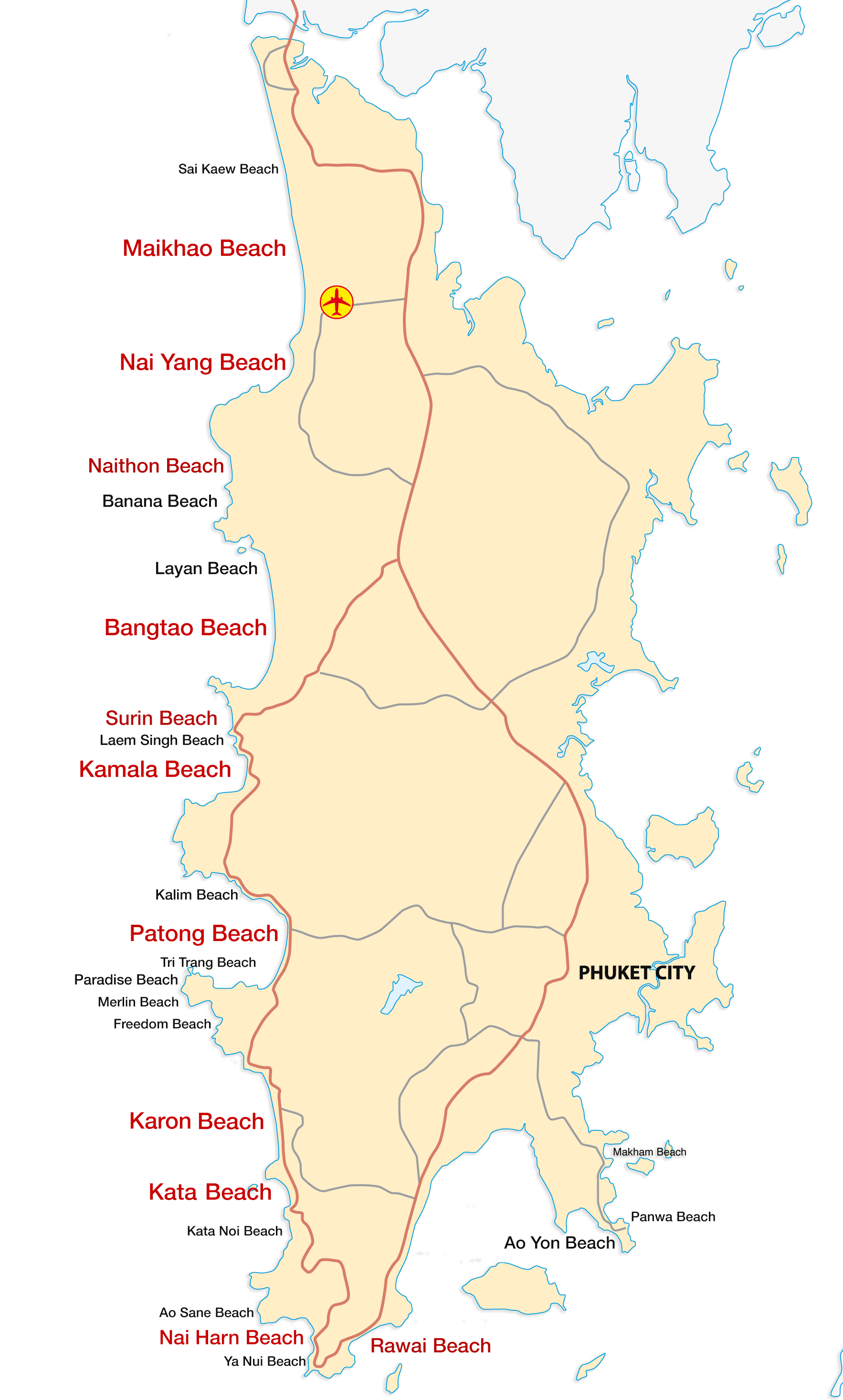
Phuket Beaches Map
Use this map to locate the beaches and visualise our small island’s geography.
How to Pick Your Phuket Beach
Skip the research and jump straight to the right beach for your trip. After 30 years on the island, here are my honest picks by what you came for:
- Travelling with kids: Kata, Karon, Kamala
- Want nightlife and convenience: Patong, Bang Tao (south end)
- Romantic getaway or honeymoon: Kata Noi, Surin, Pansea (resort guests only)
- Surfing or learning to surf: Kata (south end, low season May to October)
- Snorkelling and clear water: Ya Nui, Freedom, Ao Sane
- Quiet sunset away from the crowds: Nai Harn, Nai Yang, Naithon
- Hidden beach adventure: Freedom, Banana, Laem Singh
- Long stay with luxury beachfront resorts: Bang Tao, Mai Khao
- Local culture and authentic seafood: Rawai, Cape Panwa & Ao Yon
- Plane spotting or unique experience: Mai Khao (right by the airport runway)
- Avoiding crowds entirely: Mai Khao, Naithon, Freedom
1. Popular Beaches: Great to Book a Hotel
These are the beaches where most visitors actually stay. Each one has enough hotels, restaurants, and beach access to base your whole trip there. Listed roughly from busiest and most famous to quietest and most natural.
Patong Beach: Best for Nightlife and Convenience
| Main Tourist Beach / Nightlife Hub (West Coast) |
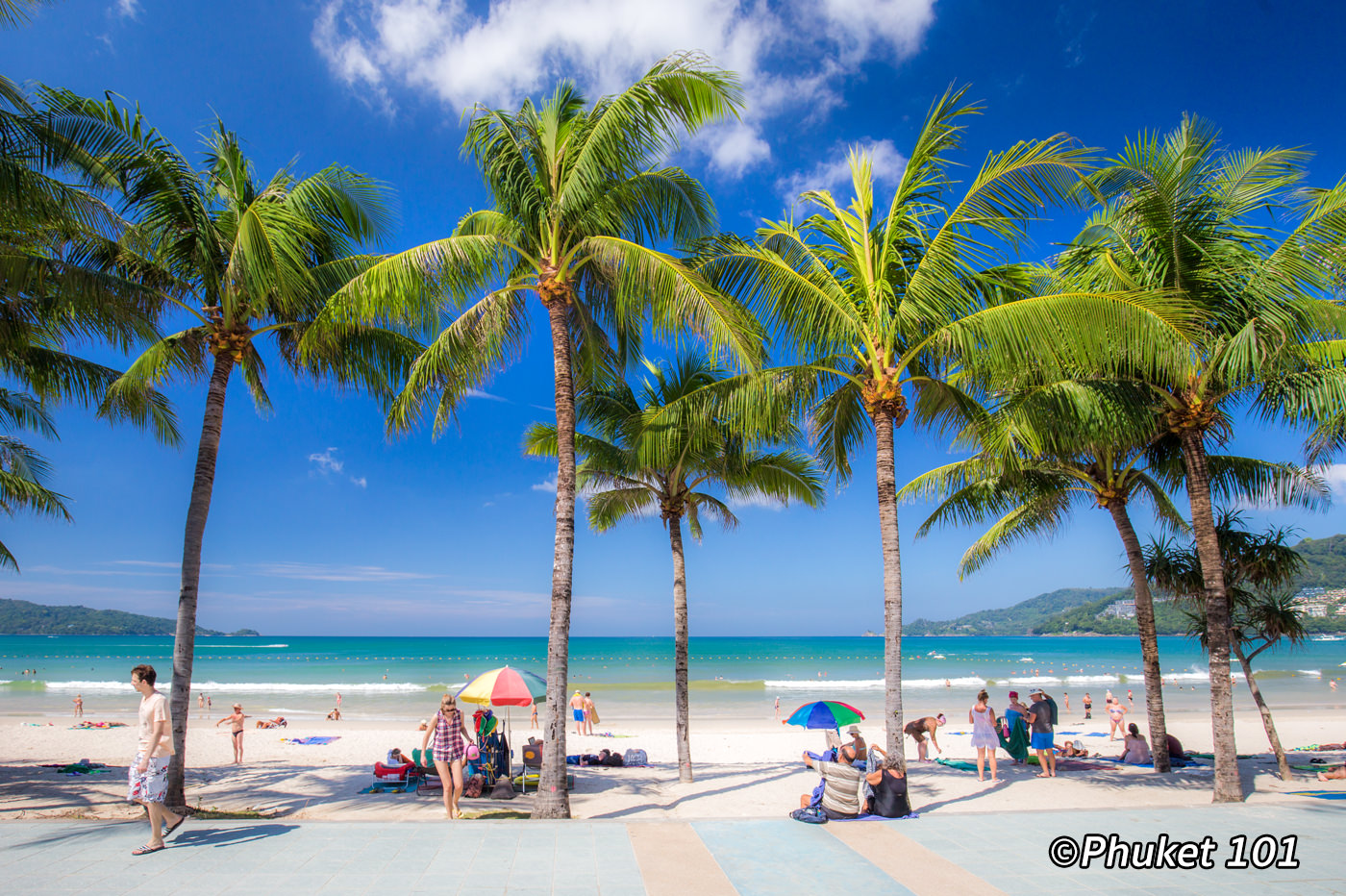
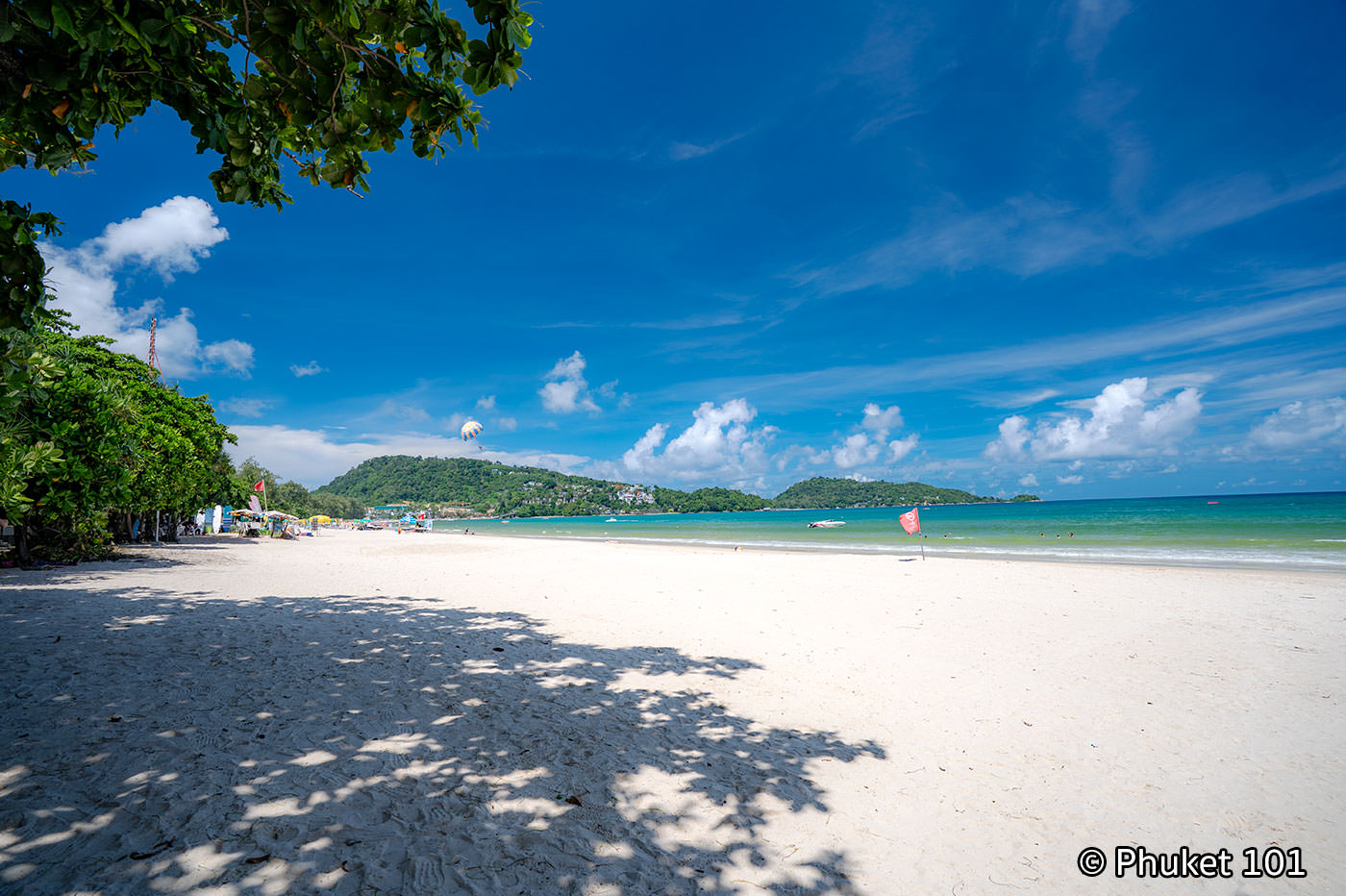
Patong Beach is Phuket’s most famous beach, the bustling heart of the island’s tourism. It’s a large, crescent-shaped bay about 3 kilometers long, with soft white sand and a busy scene of people swimming, sunbathing, and enjoying water sports.
Now, I’ll be honest: Patong is not where you go for a quiet, relaxing beach day. This is the place for action, jet skis buzzing on the water, parasailers up in the sky, beach volleyball games, and vendors wandering by selling ice cream or offering to braid your hair.

The central part of the beach can get very crowded in high season, with rows of beach chairs and umbrellas (yes, you can rent one to lounge on if you like). It’s lively, chaotic, and full of life. When I first moved to Phuket, Patong was one of the first beaches I saw, but these days, I don’t swim here often (I prefer quieter waters), but I do enjoy Patong in the early morning, it’s surprisingly peaceful, with just a few joggers on the sand and the sea almost empty.
There are hundreds of hotels to choose from, but just a couple of luxury hotels, plus only three resorts with real beach access; the other hotels calling themselves beachfront are actually across the road. If you are here to party, Patong is the place to stay: party at night and recover on a lounger under an umbrella the next day. I particularly enjoy the food vendors selling cheap and good street food and fruits under tall coconut trees! It’s a great photo opportunity.
If you want to be in Patong but in a quiet area, there are several options: Stay in the north end, in front of Four Points by Sheraton Resort, where the sand is soft, and the beach is a lot quieter than in the main part of Patong, but still within reasonable walking distance of Bangla Road. Option 2: stay in a hotel on the outskirts of Patong, like Amari Phuket, Avista Hideaway or the popular Courtyard Merlin Beach.
Kata Beach: Best for Families and First-Timers
| Main Tourist Beach (West Coast) |
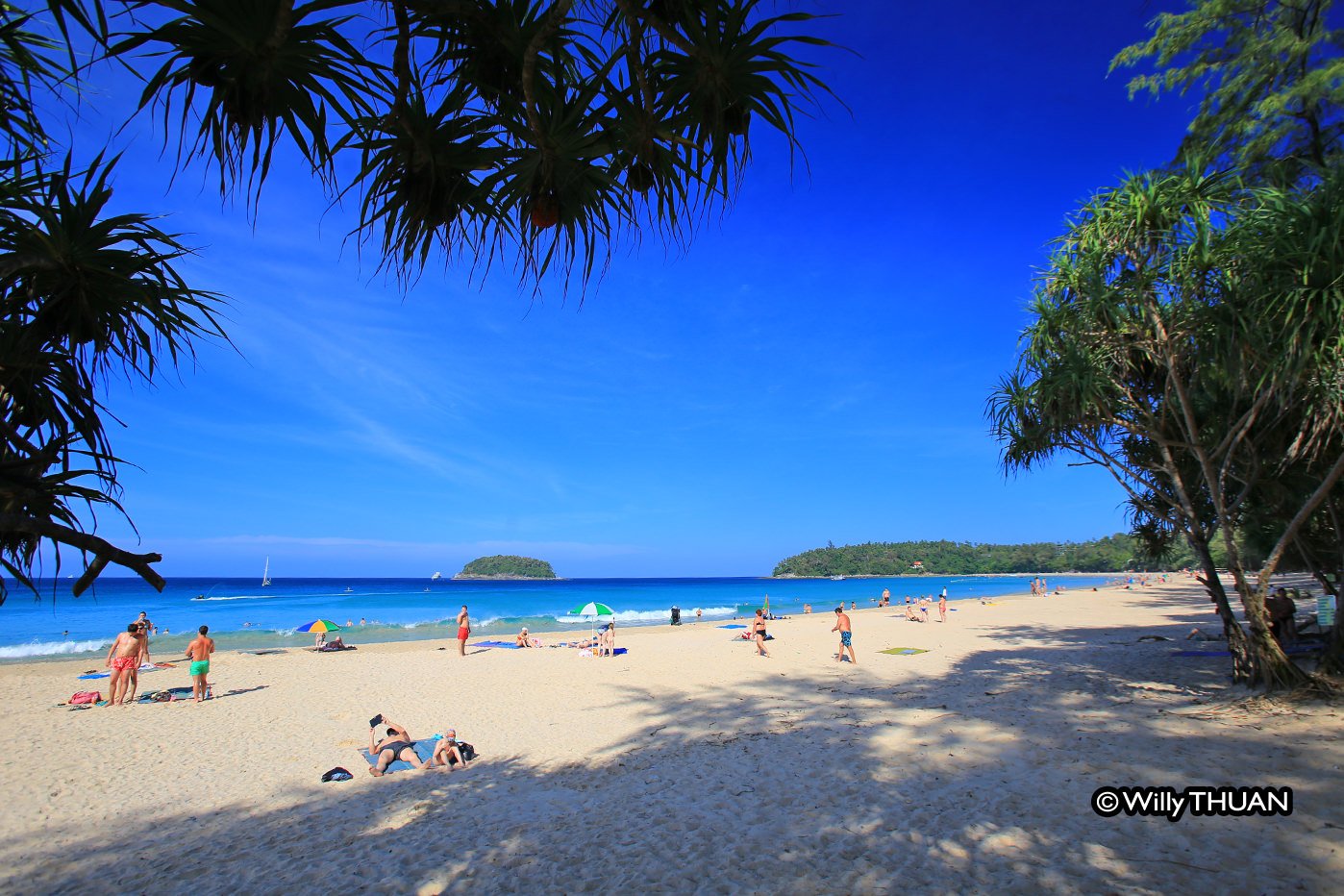
Kata Beach is a popular favorite for many travelers, and for good reason. This beautiful bay on the west coast offers a bit of everything that makes Phuket beaches special. The sand at Kata is golden and soft, the water is clear and turquoise during high season, and the beach is framed by lush green hills at either end.
At about 1.5 km long, Kata is big enough that you can usually find a spot to lay your towel without feeling overcrowded, especially towards the ends of the beach. I often recommend Kata Beach to families and first-timers in Phuket because it has a relaxed, friendly vibe with plenty of conveniences nearby. I’ve spent countless weekends here, swimming in the gentle waves and enjoying the view of little Pu Island that sits offshore. It’s the kind of place where you can take a long barefoot walk, stop for a fresh coconut from a vendor, and let the kids splash in shallow water safely.
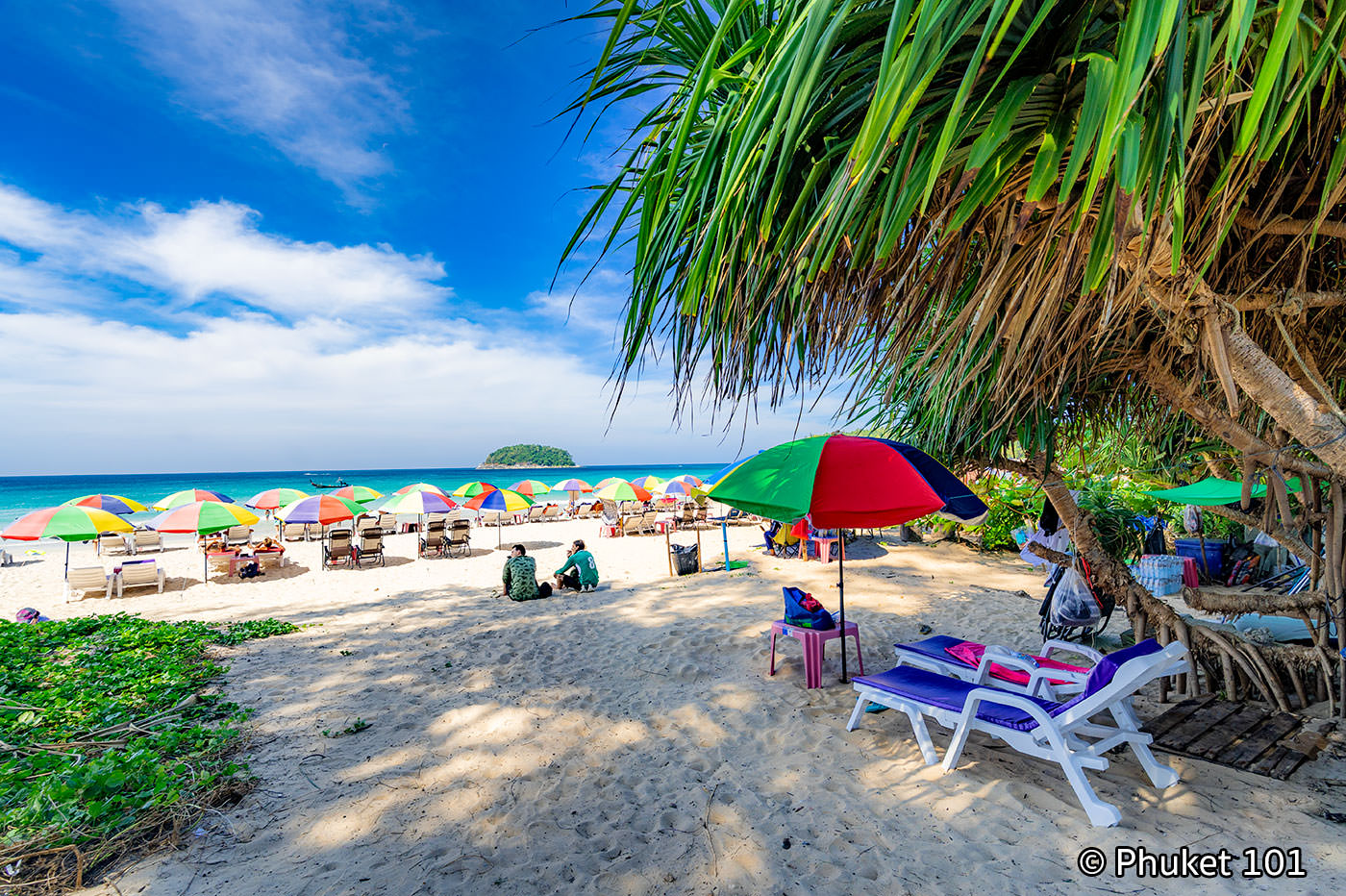
One thing I love about Kata is that it changes character with the seasons. In the sunny high season (November to April), the bay is generally calm, perfect for swimming and even snorkelling along the rocks. In the low season (May to October), bigger waves roll in, turning Kata into a mini surfing hotspot.
You might see locals and expats riding the waves or taking surf lessons, especially at the south end of the beach. I tried surfing here once; let’s just say I spent more time falling off the board than riding it, but it was a lot of fun! If you’re not into surfing, note that low-season swimming can be dangerous at times due to rip currents, so pay attention to red flag warnings.

The beach itself has a laid-back feel, it’s lively but not wild. There are no nightclubs in Kata, but you will find beachside restaurants, massage huts, and even a small night market in the area behind the beach road. In fact, one of my evening routines in Kata is to stroll to the Kata Night Market to snack on grilled seafood and banana pancakes from street vendors. For dinner with a view, a few local restaurants at the north and south ends of Kata Beach let you dine with your toes in the sand. And if you’re wondering about hotels, Kata has plenty of options from budget to luxury. A unique thing here is that only two resorts have direct beachfront access (The Boathouse and Beyond Resort Kata), most other hotels are just across the road or a short walk away. But that doesn’t bother me; even when I’m not staying overnight, Kata Beach is a spot I return to again and again for its easygoing charm and that perfect mix of scenery and amenities.
Karon Beach: Best for Couples and Long Beach Walks
| Main Tourist Beach (West Coast) |
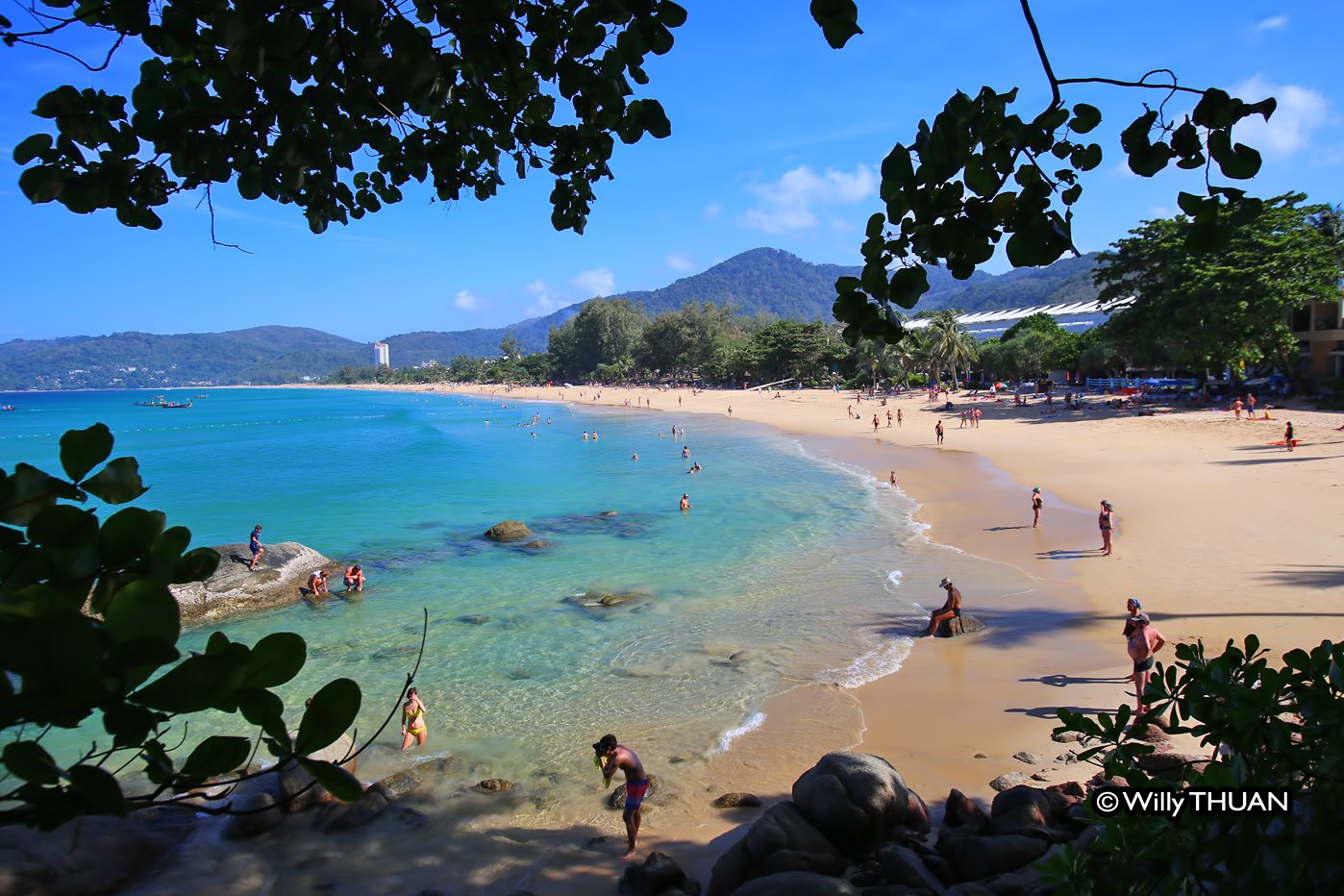
Just south of Patong and Kata, you’ll find Karon Beach, one of Phuket’s longest and most beautiful beaches. Karon stretches for almost 3.5 kilometers (making it the third-longest beach on the island) and is so wide in parts that it never feels full, even in the middle of high season. I often come to Karon when I want long walks by the sea without bumping into too many people. The sand here is golden-white and famously known as “singing sand”, it actually squeaks under your feet when you walk on it, thanks to its high quartz content. It’s a little quirky detail I enjoy sharing with friends: take off your shoes and shuffle a bit, and you’ll hear the sand sing!

The water at Karon is a gorgeous blue on sunny days, and the beach has a gentle slope into the sea. During the dry season, the sea is usually calm and great for swimming or even snorkelling near the rocky ends. But I must warn you, in the monsoon season (May to October), Karon can have strong waves and dangerous currents. The beach is quite open to the sea, so big waves roll in, and there are often red flag days when it’s unsafe to swim. Lifeguards do patrol and put up flags, so always heed their warnings, every local knows Karon’s beauty comes with a bit of respect for Mother Nature.

Karon town is smaller and quieter than Patong, but you’ll still find everything you need for a comfortable stay. A unique aspect of Karon Beach is that most hotels and businesses are set back across the road, not directly on the beachfront (with one notable exception: the Centara Grand Beach Resort at the northern end is the only large resort right on the beach). This means the entire length of the sandy shore is open and unobstructed, which I really appreciate when I’m there, no private areas, just one continuous public beach. The downside is you might have to cross the road to grab lunch or a drink, but it’s a minor trade-off. Along the northern half of Karon, there’s a tourist centre with streets lined by restaurants, bars, and shops. You can find everything from Thai curries to Italian pizza there.
At night, a couple of bars have live music, and there’s even a small nightly market by Karon Temple (I enjoy wandering there for some mango sticky rice or to pick up a souvenir). Karon is not a party town like Patong, nights are more laid-back, with couples and families having dinner or a drink. For me, Karon Beach hits a nice balance: it’s less hectic than Patong, but more happening than a remote beach. I love spending late afternoons here; the sunsets are fantastic, painting the sky orange and pink over the sea. As the evening breeze comes in, the beach cools down, and you can sometimes hear the faint music from a beachside cafe mixed with the sound of the waves. It’s a beautiful spot to end the day.
Kamala Beach: Best for Families and Calm Stays

| Main Tourist Beach (West Coast, family-friendly) |
Kamala Beach is a calmer alternative to the buzzing beaches like Patong. Located just north of Patong, Kamala has transformed over the years from a sleepy fishing village into a relaxed resort town, all while keeping a more laid-back vibe. The beach itself is a long, curving bay about 2 kilometres in length, with fine, light golden sand and clear water in the high season. One of my personal pleasures is taking an early morning walk along Kamala Beach, the bay is usually calm like a mirror, and you can see fishermen casting nets or locals doing yoga on the sand.

There’s a line of tall coconut trees along parts of the beach, providing that classic tropical look (and some nice shade patches later in the day). The south end of Kamala is near a small river inlet and is very quiet, while the north end has become known for some upscale beach clubs and resorts. Overall, Kamala is popular with families, retirees, and those who want a peaceful stay that’s not too far from the action in Patong.

The village of Kamala runs along the beach road and the road just behind it. It’s quite a compact town, essentially two main parallel streets. Along the beach road (which in some parts is just a footpath on the sand), you’ll find small hotels, Thai and Western restaurants, cafes, souvenir shops, and a few convenience stores. I’ve eaten some fantastic local meals here, grilled seafood at a sand-floor restaurant, spicy papaya salad from a street cart by the beach, and even some Italian gelato from a little shop opened by an expat. In the evenings, Kamala is generally low-key. There are bars and pubs, but it’s more about a quiet beer while listening to soft music, rather than dancing till dawn. However, Kamala has a couple of notable attractions that do light up the nights: Phuket FantaSea and the new Carnival Magic theme park.
These are large cultural theme park shows located just outside the village. I’ve attended the Phuket FantaSea show (which features Thai cultural performances, trapeze artists, and even elephants) a few times when guiding visiting friends, it’s quite a spectacle, especially enjoyable for families. Carnival Magic is a newer addition with vibrant parades and shows. Another popular spot in Kamala, especially for the younger crowd and those seeking a bit more lively atmosphere, is Café del Mar, a stylish beach club on the north end of the beach.
On weekends, I sometimes go there for a sunset drink and chill-out music; it has comfortable beach loungers and occasionally international DJs. Despite these attractions, Kamala never feels overwhelmed. During the day, the beach remains mostly about sunbathing, swimming, and the simple joys. The water at Kamala is generally very calm in high season, great for kids, and in low season, it can have some waves, but usually not as rough as more open beaches like Karon or Surin. There’s a small coral reef at the extreme north end, but for serious snorkelling you’d go elsewhere. If you’re staying in Kamala, you’re conveniently in the middle of Phuket’s west coast, making it easy to explore other beaches too. Personally, I enjoy Kamala for its easygoing charm, it’s the kind of place I might choose for a “staycation” when I want to get away from the more crowded parts of Phuket but still have plenty of dining options and a nice beach at my doorstep.
Bang Tao Beach: Best for Long Stays and Beach Clubs

| Main Tourist Beach (Northwest Coast, long & versatile) |
Bang Tao Beach is one of Phuket’s longest, most expansive beaches, an 8-kilometer stretch of sand that offers a little bit of everything. Located halfway between the airport area and Patong, Bang Tao has evolved enormously since I first saw it in the mid-90s. Back then, Bang Tao was mostly known for the Laguna Phuket complex, a group of luxury resorts built around old tin mining lagoons.
Today, while Laguna’s resorts (like Banyan Tree, Angsana, Dusit Thani) still occupy a central section of the beach, Bang Tao as a whole has become much more lively and diverse. It’s still a huge beach, so big that even on a busy day it never feels packed, and different areas of Bang Tao have different vibes. I find this beach great for long walks. Sometimes I start at the southern end near a small Muslim fishing community (where you’ll see longtail boats and local kids playing soccer on the sand at dusk) and walk north for an hour.

The southern end of Bang Tao (near “Ban Tin Lay” village) has become quite hip in recent years. There are a few popular beach clubs, bars, and restaurants right on the sand, which attract both tourists and local expats, especially in the late afternoon and evening. Places like Catch Beach Club were pioneers, and now there’s a cluster of them offering lounge chairs, good music, and cocktails. I occasionally drop by for Sunday brunch at one of these clubs, nothing beats sipping a cold drink with the Andaman Sea stretching out in front of you. Moving northward, you hit the Laguna resort zone about mid-beach.

This area is more about the resort guests: each hotel has its sun loungers and activities, but since all beaches are public, you can still stroll through. During the day, you might see horse riding along the beach here (popular with some tourists) or people learning to windsurf or stand-up paddleboard in the gentle waves. Bang Tao’s water is generally quite calm and shallow for a good distance out, especially from November to April, making it nice for wading and kids. In the monsoon months, waves can pick up, but the bay is somewhat sheltered compared to totally open ocean beaches, so it’s often manageable, still caution with red flags as always. The northern end of Bang Tao becomes very tranquil. There are fewer buildings, just casuarina trees and a few local restaurants. It edges toward Layan Beach (a technically separate, even quieter beach at the far north end). If you really want space for yourself, head up that way. One of Bang Tao’s biggest draws now is actually off the beach: the Boat Avenue and Porto de Phuket areas at the south end (near the entry to Laguna) have blossomed into a dining and shopping hub.
There’s a night market on Mondays and Fridays, lots of trendy restaurants (Thai, Japanese, Italian, steakhouses, you name it), wine bars, and boutiques. As an expat resident, I often find myself in Bang Tao’s Boat Avenue area for dinners and groceries; it has two big supermarkets that carry many imported items. This development has turned Bang Tao into a very complete destination: you have the beach, activities like beach clubs and water sports, a golf course in Laguna, and ample food and nightlife options (albeit more on the chic and relaxed side, not Patong-style craziness). If someone asks me for a place in Phuket where they can stay long-term by the beach and not get bored, Bang Tao is high on my list. Personally, I would go to Bang Tao if I want to mix a bit of everything, maybe a beach jog in the morning, a lazy afternoon reading under a tree, and a nice dinner with friends in the evening. It really showcases Phuket’s ability to cater to all tastes in one place.
Kata Noi Beach: Best for Quiet Luxury and Romance

| Quiet Beach / Semi-Private (West Coast, south of Kata) |
Just a short hop over the hill from Kata Beach lies Kata Noi Beach, a smaller and quieter sister to Kata. “Noi” means “little” in Thai, and indeed Kata Noi is a small bay, roughly 700-800 meters long. This beach is a treasure for those who want the beauty of Kata but with far fewer people. I often recommend Kata Noi to friends who say, “I like Kata, but wish it were less crowded.”
The sand here is super soft and pale golden, and the water in high season takes on a brilliant shade of turquoise, even clearer, it seems, than Kata Yai (big Kata) just next door. In fact, Kata Noi once made it onto a list of the world’s most beautiful beaches, and when you stand on its shore, you’ll see why. The bay is surrounded by green hills in the back with a few rooftop restaurants at the top, but no towering buildings. It feels tucked away and almost exclusive.

Kata Noi has an upmarket and peaceful atmosphere. There are only a handful of hotels here, but they include some of Phuket’s best. Two luxury resorts, The Shore at Katathani (an adults-only pool villa resort) and the Katathani Phuket Beach Resort, occupy the southern end and middle of the beach, respectively, and they have direct beachfront access. The northern end has the boutique Mom Tri’s Villa Royale (perched on the rocky slope) and a couple of other smaller hotels on the hillside. Because of this setup, Kata Noi almost feels like a private beach for these resorts’ guests, but it’s absolutely open to the public, and I often stroll in via the public path next to Katathani Resort for a swim. Don’t be shy about visiting even if you’re not staying there.

Along the small road behind the beach, you’ll find a few local restaurants, one or two mini-marts, some massage shops, and tailors, mainly catering to the resort guests. If I’m spending a day at Kata Noi, I usually just relax on the sand, maybe do a bit of snorkelling near the rocks (there are some fish to see, but coral is minimal), and then head to one of the casual restaurants by the road for some delicious curry or seafood.
One tip: there’s a great viewpoint on the hill above Kata Noi called Karon Viewpoint that gives a panoramic view of Kata Noi, Kata, and Karon beaches all in one frame. It’s worth driving up there either in the morning or late afternoon for a photo, it reminds me how these three bays, each with its own character, line up so beautifully on Phuket’s west coast. Kata Noi, with its serene vibe, is the kind of beach where I go to relax.
Mai Khao Beach: Best for Solitude and Plane Spotting
| Remote / Natural Beach (Far Northwest Coast) |
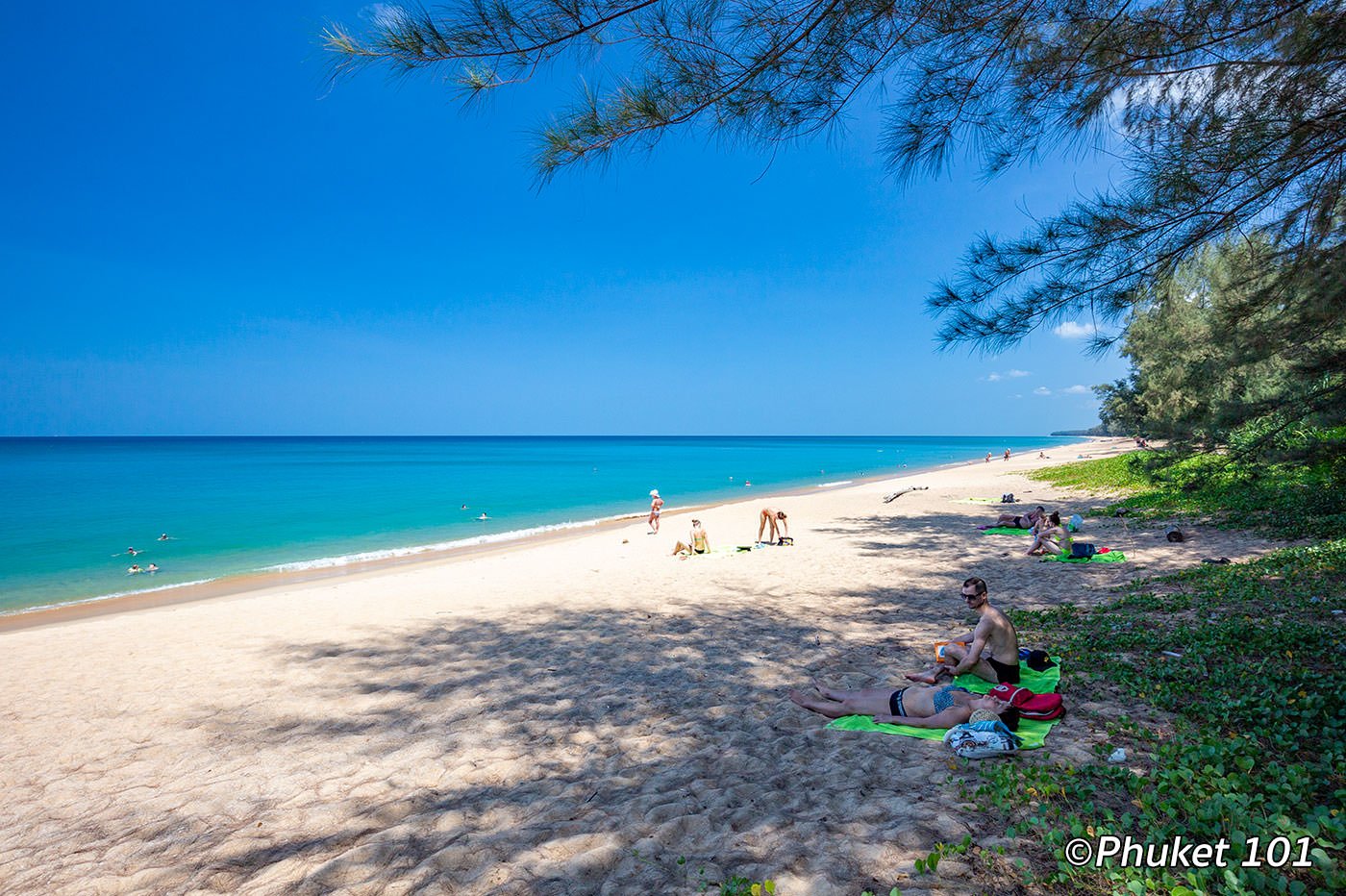
When I really want to get away from it all, I head up to Mai Khao Beach. This is Phuket’s longest beach, stretching an incredible 11 kilometres along the northwestern coast. Mai Khao is part of the Sirinat National Park, and it remains largely undeveloped and pristine. In many ways, walking on Mai Khao feels like stepping back in time, it looks much the same as it did when I first visited in 1990. There are no beach chairs, no loud jet skis, and often, no other people in sight for long stretches. The sand here is a bit coarser and more golden-brown than the soft white of the southern beaches, but it’s very clean. The slope into the sea is a little steeper, too, which means the water gets deeper faster.

One thing to note: During the monsoon season (May to October), the waves here can be quite strong, and the currents can be dangerous. Swimming is only recommended in the calm season, and even then, you’ll notice it gets deep quickly. That said, the wild beauty of Mai Khao is captivating. I like to come here in the late afternoon and just walk and walk, sometimes I’ll cover a few kilometres and see maybe a couple of fishermen or a local family picnicking, but hardly any tourists. The landscape is just sea, sand, and a fringe of casuarina pines and tropical foliage.

There are a few hotels along Mai Khao, but they are very spread out and mostly high-end resorts that respect the natural vibe (for instance, Marriott Phuket, SALA Phuket, Renaissance Phuket, and a couple of others are hidden behind tree cover and have long access lanes). You won’t see any buildings looming over the beach. The national park rules prohibit development rights on the beachfront, which is why it’s so empty. Importantly, Mai Khao is also a protected nesting site for sea turtles. Leatherback turtles used to come ashore to lay eggs here (and still do occasionally, in the quiet season). There are conservation efforts to protect any turtle nests found. If you’re very lucky, you might witness a release of baby turtles if you visit at the right time (usually around March to April).
One quirky and increasingly famous activity at Mai Khao is plane spotting. At the very northern tip of the beach, adjacent to Phuket Airport’s runway, you can stand right where aeroplanes come in for landing just a few dozen meters above your head. It’s an adrenaline rush to watch a big jet roar in seemingly just overhead. It became a popular Instagram spot (just check “#MaiKhao”, and you’ll see folks posing with planes). Do note that the authorities sometimes restrict access to that corner for safety, but usually, you can still get relatively close on the beach side. I’ve done it a couple of times, it’s a thrilling sight and makes for unique holiday photos! Aside from nature and planes, Mai Khao is about relaxation.
There is a small local village and a couple of local restaurants near the main public entrance (where the national park office is), but otherwise, it’s mostly the few resort restaurants or beach picnics. Nightlife is virtually non-existent here (unless you count listening to crickets and waves under the stars as nightlife, which I sometimes do!). For travellers, I’d suggest Mai Khao if you truly want peace, or as a day trip to see a different, untamed side of Phuket. I love the contrast it provides to my usual haunts, coming up to Mai Khao reminds me of Phuket’s natural heritage and why it’s so important we preserve these quieter corners. Plus, the sunsets here, with such an open horizon and often hardly anyone around, are absolutely magical.
There are two small modern shopping villages nearby, but not much nightlife. Because it is just next to Phuket Airport, the most popular and unusual attraction nearby is to watch the planes landing over the beach, just a few meters above your head! (only using high season). Sala Phuket and Renaissance Phuket Resort are the most popular hotels in Mai Khao.
Naithon Beach: Best for Quiet Getaway and Retro Phuket Feel
| Remote / Quiet Beach (Northwest Coast) |
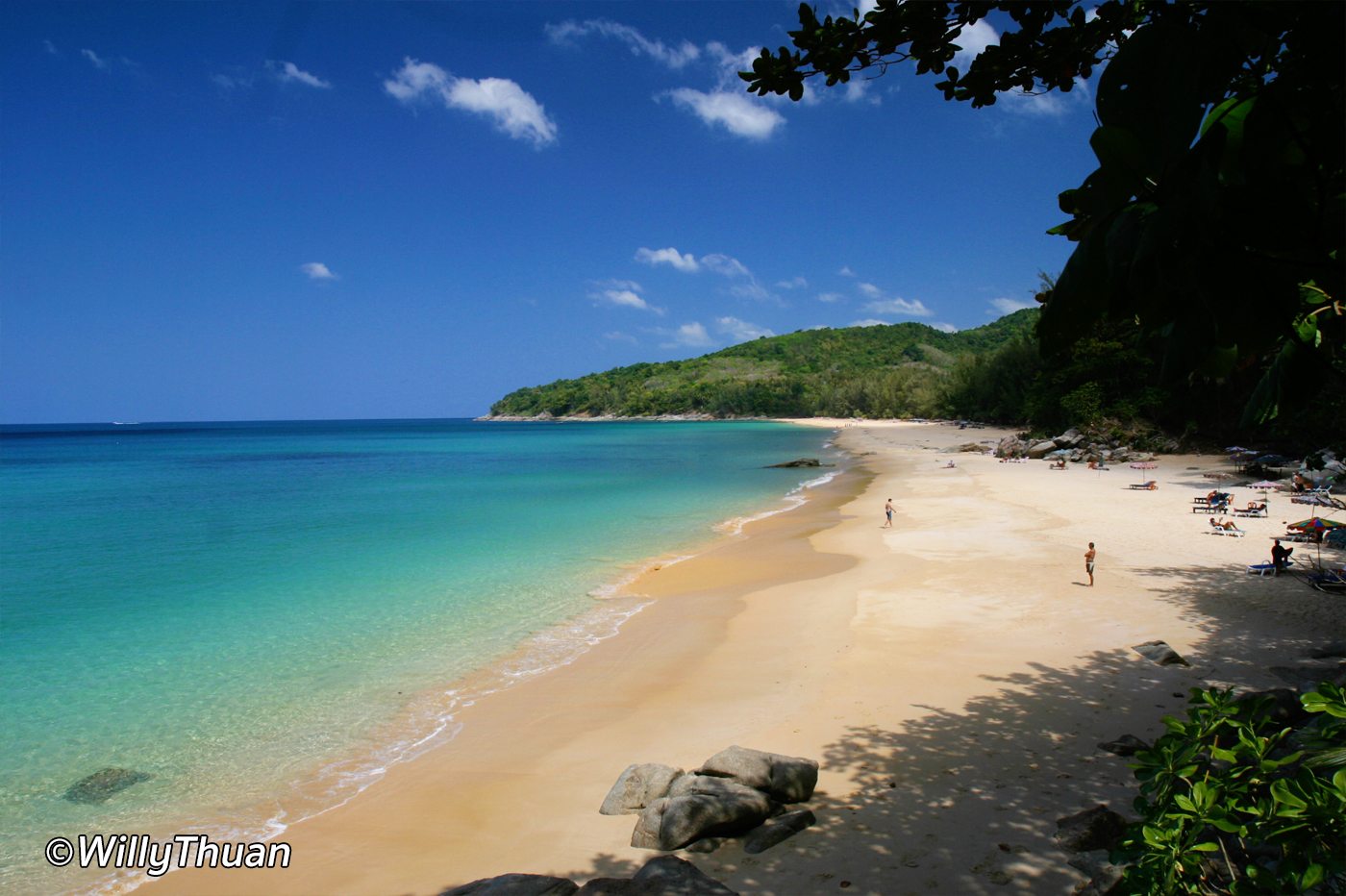
Naithon Beach (sometimes spelt Nai Thon) is a bit of a hidden pearl on Phuket’s west coast. Tucked far from the busier southern beaches, Naithon is often overlooked, which is great for those of us who adore its peaceful atmosphere. This beach is fairly long, about 1 kilometre, and features powdery white sand and clear water that can look almost neon blue on a sunny day.
Naithon is framed by green hills and is set along a stretch of road that doesn’t see much traffic aside from beachgoers. There’s something almost “retro Phuket” about Naithon; it reminds me of how many beaches there were 20 years ago, before the big development. The beach has just enough facilities to be comfortable, but not so many that it feels commercial. I often drive up to Naithon when I want a scenic ride (the coastal road from the south has beautiful viewpoints) and a quiet day by the sea.

One of Naithon’s charms is that it’s essentially a one-street village along the beachfront. You have a handful of local restaurants, a few small hotels and guesthouses, a convenience store or two, and some massage salas, and that’s about it. It’s the kind of place where, by day, you see travellers sunbathing and swimming, and by night, the same people are dining in shorts and flip-flops at open-air eateries, then heading to bed early because there’s not much nightlife.

I’ve stayed at the Pullman Phuket Arcadia Naithon Resort, perched on a cliff at the northern end of the beach. It’s relatively low-profile and blends nicely into the environment. Visitors at the Pullman can take a walkway down to the north end of Naithon Beach. If you’re not a guest, you can still wander that way, just know the very far north is slightly rocky.
Swimming at Naithon is great in the high season, the bay is open and can have a bit of surf, but usually moderate waves. In the low season, it can get rough, and there are rip currents so that swimming might be off the cards then. Naithon doesn’t have any offshore reefs, but you can sometimes do a bit of snorkelling near rocks at the edges. A fun activity here is to explore the northern tip, where there are some sea caves and rock formations (at very low tide, you might find some interesting shells or crabs). A word on getting to Naithon: you definitely benefit from having your own transport (car or scooter) as public transport doesn’t really reach here. Perhaps that’s one reason it stays quiet.
If I had to sum up Naithon’s appeal, it’s for travellers (or locals like me) who want to unwind in a scenic spot with minimal distractions. You come to Naithon to read a book under a palm tree, to take leisurely swims, and to chat with friendly locals running the small restaurants. Don’t expect parties or shopping, the nearest town is quite far. And that’s exactly why I find it special. Each time I visit, Naithon Beach gives me that mini-vacation feeling where time slows down, and it’s just you and the sound of the Andaman Sea lapping the shore.
2. Quiet Beaches: Where You Can Still Book a Hotel
Peaceful alternatives to the main tourist hubs. Hotels are around but everything moves slower. Good choice if you want to wake up to the sea without the Patong-style crowds.
Nai Harn Beach: Best for Local Vibe and Natural Beauty

| Day-Trip Beach / Local Favorite (Southwest Coast) |
Tucked in the southwest corner of Phuket, Nai Harn Beach is often cited as one of the most beautiful beaches on the island, and I wholeheartedly agree. It’s a fairly small beach by Phuket standards, a lovely cove maybe 700 meters long, with powdery white sand and stunning blue water in the dry season. What makes Nai Harn special to me is its natural, almost untouched atmosphere. Green hills surround the beach, and there’s a large freshwater lake and park just behind the sand.

Unlike the big tourist beaches, Nai Harn has only a handful of hotels and no town to speak of right by the beach, which has helped it retain a lot of its original charm. In fact, when I first visited Nai Harn in the 1990s, it looked quite similar to how it looks today. The area is somewhat protected (there’s a temple and royal-funded park nearby that prevented overdevelopment), so it hasn’t been overrun with buildings. Many locals (and long-term expats like me) consider Nai Harn my go-to beach on weekends for a relaxing day out.

The vibe at Nai Harn is peaceful and family-friendly. You’ll often see groups of Thai families having picnics under the trees at the back of the beach, and expats walking their dogs in the mornings. The water in high season is generally calm, clear, and excellent for swimming. In the low season, Nai Harn can get strong winds and waves, it becomes a popular spot for kite surfers on breezier days! I sometimes come down here to watch the colourful kites zipping over the waves. One unique scene at Nai Harn is the sight of sailboats and yachts anchored just off the bay, especially between November and April. The bay is known as a safe anchorage, so you’ll see dozens of masts bobbing out on the horizon. It adds a bit of a “picturesque postcard” feel: white beach, blue water, and sailboats. When you get hungry or thirsty, you don’t have to go far.
There’s a line of casual Thai restaurants and food stalls just under the trees behind the beach. They serve everything from grilled chicken and papaya salad to fresh coconuts and fruit shakes. I often grab lunch at one of these little places, the prices are reasonable, and nothing beats eating pad Thai with your toes in the sand. You can also find a few massage huts and vendors selling beach toys or snorkelling gear. For those who want to stay in the area, Nai Harn has a couple of noteworthy hotels (like The Nai Harn, a luxury hotel on the hillside with panoramic views, and some smaller resorts). But since accommodation is limited, many visitors just drive down or take a taxi here for the day.
If you do visit, consider combining it with a late afternoon trip up to Promthep Cape (just a few minutes’ drive away) for one of Phuket’s best sunset viewpoints. That’s a perfect way to end a Nai Harn day. In short, Nai Harn Beach is a gem, a place where I feel the pace of Phuket slows down. It’s scenic, tranquil, and holds a special place in my heart after many years of enjoying its simple, natural beauty.
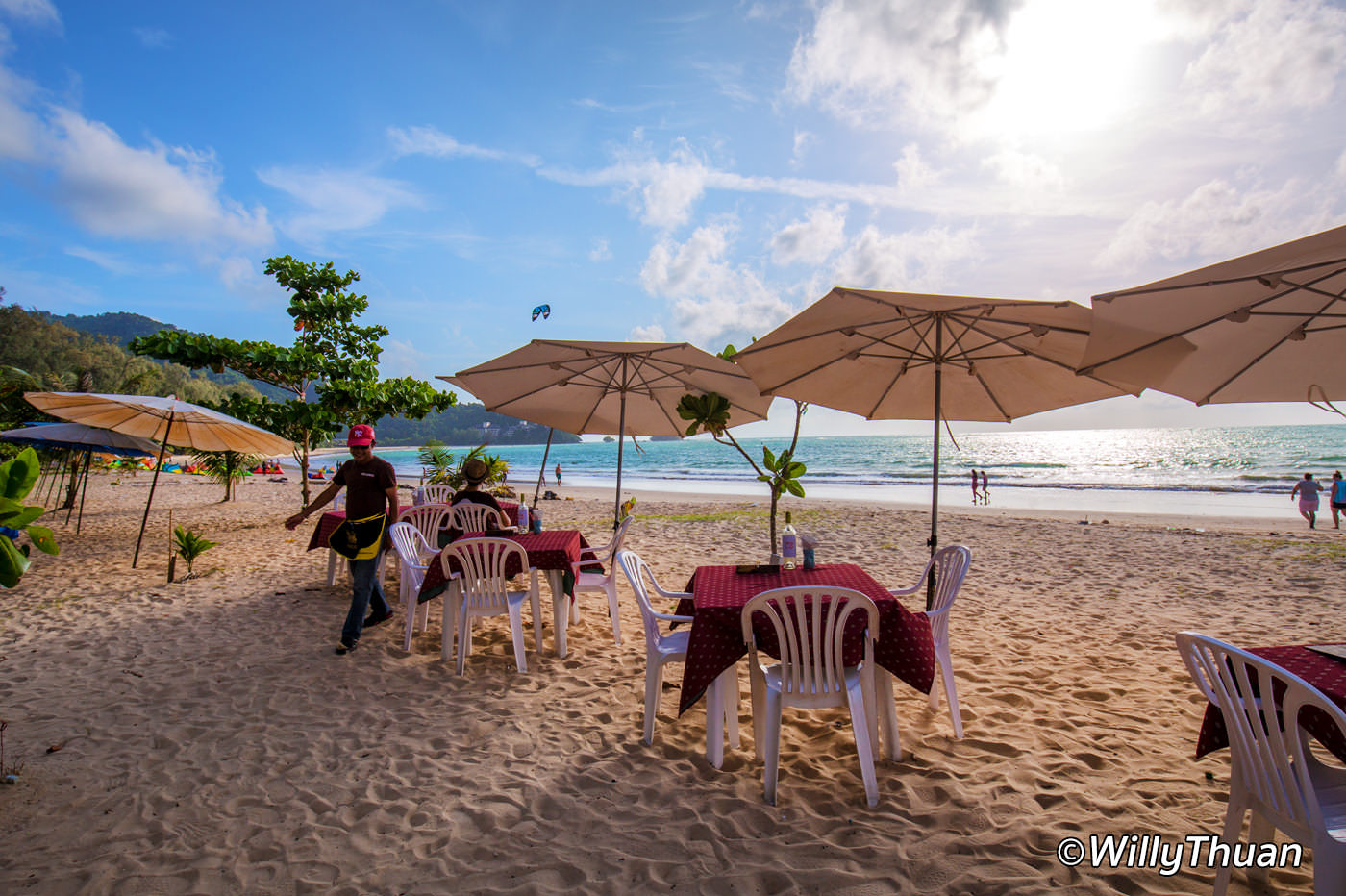
Nai Yang Beach: Best for Quiet Escape and Beach Dining
| Remote / Quiet Beach (Northwest Coast, near airport) |
Nai Yang Beach holds a special place in my heart, it’s one of those beaches that I consider a hidden haven, even though it’s not far from Phuket International Airport. In fact, as the plane descends, you can often see Nai Yang’s golden strip of sand from above, curving gently along the coast north of the runway. Despite that proximity, Nai Yang feels remote and remains wonderfully laid-back. The beach is part of the Sirinat National Park, which has helped protect it from overdevelopment.

When I first discovered Nai Yang years ago, I was struck by how it had a little of everything I love: a long crescent of soft sand, shallow, clear water (especially at low tide when little pools form, fun for wading), and a line of casuarina pine trees and tropical almond trees providing natural shade along the shore. To this day, Nai Yang has kept that untouched atmosphere. It’s never crowded; you might see more beachgoers near the main entrances, but walk a few minutes in either direction, and you could have a big stretch of sand all for yourself.

One of my favourite things to do at Nai Yang is to have lunch literally on the beach. There are a few small, welcoming restaurants and rustic bars right on the sand under the trees. These are simple local joints with plastic chairs and amazing seafood. I often order a grilled fish or some prawns and enjoy the meal with my toes digging into the cool sand in the shade, it’s the simple pleasures! After lunch, it’s perfect to laze in a hammock or get a Thai massage by the sea (yes, there are local masseuses offering their services under the trees as well). Nai Yang is also known among locals as a good spot for kite surfing on windy days and for releasing baby sea turtles; the nearby Phuket Marriott hotel and local conservationists sometimes host turtle release events here around Songkran (Thai New Year).
In terms of accommodations, Nai Yang offers a range from small guesthouses to a couple of upscale resorts. On the higher end, there’s The Slate, a very unique luxury resort with a tin-mining theme, and a Marriott Resort. Both are tucked among trees and have beach access (though, like all national park beaches in Phuket, no private resort property extends onto the sand). I’ve stayed at The Slate once for a “staycation”; its design and the way it blends with nature are impressive. But even if you’re not in a resort, Nai Yang village has budget-friendly bungalows and homestays just a short walk from the beach. One thing to note: nightlife here is minimal (a few quiet beach bars playing reggae or soft music), and shopping is just basic necessities.
I love coming here in the late afternoon; the sunlight through the trees is beautiful, and locals often gather on the grassy park areas for picnics or to play football. As the sun sets into the Andaman Sea, you might see airplanes in the distance making their final approach, their lights blinking, but you won’t hear much noise from them, just the sound of waves and rustling leaves. For anyone arriving or leaving Phuket, I always suggest that if you have time, swing by Nai Yang Beach to taste Phuket’s quieter side.
Layan Beach
| Quiet and beautiful |
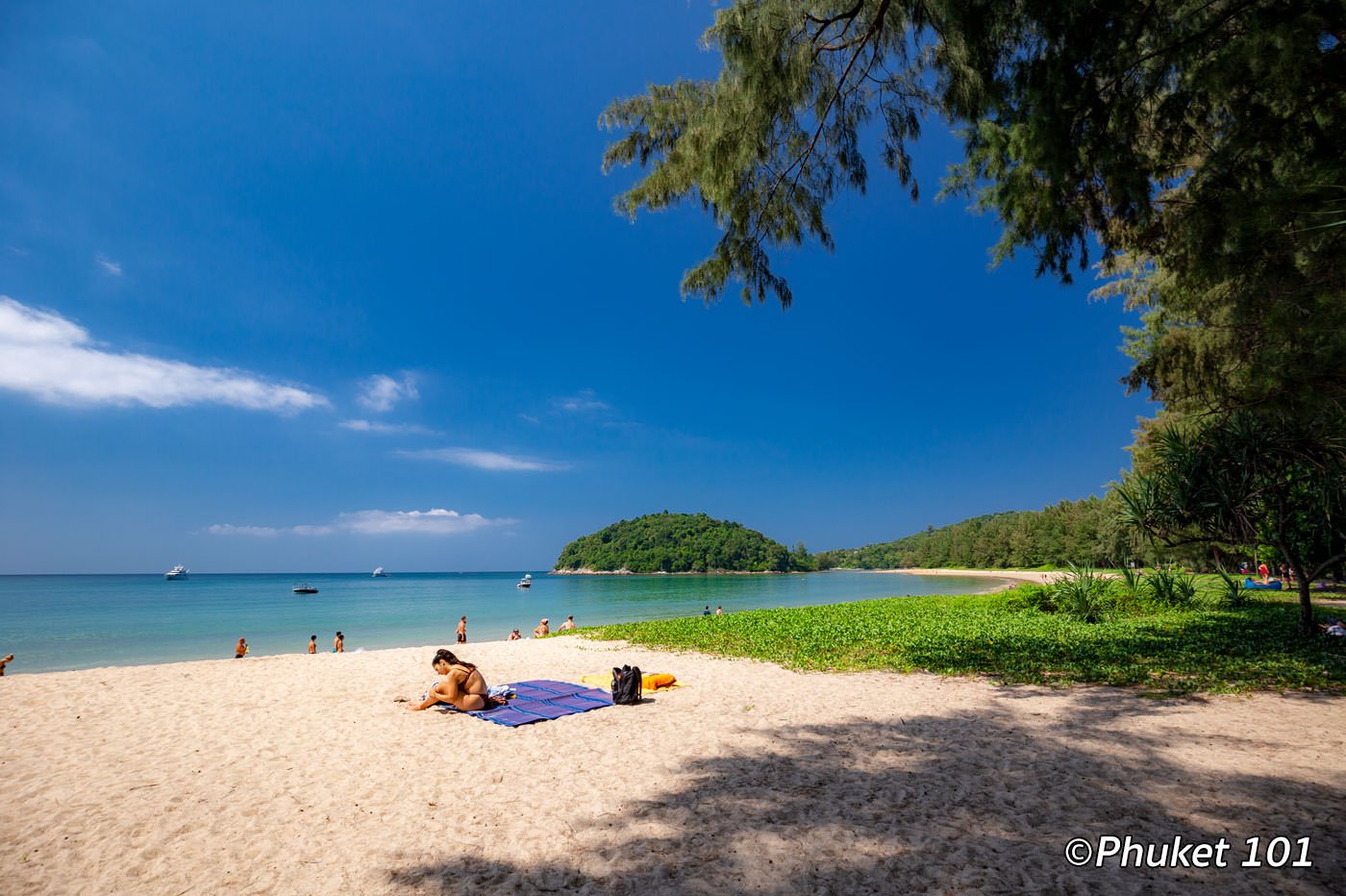
Layan may be one of Phuket’s hidden treasures, located at the northern end of Bang Tao. The beach curves gently with casuarina trees providing natural shade. The distinctive feature is the small island sitting at the mouth of a lagoon where fishing boats shelter during storms. The water remains shallow and calm, making it ideal for families with small children. A few local restaurants serve authentic Thai food at reasonable prices. The development here remains low-key despite nearby luxury resorts like Banyan Tree. During high season, the sunset views become spectacular, with the sun dropping behind the island. Even on weekends, Layan rarely feels crowded.
Rawai Beach: Best for Local Culture and Seafood Markets

| Scenic / Not a Swimming Beach / Local Experience (South Phuket, East Coast) |
Rawai Beach is not your typical swimming beach, but it’s absolutely one of Phuket’s most interesting and charming coastal spots. Located at the southern tip of the island, Rawai is essentially a working beach and a hub for local fishermen and boat excursions.
The shoreline is lined with coconut trees and a long promenade, and instead of sunbathers, you’ll see dozens of longtail boats and speedboats anchored in the shallow water. These boats are here to ferry people to the nearby islands, Rawai is a major jumping-off point for trips to Coral Island, Racha Island, Koh Bon, and many other small isles. If you come here in the morning, you’ll catch the lively scene of fishermen unloading their catch or preparing their boats for the day’s trips.

I often come to Rawai when I want a dose of local atmosphere. The eastern orientation means it doesn’t get big waves, and during low tide the water recedes quite far, exposing muddy sand and tidal critters. Because of the shallow and reefy nature, Rawai isn’t good for swimming (and locals generally don’t swim here). But it’s great to walk along, especially under the shade of the casuarina trees that line the beach road.

One of Rawai’s biggest draws is the seafood market and restaurants at the northern end of the beach. There’s a seafood market where you can pick fresh seafood (fish, crabs, prawns, clams, you name it) and then take it to a nearby restaurant to have it cooked to your liking. I’ve had this “buy and cook” experience a few times, it’s fun, and the seafood doesn’t get fresher. Even if you don’t do the market, the row of restaurants along Rawai Beach serves excellent seafood at reasonable prices. Imagine dining on grilled squid and chili prawns with a view of bobbing longtail boats and the sun setting behind palm trees, that’s a typical Rawai evening for me.
Another thing I love about Rawai is the longtail boat culture. If you want to go island-hopping or snorkeling, you can just walk up and hire a longtail boat from here. There’s a sort of unofficial “pier” area (actually a small jetty and gathering spot) where boat captains will quote you prices to various islands. The waters off Rawai are dotted with small islands that are visible from shore, Koh Bon is the closest (with a beach restaurant often visited by longtails), Coral Island and Racha are further. Even if I’m not island-hopping, I sometimes take a stroll on the long Rawai Pier that juts out into the sea, just to catch the breeze and enjoy the coastal view from out over the water.
Rawai is also known for its local art scene and expat community. Nearby is the beautiful Wat Nai Harn (and Nai Harn Beach and Promthep Cape are just a short drive away), plus some art galleries and cafes in Rawai town. Many expats live around here, giving it a mixed Thai-international community vibe.
The Gypsy Village at Rawai is an area where a community of sea gypsies (Chao Leh) live, they have their own culture and are known for their sea-based lifestyle and handicrafts. You can browse stalls selling shells and handmade jewelry there. In essence, Rawai Beach is a place to experience Phuket’s local seaside life. You come not to sunbathe, but to eat, to chat with fishermen, to catch a boat, or simply to sit under a tree and watch daily life unfold by the water. Many times, I’ve done just that, found a quiet bench, sipped a coconut, and enjoyed the view of islands on the horizon and the soft sound of longtail boat motors chugging along. It’s a side of Phuket that’s very authentic and warm, especially if you enjoy cultural experiences as much as sandy beaches.
Many expats live in this area because of its relaxed, local atmosphere. If you choose to stay in Rawai, the beautiful Naiharn and the iconic Promthep Cape, known for their superb sunset views, are very near.
Ao Yon

| Remote and quiet beach |
Ao Yon remains one of the least-visited beaches in Phuket. The entrance is easy to miss, even after driving past it dozens of times. Located between Kao Khad and Panwa beaches on the east coast, it’s growing slowly in popularity. A few restaurants and hotels have opened recently, but it keeps its peaceful character. The beach itself isn’t the most impressive for swimming, but it offers a quiet spot away from tourist areas. I like to come here to watch local fishermen bringing in their catch or simply enjoy a meal at one of the small restaurants overlooking the bay.


Khao Kad Beach

| Quiet – not great for swimming |
Khao Kad Beach is on the lesser-known east coast, overlooking Chalong Bay. This area doesn’t attract swimmers due to the muddy seabed, but the atmosphere makes it worth visiting. Luxury villas and a few upscale resorts dot the hillsides overlooking the bay. The beach itself remains largely undeveloped, creating a peaceful place to walk and enjoy views of distant islands. At sunset, the sky often turns spectacular shades of pink and orange, reflected in the calm waters. A couple of local restaurants serve fresh seafood caught daily by fishermen from the nearby village. This area suits travellers wanting to see a different side of Phuket, away from tourist centres.
Merlin Beach: Best for a Quiet Spot Near Patong
| Quiet, not great for swimming |
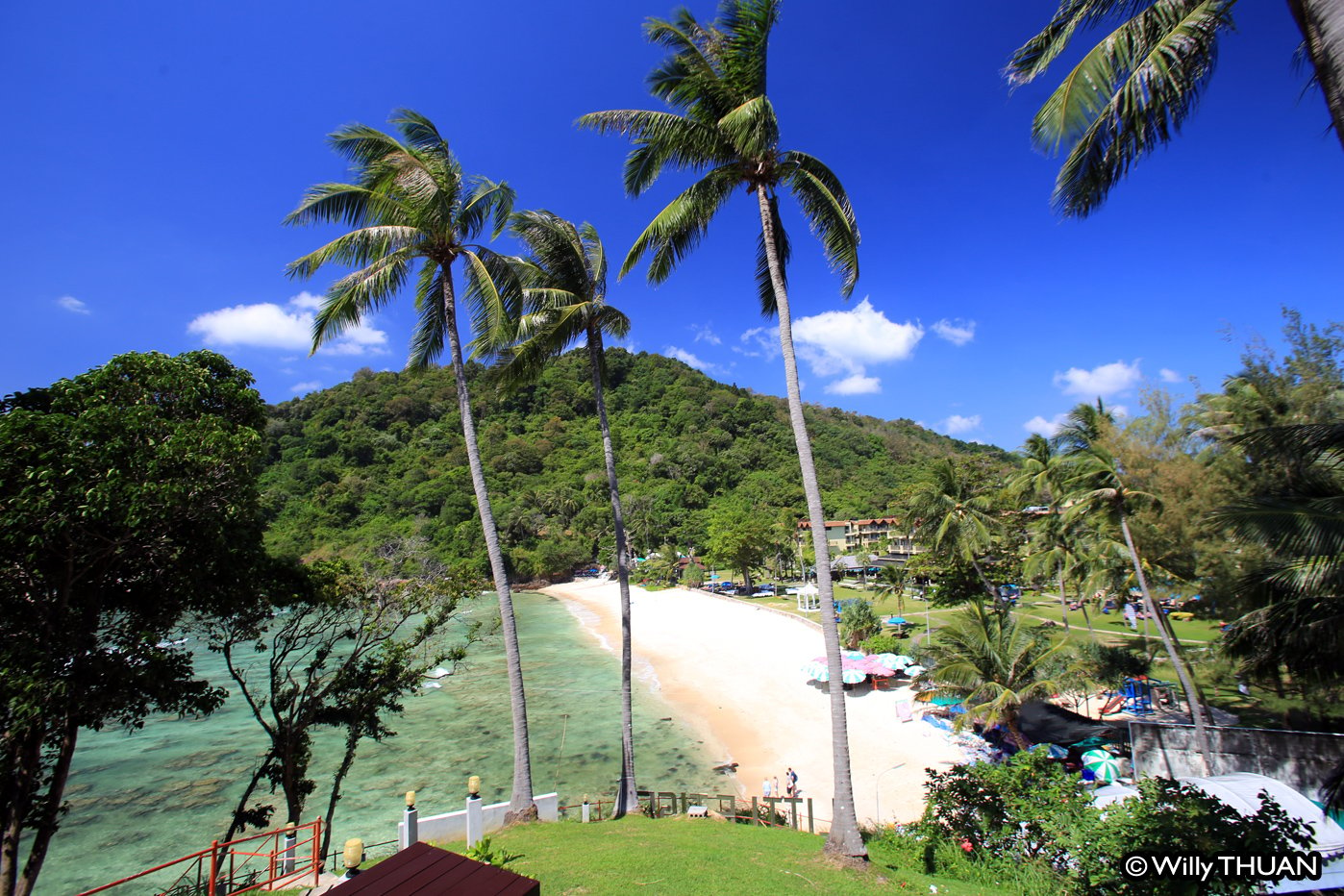
Merlin Beach can be confusing for many visitors due to naming inconsistencies. Located near Tri Trang, this small beach sits behind the Marriott Phuket Beach Club. Access requires finding a small dirt road beside the hotel. The beach offers a mix of sand and rocky areas, making water shoes useful for swimming. Massage services operate under the trees, and a popular restaurant sits on the hillside offering great views. The water clarity varies by season, but generally allows for decent snorkeling around the rocks. Despite its proximity to Patong, relatively few tourists make their way here, creating a more relaxed atmosphere.
Kalim Beach
| Not a swimming beach |
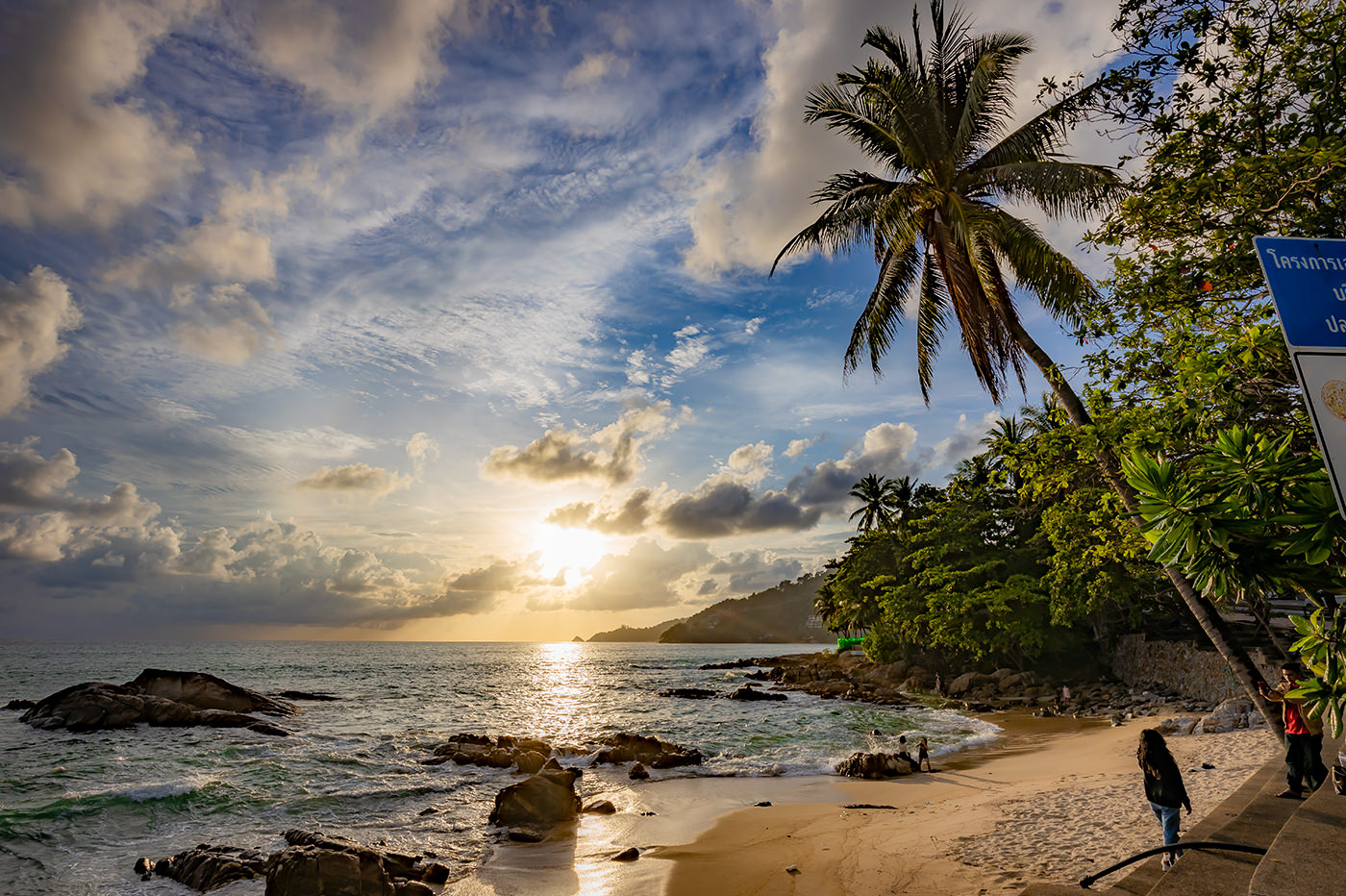
You will pass Kalim Beach whenever you drive from Patong to Kamala. This modest bay sits right next to Patong but feels completely different. The rocky seafloor makes it unsuitable for swimming, but local surfers love it during monsoon season when small waves form, perfect for beginners practising their skills. The rough, coarse sand doesn’t attract sunbathers, making it quieter than neighbouring Patong. In recent years, several good restaurants have opened on the hillside overlooking the beach, offering fantastic sunset views. I often stop here in the evening to watch locals walking their dogs or to sample food from the small street vendors that set up at the northern end.


3. Beaches for a Day Trip
Beaches you visit from your hotel rather than where you sleep. A scooter or a hired driver makes them all easy to combine into a half-day or full-day outing.
Surin Beach: Best for Clear Water and Photos
| Day-Trip Beach (West Coast, scenic and upscale area) |
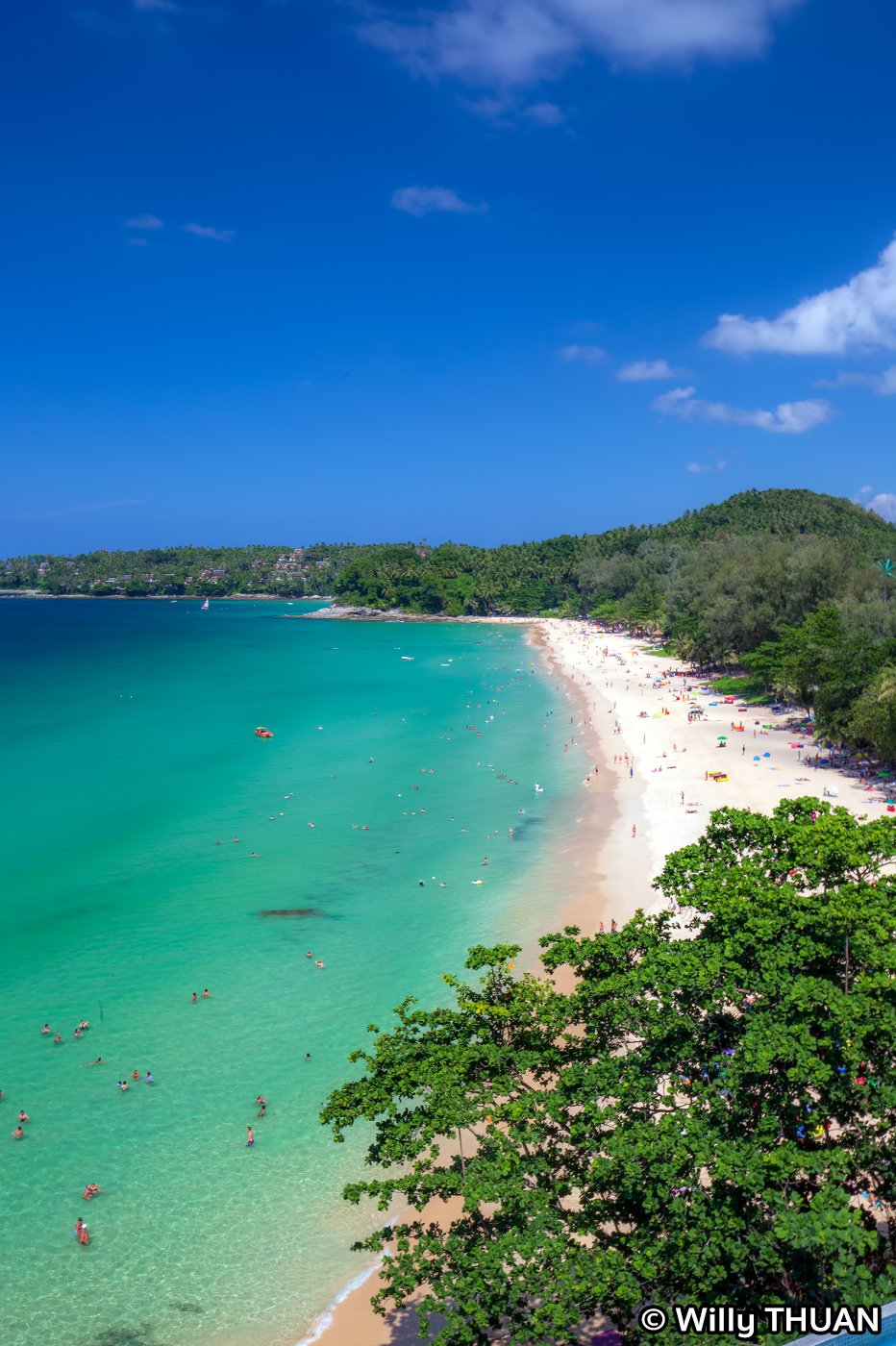
Surin Beach has long been known as “Millionaire’s Row” due to the luxury villas and resorts tucked into the hills around it. But for me, Surin Beach itself is a public gem that every visitor can enjoy. It’s a medium-sized beach, perhaps 1 kilometre long, with powdery soft sand and water that turns a brilliant aquamarine in the sunshine. Surin’s sand is among the finest in Phuket, it almost squeaks underfoot like Karon’s. In the early 2000s, Surin became famous for its trendy beach clubs and restaurants right on the beach. I remember it being a very fashionable hangout; you could rent a sun lounger, order a cocktail, and enjoy gourmet food from places like Catch Beach Club and others along a strip.

However, a few years back, those establishments were all removed as part of a government initiative to return beaches to a natural state (since technically they were on public land). Now, Surin Beach is completely free of beach chairs, clubs, or buildings, just a grassy promenade, tall palm trees, and the sand. The difference is huge, and honestly, the beach looks more beautiful than ever because of it. It’s just nature and open views, which I appreciate, even though I do miss the convenience of a beach chair sometimes!

These days, Surin is one of my top recommendations for those seeking a scenic and relatively quiet beach without going off the beaten path. The water quality is often excellent in the dry season, great for swimming and boogie boarding. Surin can get waves and rough surf in the low season, so like other west coast beaches, heed any red flag warnings then. There are still a few local vendors and small eateries at the far ends of the beach. In particular, at the southern end under the trees, you’ll find clusters of local Thai food stalls that pop up by late morning. They set up plastic tables and chairs right under the coconut palms facing the water, it’s one of my favourite lunch spots on a beach.
You can enjoy some spicy papaya salad, grilled chicken, or fresh fruit while your toes play in the sand. It’s simple, delicious, and cheap, the way local beach dining should be. Surin village (just across the road) also has some upscale restaurants and wine bars, thanks to the affluent community around. If you fancy a break from Thai food, there are options like Italian or Mediterranean within a short walk. In terms of accommodations, Surin has a few luxury hotels (like Twinpalms, The Surin, and Amanpuri, which is actually on Pansea Beach next door) and some mid-range resorts and apartments. They’re not on the sand, but within a 5-minute walk. I’ve stayed at one or two over the years for a weekend escape and loved hearing the ocean at night from my balcony. Surin Beach doesn’t have loud nightlife; it’s more about daytime beauty and maybe a romantic dinner with the sunset.
One thing I often do with friends is to drive up the hill north of Surin to the viewpoints, there’s a spot where you can see Surin Beach and Laem Singh and further to Kamala in the distance, which makes for great photos. In summary, Surin Beach offers that picture-perfect tropical beach experience with clear waters and soft sand, but without the fuss of commercialisation right on the beach. It’s an easy Surin, it might just become one of your favourite Phuket beaches, as it has for me.
Freedom Beach: Best for Adventure and Hidden Paradise
| Hidden / Day-Trip Beach (West Coast, near Patong) |
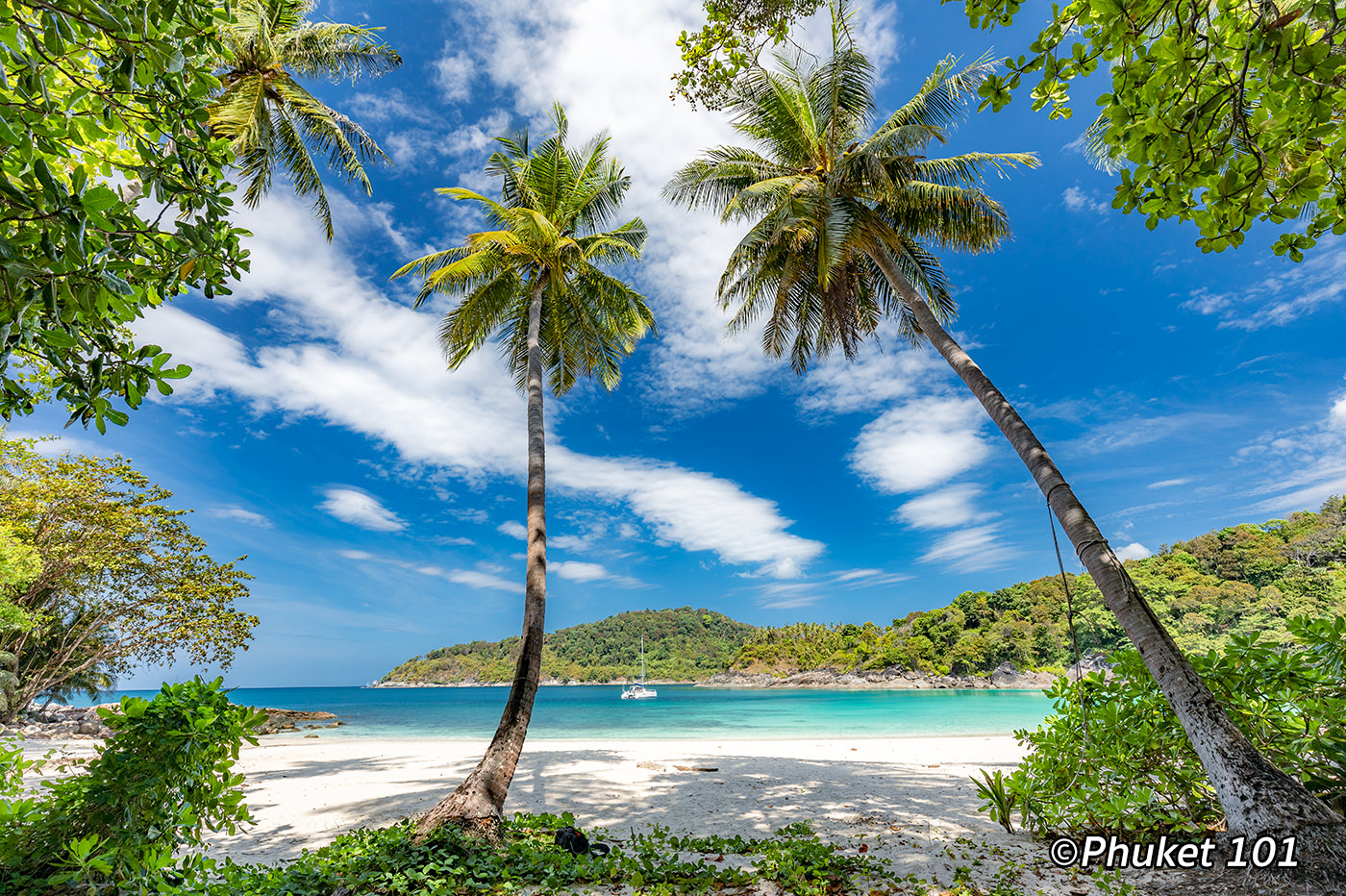
Freedom Beach is one of my absolute favorite hidden gems in Phuket. Imagine a 300-meter stretch of incredibly soft white sand backed by lush jungle and coconut trees, with clear blue-green water gently washing up on the shore. It’s a little pocket of paradise, surprisingly close to the busiest part of the island. In fact, Freedom Beach lies just next door to Patong, but it feels a world away from the crowds. I first discovered it many years ago, and it still amazes me, even in the high season, it’s relatively quiet due to its relatively “secret” location. When I need a break from crowds, I come here to relax near crystal water, surrounded by nature.
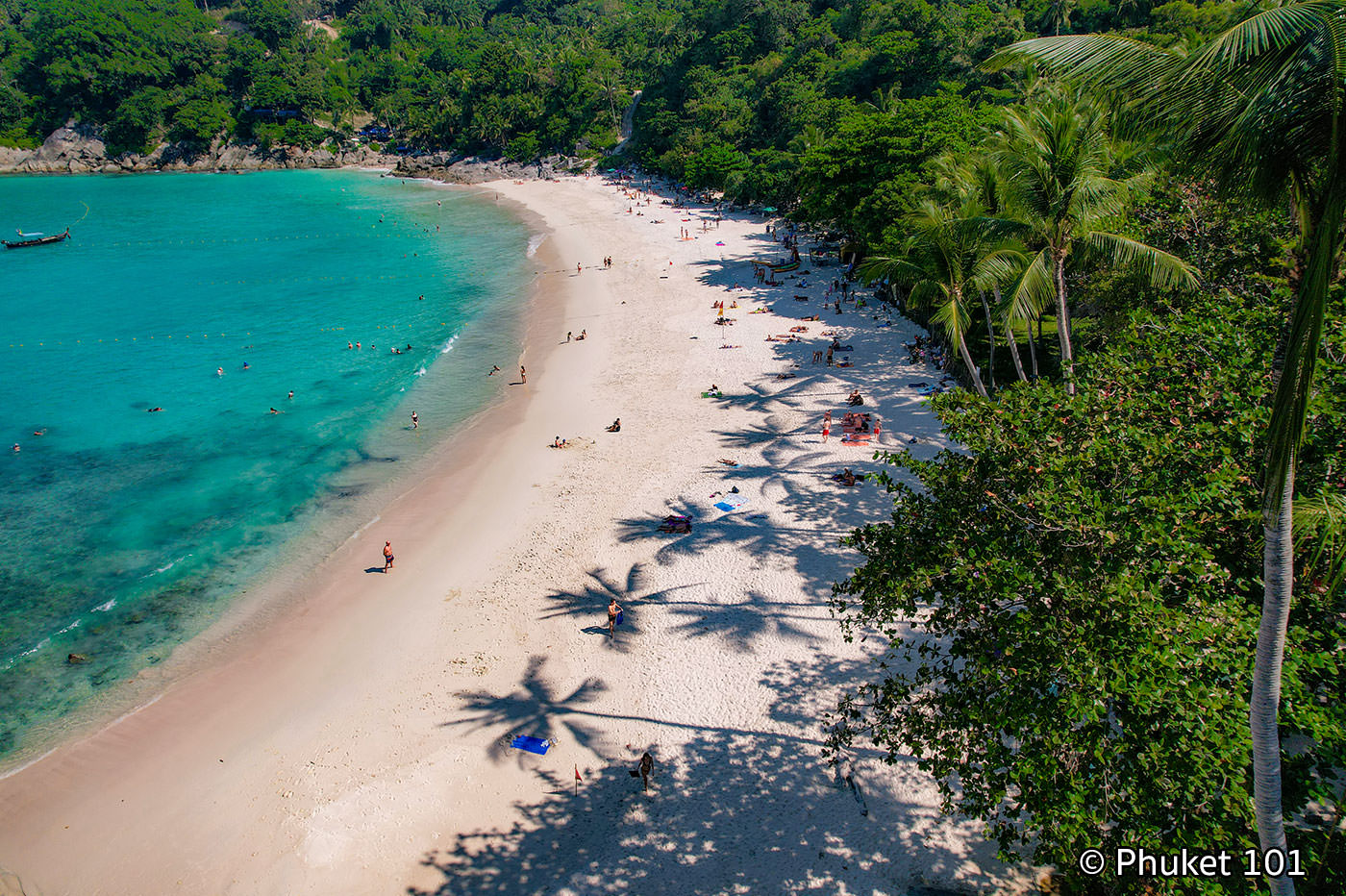
Getting to Freedom Beach is an adventure in itself (and part of why it stays peaceful). There are only two ways to get there: by boat or on foot. During the dry high season (December to April), the easiest way is to hire a longtail boat from southern Patong. It’s a quick ride around the headland; you’ll usually pay around 1,200 to 1,500 baht for a round-trip (try bargaining or find other travellers to share the cost). The boat drops you right on the sand. In the low season (May to October), or if you’re feeling more adventurous, you can go by land, but be ready for a workout! You have to trek down a steep hillside path through the forest. I’ve done this hike a few times; it’s short (maybe 15 to 20 minutes) but quite steep and can be slippery, so wear good shoes.
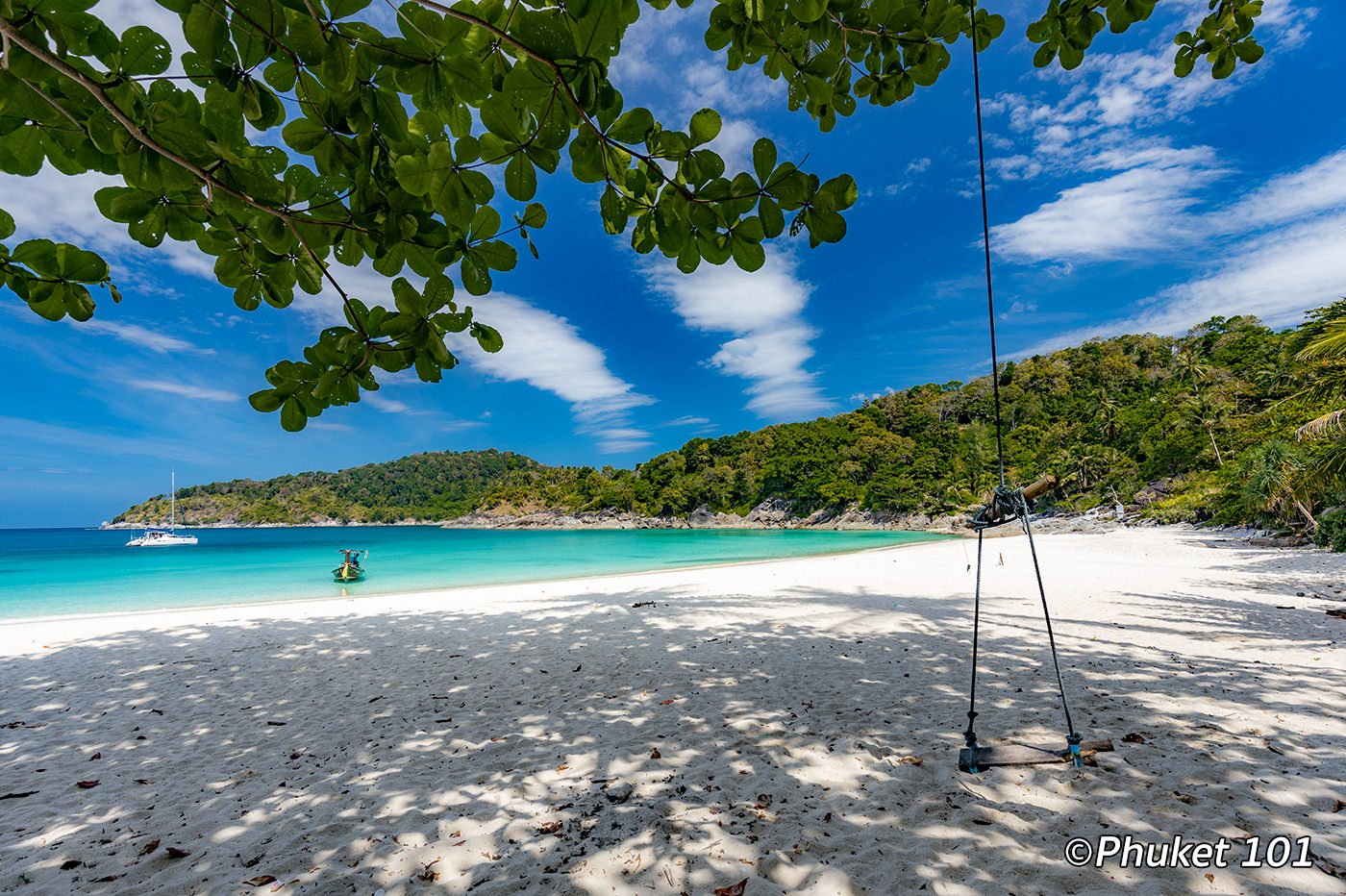
Remember, what goes down must come up. The climb back up will get your heart pumping! There’s usually no road access by car or bike directly to the beach. Because of this, you won’t find jet skis or large crowds here, just a few sunbathers, snorkelers, and me, lying under the palms, feeling like I’ve found a secret island. In peak months (January especially), a little beach restaurant often operates here, where you can grab a cold coconut or a simple Thai lunch overlooking the bay. At other times, amenities are minimal, so I always pack some water and snacks. If you visit Freedom Beach, start early in the day (to beat any boat rush and the midday heat on the trail) and bring a snorkel mask; both ends of the beach have rocks with pretty fish to see. Trust me, the effort to reach this beach is absolutely worth it for the tranquillity and postcard-perfect scenery.
Note that during the peak season, January and February, the beach becomes busier, and there is even a nice beach restaurant. Unless the weather is quiet and the sea is calm, longtail boats don’t operate during the low season (roughly June to October), and the only way to get there is down a steep hill. Remember that walking back up that hill is not for the faint of heart! See how to access Freedom Beach here.
Ya Nui Beach: Best for Snorkelling and Kayaking
| Hidden / Snorkelling Beach (South of Phuket, near Promthep Cape) |
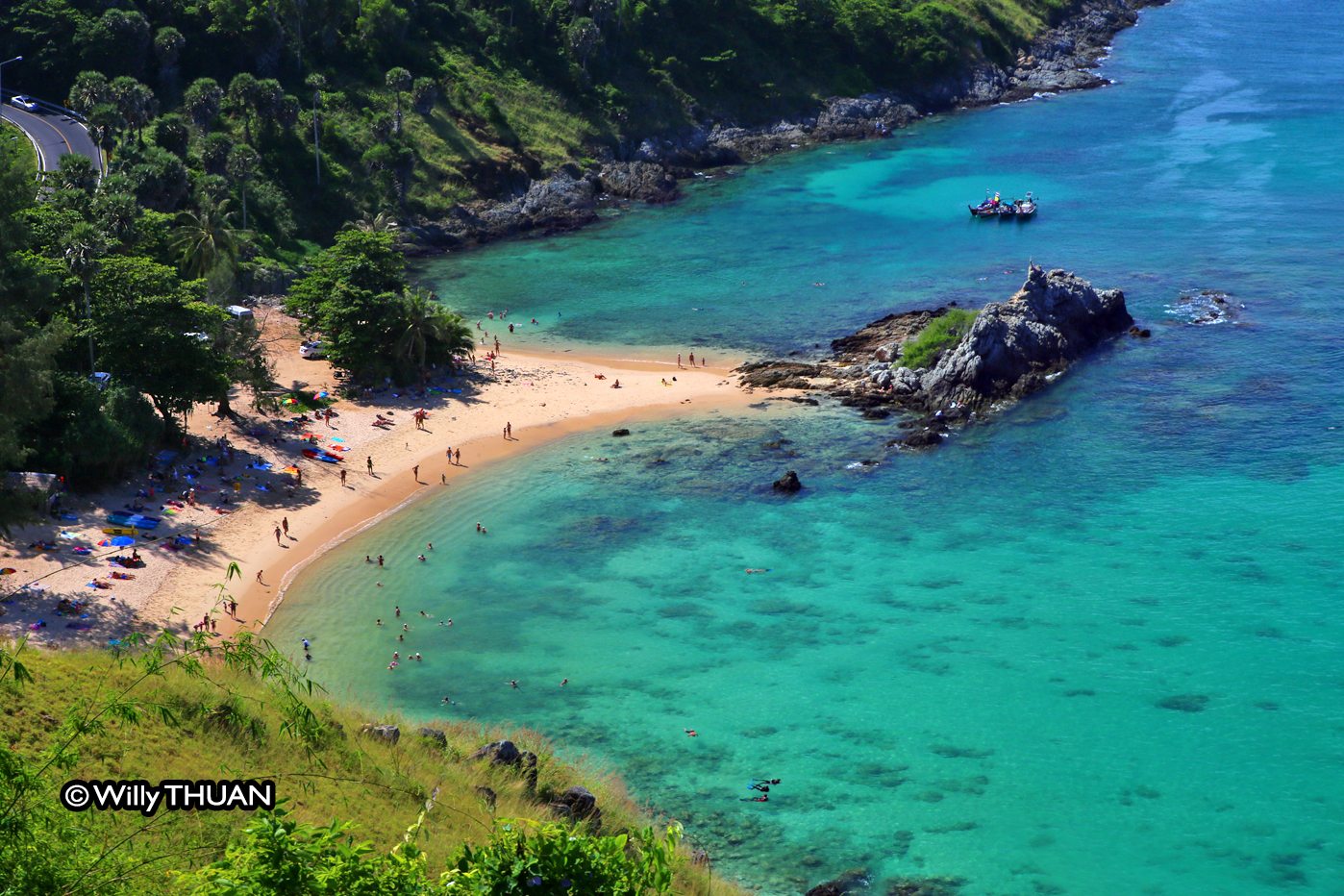
Ya Nui Beach may be small, but it packs a lot of charm into its tiny cove. This little beach often surprises people, you could easily miss it while driving between the famous Promthep Cape and Windmill Viewpoint. In fact, I missed it in my first year in Phuket until a local friend took me there for a snorkelling afternoon.
Tucked between hills, Ya Nui is only about 120 meters wide, a mix of soft sand and a few rocky patches. What I love about Ya Nui is its cosy, secret feel. It truly feels like a cove you’d read about in a novel, clear water, a handful of longtail boats anchored in the bay, and excellent snorkelling just off the beach. The first time I swam at Ya Nui, I was amazed at how many fish I could see just a few meters from shore.

There are rocky areas at both ends of the bay, which create an underwater habitat for marine life, so bring a mask if you come here. It’s common to see parrotfish, angelfish, and even the occasional octopus among the rocks! The beach is also popular for kayaking, you can rent a kayak and paddle around the nearby islet (Ko Man) just offshore. A few adventurous people even do beach dives (scuba) here because the water can be quite clear and calm in high season.

Despite its hidden vibe, Ya Nui is not exactly a secret, it tends to get busy at times, especially in the high season and on weekends. There’s limited parking along the road, and you’ll notice many cars and motorbikes lined up when the beach is popular. If it feels a bit crowded on the sand, I sometimes take a break at one of the little open-air restaurants just across the road from the beach. There are a couple of them that are very casual, with plastic chairs and tasty Thai food. Sitting there, you still get a view of the beach and a nice breeze. It’s a perfect spot for a lazy lunch or a cold drink when the sun is high.
One thing to note: Ya Nui doesn’t have any hotels right on the beach (which is good for keeping it unspoiled), but if you love it and want to stay nearby, Nai Harn Beach with its hotels is just up the hill, or there are some homestays in Rawai down the road. The crowd at Ya Nui is a mix, families, snorkelers, and sometimes groups of friends doing a little beach hopping (often coming from Nai Harn or checking out the viewpoints).
Because it’s so small, you might end up chatting with fellow beachgoers more than at larger beaches. I’ve met travellers from all over the world here while comparing our snorkelling finds of the day. For sunsets, I usually head up the road to Windmill viewpoint or Promthep, since those higher spots have panoramic views. But for everything else, morning swims, midday snorkel sessions, and afternoon naps under a pandanus tree, Ya Nui is a delightful little beach that proves smaller can be better. If you blink, you might miss the turnoff, so keep an eye out for it when exploring Phuket’s southern tip. It’s definitely worth stopping by.
Ya Nui can be busy during the high season, so when it gets too busy, have a nice lunch or drink at the terrace of one of the little local restaurants across the street. The shade of the tall trees over the open space is welcoming, and the prices are reasonable.
Paradise Beach: Best for Beach Club Vibe and Day Parties
| Private/Theme Beach (Near Patong, West Coast) |
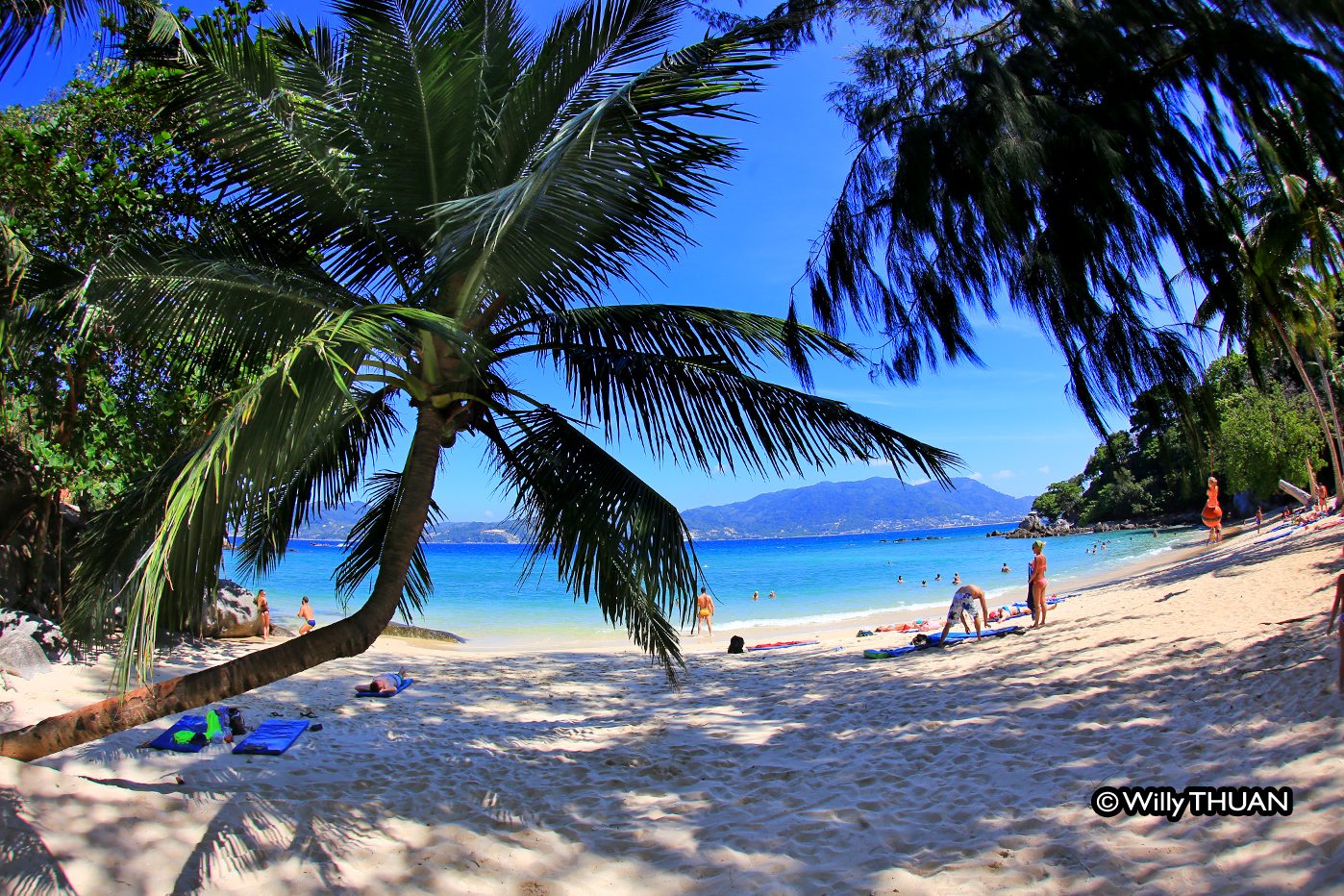
With a name like Paradise Beach, you’d expect something extraordinary, and in some ways, this little cove near Patong does deliver a unique experience, though perhaps not in the way you’d imagine. Paradise Beach is located very close to Patong (just around the headland to the south), yet it feels quite removed. The beach itself is small, actually two small sandy coves divided by a rocky spit, both with white sand and clear blue water. In terms of natural beauty, Paradise Beach is lovely: turquoise water, coral fragments on the sand, and large banyan and palm trees providing shade.

I remember years ago, Paradise Beach was a true hidden gem, accessible only by a dirt road and a bit of a hike, with just a simple local restaurant and hardly any people. I used to escape there for a quiet swim and snorkel. However, in recent times, Paradise Beach has been developed into more of a beach attraction or park.
Now, when you go, you’ll encounter an entrance gate where they often charge an entry fee (a few hundred baht, which usually can be used as credit for food/drink inside). The beach area has been commercialised: you’ll see bars, restaurants, souvenir shops, plenty of sunbeds, and even a volleyball court. There’s also an installed jetty in one cove for boats, and they sometimes host events like full moon parties here at night, with music and neon lights, catering to travellers who want a party but not necessarily the chaos of Patong’s Bangla Road.

So, Paradise Beach now feels a bit like a private beach club that’s open to all (for a fee). On the one hand, it’s very convenient, you can get food and cocktails, do kayaking or paddleboarding, and use facilities like showers and bathrooms easily. On the other hand, it’s not the untouched “secret beach” vibe it once was. When I go now, I usually take visitors who want a comfortable beach day with amenities, or if they’re curious about the full moon party scene in Phuket (note: it’s fun but not as massive as the original Koh Phangan Full Moon parties). The water at Paradise Beach is generally calm because the bay is protected. It’s good for swimming and snorkelling around the rocks (you can spot some fish, though the coral is mostly damaged due to so many visitors).
One tip: if you walk a bit away from the main area, you might still find a quieter spot on the edges of the beach or the second small cove. There’s also a viewpoint trail that offers a nice look over Patong Bay. To get to Paradise Beach, nowadays the road is paved and clearly marked from Patong; you can drive or take a tuk-tuk fairly easily (about 15 minutes from Patong). They have a parking area and even shuttle carts that bring people down the hill to the beach entrance.
All in all, I’d say Paradise Beach is a fun, convenient beach stop if you don’t mind the commercial aspect. It’s kind of a mini theme park beach: you pay a bit, and you get the facilities. If you’re looking for pure solitude, this isn’t it (for that, see Freedom Beach or others).
Promthep Beach
| Hidden and very hard to reach |
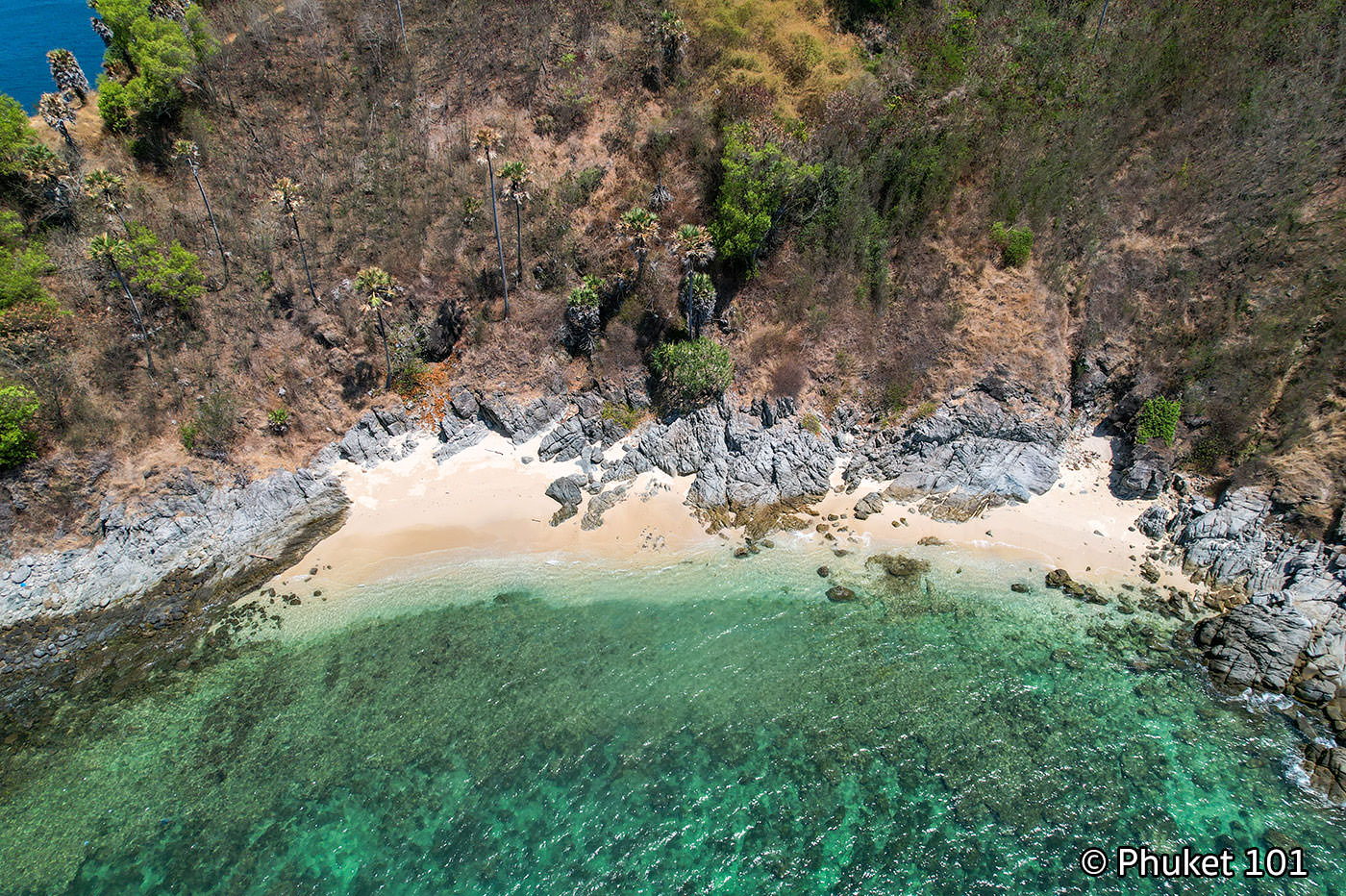
This tiny hidden beach sits below the famous Promthep Cape viewpoint. Accessing it requires finding a small path starting opposite the CY Cafe, across from the main viewpoint. The steep trail makes it challenging to reach, which keeps visitor numbers extremely low. The small rocky cove offers no facilities but provides an incredible sense of discovery for those making the effort. Swimming conditions vary widely depending on tides and seasons. The views looking back toward the cape make the journey worthwhile, especially near sunset when the rocks glow golden in the late afternoon light. Proper shoes are essential for the climb down.
Tri Trang Beach

| Quiet – Not great for swimming |
Tri Trang is a good beach for visitors staying in Patong who want a quieter alternative within easy reach. This long beach south of Patong reveals its rocky seabed during low tide, remnants of coral that once thrived here. High tide provides better swimming conditions with enough water covering the rocks. The beach never gets crowded, even during peak season, creating a peaceful atmosphere just minutes from busy Patong. A few simple restaurants offer food and drinks at reasonable prices. Road access has improved in recent years, making it easier to reach. The contrast between the busy tourist centre and this relatively calm bay so close by is striking.


4. Hidden, Secret, and Remote Beaches
The off-the-map beaches that take real effort: a hike through the jungle, a longtail boat from the next bay over, or a long drive to the north of the island. Few visitors find them. The ones who do remember them forever.
Laem Singh Beach

| Very quiet and superb – accessible by boat |
Laem Singh was once easily accessible by a small path down from the main road. This stunning bay between Kamala and Surin was closed to land access in 2017 when the landowner blocked the entrance. Now, visitors can only reach it by longtail boat from Surin Beach. Despite these challenges, the effort proves worthwhile: the beach retains its natural beauty with palm trees leaning over golden sand. The crystal-clear water makes it perfect for swimming and snorkelling. Since boat access limits visitor numbers, you might find yourself sharing this tropical paradise with just a handful of other people. Read how to get to Laem Singh Beach.


Banana Beach
| Relatively quiet |
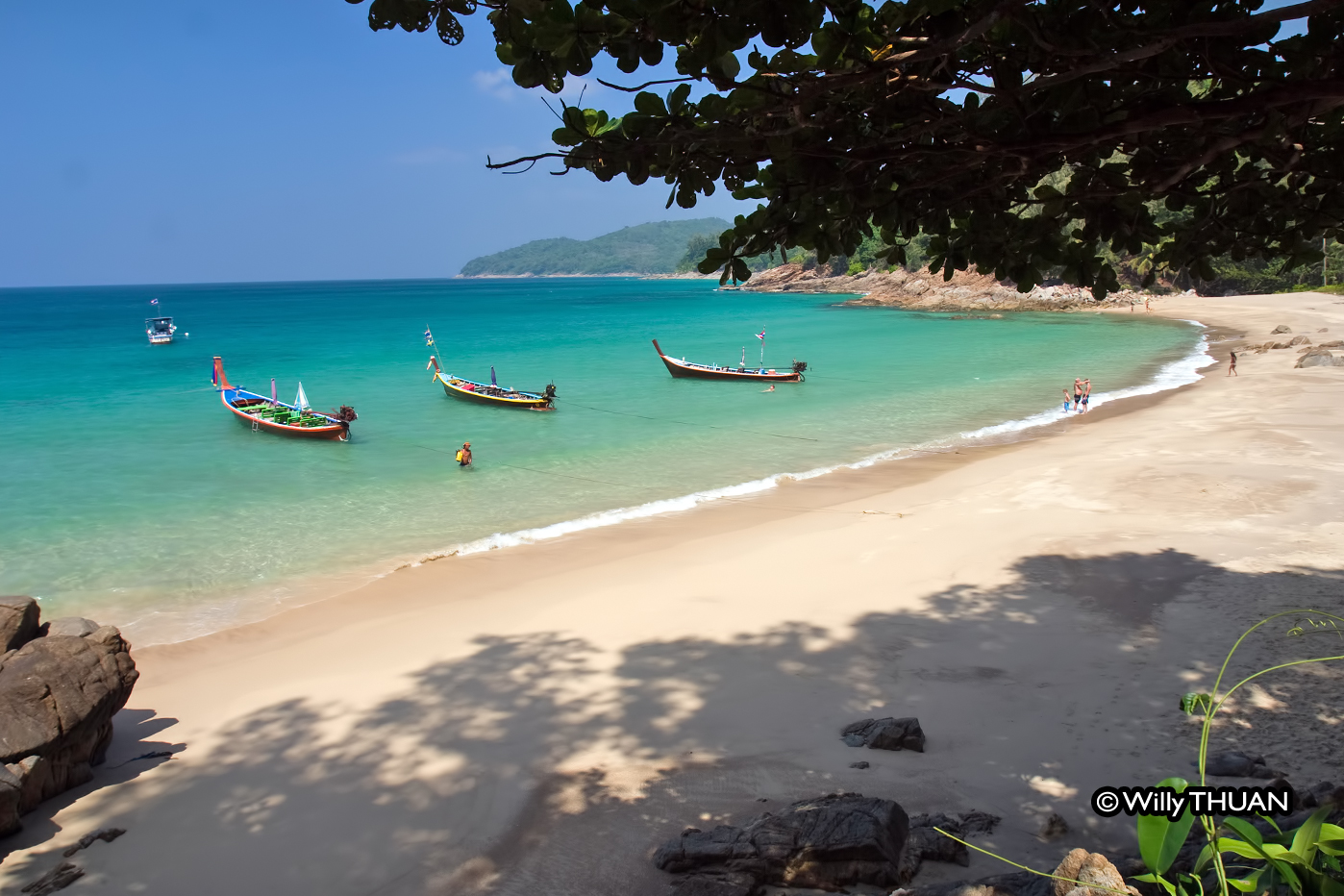
Banana Beach hides behind thick trees along the coastal road near the airport, and most people drive past without knowing it’s there. This small cove with white sand and clear water remains relatively unknown to most visitors and can be really quiet outside peak season (December to March). To reach it, you need to walk down a steep path through the forest. The effort is worth it, the beach is beautiful and rarely crowded. During high season, a small stand sells drinks and simple food. The swimming conditions are usually good, with gentle waves and a sandy bottom. Coming early in the morning means you might have the whole place to yourself.


Ao Sane
| A bit remote – not too busy |
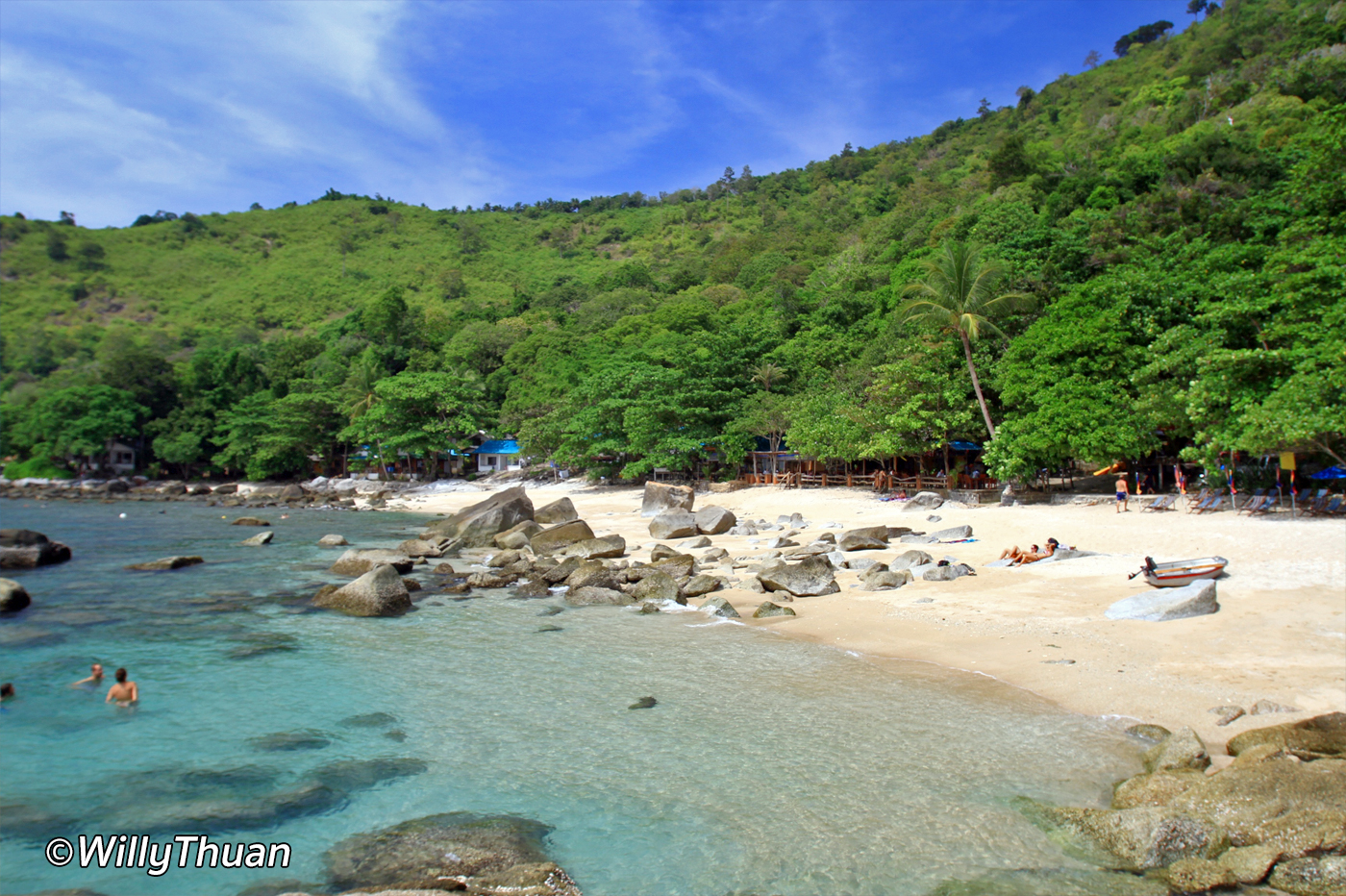
NOTE: Ao Sane Beach currently has massive buildings under construction. Ao Sane is hidden yet visible from Nai Harn Beach. You’ll need to drive on a narrow road past the Nai Harn Hotel to find this gem. The beach consists of three small bays connected by short walks. While the sand feels a bit rough under your feet, the setting is beautiful with large rocks and green trees creating shade. The clear water makes it good for snorkelling. There’s just one restaurant serving simple Thai food and cold drinks. Not too many people come here, which makes it perfect for those looking to escape the crowds.
Haad Sai Kaew
| Deserted beach in the north |
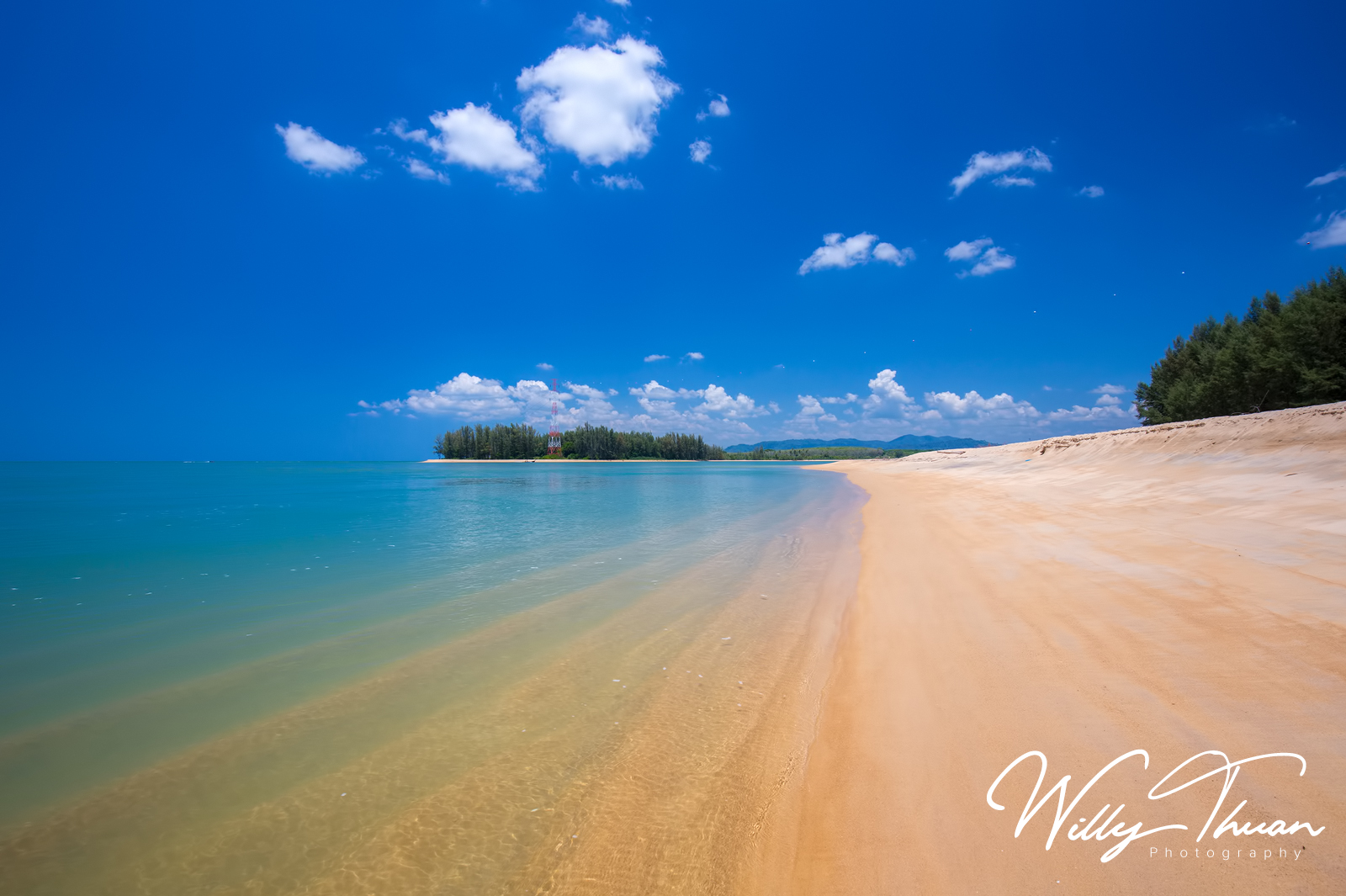
Haad Sai Kaew sits at Phuket’s northern tip, far from anything touristy. The name means “Glass Sand Beach” in Thai, though the sand isn’t as white as southern beaches. What makes this place special is how empty it feels; you can walk for kilometres seeing only a handful of people. The water turns a beautiful blue during high season, perfect for swimming and relaxing. There are few facilities here, just a couple of small local restaurants serving fresh seafood. This beach still looks like Phuket did decades ago, before mass tourism arrived. The location is far from tourist centres, which keeps it authentic and peaceful.


Haad Pak Phra

| Deserted beach in the north |
Haad Pak Phra is the last beach leaving Phuket from the north end, and most people would drive past without ever stopping.
Hua Beach
| Hidden beach |
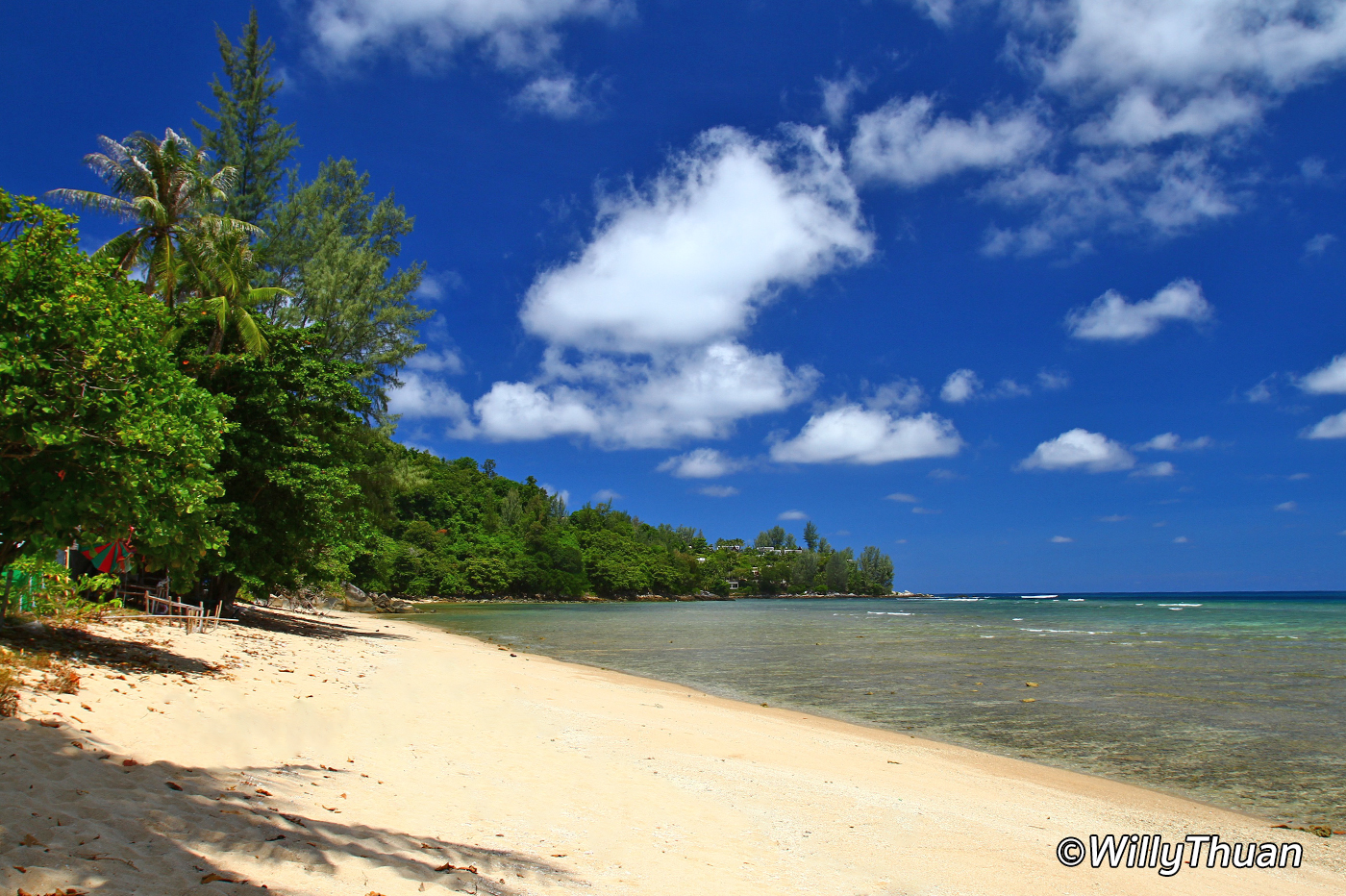
Hua Beach remained hidden from me for years despite living just a few kilometres away. Located not far from busy Kamala, this small cove feels worlds apart from tourist hotspots. The beach itself isn’t particularly remarkable for swimming due to rocks and coral, but its secluded nature gives it a special charm. I often find myself alone here, even during high season. A small path through private land leads to this hidden spot. The surrounding cliffs and green hills create a natural amphitheatre that blocks noise from nearby areas. Bring your own drinks and snacks as there are no facilities here.
Makham Beach
| Quiet – not great for swimming |
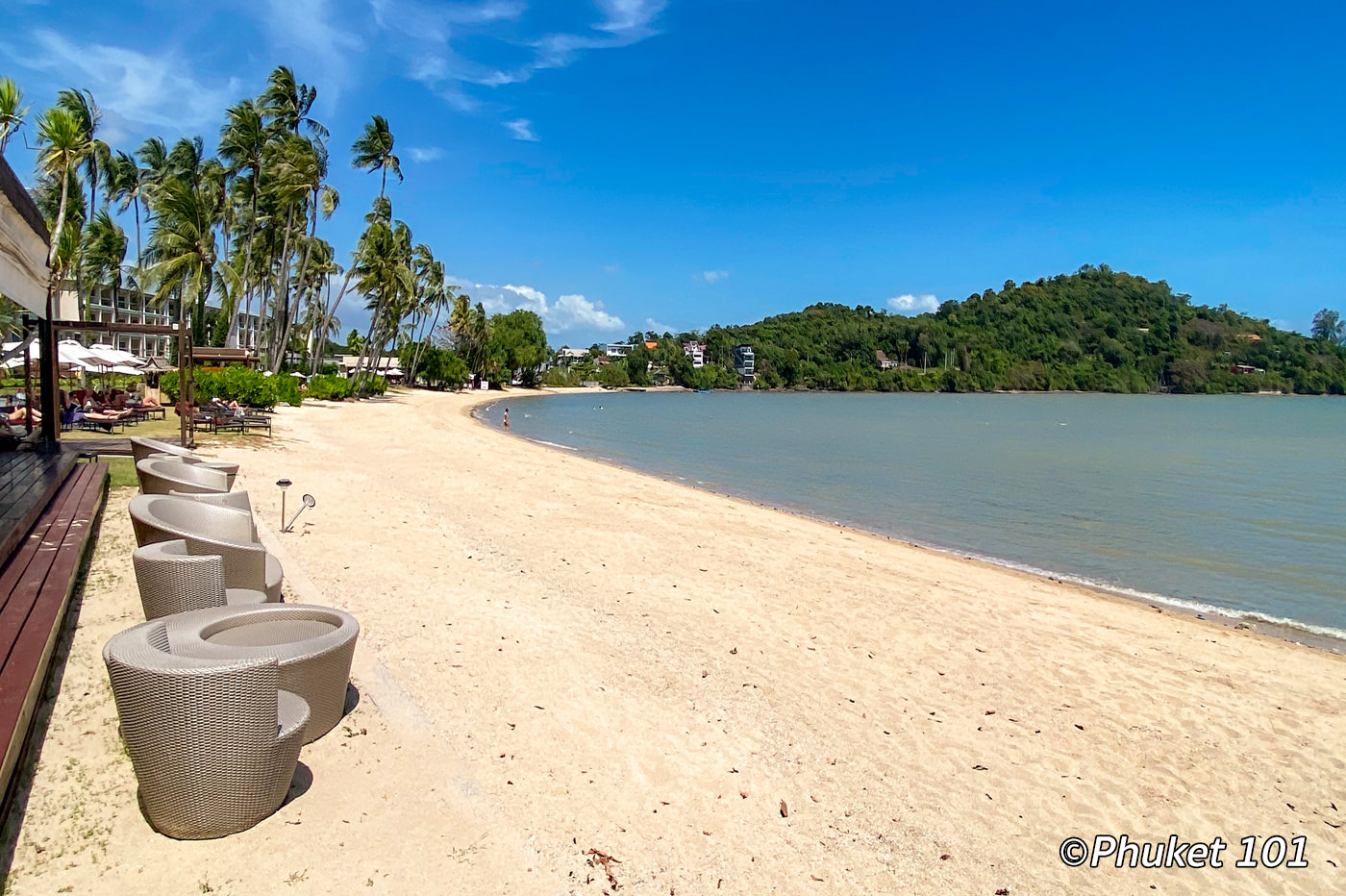
Makham Beach is tucked away in the maze of small roads near Cape Panwa. This hidden spot requires some effort to find, away from the main tourist areas. The beach itself offers pleasant views rather than swimming opportunities, as the water lacks the clarity of the West Coast beaches. The Crowne Plaza Hotel added appeal to the area with its beach pool and bar open to outside visitors. Local fishermen still use parts of the beach to moor their colourful boats, adding authenticity to the scene. A few small shops and restaurants cater mainly to locals, serving fresh seafood at reasonable prices. The peaceful atmosphere here is a welcome contrast to busier areas.
Rayee Beach

| Quiet – Not a swimming beach |
Rayee Beach offers limited appeal compared to nearby alternatives. This small strip of sand sits in southern Kamala, providing nice views but poor swimming conditions. The beach gained some recognition from the long-established White Orchid restaurant and a few small bars built overlooking the water. During high tide, much of the beach disappears, leaving little space for activities. The rocky seabed makes swimming challenging, though the sunset views can be spectacular. I sometimes stop here for drinks or dinner when exploring the coast, but I wouldn’t recommend making a special trip just for the beach itself.
Heeowhat Beach

| Tranquil but not a swimming beach |
Heeowhat Beach sits on Cape Panwa’s east coast, in front of the Pullman Panwa Phuket Resort. This wide, shallow beach has tall trees that provide welcome shade on hot days. Since the water remains shallow far from shore, swimming isn’t great, but walking along the peaceful shore makes for a pleasant experience. The beach never gets crowded, even during peak season. I sometimes come here in the early morning to watch fishermen preparing their boats or in the evening when the sun sets behind the hills. There’s something calming about this overlooked spot that keeps drawing me back.
Friendship Beach
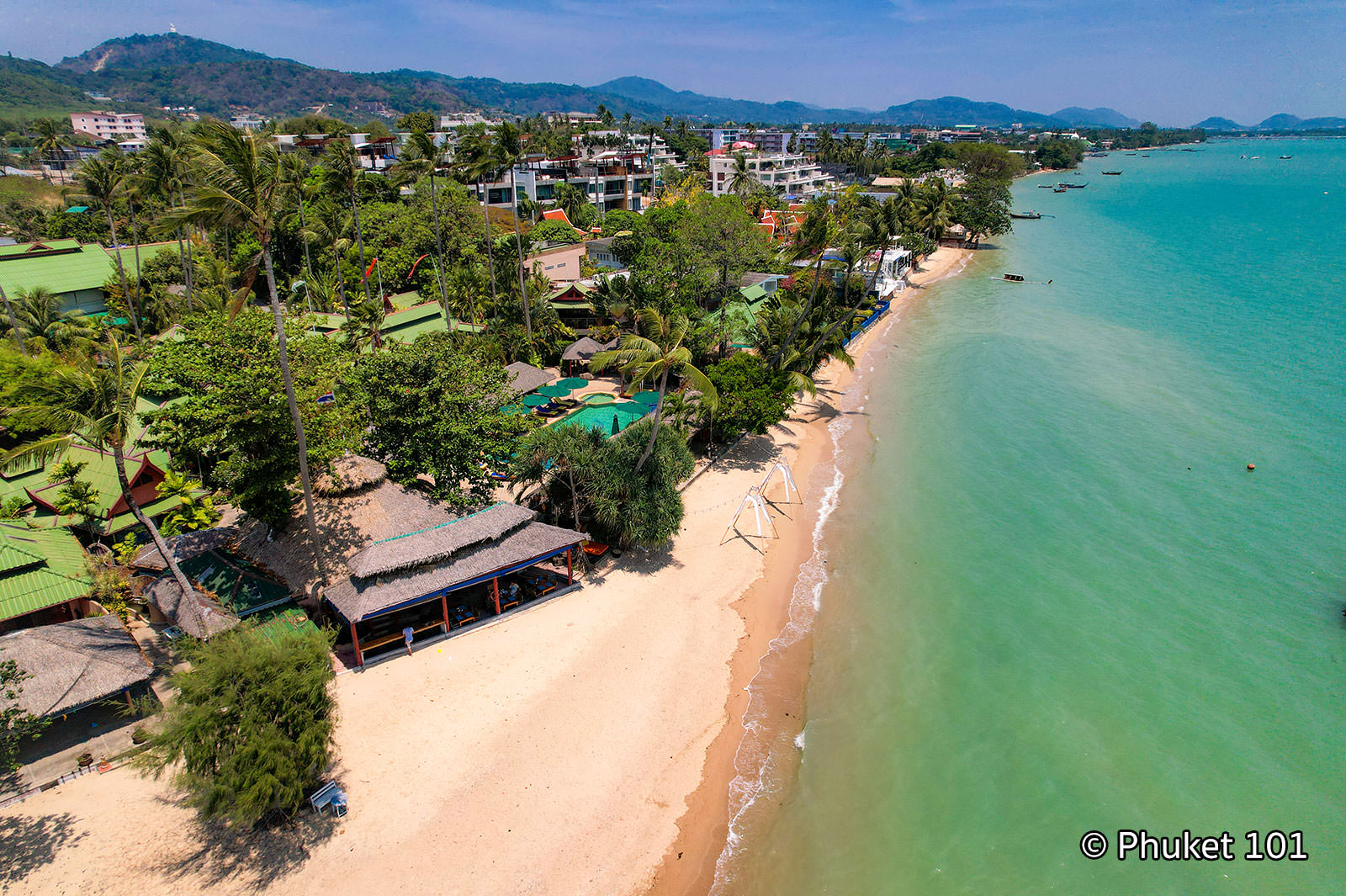
| Quiet beach – not great for swimming |
Friendship Beach on the East Coast is a good escape from the tourist crowds. While not ideal for swimming due to the muddy seabed, it offers stunning views of distant islands and passing boats. The beach got its name from the original Friendship Beach Resort built there years ago. Today, several restaurants and small hotels line the shore, making it popular with expats living in Phuket. I enjoy coming here for drinks or dinner with the peaceful backdrop of Chalong Bay. When the tide is high, the beach almost disappears, but at low tide, it’s beautiful.


Siam Beach
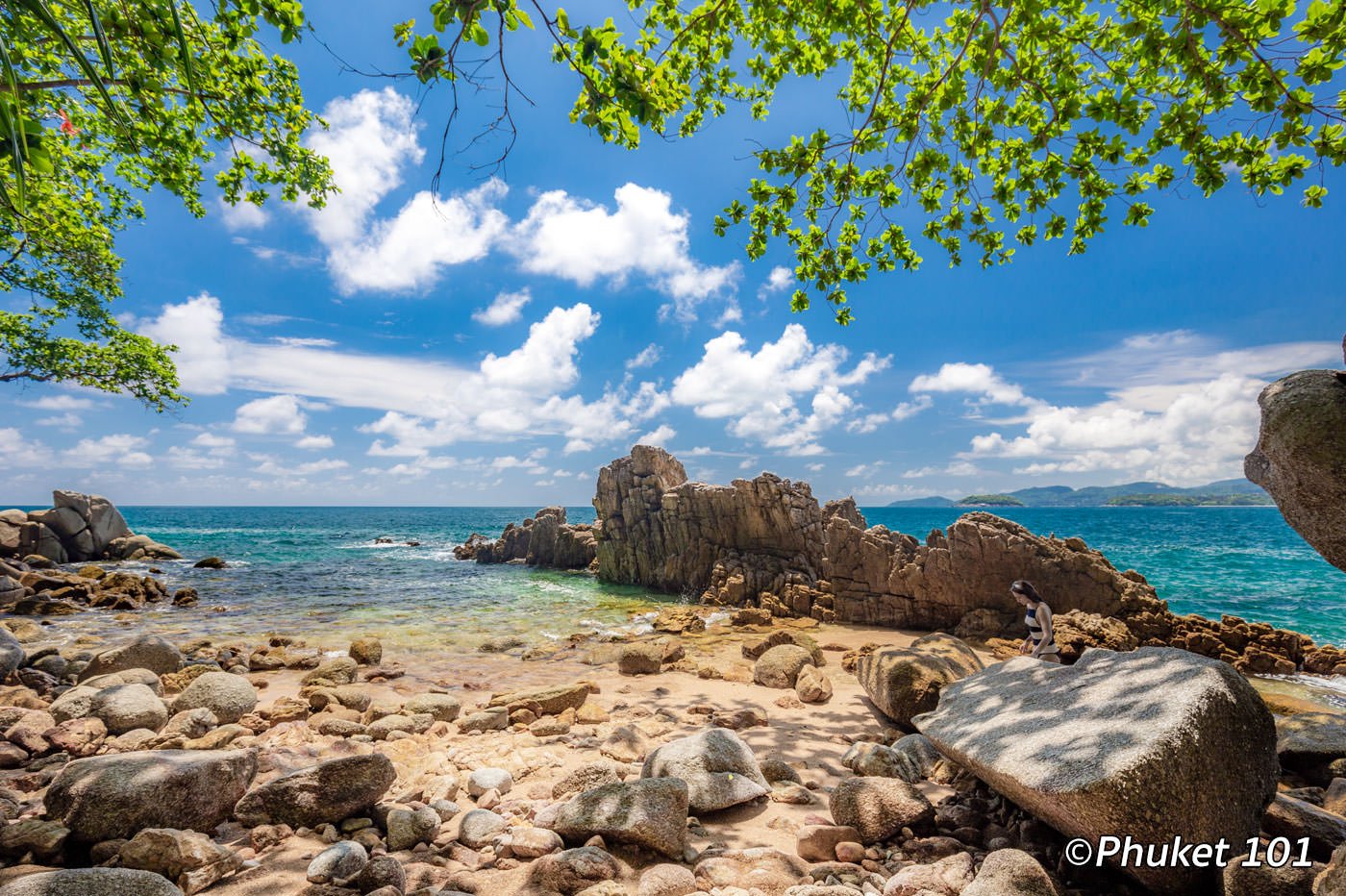
| Hidden, tiny rocky beach |
Siam Beach’s tiny cove requires descending steep stairs, limiting access for those with mobility issues. The beach consists mostly of rocks with small sandy areas, making it unsuitable for traditional beach activities. However, the clear water and abundant marine life create excellent snorkelling opportunities during calm seas. Very few tourists know about this spot, so you’ll often have it to yourself even during high season. No facilities exist, so bring everything you need. Water shoes are essential due to the rocky entry into the sea, and proper sun protection is a must as shade is limited.
Phuket Secret Beaches (#45 and #46)

Those two secret beaches might be the last ones, so I will not reveal them openly here. They are hard to find and hard to reach, too! So let’s make a deal 🙂 Follow us on instagram.com/phuket.101/ and send us a message, and I will tell you where they are. 😀


5. Private Beaches
Stunning bays effectively reserved for one specific resort’s guests. Thai law says no beach is truly private, but when a single hotel owns all the surrounding land, access is what it is. The way in: book the resort, or admire from a viewpoint.
Cape Panwa Beach
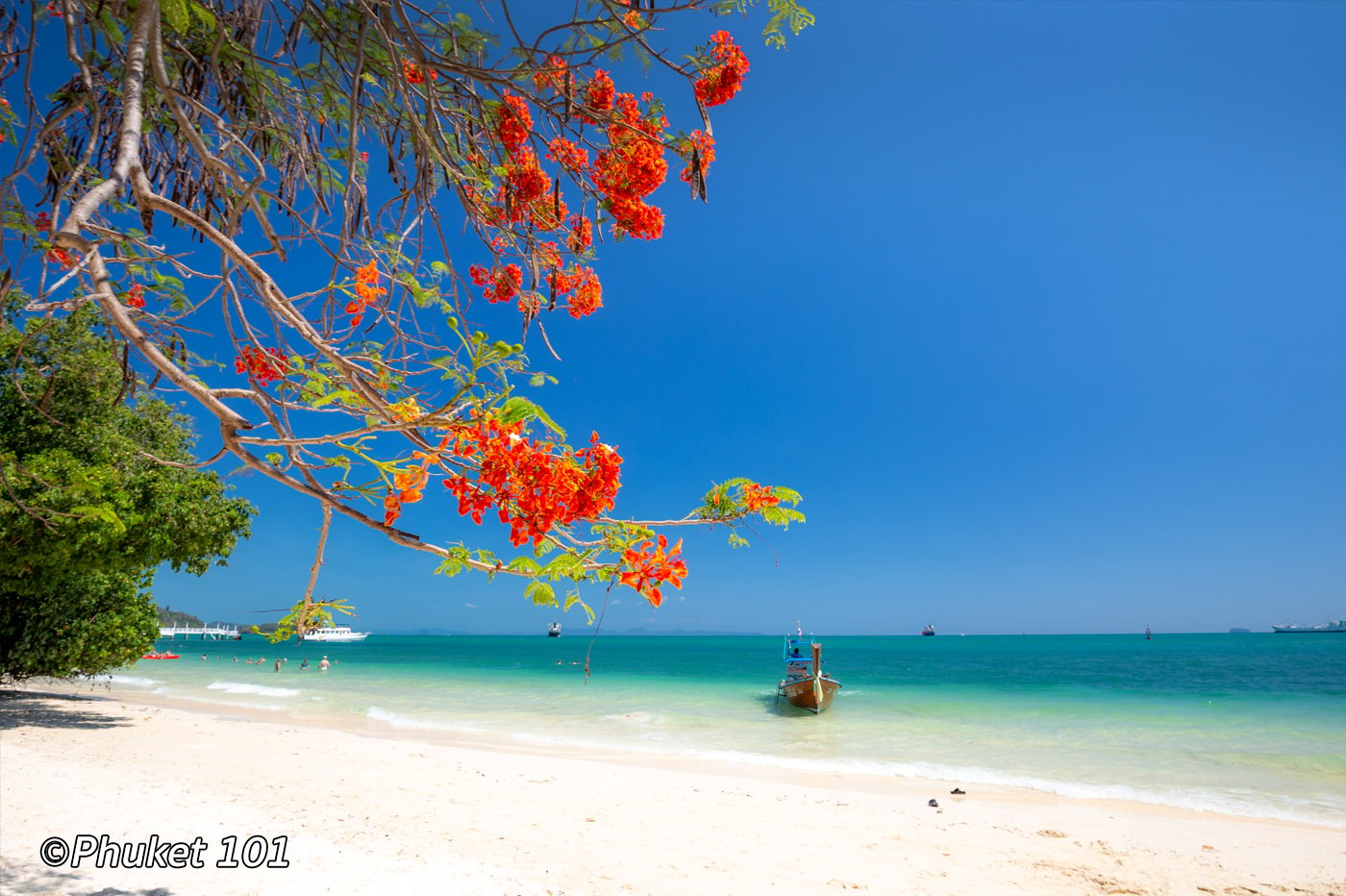
| Beautiful private beach |
Cape Panwa Beach belongs to Cape Panwa Hotel, which owns all the surrounding land. Public access remains limited, with the only option for non-guests being a dinner reservation at the hotel’s Cape House restaurant. The beach itself offers a peaceful retreat from busier areas, with soft sand and calm water. The eastern location has different scenery from the west coast beaches, with views of distant islands rather than the open sea. The hotel maintains facilities exclusively for guests, including water sports equipment and beach service. This area appeals to visitors who want to experience a completely different side of Phuket.


Pansea Beach
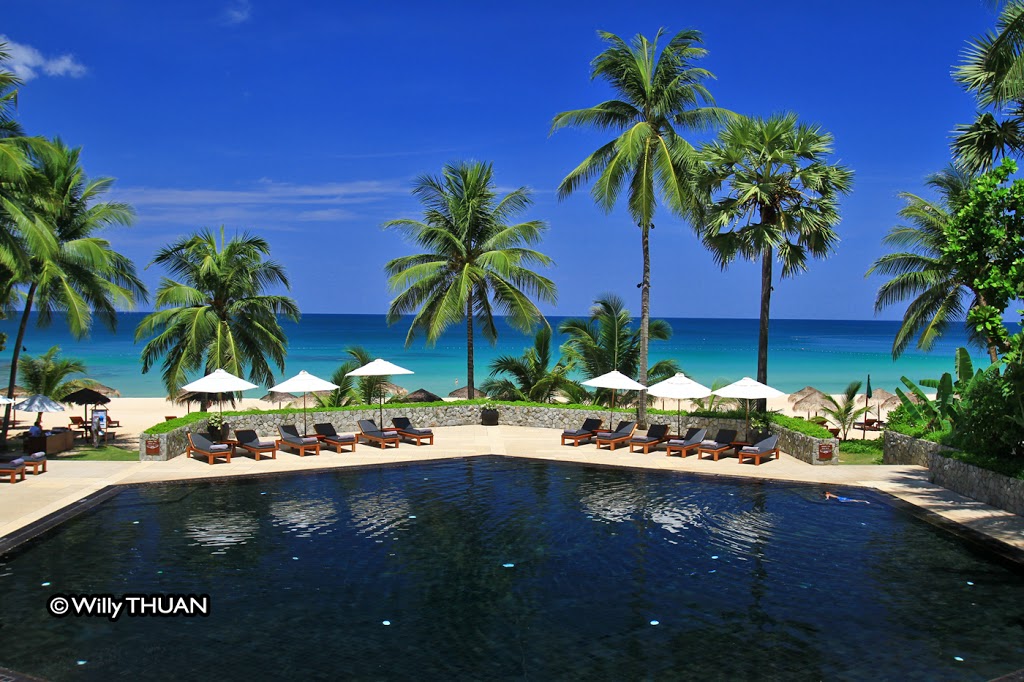
| Amazing private beach |
Pansea Beach is stunning but almost impossible to visit. This bay remains effectively private despite Thailand’s laws prohibiting private beaches. The Surin Phuket and Amanpuri Phuket luxury resorts control all land surrounding the beach, restricting access to hotel guests only. From the few glimpses I have had over the years, I can confirm its reputation as one of Phuket’s most beautiful stretches of sand. The perfect crescent shape, clear water, and exclusivity make it highly sought-after. Unless staying at one of the resorts, most visitors must admire it from distant viewpoints or photos only.


Karon Noi
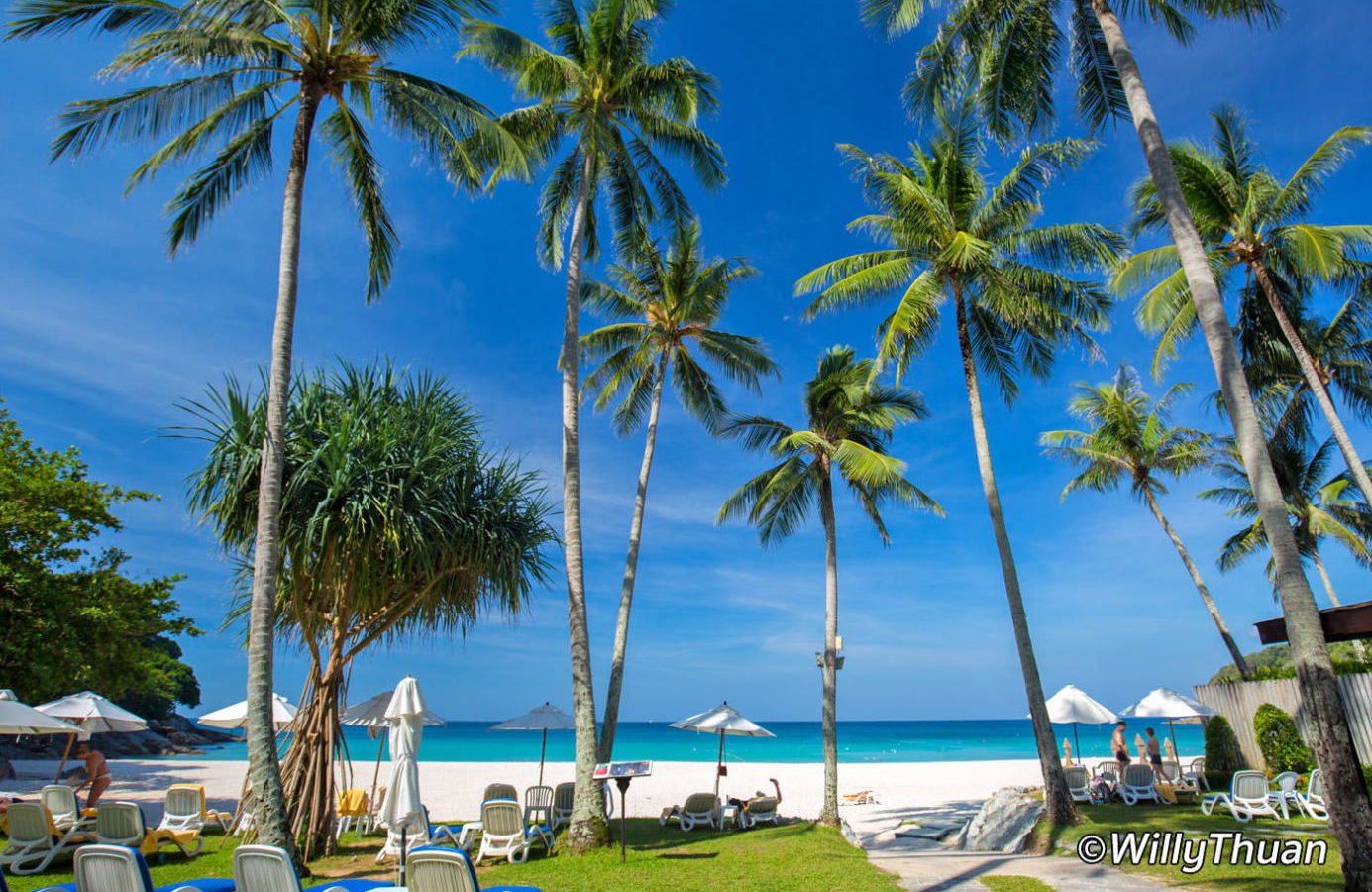
| Superb private beach |
Karon Noi is one of Phuket’s most beautiful beaches, though few tourists ever see it. Le Meridien Phuket exclusively occupies this pristine bay, making it accessible only to hotel guests. The sand feels like powder between your toes, and the water displays an amazing blue colour year-round. The hotel maintains the beach perfectly, with no litter or noise to disturb the tranquillity. Rocky headlands on both sides create ideal snorkelling conditions with plenty of colourful fish. Sometimes day passes are available if you want to experience this hidden gem without staying at the resort, but availability varies by season.
Trisara Beach
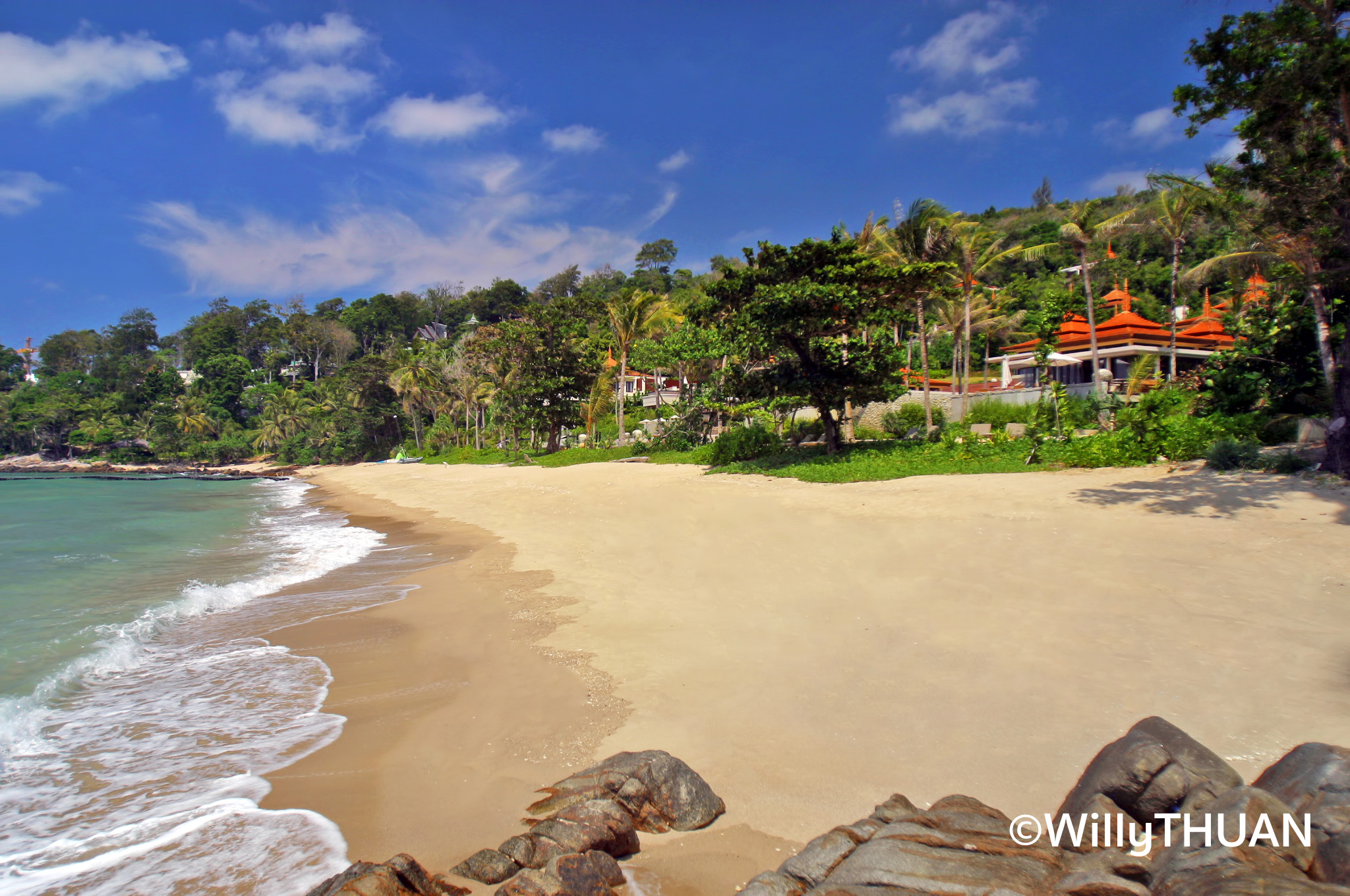
| Small and private |
Trisara Beach remains strictly private, serving only guests of the exclusive Trisara Villas. This small sandy cove on the west coast sits between Bangtao and Naithon beaches, offering luxury and seclusion to resort guests. From what I have seen from the water, the beach features soft sand and clear water, carefully maintained by resort staff. Like other effectively private beaches in Phuket, the resort controls all surrounding land, making land access impossible for non-guests. The exclusivity contributes to its pristine condition, free from the wear and development that affects more accessible beaches. Only worth considering if you are willing to pay for the luxury resort experience.
Yae Beach
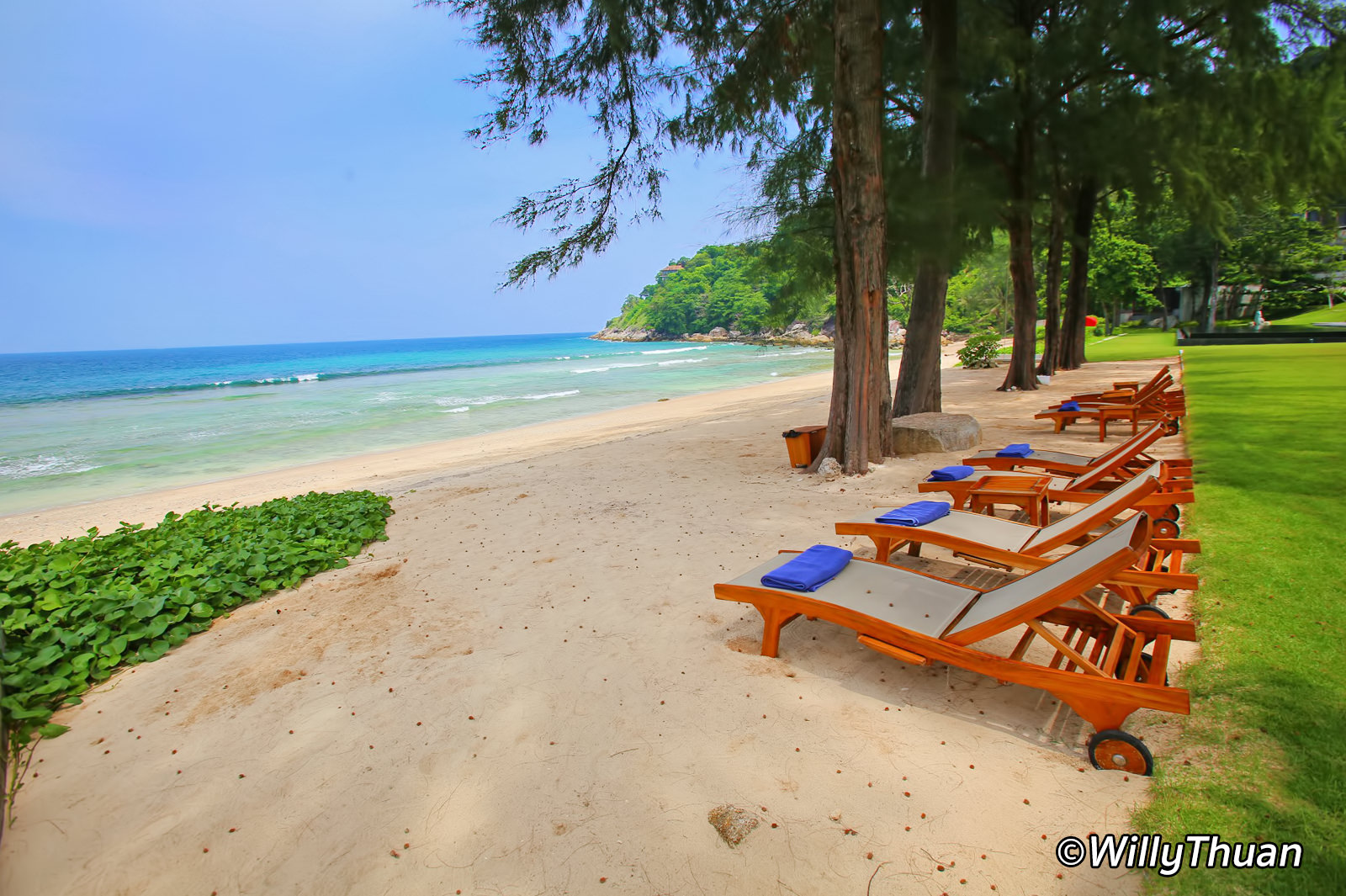
| Private beach – not for swimming |
Yae Beach is hidden on the coastline between Patong and Kamala and is reserved for the guests of the Naka Hotel. Finding it requires knowing exactly where to look along the coastal road, as no significant signs mark its location. A small hut occasionally sells drinks during high season, but often remains closed. The beach itself offers decent views, but swimming conditions vary greatly depending on tides and seasons. I sometimes stop here briefly while touring the West Coast, but I wouldn’t recommend making a special trip. The nearby viewpoints provide better views with easier access.
Nakalay Beach
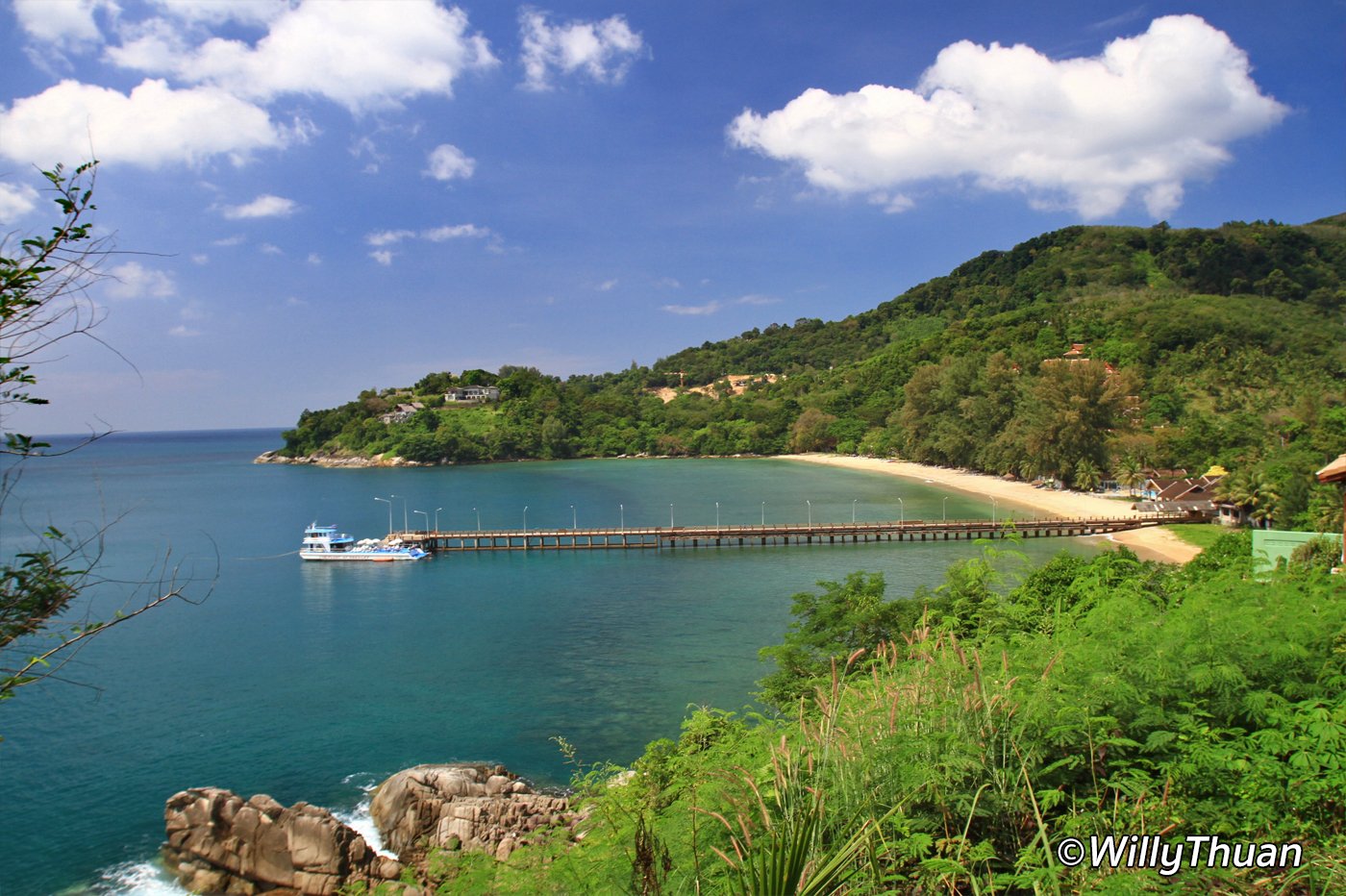
| Private beach – not great for swimming |
Nakalay Beach is rarely mentioned in most guides since Thavorn Beach Resort guests primarily use it. Located between Kamala and Patong, this modest bay offers limited public access. The beach itself provides decent swimming conditions during high season, with some interesting snorkelling around the rocky areas. The resort maintains the beach well, keeping it clean and providing facilities for guests. From public areas, you can enjoy views of the bay and distant headlands. A few small local restaurants operate near the public entrance, serving simple Thai dishes. The location halfway between major tourist centres makes it a convenient stop for those exploring the coast by motorbike or car.
Naithon Noi Beach
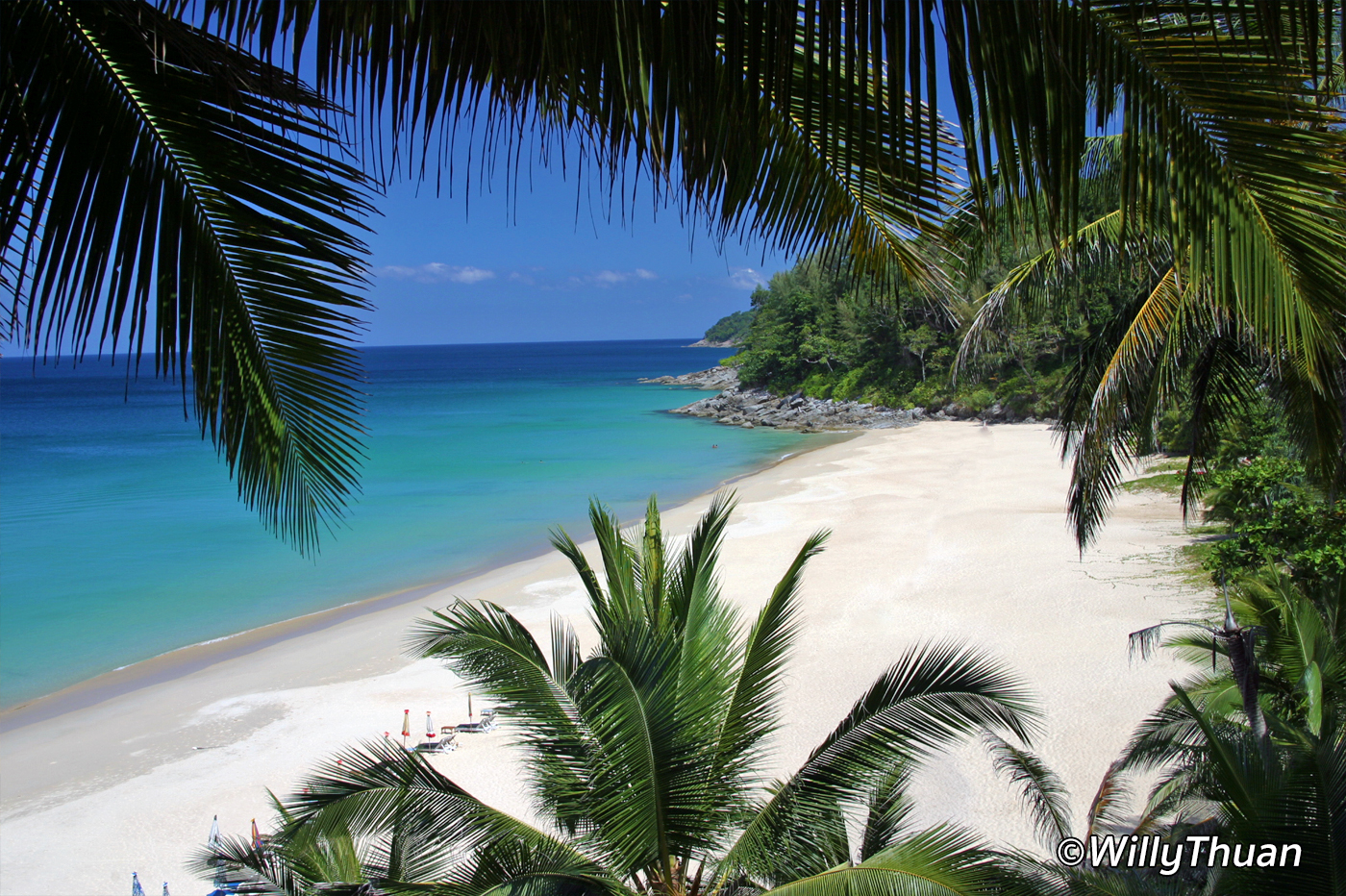
| Quiet private beach |
Naithon Noi Beach is rarely mentioned to visitors since access limitations make it challenging to visit. Located between Naithon and Banana Beach, this small bay serves primarily as the private beach for Andaman White Beach Resort. While technically not a private beach (as none can be in Thailand), the resort owns all surrounding land, effectively controlling access. On the rare occasions I have visited, I found perfect white sand and crystal clear water that ranks among Phuket’s best. The bay’s sheltered position creates ideal swimming conditions during high season. Unless staying at the resort, most visitors will need to admire this hidden gem from viewpoints along the coastal road.
Nui Beach
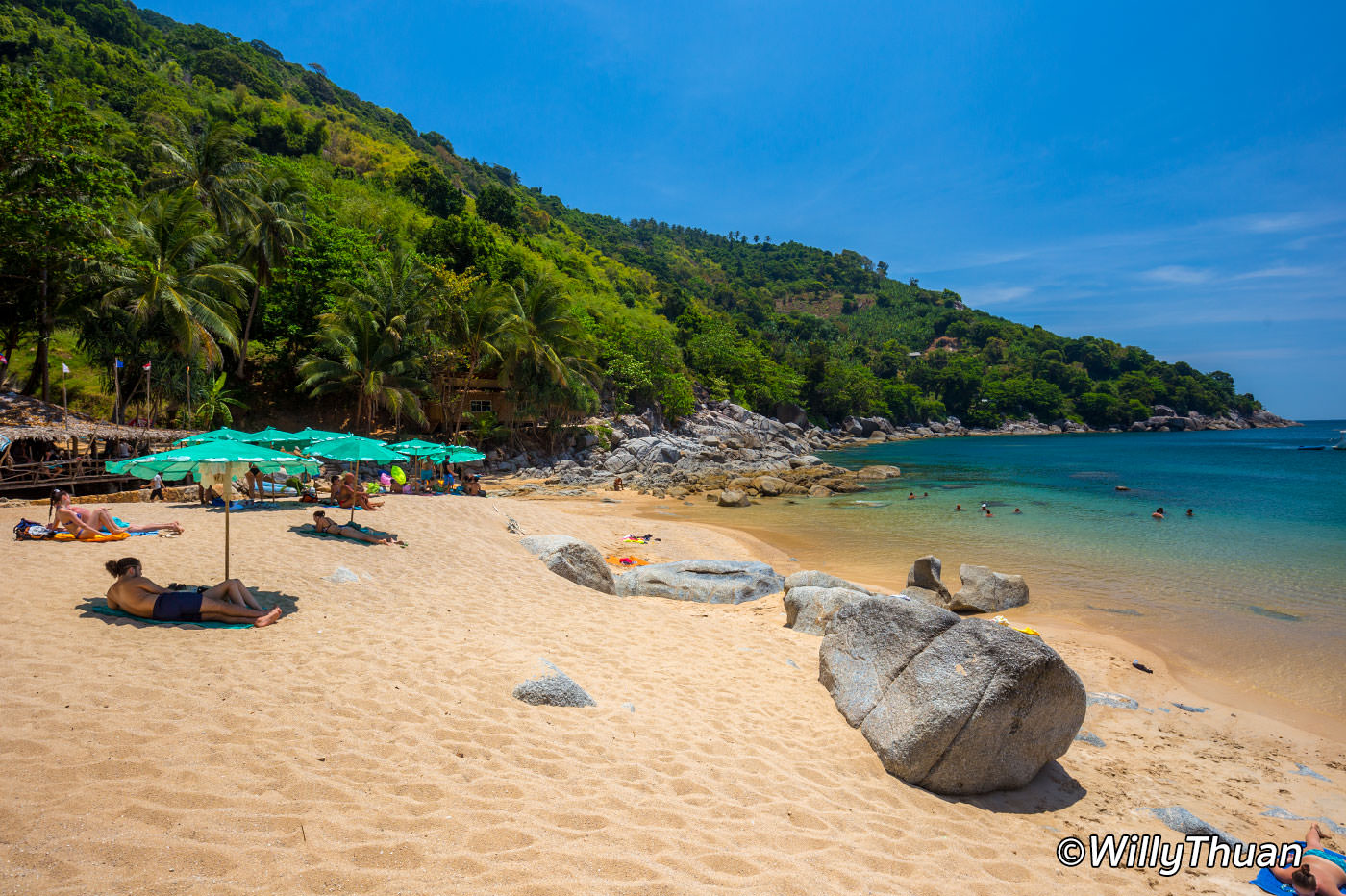
| Hidden and private beach |
Nui Beach requires a challenging drive down a dirt road past Karon Viewpoint. This small cove between massive granite boulders charges an entrance fee that has decreased in recent years. The effort to reach it keeps visitor numbers low compared to more accessible beaches. The unusual black rocks, contrasting with the sand, create a distinctive landscape unlike other Phuket beaches. The water clarity makes snorkelling rewarding, with diverse marine life around the rocks. Basic facilities include simple food and drink options plus beach chairs for rent.


Mee Sook Beach
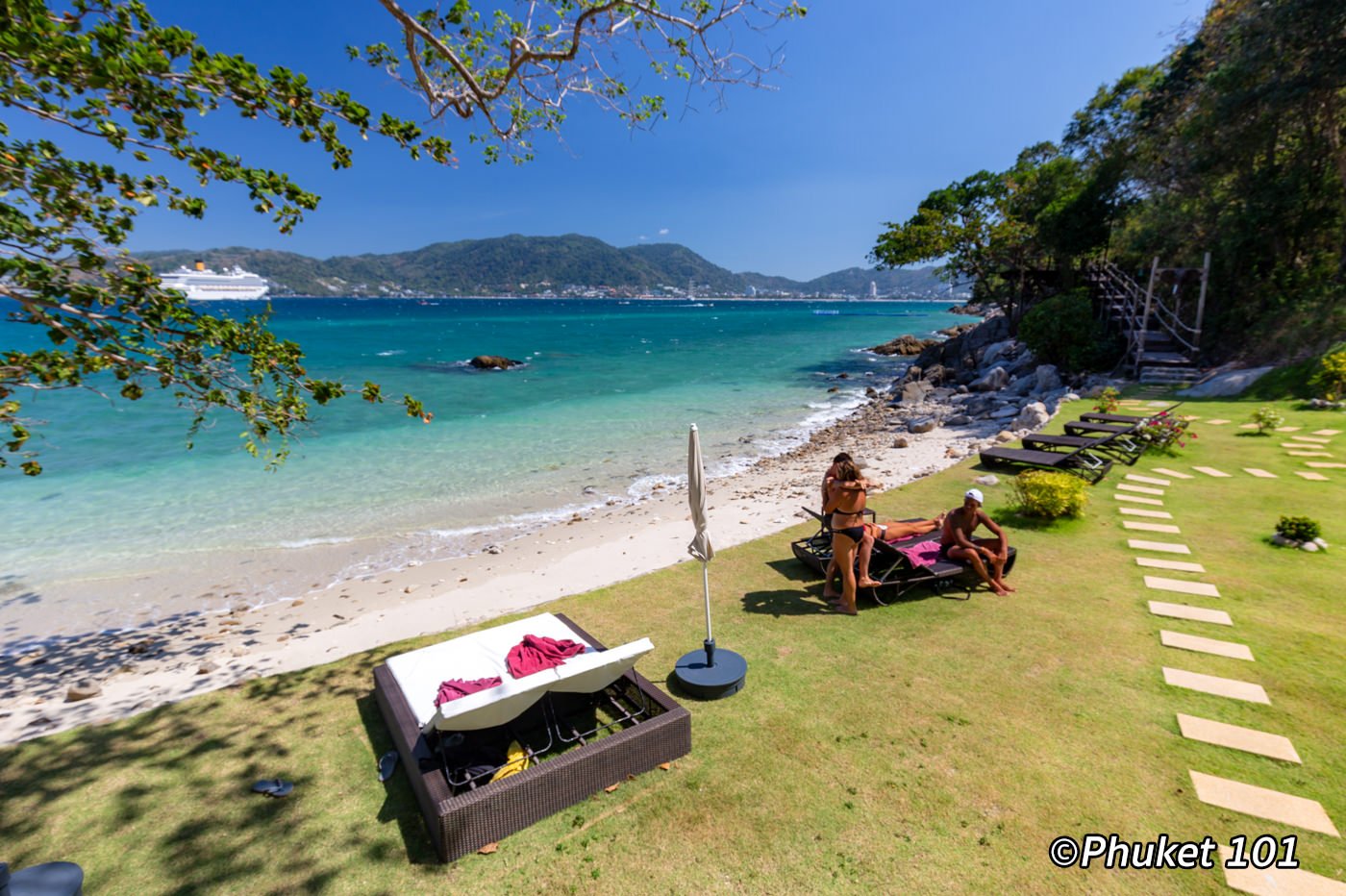
| Hidden near Patong |
Mee Sook Beach is a tiny hidden cove between Patong and Paradise Beach, behind a gate with an entrance fee that keeps visitor numbers low. The beach consists of two small sandy areas, with Splash Beach Club operating on one section. Swimming isn’t the main attraction due to rocks and limited space, but the secluded setting creates a special atmosphere. The surrounding cliffs provide natural shade during morning hours. Few locals even know about this spot, making it feel like a secret discovery. A good option when Patong becomes too crowded and you need a quiet place to relax.
Laem Ka Beach
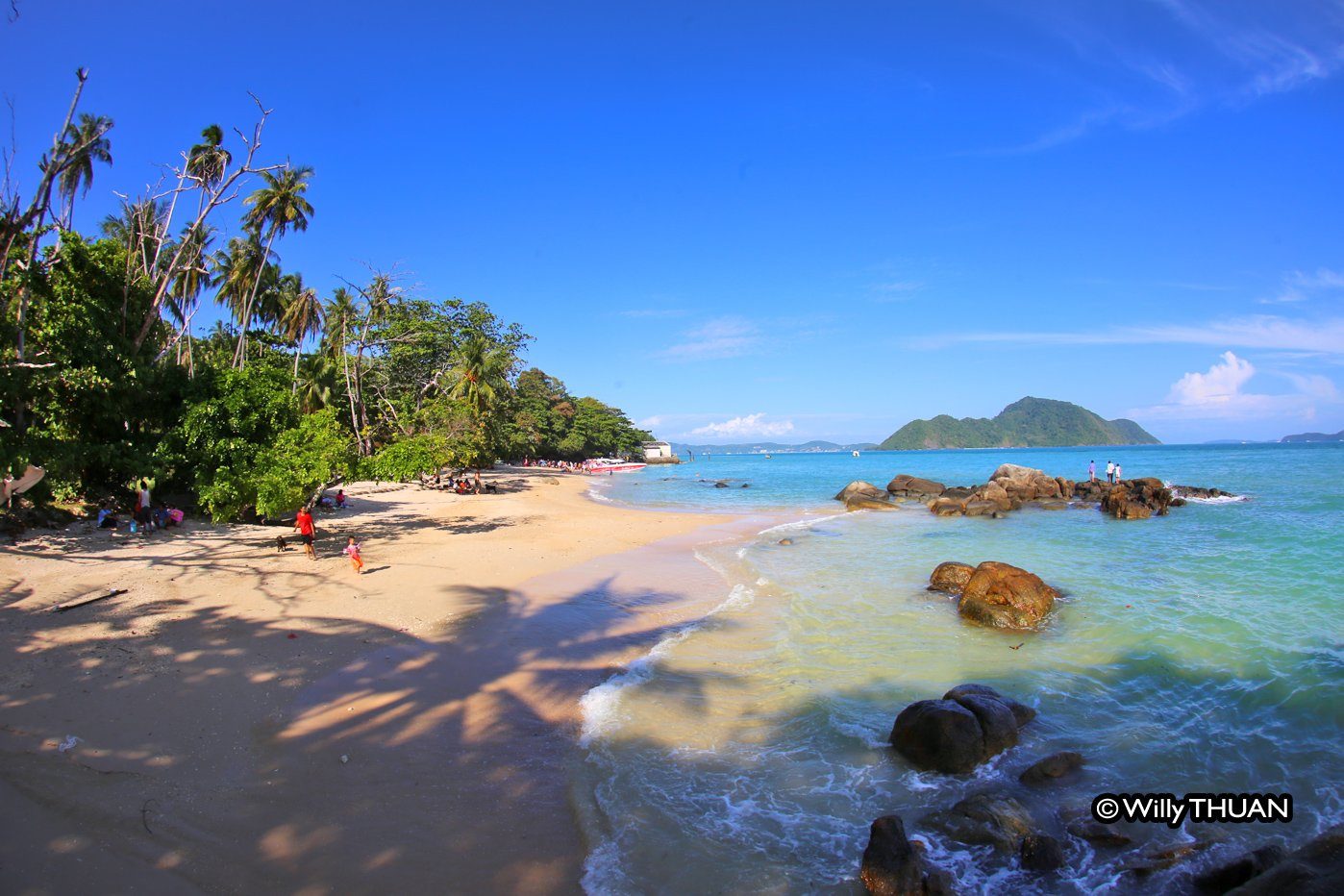
| Hidden beach – closed to public access. |
Laem Ka Beach was popular before it closed to the public. This small gem in the south near Rawai remained hidden from most tourists. The unusual rock formations and clear water made it perfect for snorkelling. The beach consisted of two distinct parts: a sandy area great for swimming and a rocky section ideal for exploring tide pools. The road access was closed several years ago when developers purchased the surrounding land for a hotel project. Construction has been ongoing for some time, and it is unclear when or if public access will return. I hope this beautiful spot becomes available again in the future.
My Personal Picks
You’ve just read about 21 beaches, and they’re all worth visiting for different reasons. But if you pulled me aside at a beach bar and asked me to just name one for each kind of day, these are the ones I’d give you, from 30 years of real mornings, real sunsets, and real lunches with my toes in the sand:
- The most popular beach: Patong, for action, nightlife, and a bit of everything under the sun. Not where I go to relax, but where I send friends who want the full Phuket experience.
- The best for families: Kata, with safe swimming in high season, a mellow vibe, and plenty of food options within a few minutes’ walk.
- The all-rounder: Karon, long, never too crowded, with a small town for dining and shopping. Great for couples and families alike.
- The best for beachfront dining: Kamala, for those laid-back restaurants and cafes right by the sand, where you can eat dinner with your toes in the water.
- The clearest water: Surin, in the dry season. Crystal clear, powdery soft sand, and the cleanest-looking water on the West Coast.
- The quietest: Laem Singh, if you’re willing to make the effort to get there. Feels like a secluded island hideaway, just you and nature.
- The hidden gem: Banana Beach, tucked away and still wonderfully undeveloped. A secret worth keeping (and discovering).
- The best for snorkelling: Ya Nui, a small cove with rocky ends teeming with fish. Bring a mask and fins.
- The best remote escape: Naithon, far from the main tourist hubs, serene and spacious, with just enough facilities.
- The best for local culture: Rawai, not a swimming beach, but the best place on the island for fishermen, seafood markets, and the feeling of Phuket the way it used to be.
A few final things worth knowing: Phuket has over 40 beaches, and the 21 above are my personal top picks for beauty and unique experience. Season matters more than most people realise. November to April is the dry season, the west coast waters are calm and blue, and swimming is safe on most beaches. May to October brings bigger waves, which is great for surfing but dangerous in some places. Always respect the red flags and lifeguards.
Early mornings or late afternoons are my favourite times on any beach. The temperature is cooler, the lighting is magical, and you’ll often have more beach to yourself. And if you’re on the island and you see a tall guy with sunglasses walking the sand at sunrise, come say hello. I hope this guide helps you feel the warmth and wonder of Phuket’s beaches the way I have over the decades. Enjoy your island time, and maybe I’ll see you on the sand.
Quick Beach Comparison
| Beach | Best For | Vibe | Crowds | Hotels |
|---|---|---|---|---|
| Patong | Nightlife, shopping, convenience | Busy, loud, fun | Very busy | Many |
| Kata | Families, first-timers, surfing | Relaxed, friendly | Moderate | Many |
| Karon | Long walks, couples, wide beach | Calm, spacious | Never crowded | Many |
| Nai Harn | Local vibe, beautiful landscape | Peaceful, natural | Moderate | Some |
| Kamala | Families, retirees, calm stay | Laid-back, easy | Low | Many |
| Kata Noi | Quiet luxury, romance | Exclusive, serene | Low | Some |
| Freedom | Adventure, snorkelling | Hidden, pristine | Very low | Day trip |
| Nai Yang | Quiet escape, beach dining | Local, untouched | Low | Some |
| Laem Singh | Adventurers, hidden beach lovers | Secret, remote | Almost empty | Day trip |
| Ya Nui | Snorkelling, kayaking | Cosy, small | Moderate | Day trip |
| Bang Tao | Long stays, beach clubs, luxury | Diverse, expansive | Varies by section | Many |
| Mai Khao | Solitude, nature, plane spotting | Wild, deserted | Almost empty | Some |
| Surin | Clear water, photos, street food | Natural, scenic | Low to moderate | Some |
| Pansea | Luxury resort guests | Exclusive, private | Resort guests only | Resort only |
| Naithon | Quiet getaway, retro Phuket feel | Peaceful, simple | Low | Some |
| Ao Sane | Snorkelling, diving | Rugged, hidden | Very low | Day trip |
| Banana | Secret beach hunters, snorkelling | Castaway, untouched | Very low | Day trip |
| Merlin | Quiet spot near Patong | Low-key, rocky | Very low | Resort only |
| Cape Panwa & Ao Yon | East coast calm, seafood dinners | Local, residential | Very low | Some |
| Paradise | Beach club vibe, parties | Commercial, organised | Busy (paid entry) | Day trip |
| Rawai | Seafood, local life, boat trips | Working beach, authentic | Local crowds | Some |
Phuket Beaches Video
Subscribe to our YouTube for more videos!
Map of Phuket Beaches
Things to Do in Phuket




FAQs about Phuket Beaches
