
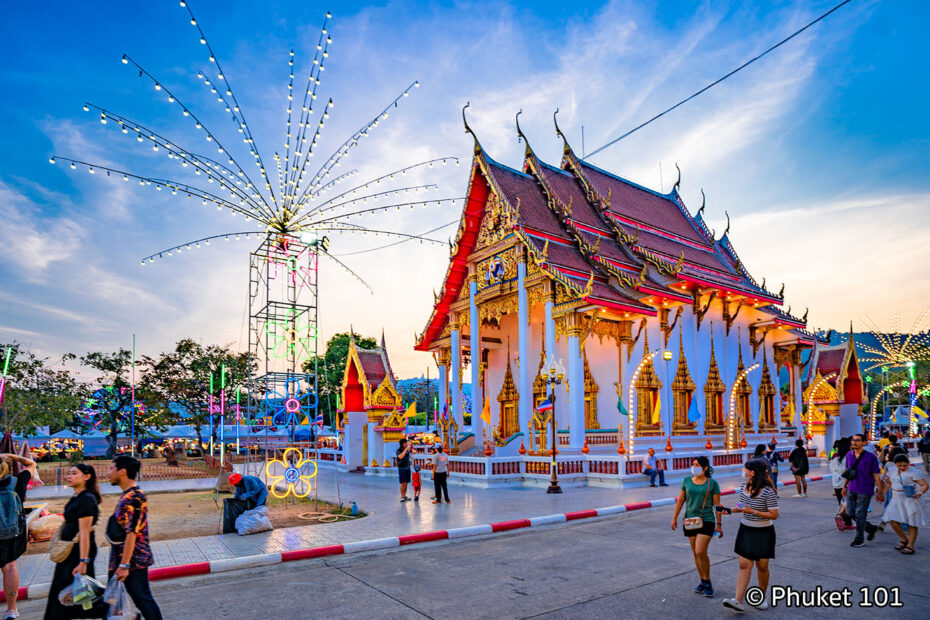
Wat Chalong Fair 2026 – 16 to 22 February
Wat Chalong Fair runs for about 10 days every year during the Chinese New Year. It’s a proper Thai temple fair with carnival rides, loud stage shows, firecrackers, and endless food stalls.

Phuket has more than 40 Buddhist temples, plus Chinese shrines that have been part of the island’s culture for centuries. Wat Chalong is the most visited, but many smaller temples are just as interesting and far less crowded. This section also covers Buddha postures you will see in every temple, and temples in nearby destinations like Krabi and Chiang Mai.
Wat Chalong Fair runs for about 10 days every year during the Chinese New Year. It’s a proper Thai temple fair with carnival rides, loud stage shows, firecrackers, and endless food stalls.

Tha Rua Shrine is one of the oldest Chinese shrines in Phuket, found in Thalang District on Thepkasattri Road about 800m south of the Heroines’ Monument. It’s an important site during the annual Phuket Vegetarian Festival, when thousands of devotees come to hold ceremonies and eat vegetarian food during the event’s nine days.
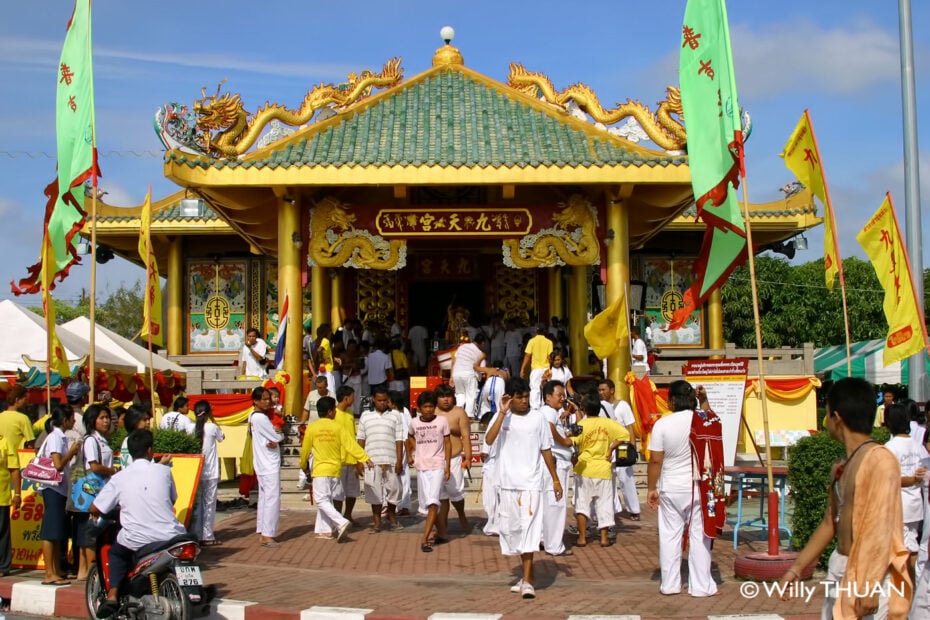
Kio Thian Keng Shrine is a colourful Chinese shrine that is set on the seashore inside Saphan Hin public park in Phuket Town. It’s a place of worship for the local Chinese-Thai community, and it plays an important role as the site of the final farewell to the gods during the annual Phuket Vegetarian Festival.

Lai Thu Tao Bo Keng is one of the oldest Chinese shrines in Phuket, and many believe it was the birthplace of the Phuket Vegetarian Festival nearly two centuries ago, 1825 to be precise. The shrine is located in the subdistrict of Kathu in the island’s interior, between Phuket Town and Patong Beach.

Bang Neow Shrine in Phuket Town is one of Phuket’s oldest and most revered Chinese shrines. It’s one of the main shrines taking part in the annual Phuket Vegetarian Festival It is a place of worship and merit-making activity for the local Chinese-Thai community throughout the year.

Lim Hu Tai Su is a Chinese Taoist shrine on the north side of Phuket Town, also known as Sam Kong Shrine, for the neighbourhood in which it’s found. Though not as well known by visitors as larger Chinese shrines like Jui Tui Shrine in Phuket’s Old Town area, Sam Kong Shrine is a revered place of worship for the local community. It’s become a key part of the Phuket Vegetarian Festival when it hosts several ceremonies and a procession during the annual 9-day event.
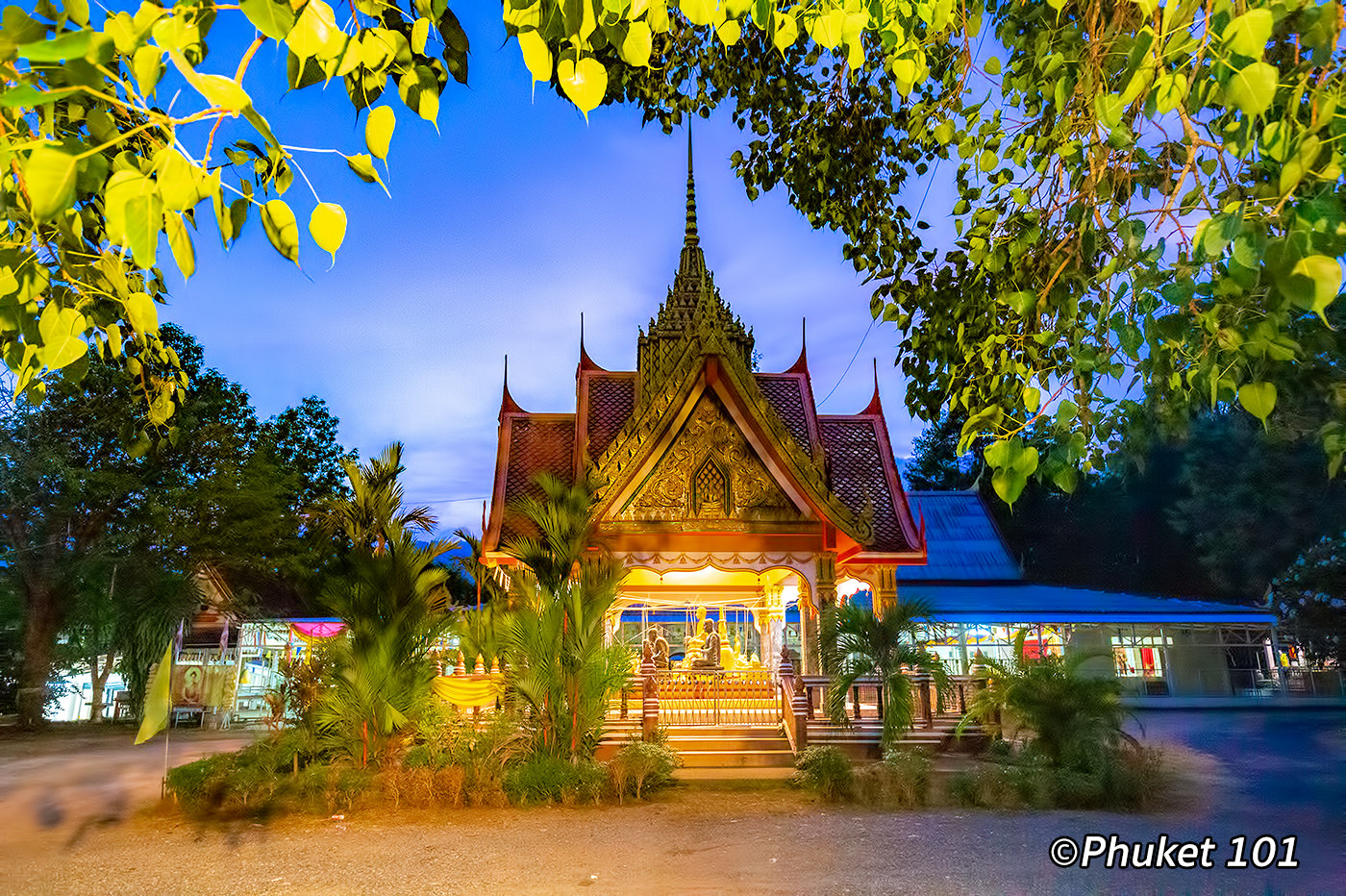
Wat Kathu, or Kathu temple, is a not very well-known landmark among tourists, but local photographers know how beautiful it is. This Buddhist temple is on the way to Phuket Town and not far from Patong, but because it stands away from the main road, most people don’t even consider visiting it.

Jui Tui Shrine (Kew Ong) is one of the oldest and most important on Phuket Island. It plays a significant role during the famous Phuket Vegetarian Festival, usually held in October and November. The festival dates use the Lunar Calendar, and the festival’s exact dates change every year.

Wat Doi Thepnimit is a monastic residence with a fantastic panoramic view over Patong beach. You can see its iconic white pagoda from the beach, if you know in which direction to look, of course, it’s pretty tiny.

Wat Phra Nang Sang, originally known as Wat Takian, was built more than 200 years ago and is one of the oldest Thai temples in Phuket. This unusual temple was built when Thalang was the main city of Phuket Island and even was the scene of a battlefield during the Burma War in 1785.
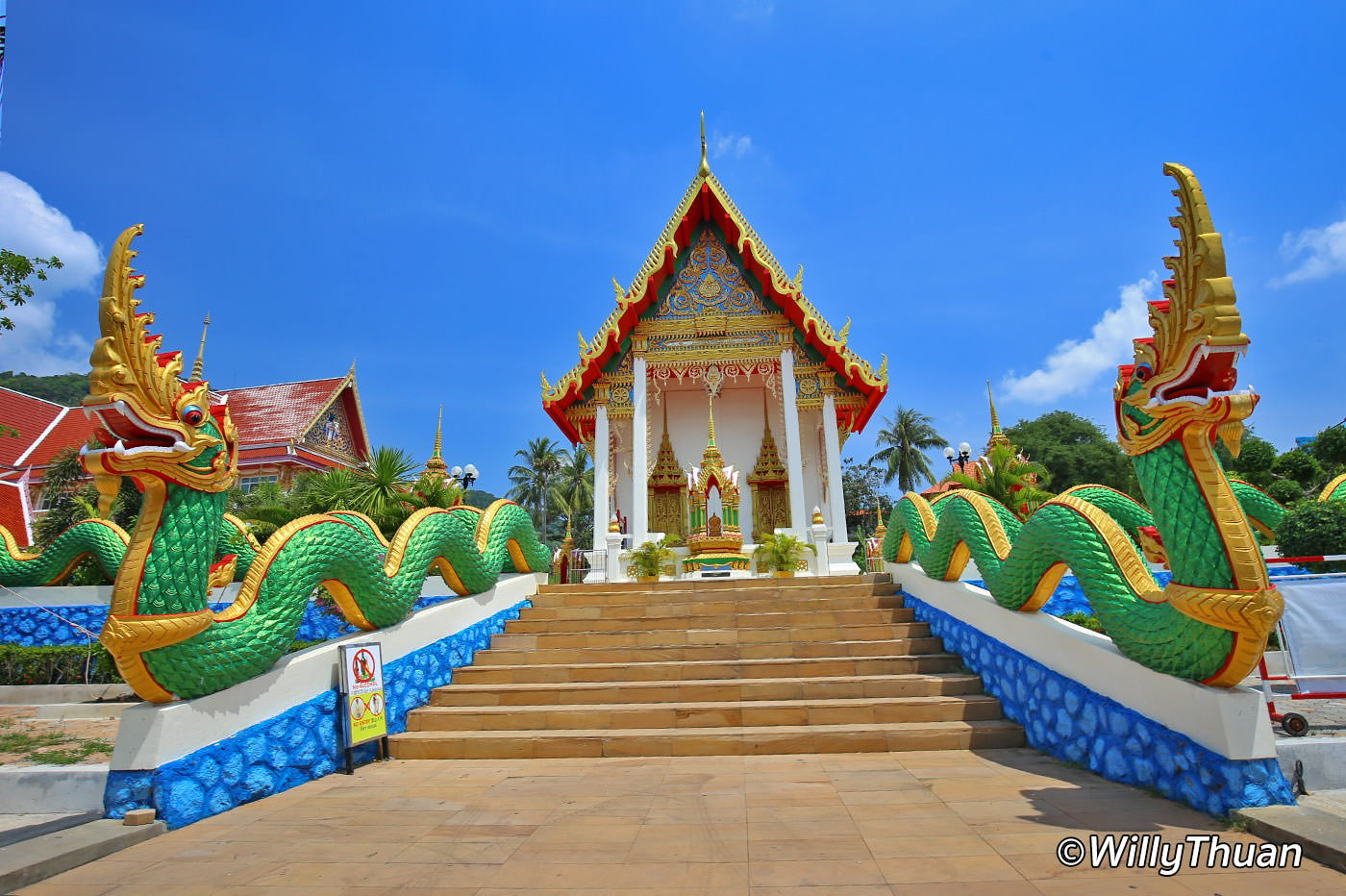
The Karon Temple Market has grown steadily in popularity in the past years. Because it only occurs twice a week (Tuesdays and Fridays), people start to plan their evenings around that event.

The Phuket Vegetarian Festival runs during the ninth lunar month, marking one of Thailand’s most spectacular cultural celebrations. This nine-day Taoist festival transforms Phuket into a spiritual sanctuary where thousands of devotees in white clothing honour the Nine Emperor Gods through dramatic processions, firewalking ceremonies, and extreme body piercing rituals
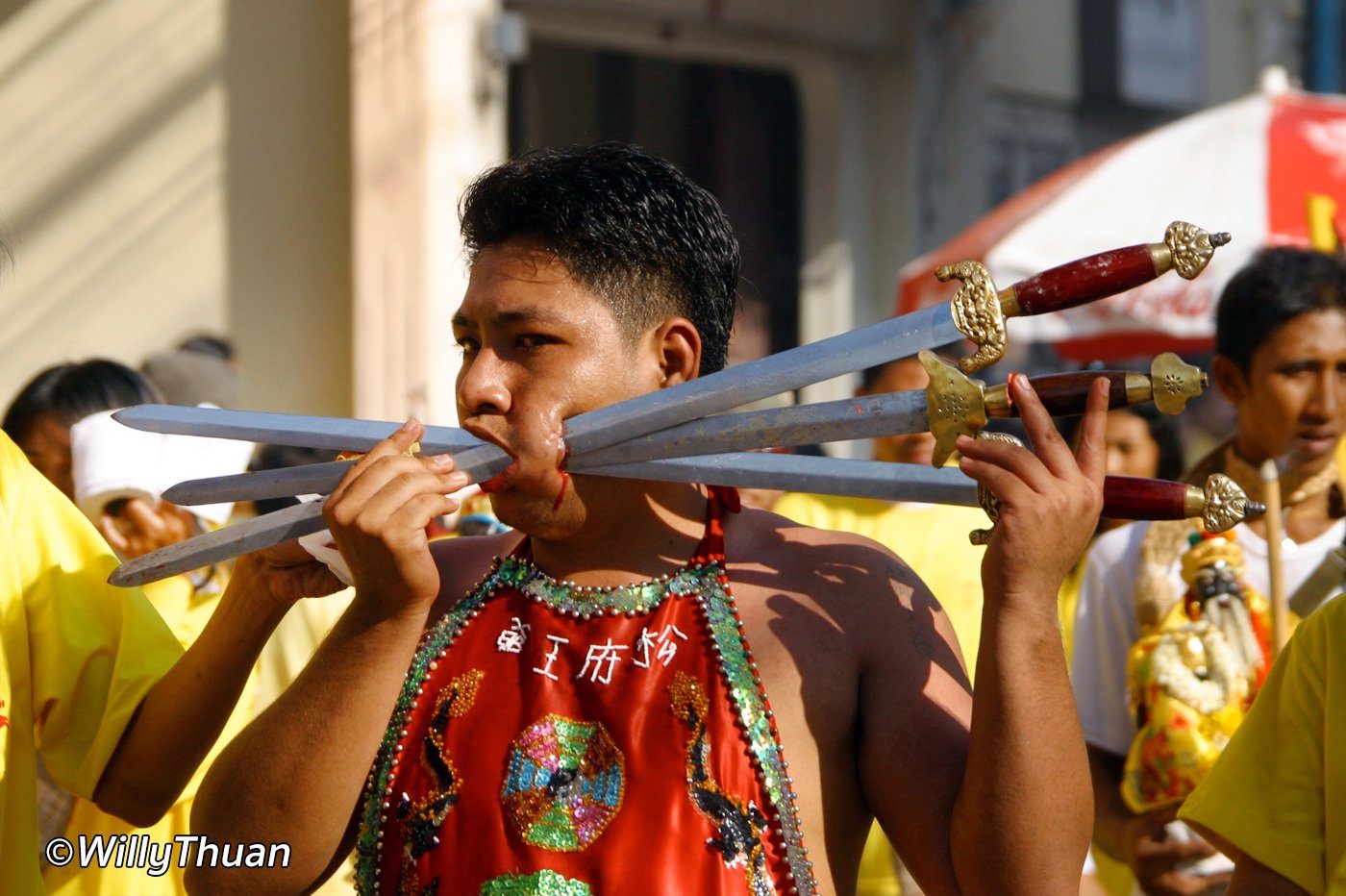
In case you are coming to Phuket in October, here is a Phuket Vegetarian Festival Schedule and Calendar of each day’s event, in which temple each event will occur, and when and where the famous processions will happen. Remember to bring a mask for the smoke and ear protection as the firecrackers sound will leave you deaf for a day.

The Shrine of the Serene Light is a beautifully decorated Chinese Temple on Phang Nga Road, one of the most famous streets of Phuket Town. It used to be ‘the little hidden Chinese temple’ tucked away at the end of a small path, right under your nose.
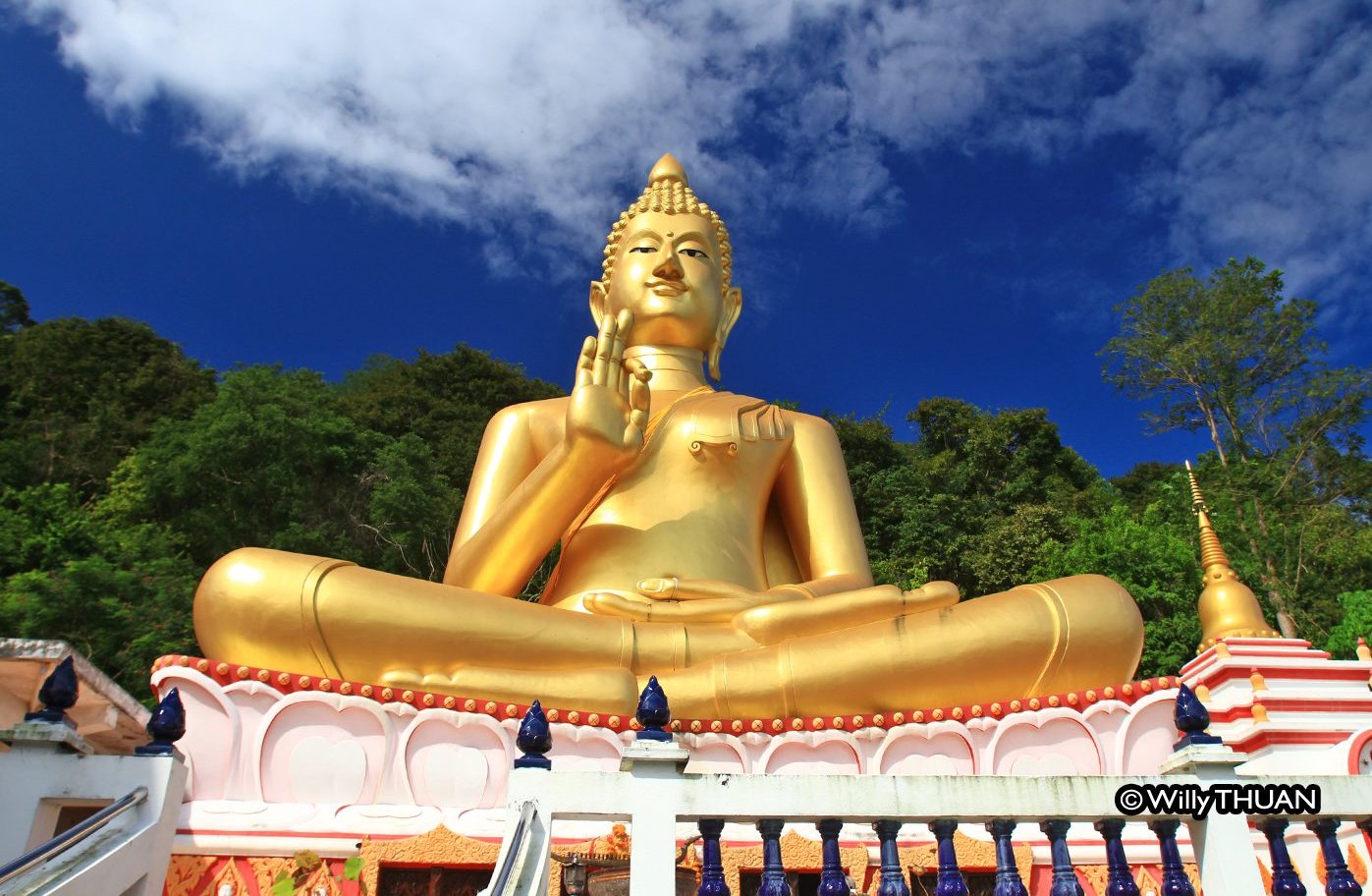
Wat Khao Rang (Kao Rang Temple) is a modest temple in Phuket town that would be somewhat anonymous if it was not for its large and majestic golden sitting Buddha. But is the giant Buddha not supposed to be much bigger and made of white marble?

There are quite a few Chinese shrines in Phuket, and each has its own characteristics and unique features, which always offer excellent photo opportunities. The large ones are very popular during the Chinese New Year in February or the Phuket Vegetarian Festival in October.
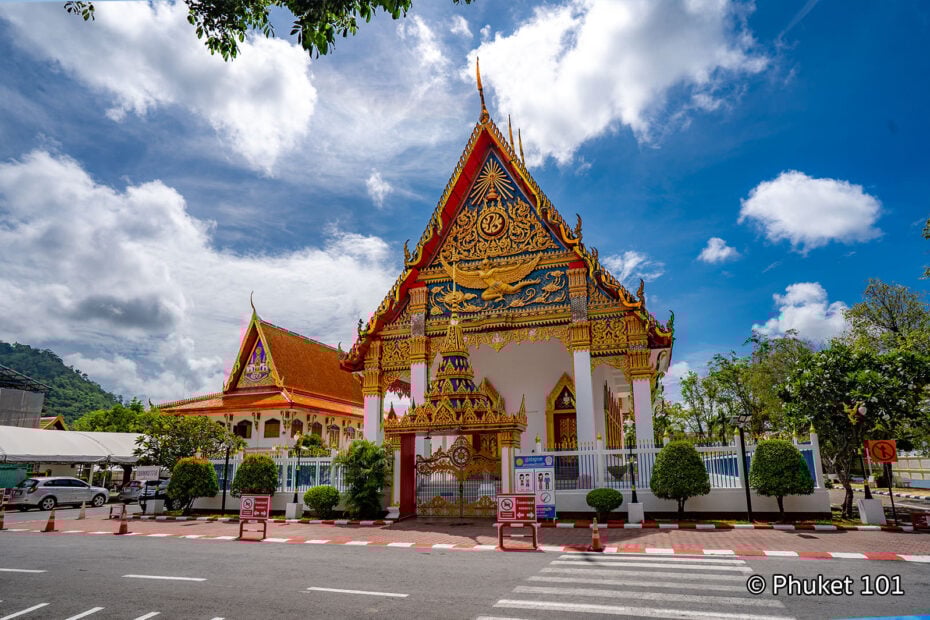
Wat Mongkol Nimit or Wat Putta Mongkon might not be the most impressive temple in Phuket but this one means a lot to people living around Phuket Town. All temples are of course worth visiting but since Wat Mongkol Nimit is close to Thalang Road, the historical streets of Phuket Town it would complete your visit perfectly.

Wat Sri Sunthon (Wat Srisoonthorn) is known for the immense golden Buddha reclining at the top of a large building in the ‘Pang Sai Yat’ posture, which corresponds to “Realizing Nirvana”. The statue seems to be staring endlessly at the frantic traffic on the nearby road to Phuket International Airport. Of course, you already knew that ‘Wat’ is the Thai word for ‘Temple’.
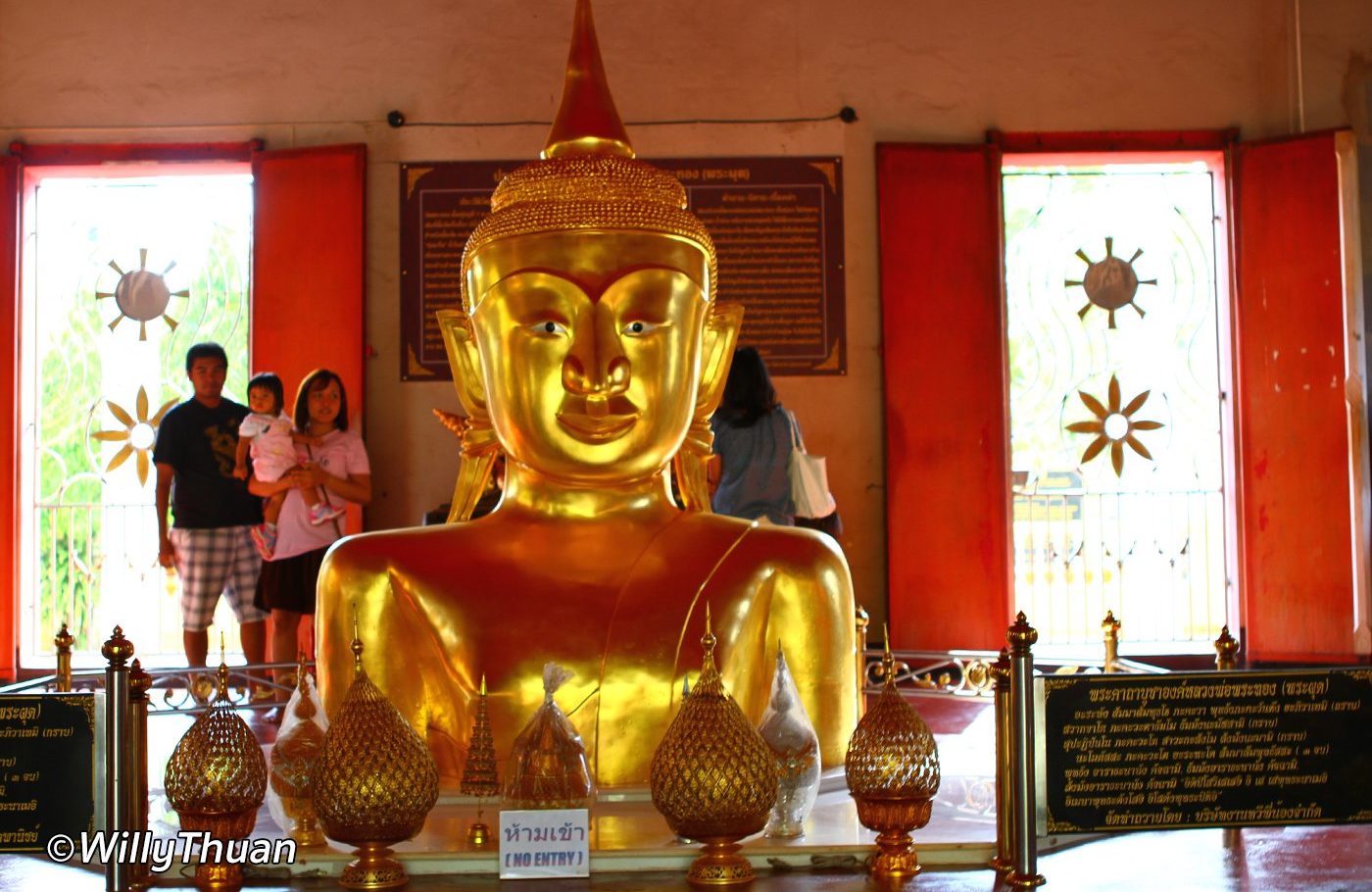
Wat Phra Thong (or Wat Prathong), meaning ‘Golden Buddha Image Temple is a very old temple with an incredible legend behind it, the kind of story that irresistibly attracts people. It’s not very big or impressive, but everyone first wants to see the famous half-buried golden Buddha. So what is this strange legend about a temple in Thalang on the way to Phuket Airport?
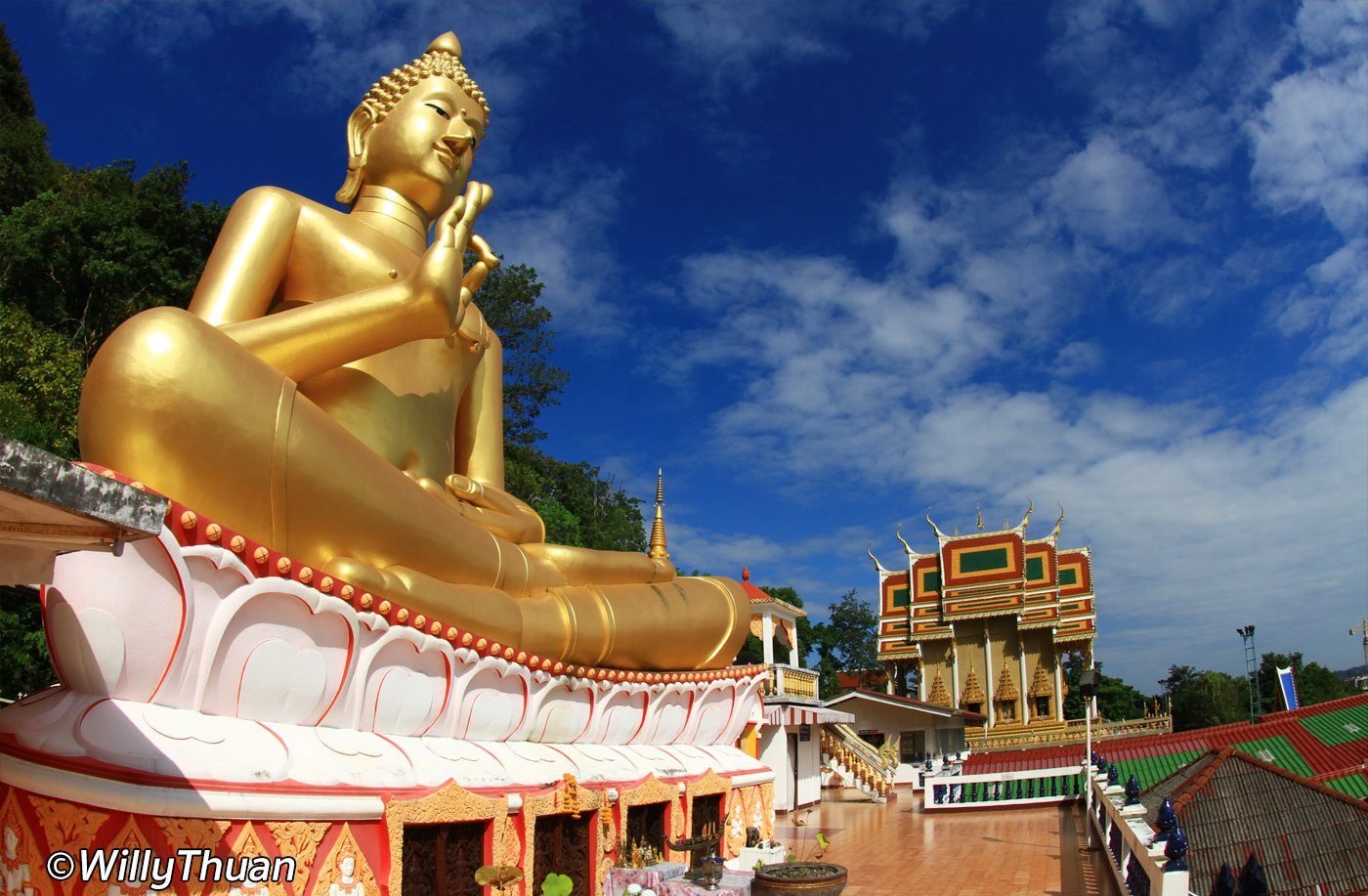
Phuket Thai temples, or Wats, are always worth a visit; from the temple hidden inside a cave to the famous Wat Chalong, a visit to Thailand would not be complete without exploring a few of these magnificent and beautifully ornamented buildings.
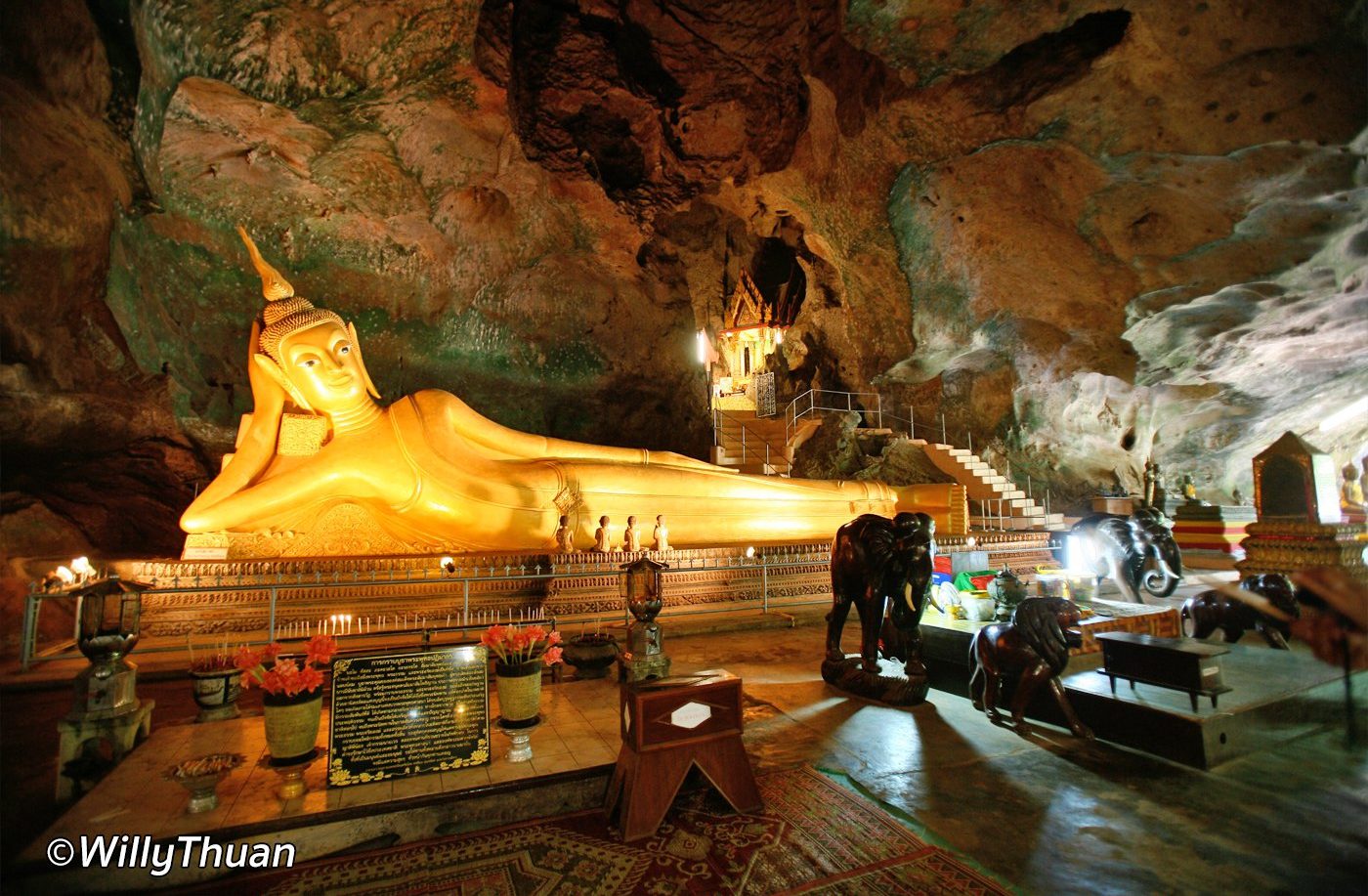
Hidden in a vast cave in Phang Nga Province, Wat Suwan Khuha is a surprising religious site sheltering an immense reclining golden Buddha. If you feel like a little drive outside Phuket island, this is your chance to explore another side of Phang Nga!
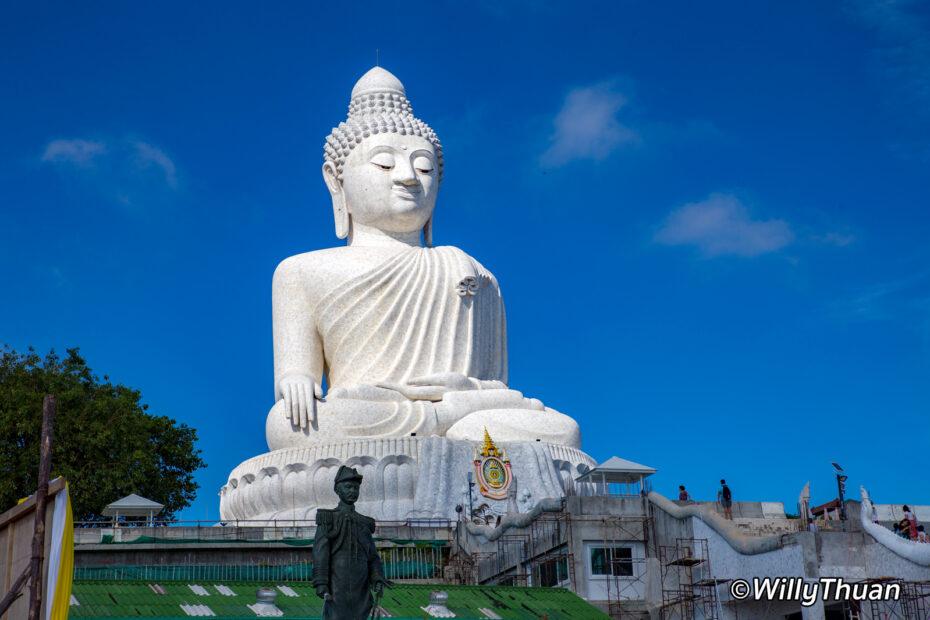
Each Buddha statue in Thai temples represents a day of the week, a story from the Buddha’s life, and personality traits linked to your birth day. Here’s what each posture means and how locals use them.

Wat Chalong (วัดฉลอง) is the largest and most visited Buddhist temple in Phuket. It sits about 8 kilometres south of Phuket Town, on the way to Chalong and Rawai.
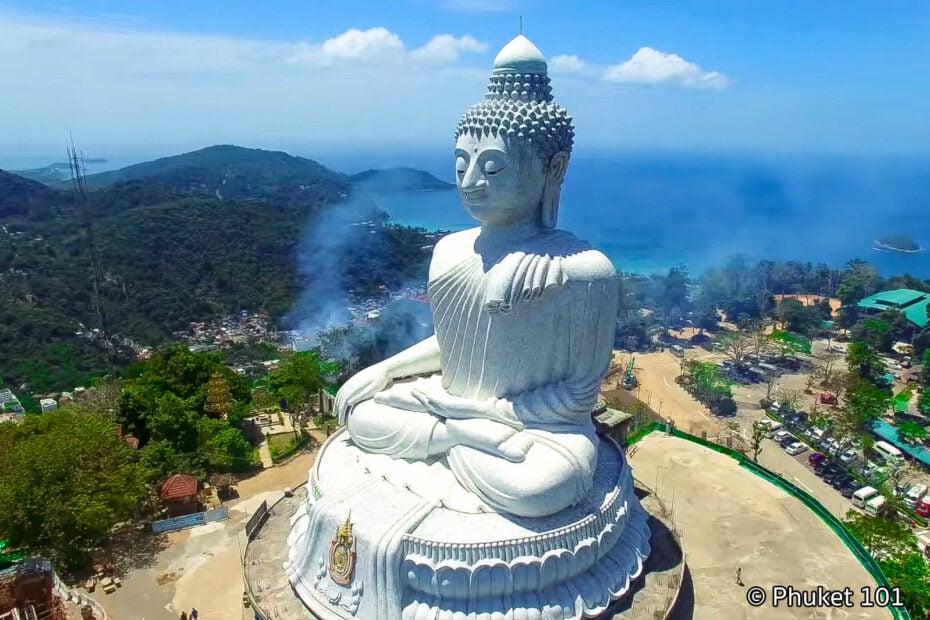
Big Buddha Phuket is a 45m white marble statue on Nakkerd Hill with stunning views of Chalong Bay. Learn how to get there, what to expect and tips from a local.