

Where are the Best Surfing Beaches in Phuket?

The best beaches for surfing in Phuket are all located along the west coast, where you can get decent wave action. Waves are not huge but are great for beginners, and competitions are frequent during the low season. You will easily find board rental shops and surf schools, and surf lessons are widely available at busier beaches.
Best Times to Surf in Phuket
Phuket surfing is best from May to October, during the southwest monsoon. The west coast faces directly into swells coming up from the Indian Ocean past the tip of Sumatra, which is what creates the waves. That said, Phuket is not Bali. Waves here are modest by world standards, averaging around 1 metre with bigger sets occasionally reaching 2 to 3 metres in the middle of the season. Even in peak months the ocean can go flat for days at a time, so come with a plan B. The same monsoon also brings rain and onshore winds, so good surf days and clean conditions are not the same thing. Picking the right month makes a real difference.
Phuket Surf Season Month by Month
April: The shoulder month. Winds shift from northeast to southwest, and the first small swells appear. Waves are usually 0.5 to 1 metre, often clean in the early morning before the wind picks up. Good for beginners and longboarders. Most days are still dry.
May: The season properly starts, but the first weeks can still be flat. Swells build through the month and good days bring 1 to 2-metre waves with clean offshore winds in the early morning. A great month when it works, but not guaranteed, so check the forecast before flying in for May surf specifically. Many regulars rate May as one of the best months when the swell shows up.
June: Consistent waves of 1 to 2 metres, sometimes bigger. The monsoon is now in full swing, so onshore winds chop up the surface most afternoons. Early morning sessions are the move. Surf competitions usually run during this month.
July: Peak season for size. Waves reach 2 to 3 metres on the bigger days, with the occasional 3-metre-plus swell. Rain is heavier and the wind is stronger. Conditions are powerful but messy, better for confident intermediates and above. Beginners should stick to the sheltered southern ends of Kamala and Bangtao.
August: Similar to July. Strong, consistent surf with bigger sets and stronger currents. This is the month for experienced surfers chasing size. Heavy rain days are common, and lifeguards may post red flags during big swells.
September: The other sweet spot of the season alongside May. Swells are still solid at 1 to 2 metres, but the wind starts to ease. Cleaner faces, longer rides, and slightly fewer rain days than mid-season. Annual competitions often run in September too.
October: The wind-down. Surf is more hit-and-miss, but when a late storm pushes north past Sumatra, you can still get clean 1 to 1.5-metre waves. Crowds are thinner. Towards the end of the month, conditions start to flatten out.
November to March: Mostly flat. The northeast monsoon takes over, the sea goes calm, and the west coast turns into a swimming and snorkelling coastline. Surfable days do happen, maybe a handful per month, when a distant pressure system sends a long-range groundswell across. Longboards work better than shortboards in these conditions. If you are in Phuket during these months and want to ride something, Surf House in Kata and Surf House Patong have flowboarding, and Phuket Wake Park has cable wakeboarding.
What if the Surf is Flat?
It happens, even in peak season. Phuket gets quiet stretches when the swell takes a break, sometimes for a week or more. Worth having a backup plan rather than sitting on the beach waiting. Good alternatives include flowboarding at Surf House in Kata or Surf House Patong, cable wakeboarding at Phuket Wake Park, standup paddle-boarding from any of the calmer bays, or kiteboarding at Nai Yang when the wind is up. Here is a long list of the many great things you can do in Phuket.
Best Time of Day to Surf in Phuket
Early morning, almost always. Sunrise to about 9 am gives the lightest winds and the cleanest faces, especially during the May to September window. By midday, the southwest wind kicks in and turns the surface choppy. A second window sometimes opens late afternoon as the wind drops, but mornings are the safer bet.
Tide Tips for Surfing in Phuket
Most Phuket beach breaks work best at mid-tide. High tide pushes the wave too close to shore and kills the shape. Low tide exposes rocks at Kalim and Kata Noi, which can make rides hazardous. Check the tide chart before you head out, especially if you are surfing somewhere with reefs or rocks.
Water Temperature
The sea sits between 28 and 30°C all year. No wetsuit needed, ever. A rash vest is useful for sun protection on long sessions and to keep the wax off your chest.
Surf Competitions in Phuket
Most events run between June and September, with Kata Beach as the main venue. Quiksilver started competitions at Kata back in 1999, and the Kamala Go Surfing Club has run an annual contest since 2005. Dates shift each year, so check locally a few weeks ahead if you want to watch.
Quick Pick: Best Month for Your Level
Beginners: April, May, early June, late September, October. Smaller waves, cleaner mornings, fewer crowds in the water.
Intermediate: May, June, September. Decent size with manageable wind.
Advanced: July and August. Bigger swells, stronger currents, more power.
Non-surfers visiting in surf season: May and September are also the best low-season months for hotel value with the fewest rain interruptions.
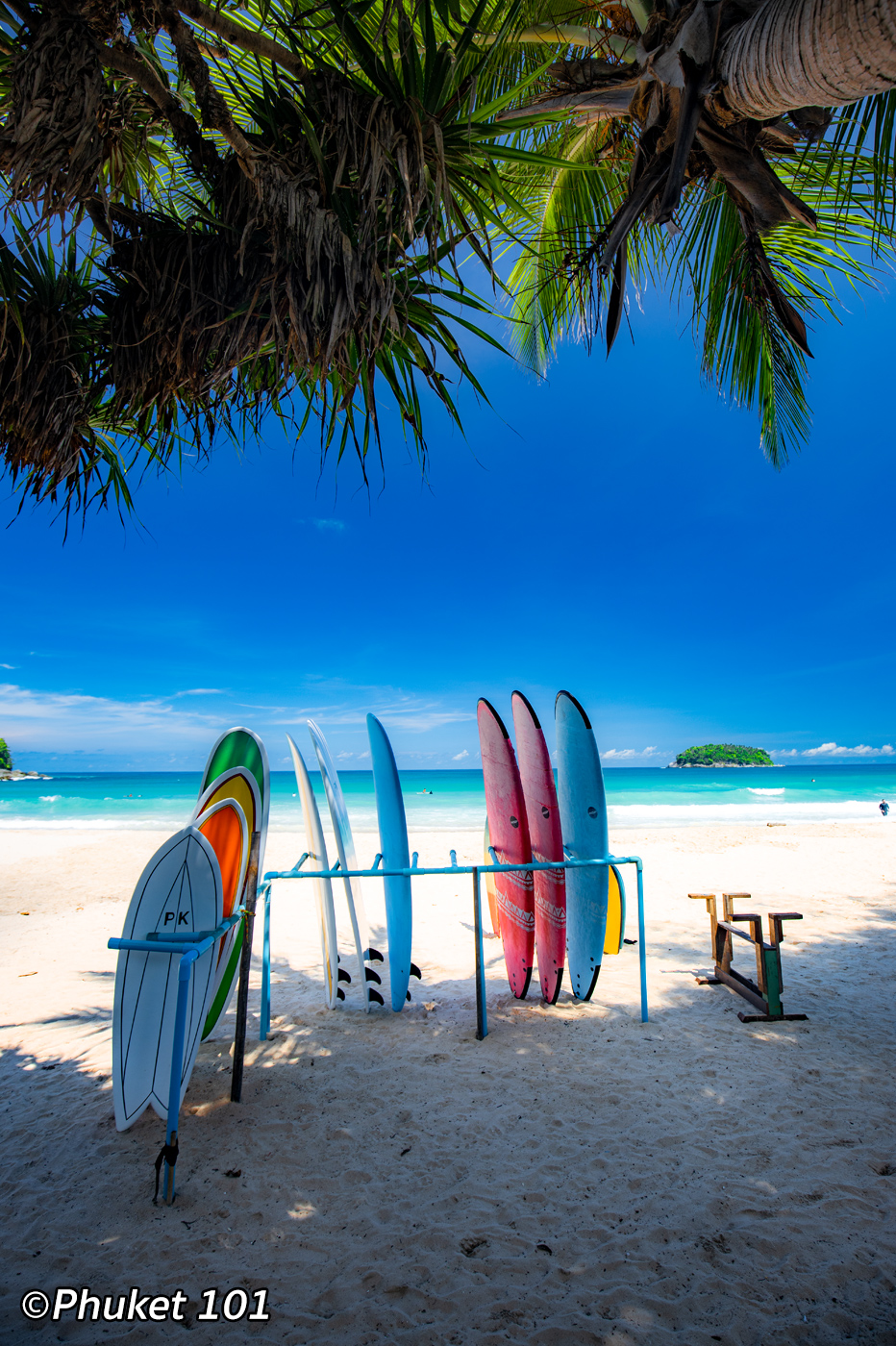
Suppose you visit Phuket during the calmer months of November through April. In that case, some good alternatives to surfing include flowboarding at Surf House in Kata and Patong, standup paddle-boarding (SUP), kayaking and wakeboarding.
Best beaches for surfing in Phuket, from south to north:
Nai Harn Beach
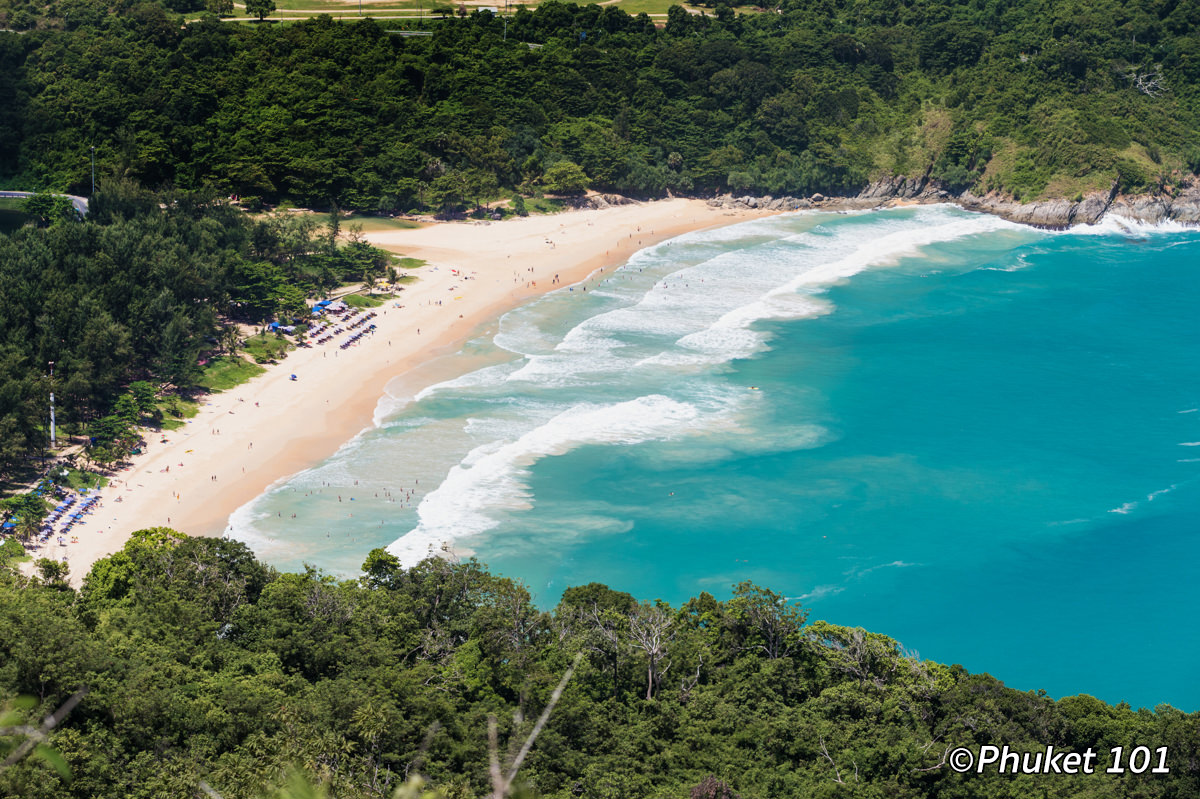
Nai Harn attracts small groups of mostly local surfers, with decent waves ranging from a half-metre to 3-metre swells at each beach end. There’s a beach and reef break at the northern end near The Nai Harn resort, while at the opposite end near the lagoon, a permanent sandbar helps create waves for long and fast rides.
Surf conditions at Nai Harn beach are best suited for beginner to intermediate surfers. You will need to bring your boards here, as no surfboard rentals or lessons are available.
Kata Beach
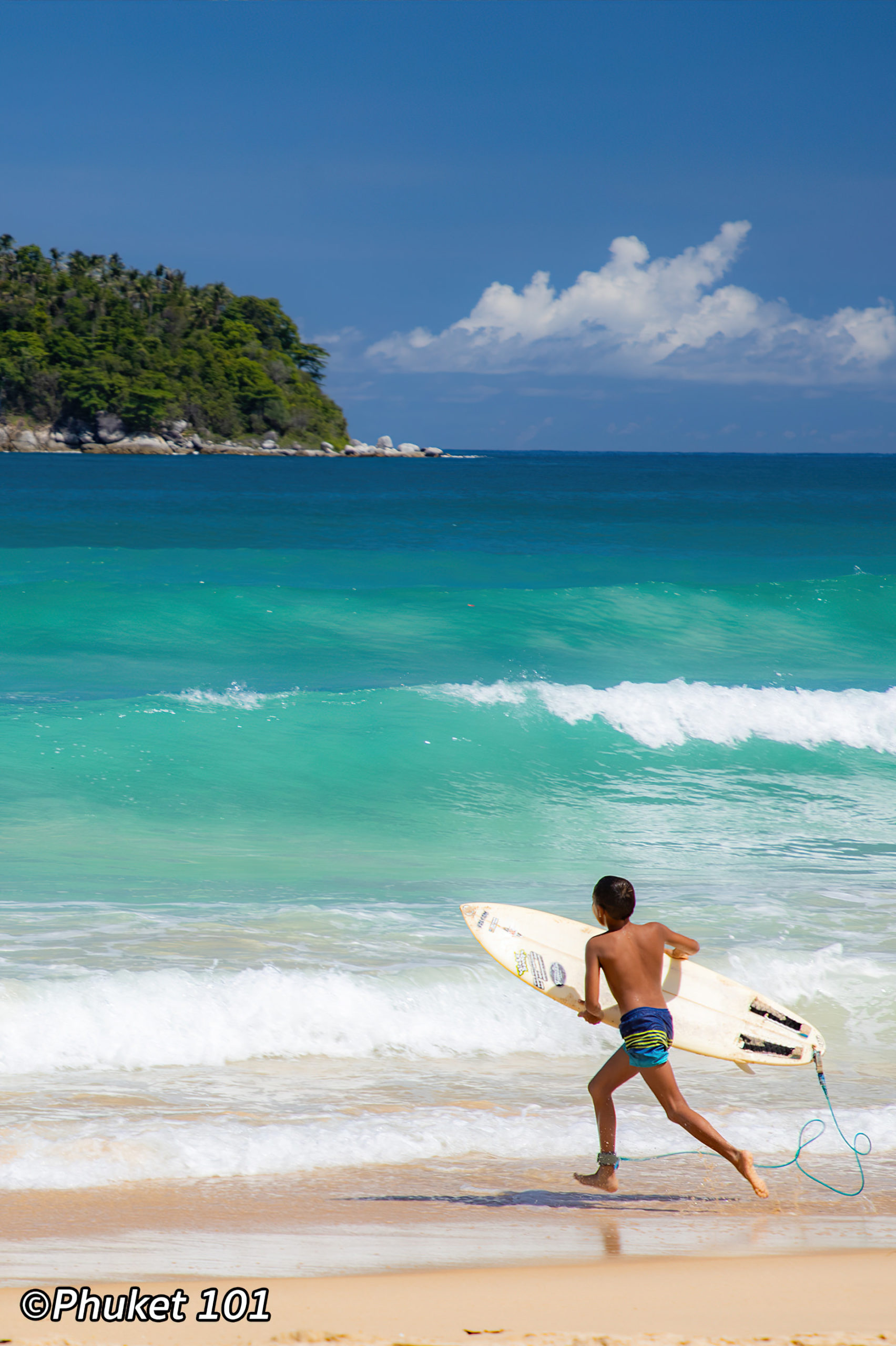
Kata Beach is the best-known surfing beach in Phuket, with the most wave-riding action at its southern end near The Boathouse resort. Surfers should find decent waves at any tide level, but conditions are best mid-tide.
Beginner to advanced surfers will enjoy surfing here, and while Kata can get busy, it’s rarely overcrowded. Board rental is available from a few shops at the beach, and those looking to learn or improve their skills can sign up for lessons at one of the surf schools.
Kata Noi Beach
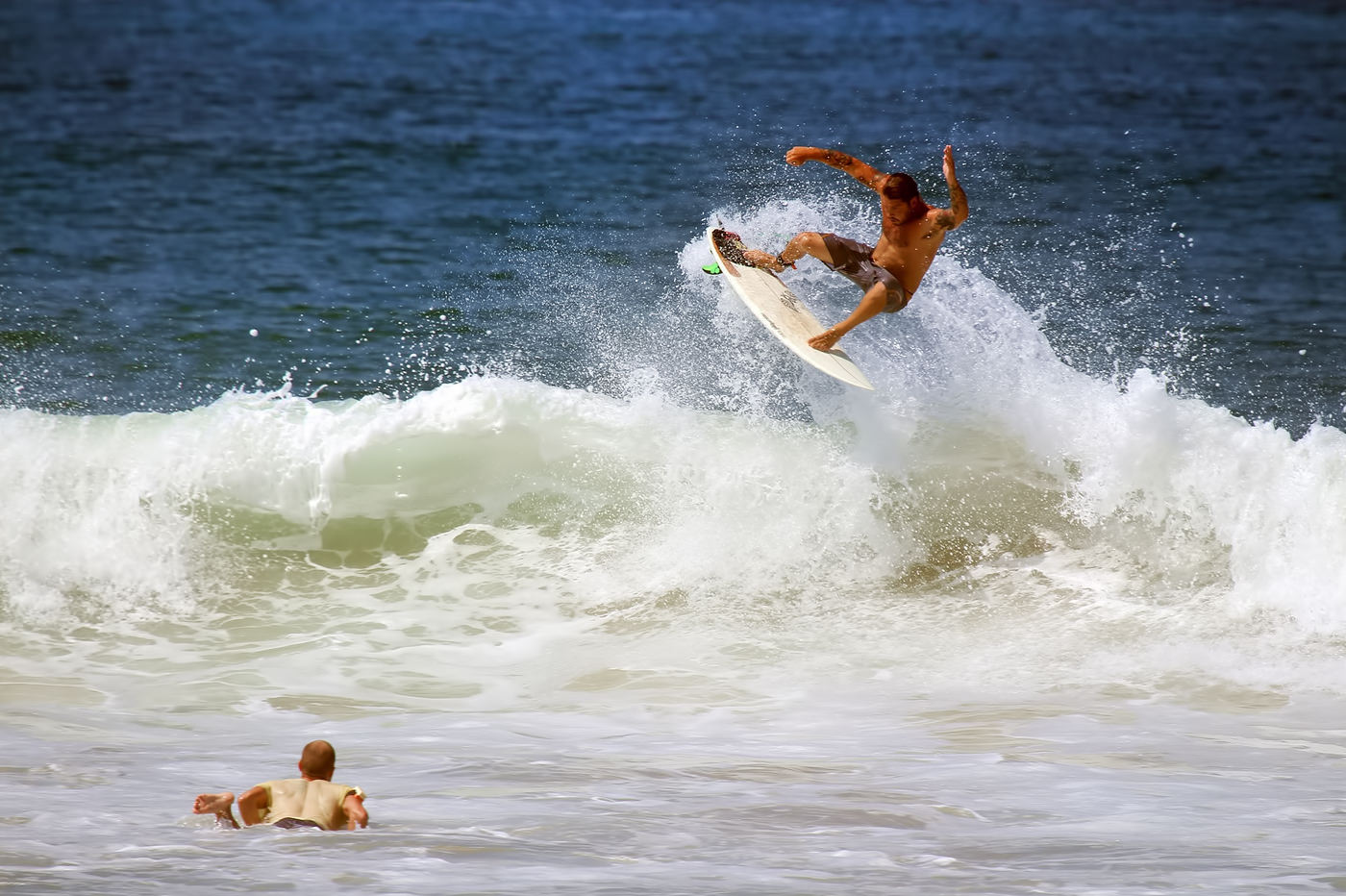
Kata Noi is a tiny bay separated from Kata Beach by a headland with good surfing action at its northern end. The waves here can be quite fast and are usually more powerful than those at the more popular Kata Beach. Katathani Resort takes up most of the land fringing Kata Noi’s beautiful soft white sands, but there’s public access from the road. Unfortunately, there’s no surf school here, but you can easily find surf lessons and board rentals nearby.
Kalim Beach
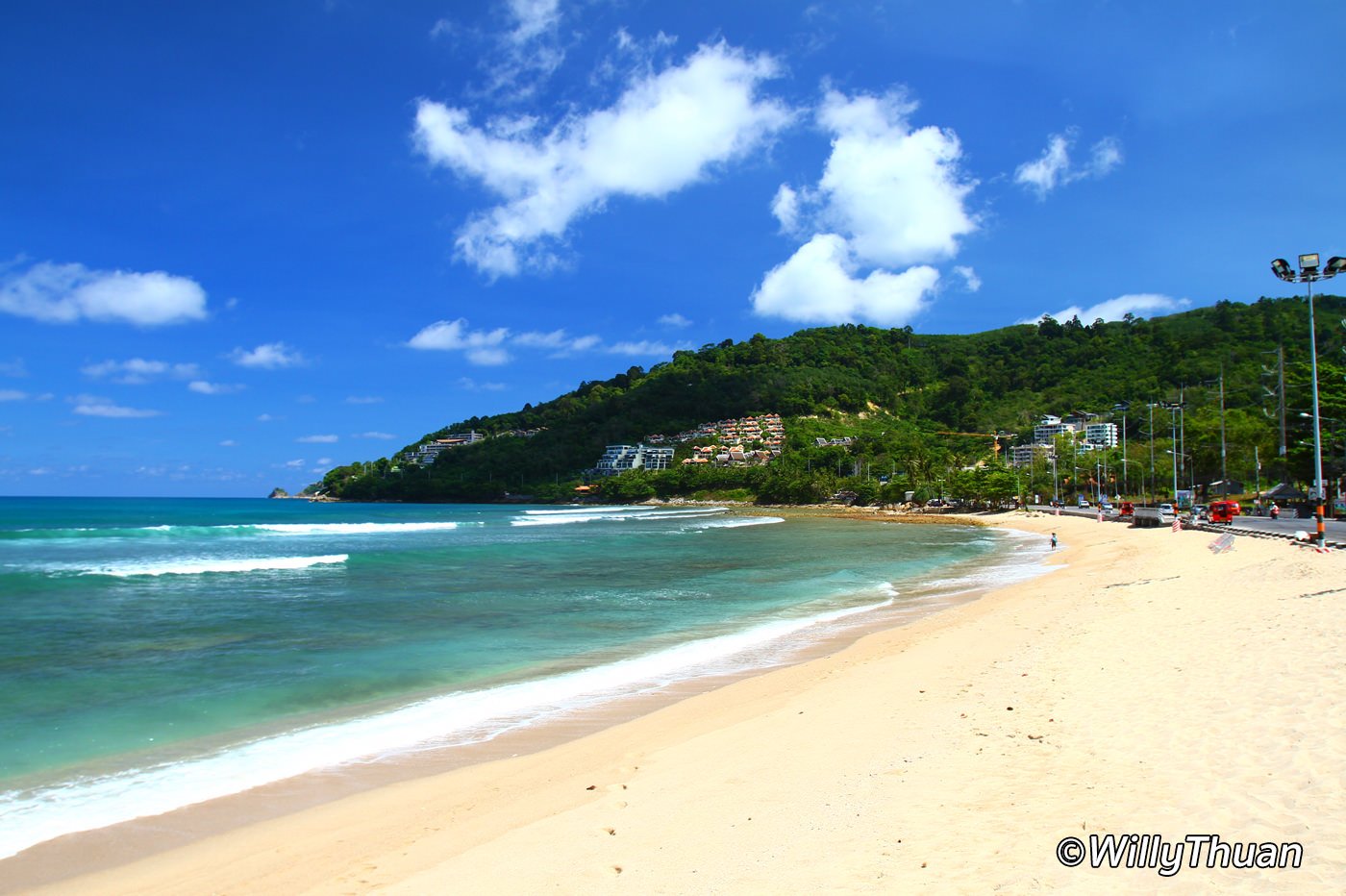
This small beach on a rocky headland just north of Patong Beach is a great little spot for surfing, with waves up to 3 metres. A shallow coral right-hand reef break offers long rides of 50 to 100 metres. However, it’s best to go at high or mid tide as exposed rocks at low tide could make your ride hazardous.
Kalim is more suitable for intermediate to advanced surfers. There are no board rental places directly on Kalim, but you’ll find some along the beach in Patong.
Kamala Beach
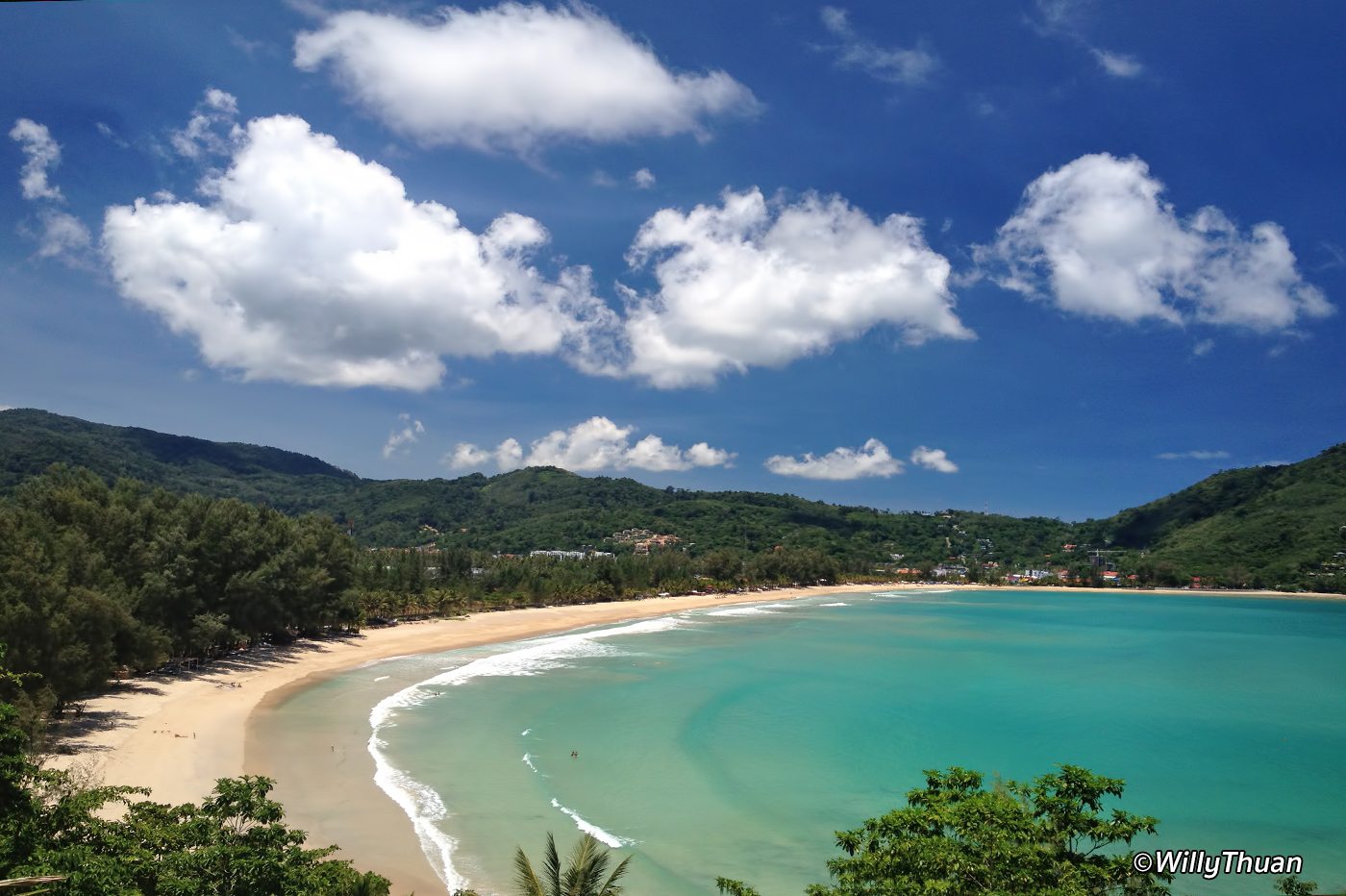
Kamala Beach offers consistent breaks and a sheltered bay that is good for surfers of all experience levels. There are surfable waves at various points along the beach, with some of the best at the northern end near the Novotel Phuket Kamala Beach resort. More advanced surfers like to head to the point break near the southern end.
Surfboard rental is available at a few shops along the beach. Kamala is also great for surfers who want to break up their day riding the waves to enjoy some dining and drinks on the beachfront, with Café del Mar beach club and several restaurants lining the sands.
Surin Beach

Those searching for some barrel waves have the best chance of finding them at Surin Beach. Surfing in this small bay best suits experienced surfers with heavier wave action and strong currents. The best surfing spots are near the rocky headlands at each end of Surin’s 800-metre length.
All the shops along Surin Beach cleared out some years ago, so you won’t find any surf schools here, and you’ll need to source your surfboard elsewhere before hitting the waves.
Bangtao Beach
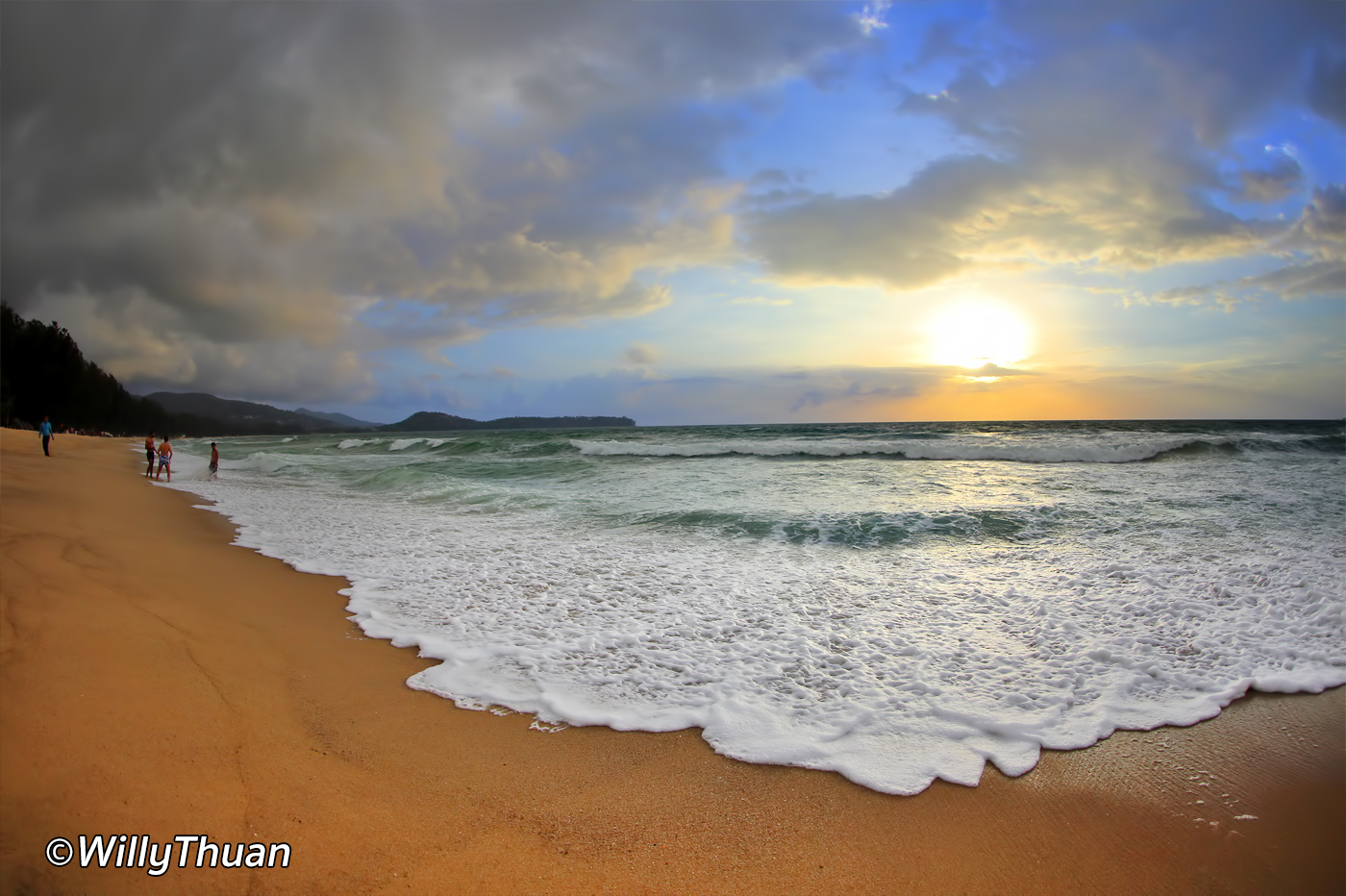
Bangtao Beach is a long stretch of soft sand north of Surin Beach that appeals to beginner surfers with calmer wave conditions. The southern end is sheltered by the headland, churning up smaller waves perfect for those learning to surf.
A few surfing schools and board rental places are found at this southern end near Sunwing Hotel and Catch Beach Club. You’ll find bigger waves north towards Layan Beach, but they can be hit or miss as they don’t appear consistently.
Nai Yang Beach
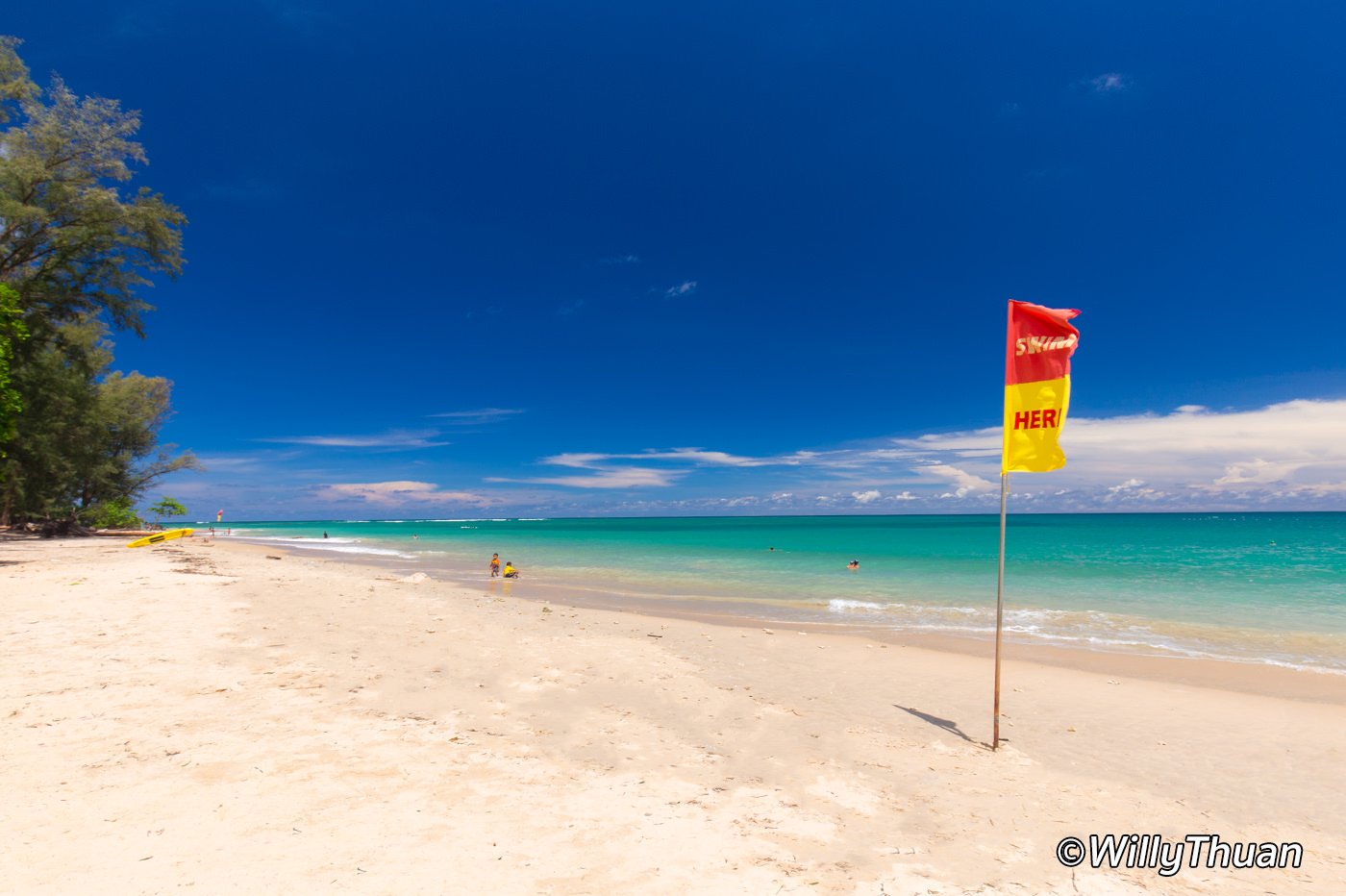
Nai Yang Beach near Phuket airport has an offshore reef that can kick up some of Phuket’s best surfing waves, but it’s a notoriously unpredictable spot. A long paddle out to the reef and exposure to the winds make Nai Yang a place best left to more advanced riders. However, surfing closer to the beach is sometimes possible at low tide.
Nai Yang has no surf schools or board rental places, so you’ll need to bring your surfboard out to play here. However, a kiteboarding shop (Kite Boarding Asia) offers lessons and rentals near the Slate Hotel if you’d like to try a wind-powered wave-riding challenge instead.
More photos of surfing in Phuket


Map of Surfing Beaches in Phuket
More reading