


Where to Find it and When is the Season

Mango sticky rice is the most famous Thai dessert, and you will find it all over Phuket, from market stalls to dessert cafes to sit-down Thai restaurants. The dish is simple: warm glutinous rice soaked in sweet, salty coconut milk, served with slices of ripe yellow mango. It is everywhere on the island, but the quality swings a lot from one place to the next. This guide covers what the dish actually is, when the mango is at its best, the spots I would point a visitor towards, and how to tell a good plate from a forgettable one. After years of eating my way around the island, I still think a good one is hard to beat.
What mango sticky rice actually is
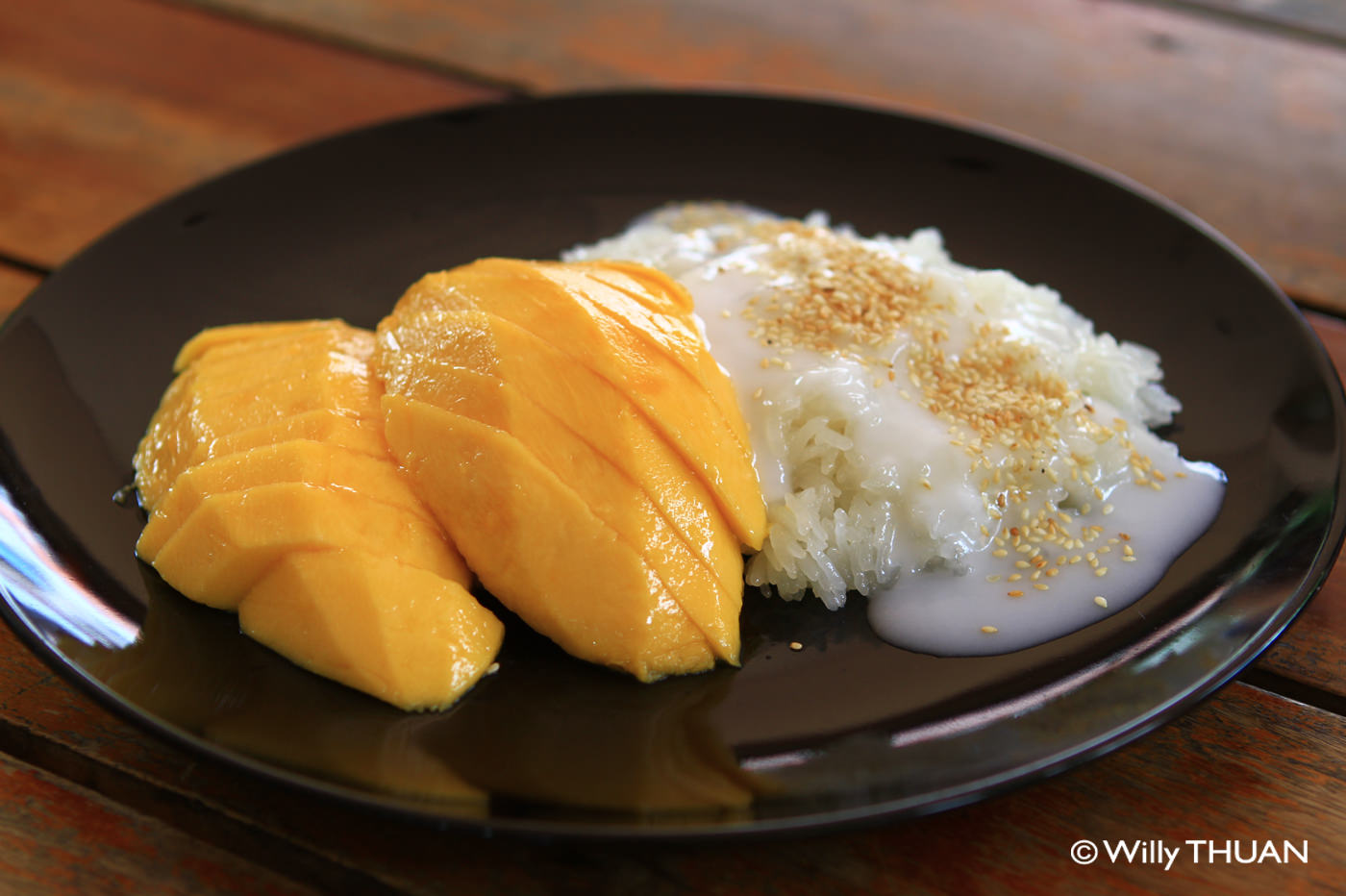
The Thai name is khao niao mamuang. Khao niao means sticky rice, and mamuang means mango. The rice is a glutinous variety, steamed and then mixed with coconut milk, sugar and a pinch of salt while still warm. That salty-sweet balance is the whole point. It should not taste like plain sweet rice.
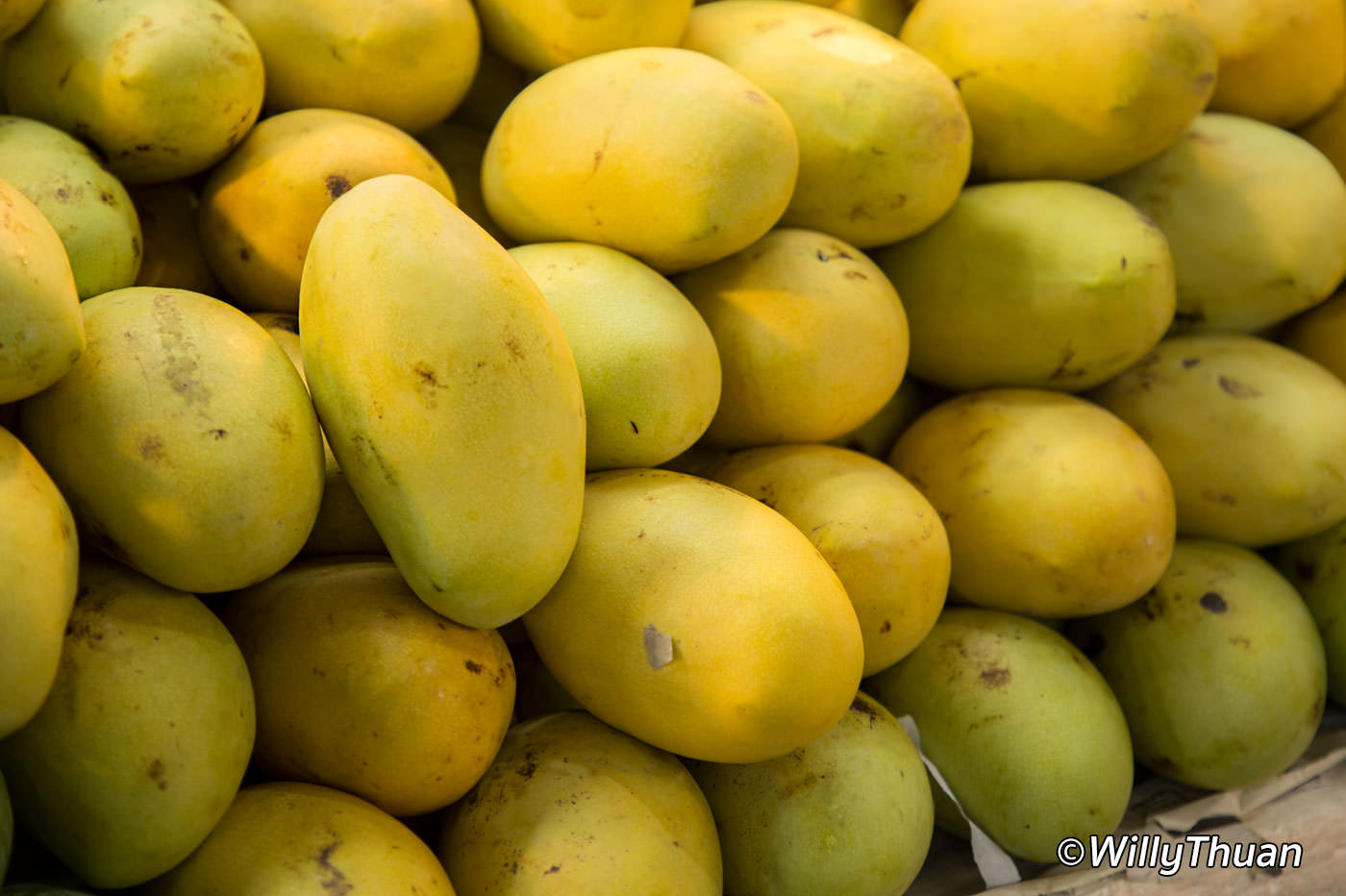
The mango matters as much as the rice. The classic variety is nam dok mai, a smooth yellow mango with no stringy fibres and a clean, honey sweetness. Some places use ok-rong, another sweet yellow type. A good plate often comes with a drizzle of thicker coconut cream on top, and sometimes a scatter of toasted mung beans or sesame seeds for crunch.
One thing worth knowing: it is naturally dairy-free. The creaminess is all coconut, so it works for vegans and anyone avoiding milk.
When mango is at its best
Thai mango season runs roughly from March to June, peaking in April and May. This is when nam dok mai is at its sweetest and juiciest, and when mango sticky rice is genuinely at its best across the island.
Outside those months, you can still find it almost everywhere, because Phuket is a tourist island and the demand never stops. The catch is that the mango is often frozen, imported, or simply less ripe. The rice and coconut stay the same year-round, but the fruit is the part that suffers. If you are visiting in the high season around December and January, the dish is still good, just know the mango is past its natural peak.
Where to eat it in Phuket
You will easily find mango sticky rice everywhere in Phuket, so don’t worry too much. Now, if you want to find places that do it really well, these are research-based picks across different settings, so you have a market stall, a couple of Old Town spots, a scenic cafe, and a proper Thai restaurant.
Mae Patum, Phuket Old Town
A small dessert spot in the Old Town that locals send people to for mango sticky rice. The mango is ripe and sweet, the rice fragrant, and the coconut milk properly creamy. Portions are generous, and the setting is simple and casual rather than fancy. A good choice if you want the dessert done well without a big restaurant around it.
Kopitiam by Wilai, Phuket Old Town

An old-style Sino-Portuguese cafe on Thalang Road in the heart of the Old Town. The mango sticky rice here is served as a trio with the sticky rice, fresh mango, and a scoop of coconut ice cream. They warm the rice before serving, which is a small detail that makes a difference. Easy to pair with a wander around the historic streets.
Wanlamun, Phuket Town
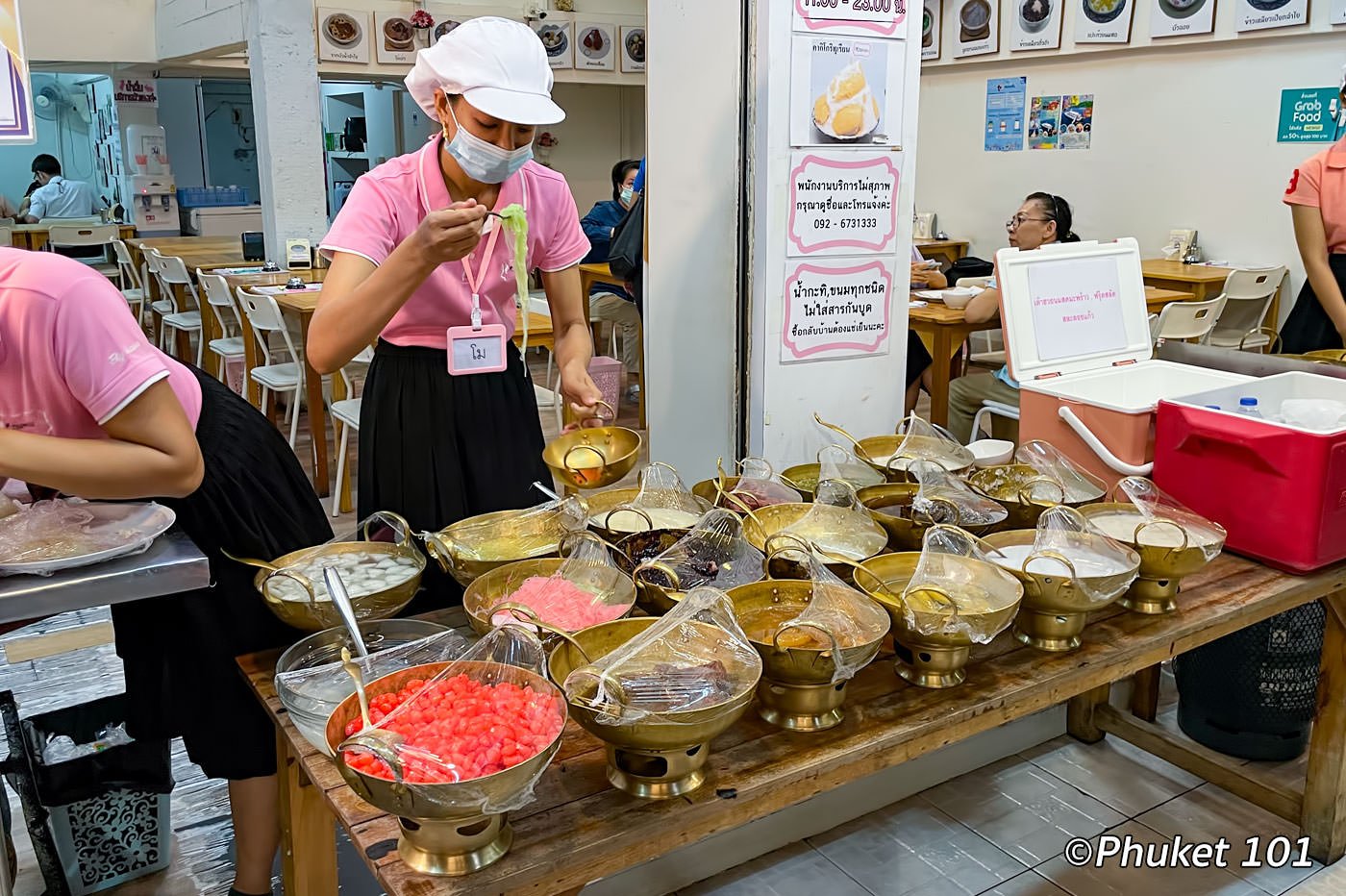
A dessert-focused spot in Phuket Town with a wide spread of Thai sweets. The mango sticky rice is the one people come back for, with soft rice and good mango. Worth it if you want to try a few other Thai desserts in one sitting alongside the classic.
Ma Doo Bua, near Thalang
The cafe to pick if you want the dessert plus a setting. Ma Doo Bua sits beside giant lotus ponds and is built for slow afternoons and photos. The mango sticky rice is well-made, and the surroundings do the rest. Further north than the Old Town, so best worked into a day out that way.
Raya Restaurant, Phuket Old Town

A long-running traditional Thai restaurant set in an old Sino-Portuguese mansion. This is the sit-down-meal option, where you order the mango sticky rice to finish a proper Thai dinner rather than as a standalone snack. The dessert is classic and well made, in keeping with the restaurant’s reputation for old-school Phuket cooking.
Banzaan Fresh Market, Patong

For the street-stall version, the fresh market behind Jungceylon in Patong has fruit and dessert stalls making mango sticky rice fresh. This is the cheapest, most casual way to eat it, packed in a box and eaten on the go. Handy if you are based around Patong and want the real, no-frills version.
How to spot a good one
The rice should be glossy and just warm, not fridge-cold and hard. Cold, stiff rice is the giveaway of a pre-made box that has been sitting too long.
The coconut should taste of salt as well as sugar. If it is only sweet, it is missing half the flavour.
The mango should be ripe, soft and yellow, with no green edges or sour bite. In peak season, this is easy. Off-season, look for places with a fast turnover so the fruit has not been sitting around.
Freshly assembled beats pre-packed. Stalls that spoon the coconut over in front of you usually serve a better plate than ones handing over a sealed box made hours ago.
A few practical notes
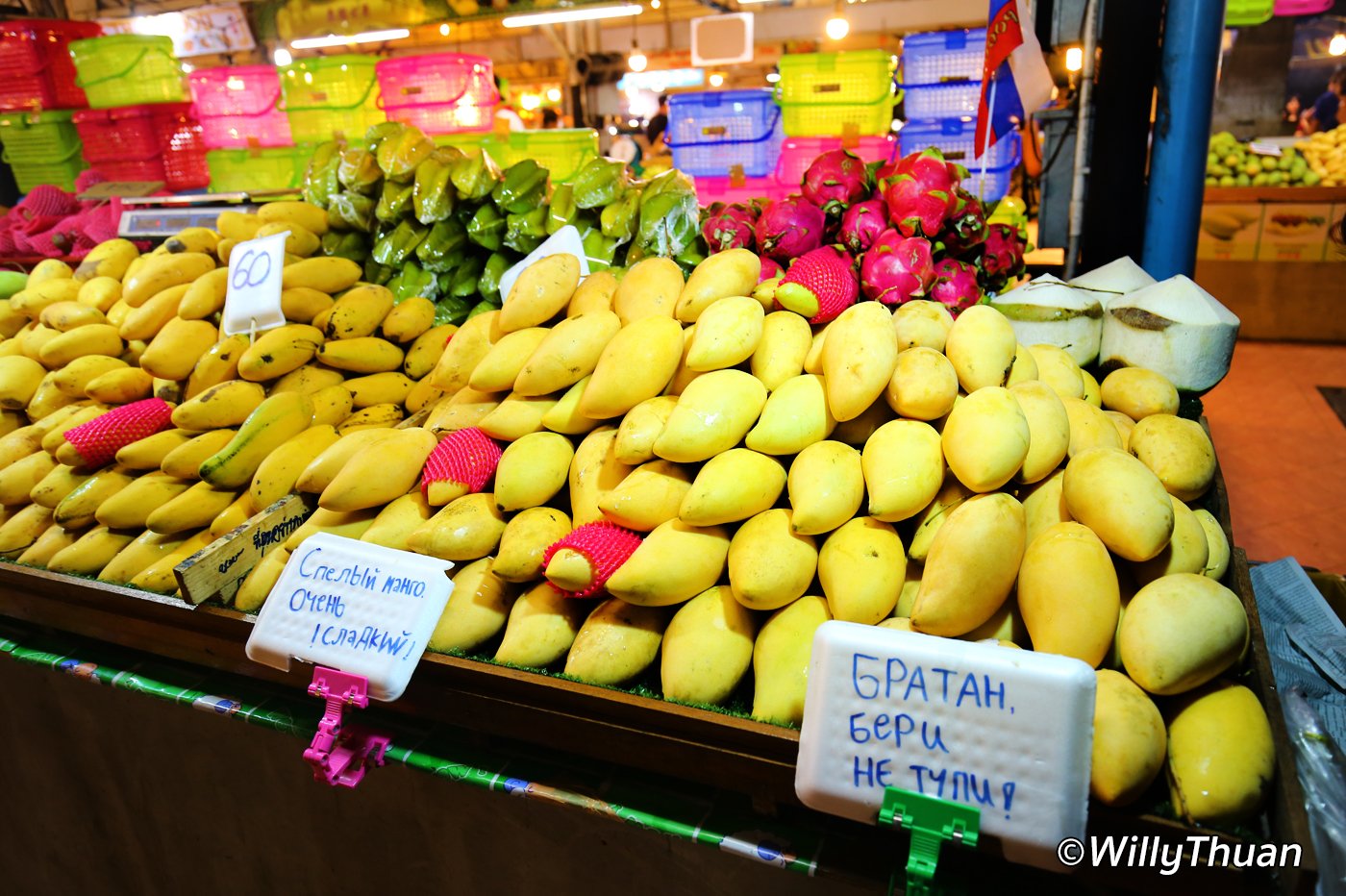
Markets and street stalls give you the cheapest, freshest version, often the best value on the island. Dessert cafes and restaurants charge more, and you are partly paying for the setting and the air-conditioning.
It travels well for an hour or two, so a market box is fine to take back to your room or the beach. Just eat it the same day.
Because it is coconut-based, it suits vegans and anyone off dairy, which is rare for a creamy dessert.
More Local Food in Phuket

If you are visiting in mango season, make a point of trying it more than once. The difference between an average plate and a great one is bigger than you would expect for something this simple.
