


What Are the Best Thai Sweets in Phuket?

Thailand is known worldwide for its amazing food, but it doesn’t stop there. There are also many Thai sweets and desserts to try during your stay in Phuket. Of course, everyone knows the delicious pancakes (or roti) and the mango sticky rice, but don’t stop your culinary exploration here: look around, and you will find amazing treats to make your holiday even sweeter! You don’t have to go very far to find them; there are plenty of sweets to enjoy at any night market and in the streets of Phuket Town, especially during the Sunday Street Market.
Khao Niao Mamuang – ข้าวเหนียวมะม่วง (Mango Sticky Rice)
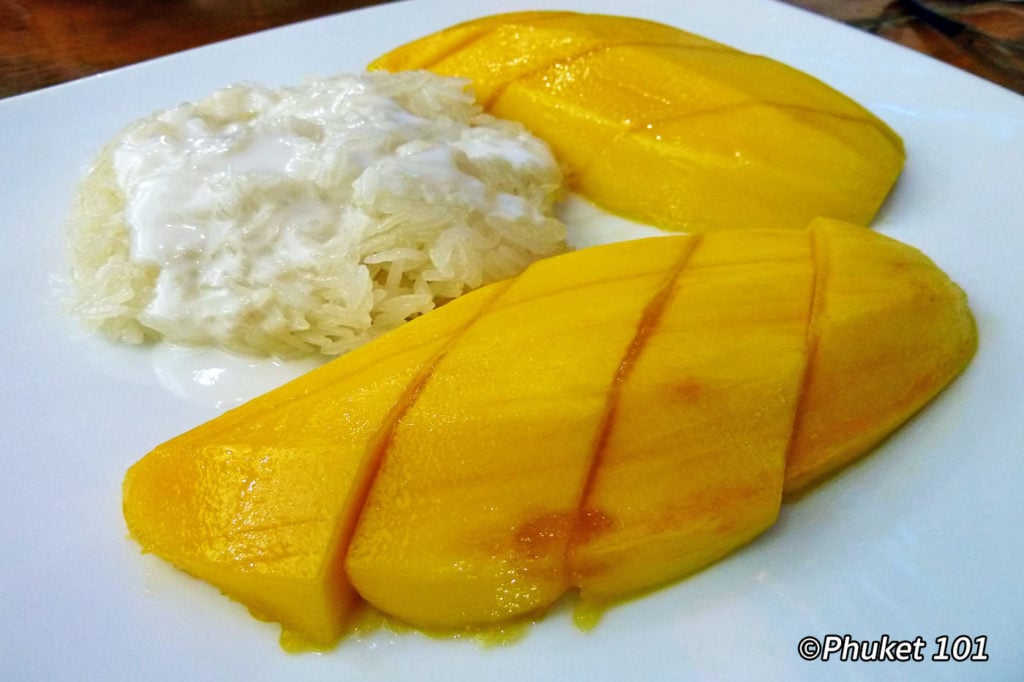
Khao Niao Mamuang is a very close tie with the banana pancake! We asked our readers several times; both are a must-try treat in Thailand. The dessert is surprisingly simple: a beautiful ripe mango nicely peeled, some sticky rice covered with condensed milk and a sprinkle of sesame seeds. It’s simple, but while the pancake quality doesn’t vary too much from one cart to the next, mango sticky rice depends on the restaurant and the season. Almost every Thai restaurant will have them on the menu.
Roti – โรตี (Banana Pancake)
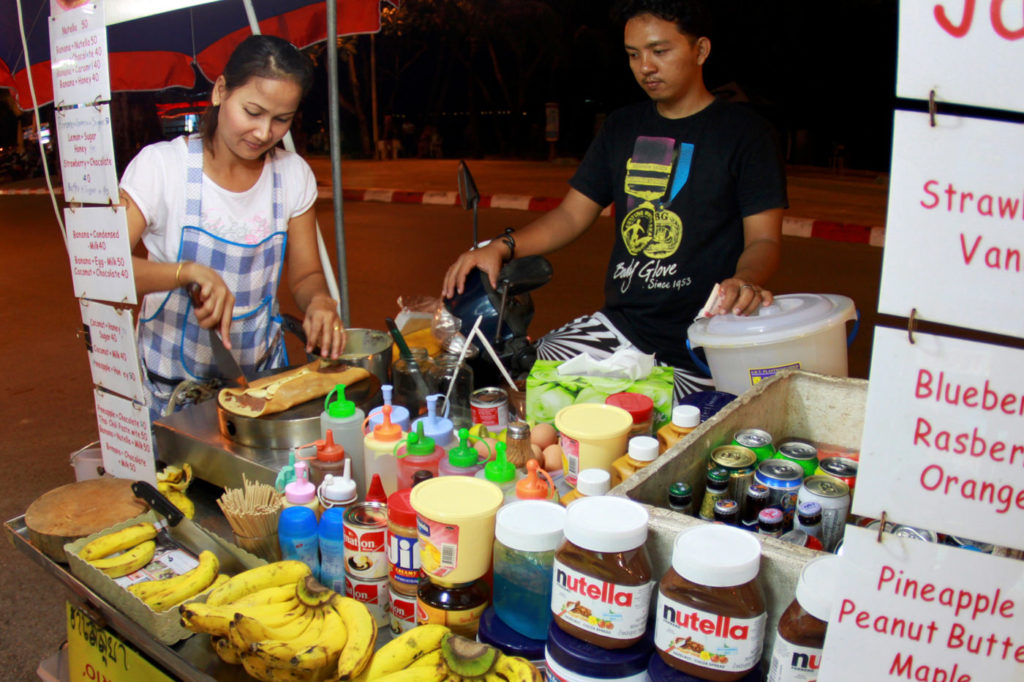
Roti is just called ‘banana pancake’ by most visitors, though it’s not a pancake at all. The dough is stretched thin and fried on a flat griddle with butter, then folded around your choice of fillings. Those pancakes come in many ways: with condensed milk, Nutella, banana, chocolate, mango, peanut butter, and pineapple. There seems to be no limit to their imagination! The technique came from Indian and Muslim traders, and watching the vendor stretch and flip the dough is part of the experience. They are easy to find on the streets of any town in Phuket.
Ice Cream Kati – ไอศกรีมกะทิ (Coconut Ice Cream)
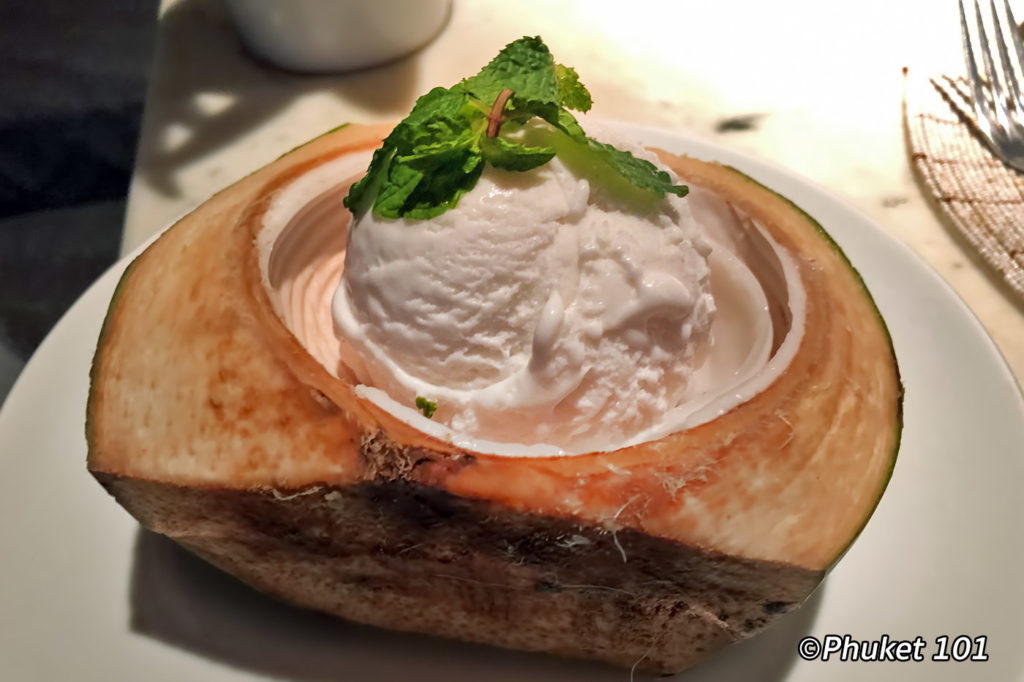
Ice Cream Kati seems to be an obvious choice in a warm country that grows so many coconut trees, and once you try it, you will realise how different it is from the ‘branded’ ice cream you ate before. The taste is lighter, more delicate and not as sweet as the coconut ice cream bought overseas. You may have your ice cream served inside a real coconut to make things better! It comes with red water chestnut, roasted peanuts, and sticky rice, and you can also eat the coconut flesh. Such a refreshing treat after a seafood dinner. So far, the best we found was at Kan Eang @ Pier in Chalong Bay.
Kanom Chan – ขนมชั้น (Layer Jelly Cake)
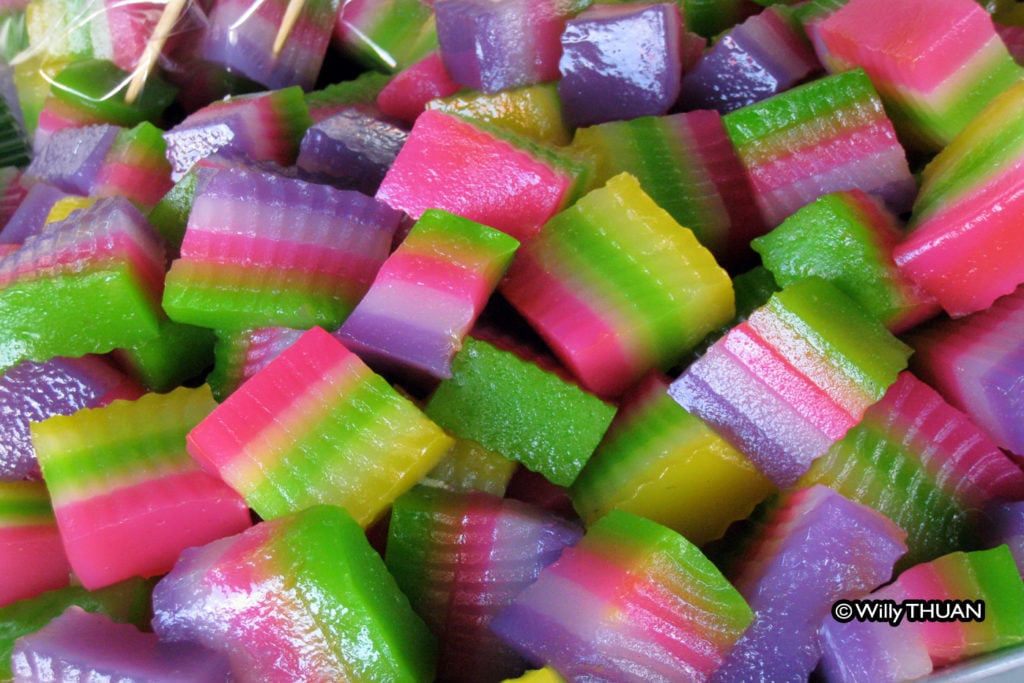
Kanom Chan is a colourful and sweet traditional dessert made of rice and coconut. It’s soft, sweet, a little chewy, and quite easy to find at night markets. ‘Kanom’ means ‘dessert’, and ‘chan’ means ‘layers’. It is usually made with palm sugar, coconut milk, rice flour, tapioca, and pandan for the green colour. Each layer is steamed separately, creating the distinctive striped appearance. The dessert is sliced into small squares or diamond shapes before serving.
Nam Khaeng Sai – น้ำแข็งใส (Shaved Ice with Syrup)
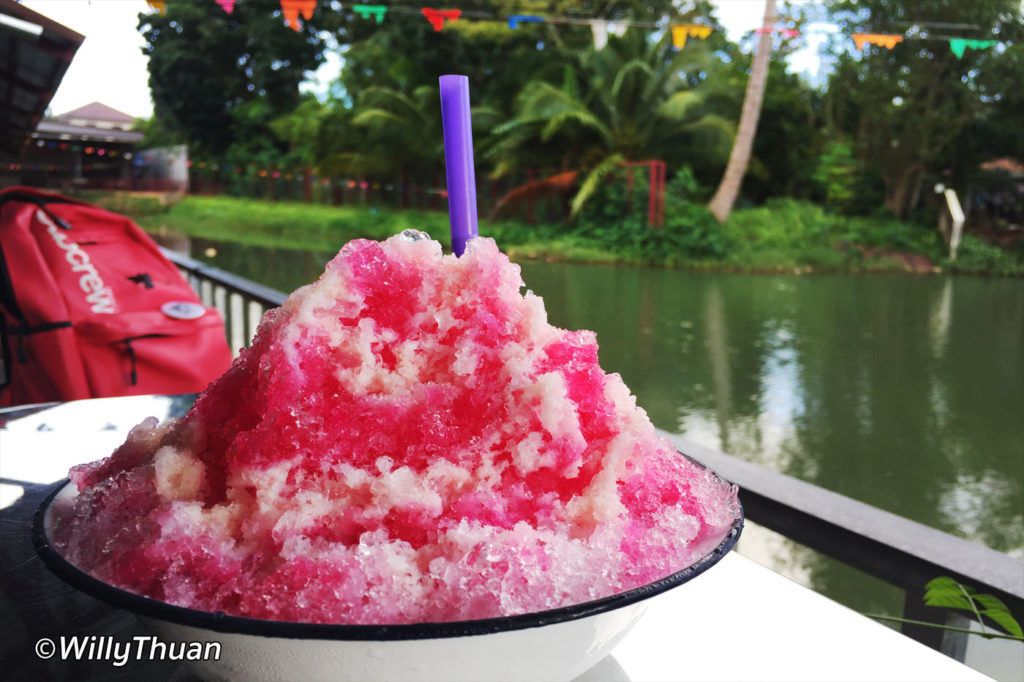
For most foreigners, serving shaved ice as dessert is a little strange, but the longer you live in a tropical country like Thailand, the more it makes sense. It’s simple, cheap, very refreshing, and since it’s mostly water, it’s very light! All it takes is shaved ice (you can easily buy a machine to do your own), some cheap syrup and condensed milk purchased at the local store. The red syrup is the most popular, not strawberry or grenadine. Under the ice, you might find corn, blocks of jelly or even red beans, which often shock foreigners.
Kluay Khaek – กล้วยแขก (Banana Fritters)
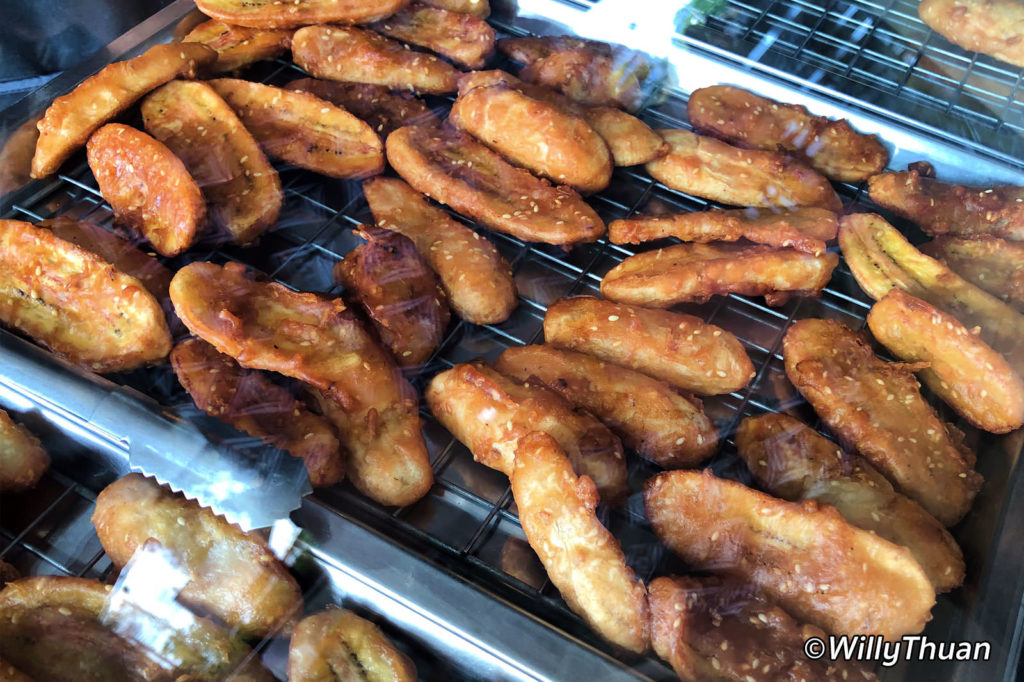
Kluay Khaek are deep-fried bananas coated in a light, crispy batter made from rice flour, sesame seeds, shredded coconut, and a pinch of salt. The bananas used are small, firm Namwa bananas that hold their shape when fried. The fritters are golden and crunchy on the outside, soft and sweet inside. They’re best eaten hot from the wok and are sold from street carts throughout Phuket, usually in the late afternoon.
Kanom Buang – ขนมเบื้อง (Crispy Pancake)
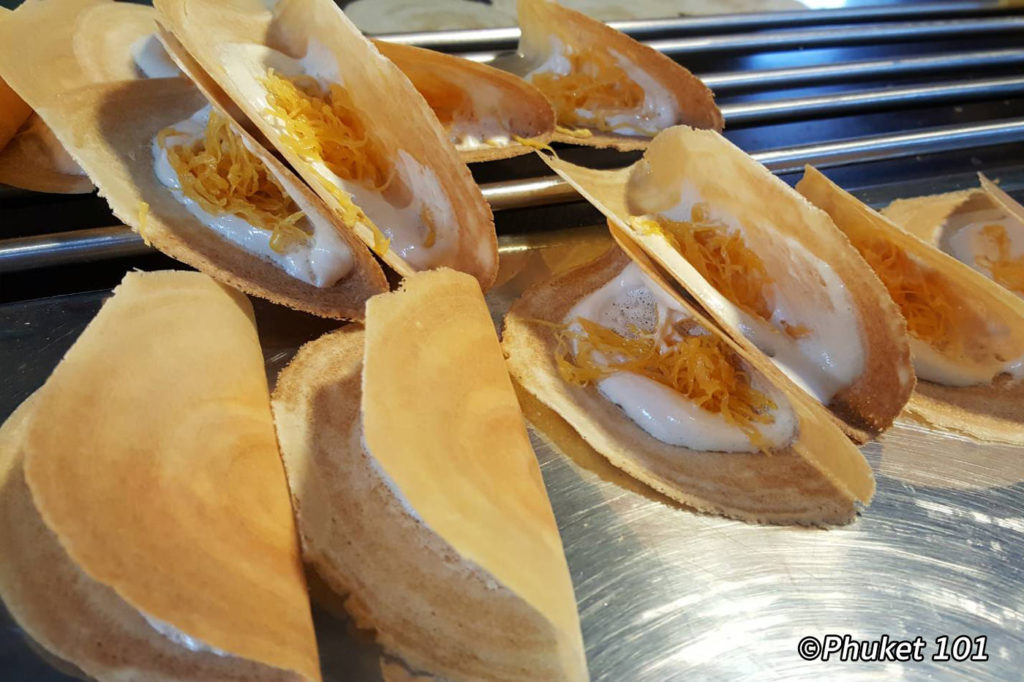
Kanom Buang is an ancient Thai dessert known as crispy pancakes in English. It is a popular form of street food in Thailand. These crepes look a bit like tacos. The thin, crispy shells are made from rice flour batter cooked on a hot griddle. Kanom Buang are usually first topped or filled with coconut cream, followed by sweet or salty toppings such as shredded coconut, Foi Thong (golden egg threads), or chopped spring onions for the savoury version.
Look Chup – ลูกชุบ (Mung Bean Sweets)
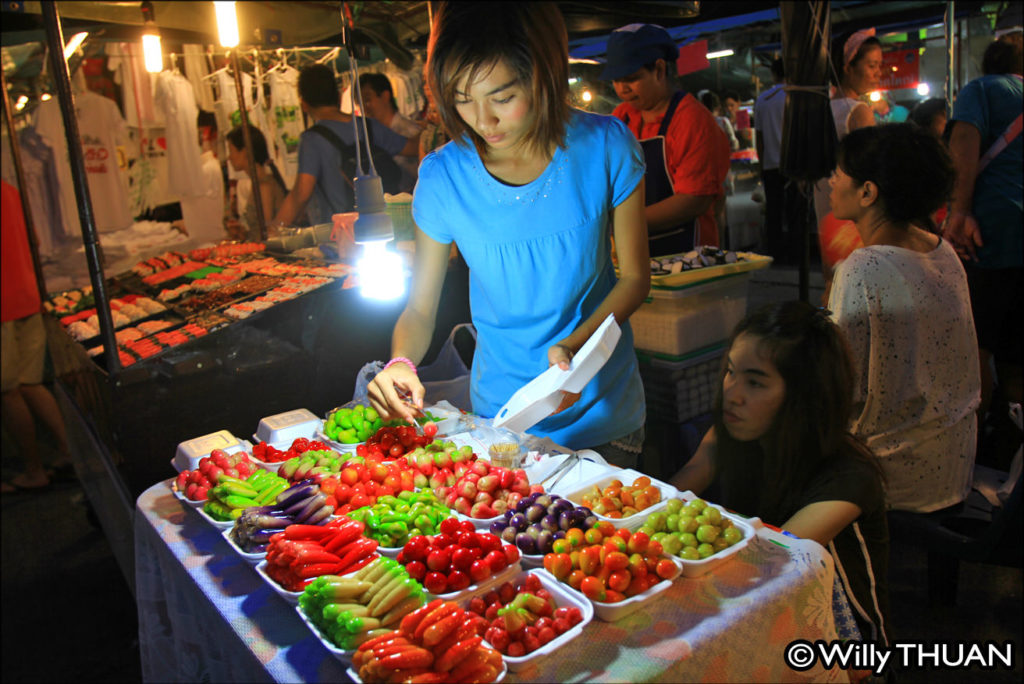
Look Chup is a superbly crafted traditional dessert made of mung bean paste mixed with coconut milk, similar to marzipan. The paste is shaped by hand into miniature fruits and vegetables, then coated with a thin layer of edible gelatin that gives them a glossy shine. The craftsmanship is remarkable, with each tiny creation painted by hand. They’re sweet and delicate, and make beautiful displays at local markets. Look Chup are often given as gifts and appear at special occasions.
Kanom Krok – ขนมครก (Coconut Pudding)
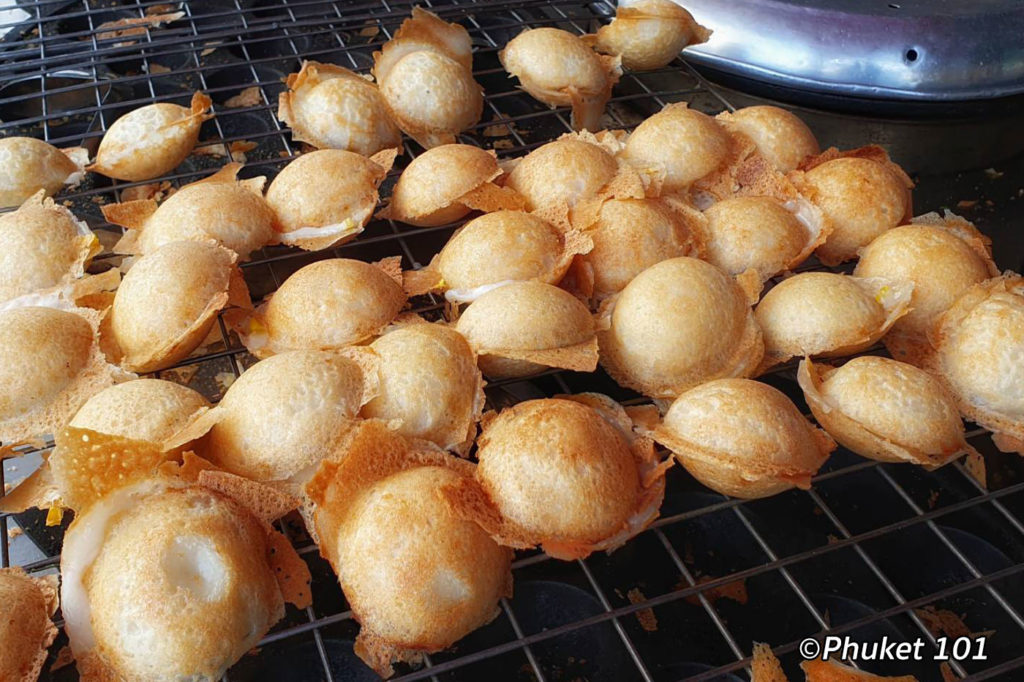
Kanom Krok is made of rice flour, sugar, and coconut milk mixed together to form a dough, then split into two batters, one salty and one sweet. Both batters are cooked in a special cast-iron pan with small round moulds. Each half is picked, and the two half-circular pieces are joined to form this circular shape. The outside is crispy while the inside remains soft and custardy. Common toppings include spring onion, corn, or taro. Kanom Krok is a popular breakfast and snack throughout Thailand.
Bua Loi – บัวลอย (Rice Balls in Coconut Milk)
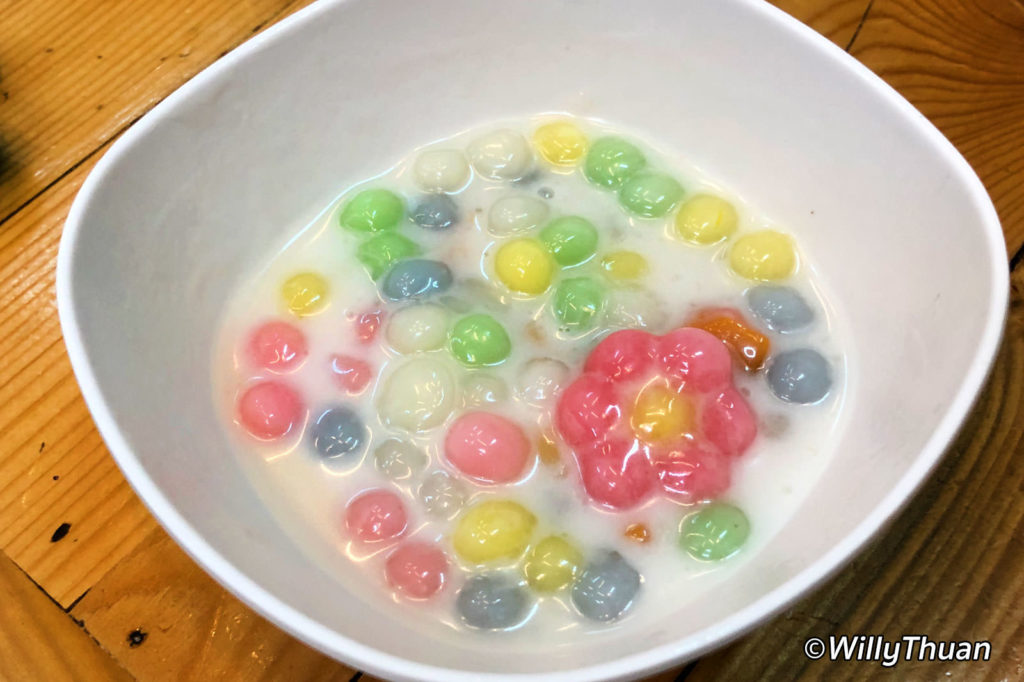
Bua Loi is a warm dessert made of colourful rice flour balls floating in sweet coconut milk. The balls are naturally coloured using pandan (green), butterfly pea (blue), and pumpkin (orange). It’s surprisingly good and gentle, reminding of soothing childhood desserts. The coconut milk is lightly sweetened with palm sugar, and sometimes a salted egg yolk is added in the centre of each ball. You can find it at Wanlamun Sweet Shop in Phuket Town.
Tako – ตะโก้ (Coconut Jelly)
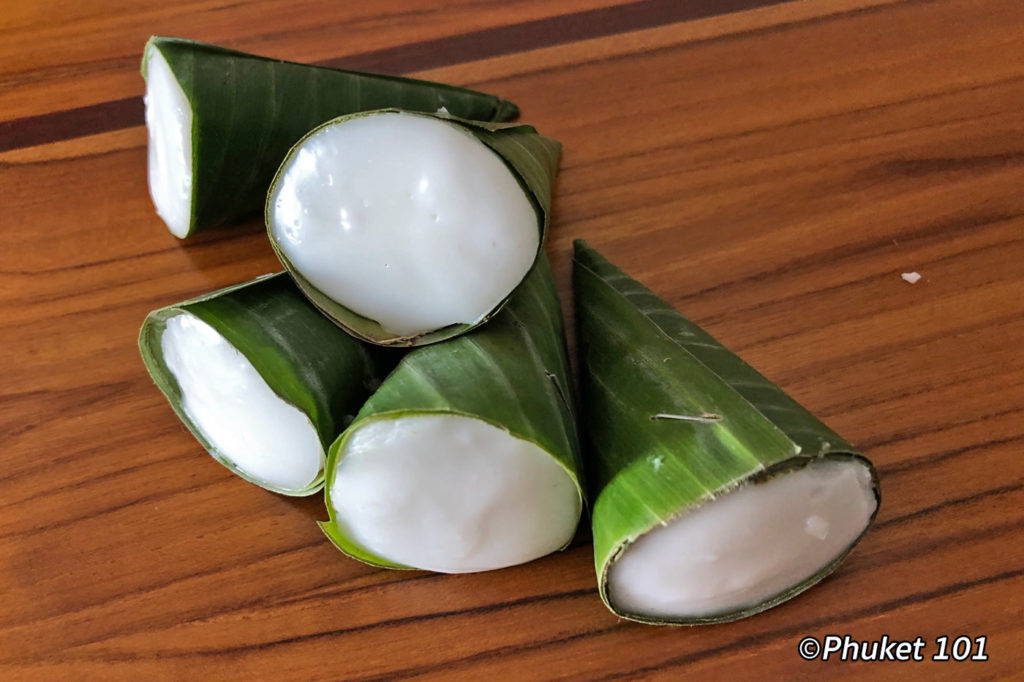
Tako is a Thai dessert with two distinct layers: a bottom layer made of flour, water, and sugar, often flavoured with corn, taro, or water chestnut, and a creamy coconut milk topping. The dessert is traditionally served in small cups fashioned from pandan leaves, which add a subtle fragrance. The texture is silky and jiggly, and the combination of the slightly firm base with the rich coconut cream on top makes it irresistible.
Oh Aew – โอเอ๋ว (Banana Jelly Dessert)
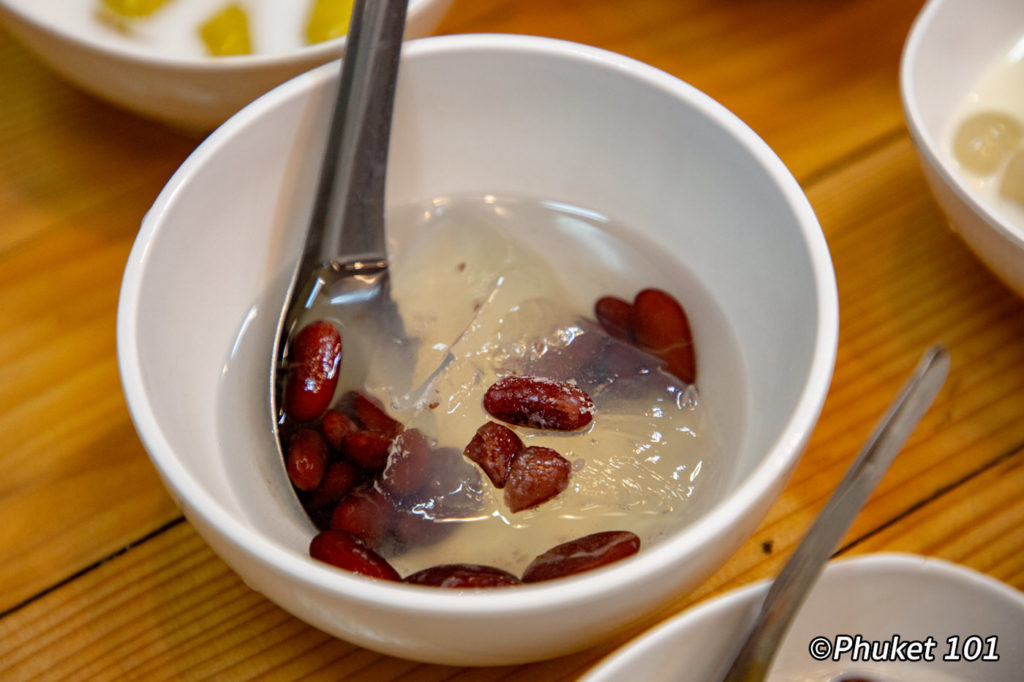
Oh Aew is an icy dessert with gelatinous cubes made from banana seed starch and red kidney beans. It’s served with shaved ice and sweet red syrup. Oh Aew originated from Hokkien Chinese settlers in Phuket and remains a local favourite. It’s refreshing and light, very popular with Phuket people, but might be a little surprising to foreigners. You can find it at Cafe’In, the coffee shop in front of the Thai Hua Museum in the old Phuket Town, and at Wanlamun Dessert Shop.
Kanom Thuay – ขนมถ้วย (Coconut Custard)
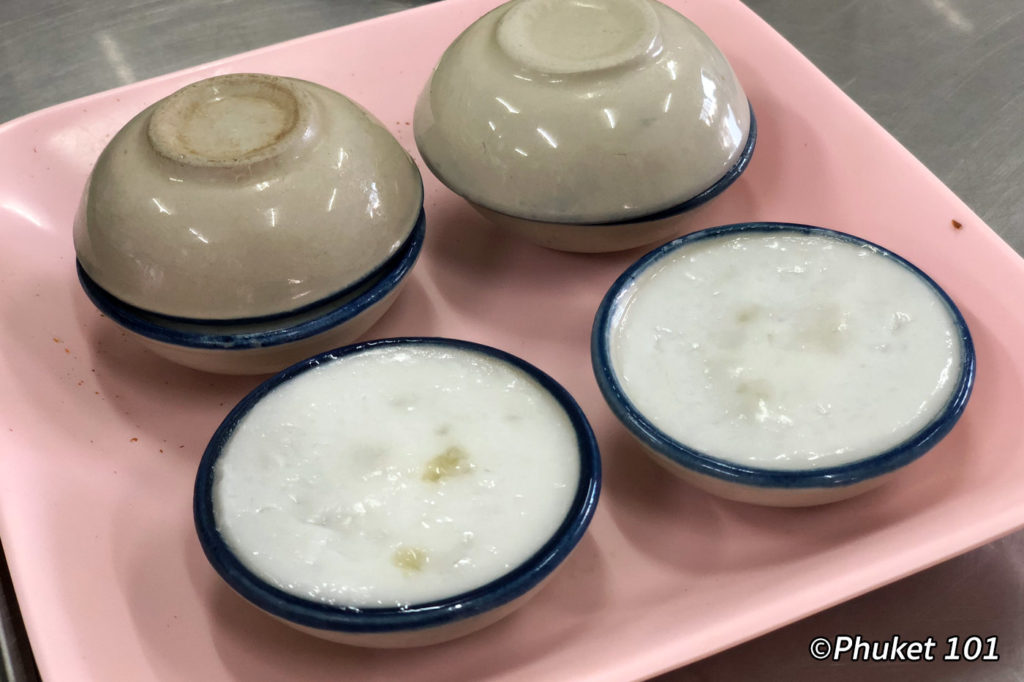
Kanom Thuay is a very popular treat among locals. You will mostly find it in a local restaurant, for lunch or dinner. As seen in the photo above, it is served in two little ceramic cups placed on top of each other. The bottom layer is sweet, made from rice flour, coconut milk, and palm sugar, while the top layer is lightly salted coconut cream. The contrast between sweet and salty is what makes this simple dessert so addictive.
Lod Chong – ลอดช่อง (Pandan Noodles in Coconut Milk)
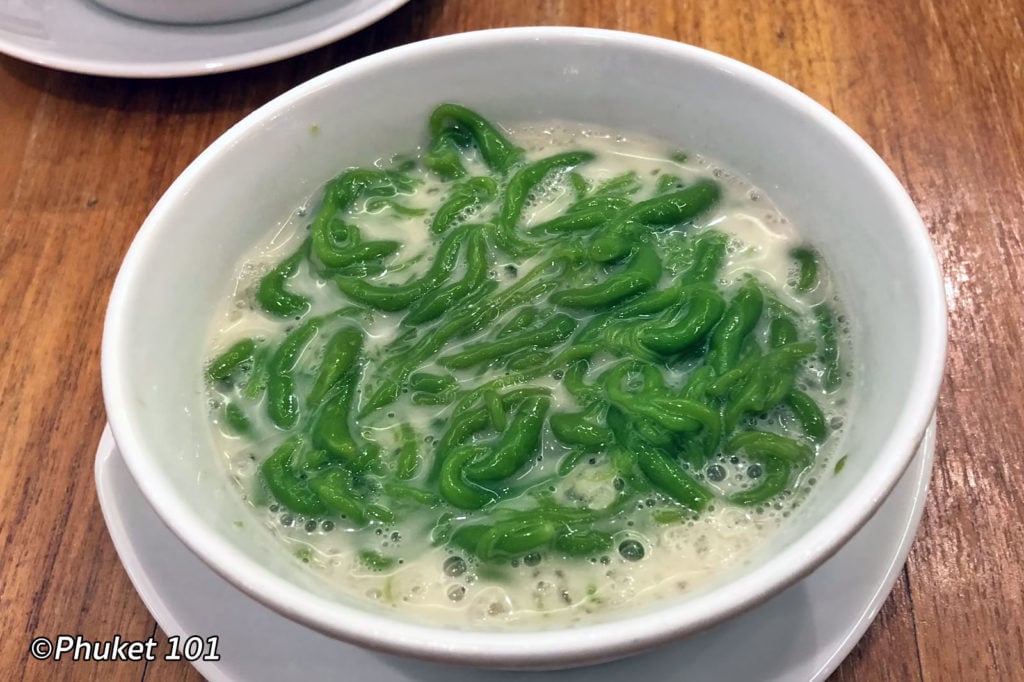
Lod Chong is a little surprising the first time you see it in a glass jar by the street. It looks like green worms in icy, sugary coconut milk! The green ‘noodles’ are made of rice flour and mung bean flour, coloured and flavoured with pandan juice. They’re pressed through a sieve into ice water to create the worm-like shape. The dessert is served in sweetened coconut milk with crushed ice, making it wonderfully refreshing on a hot day.
Chao Kuay – เฉาก๊วย (Black Grass Jelly)
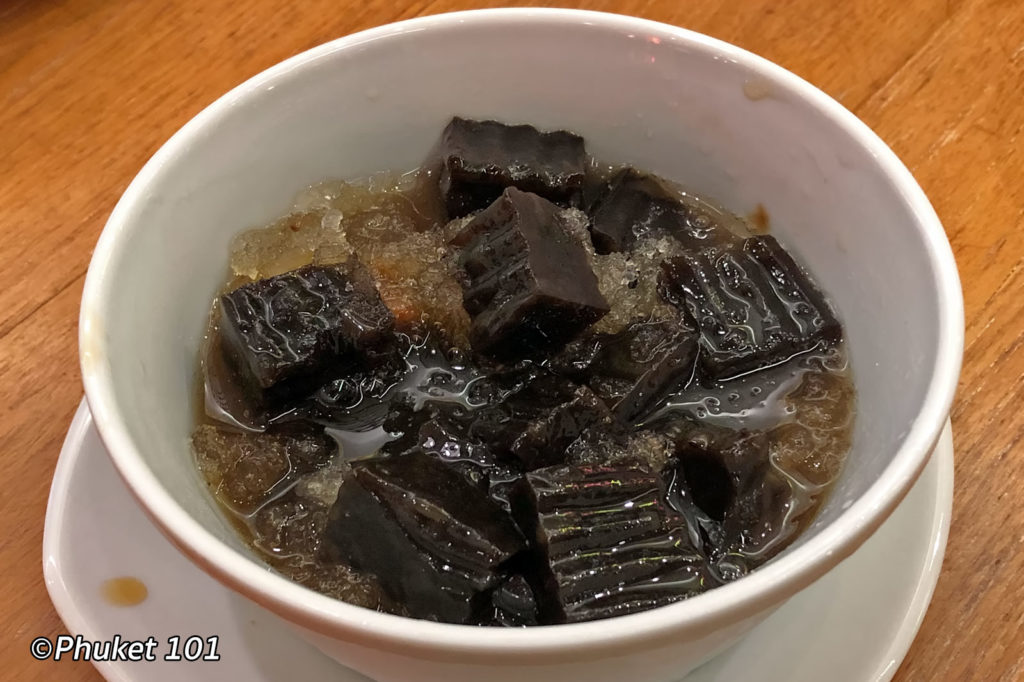
Chao Kuay is a refreshing dessert made from the Platostoma palustre plant, a member of the mint family. The jelly is dark brown to black in colour with a slightly bitter, herbal taste. It’s believed to have cooling properties, making it popular during hot weather. Chao Kuay is typically served cubed in a bowl with crushed ice and sweet syrup, or blended into a drink. The jelly has a soft, wobbly texture that’s quite unlike Western gelatin.
Thong Yip – ทองหยิบ (Pinched Gold)
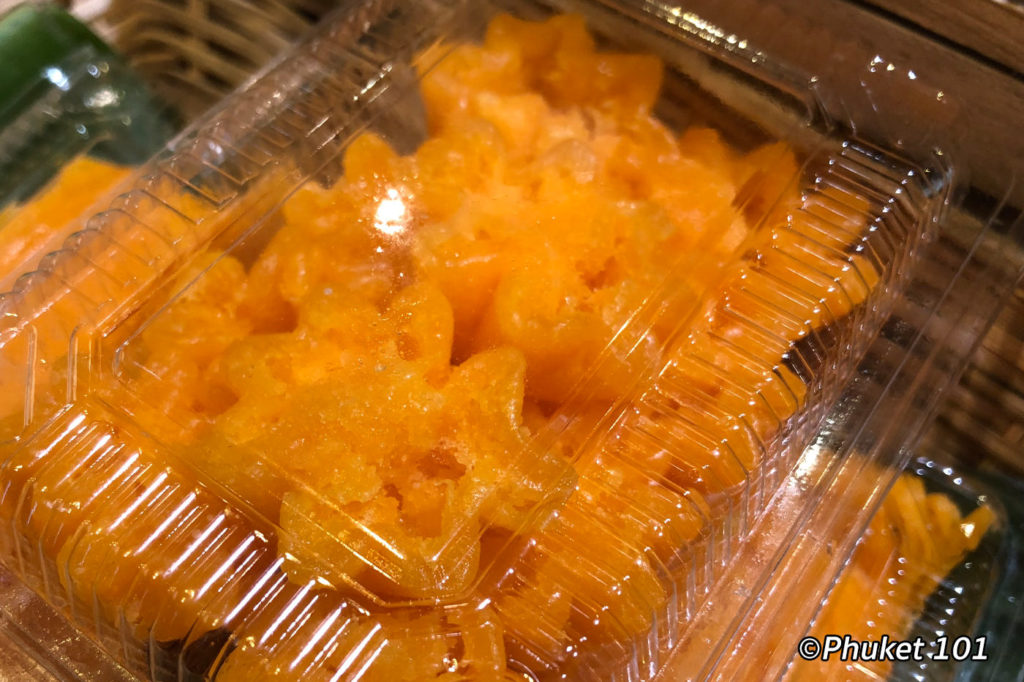
Thong Yip is an egg-based sweet made by drizzling egg yolk into hot sugar syrup, then shaping it into a flower with pinched petals while still warm. The name means ‘pinched gold’, referring to both the golden colour and the pinching technique. This delicate dessert is usually made for important occasions and ceremonies such as weddings, ordinations, and housewarmings. It’s part of a family of auspicious Thai sweets that also includes Thong Yod (golden drops) and Foi Thong (golden threads).
Khao Tom Mat – ข้าวต้มมัด (Sticky Rice in Banana Leaf)
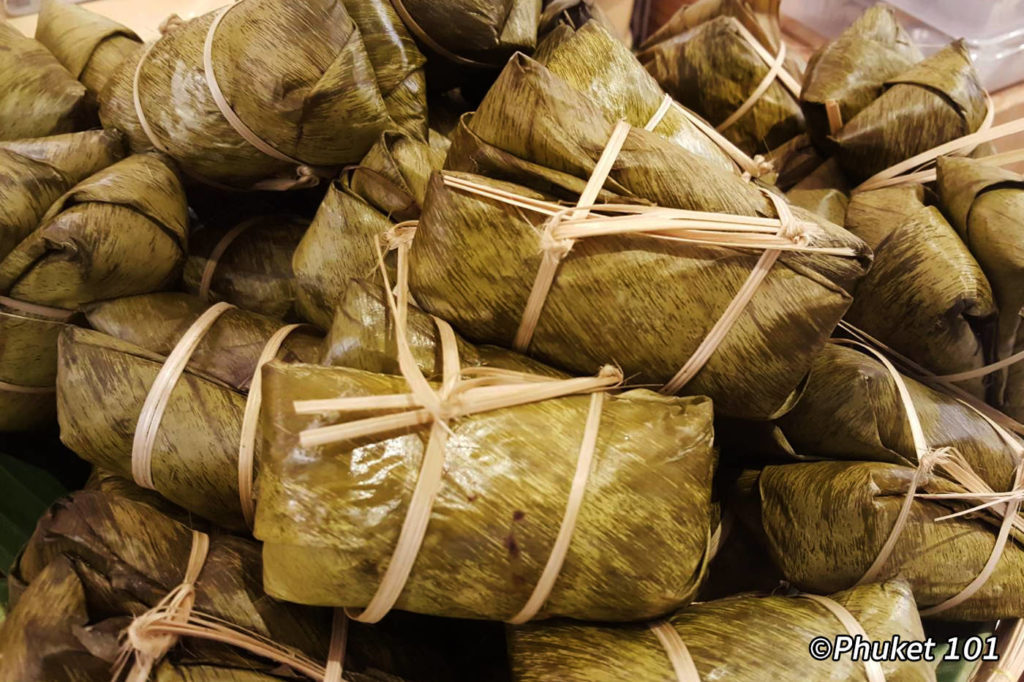
Khao Tom Mat is a Thai dessert made of sweet sticky rice steamed in banana leaves. The rice is mixed with coconut milk and sugar, wrapped around a filling of ripe banana or black beans, then tied into a neat bundle and steamed until fragrant. The banana leaf imparts a subtle grassy aroma to the rice. Khao Tom Mat is a portable snack, easy to carry and eat on the go, and is commonly sold at morning markets and temple fairs.
Best Place to Eat Sweets in Phuket