


Phuket Hardcore Thai Food

Phuket already has ‘10 Typical Phuket Dishes‘, ‘10 Best Really Local Restaurants‘, and even ‘10 Fried Insects for Gourmets‘. Now it is time to move on to serious business: 10 hardcore Thai dishes, only for the brave. Will you dare?
I will skip the insects and focus on the real dishes that Thai people cook daily and really enjoy. After 30 years in Phuket, I still can’t eat several of them, but I can tell when someone has had some for lunch! Some look weird, some smell really bad, some taste terrible, and some get all of it. Be daring! Try some of them when you visit! From the ‘Toughest’ to the ‘Less scary,’ I give you the ’10 Hardcore Thai Dishes’ you have to try to say you have ‘Really Been in Thailand’
Tin Ped – ตีนเป็ด (Duck Feet)
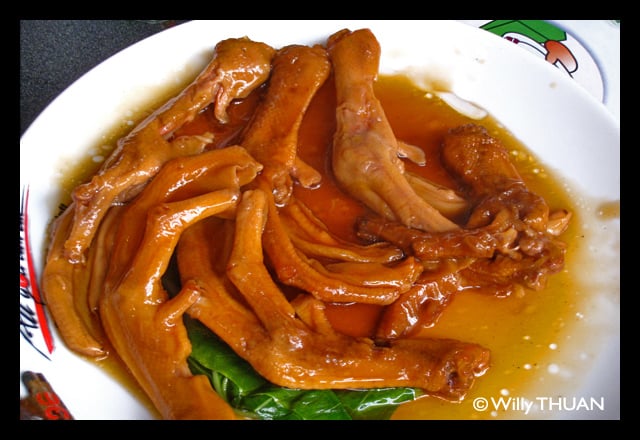
Tin Ped is duck feet, and you will see it all over Phuket’s casual food spots. The feet are cleaned well, then boiled or braised until the skin goes soft and a bit gelatinous. They usually come in a savoury broth with soy sauce, star anise and garlic, or grilled and dipped in chilli sauce.
The texture is the main event. The skin is chewy and soaks up whatever it is cooked in. You find it at local restaurants, night markets and street stalls. It is cheap and uses every part of the bird. For the rest, well, look at the photo.
- Aspect: Very Weird
- Smell Level: Good
- Taste Level: Light
Pad Sataw – ผัดสะตอ (Stink Bean Stir-Fry)
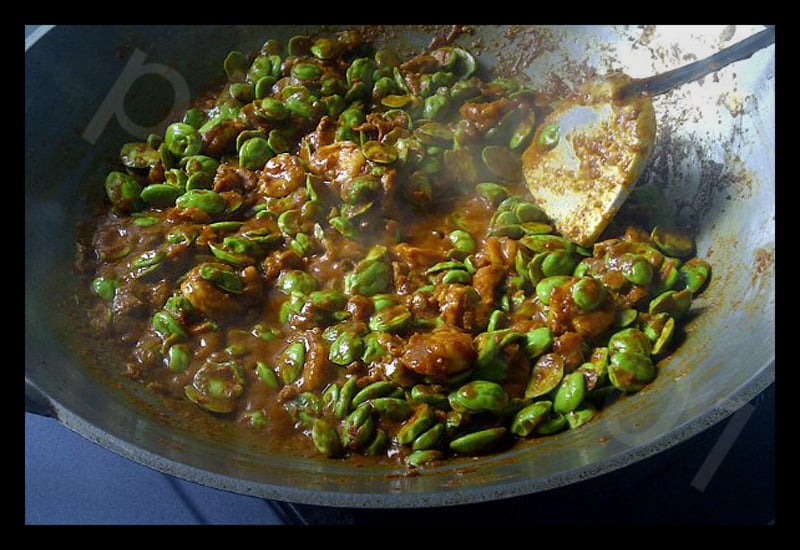
Pad Sataw is a stir-fry built around sataw, the stink bean. The bean has a strong, peppery taste and a smell that stays with you. It is fried fast in a wok with garlic, chillies and your choice of protein, usually shrimp, chicken or pork. Fish sauce and a little sugar balance it out, and the beans stay slightly firm.
The smell lingers on your hands and your breath for hours, but people down south love it. You find it at casual restaurants, market stalls and home kitchens, served with jasmine or sticky rice.
- Aspect: Appetising
- Smell Level: Strong and lasting
- Taste Level: Fainting
Yum Kai Mang Da – ยำไข่แมงดา (Horseshoe Crab Roe Salad)

Yum Kai Mang Da is a salad made from horseshoe crab roe, and it is for adventurous eaters only. The roe is mixed with green mango, herbs, chillies, fish sauce and lime juice, so it ends up spicy and sharp. The eggs are rubbery and taste strongly of fish, which takes some getting used to. Horseshoe crabs are ancient animals with blue blood, closer to spiders than to crabs.
One serious warning: the similar-looking Hay Ra contains tetrodotoxin, around 100 times more poisonous than cyanide. Only order this from a restaurant you trust. You see it now and then at seafood places in Rawai and at the Sunday Night Market in Phuket Town. Read more…
- Aspect: Scary to repulsive
- Smell Level: Light
- Taste Level: Light to ‘Very Fishy’
Gaeng Tai Pla – แกงไตปลา (Fermented Fish Curry)
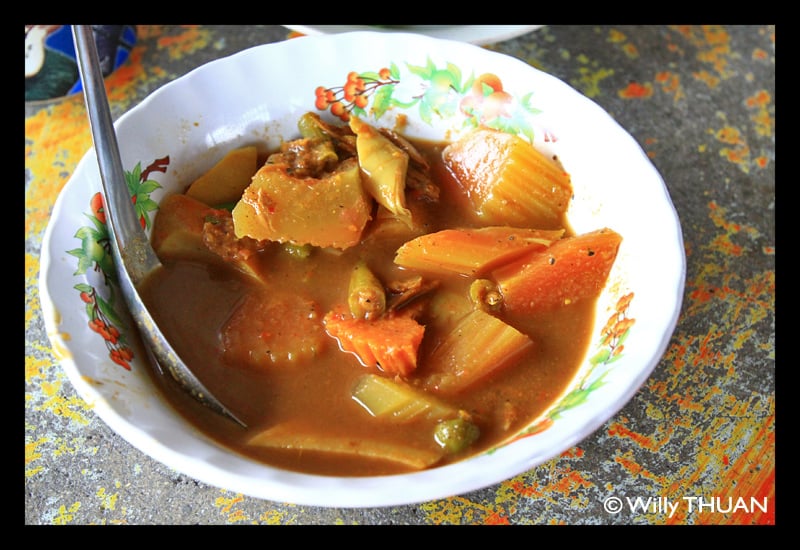
Gaeng Tai Pla is a strong, spicy southern curry made with fermented fish guts. It comes with grilled fish, vegetables like bamboo shoots and aubergine, and a thick, salty sauce. Chilli, lemongrass, kaffir lime and turmeric give it a deep flavour and a smell that fills the room.
It is a Phuket and coastal favourite, usually served with steamed rice. The heat and the intensity are not for everyone, but locals love how bold it is.
- Aspect: Normal
- Smell Level: Very Strong
- Taste Level: Fainting
Gaeng Som – แกงส้ม (Sour Curry)
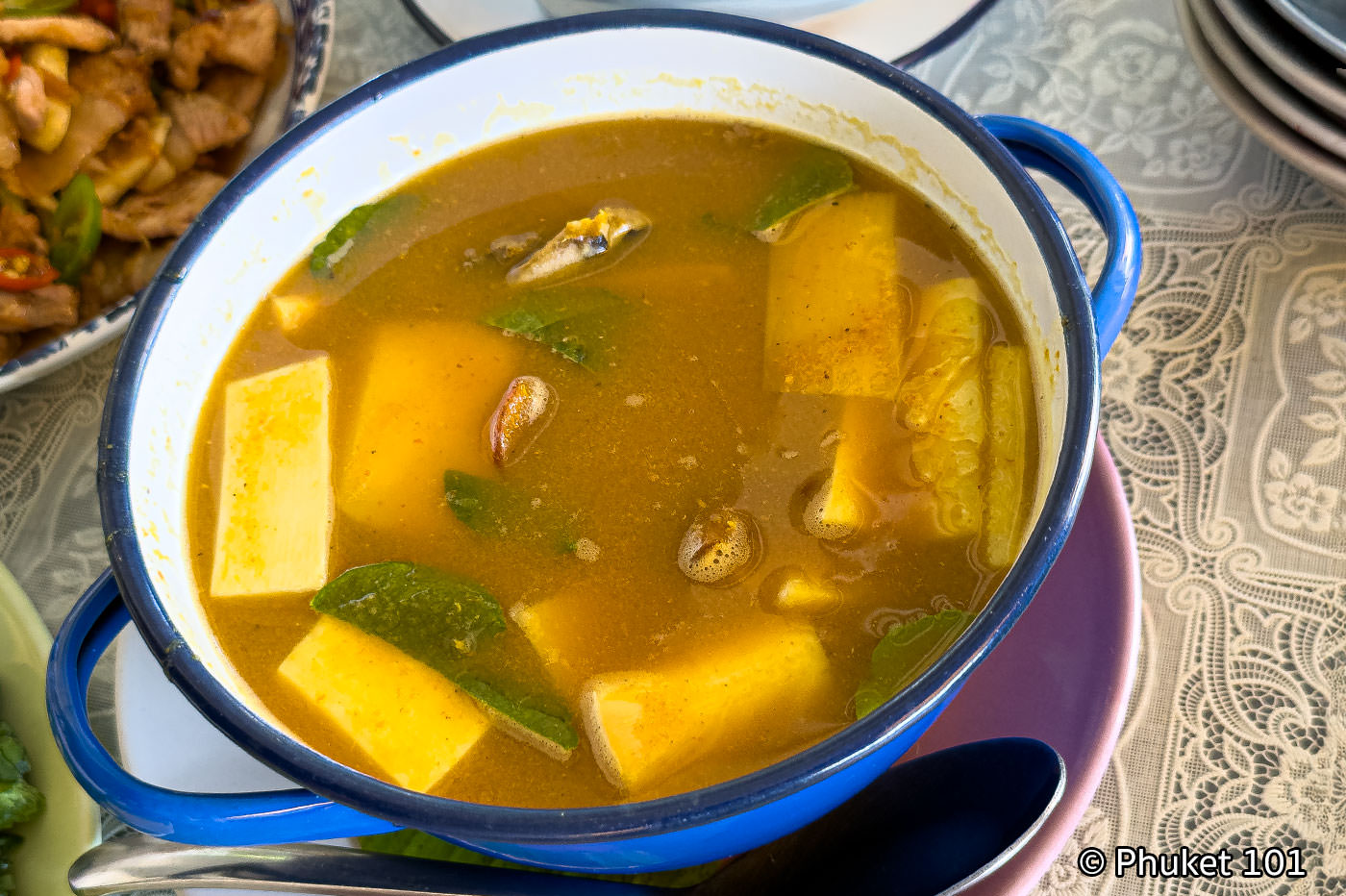
Gaeng Som is a sour, spicy curry you find all over the south, Phuket included. Tamarind and chilli paste give it a sharp, sour heat that runs through the whole dish. Fish or prawns sit in the broth with vegetables like cabbage, long beans and pumpkin, and turmeric turns it golden.
It is lighter than most Thai curries because there is no coconut cream. Served with jasmine rice, it lands somewhere between sour, spicy and savoury.
- Aspect: Weird
- Smell Level: Very Strong
- Taste Level: Fainting
Sup No Mai – ซุปหน่อไม้ (Bamboo Shoot Soup)
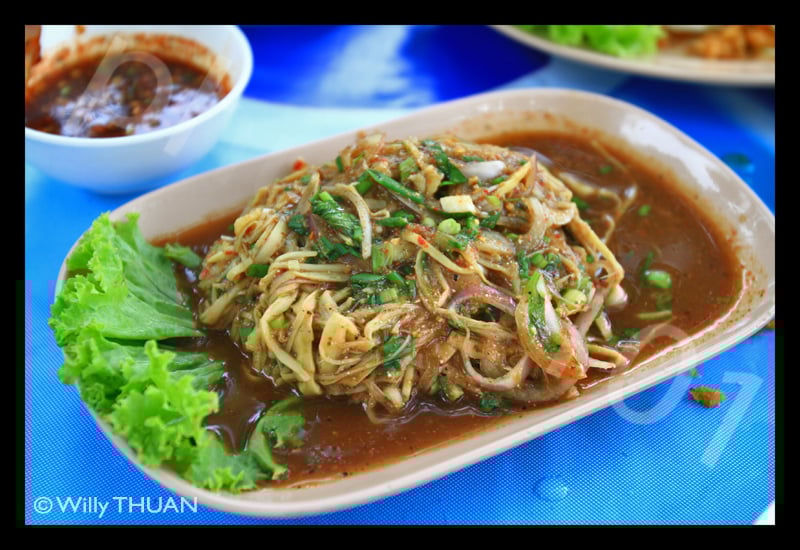
Sup No Mai is a mild, fragrant broth built around bamboo shoots. The base is chicken or pork stock with galangal, lemongrass and kaffir lime leaves. Sliced fresh bamboo shoots go in with mushrooms and sometimes prawns, and a squeeze of lime lifts it at the end.
It is light, with no real heat, more of a comfort bowl. You see it in Phuket as a starter or a light meal at local restaurants and night markets.
- Aspect: Strange
- Smell Level: Stranger…
- Taste Level: …Strangest
Tam Sua – ตำซั่ว (Extreme Papaya Salad)
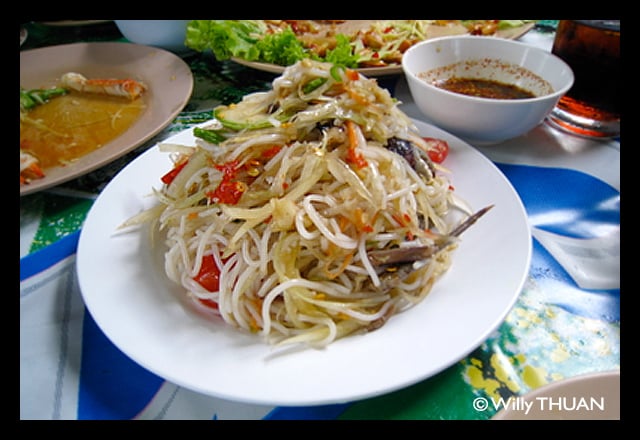
Tam Sua is an extreme version of som tam, the green papaya salad everyone knows. This one is built for people who like big, intense flavours. Grated green papaya gets pounded in a clay mortar with poo kem (salted rice field crab), pla raa (fermented fish), bird’s eye chillies, long beans and tomatoes, plus garlic, fish sauce and lime.
The fermented fish and crab take over, salty and pungent. It is a local dish through and through, found at street stalls and casual spots rather than smart restaurants.
- Aspect: Weird (black crab legs look like a spider).
- Smell Level: Strong to Stinky
- Taste Level: Very Strong
Lo Ba – โลบะ (Hokkien Fried Pork and Offal)
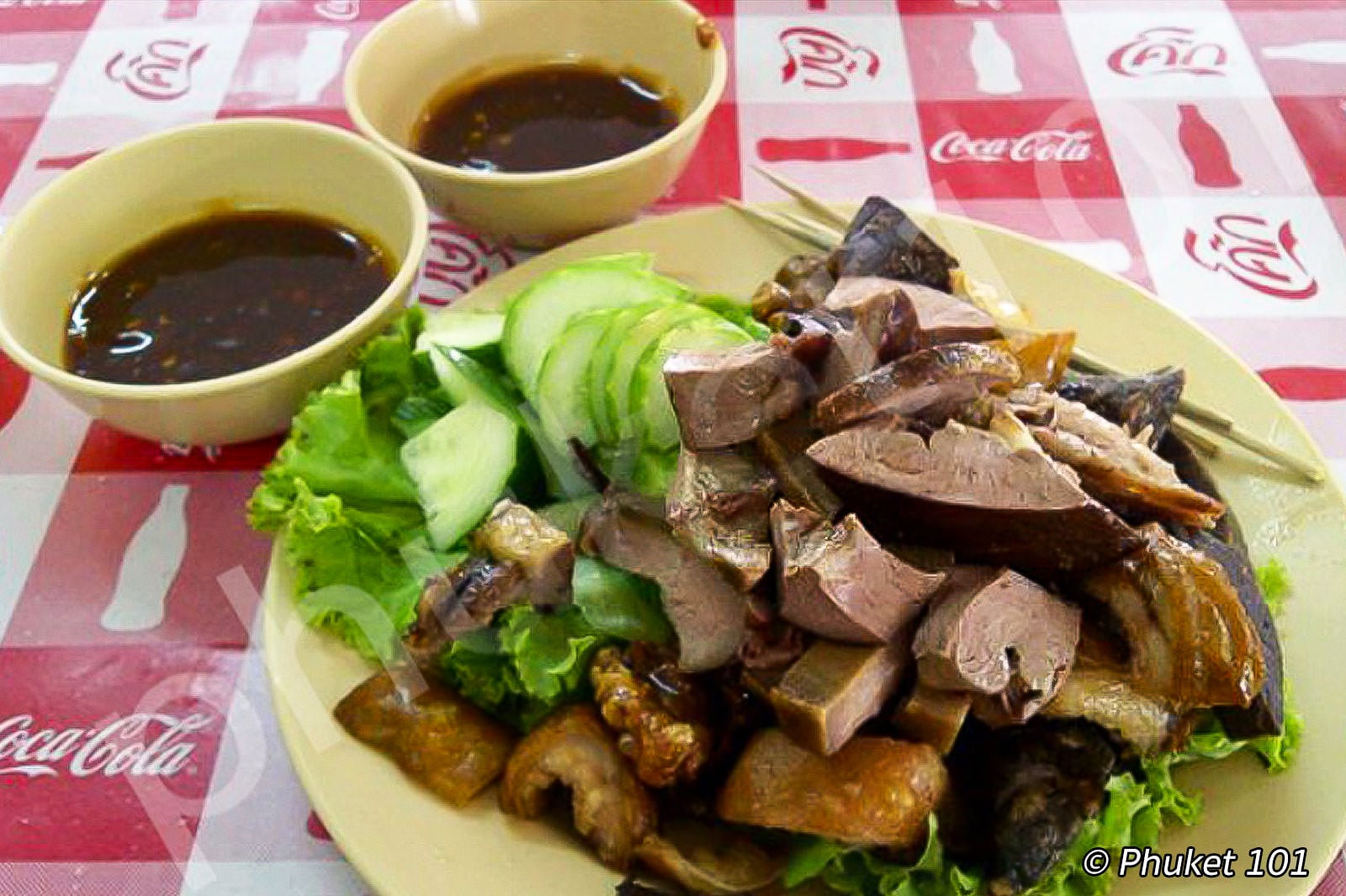
Lo Ba is one of Phuket Town’s old Hokkien dishes. It is a plate of deep-fried pork and offal, things like belly, liver, tongue and intestine, with tofu and sometimes a fried egg. It all gets chopped up and served with a thick, dark dipping sauce that is sweet and a little sour.
The Hokkien Chinese who settled in Phuket Town brought it over, and the best versions are still at the old town markets. Older locals are the ones who really love it.
- Aspect: Not appetising
- Smell Level: Eeeeeeew!
- Taste Level: Strong
Nom Wua Yang – นมวัวย่าง (Grilled Beef Udder)
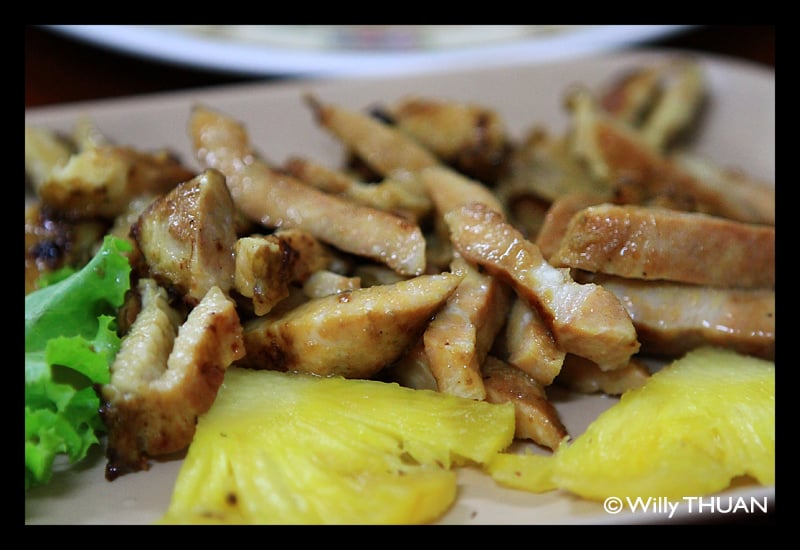
Nom Wua Yang is grilled beef udder, a rare one you only find in a few spots down south, Phuket included. The udder is cleaned, marinated in soy sauce, garlic and spices, then grilled over charcoal until it chars on the outside and turns tender inside.
The texture is the strange part. It is soft and a bit gelatinous, and it takes on the marinade well. It is sliced and served with sticky rice and a spicy fish sauce dip with chillies and lime. Look for it at grilled meat specialists and local stalls.
- Aspect: Oh my
- Smell Level: Acceptable
- Taste Level: The taste is ok, but the consistency gave me goosebumps.
Nam Prik – น้ำพริก (Chilli Dip)
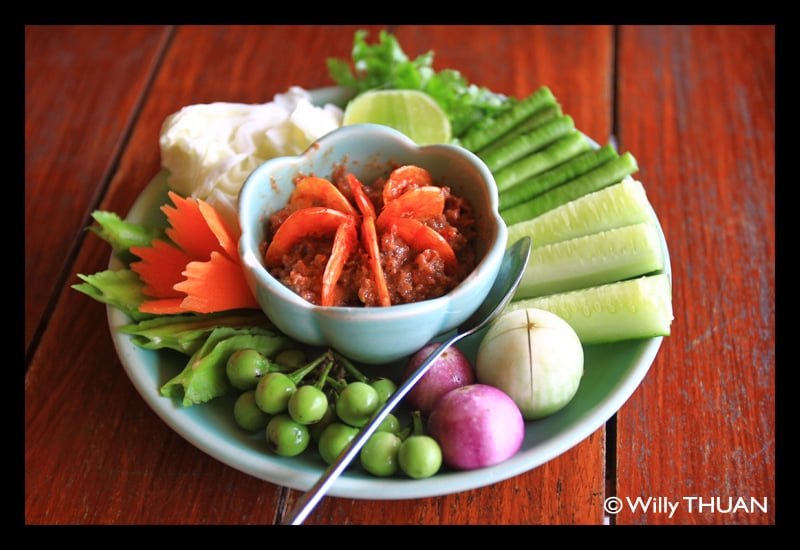
Nam Prik is the classic Thai chilli dip, served with fresh vegetables and sticky rice. Roasted dried chillies, garlic and shrimp paste (kapi) are ground in a mortar, then loosened with fish sauce and lime. The result is thick, spicy, salty and a little sour.
You dip raw vegetables into it, things like cabbage, long beans, cucumber and aubergine. Every region has its own version, but the southern one uses more shrimp paste, so it comes out deeper and funkier than the rest. It turns up everywhere in Phuket, from family dinners to street stalls.
- Aspect: Well-presented and nice-looking
- Smell Level: The paste smells very fishy
- Taste Level: Strong, and the veggies are bitter.