

A Sino-Portuguese Mansion Telling Phuket’s Chinese Story

Phuket Thai Hua Museum (พิพิธภัณฑ์ภูเก็ตไทยหัว) is the best museum on the island for understanding how the Chinese immigrants shaped Phuket’s history, architecture, and food. It sits in a beautifully restored 1934 Sino-Portuguese mansion on Krabi Road in Phuket Town, and the building itself was originally the first Chinese-language school on the island. The museum is well designed, clearly explained without being too academic, and takes about an hour to visit. Entry is 200 baht, plus an extra 200 baht for a photo pass if you want to take pictures inside.
Phuket Thai Hua Museum – Quick Facts
Thai name: พิพิธภัณฑ์ภูเก็ตไทยหัว (Phiphitthaphan Phuket Thai Hua)
Meaning of “Thai Hua”: Thai and Chinese together
Location: Phuket Old Town, Krabi Road
Building: 1934 Sino-Portuguese mansion (first Chinese school in Phuket)
Museum opened: 2010
Exhibits: 13 themed rooms across two floors
Hours: 9 am to 5 pm, closed Mondays
Entry: 200 baht (+ 200 baht photo pass)
Time needed: About 1 hour
Phone: 076 211 224
What to See Inside
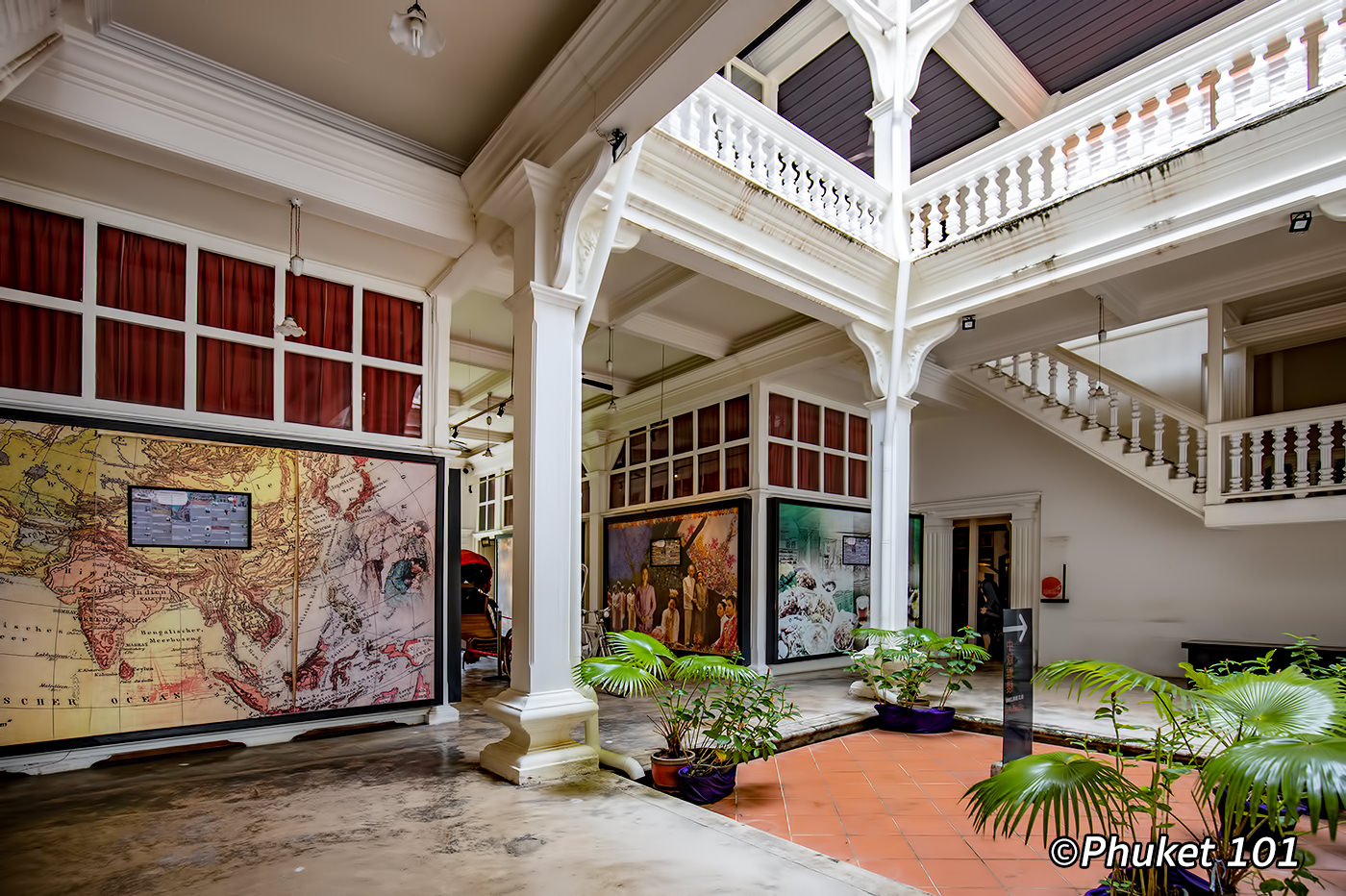
The museum is organised into 13 themed rooms spread across two floors. Each room covers a different aspect of Phuket’s Chinese heritage, with photos, videos, artefacts, and original immigration papers on display. Captions are in Thai and English.
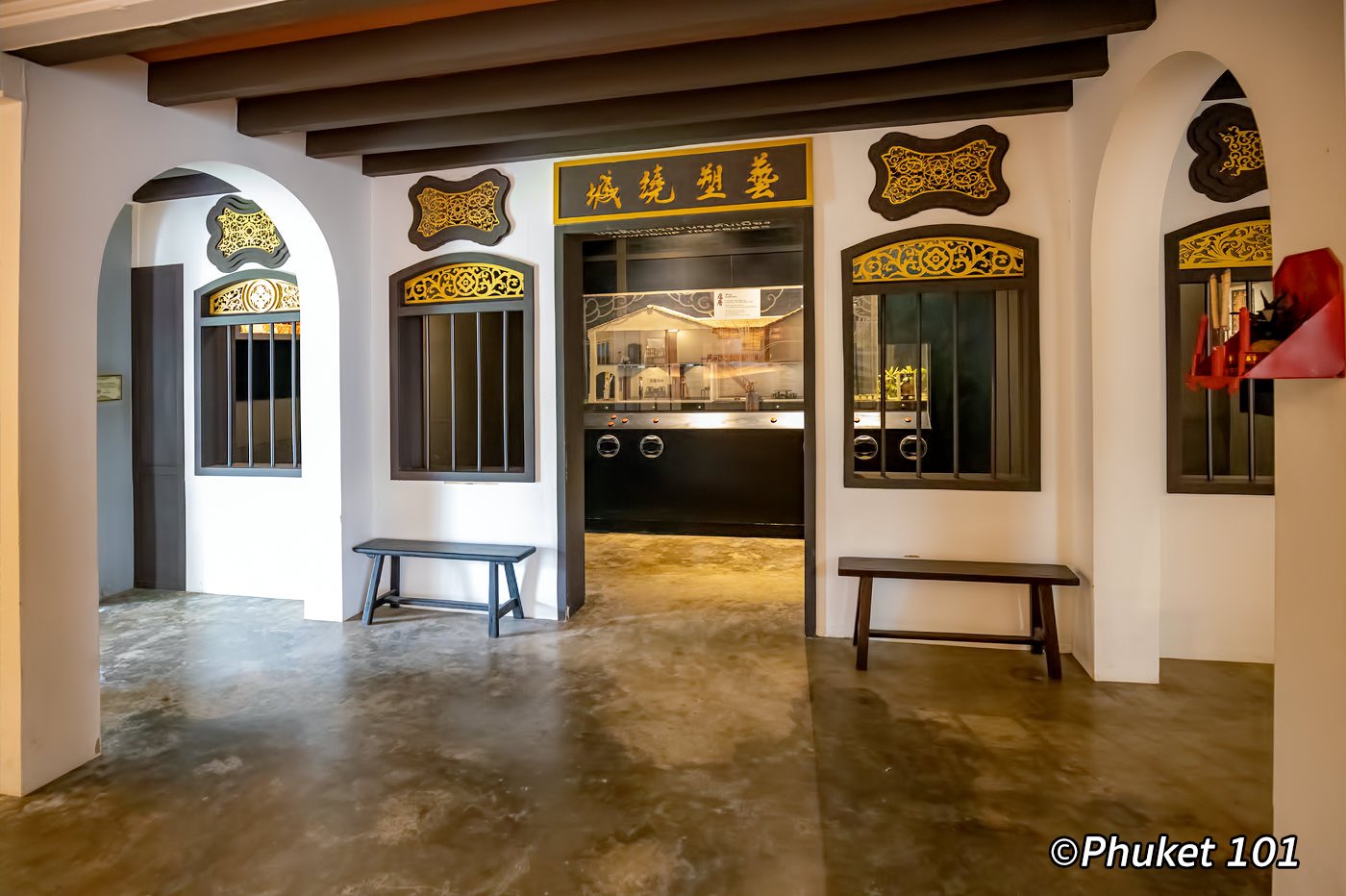
The ground floor focuses on the early Hokkien Chinese settlers who came to Phuket for the tin mining trade in the 19th century. You learn about the families who built the Sino-Portuguese mansions still lining the streets of Old Phuket Town today. There is a scaled model of a traditional shophouse showing how families lived above their businesses, displays on the Angyee (Chinese secret societies who organised miner rebellions in the late 1800s), and a recreation of an original classroom from the school’s early days.
Upstairs, a dedicated room covers the major festivals and cultural events of Phuket, including the origins of the Phuket Vegetarian Festival which began in 1825 after a visiting Chinese opera troupe recovered from a local epidemic by observing strict vegetarian practices. The displays explain how the festival evolved from a small Hokkien community ritual into the nine-day event it is today. Other rooms cover Baba-Peranakan food, traditional dress, and architecture.

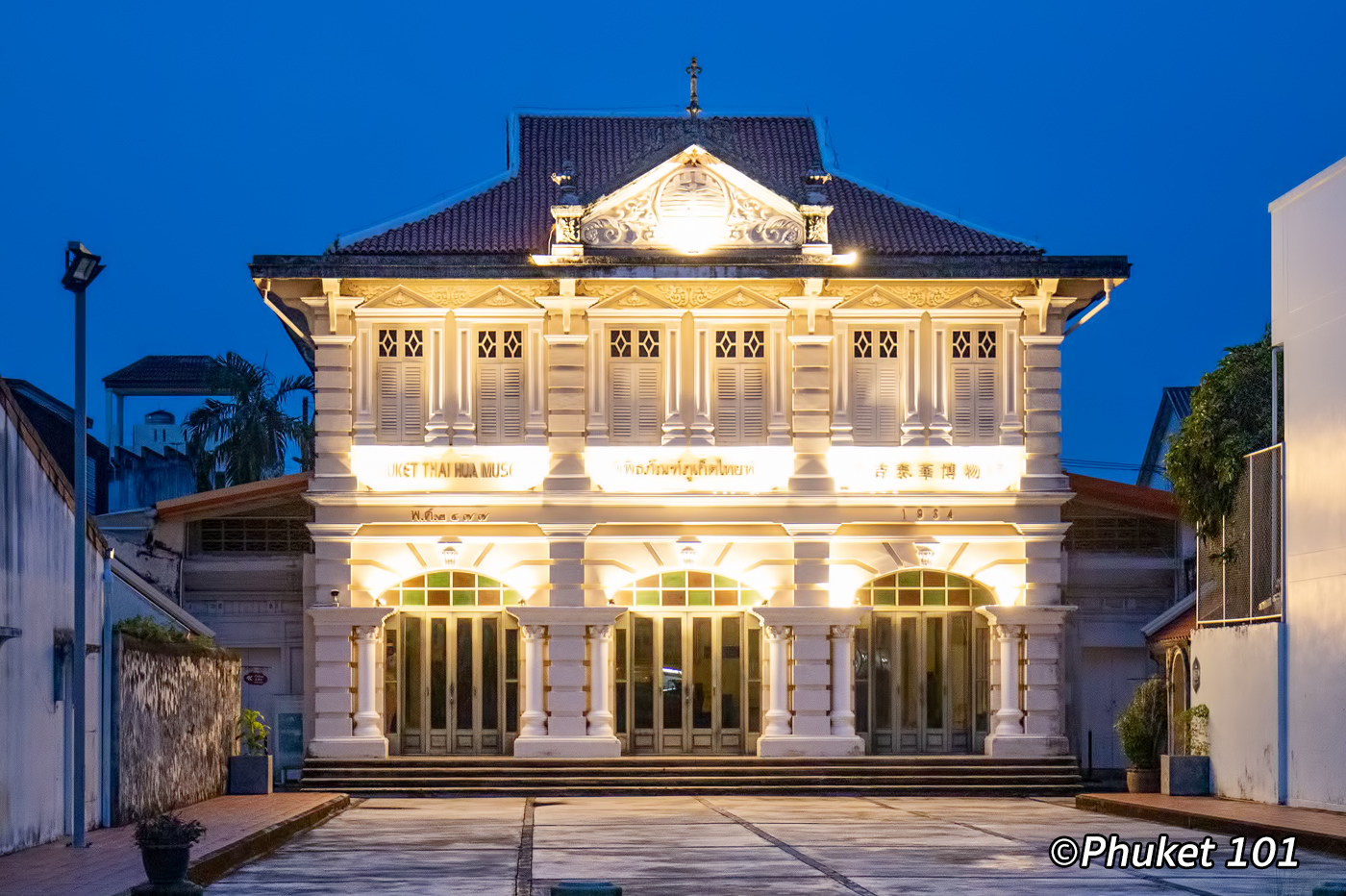
The building itself is part of the experience. The colonial-era architecture, the wooden staircases, and the restored interiors are worth seeing even if you only glance at the exhibits. Look up at the front gable when you enter, where you will see the red bat symbol (หุง เขียน ฝู in Hokkien). In Chinese culture, red means greatness, and the bat means good luck, and a bat with wings spread is a metaphor for an open book, so a school building ornamented with a red bat symbolises literacy as the greatest fortune. It is one of the best-preserved heritage buildings in Phuket Town.
Why Visit
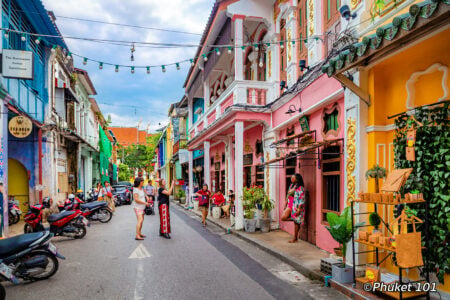
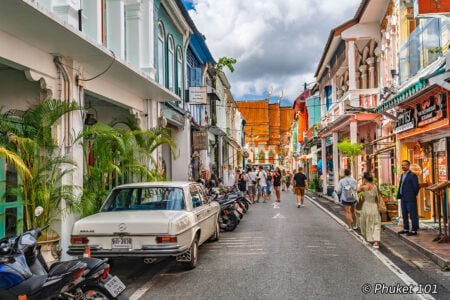
The Thai Hua Museum works best as part of a half-day walk around Old Phuket Town. After walking past the colourful shophouses on Thalang Road, Soi Romanee, and Phang Nga Road, the museum gives context to everything you just saw. The buildings, the Chinese shrines, the food, the festivals all connect back to the tin mining era and the Hokkien families who built this town.
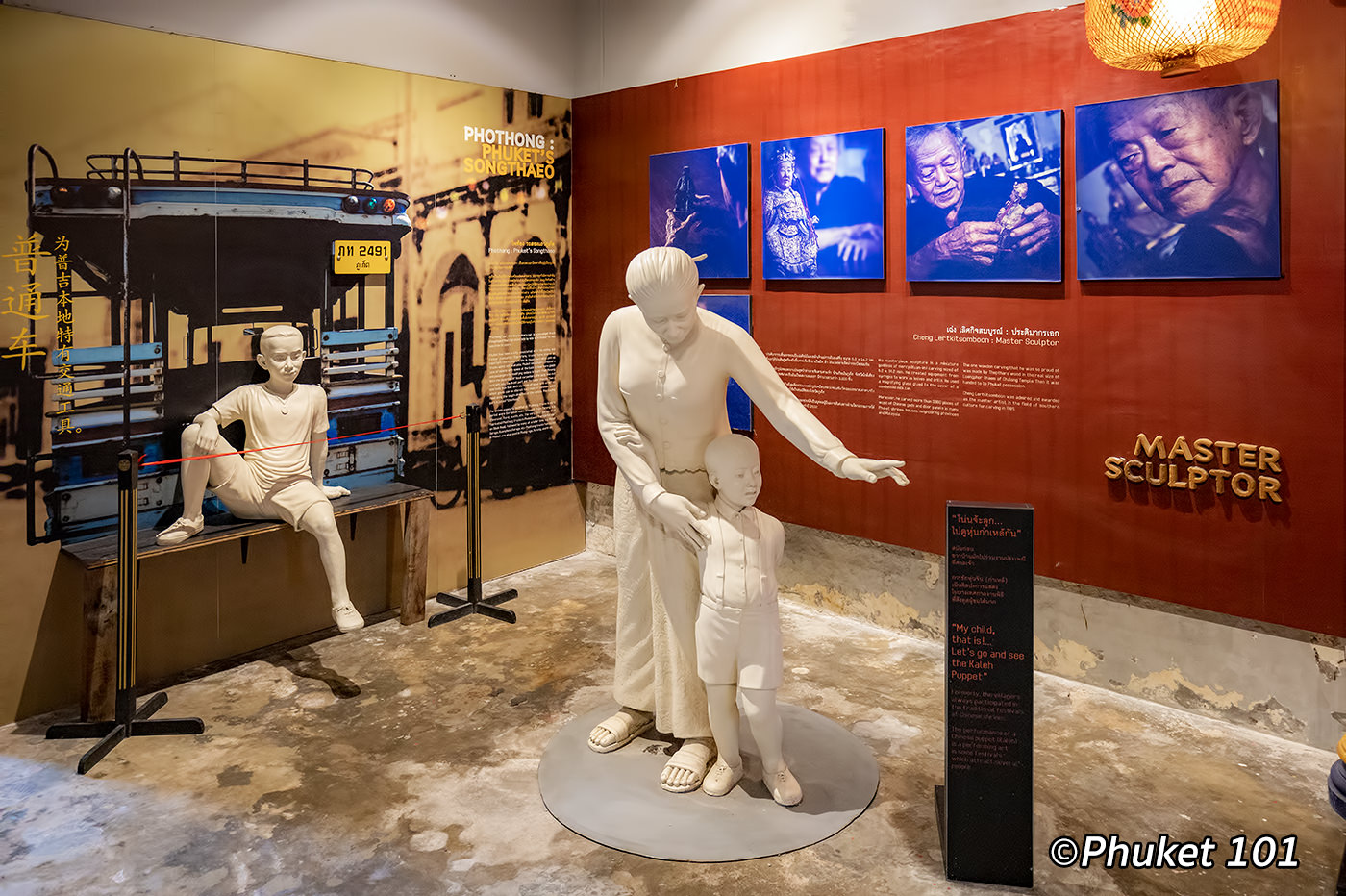
The museum is air-conditioned, which is a welcome break on a hot afternoon. Combine it with a coffee stop at one of the small cafes nearby on Krabi Road or Thalang Road.

Insider Tips
Visit in the afternoon. Most tourists explore Phuket Town in the morning, so the museum is usually quieter after 2 pm. Being air-conditioned, it is also a good escape from the hottest part of the day.
The photo pass (200 baht extra) is worth paying if you enjoy photography. The interior light, wooden details, and display design are genuinely photogenic. Without the pass, you can still take pictures of the building exterior and courtyard for free.

Combine the museum with a walk along Krabi Road and Phang Nga Road. The Shrine of the Serene Light is just a few minutes away on foot, hidden through a narrow passage between shophouses. Most visitors walk right past it.
If you are in Phuket Town on a Sunday, visit the museum first, then walk to Thalang Road for the Sunday Walking Street market, which starts around 4 pm.
Closed on Mondays. Check the day before you plan to visit, especially if you are making a dedicated trip into Phuket Town.
Phuket Thai Hua Museum Through the Years
The mansion on Krabi Road was built in 1934 by the Hokkien Chinese community as Phuket Thai Hua School, the first Chinese-language school on the island. It was funded by donations from local Hokkien families whose wealth came from tin mining, and the name “Thai Hua” means “Thai and Chinese” in combination. King Rama VII had visited the school grounds in 1928, before the current building was constructed, and the visit is still commemorated inside the museum.
The school ran throughout the 20th century, teaching generations of Phuket children in Mandarin and Thai. It closed temporarily in 1941 when all Chinese-language schools in Thailand had their licences revoked for political reasons during World War II, reopening after the war. In 1995, the school outgrew the old building and moved to larger premises on Vichit Songkram Road, where it continues today as Phuket Thai Hua ASEAN Wittaya School.
The old building on Krabi Road stood largely empty for years, used only as an occasional meeting place for alumni. In 2002, the Alumni Association decided to convert it into a community museum, and the building was registered as a national heritage site that same year. Restoration took several more years, and the museum officially opened in 2010 as Phuket Thai Hua Museum.
When I first visited shortly after it opened, it was still a museum-in-progress: a beautiful empty building with a few display panels. Each time I have returned since, more rooms have been filled in, and today the 13 themed rooms cover the full arc of Phuket’s Chinese history. It is one of the few cultural projects in Phuket Town that has kept improving year after year rather than fading.
Phuket Thai Hua Museum Photos


Phuket Thai Hua Museum Info
Thai name: พิพิธภัณฑ์ภูเก็ตไทยหัว
Address: 28 Krabi Road, Talat Nuea, Mueang Phuket District, Phuket 83000
Location: Phuket Old Town
Hours: 9 am to 5 pm (closed Mondays)
Phone: 076 211 224
Entry: 200 baht (+ 200 baht for photo pass)
Time needed: About 1 hour
Building: 1934 Sino-Portuguese mansion (former Chinese school)
Museum opened: 2010
Website: phuketthaihuamuseum.com
Phuket Thai Hua Museum Map
FAQs About Phuket Thai Hua Museum
Your Phuket Town Travel Guide