


Rainy Season in Phuket
20,202 viewsBy Willy Thuan
Content
show
What the Rainy Season Actually Looks Like
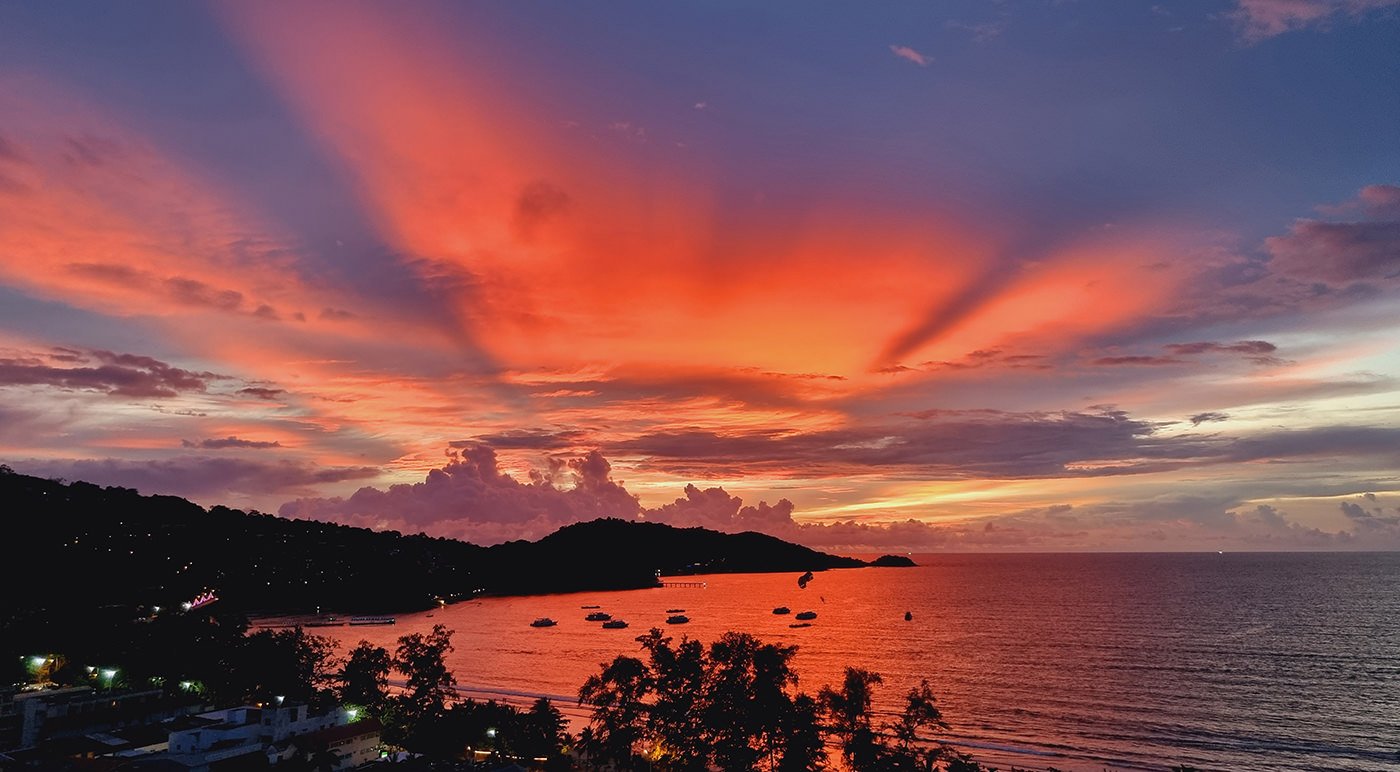 Most people imagine non-stop grey skies and constant downpours. That is not how it works. A typical rainy season day in Phuket starts with sunshine. Clouds build during the afternoon, and by 3 or 4 pm, you get a heavy tropical shower that lasts 30 minutes to two hours. Then it clears, and you often get a spectacular sunset with dramatic cloud formations.
The exception is the “unlucky weeks.” Every rainy season, there are stretches of 3, 6, or even 9 days of continuous rain. Nobody can predict when they will happen. If your holiday falls during one of those weeks, you will need a backup plan. If it does not, you might get better weather than some people get in January.
The island looks completely different during these months. Everything is green and lush after the first rains. The hills behind Kathu turn a deep tropical green that you never see during the dry season. I run around Bang Wad Reservoir regularly, and during the monsoon, it is full and beautiful, surrounded by green hills. By April, that same reservoir is mostly dry mud.
Most people imagine non-stop grey skies and constant downpours. That is not how it works. A typical rainy season day in Phuket starts with sunshine. Clouds build during the afternoon, and by 3 or 4 pm, you get a heavy tropical shower that lasts 30 minutes to two hours. Then it clears, and you often get a spectacular sunset with dramatic cloud formations.
The exception is the “unlucky weeks.” Every rainy season, there are stretches of 3, 6, or even 9 days of continuous rain. Nobody can predict when they will happen. If your holiday falls during one of those weeks, you will need a backup plan. If it does not, you might get better weather than some people get in January.
The island looks completely different during these months. Everything is green and lush after the first rains. The hills behind Kathu turn a deep tropical green that you never see during the dry season. I run around Bang Wad Reservoir regularly, and during the monsoon, it is full and beautiful, surrounded by green hills. By April, that same reservoir is mostly dry mud.
Month by Month During the Rainy Season
Not all rainy season months are the same. May feels nothing like September. Here is a realistic breakdown based on what I have seen over the years. May and June are transition months. The monsoon is arriving but has not fully settled in. You still get plenty of sunny days, and the rain is often light. Many people visit in May and June without any problems. Hotel prices drop, and beaches are noticeably quieter. The sea starts getting rougher on the west coast, but the east coast beaches stay calmer. July and August are wetter but still manageable. The monsoon is established, and you can expect rain on most days, but rarely all day. This is the period when surfing picks up on Kata Beach and Kalim Beach. The waves are not huge, but there are surf shops in Kata where you can learn. Tours to Phi Phi Islands and Phang Nga Bay still operate. Phang Nga Bay is actually more impressive with dramatic clouds above the limestone cliffs, and because the cliffs protect the bay, the water stays calm. September and October are the wettest months. If you have a choice of when to visit, these are the months I would avoid. Grey skies are more common, rain can last longer, and the sea is at its roughest. This is when the unlucky weeks tend to happen. But even in September, you can still get beautiful days. The Similan Islands are closed from mid-May to mid-October, so you cannot visit them during these months.
May is the last month of the high season in Phuket, and the weather in Phuket sees a shift from ... Read More
Phuket weather in June sees the return of the rains as it is the start of the monsoon, locally called ... Read More
Phuket weather is more rainy in July than in June. The monsoon, or low season, has definitely started, and you ... Read More
Phuket weather in August may see a little more rain than in July since it is the peak of the ... Read More
September is usually the wettest month of the year in Phuket. You can expect more rainy days than sunny ones, ... Read More
In October, the weather in Phuket is not much different from that in September, with a mix of sunny and ... Read More
In November, the weather in Phuket starts showing some improvement as it is the last month of the rainy season ... Read More
The Sea During the Rainy Season
 This is the part that matters most. The sea temperature stays warm all year (29-30°C during the monsoon), but the west coast beaches get strong waves and dangerous riptides from May to October. You must respect the red flags. The undertow is powerful enough to pull experienced swimmers out to sea within seconds. Every year, people drown because they underestimate it.
Patong, Kata, Karon, Surin, and Kamala all get rough during the monsoon. If swimming is important to you, there are a few options. Some beaches stay swimmable during the rainy season because they are more sheltered. East coast spots like Ao Po and Cape Panwa stay calmer. And booking a hotel with a great swimming pool is always a smart move. A beachfront hotel with a pool gives you the best of both worlds: enjoy the beach on calm days, swim in the pool when the sea is rough.
This is the part that matters most. The sea temperature stays warm all year (29-30°C during the monsoon), but the west coast beaches get strong waves and dangerous riptides from May to October. You must respect the red flags. The undertow is powerful enough to pull experienced swimmers out to sea within seconds. Every year, people drown because they underestimate it.
Patong, Kata, Karon, Surin, and Kamala all get rough during the monsoon. If swimming is important to you, there are a few options. Some beaches stay swimmable during the rainy season because they are more sheltered. East coast spots like Ao Po and Cape Panwa stay calmer. And booking a hotel with a great swimming pool is always a smart move. A beachfront hotel with a pool gives you the best of both worlds: enjoy the beach on calm days, swim in the pool when the sea is rough.
Flooding in Phuket
Phuket is a hilly island, so when it rains hard, water rushes down from the hills and collects in low-lying areas. Flash flooding happens a few times each rainy season, usually after several hours of continuous heavy rain. The water rises fast but also drains within a few hours once the rain stops. Some areas flood more often than others. Based on recent events (including a major flood in June 2024 that diverted 14 flights away from Phuket Airport), the most common flood-prone spots are the Kathu area (around Wat Kathu and the road near Loch Palm golf course), the low section of Patak Road near Kata, the road in front of Patong Hospital, the Cherngtalay road between Ban Kian junction and Blue Tree water park, and the Chalong area near the electricity authority curve. Some sections of the road to the airport also flood occasionally. For tourists, flooding is rarely dangerous. It is mostly an inconvenience that slows down traffic for a few hours. If you are driving or riding a motorbike during heavy rain, slow down and avoid low-lying underpasses. The water drains quickly once the rain stops.What to Do When It Rains
Rainy days are a chance to explore things you might skip during perfect beach weather. Phuket Old Town is perfect on a cloudy or rainy day. The streets are beautiful, and there are plenty of cafes, shops, and restaurants in old heritage houses where you can take a break. Central Phuket and Jungceylon are popular for rainy afternoons. A spa treatment is another classic rainy day option. And the cooler temperatures actually make it more comfortable to walk around than in the scorching heat of March or April. All tours and attractions operate normally during the rainy season unless there is a serious storm, which is rare. Day trips to Phang Nga Bay run all year, and the scenery is more dramatic with heavy clouds. Phi Phi Islands are accessible year-round, though the boat ride can be rougher. For more ideas, read my full guide to Things to Do in Phuket When It Rains.Hotel Prices During the Low Season
This is the biggest advantage of visiting during the monsoon. Hotel prices drop by 40-60% compared to peak season. A luxury resort that costs 15,000 baht per night in January might be 6,000-8,000 baht in July. Budget hotels that charge 2,000 baht in high season can drop to 800-1,000 baht. The savings are real and significant. If you are flexible with your dates and do not mind the occasional rainy afternoon, you can experience a much higher level of hotel than your budget would normally allow. Many travellers deliberately visit in May, June, or July for exactly this reason.Insider Tips for the Rainy Season
Weather apps are almost useless in Phuket. I check them, but a forecast showing thunderstorms all week regularly turns into scattered afternoon showers with sunny mornings. Do not cancel your trip based on a weather app. If you are renting a motorbike, be extra careful on wet roads. The first rain after a dry spell makes the roads very slippery because oil and dust float to the surface. Wait 20 minutes after the rain starts before riding if you can. Pack light rain gear, but do not overdo it. A compact umbrella and a light raincoat are all you need. You can buy cheap ponchos at any 7-Eleven for 50-100 baht. Quick-dry clothes are more practical than heavy fabrics. The sunsets during the rainy season are some of the best of the year. Heavy clouds catching the last light create colours you never see during the high season when the sky is clear. Promthep Cape and sunset bars along the west coast are worth visiting on cloudy evenings.Phuket’s Rainy Season Through the Years
The monsoon pattern has shifted noticeably since I arrived in the 90′. The rainy season used to start more predictably in May and end cleanly in October. In recent years, it has become harder to tell when it begins and ends. Some years, the rain barely arrives until July. Other years, like 2024, the monsoon came in with full force. In June 2024, a single day of extreme rainfall flooded roads across the island and diverted 14 flights away from Phuket Airport. In August 2024, prolonged rain triggered the Big Buddha landslide on Nakkerd Hill that killed 13 people. The intensity seems to be increasing too. When it rains now, it tends to rain harder and faster than it did 20 years ago. The drainage systems across the island have not kept up with all the construction and development. Areas that never flooded when I first moved here now flood regularly because new buildings and roads have blocked natural water channels. None of this should scare you away from visiting. Flooding clears within hours, and the dangerous weather events are rare. But it is worth knowing that Phuket’s monsoon is not the gentle, predictable season it once was.More About the Weather in Phuket
