
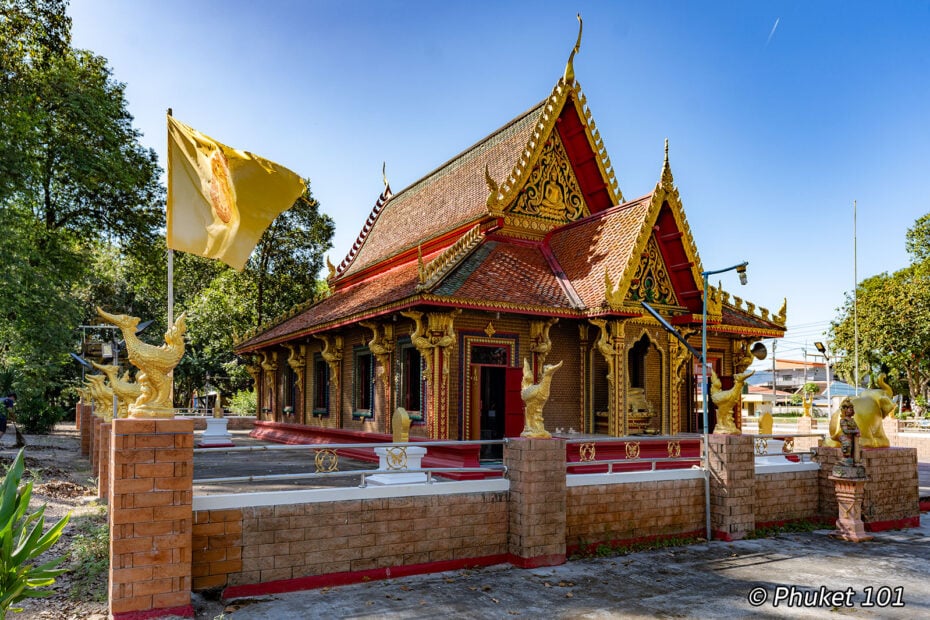
Wat Thep Kasattri (Ban Don)
Post Views: 224 Phuket’s Oldest Temple and the Legacy of the Two Heroines Wat Thep Kasattri is the first temple ever built in Phuket, dating… Read More »Wat Thep Kasattri (Ban Don)

Post Views: 224 Phuket’s Oldest Temple and the Legacy of the Two Heroines Wat Thep Kasattri is the first temple ever built in Phuket, dating… Read More »Wat Thep Kasattri (Ban Don)
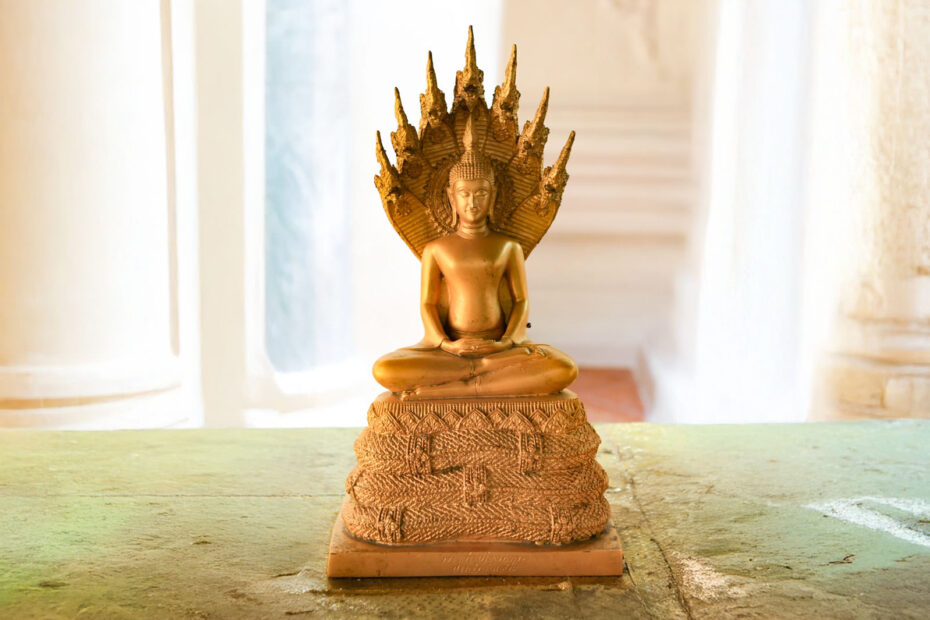
If you were born on a Saturday, your Buddha posture shows something unusual: the Buddha isn’t alone. A giant serpent coils beneath him, and a many-headed hood rises behind his shoulders like an umbrella.

Walk into any Thai temple and you’ll see Buddha statues in different poses. Each one represents a day of the week. The Friday image shows Buddha standing with his arms crossed over his chest, a gesture that looks like he’s deep in thought.
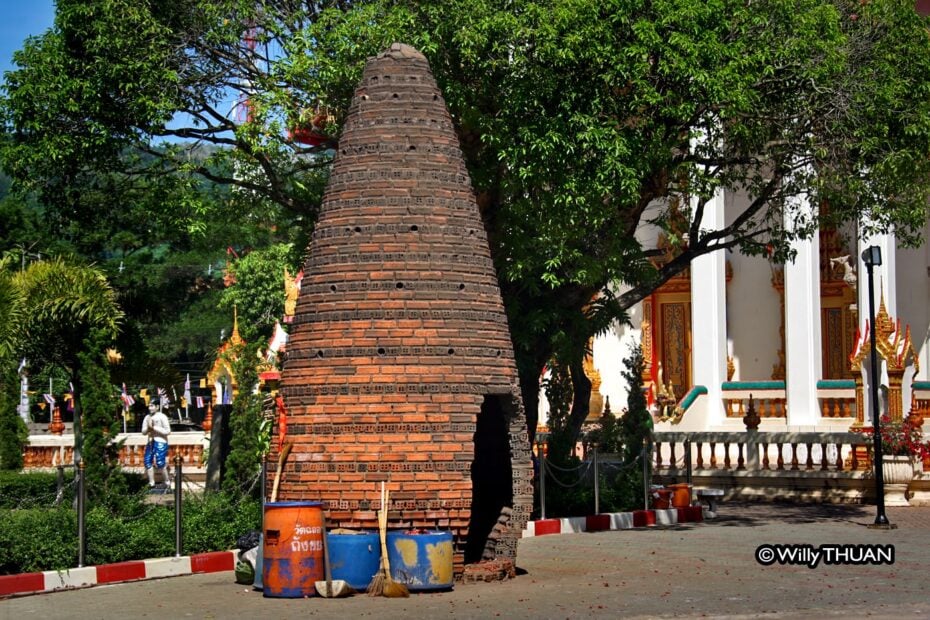
The first time we heard an explosion at Wat Chalong, we thought something had gone wrong. A deep boom echoed across the temple grounds, followed by another, then another.
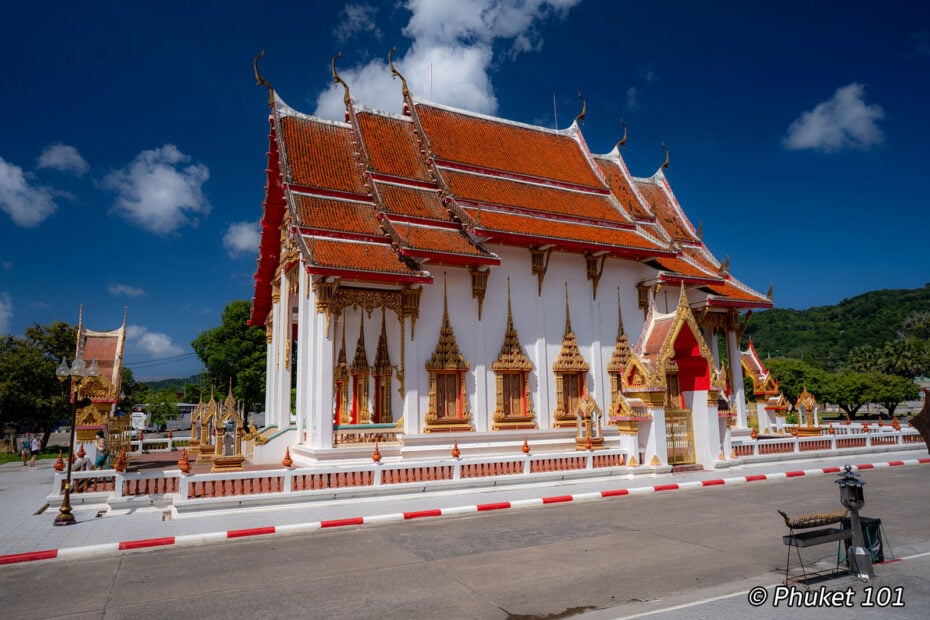
Wat Chalong is worth visiting if you want to see Phuket’s most important Buddhist temple. We’ve been dozens of times over the years and still stop by when showing friends around the island.
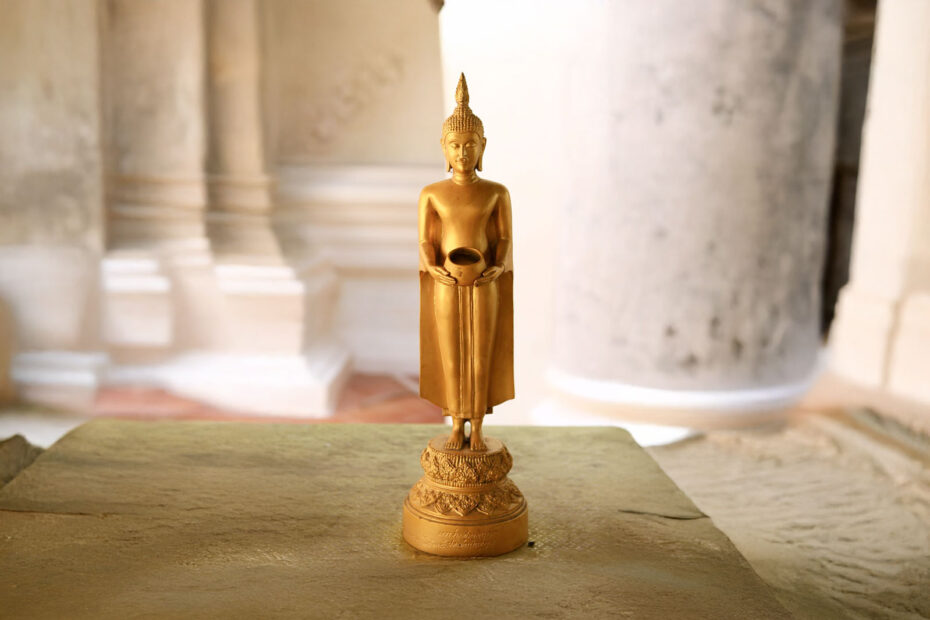
Wednesday is the only day with two Buddha postures in Thai tradition. People born on Wednesday during the day follow one image. Those born at night follow another.
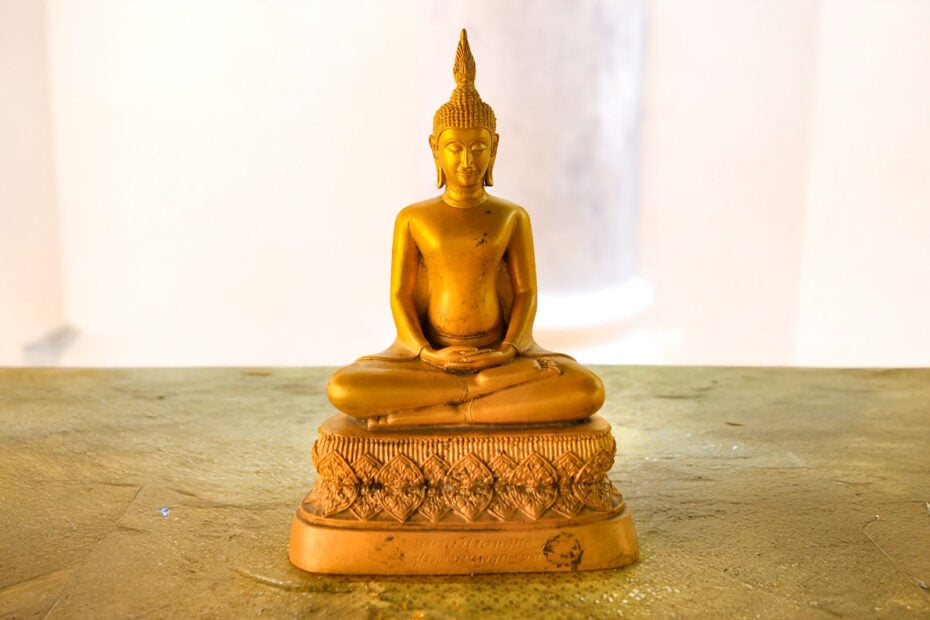
In Thai temples across Phuket, you’ll find Buddha statues arranged by the day of the week. Thursday’s image shows the Buddha seated in deep meditation, hands resting in his lap.
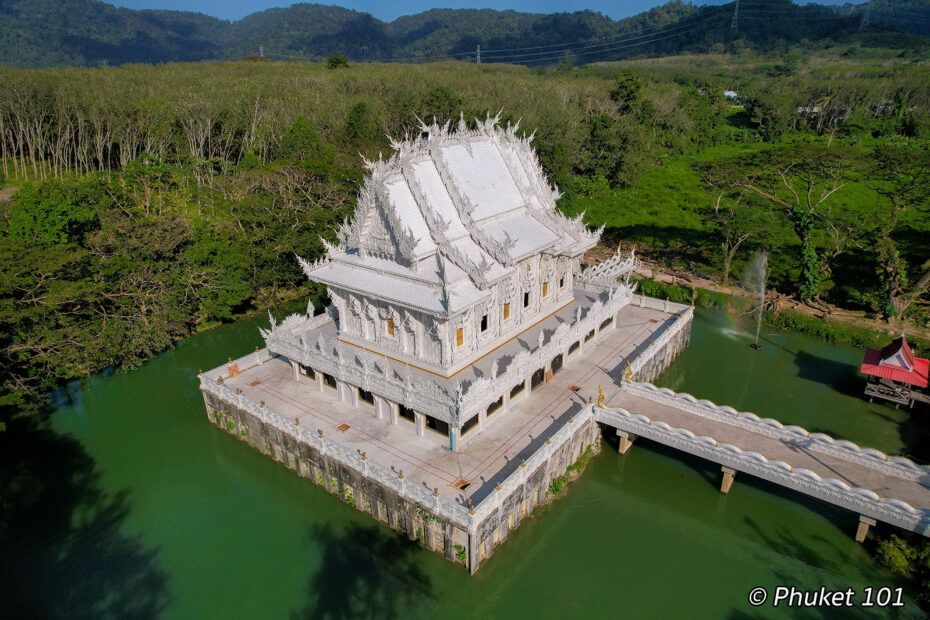
Wat Kanan is Phuket’s striking white Buddhist temple, often referred to as the island’s answer to the famousWhite Temple in Chiang Rai. Located in the Thalang area of Phuket, this relatively new and lesser-known temple has recently gained attention as a stunning spiritual and architectural destination.
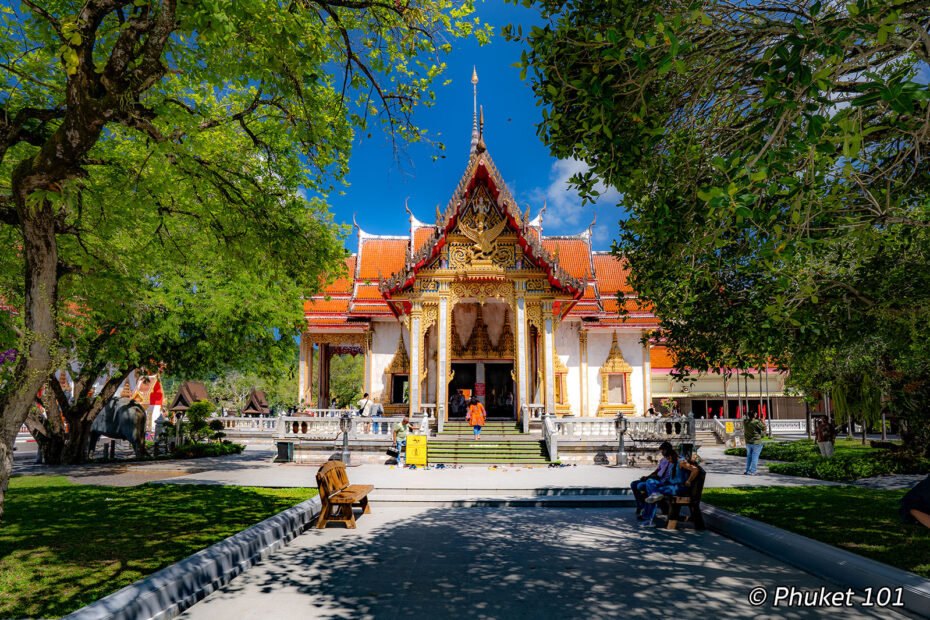
The best temple tours in Phuket typically feature Wat Chalong, the island’s most important Buddhist temple, alongside the iconic Big Buddha on Nakkerd Hills with panoramic views across three beaches.
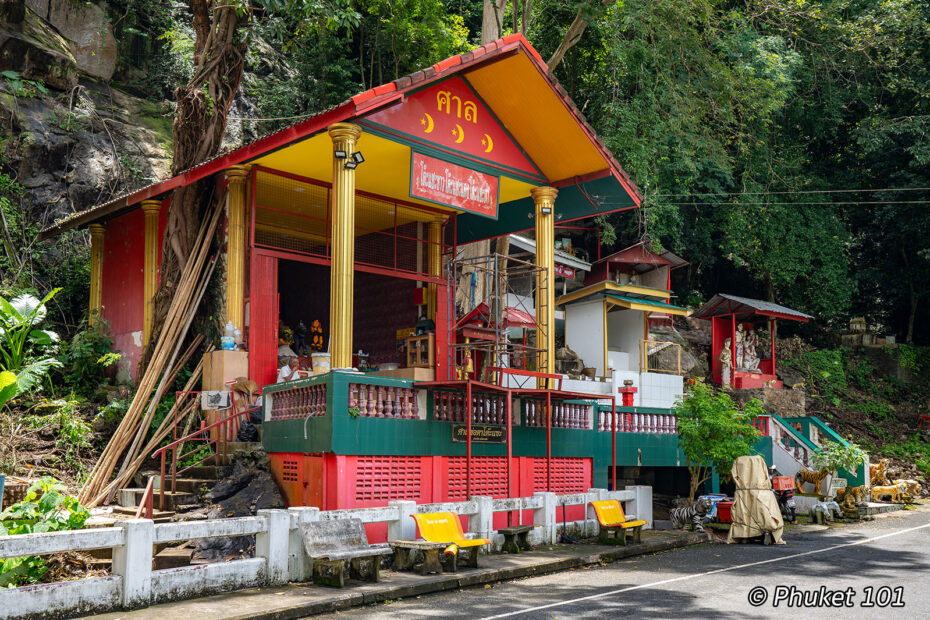
Pho Ta Toh Sae Shrine is a small, old Chinese shrine renowned for its unusual display of tiger statues, located on Monkey Hill in Phuket Town. You will discover dozens of tigers in varying sizes and ages guarding the entrance and lining the inner courtyard.
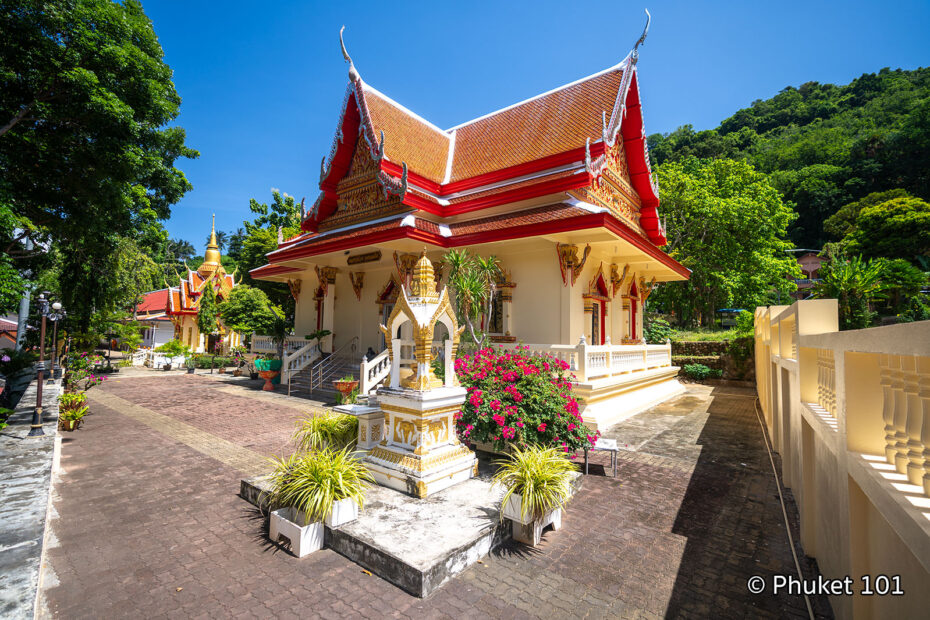
Wat Kitti Sangkharam, also called Kata Temple, sits on the eastern side of Kata Beach along Patak Road. The temple is known for its ornate ordination hall, colorful facades, and calm grounds with statues and murals depicting the Buddha’s life.
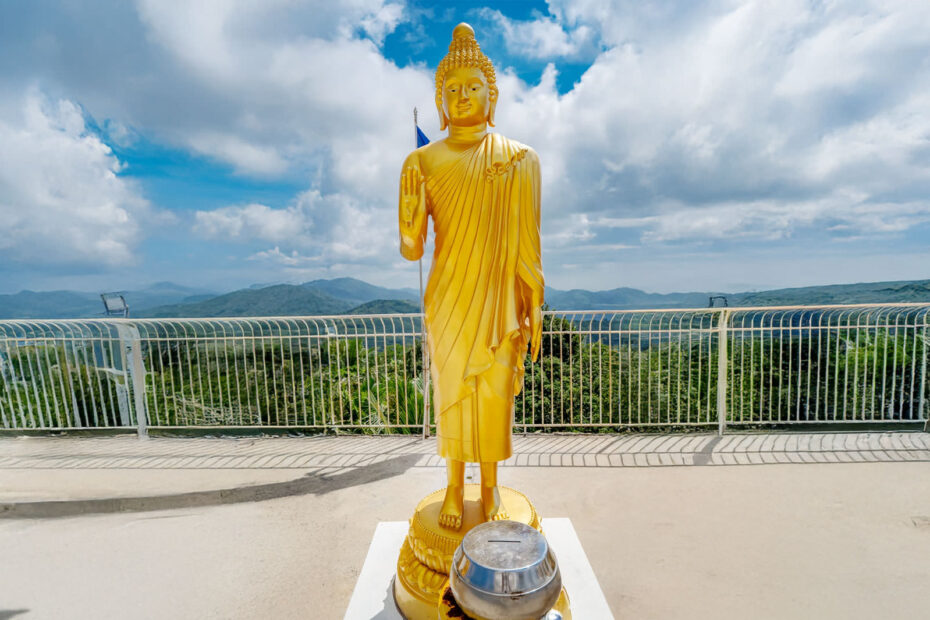
The Monday posture shows the Buddha standing with his right hand raised at chest level, palm outward. It represents the moment he stopped a war between his relatives with wisdom and compassion.
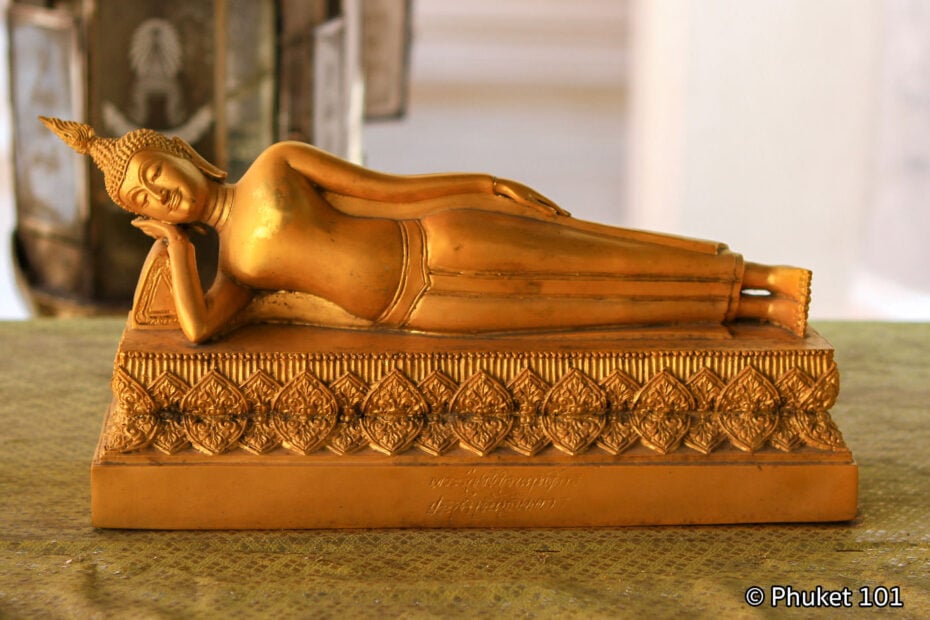
In many Thai temples, visitors see Buddha statues shown in different postures for each day of the week. The Tuesday image is the Reclining Buddha (Thai: Pang Sai Yat, ปางไสยาสน์). This posture is not about sleeping. It represents the Buddha’s final passing into Parinibbāna (final Nibbāna).
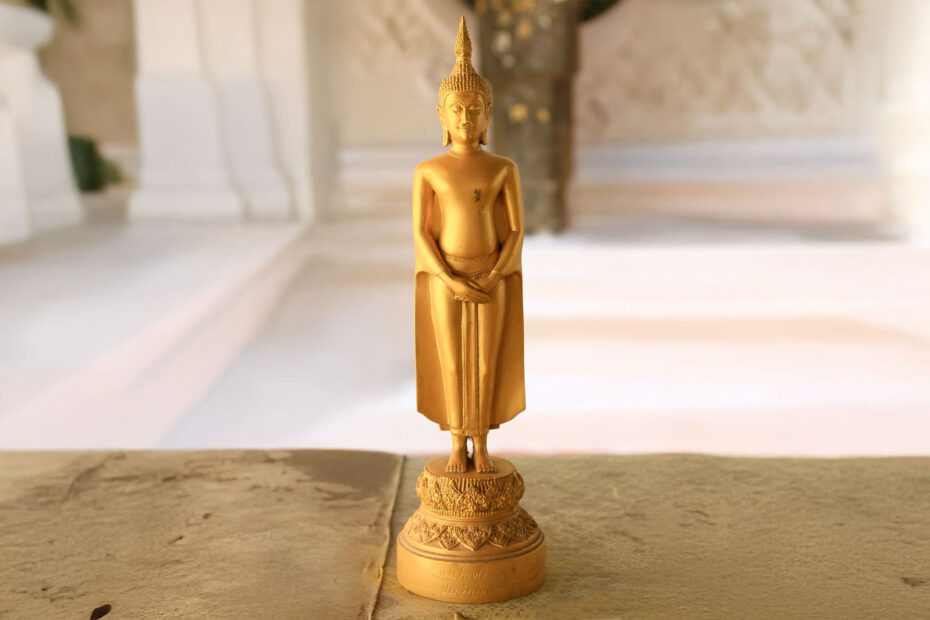
The posture for Sunday is called the Steadfast Gaze (Pang Thawai Net). In English, it is sometimes called the “Seven-Day Gaze” or “Seven Days Looking.”
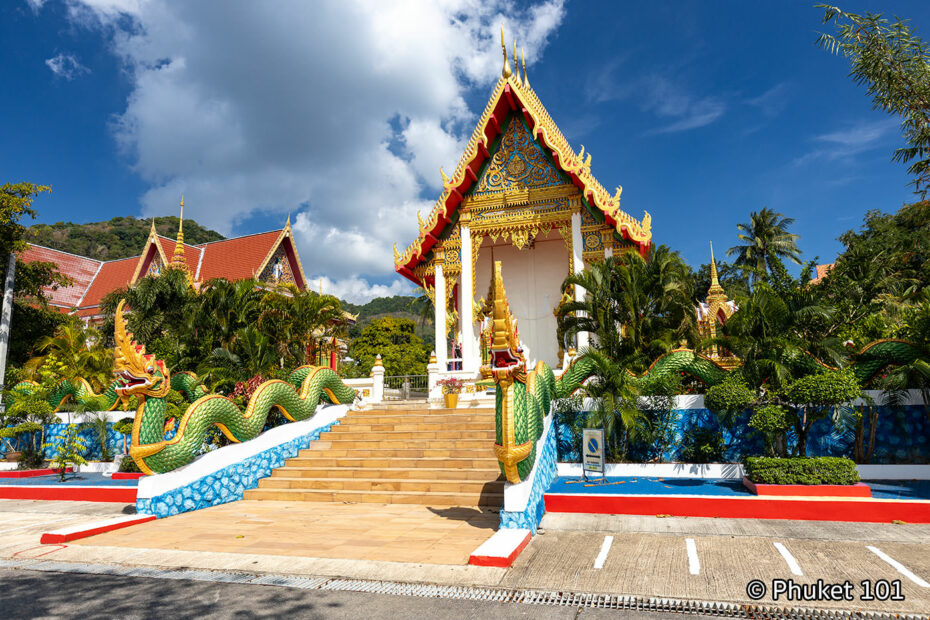
Wat Karon, or Wat Suwan Khiri Khet, sits just inland from Karon Beach and has been part of the local community since 1895. It received its royal charter in 1939, marking its official status as a Buddhist temple in Phuket.
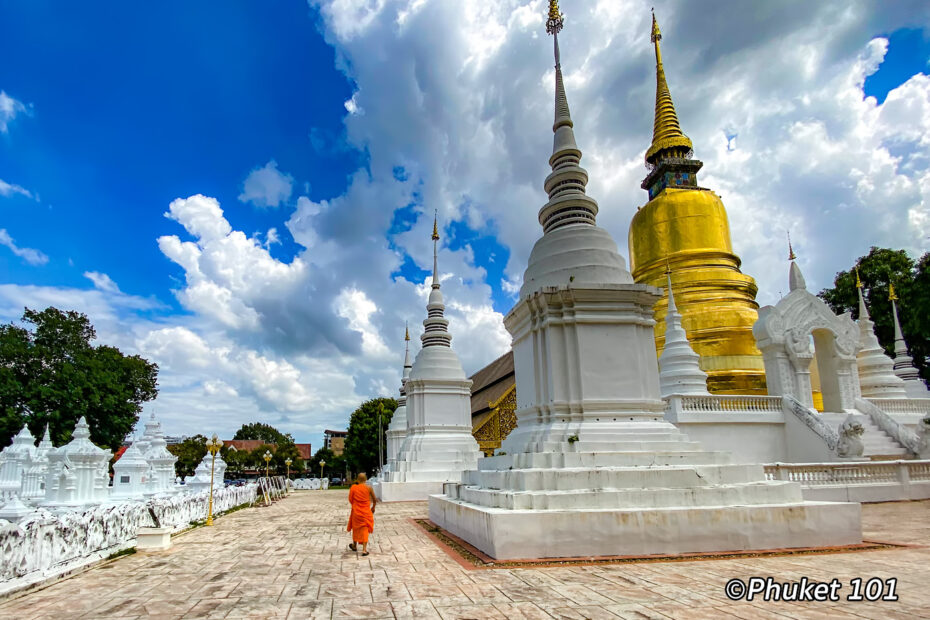
Wat Suan Dok, which means the temple of the flower garden, was built in 1373 and is unique because of the many white mausoleums containing the remains of the previous rulers of Chiang Mai
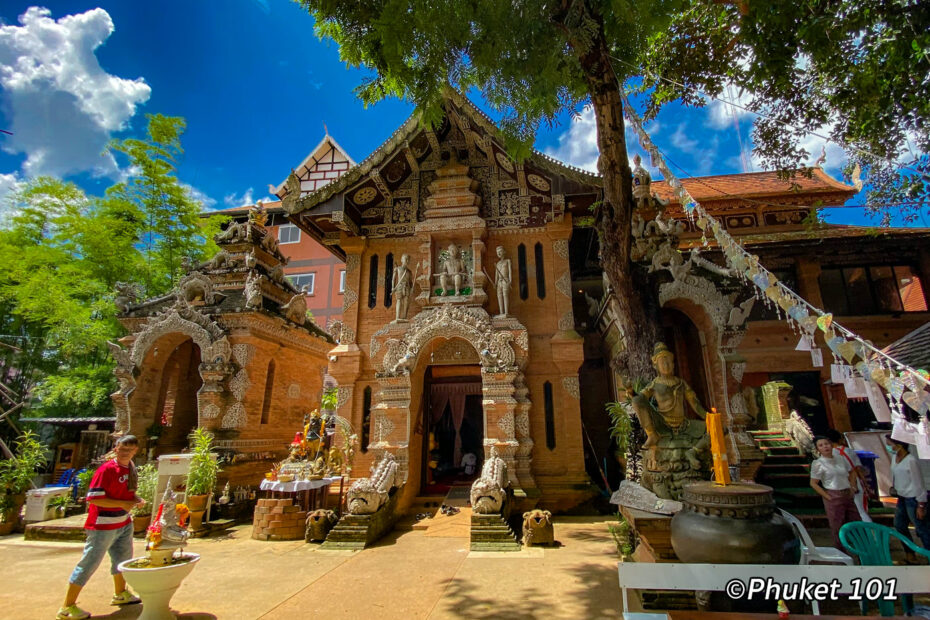
Post Views: 1,675 An ancient temple with a massive chedi and royal history Wat Lok Moli is one of those temples people often notice without… Read More »Wat Lok Moli
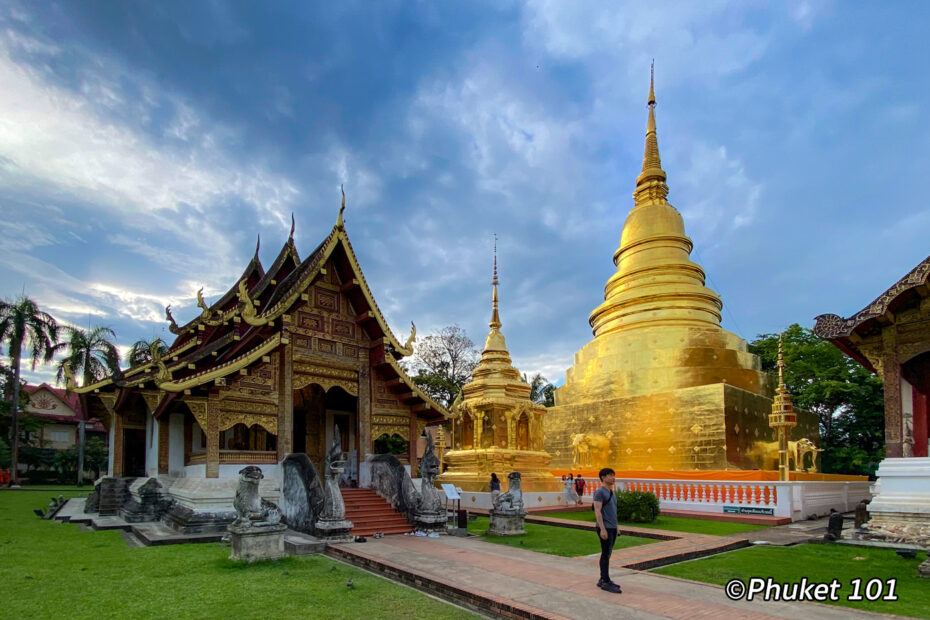
Wat Phra Singh is a significant one. It looks modest and darker than most other wats from the outside but is superb inside. Walk to the back to admire another temple and a shiny golden stupa
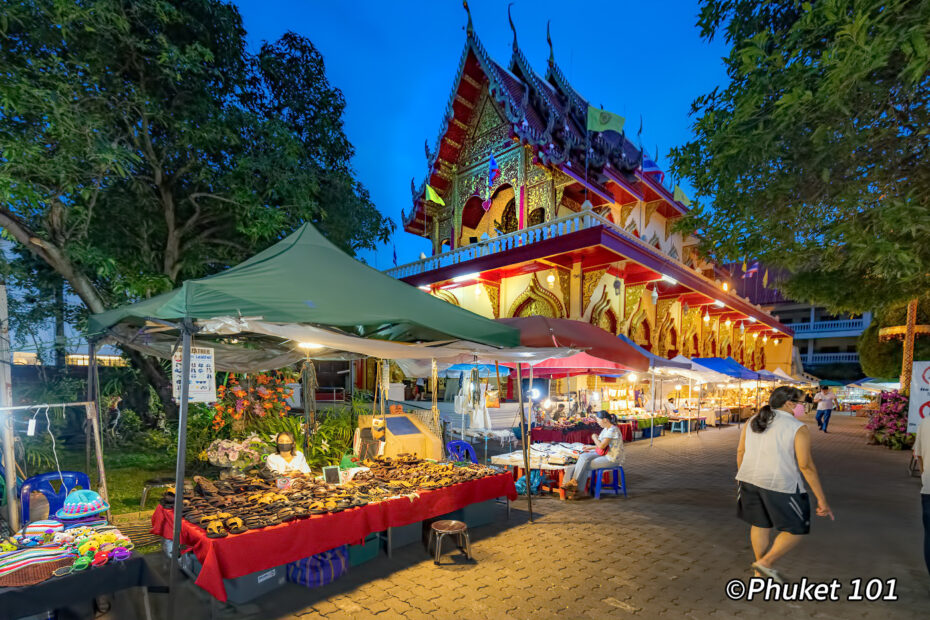
Wat Phan On is on the side of the Walking Street Market, with a golden Chedi and a beautifully decorated main Temple. On Sundays, the temple is occupied by food vendors and tables for customers to enjoy.
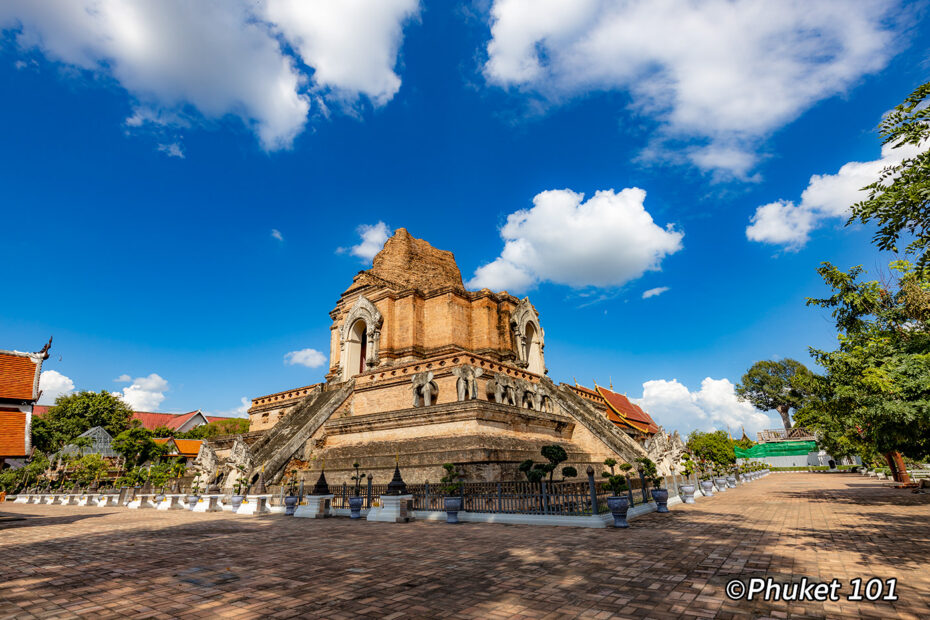
Wat Chedi Luang is the largest and most spacious, with an immense and majestic central stupa. The square brick shape of the main chedi with elephants surrounding it is very iconic
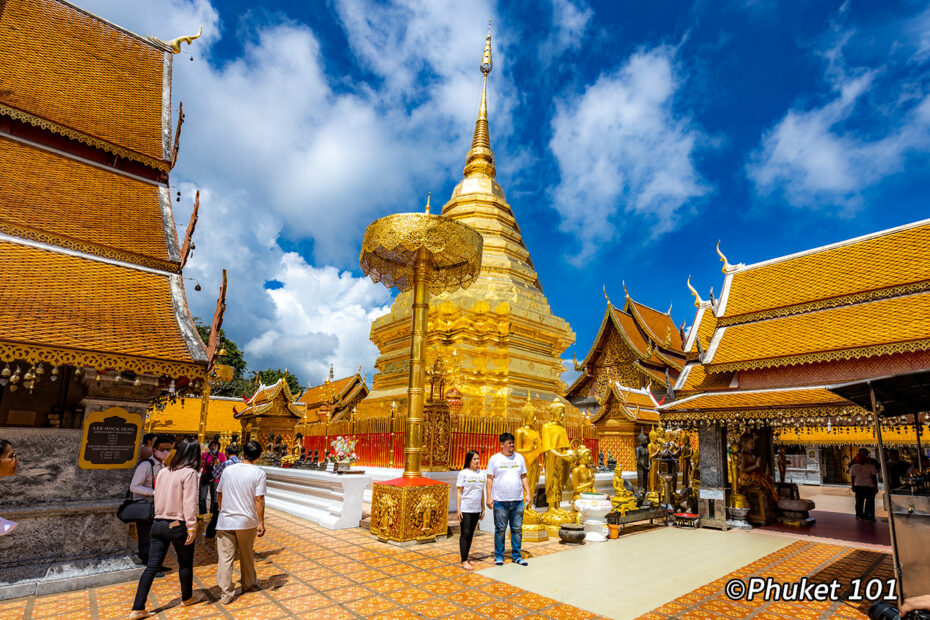
Doi Suthep is the most iconic landmark of Chiang Mai, but it takes about an hour by car to reach from the downtown city centre
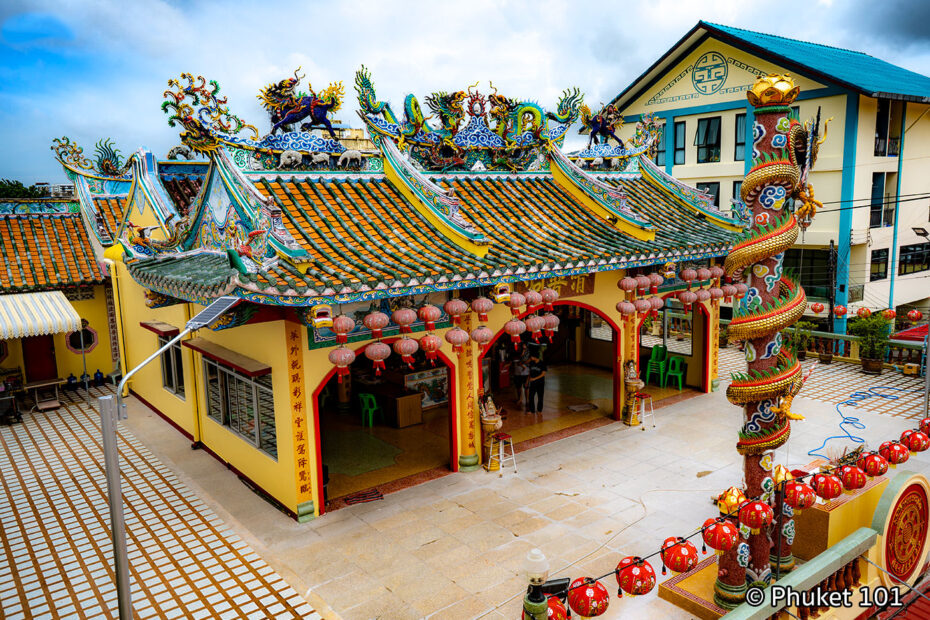
Sui Boon Tong Shrine is a lesser-known Chinese shrine, but despite its discreet location and modest entrance, it remains an active spiritual site and plays a meaningful role during the annual Phuket Vegetarian Festival.
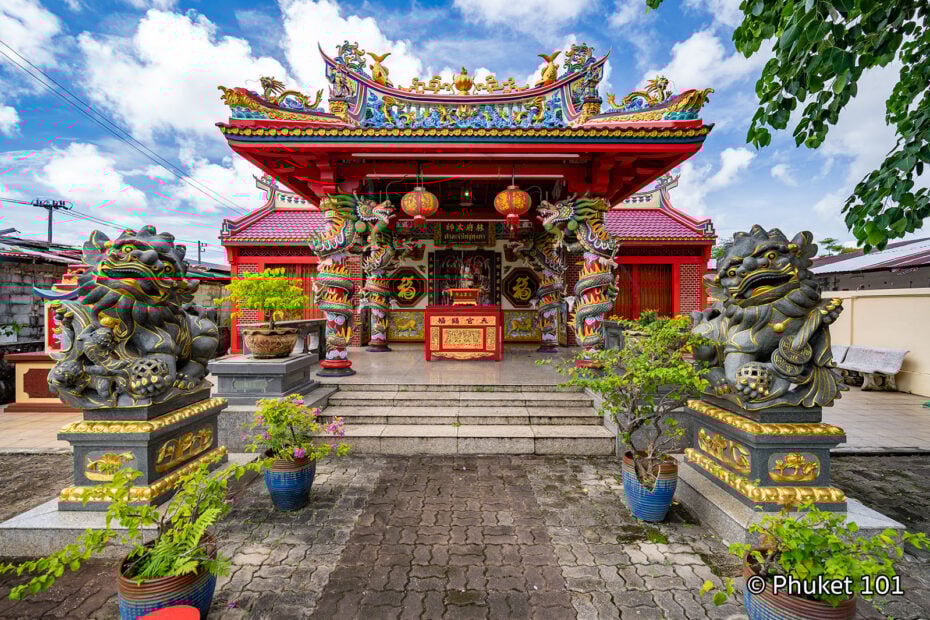
Long Hun Keng Shrine (肜雲宮) is a small and lesser-known Chinese shrine located along Thepkasattri Road in Phuket Town. Despite its modest size and low profile, it holds cultural significance for the local Chinese-Thai community, especially during the Vegetarian Festival.
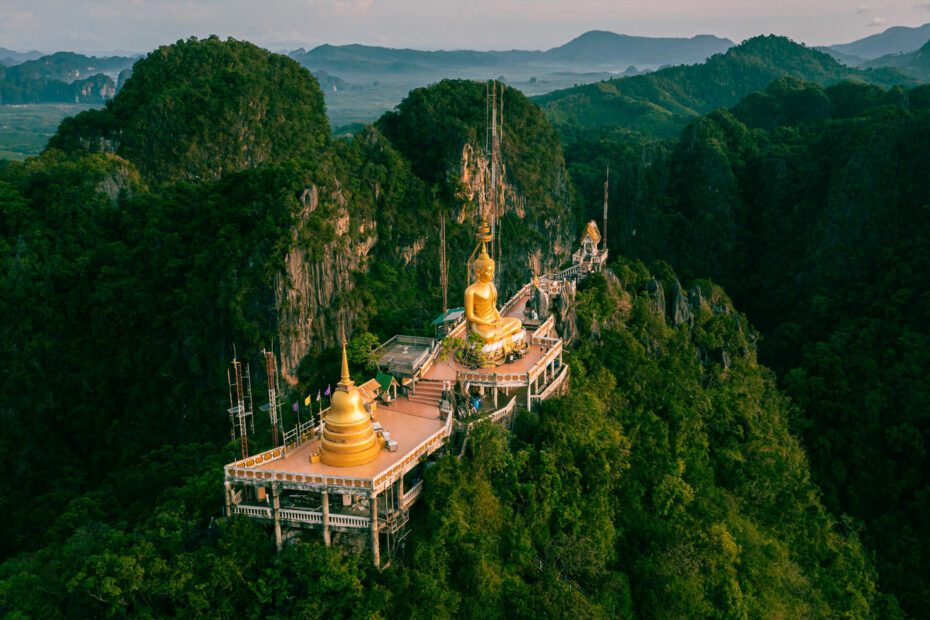
Wat Tham Seua, also known as the Tiger Cave Temple, is nestled in a jungle setting about 9km north of Krabi Town. The temple grounds feature glittering caves and archaeological treasures, including stone tools and pottery remains
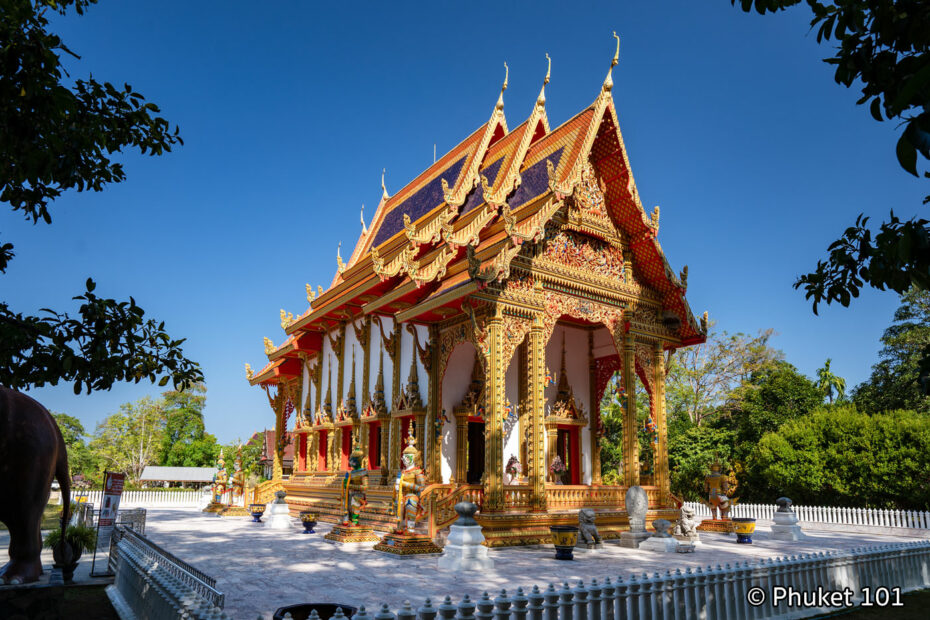
Wat Kom Nai Khet, also known as Wat Khuek Khak, is a serene Buddhist temple in the Khao Lak area about 5km north of Bang Niang Beach
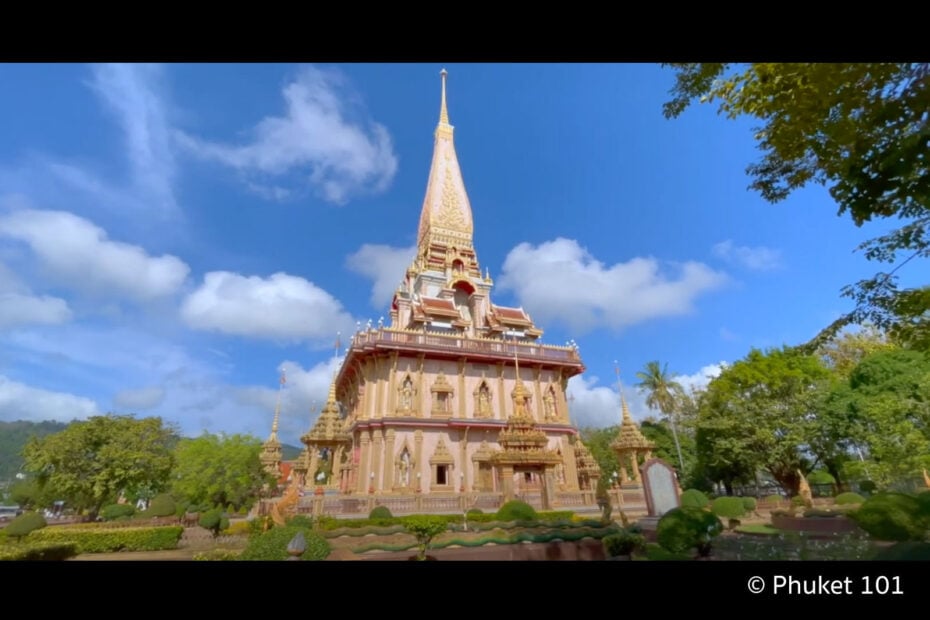
This Wat Chalong Video takes you to Phuket’s most important and largest temple. Located in Chalong, this beautifully decorated temple has been a spiritual centre for locals for over a century.
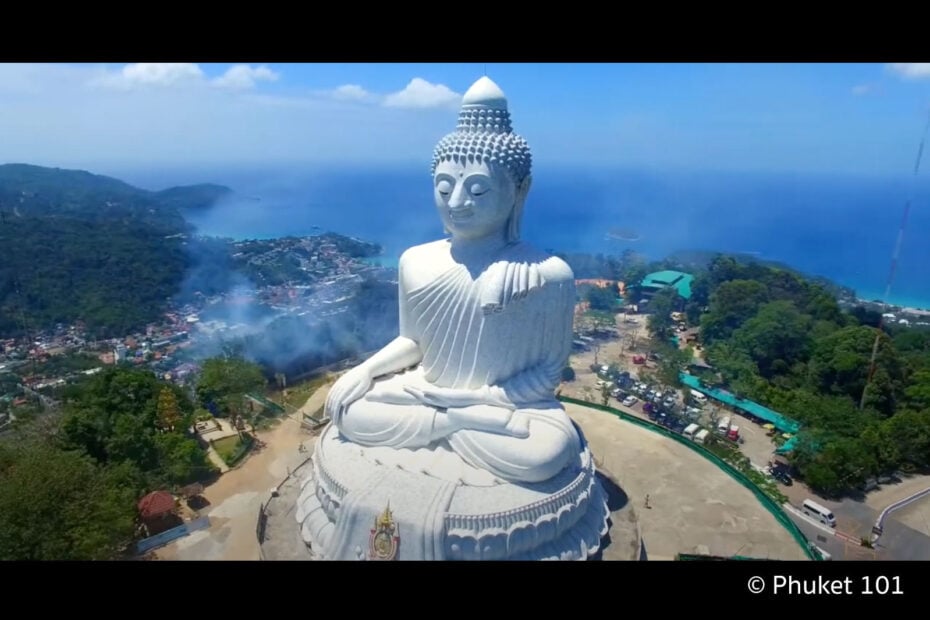
This Phuket Big Buddha Video takes you to one of the island’s most famous landmarks. Sitting on Nakkerd Hill between Chalong and Kata, the 45-metre-tall statue can be seen from many parts of southern Phuket.
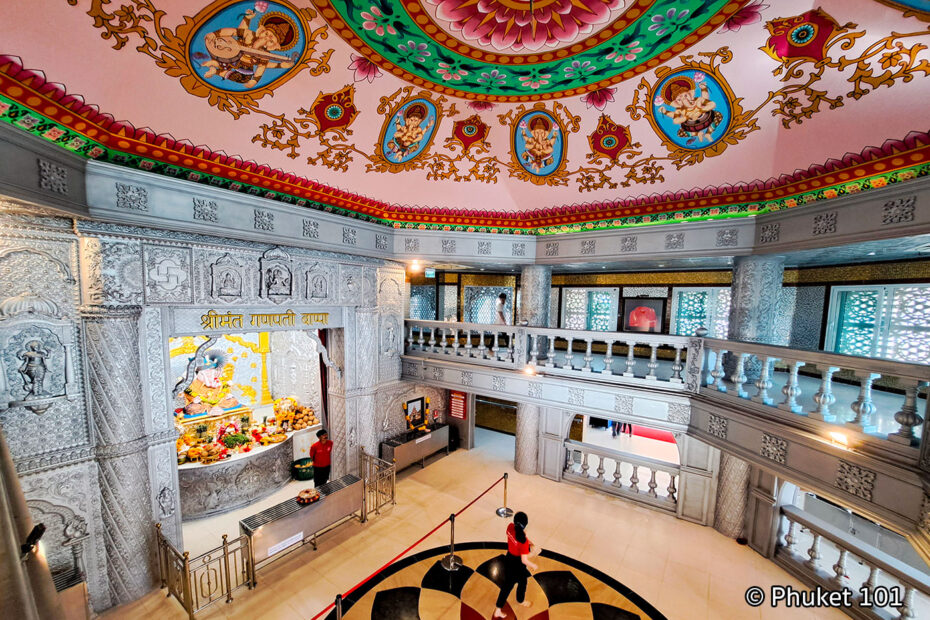
Lord Shrimant Ganpati Bappa Devalai is a Hindu temple dedicated to Ganesha set in Rawai Beach near Rawai Park. This intricately designed Phuket temple is a replica of the century-old Shrimant Dagdusheth Halwai Ganpati Temple in Pune, India
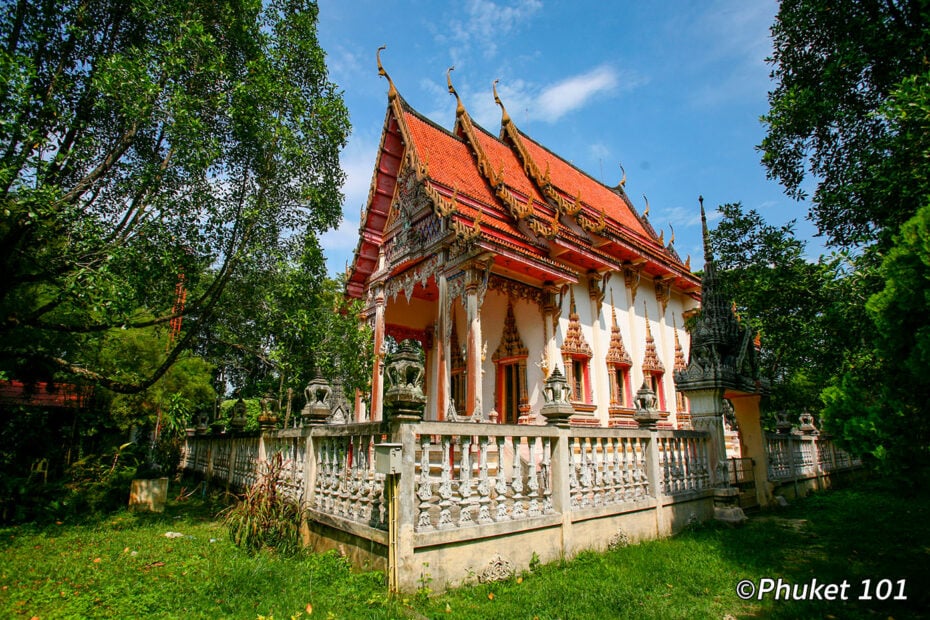
The Mai Khao Temple is less known but worth a photo (Wat Mai Khao). The temple itself is tucked away from the road. It doesn’t have any particular architectural interest, but it hides a little treasure: a small bird sanctuary hidden in the park behind it
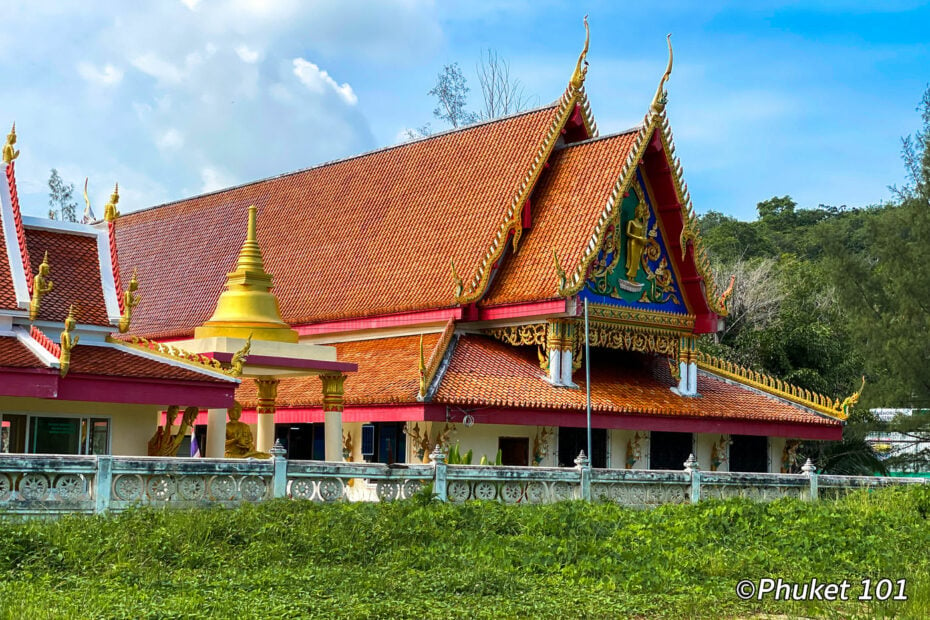
Wat Baan Kamala is a modest temple near the entrance of town. It is quite modest, but the long lines of small golden Buddhas are worth a photo and a glimpse of real Thai life. Remember that this is a religious site so don’t wear too short clothes.
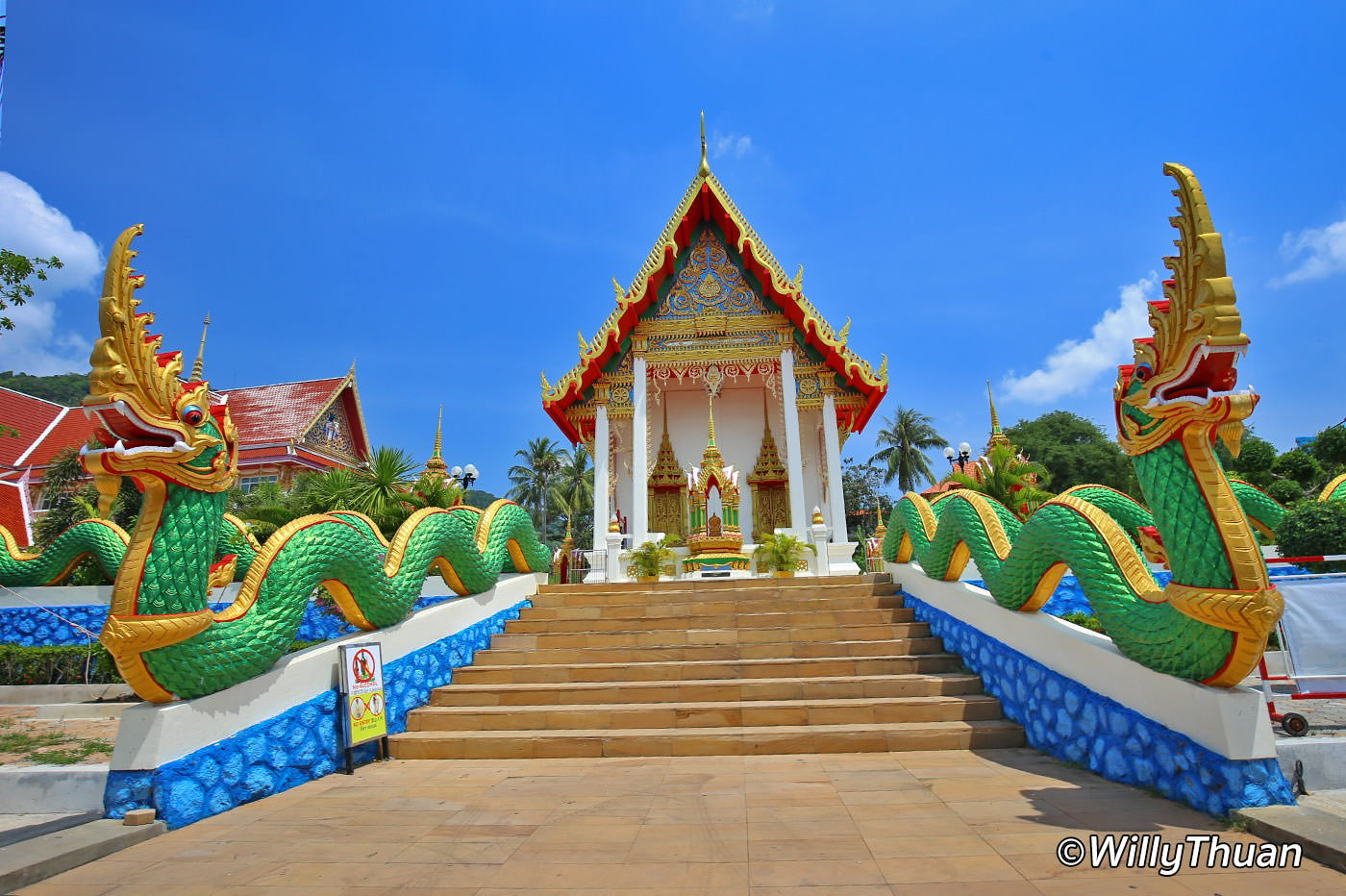
Wat Suwan Kirikhet is a small but beautiful temple in the back of Karon Beach that frequently hosts the popular Karon Temple Market and occasional funfairs, which are always fun to visit.
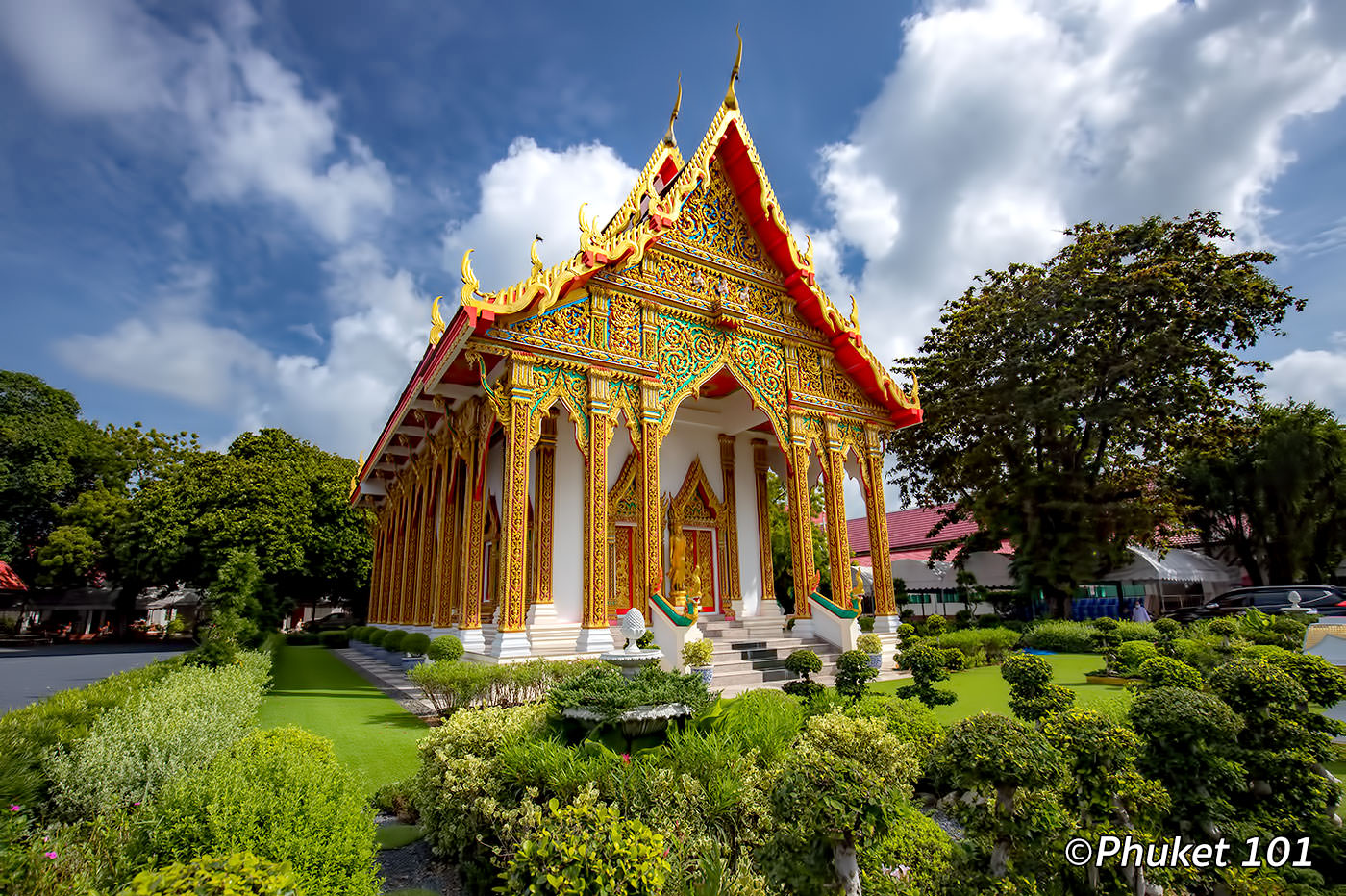
Wat Ladthi Wanaram, located in Chalong Subdistrict in the south of Phuket, is a temple of the Mahanikaya sect. The temple occupies 26 rai of land and has a rich history. It was founded in 1758 and received its royal charter on February 5, 1957.
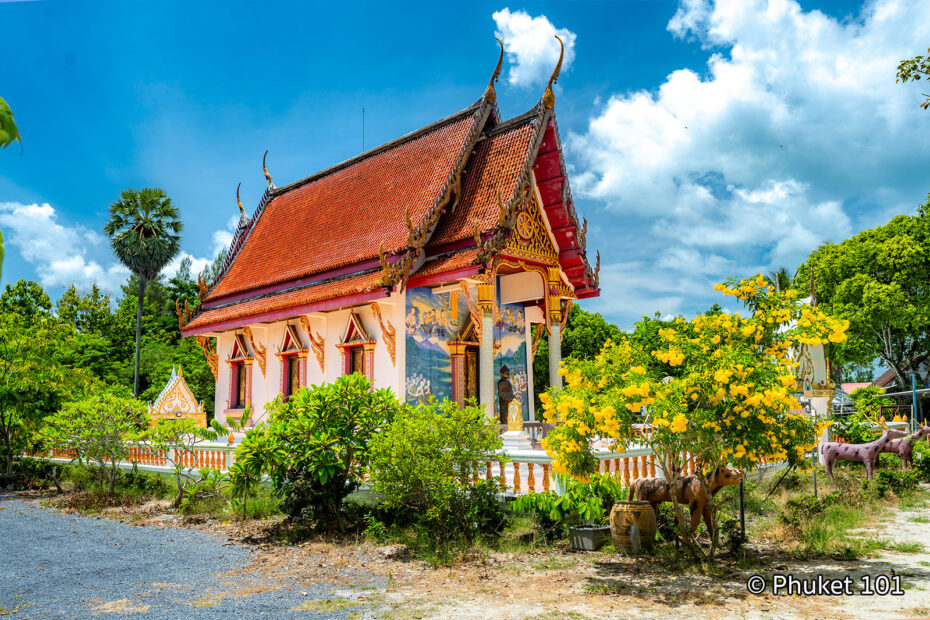
Wat Sophon Wanaram is a tiny but brightly decorated temple on the road between the Heroine monument and Bang Pae waterfalls. It is easy to spot the gate by the roadside.
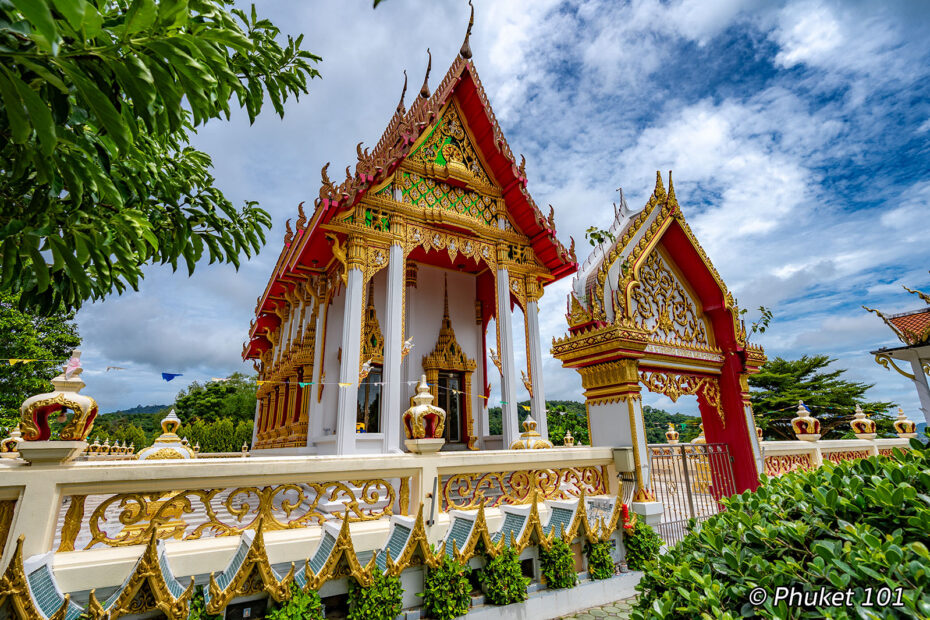
Beautifully standing on the east coast of Phuket just opposite Koh Maphrao (Coconut Island), Wat Sapam is not often visited as cars usually drive (too) fast in these curves, and the street leading to the temple is hard to locate.
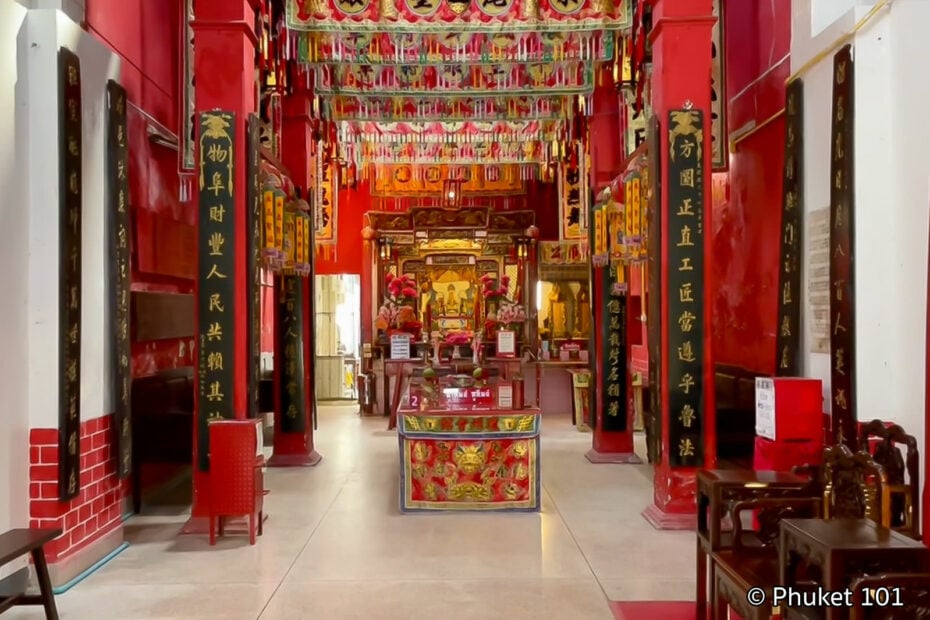
Located on the popular Thalang Road in the heart of Phuket Old Town, the Hainan Shrine is more than just a place of worship. Built in 1910, this beautiful shrine has been a cultural and spiritual centre for over a century, especially for the Hainanese community in Phuket.
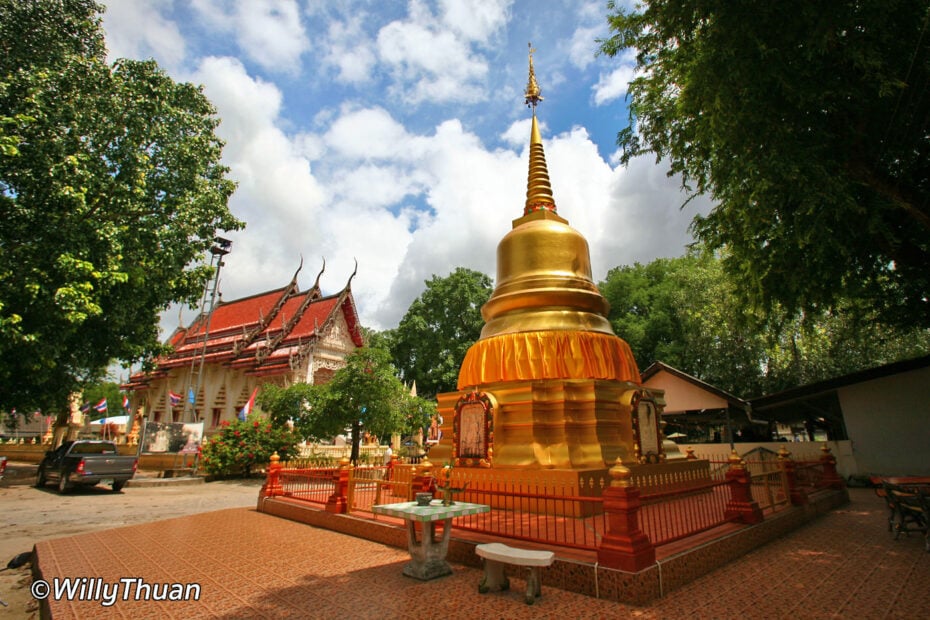
Wat Thepnimit (วัดเทพนิมิตร) is a local Buddhist temple located in the Wichit subdistrict of Phuket, near the Wichit Subdistrict Office and not far from Phuket Town.
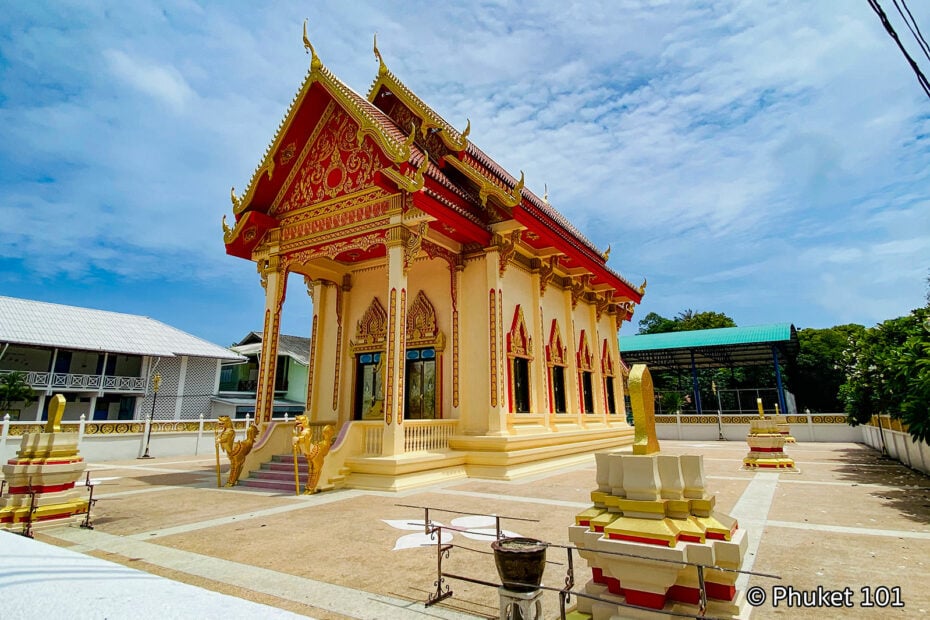
Wat Sawang Arom is a temple of the Mahanikaya sect located in Rawai, south of Phuket Phuket Island. Established in 1942 by Phra Bunrod Thammakamo, the temple covers an area of approximately 9,636 square meters.
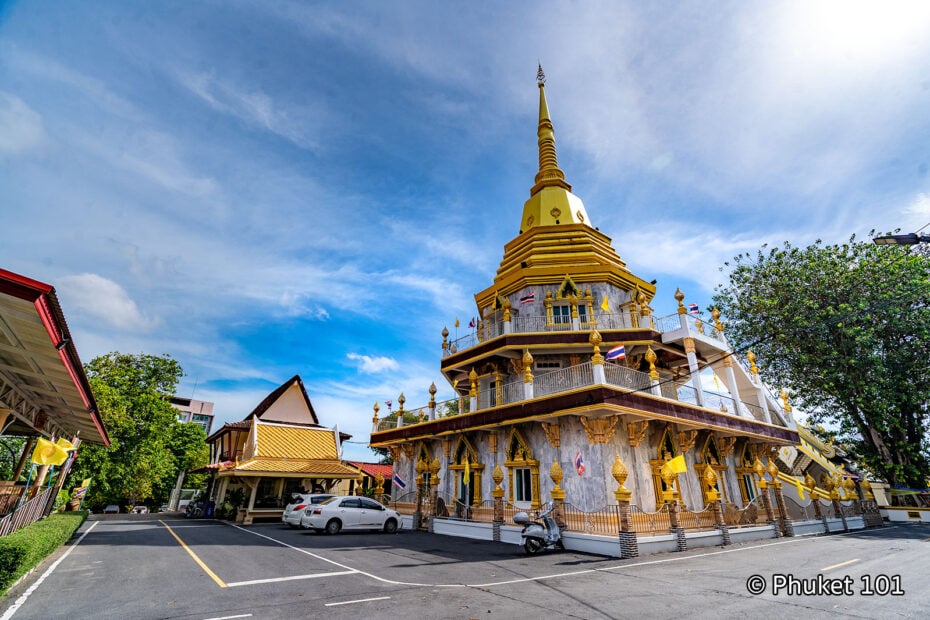
Wat Nakaram (Wat Naka) only main characteristic is the golden Chedi standing next to the main temple. Located just across the road from the famous Phuket Weekend Market, it’s an excellent opportunity to visit both simultaneously.
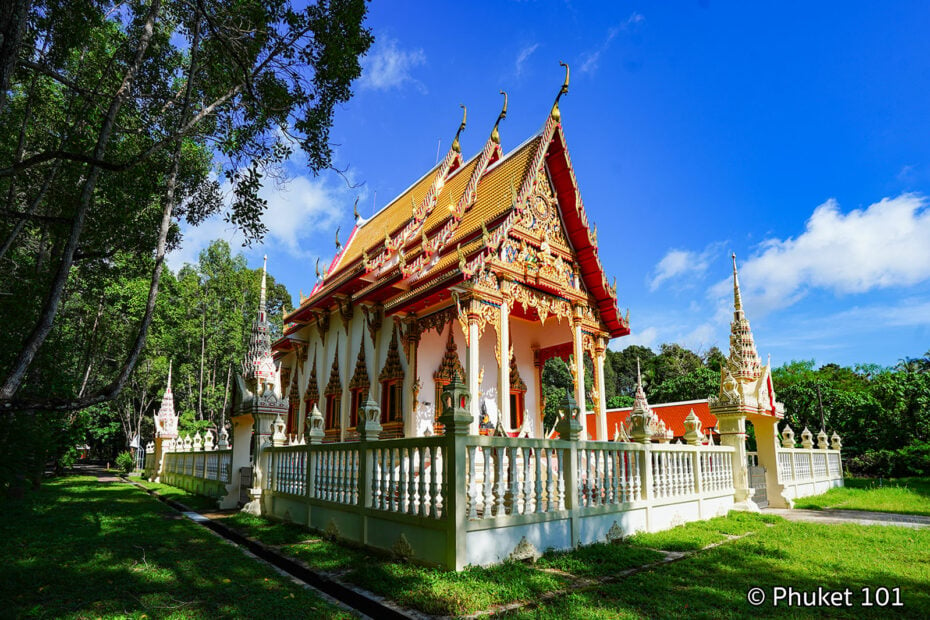
Wat Tha Rua is a Mahanikaya sect temple in Tambon Si Sunthon in Thalang, just before the Heroine Circle on the way to Phuket International Airport.
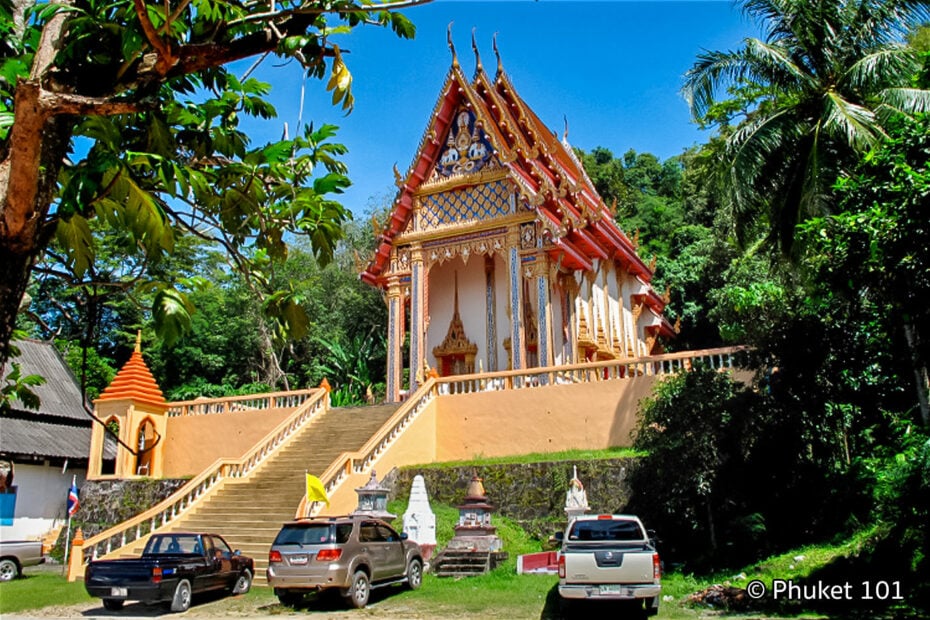
Wat Khosit Wiharn (วัดโฆษิตวิหาร) is a Buddhist temple located near Phuket Town. The temple grounds encompass approximately 87 rai and are situated near Thep Krasattri Road, adjacent to the Khao To Sae National Forest Reserve (Monkey Hill).
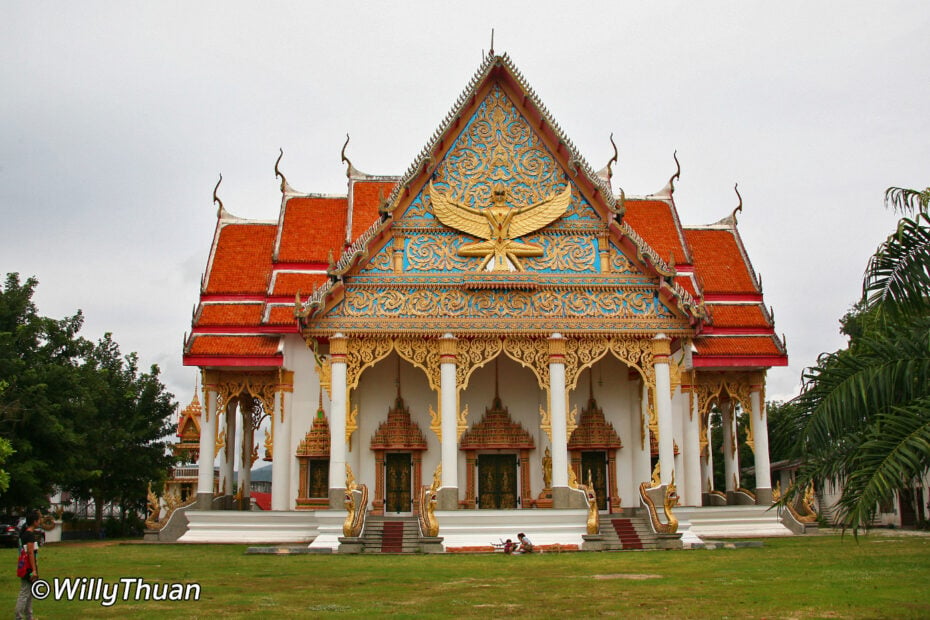
This vast and beautiful temple on the fringe of Phuket town also plays a significant role for Phuket citizens but is rarely visited by tourists because of its location in the city’s back streets.
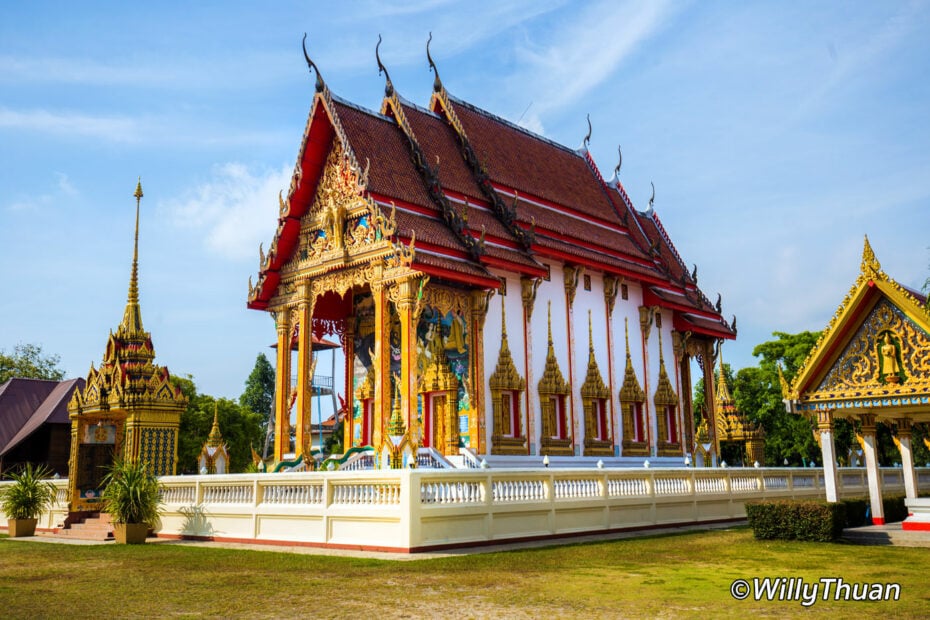
Wat Cherngtalay, historically known as Wat Tin Le, is an ancient and revered temple located in Phuket Province. It has served as a spiritual centre for the people of Cherngtalay for generations. One of its most notable figures, Luang Por Plod, served as abbot from 1852 to 1886.
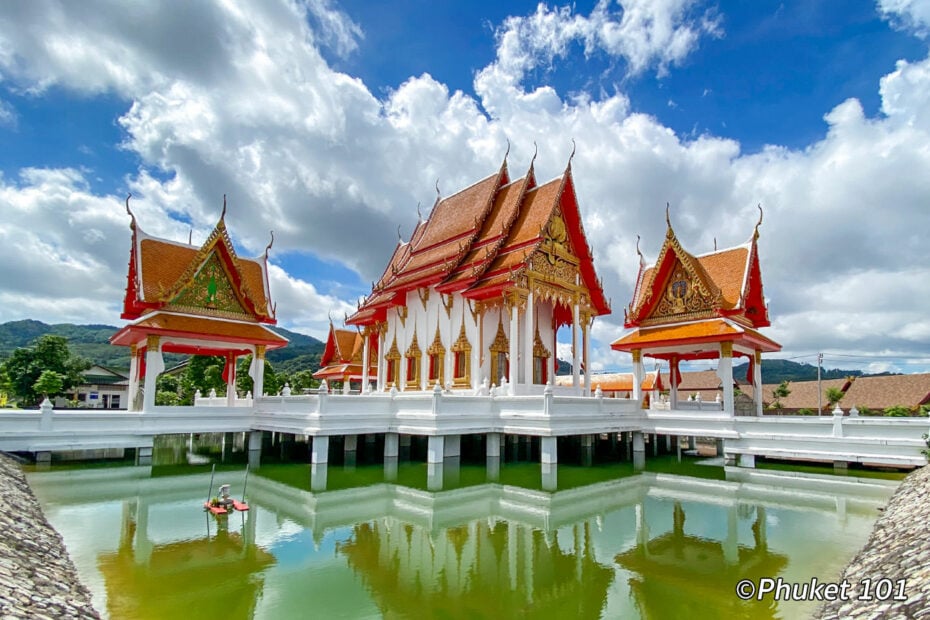
Wat Luang Pu Supa is where the oldest monk in Thailand, who is more than 112 years old, lives. Parts of this temple are still under construction. Quite large and built over an artificial pond, the temple grounds include a golden Chedi and a large but unfinished hemispheric Chedi.
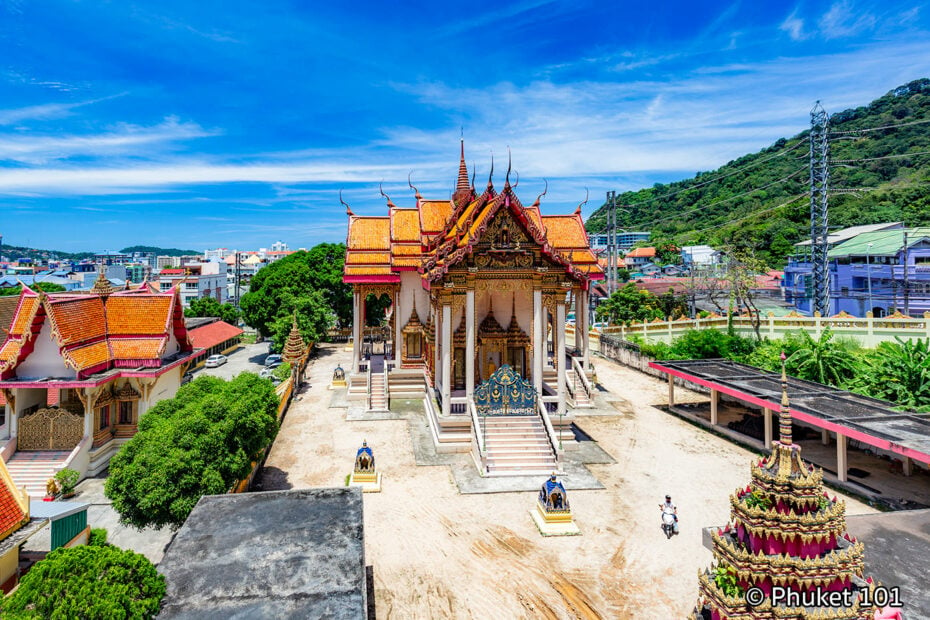
Wat Suwannakhiriwong is a Mahanikaya sect temple located in Patong. Spanning 17 rai, the temple is bordered by Phra Barami Road, a canal, and the foot of a mountain, with villagers’ houses nearby. The current abbot is Phra Khru Pothipanyakan. Established in 1769 and originally named Wat Pa Tong, the temple later became Wat Suwannakhiriwong.
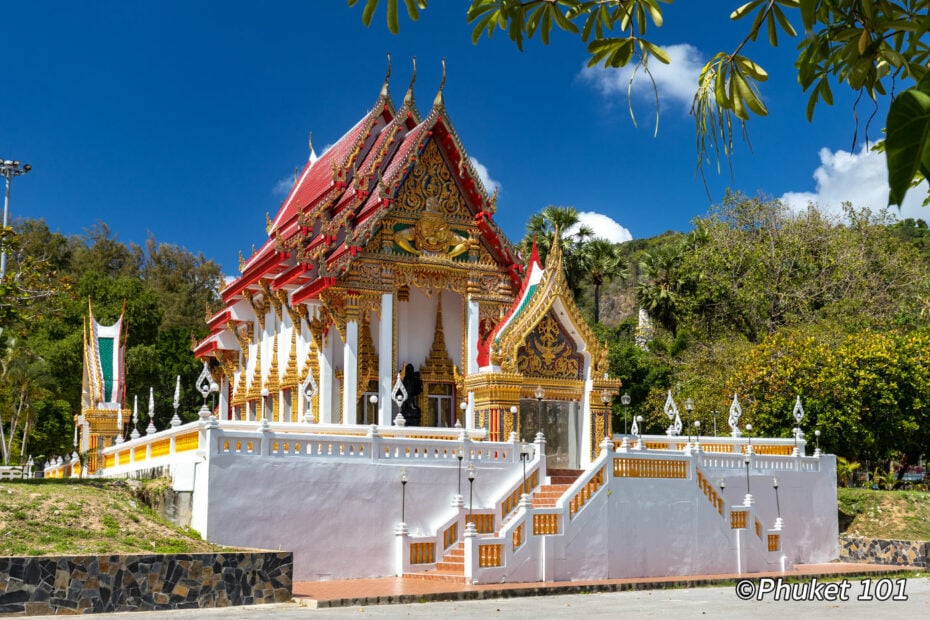
Wat Nai Harn is a local Buddhist temple situated just a short distance from Nai Harn Beach. The temple complex features a main ordination hall, a sermon hall, monks’ residences, and a pagoda-style structure adorned with intricate golden sculptures.
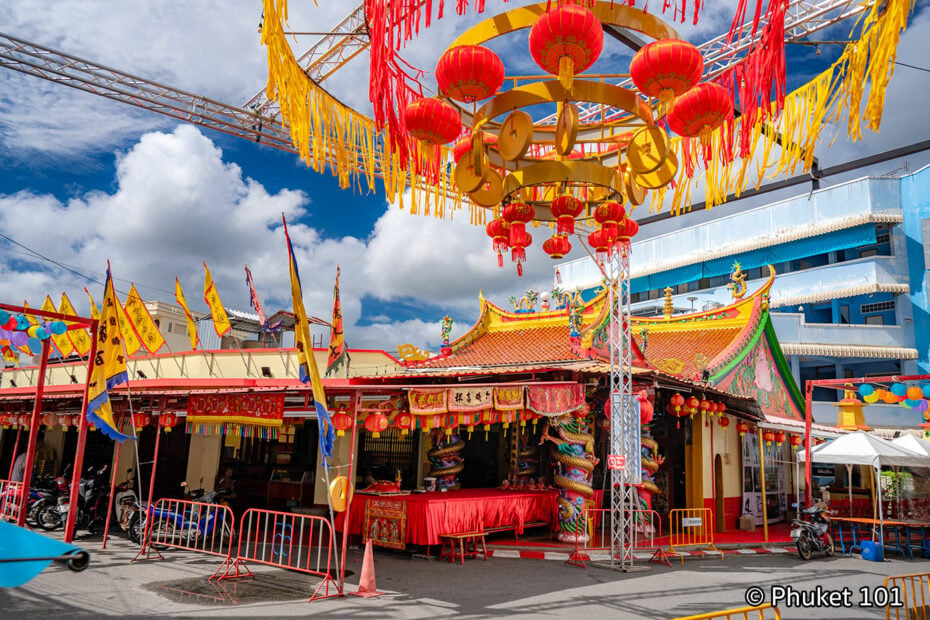
Adorned with intricate artwork depicting sins and punishments, Sheng Tek Beo in Phuket Town is a shrine that plays a key role in the Por Tor festival, or Hungry Ghost Festival, which occurs every year around September. The central celebrations occur at this shrine dedicated to the Por Tor god, or king of hell.
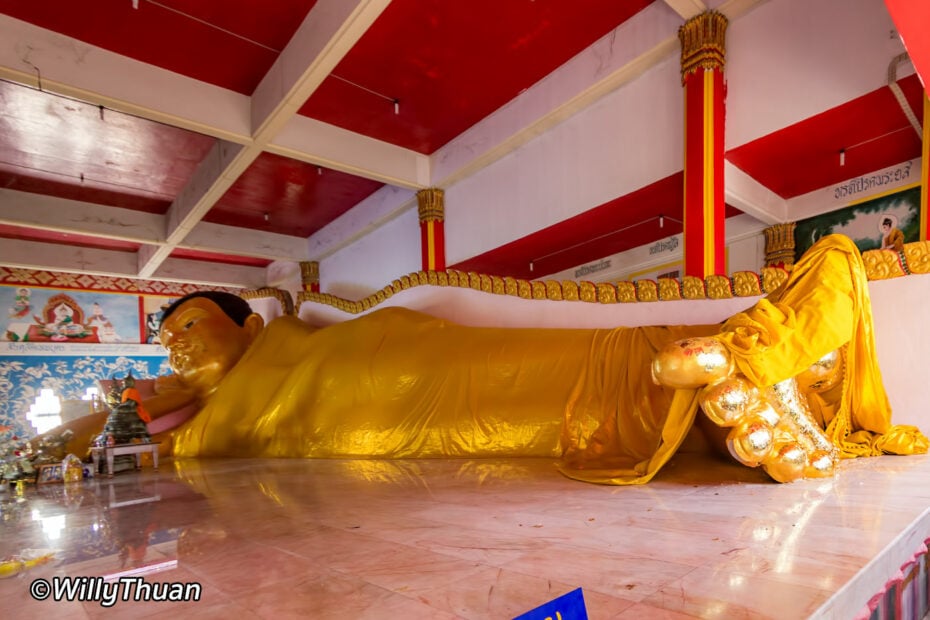
Built atop a hill on Koh Sirey, a small island only 20 km square next to Phuket Town, Wat Ban Koh Siray is visible from quite far away. Driving up to the temple is easy, and a small road surrounds it, surrounded by many small shrines dedicated to people who passed away.
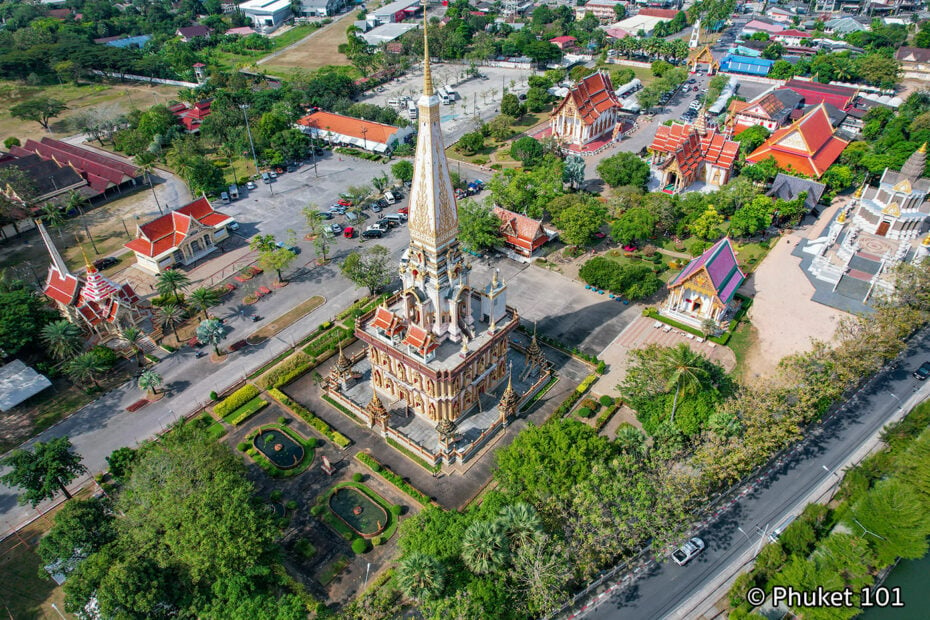
Wat Chalong, officially known as Wat Chaiyathararam, is the largest and most revered Buddhist temple in Phuket. Built in the early 19th century, it is an important spiritual site for locals and tourists alike.
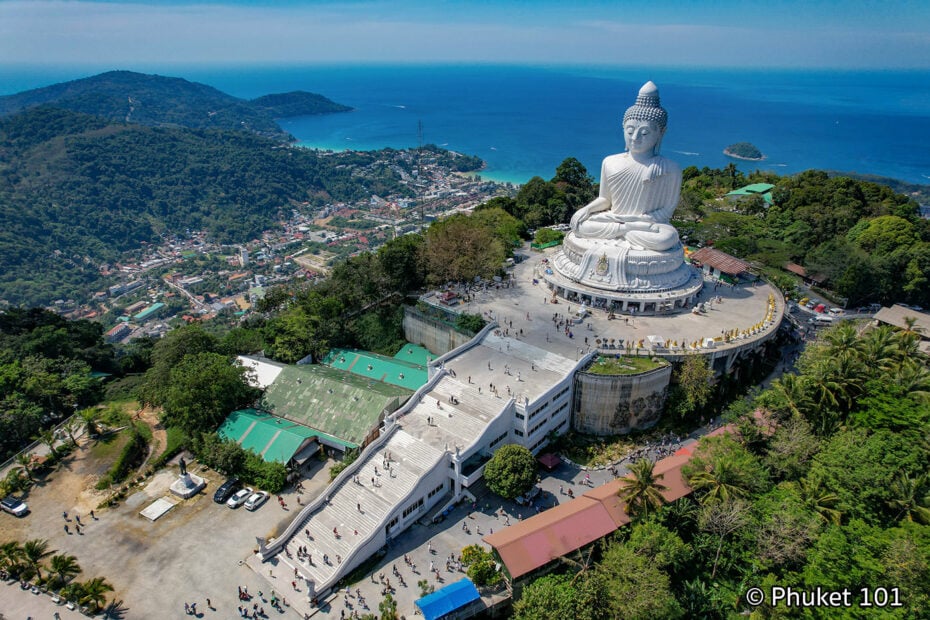
The construction of Phuket Big Buddha started in 2002, on the top of Nakkerd Hill in the south of Phuket Island. The site was very hard to reach in the first years and it was not yet famous as nothing was visible from the far and not many people talked about how big it would become.
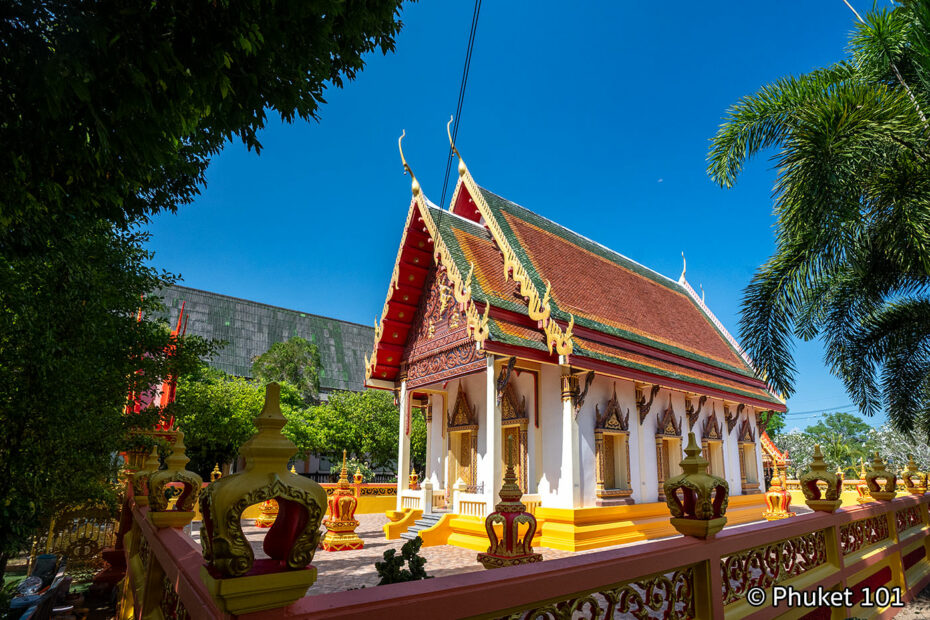
The Mongkhon Wararam Temple (Wat Nai Yang) is located in Nai Yang Village, just 500 metres from the superb beach of Nai Yang, and just next to the Proud Hotel.

Wat Charoen Samanakij, also known as Wat Lang San, is a beautiful and serene temple nestled on the slopes of Toh Sae Hill in Phuket Town, behind the old Phuket Prison which has since moved to the north of the island. It is a relatively new temple, having been built in 2012, but it has quickly become a popular destination for both locals and tourists alike.
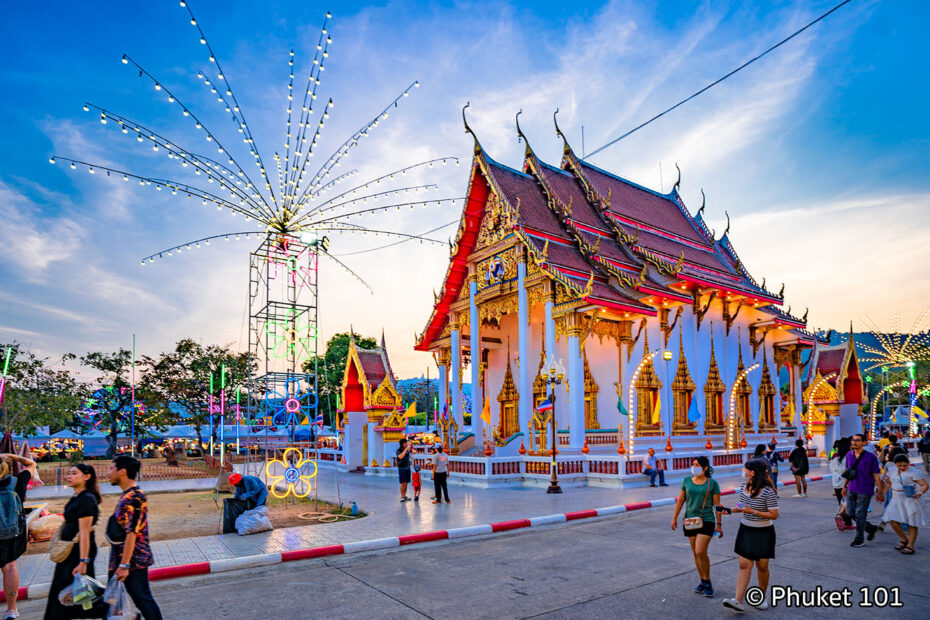
Wat Chalong Fair runs for about 10 days every year during the Chinese New Year. It’s a proper Thai temple fair with carnival rides, loud stage shows, firecrackers, and endless food stalls.