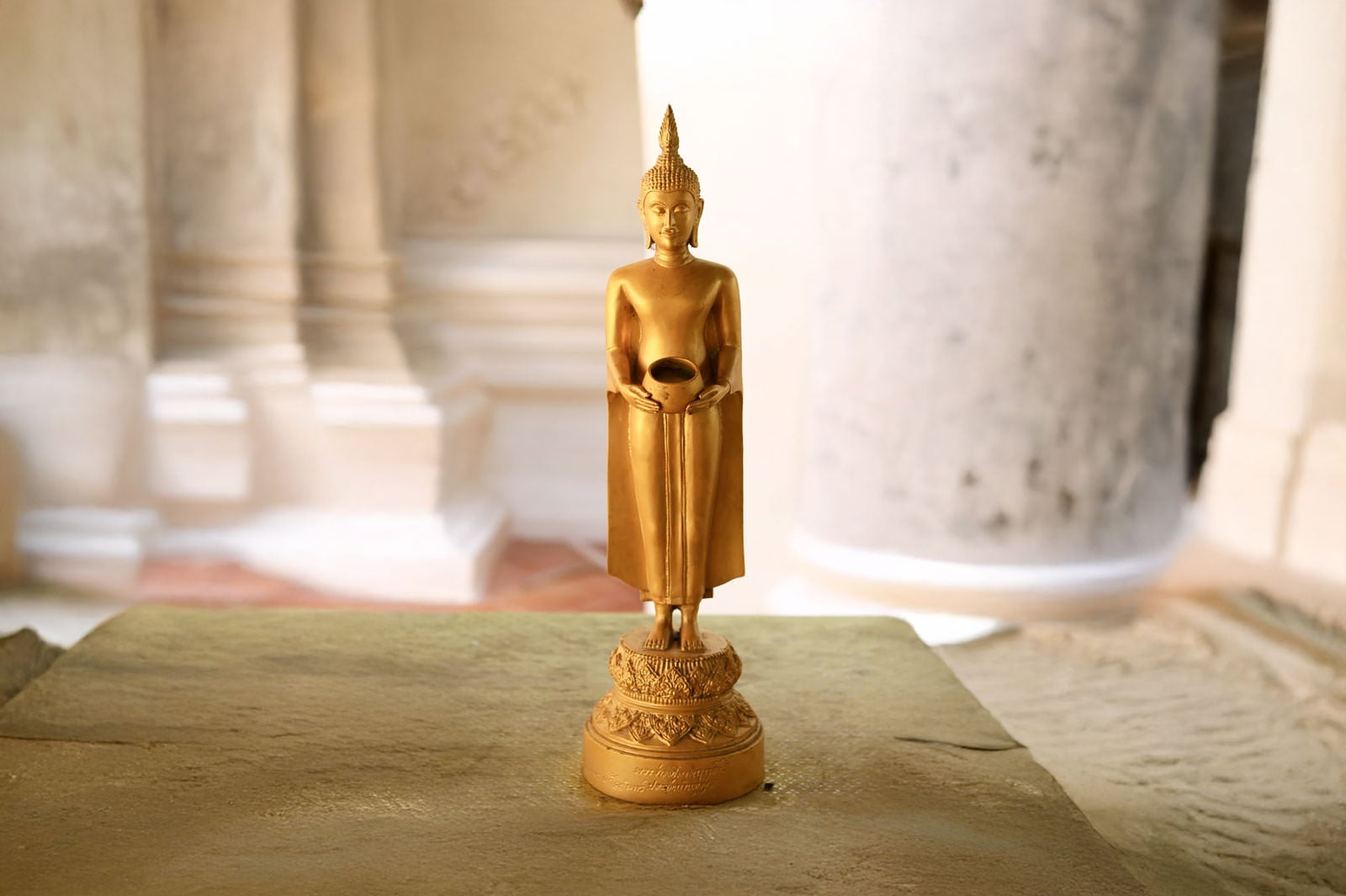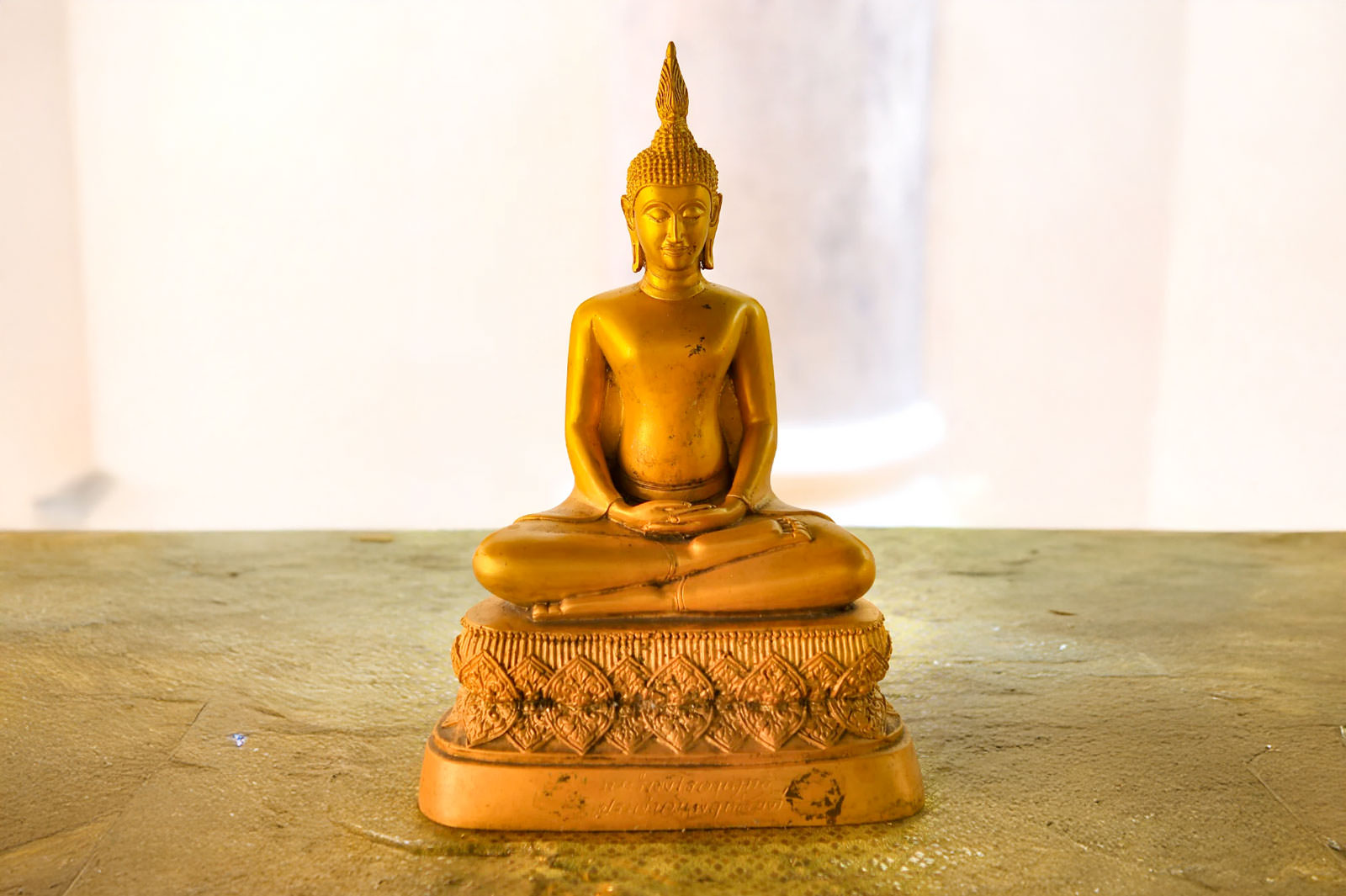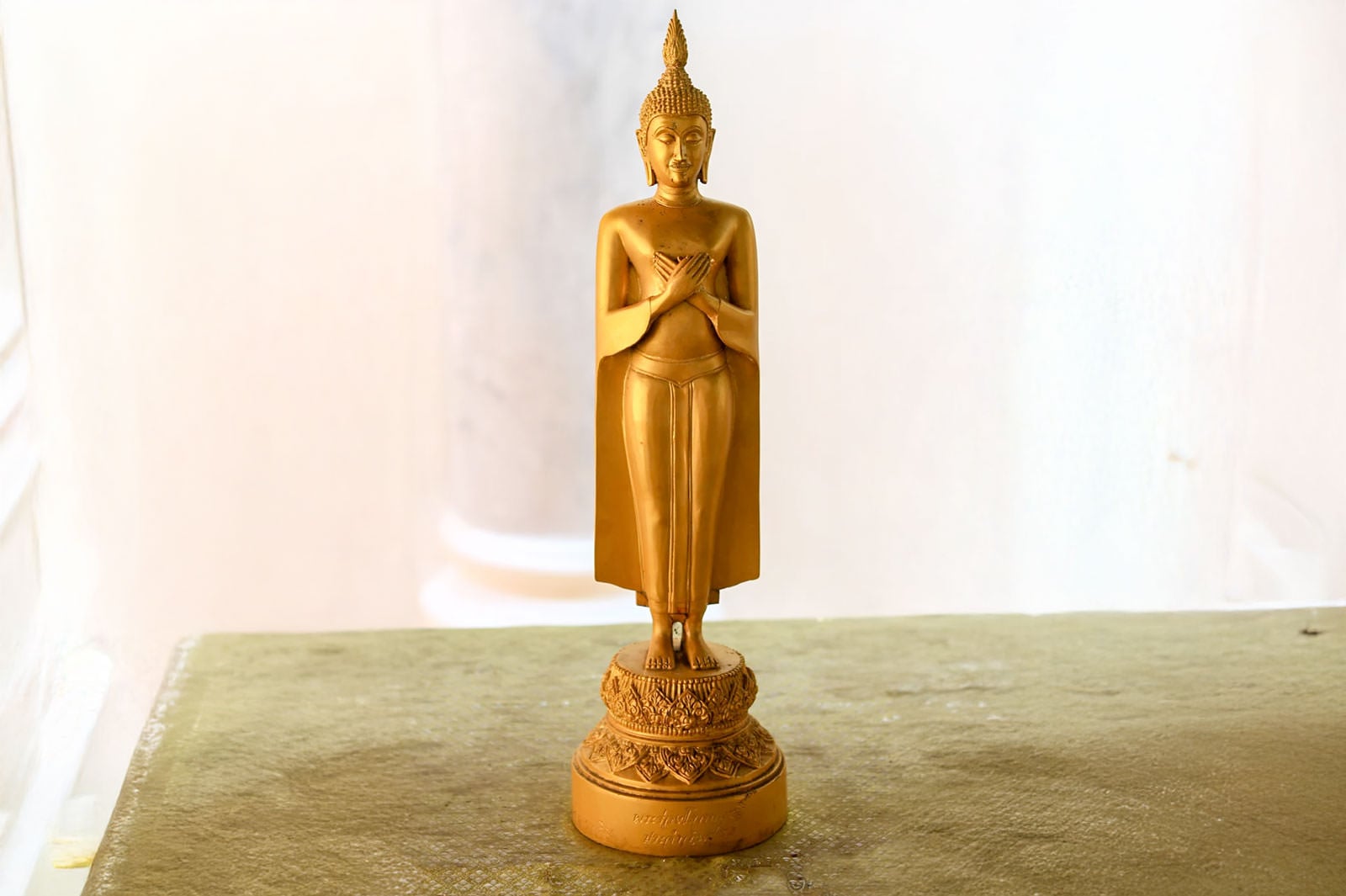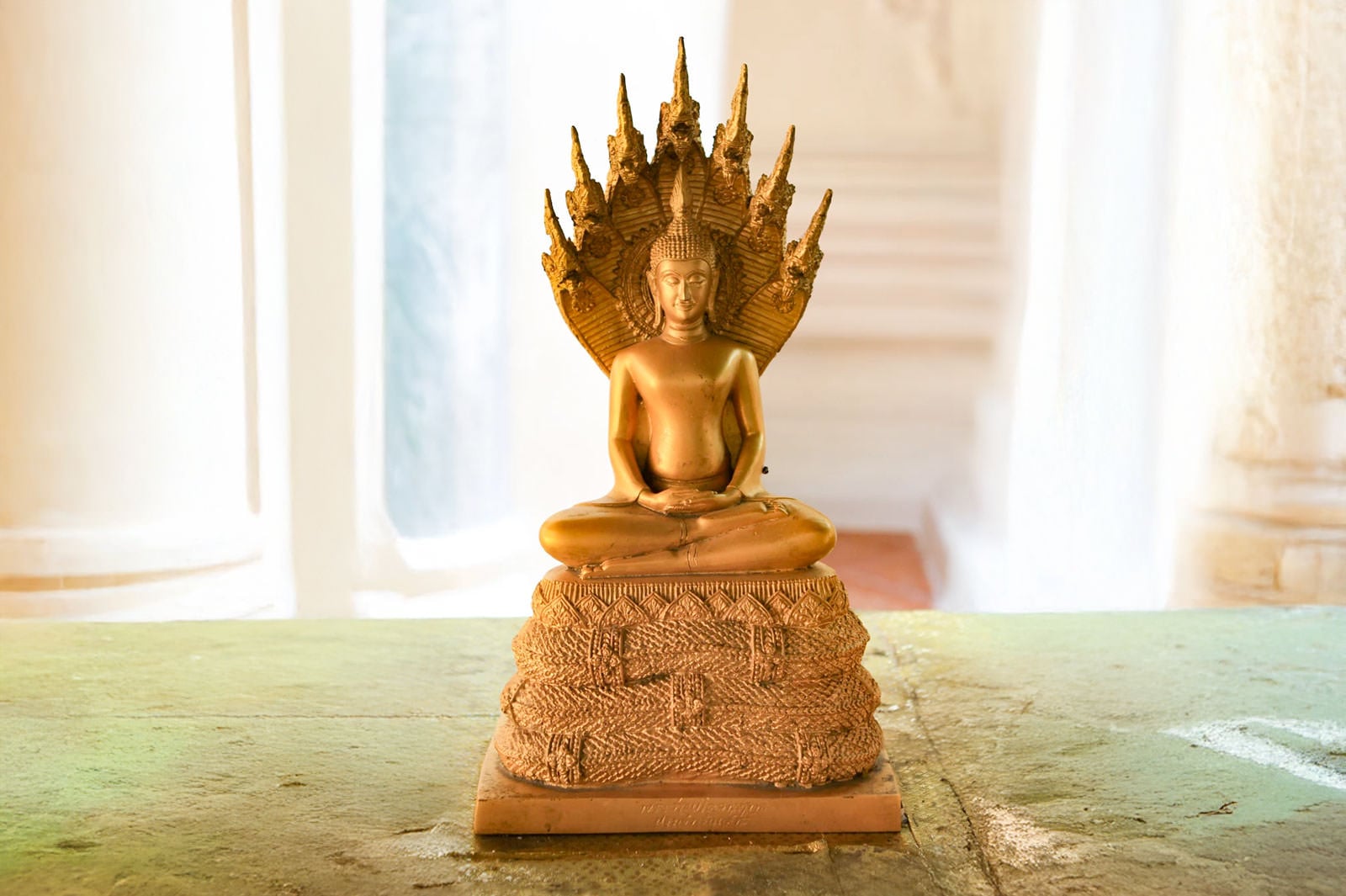

Monday Buddha Postures and Their Stories

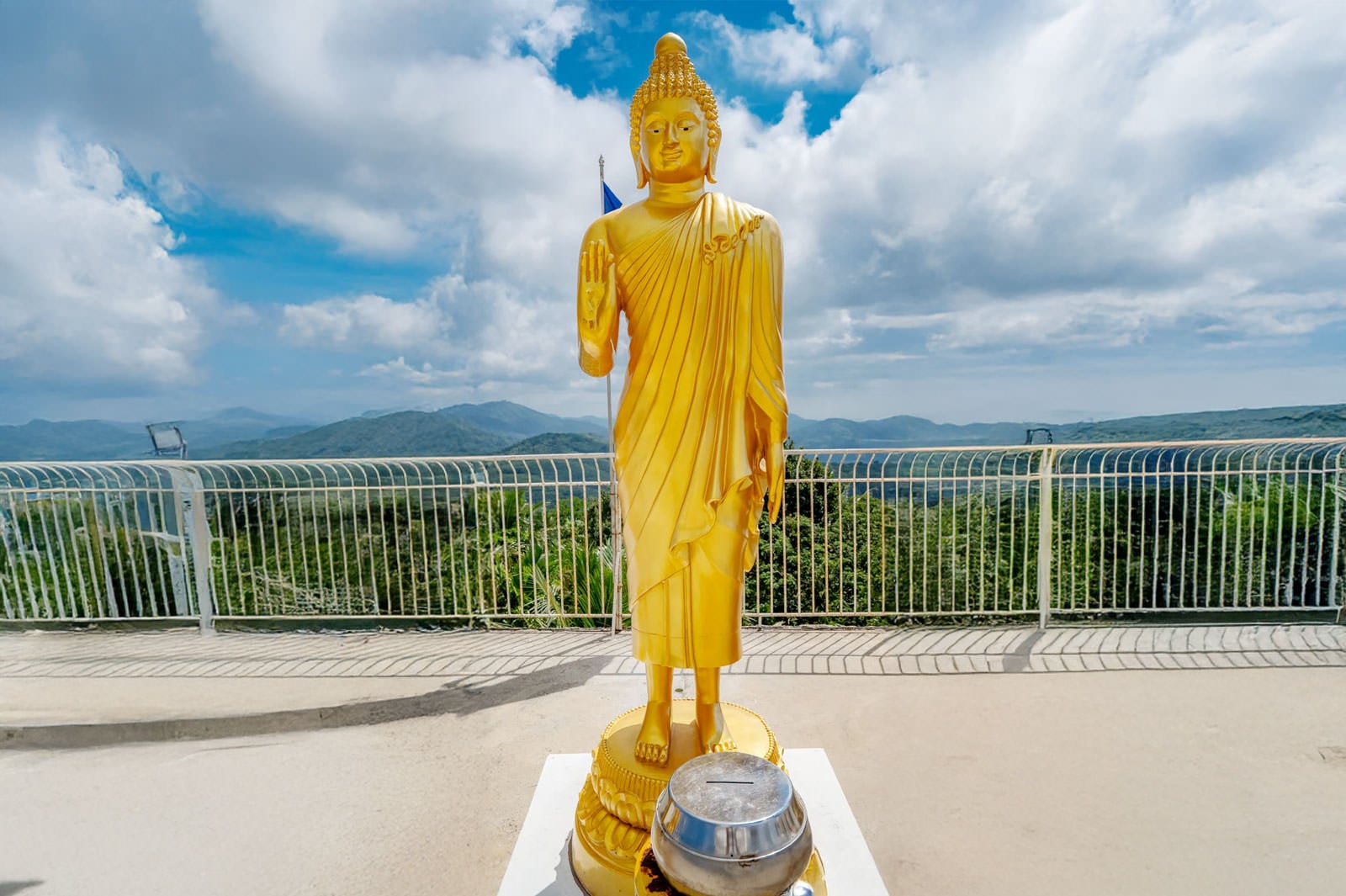
The Monday posture shows the Buddha standing with his right hand raised at chest level, palm outward. It represents the moment he stopped a war between his relatives with wisdom and compassion.
The Story Behind the Pose
According to Buddhist tradition and commentaries, a severe drought lowered the waters of the Rohinī River. The Sākyans (the Buddha’s father’s clan) and the Koliyans (his mother’s clan) both depended on this river for irrigation. Words turned into threats, and threats turned into armed camps.
The Buddha stood between the two sides and asked a simple question: Which is more precious, the water you fight for, or the lives of your people?
His words cut through anger and pride. The armies put down their weapons, and peace was restored. This is why the Monday posture shows one raised hand: stopping harm without violence.
Historical Geography
The event is linked to the region of Kapilavatthu (near today’s Tilaurakot, Nepal), homeland of the Sākyans. The Rohinī River marked the boundary between the Sākyans and the Koliyans. While the exact location of the standoff is not archaeologically fixed, the setting reflects real life in the North Indian plains, where water rights meant survival.
What It Teaches
- Non-violence: True strength is the courage to prevent harm.
- Reconciliation: Listening and reframing can end conflicts.
- Clear priorities: People matter more than material gain.
Canonical note: The theme of non-violence is central to early Buddhist teachings. This specific river dispute story comes from later tradition/commentary, not from a primary sutta in the Pāli Canon.
Similar Poses (How to Tell Them Apart)
Because the raised-hand gesture appears in many Buddha images, Pang Ham Yati (Pacifying the Relatives) is the posture many people recall first. As a result, other poses are sometimes loosely identified the same way. Each has its own origin story and hand position:
Pang Ham Yati (ปางห้ามญาติ) – Monday
- Gesture: One right hand raised at chest level, palm outward.
- Meaning: The Buddha halts a war between the Sākyans and Koliyans at the Rohinī River.
- Key idea: Stopping conflict with wisdom and compassion.
Pang Ham Samut (ปางห้ามสมุทร) – “Pacifying the Ocean”
- Gesture: Two hands raised, both palms outward.
- Meaning: Later-tradition story of the Buddha halting a flood/sea (details vary).
- Key idea: Calming overwhelming forces; not the same event as Ham Yati.
Pang Prathan Phon (ปางประทานพร) – “Bestowing Blessings”
- Gesture: Left hand raised (palm outward); right hand often at the side or in a giving/resting pose.
- Meaning: The Buddha grants blessing or reassurance (iconographic variants exist).
- Key idea: A blessing posture; distinct from the peacekeeping story of Ham Yati.
Quick tip for travellers:
If only the right hand is raised, it is likely Ham Yati (Monday).
If both hands are raised, it is usually Ham Samut.
If the left hand is raised to bless, it is Prathan Phon.
Where to See This Posture
- Bangkok, Wat Benchamabophit (Marble Temple): The cloisters display classic Buddha images in many postures, including Monday’s Ham Yati.
- Phuket, Wat Chalong: Look for the seven-day-of-the-week Buddhas inside the Phra Mahathat Chedi; Monday’s image is easy to spot by the single raised right hand.
- Across Thailand: Many temples show all seven (or eight) day-of-week images together; Monday is marked clearly for offerings.
The Real Place: Tilaurakot, the Buddha’s Home Town
During a pilgrimage with Thai friends to the sites of the Buddha’s life, we stopped at Tilaurakot in Nepal, the archaeological site identified as ancient Kapilavatthu. This is the city where the Buddha grew up as Prince Siddhattha, and the homeland of the Sakyans, one of the two clans in the Monday story.
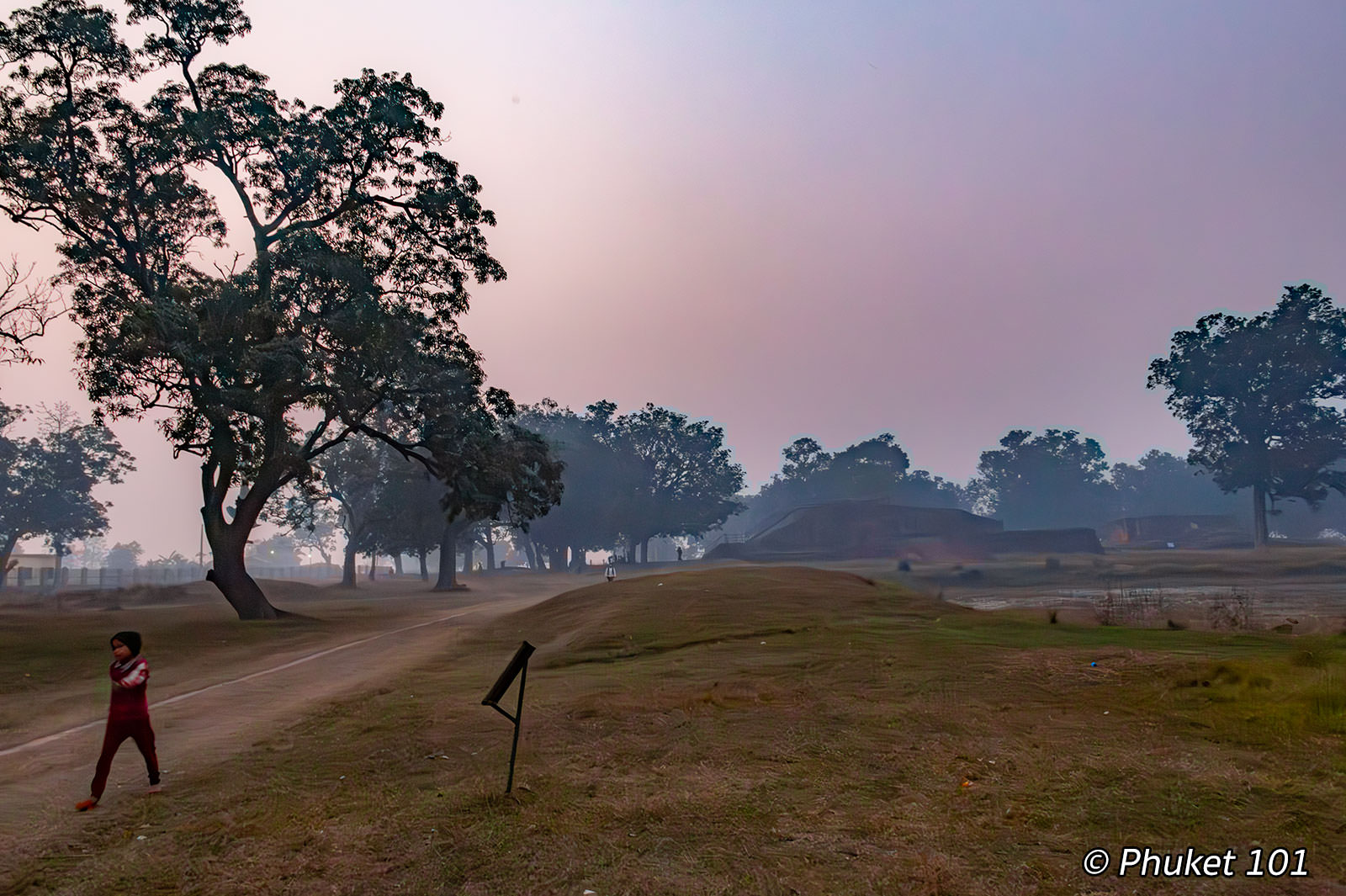
There is not much to see, and that is exactly what stays with you. The capital of the Sakyans is now low brick foundations in quiet farmland, with mist over the mounds at dawn and local children walking the paths between them. No big temple, no crowds, just the outline of a city that mattered enough, 2,500 years ago, for two clans to nearly go to war over the river that watered it.
Standing there, the Monday posture makes more sense. The Buddha came from this place, knew both families, and stopped the fighting with one raised hand and one question about what was actually worth more. The city is gone. The lesson did better.
Quick Reference
- English name: Pacifying the Relatives
- Thai name: Pang Ham Yati (ปางห้ามญาติ)
- Pose: Standing; right hand raised, palm outward (reassurance/“stop”); left hand relaxed
- Theme: Non-violence, reconciliation, clear priorities
- Day of the week: Monday
Monday Birth Personality (Thai Belief)
Thai tradition links each weekday with certain traits and colours.
For those born on Monday:
- Traits: serious, thoughtful, and blessed with a strong memory
- Lucky day: Saturday
- Unlucky day: Sunday
- Lucky colour: Black
- Unlucky colour: Orange
Note that Monday’s lucky colour is not yellow. Yellow is Monday’s day colour (สีประจำวัน), the one Thais wear to honour the King, who was born on a Monday. The lucky colour by birth day comes from a separate system, explained in the 7 Buddha postures guide. These beliefs are cultural, not canonical. Many Thais enjoy them as part of everyday customs.
Reflection
The Monday posture reminds us to choose people over pride and peace over anger. One raised hand is enough to stop harm when it is lifted with clarity and compassion.
Which Day Were You Born?
Enter your birth date to find your Buddha posture and lucky colour.
That date does not exist. Please check it.
The Buddha Postures for the Days of the Week