
Tuesday Buddha Postures and Their Stories

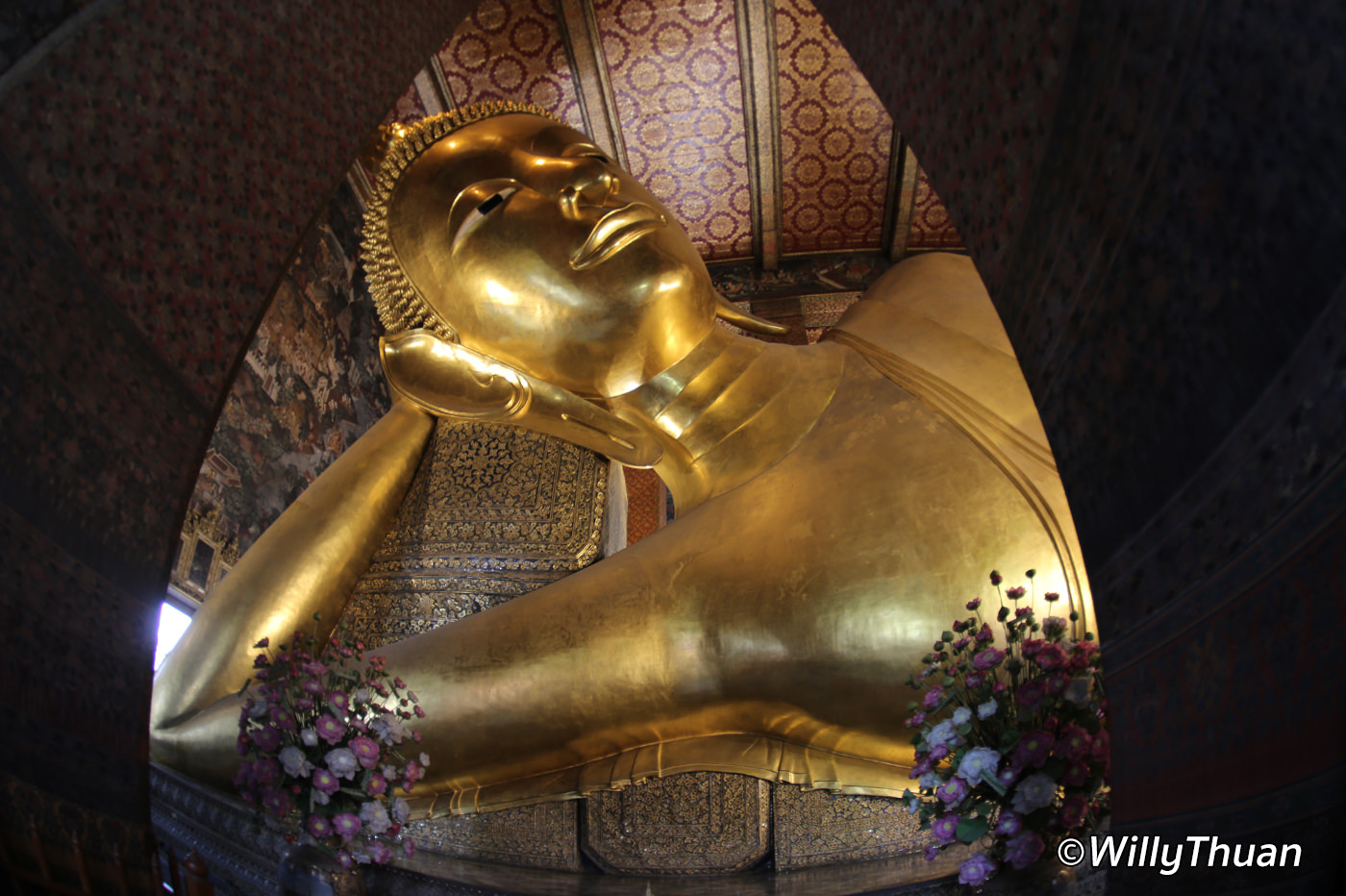
In many Thai temples, visitors see Buddha statues shown in different postures for each day of the week. The Tuesday image is the Reclining Buddha (Thai: Pang Sai Yat, ปางไสยาสน์), lying on the right side with the head propped on the right hand. In the Thai weekday tradition, this statue tells the story of the Buddha humbling the proud spirit Asura Rahu. The same reclining form also depicts the Buddha’s final passing, which is why this is the most misunderstood posture of the seven. This page covers both stories and how to tell them apart.
The Posture and the Scene
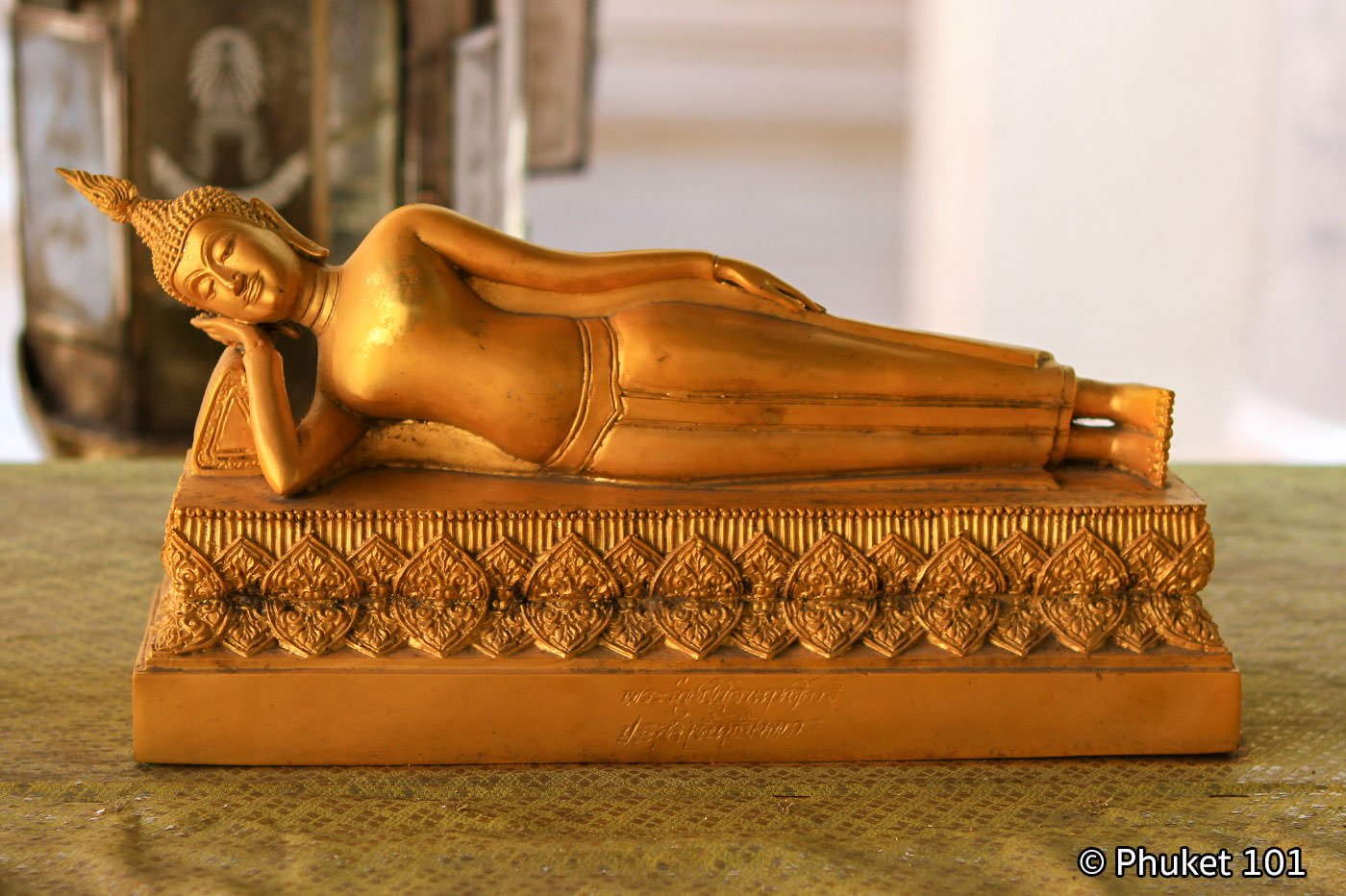
The Reclining Buddha lies on the right side, head supported by the right hand, with the left arm resting along the body and the toes perfectly aligned. This is called the lion’s posture. The eyes are open or half open, and the expression is calm and alert. The image shows complete ease, not sleep and not death.
The Story Behind the Tuesday Posture
The story Thai tradition attaches to the Tuesday Buddha is about pride. Asura Rahu was a giant spirit who refused to show respect to anyone, including the Buddha. He believed his enormous size made him superior, and he would not bow to a smaller being.
The Buddha did not argue. He simply made himself appear vastly larger than Rahu and lay down in this completely relaxed reclining position. Looking up at the Buddha towering above him even while lying at ease, Rahu understood his own pride for what it was. He bowed, accepted the teaching, and became a follower.
The point of the story is that the Buddha never stood up, never raised his voice, and never tried to prove anything. Calm confidence did all the work. That is why the Tuesday Buddha reclines with open eyes and a settled expression.
Canonical note: The Rahu story comes from later Thai tradition and temple teaching, not from the Pāli Canon. It is the story you will hear at Thai temples when you ask about the Tuesday statue.
The Other Reclining Buddha: Parinibbāna
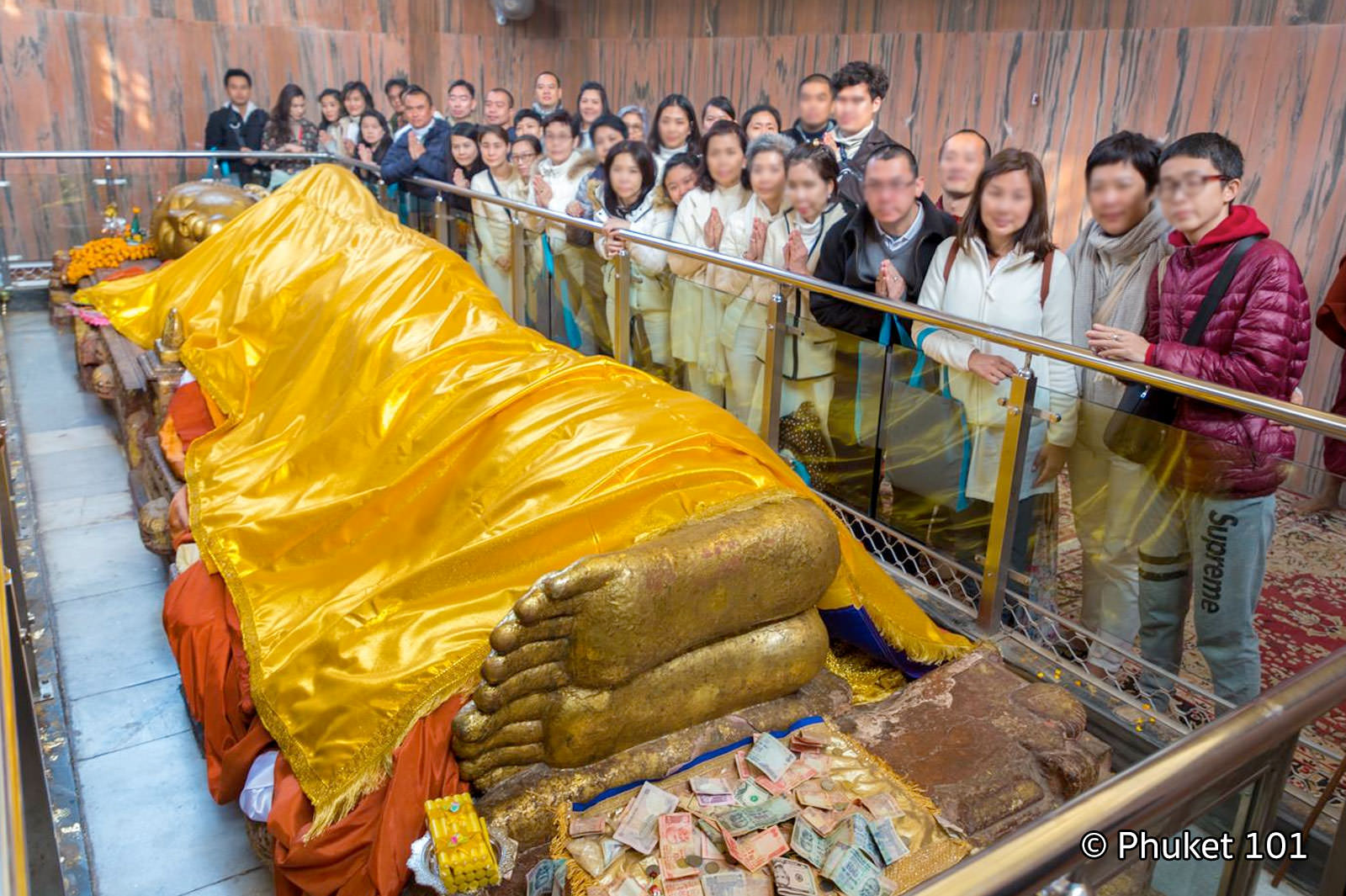
Here is where most visitors (and plenty of websites) get confused. The reclining form also depicts a second, separate event: the Buddha’s final passing into Parinibbāna near Kusinārā (today Kushinagar, India), in a sal-grove of the Mallas, between twin sal trees.
Word note: Nibbāna (often called “Nirvana” in English) means complete freedom from suffering and the cycle of rebirth. Parinibbāna is the final Nibbāna that occurs at death for someone fully awakened.
Unlike the Rahu story, this event is recorded in the Pāli Canon, in the Mahāparinibbāna Sutta. Many Buddhists remember it each year during Visakha Bucha (Vesak), which commemorates the Buddha’s birth, Awakening, and final passing.
How to tell the two apart: the Tuesday Buddha (Rahu story) is alive, with open or half-open eyes and the head propped up on the hand, alert and at ease. The Parinibbāna image shows the final passing, usually with eyes closed and the head resting on a cushion. The famous 46-metre Reclining Buddha at Wat Pho in Bangkok depicts the Parinibbāna. The small reclining statue labelled “Tuesday” in a temple’s weekday row carries the Rahu story. Same pose, two different moments.
The Final Teaching
Just before passing, the Buddha gave a short, clear teaching often called his final words: “All conditioned things are subject to decay. Strive on with heedfulness.” (Pāli: “vayadhammā saṅkhārā; appamādena sampādetha.”)
Word note: “heedfulness” (appamāda) means being not careless, alert, and responsible in what you do. It means paying steady attention to what is wholesome and helpful.
Plain meaning: everything that is made or born will change and end. Knowing this, live carefully and practice with steady attention.
Symbolism (for travellers)
- Inner peace: The Tuesday posture shows that calm confidence needs no proof. The Buddha humbled Rahu without moving.
- Impermanence: In its Parinibbāna reading, the same form is a reminder that life changes and ends.
- Composure: The right-side lion’s posture shows dignity and awareness, whether facing a proud giant or the final moment of life.
Right-Side Norm (and a rare exception)
Almost all reclining Buddha images show the Buddha on his right side in the lion’s posture. A left-side reclining image exists in some East Asian (especially Japanese) art traditions, but this is rare and not typical in Thai Theravāda imagery.
Where You’ll See It
Phuket: Wat Sri Sunthon in Thalang has the largest reclining Buddha on the island, a 29-metre golden statue in the Pang Sai Yat posture on the roof of the main building, facing Thepkrasattri Road just north of the Heroines Monument. The labelled Tuesday image is also part of the weekday row inside the Phra Mahathat Chedi at Wat Chalong.
Bangkok: The 46-metre gold-leafed Reclining Buddha at Wat Pho is Thailand’s most famous example of the reclining form, depicting the Parinibbāna.
Across Thailand: Larger temples often display a Reclining Buddha, and many temple courtyards group the seven (or eight, counting Wednesday night) day-of-week images with labels. Look for the Tuesday label next to the reclining figure.
Pilgrimage in India: At Kushinagar, visitors can see sites connected with the Buddha’s final passing remembered in local tradition.
The Real Place: Kushinagar
Our pilgrimage ended where the Buddha’s life did. Kushinagar, in northern India, is the ancient Kusinārā where he passed into Parinibbāna between the twin sal trees, and the Parinirvana Temple now stands over the spot, a quiet cream-coloured shrine with the excavated brick foundations of ancient monasteries all around it.
Inside the temple lies a reclining Buddha over 1,500 years old, draped in golden robes by pilgrims. The eyes are closed and the head rests low. After seeing the Tuesday Buddha in so many Thai temples, alert and propped up on one hand, the difference is immediately clear when you stand in front of this one. Same pose, completely different moment.
Of all the places we visited on the trip, this was the quietest. Groups from different countries took turns inside, some chanting, some just standing in silence. Nobody needed to explain what the place was. The mood did it.
Kushinagar Temple Photos


Quick Reference Snapshot
- English name: Reclining Buddha
- Thai name: Pang Sai Yat (ปางไสยาสน์)
- Tuesday story: The Buddha humbling the proud spirit Asura Rahu through calm (Thai tradition)
- Second meaning: The same reclining form also depicts the Parinibbāna, the Buddha’s final passing (Pāli Canon, Mahāparinibbāna Sutta)
- Posture: Lying on the right side, right hand supporting the head; composed expression
- How to tell them apart: Tuesday Buddha alert with open eyes and head propped on the hand; Parinibbāna image with eyes closed and head on a cushion
- Final teaching: “All conditioned things are subject to decay. Strive on with heedfulness.” (Pāli: vayadhammā saṅkhārā; appamādena sampādetha)
Tuesday Birth Personality
If you were born on a Tuesday, Thai beliefs say you are:
- Brave, determined, and action-oriented
- Likely to work in the services or security sectors
- Lucky Day: Thursday
- Unlucky Day: Monday
- Lucky Colour: Yellow
- Unlucky Colour: White
Closing Thought
The Tuesday posture carries two lessons in one form. From the Rahu story: real confidence does not need to prove anything. From the Parinibbāna: nothing lasts, so use your time well. When you see a Reclining Buddha in Thailand, it is more than a famous statue. Check the eyes and you will know which moment you are looking at.
Kushinagar Temple Location Map
Which Day Were You Born?
Enter your birth date to find your Buddha posture and lucky colour.
That date does not exist. Please check it.
The Buddha Postures for the Days of the Week