

Friday Buddha Posture and Its Story

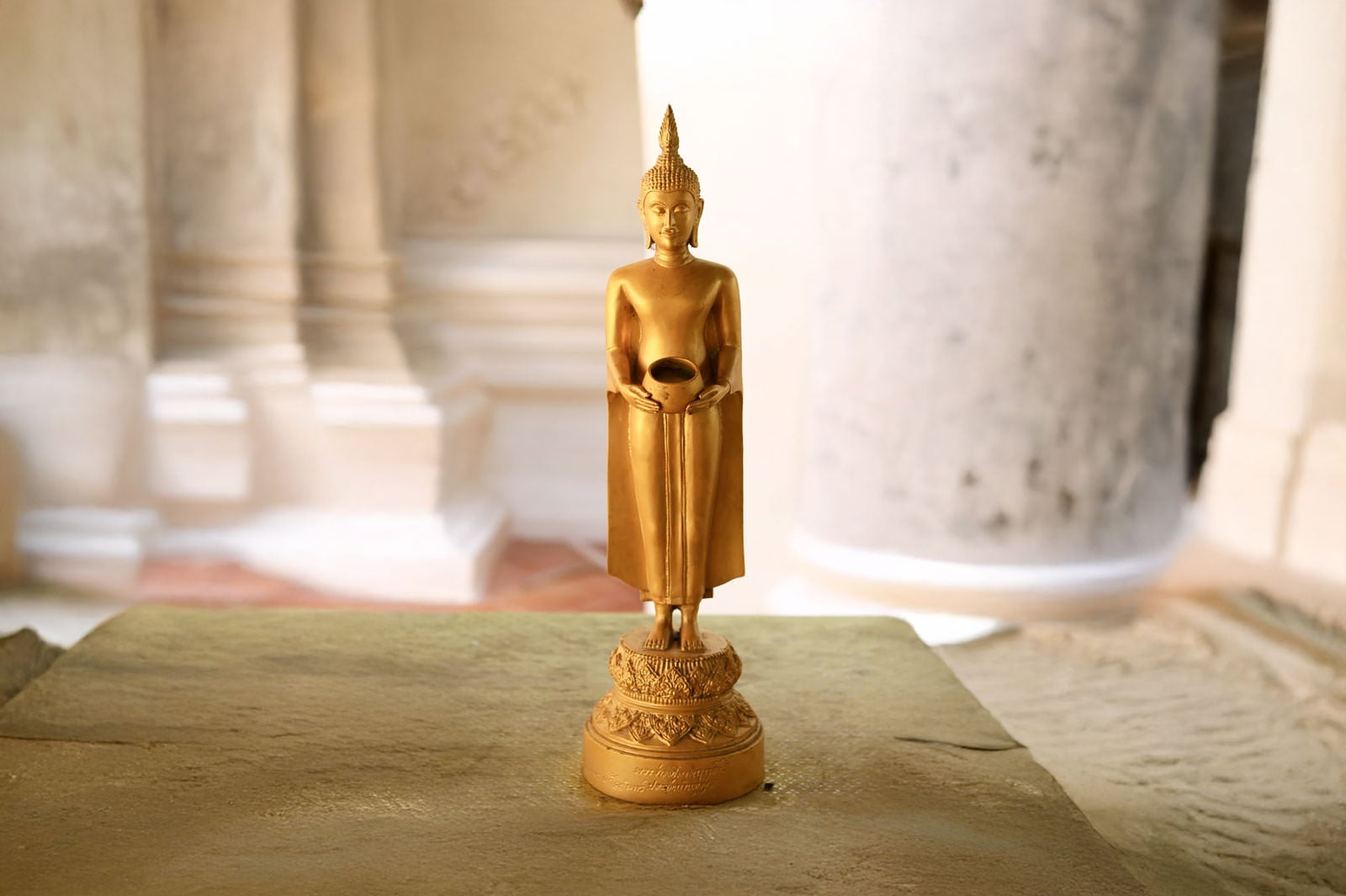
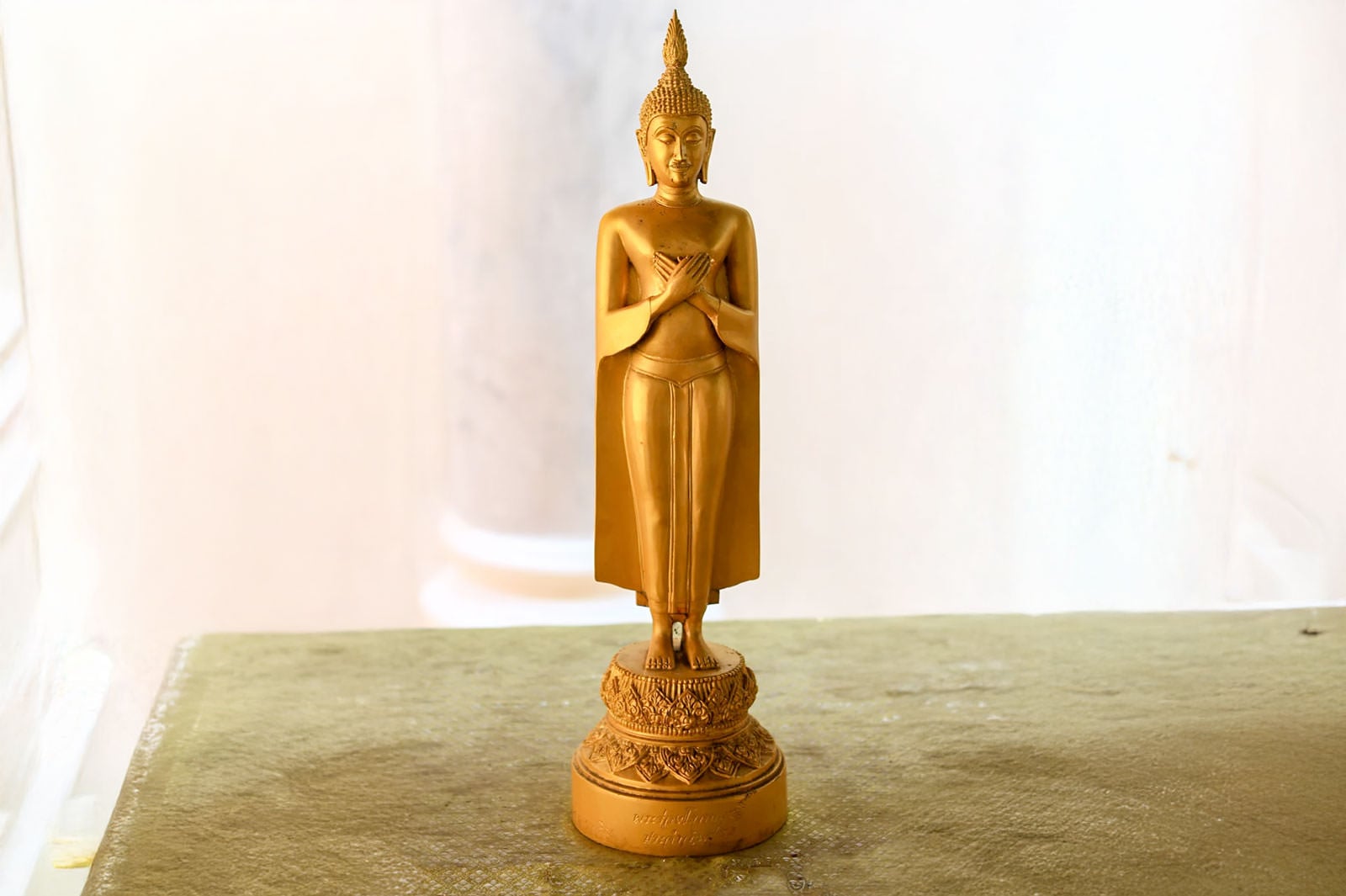
Walk into any Thai temple, and you’ll see Buddha statues in different poses. Each one represents a day of the week. The Friday image shows Buddha standing with his arms crossed over his chest, a gesture that looks like he’s deep in thought. If you were born on Friday, this is your Buddha image. Here’s what it means and where to find it in Phuket.
What It Looks Like
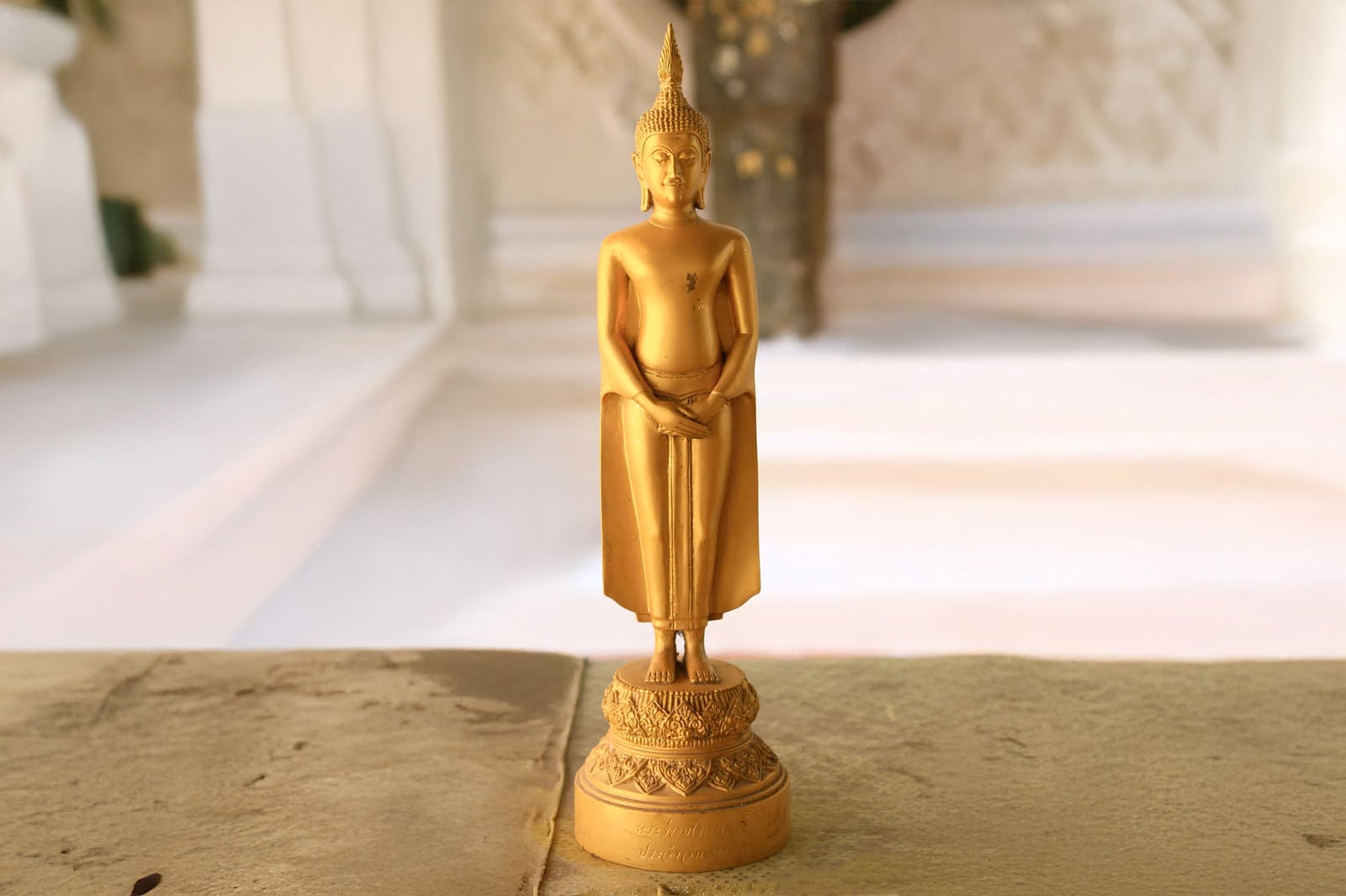
The Friday Buddha, called Pang Ram Phueng in Thai, is easy to spot. Buddha stands upright with his feet together and both arms crossed over his chest. His right hand rests on top of his left. He’s not holding anything, and the pose looks quiet and self-contained.
You’ll recognise it because it’s the only weekday Buddha with crossed arms. This makes it stand out from the others, which show Buddha sitting in meditation, walking, or lying down.
The Story: Buddha’s Moment of Doubt
This posture captures a surprisingly human moment in Buddha’s story. Right after he achieved enlightenment under the Bodhi tree, he didn’t immediately rush off to teach. Instead, he stood under a Banyan tree and had second thoughts.
The problem? Buddha looked at what he’d just figured out – the path to ending suffering, the nature of reality, all of it – and thought: “This is way too complicated. Nobody’s going to get this.”
He genuinely wondered if the teachings were too difficult for regular people to understand. It wasn’t arrogance. It was closer to a teacher looking at advanced physics equations and thinking, “How do I explain this to someone who’s never studied science?”
So he stood there, arms crossed, thinking it through.
Ancient Buddhist texts describe Buddha spending weeks near the Bodhi tree after his enlightenment. During the second week, he stood in the Sunday posture of steadfast gaze, staring at the Bodhi tree without blinking in gratitude for its shelter. Another week he walked back and forth. The Friday contemplation posture represents a later period under the Banyan tree, when he wrestled with whether to teach at all.
Here’s what changed his mind: Buddha realised people are like lotus flowers. Some lotuses bloom in deep water, some in shallow water, some at the surface. They’re all at different stages. Some people would be ready to understand his teachings, even if others weren’t.
That moment of compassion – deciding to teach anyway, despite the difficulty – is what the Friday posture represents.
One technical note: the specific arm-crossing gesture doesn’t appear in ancient Buddhist scriptures. Thai artists developed this pose later as a way to visually represent Buddha’s contemplative period. But the story of Buddha hesitating to teach is well-documented in canonical texts.
What It Means
The Friday Buddha symbolises thoughtful reflection before making big decisions. It’s about taking time to think things through, even when you’re uncertain.
It also represents compassion mixed with doubt. Buddha had achieved enlightenment – the ultimate spiritual goal – but he still worried about others. The posture shows that wisdom includes acknowledging when things are difficult, not pretending everything’s easy.
For visitors interested in meditation or Buddhist practice, this image suggests the value of quiet contemplation. The stillness of the pose, with arms crossed protectively, creates a sense of turning inward before engaging with the world.
The Friday Birthday Connection
Thai culture links each weekday to a Buddha image and a set of personality traits. If you were born on Friday, tradition says you’re creative, artistic, and naturally friendly. Friday-born people are supposedly good at making friends, interested in art and music, and skilled at juggling multiple tasks.
Your lucky colour is light blue (linked to Venus in Thai astrology). Oddly enough, your lucky day isn’t Friday – it’s Tuesday. Wednesday is considered unlucky.
These beliefs blend Thai Buddhist culture with Hindu astrology. They’re folk traditions rather than core Buddhist teachings, but they’re still part of temple culture. Many Thais wear their birth-day colour on the corresponding day of the week, and you’ll see coloured cloth tied around Buddha images as offerings based on these associations.
Where to See It in Phuket
Wat Chalong
Start here. Wat Chalong is Phuket’s biggest and most important temple, and it has all seven weekday Buddha images in one place.
Look for the tall white-and-gold tower in the centre of the temple grounds – that’s the Phra Mahathat Chedi. Go inside and climb up. You’ll find the seven Buddha images on one of the upper levels, clearly labelled with the days of the week. The Friday contemplation posture is among them.
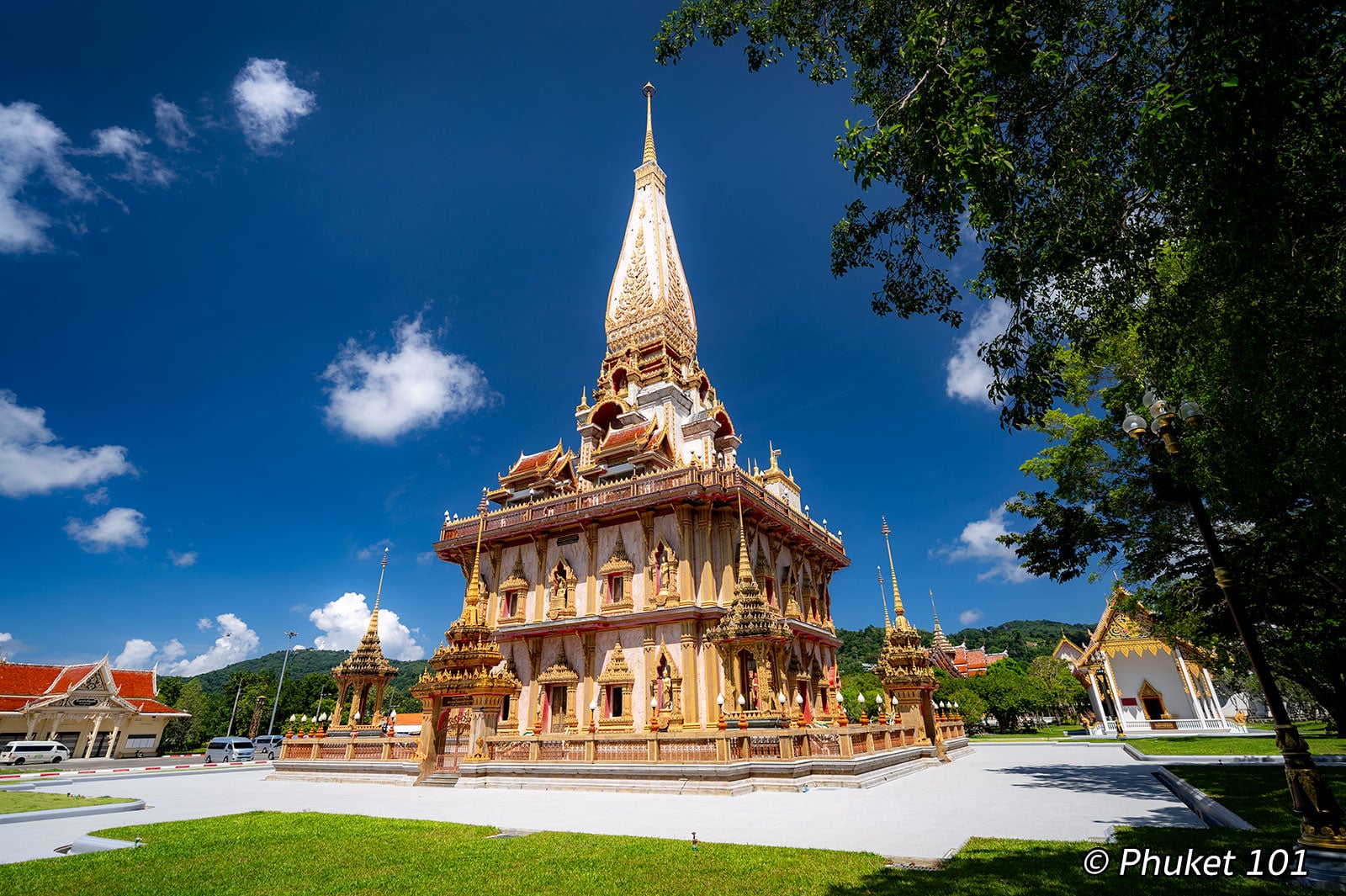
The temple itself is impressive. The 60-metre chedi is decorated in pink and gold, with detailed murals showing scenes from Buddha’s life. The building reportedly contains a fragment of Buddha’s bone, though you can’t see it.
Wat Chalong opens at 7:00 AM and closes at 5:00 PM daily. There’s no entrance fee, but donations are welcome. The best times to visit are early morning (7:00-9:00 AM) or late afternoon (3:00-5:00 PM). Weekdays are quieter than weekends. The temple is in Chalong subdistrict, about 15-20 minutes from Phuket Town. Read more
Wat Karon
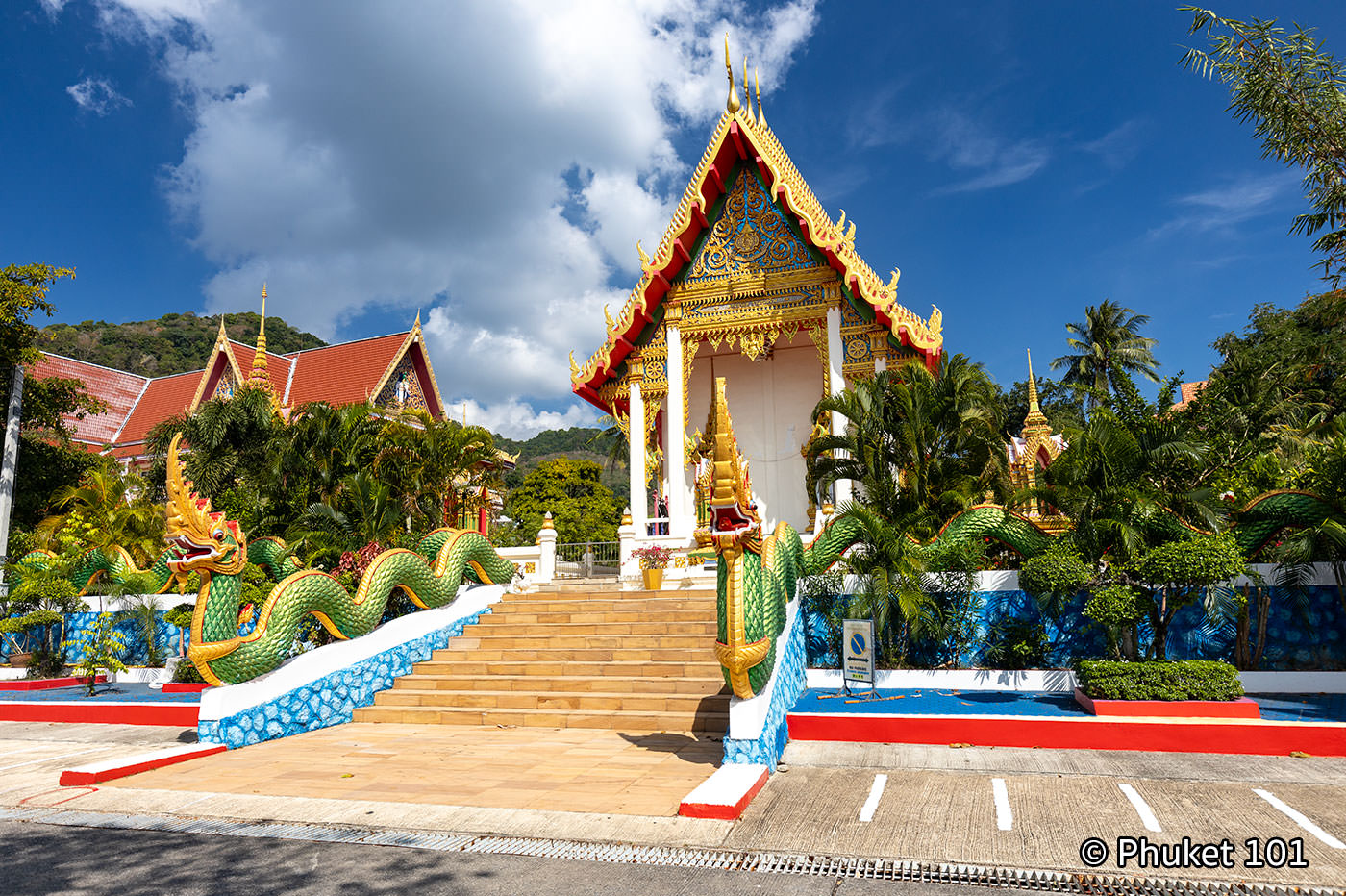
This smaller temple sits near the northern end of Karon Beach, within walking distance if you’re staying nearby. It’s less touristy than Wat Chalong, which means you’ll probably have the place mostly to yourself.
The temple dates from 1895 and has bright green naga (serpent) statues guarding the entrance. Inside, you’ll find several Buddha images, including the Friday posture. There’s also a rare black Buddha statue and other interesting pieces.
No entrance fee. A visit takes about 20-30 minutes. If you’re there on Tuesday or Friday afternoon, check out the Karon Temple Market that sets up near the temple grounds. Read more
Big Buddha
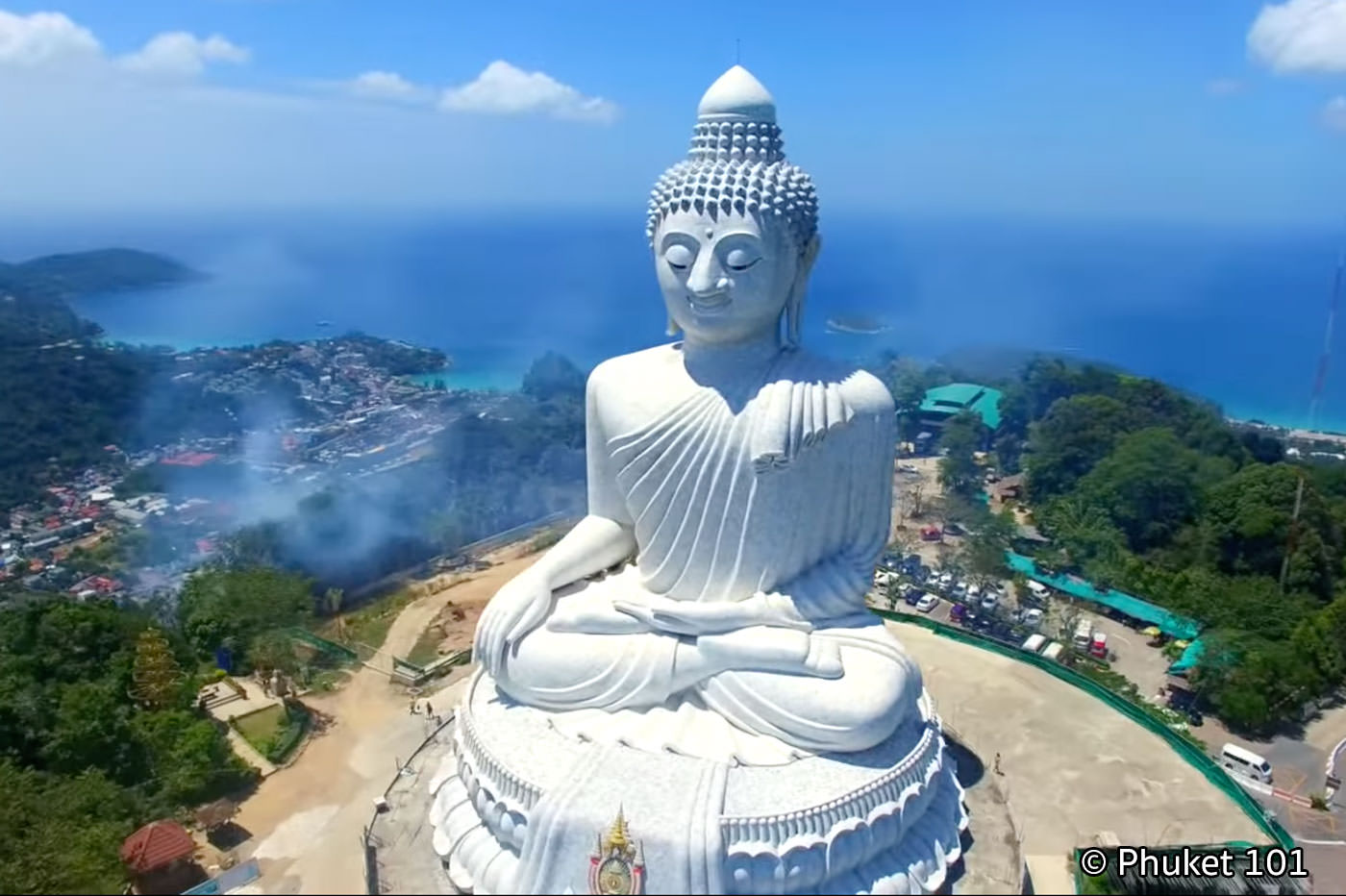
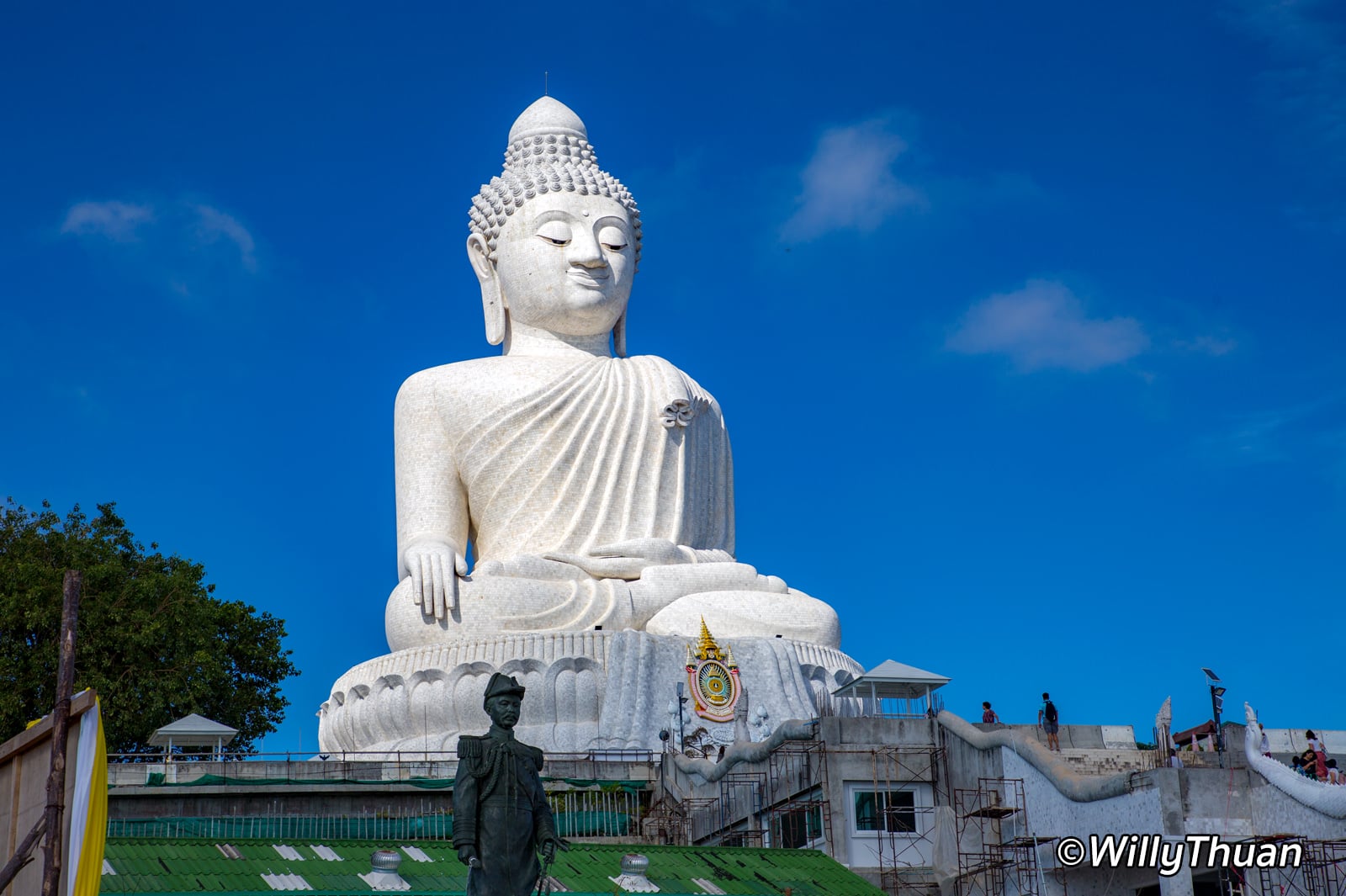
The Big Buddha site on Nakkerd Hill has a seven-day Buddha shrine near the massive white statue. It’s free to visit, and you can get there by motorbike or taxi from anywhere in southern Phuket. The views from up there are worth the trip even if you’re not particularly interested in Buddha images. Check current opening status before you go – the site occasionally closes for maintenance or special events. Read more
Temple Etiquette
Cover your shoulders and knees. No tank tops, no shorts. This applies to all temples in Thailand, not just Phuket.
Take off your shoes before entering any building with Buddha images. You’ll see piles of shoes outside – that’s where yours go.
Keep your voice down inside temple buildings. Don’t touch the Buddha statues or climb on anything. If monks are present, be respectful of their space – women shouldn’t touch monks or hand things directly to them.
Some temples rent sarongs if you show up in shorts, but don’t count on it. Just dress appropriately from the start.
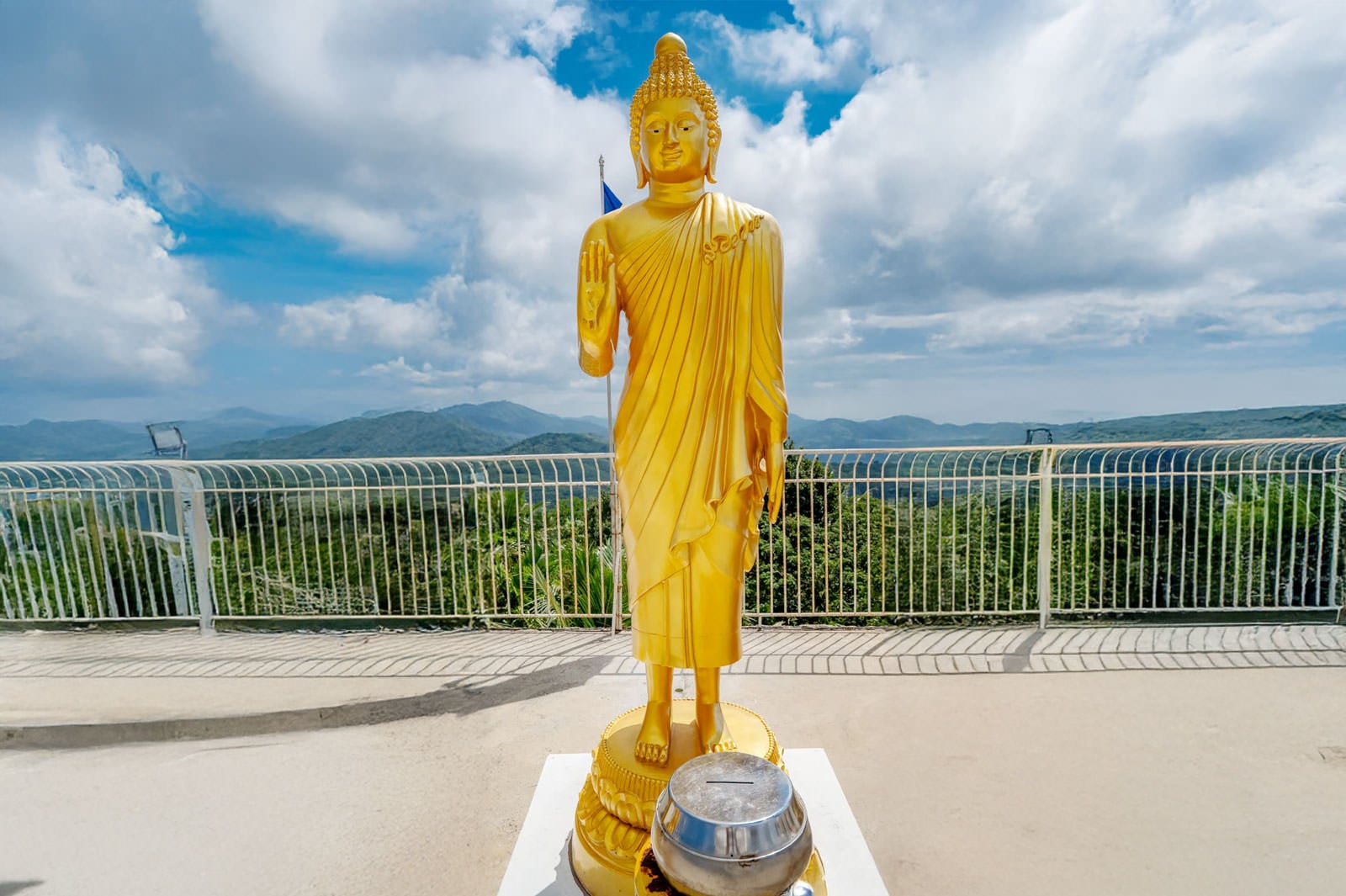
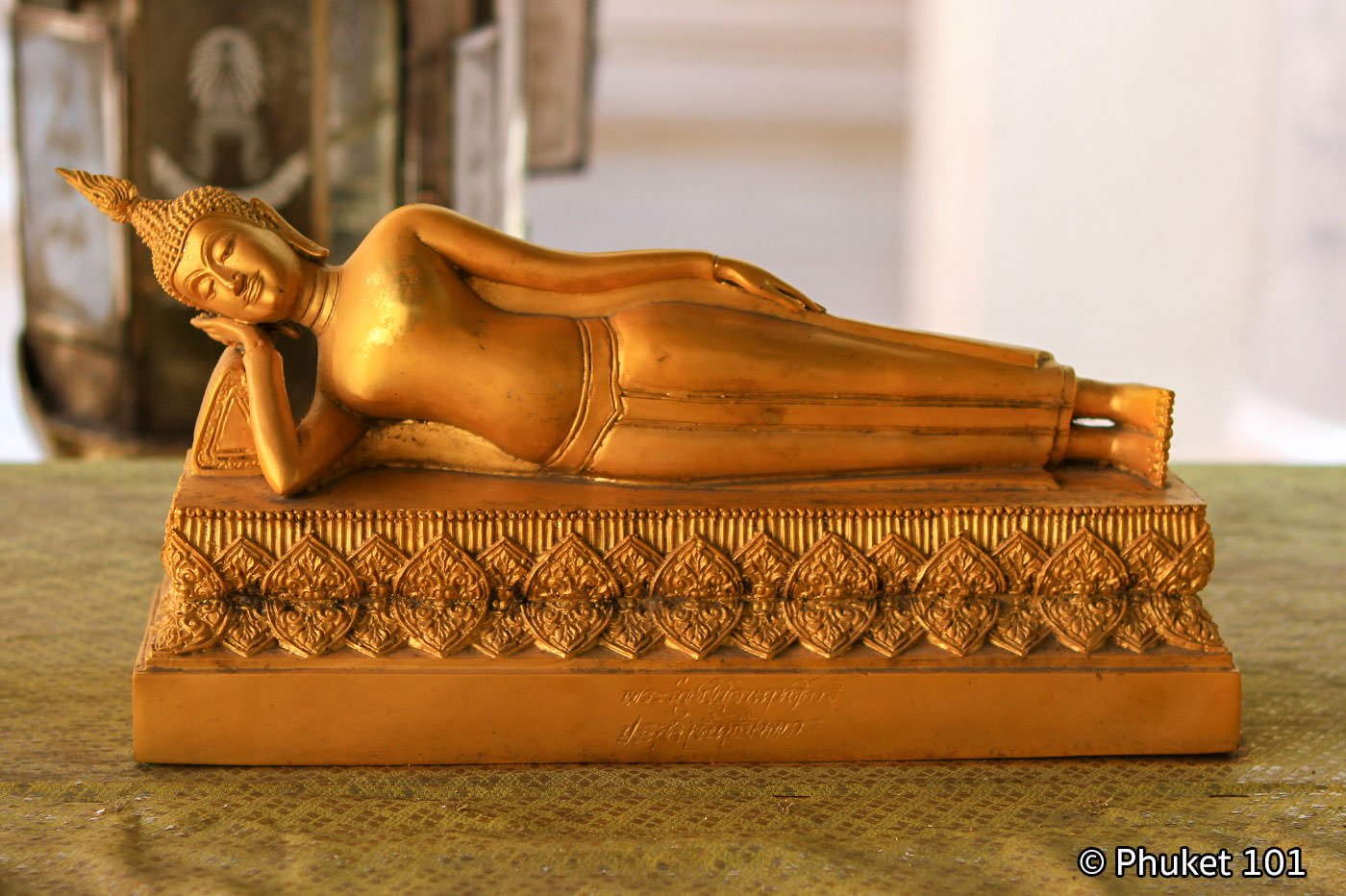
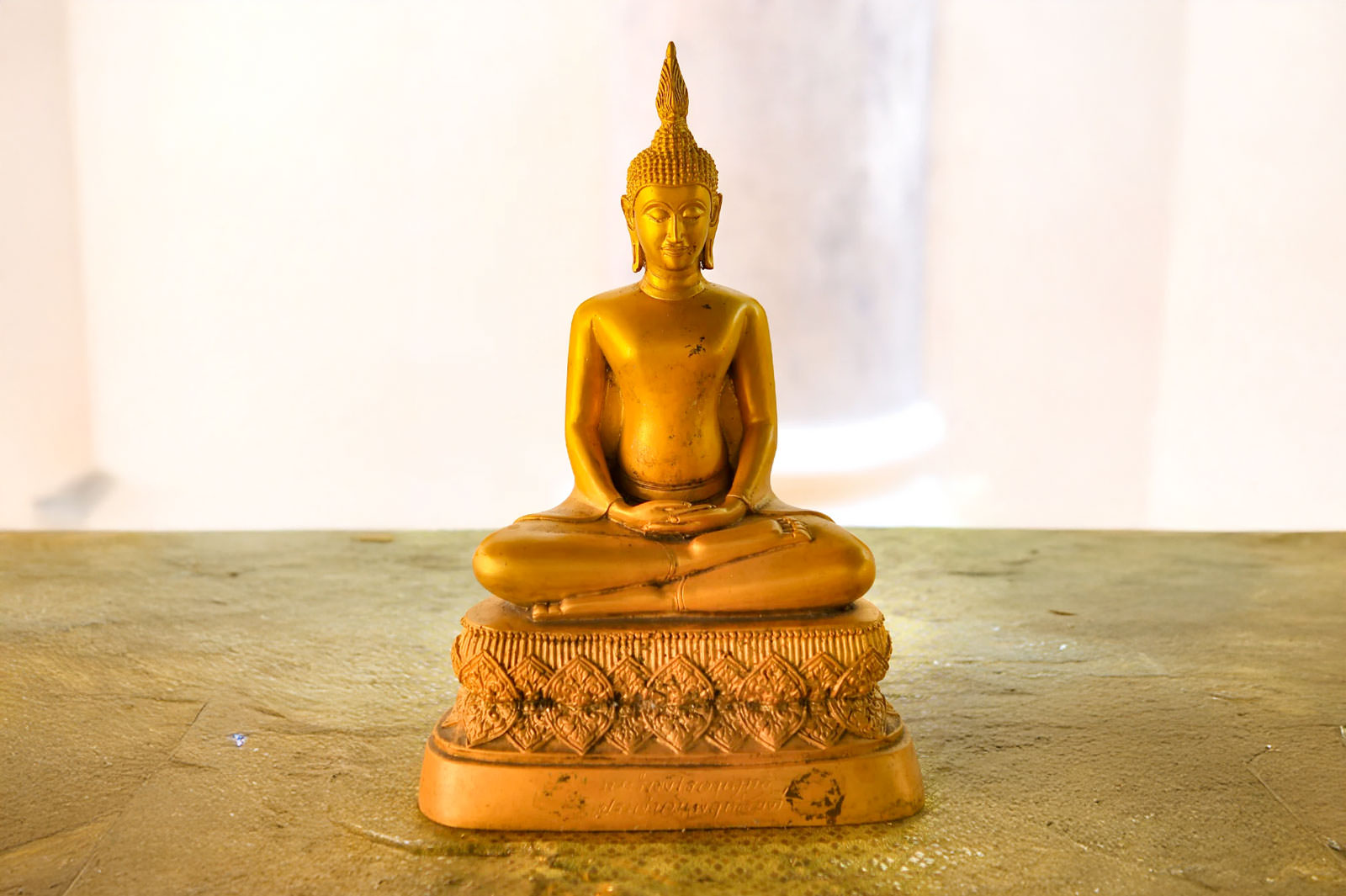
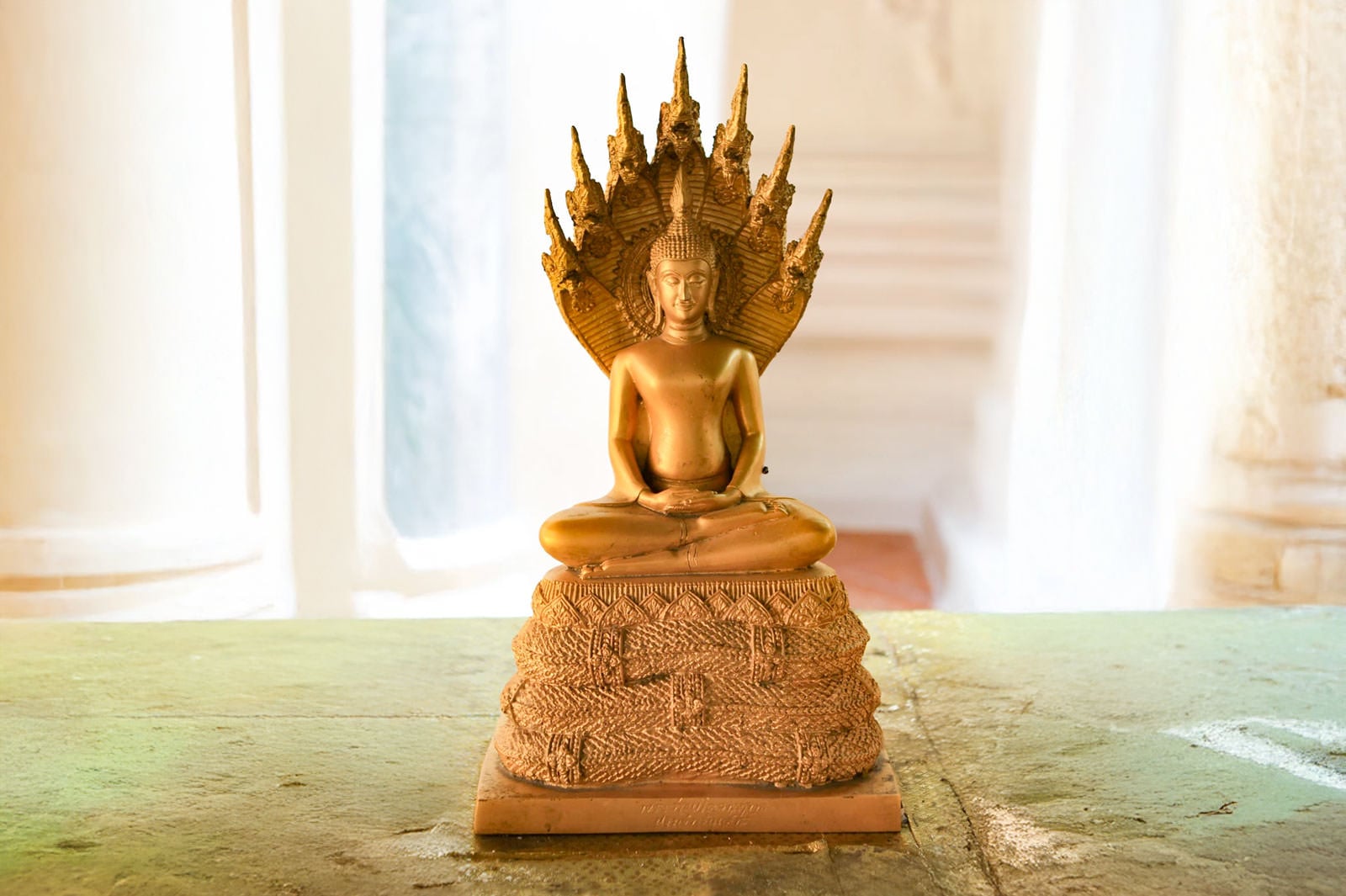
The Buddha Postures for the Days of the Week