

Phuket’s Most Important Temple

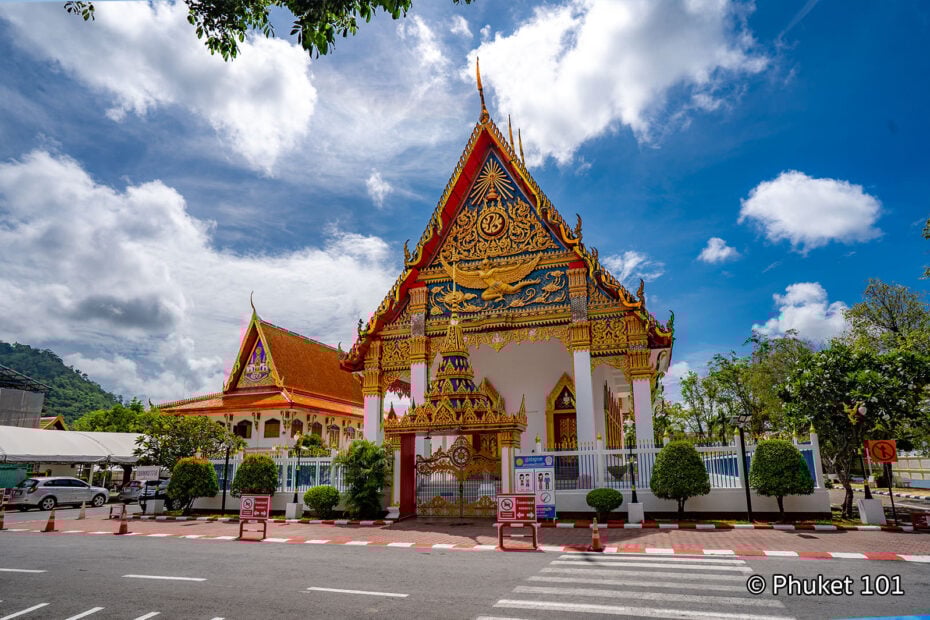
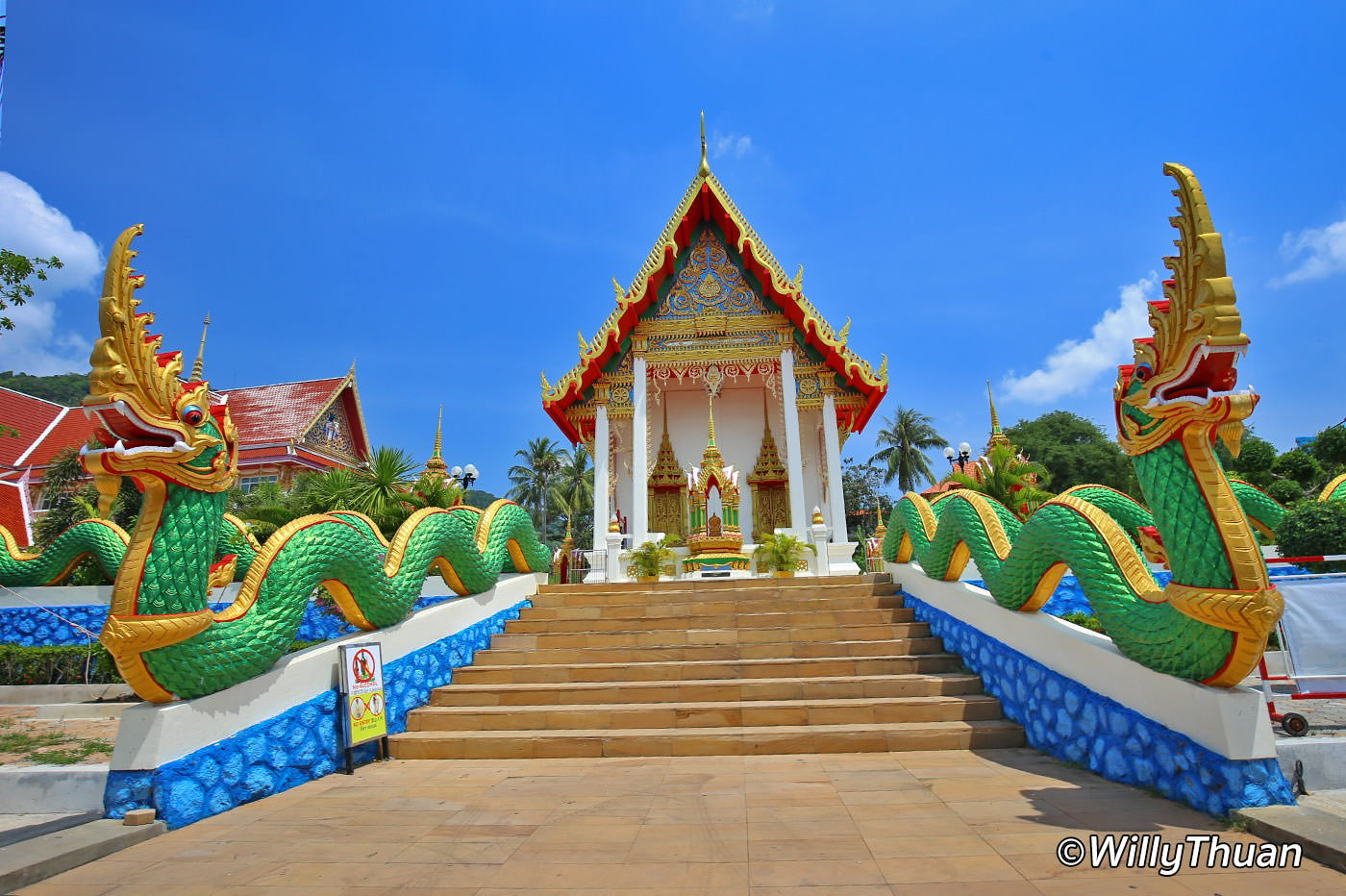
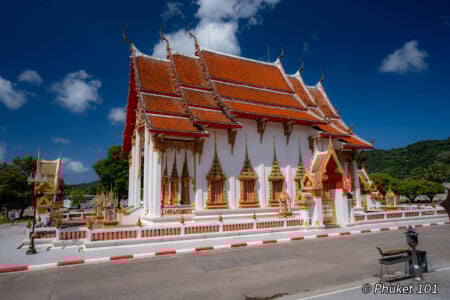
Wat Chalong (วัดฉลอง), officially called Wat Chaiyathararam (วัดไชยธาราราม), is the largest and most visited Buddhist temple in Phuket. It sits about 8 kilometres south of Phuket Town, on the way to Chalong and Rawai. Built around 1837, the temple is the island’s main spiritual centre and welcomes hundreds of thousands of visitors each year.

The temple is best known for its 60-metre golden chedi, which holds a fragment of the Buddha’s bone, and for its three highly revered monk statues inside the main prayer hall. Most visitors spend about an hour walking the grounds, climbing the chedi for the view, and watching local families make merit with firecrackers. Entry is free.
Wat Chalong is one of the most rewarding cultural stops on the island and pairs well with a visit to the nearby Big Buddha, which is just 8 km away. See the full guide to things to do in Phuket for more ideas.
Visiting Wat Chalong: Quick Answers
Most visitors come to Wat Chalong with the same questions. Here are the practical answers in one place, before getting into the detail of what to see inside.
- Is it worth visiting? Yes, especially if it is your first temple in Thailand. The chedi, the three monk statues, and the firecracker ceremony together give a strong sense of how Thai Buddhism works in daily life.
- How long do I need? About one hour is enough for most visitors. Allow 90 minutes if you want to climb to the top of the chedi and stop for photos.
- Is there an entry fee? No. Entry is free. Donations are welcome but not expected.
- What are the opening hours? The buildings are open from 7 am to 5 pm. The grounds outside can be walked at any time.
- Is there a dress code? Yes, in principle. Cover shoulders and knees. In practice the rule is loosely enforced, but it is respectful to follow it. Shoes and hats must come off before entering any building.
- Best time to visit? Early morning, before 10 am, is cooler and quieter. Late afternoon is also good and softer for photos.
- Can I take photos? Yes, in most areas. No flash near Buddha images, and watch for no-photo signs in inner rooms.
The Grand Chedi (Phra Mahathat Chedi)
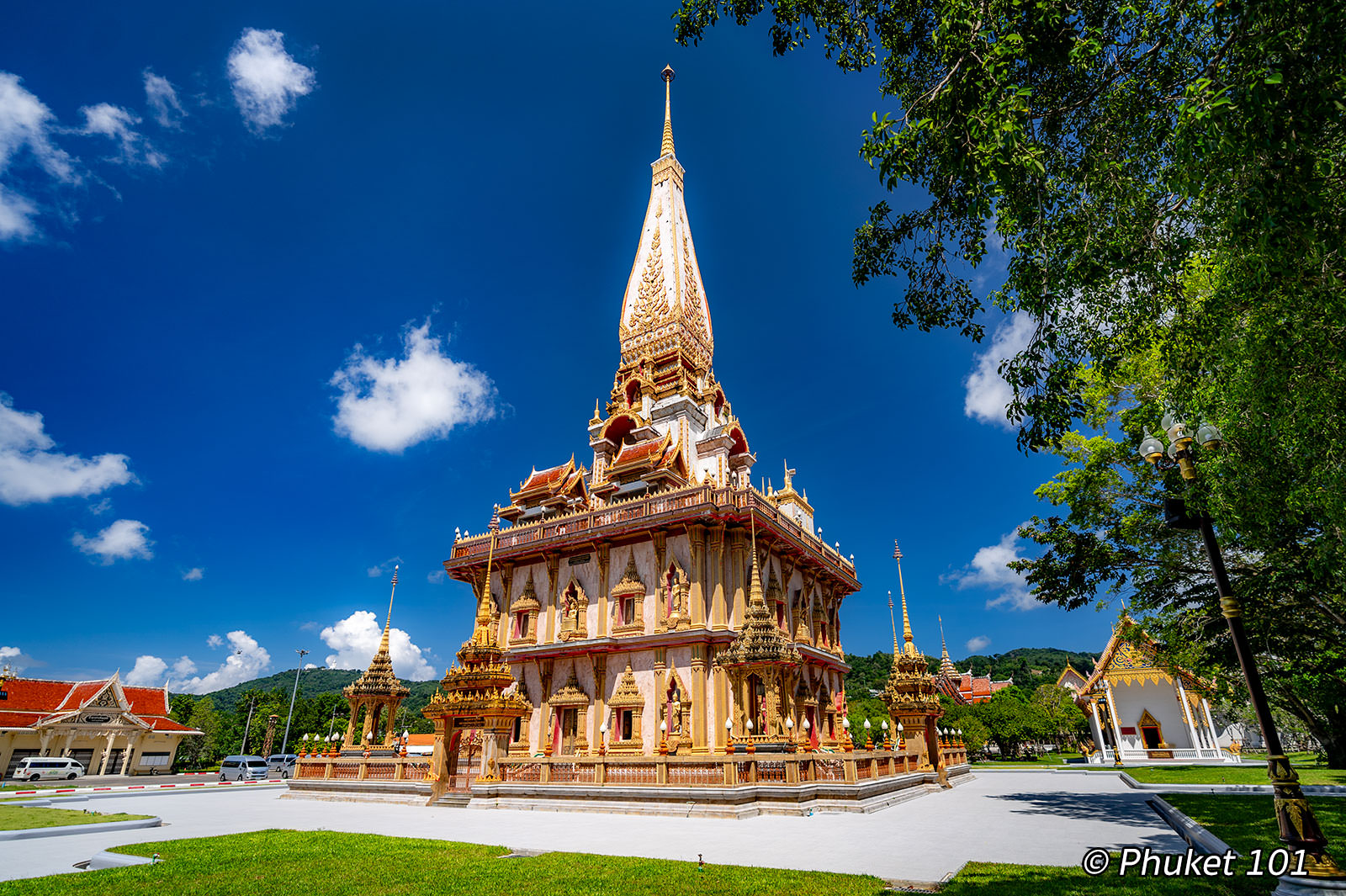
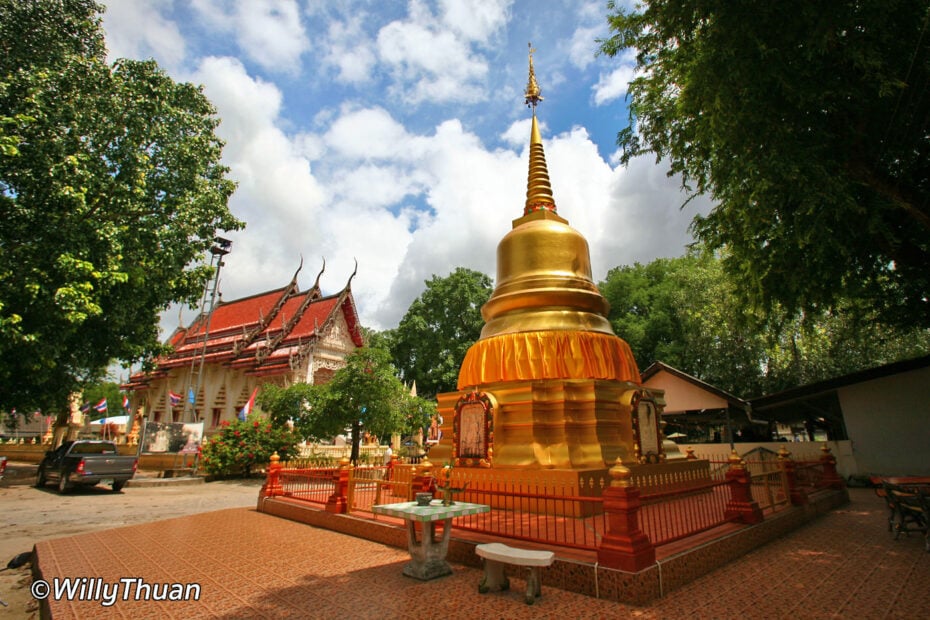
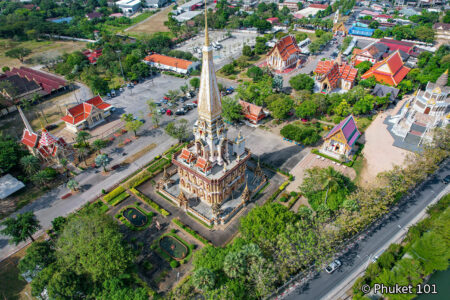
The centrepiece of Wat Chalong is a 60-metre golden chedi called Phra Mahathat Chedi, built between 1991 and 2001. This three-level pagoda holds one of Buddhism’s most valued objects: a fragment of the Buddha’s bone. Sri Lanka gifted this relic to King Rama IX in 1999 for his 72nd birthday.
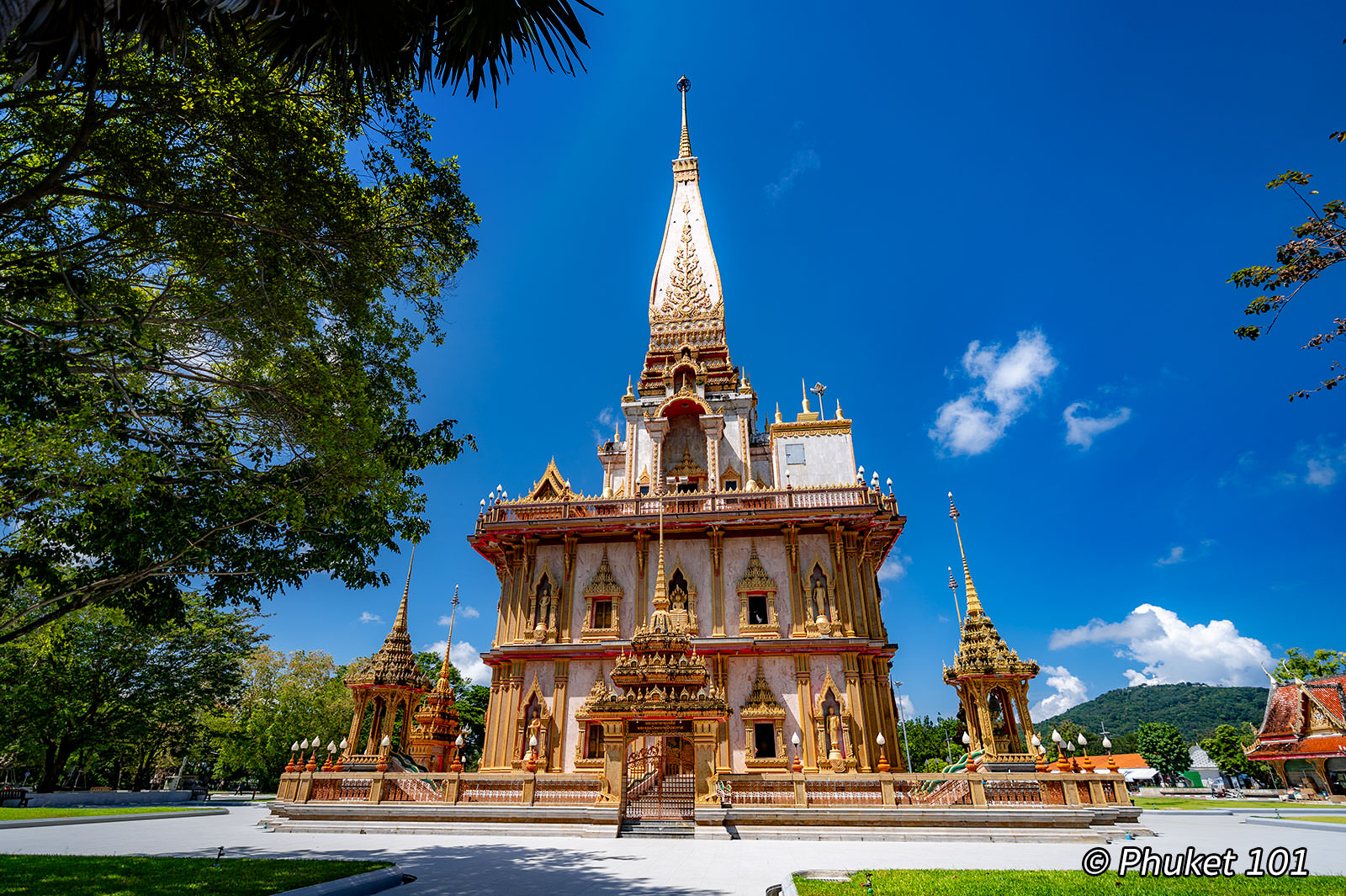
The chedi is decorated with detailed Thai carving and gold leaf that catches the sunlight. Each of the three levels has its own purpose and offers a different spiritual experience.
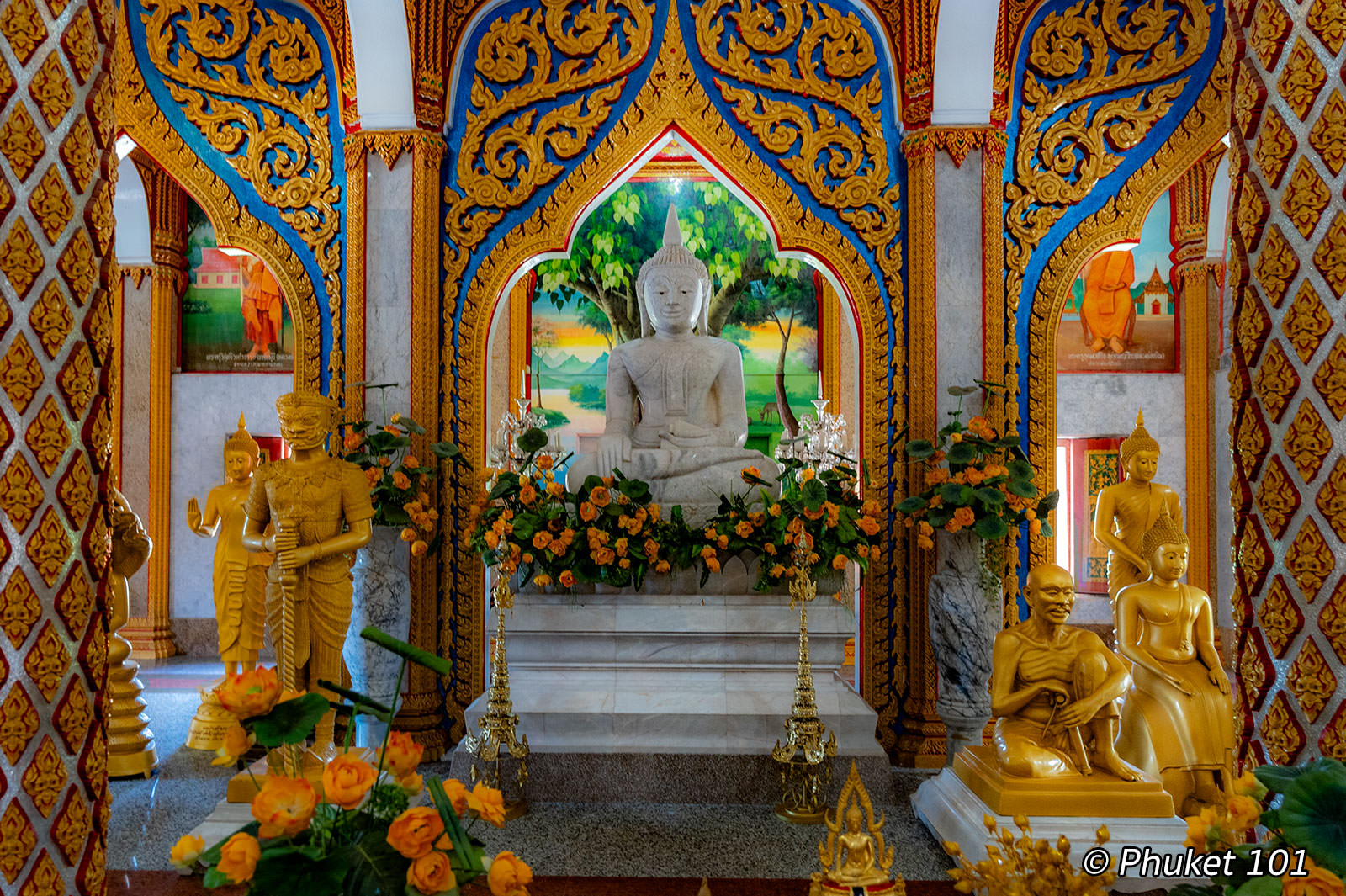
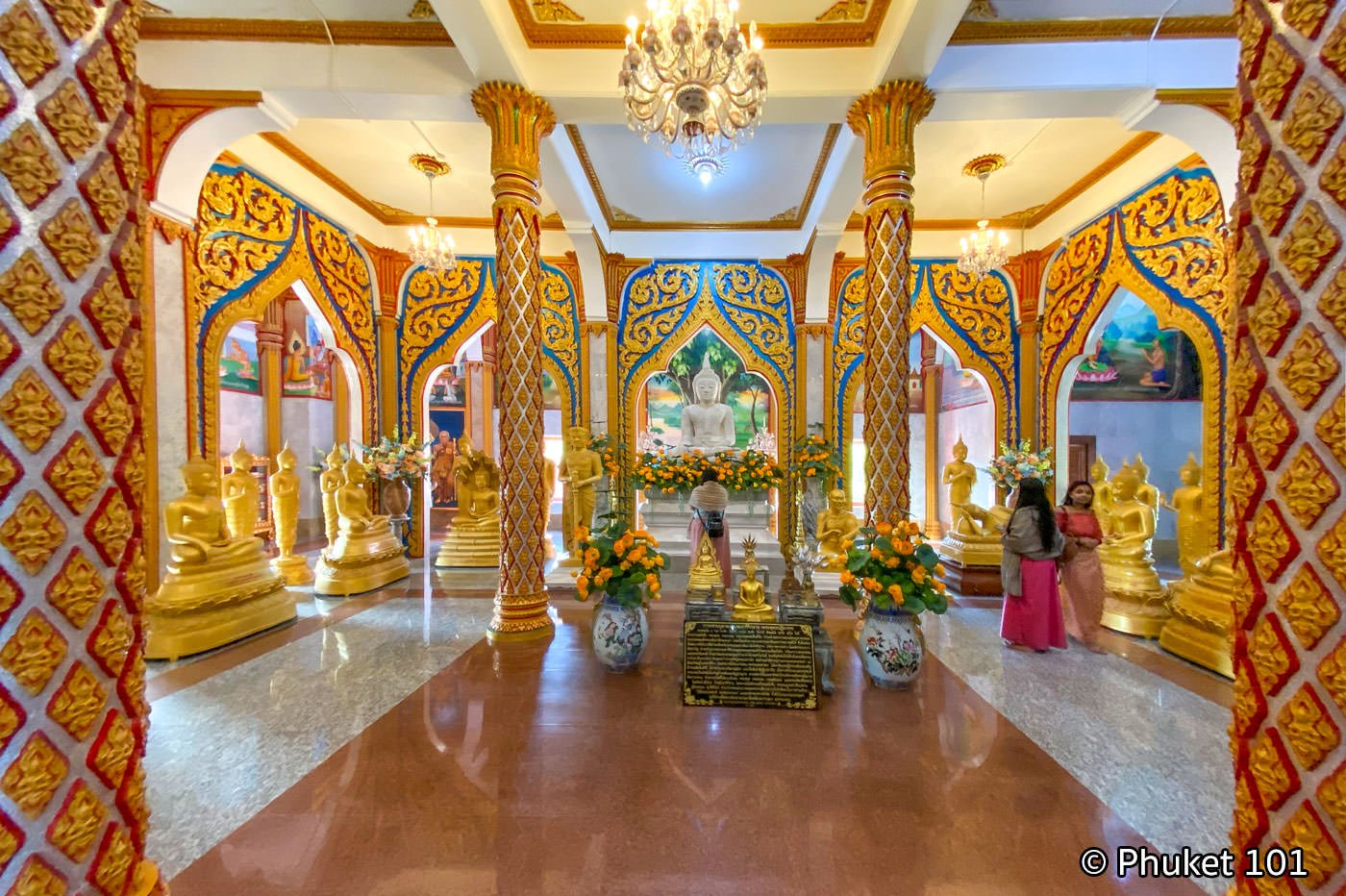
The first two floors hold many Buddha statues in different poses, representing the seven positions linked to each day of the week. Visitors have placed gold leaf on these statues over the years, creating a calm space for meditation and prayer.
Murals cover the walls and ceilings throughout the chedi. They show the Buddha’s life from his birth through enlightenment and his teachings. Skilled Thai artists painted these scenes with bright colours and fine detail. The murals work as both religious teaching and artwork that appeals to visitors.
The Sacred Relic Chamber
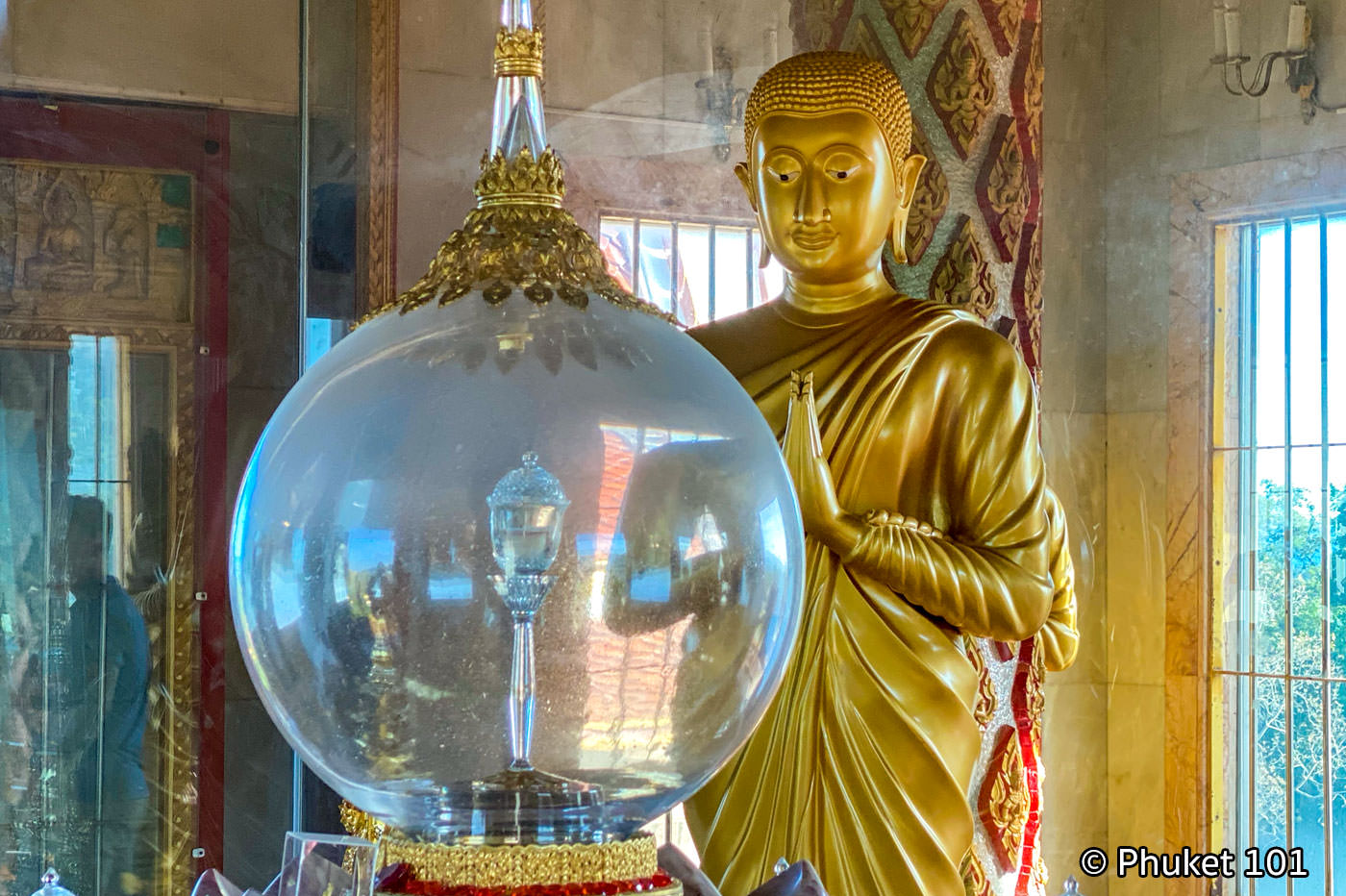
The top floor houses the temple’s most important treasure: the Buddha’s bone fragment, displayed inside a small glass case. Buddhists believe this relic holds spiritual strength and pilgrims travel from far away to meditate near it and ask for blessings.

Visitors can climb to this top level. The view stretches across the full temple grounds and the surrounding countryside. The climb itself works as a kind of meditation, moving upward through increasingly sacred parts of the chedi.
Wat Chalong Temple Video
The Main Prayer Hall and Monk Statues
Most Thai people make merit in the main prayer hall (viharn) by offering lotus flowers and pressing small pieces of gold paper onto the monk statues inside.
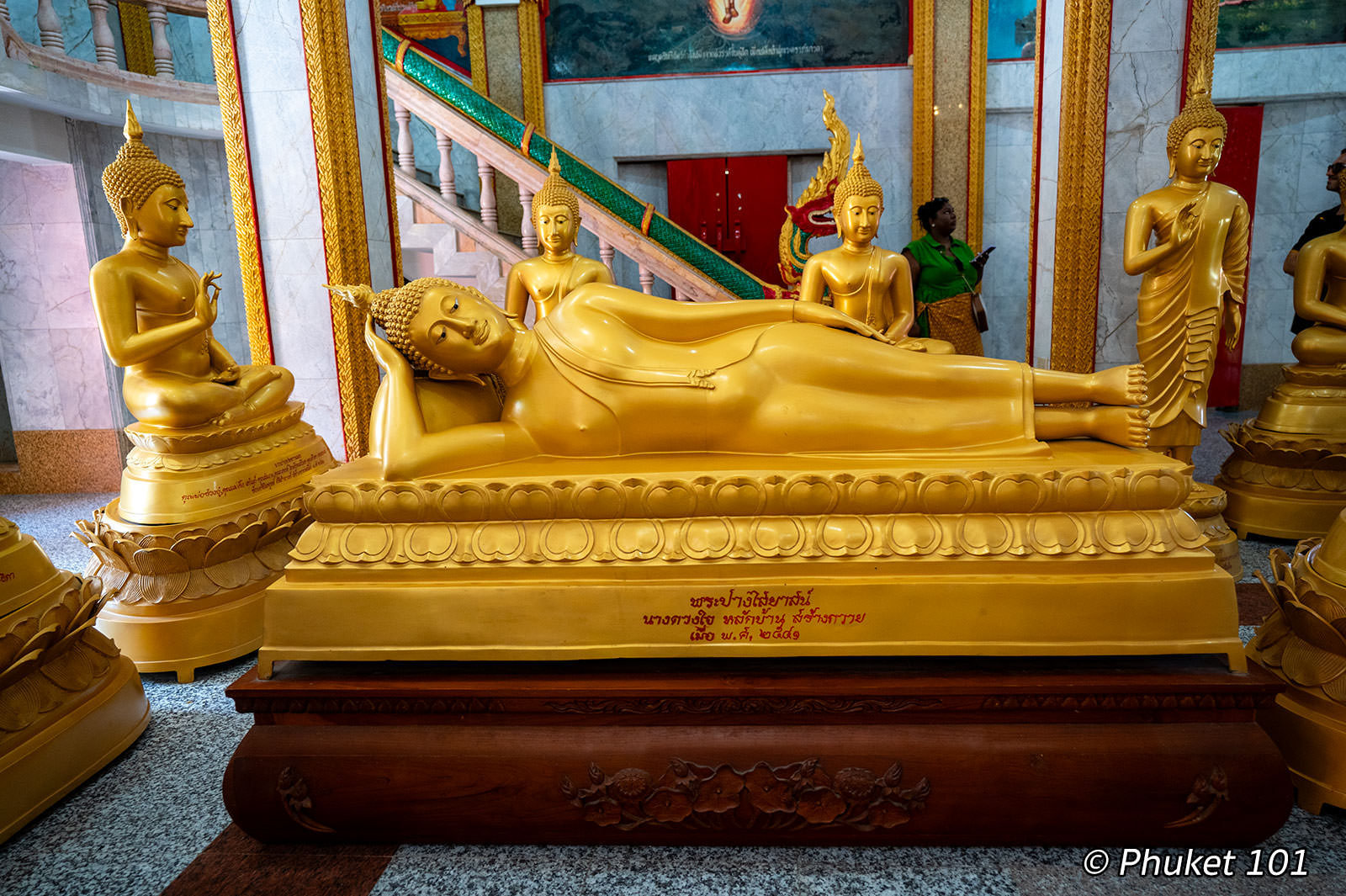
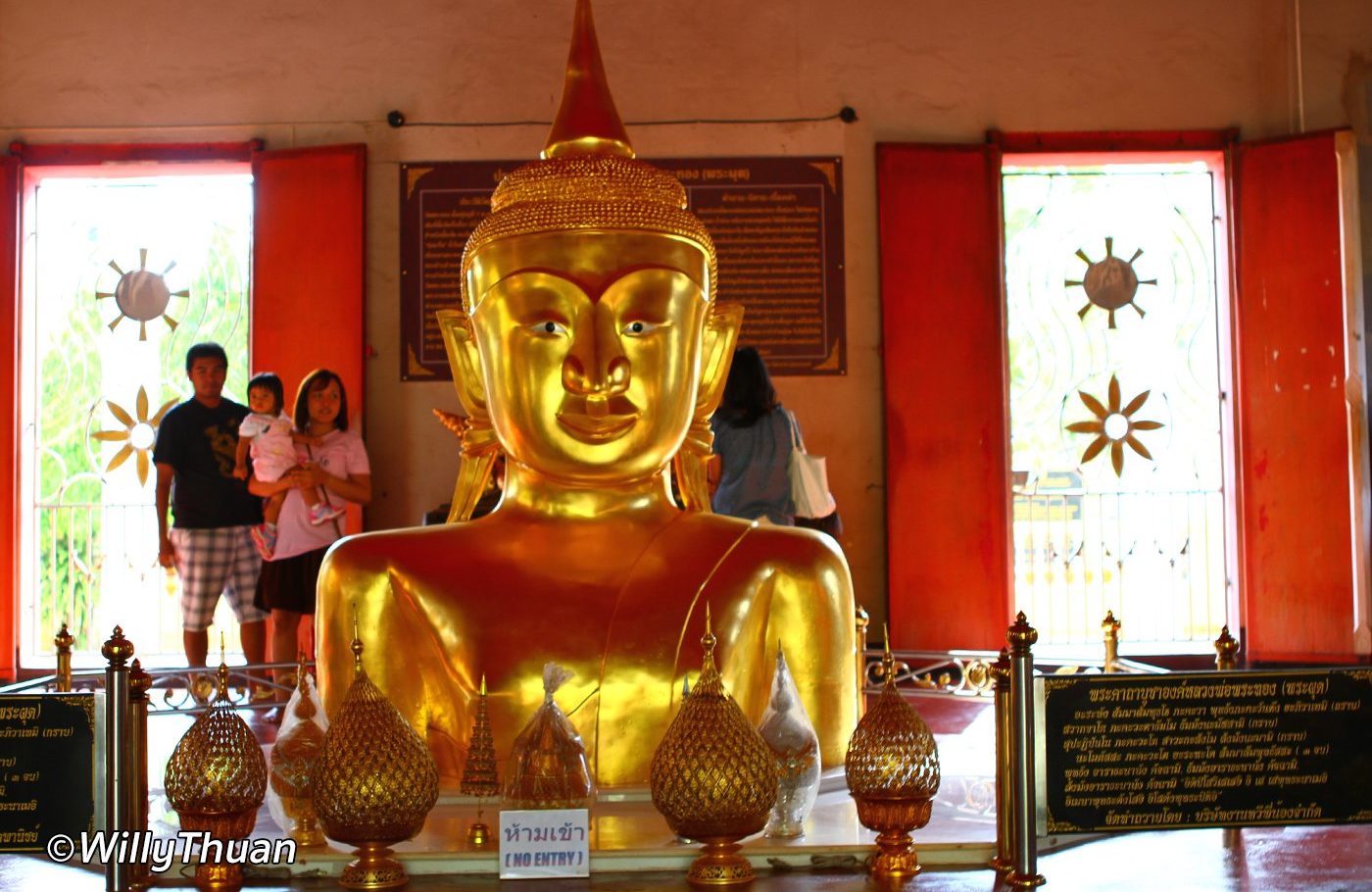
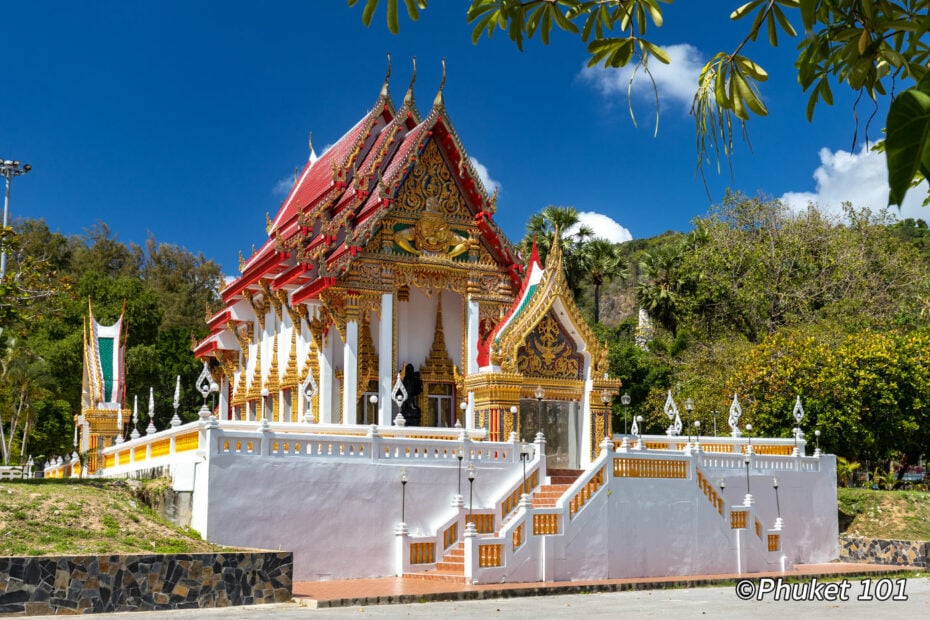
The main hall holds life-like wax statues of the three most respected monks of Wat Chalong: Luang Pho Chaem, Luang Pho Chuang, and Luang Pho Gluem. The figures are remarkably detailed and realistic, and they are continuously covered in fresh layers of gold leaf applied by visitors as a sign of respect and gratitude.
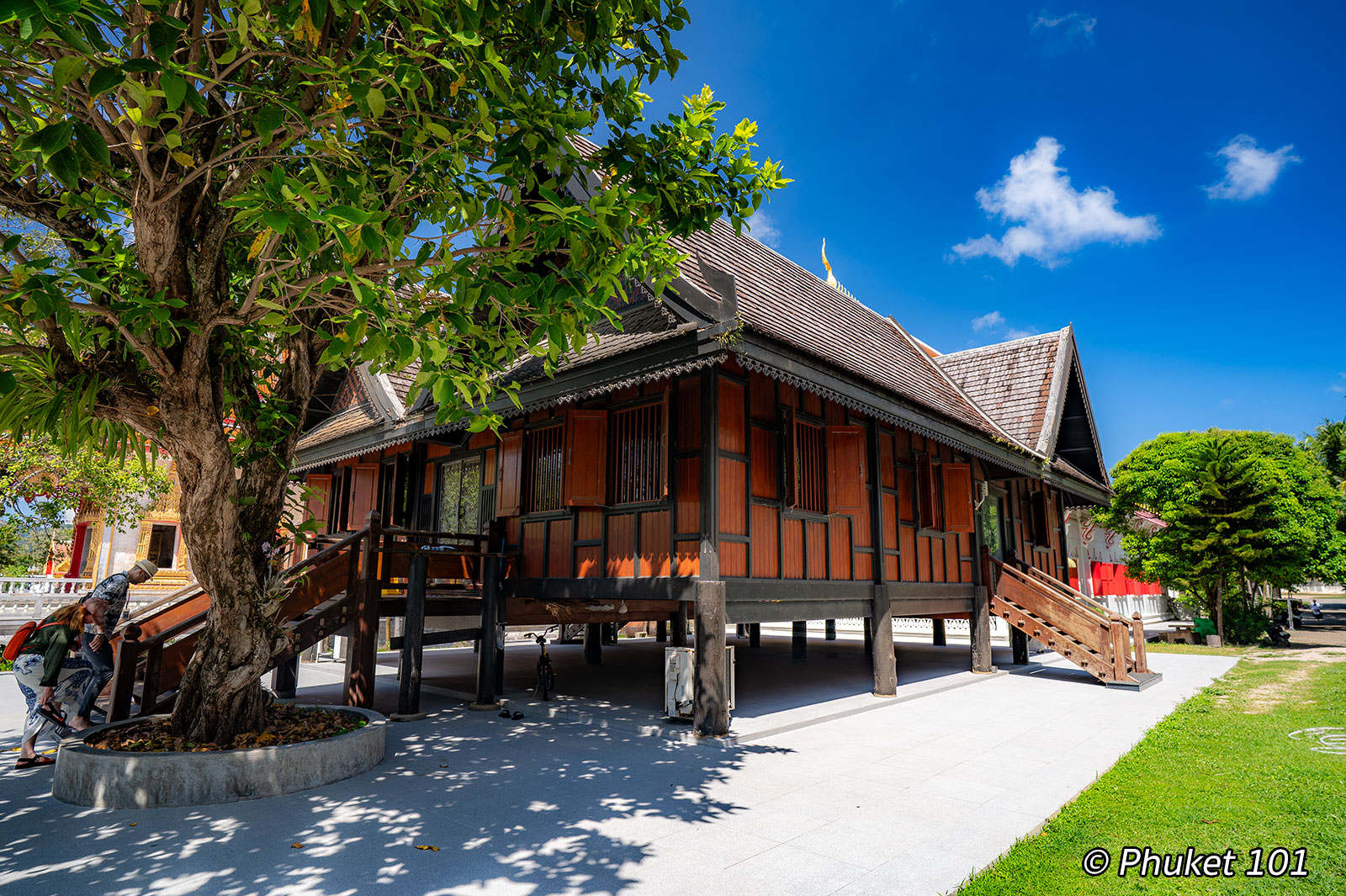
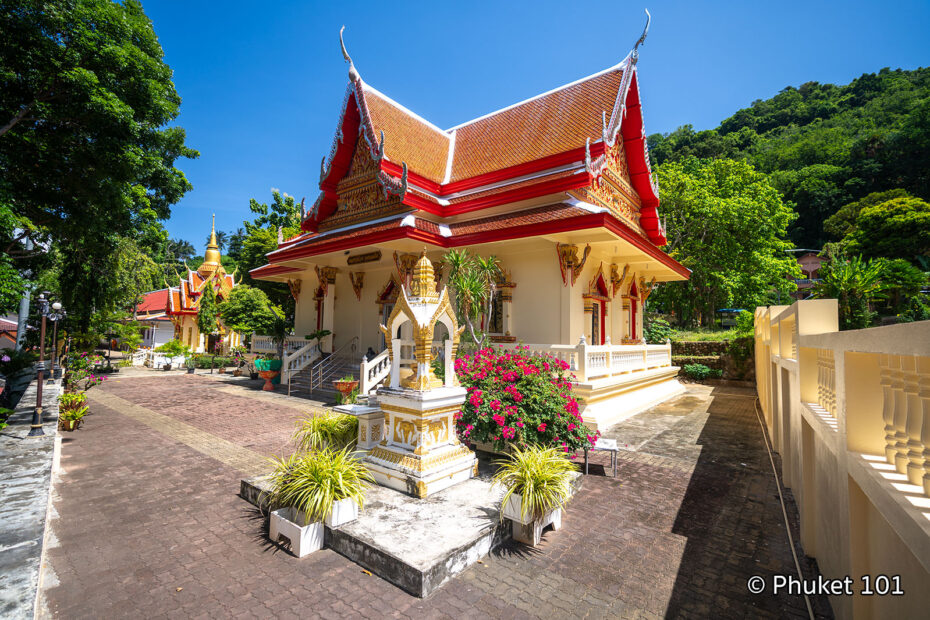
The hall follows traditional Thai temple architecture, with raised wooden construction and a traditional monk residence next to it. The building is the centre of all daily religious activity, where local Thai people come to make merit by offering lotus flowers, lighting incense, and adding gold paper to the monk statues.
Making Merit with Firecrackers
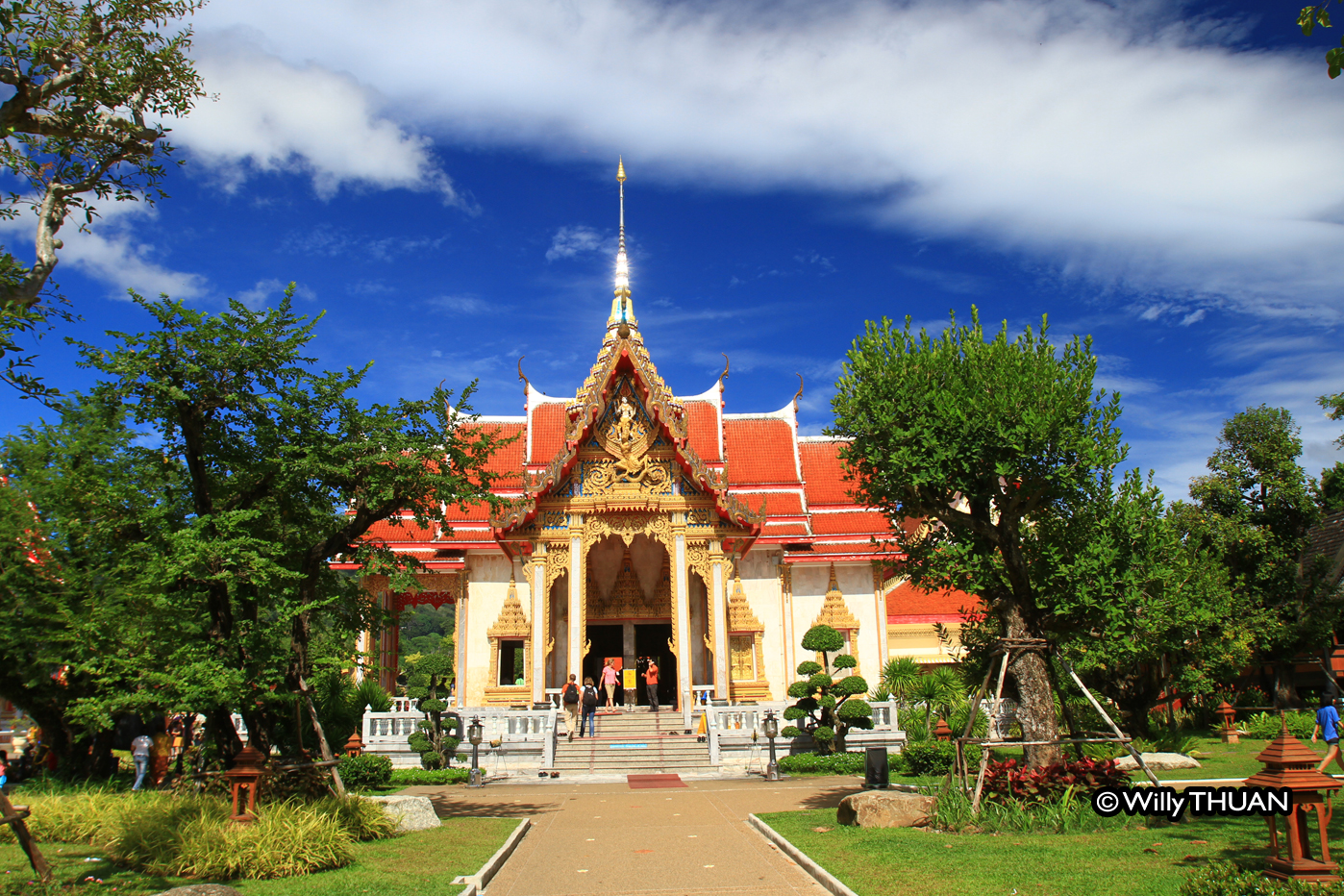
One of Wat Chalong’s most distinctive features is the practice of merit-making through firecracker ceremonies. Throughout the day, loud explosions come from a brick oven-like structure, where local people light firecrackers to give thanks when their prayers have been answered or a wish has come true. Temple staff help with the lighting, especially for the larger firecrackers, which are powerful and need careful handling. The bigger ones are loud enough to make first-time visitors jump, and they make for great photos. Read more about the firecracker tradition.

Around the Temple Grounds
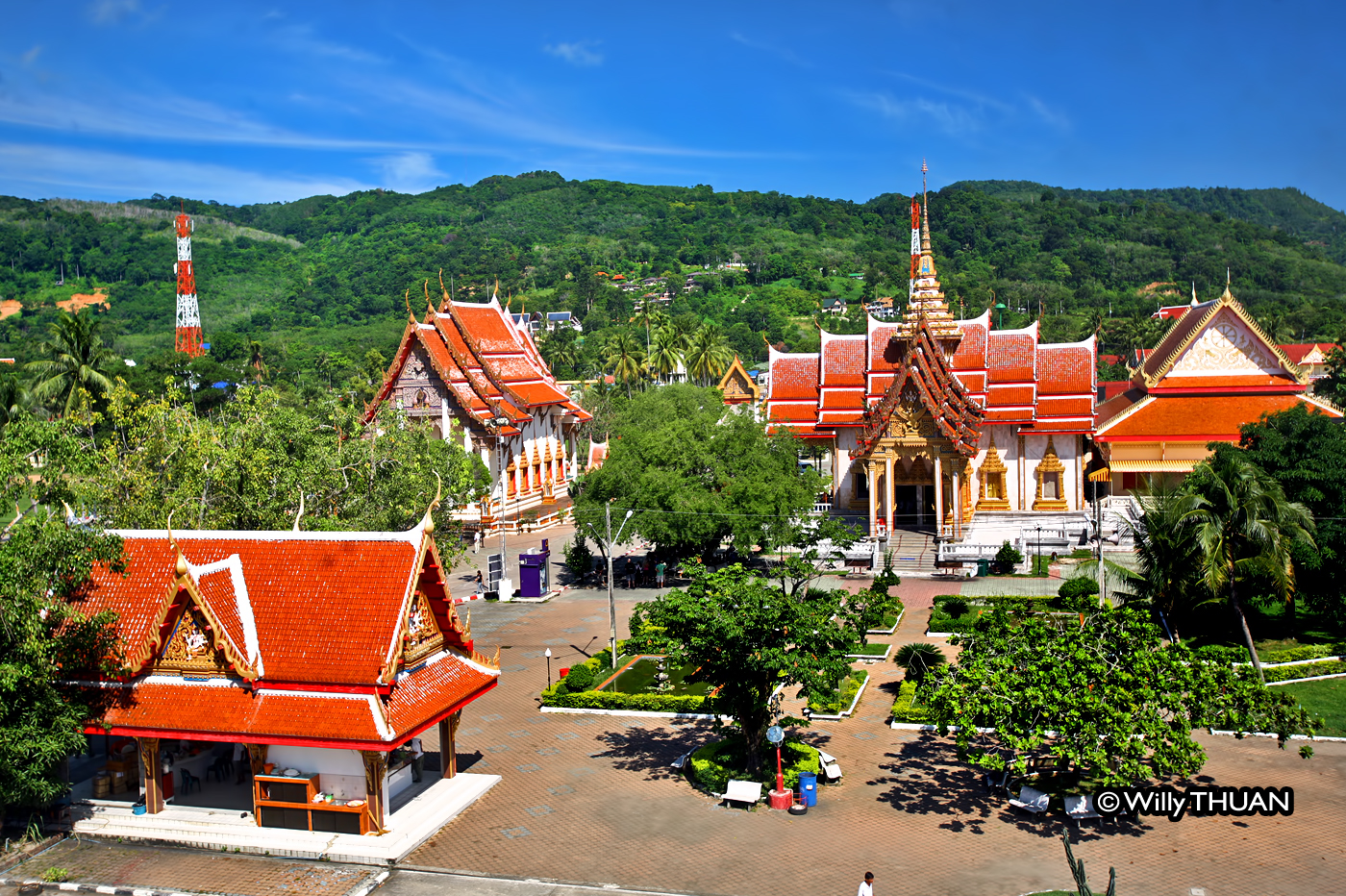
A dozen small shops sell souvenirs and tourist goods on the temple side. Oddly, the shops selling religious items are outside the temple grounds, next to the gate.

Several times a year, the temple hosts funfairs with food stalls, classic Thai games, and big-stage performances. They are loud, busy, and a lot of fun, and they give a real glimpse into local Thai life.
Wat Chalong Temple Fair
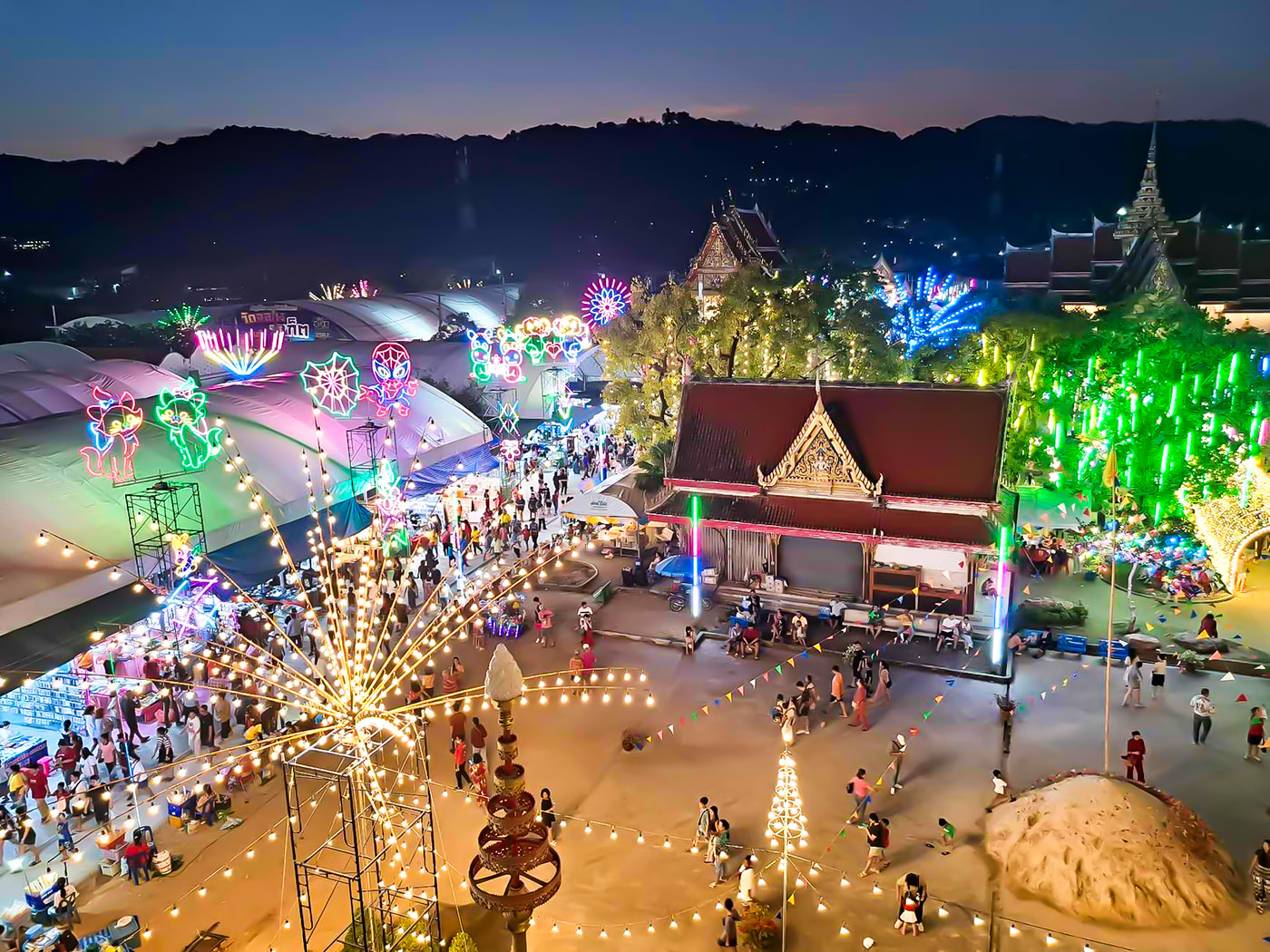
Wat Chalong Fair is one of Phuket’s largest annual temple festivals, held for about 10 days during the Chinese New Year. The event blends traditions with lively celebrations, including stage shows, firecrackers, colourful markets, and small amusement rides. Visitors pay respect inside the temple, then walk outside to enjoy food stalls, flower shops, carnival games and even some fried insect snacks. The fair attracts families and locals with its fun evening atmosphere, music, and Thai cultural performances.
More about Wat Chalong Temple

Wat Chalong 360 Panorama
Photos of Wat Chalong Temple


Wat Chalong Temple Info
Location: between Phuket town and ChalongAddress: 70/6 Chao Fah Tawan Tok Road, Chalong, Phuket 83130
Open: 7 am to 5 pm (the grounds can be walked at any time)
Phone: 076 381 226
Dress Code: No short skirts or short pants, no sleeveless T-shirts
Price: Free
Built: 1837
Official name: Wat Chai Thararam (วัดไชยธาราราม)
How to Get to Wat Chalong
Wat Chalong is easy to find on Chaofa Road, between Phuket Town and Chalong, in the south of Phuket. Just follow the many signs on the way to Chalong Circle. From Phuket Town, take Chaofah Road towards Chalong and Rawai. There are two Chaofah Roads: the one you need passes in front of the Central Phuket Shopping Mall. The temple is about 10 km south of Central, on the left and clearly signposted.Distance from Patong to the temple: 16 km
From Phuket International Airport: 37 km
From Phuket Town: 9 km
From Bangtao: 29 km
From the Big Buddha: 8 km
Wat Chalong Temple Map
Get the directions on your phone: https://goo.gl/maps/u9SBmUBRDh4d5a5p9.This story was first published on February 18, 2012
Insider Tips for Visiting Wat Chalong
I have been to Wat Chalong many times over the past 30 years, and a few small things make the visit much better. Most tourists rush in, take a few photos at the chedi, and leave in 20 minutes. That is a missed opportunity. Here is what I would do differently.
Go early, before 9 am. The temple is at its calmest in the first two hours after opening. The light on the white and gold of the chedi is also the prettiest at that time, especially from the back. By 10 am the tour buses start to arrive and the atmosphere shifts.
Climb the chedi all the way to the top. Most visitors stop on the first or second floor. The third level, where the bone relic is kept, is the smallest and quietest space and the most spiritually significant. Just outside the relic chamber, the open balcony gives a 360-degree view across Chalong towards the Big Buddha. It is one of the best views in this part of the island and almost no one is up there.
Don’t skip the main prayer hall. The chedi gets all the attention, but the viharn next to it is where the real heart of the temple sits. The three monk statues of Luang Pho Chaem, Luang Pho Chuang, and Luang Pho Gluem inside are wax figures so detailed that first-time visitors often think they are real people. Locals press small squares of gold leaf onto them as a sign of respect, and the statues are now thickly covered in gold. Watch for a few minutes from a respectful distance.
If you hear an explosion, walk towards it, not away. The firecrackers are part of a merit-making ceremony, set off when a wish has been answered. The brick oven where they are lit is on the temple grounds, and the staff are happy for visitors to watch from a few metres away. The sound is shocking the first time, but it is one of the most authentic moments you will see at any temple in Phuket.
Combine it with the Big Buddha. The two sites are 8 km apart and the road between them is straightforward. Wat Chalong in the morning, then up the hill to the Big Buddha for late morning or sunset, makes a very good half day. A taxi for the round trip from Patong should be around 1,500 to 1,800 baht, agreed in advance.
Bring a sarong if you are wearing shorts. The dress code is loosely enforced at the gates, but to enter the chedi or the prayer hall you really should cover knees and shoulders. There are sarongs available near the entrance, but having your own is easier and more comfortable.
Skip weekends and Buddhist holy days if you can. Wat Chalong is a working temple and Thai families come to pray, especially on weekends, full moon days, and during the Chinese New Year fair. It is great to see, but it is busy. A weekday morning gives you the temple almost to yourself.
Wat Chalong Through the Years
Wat Chalong has been around for almost 200 years, and its story is tied closely to the history of Phuket itself. The temple has grown from a small village monastery into the most important Buddhist site on the island, and the sequence of events below shows how that happened.
Around 1837: The temple is founded in the small farming community of Chalong, in the south of Phuket. At this time it is a simple village monastery serving local Thai Buddhist families, with none of the large buildings that visitors see today. The first abbot is Phra Mueang.
1850: A young monk named Chaem becomes the new abbot of Wat Chalong. He had arrived from Phang Nga as a child and trained in Vipassana meditation under the previous abbot. He is known for his strict observance of monastic rules and for his deep knowledge of traditional herbal medicine. Over the next decades, he becomes one of the most respected monks in the south of Thailand.
1876: This is the year that turns Wat Chalong into a place of legend. Phuket’s tin mining industry employs thousands of Chinese immigrant workers, who are organised into rival secret societies known as Angyee. After years of falling tin prices and heavy government taxes, the workers rise up in a violent rebellion. Mobs attack government buildings in Phuket Town, the governor flees the island, and around 100 people are killed. Terrified local Thai families run south to Wat Chalong with whatever valuables they can carry. Luang Pho Chaem refuses to leave his temple. He shelters the refugees, treats the injured on both sides with herbal medicine, and at one point holds off a mob of rioters who try to attack the temple. He gives blessed white headbands, called pha prachiat, to villagers who join the resistance, and these become symbols of courage. The rebellion is finally suppressed when troops arrive from Nakhon Si Thammarat and Kedah.
1877: King Rama V credits Luang Pho Chaem with helping to save the island and appoints him Chief Ecclesiastical Officer of Phuket. The King also grants the temple its formal royal name, Wat Chaiyathararam, which means “Temple of Auspicious Waters”. Locally, everyone still calls it Wat Chalong.
1908: Luang Pho Chaem dies at the age of 81. When his belongings are counted, he is found to have owned just 50 satang. His funeral is sponsored by the royal court the following year, and he becomes one of the most venerated kru, or sacred masters, in southern Thailand. He is succeeded by Luang Pho Chuang, who continues his tradition of healing.
20th century: The temple grows slowly, with new buildings added decade by decade as the local population grows. Statues of Luang Pho Chaem and Luang Pho Chuang are placed in the main viharn, and locals begin the tradition of pressing gold leaf onto them as a sign of respect. By the late 20th century, the original wax figures have been joined by a third, of Luang Pho Gluem, the third revered abbot.
1991 to 2001: The temple’s biggest physical change in modern times. Construction begins on the Phra Mahathat Chedi, the 60-metre golden pagoda that is now the visual centre of the temple. The project takes a full decade and is funded almost entirely by donations.
1999: The Government of Sri Lanka donates a fragment of the Buddha’s bone, known as Phra Borom Sareerikatat, to King Rama IX for his 72nd birthday. The relic is placed inside a glass chamber on the top floor of the new chedi, transforming Wat Chalong from a regional temple into a pilgrimage destination drawing Buddhists from across Southeast Asia.
2002: The chedi is officially completed and the temple complex is given its most extensive renovation, preparing it for a new era of mass tourism as Phuket grows.
Today: Wat Chalong is the most visited Buddhist temple in Phuket and the spiritual centre of the island. The annual Wat Chalong Fair, held during Chinese New Year, draws huge local crowds, and the firecracker tradition is still practised every day by local people whose prayers have been answered. The 1876 story of Luang Pho Chaem is taught to every Phuket schoolchild.
Don’t Miss near Wat Chalong
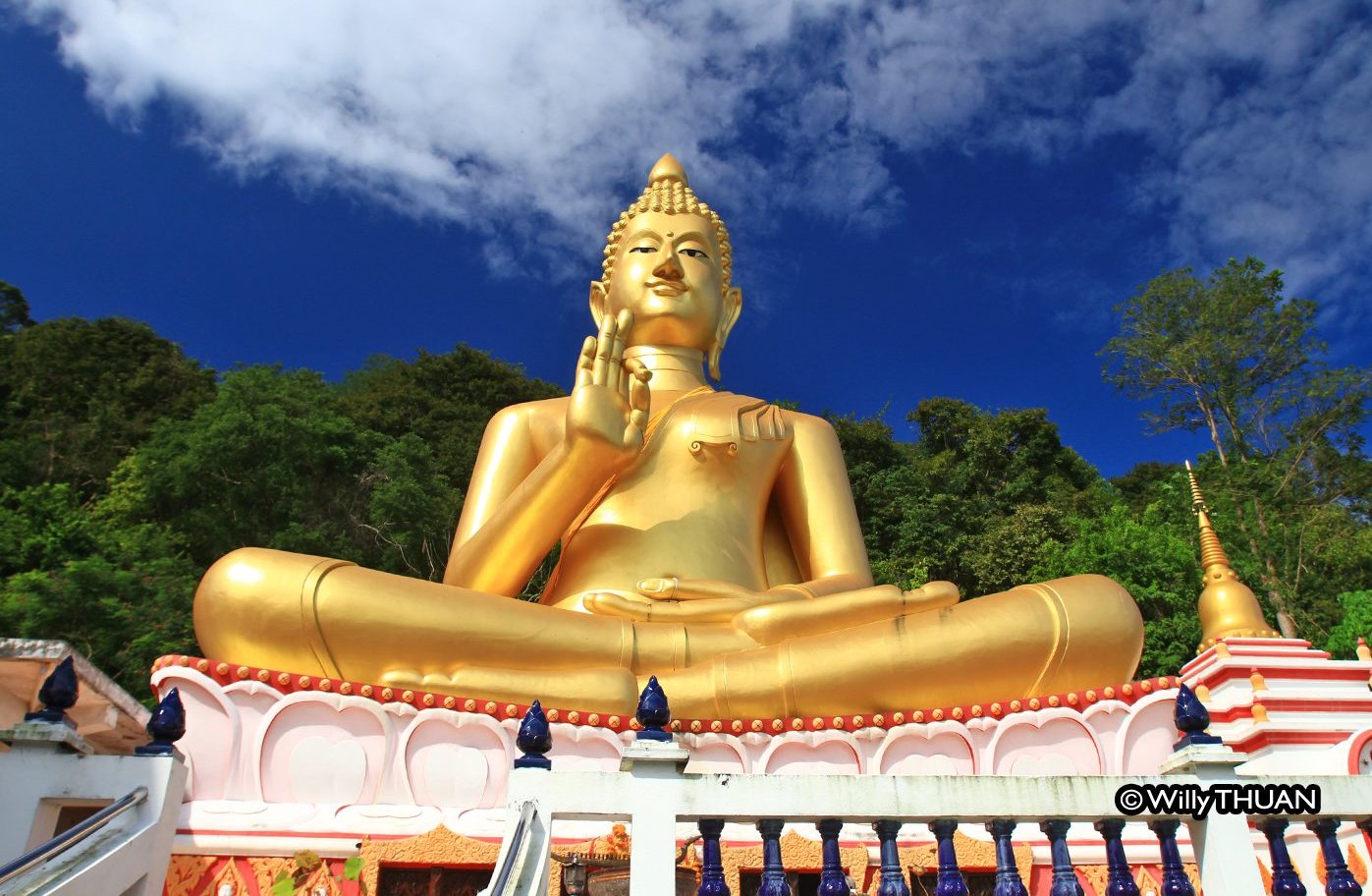
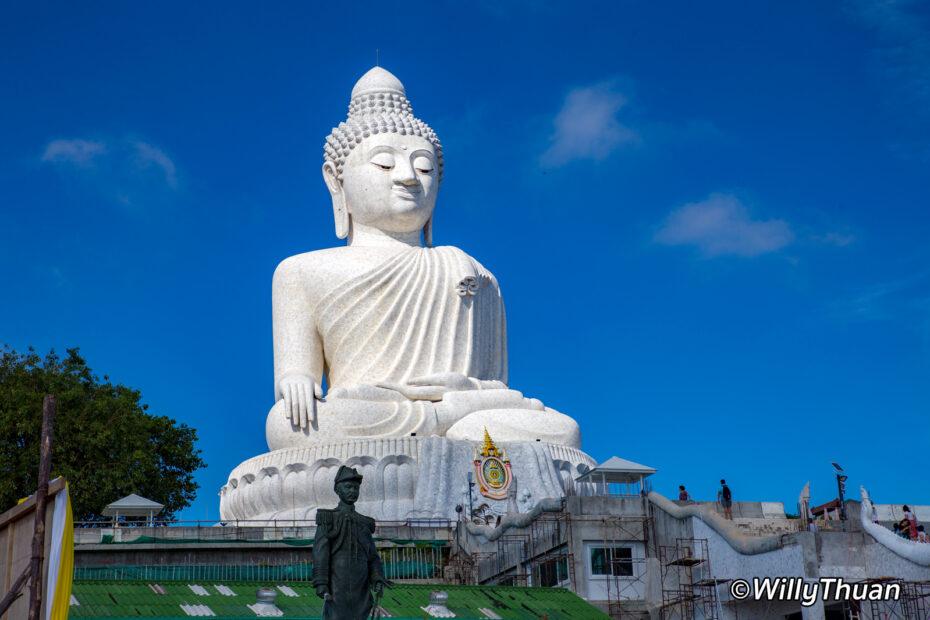
The Big Buddha is visible from Wat Chalong and from most of southern Phuket. The two sites work very well together as a half-day trip.
Big Buddha Phuket
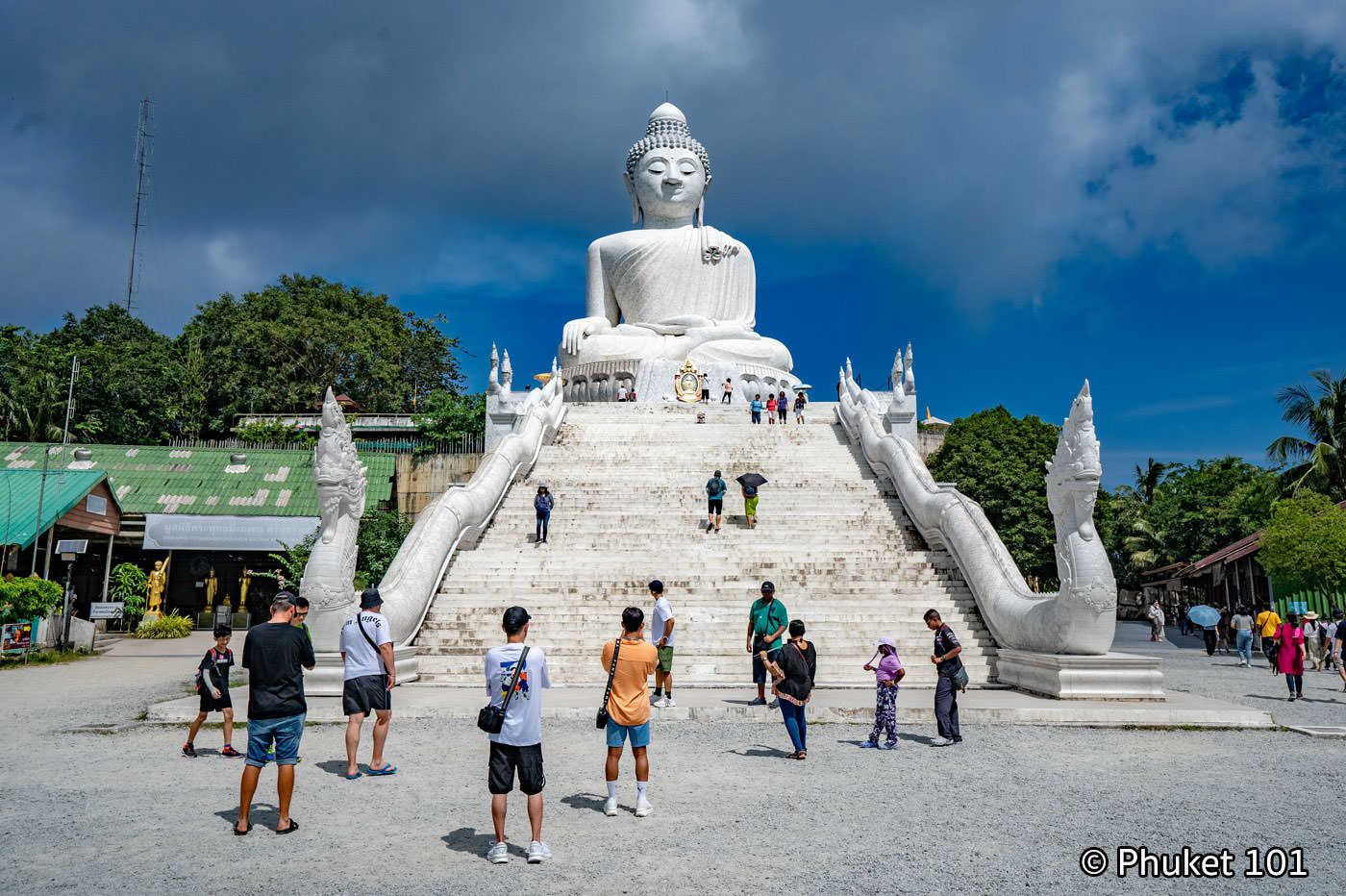
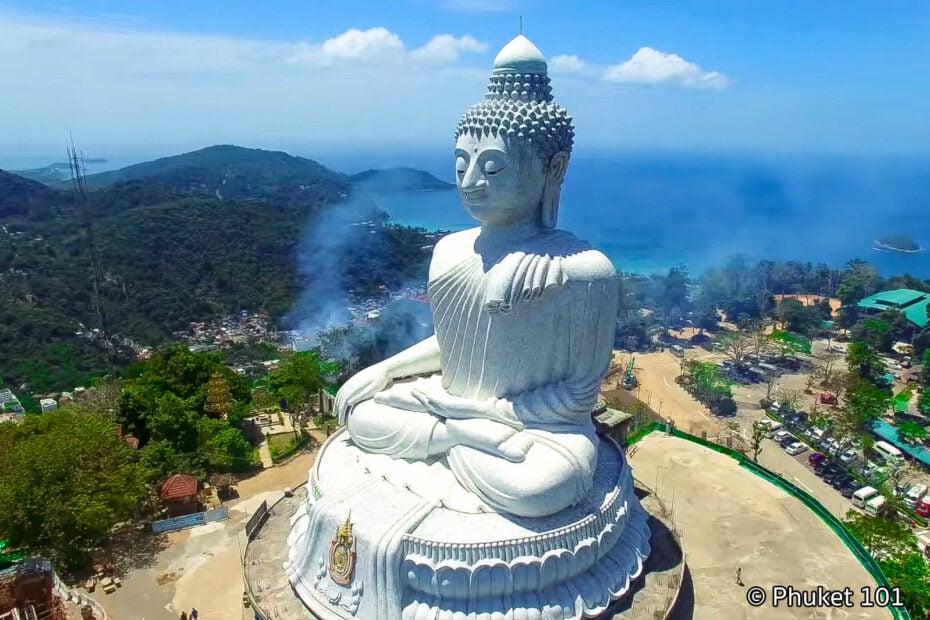
The Big Buddha is one of the island’s most famous landmarks. Sitting 45 metres tall on top of Nakkerd Hill, it offers wide views over Chalong, Kata, and Rawai. The statue is made of white Burmese marble and shines brightly in the sun. From the base, much of southern Phuket is visible. The road from Wat Chalong to the Big Buddha is about 8 km and takes around 15 minutes by car.
FAQs About Wat Chalong Temple
More Temples in Phuket