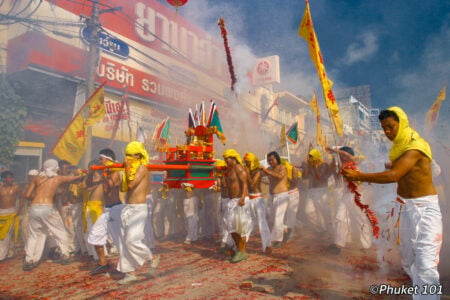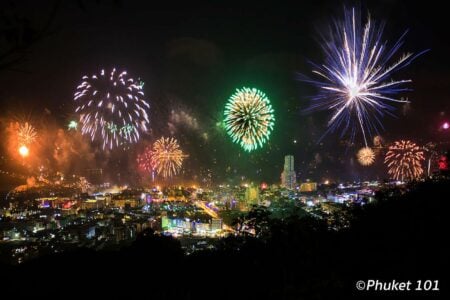


What is the Songkran Water Festival?

Songkran Festival Phuket happens on April 13 to 15, 2026. The dates vary depending on Thailand’s regions, and the festival can last several days in the north.
Songkran Festival in Phuket Video
Subscribe to our YouTube for more videos!
I’ve been through more than 30 Songkrans in Phuket, every single one since I arrived in 1994, and it’s still my favourite Thai festival. If you’re visiting Phuket or anywhere in Thailand in April, you need to understand what you’re walking into. Songkran is the Thai New Year, which occurs when the sun moves from Pisces to Aries. According to the Thai calendar, we are now in the year 2569. The whole country gets several days off, and most Thai people travel back to their home provinces to celebrate with their families.

Fortunately for visitors, it is business as usual in Phuket. You can still enjoy all the tours and day trips as normal. Just expect massive traffic jams on the roads as everyone is out on pickup trucks, throwing water at each other. And I do mean massive. If you need to get somewhere on time, plan for double the usual travel time, at least.
Songkran Festival at a Glance
| Songkran Phuket 2026 | |
|---|---|
| Dates | April 13 to 15, 2026 |
| What | Thai New Year and water festival |
| Wildest Area | Bangla Road in Patong Beach, Soi Ta-Iad in Chalong |
| Family Friendly | Phuket Town in the morning |
| Relaxed Option | Bang Tao and Laguna area |
| Weather | Hottest month, 34°C daytime |
| Tours | All tours run as normal |
| Traffic Warning | Expect double travel time, especially in Patong |
What is Songkran Really About?
Most visitors see the water fights and assume that’s what Songkran is. It’s not. The water is just the part that went viral.
The word “Songkran” comes from the Sanskrit “Sankranti” (สังกรานติ), meaning “to move” or “to pass.” It marks the moment the sun moves from Pisces into Aries, completing a full cycle of the zodiac. This was the original Thai New Year for centuries before Thailand adopted the international calendar in 1941. The tradition has roots in Hindu-Brahmanical rituals brought to Southeast Asia over a thousand years ago. You’ll find similar festivals in Laos, Myanmar, and Cambodia.
Water was never about fun. It was about purification. Washing Buddha statues with scented water was a way to cleanse sin and bring merit. Pouring water gently over the hands of parents and elders was how younger family members showed respect and asked for blessings. Cleaning the house was about removing bad luck before the new year started. These rituals still happen every Songkran morning in homes and temples across Thailand, long before anyone picks up a water gun.
The three days each have a specific meaning:
| Date | Thai Name | Meaning |
|---|---|---|
| April 13 | Wan Maha Songkran (วันมหาสงกรานต์) | The Great Songkran. The sun enters Aries. Families wash Buddha statues and build sand pagodas at temples. |
| April 14 | Wan Nao (วันเนา) | The Day of Staying. A day between years. Families prepare food and visit temples. Also National Senior Citizens’ Day (วันผู้สูงอายุแห่งชาติ). |
| April 15 | Wan Thaloeng Sok (วันเถลิงศก) | Day of the New Era. The first day of the Thai New Year. Younger family members pour scented water over elders’ hands to ask for blessings. |
The water fights evolved later, partly because April is the hottest month of the year and partly because once you give an entire country permission to throw water at strangers, things tend to escalate. But the morning rituals at temples, the hand-pouring ceremony with parents, and the house cleaning still come first. If you want to see the real Songkran, wake up early on April 13 and visit any local temple before the water guns come out.
How Songkran Has Changed Over the Years
When I first experienced Songkran in 1994, it was a completely different event. Your friends would wait for you at the corner of the house with a bucket of water. You’d get splashed, everyone laughed, and that was it. We’d ride on the back of a pickup truck with a barrel of ice water and splash other trucks and people along the road. People were a bit drunk and dancing on the side of the road already by noon. It was fun and, honestly, quite tiring because you’d stay out in the sun all day. But because you’re wet the whole time, you don’t realise how much sun you’re getting on your head.
The next day at the office was always tough. Over the years, Songkran in Phuket got wilder. A lot wilder. The water fights became more intense, the drinking heavier, and the crowds much bigger. Traffic into Patong during Songkran became almost impossible. You could spend two or three hours just trying to get through the town.
That’s one of the reasons many of us who’ve been here a long time moved our Songkran celebrations to the north of the island, around Bang Tao and Laguna, where it’s still fun but less of an all-out battle zone. The government has also stepped in over the years with stricter rules. There have been crackdowns on alcohol near the road, foam spray has been banned in many areas, and police checkpoints pop up everywhere to catch drunk drivers. It’s still a water fight, don’t worry about that, but it’s a bit more controlled than it used to be.
What Happens During the Songkran Festival?
Starting early morning on April 13, people celebrate the Songkran Festival in many different ways. It is an exceptional day, and the water ceremony takes many forms. In the morning, it’s traditional and respectful. You sprinkle your family with a tiny cup of water. You pour water gently over a statue of Buddha and say a little prayer. It’s good luck, and the older generation takes this part seriously.

Later in the morning, the game starts to change. Because this is the hottest time of the year, splashing each other with water is a lot of fun. Add a little beer to that, and Songkran becomes a country-wide water war. By early afternoon, the streets in the main tourist areas are total chaos, and I mean that in the best possible way.
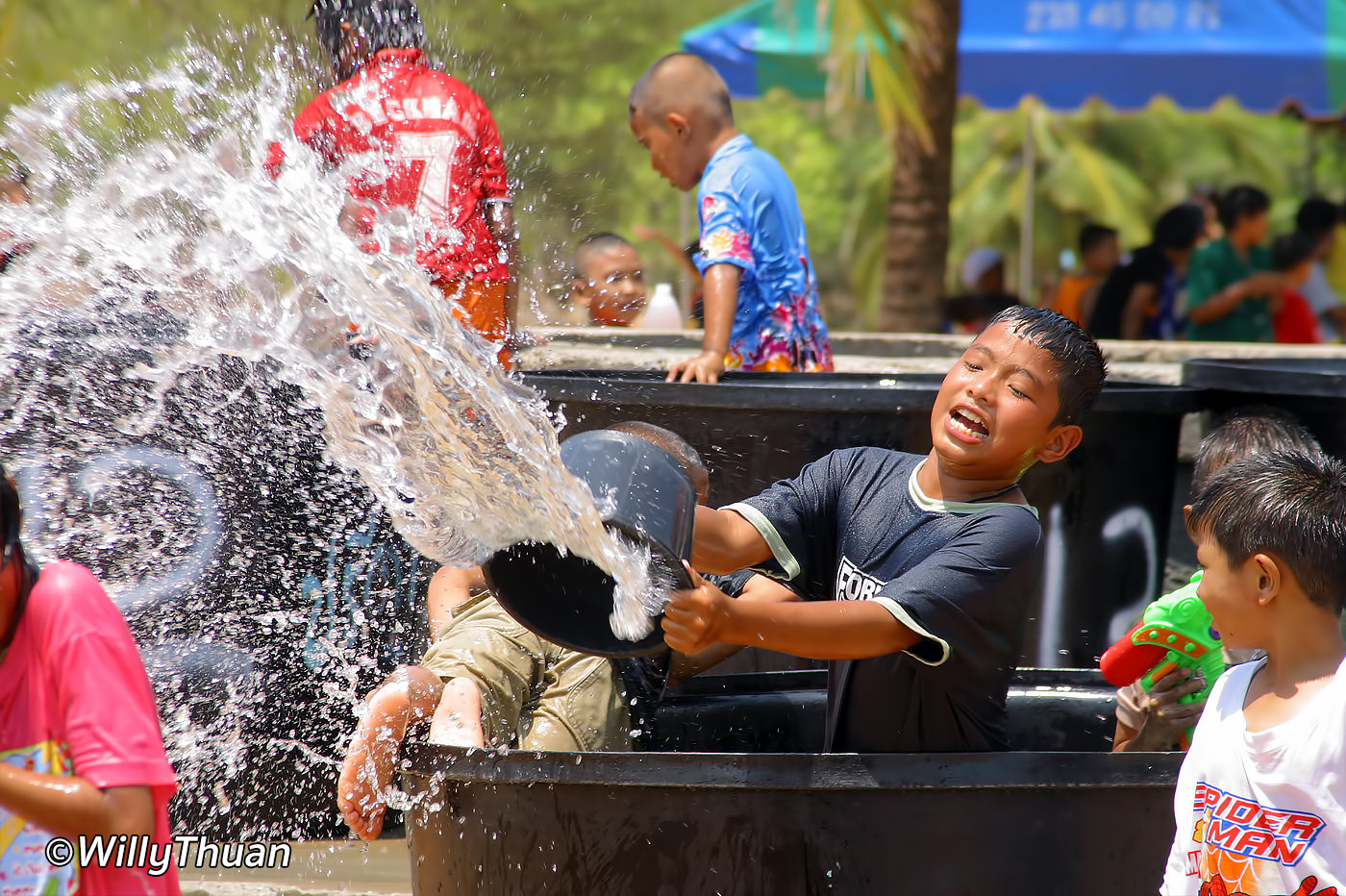
People living in Thailand tend to fall into three groups during Songkran: ‘Wild Wet Fun‘ fans who are out on the streets from dawn, ‘Sulking Hermits‘ who lock themselves indoors for three days, having wisely stocked up on food beforehand, and ‘Smart Dudes‘ who use the very long weekend to fly somewhere abroad and stay dry. I’ve been all three at different points over the years. These days I lean more toward option one, but only until about 3 pm, then I’m done.
What are the best water weapons?
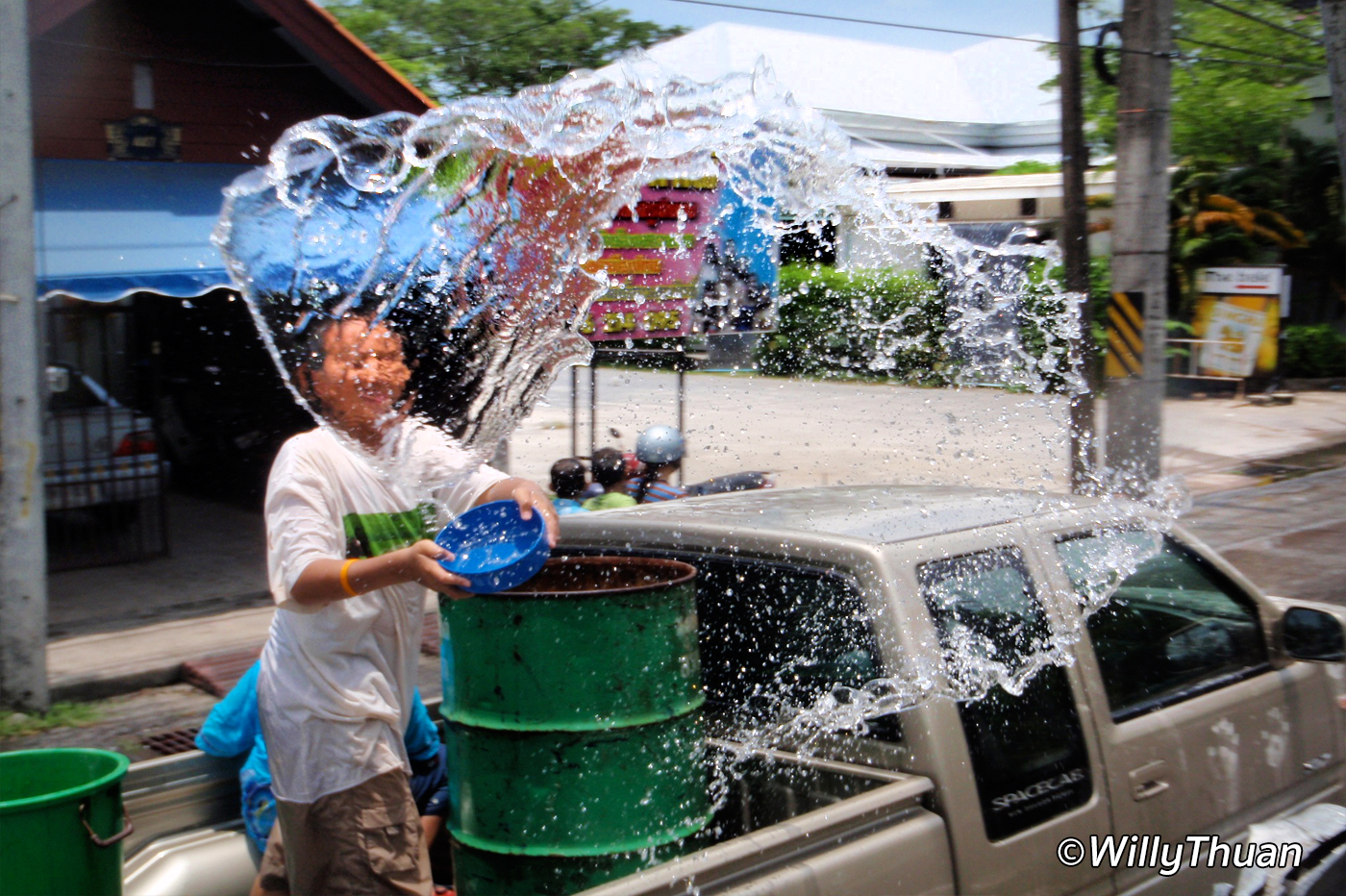
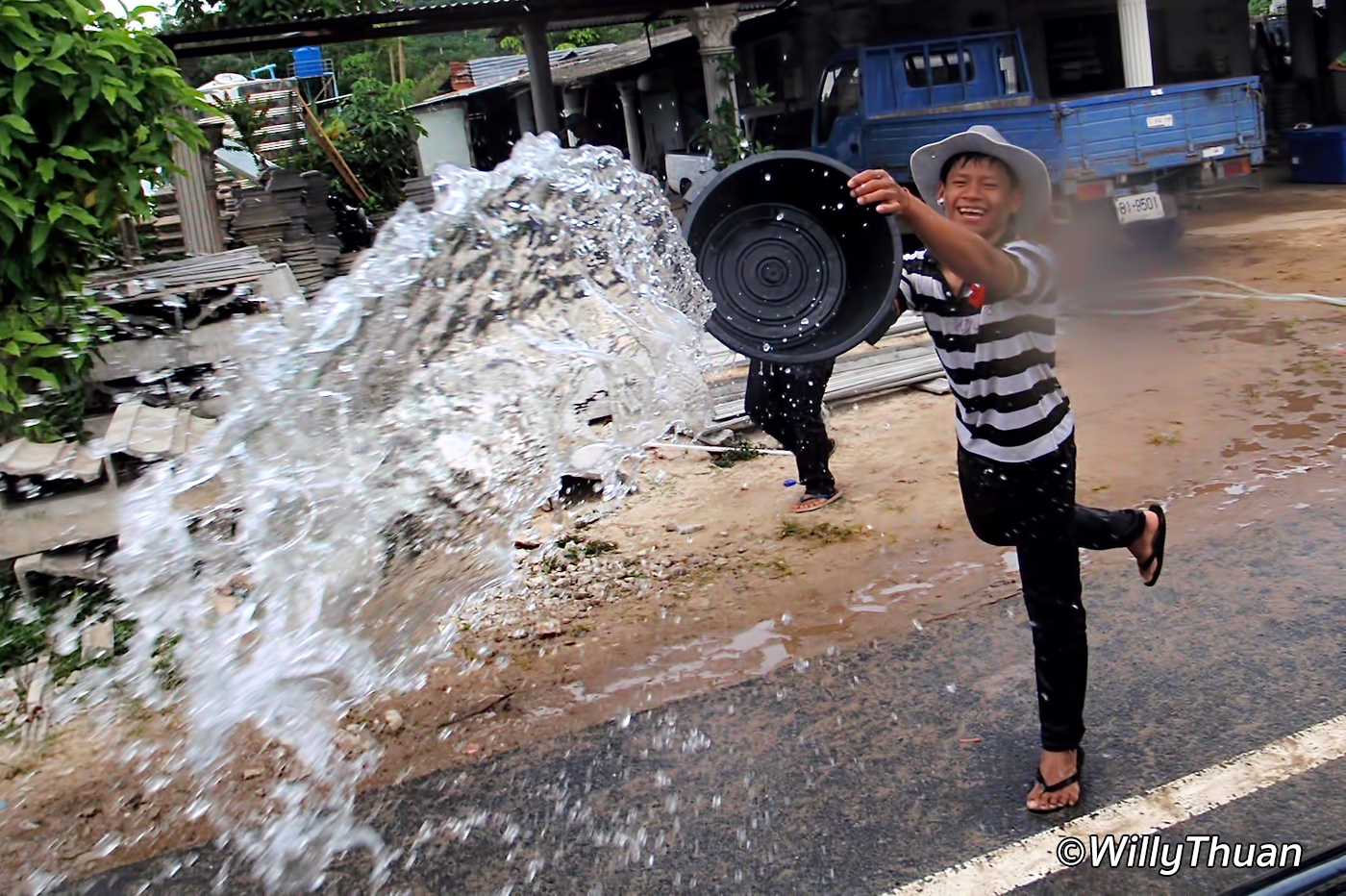
This is a fun question. About two weeks before Songkran, every shop, convenience store, street stall and shopping mall fills up with hundreds of colourful water weapons, each bigger and more ridiculous than the next. The ones with the largest water tanks and manual pumps are popular with newcomers, and they work well enough for a one-on-one street battle. But the pros have a much better weapon, and I can confirm it works. The real veterans go around town on the back of pickup trucks with a barrel of ice water, and all they need is a simple plastic bucket. With a bit of practice, you can throw a full bucket of ice water with surprising accuracy. When that hits you, you feel it. There’s nothing quite like ice water coming at you when you’re not expecting it.
Where are the Best Places to Celebrate in Phuket?
April
No Events
Not all Songkran locations in Phuket are the same. Each area has a different feel, and knowing the difference helps you pick the right one for you.
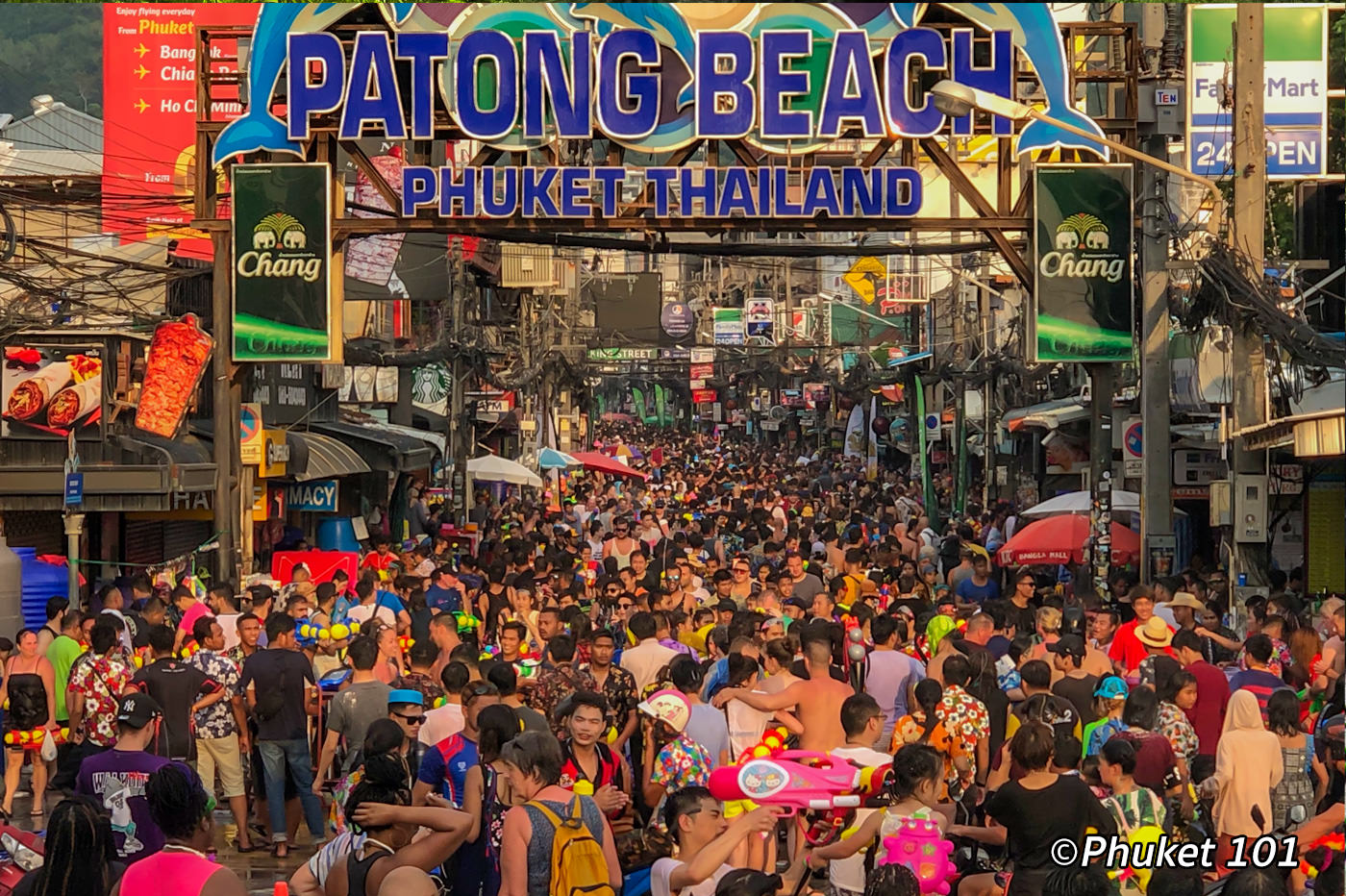
Bangla Road in Patong is the ultimate Songkran war zone. It goes until late at night, the music is loud, and the water never stops. If you want the full experience and don’t mind getting absolutely soaked in a crowd, this is it. But it’s not great for small kids or anyone who doesn’t want to be in a mosh pit of water.
Phuket Town starts gently around 10 am, with water sprinkling around the temples and along the old town streets. By noon it picks up, but it stays relatively family-friendly compared to the beach areas. If you want to see the traditional side of Songkran before the chaos begins, start here in the morning.
Patong, Kata and Karon are where things get serious from early afternoon. The main roads through these towns turn into full water battle zones. Pickup trucks loaded with barrels crawl through traffic while people on the roadside ambush them. The energy is high, the water is cold, and everyone is in it together. Patong is the most intense of the three by far.
Bang Tao and Laguna area in the north of the island is where many long-term residents have moved their Songkran celebrations. It’s still fun, still wet, but more relaxed and easier to get to and from. No nightmare traffic jams. If you’re staying around Bang Tao Beach, you can enjoy Songkran without the battle of getting through Patong.
Soi Ta-iad in Chalong has become one of the most fun Songkran spots in recent years. This is Phuket’s fitness street, packed with gyms and Muay Thai training camps, so it’s full of young farangs who came to Phuket to train and have the time of their lives. A wild water fight in the street is the perfect opportunity to show off those new muscles and fit bodies. The energy is high, everyone is young and up for it, and the atmosphere is completely different from Patong. If you’re staying in this part of the island, don’t miss it.
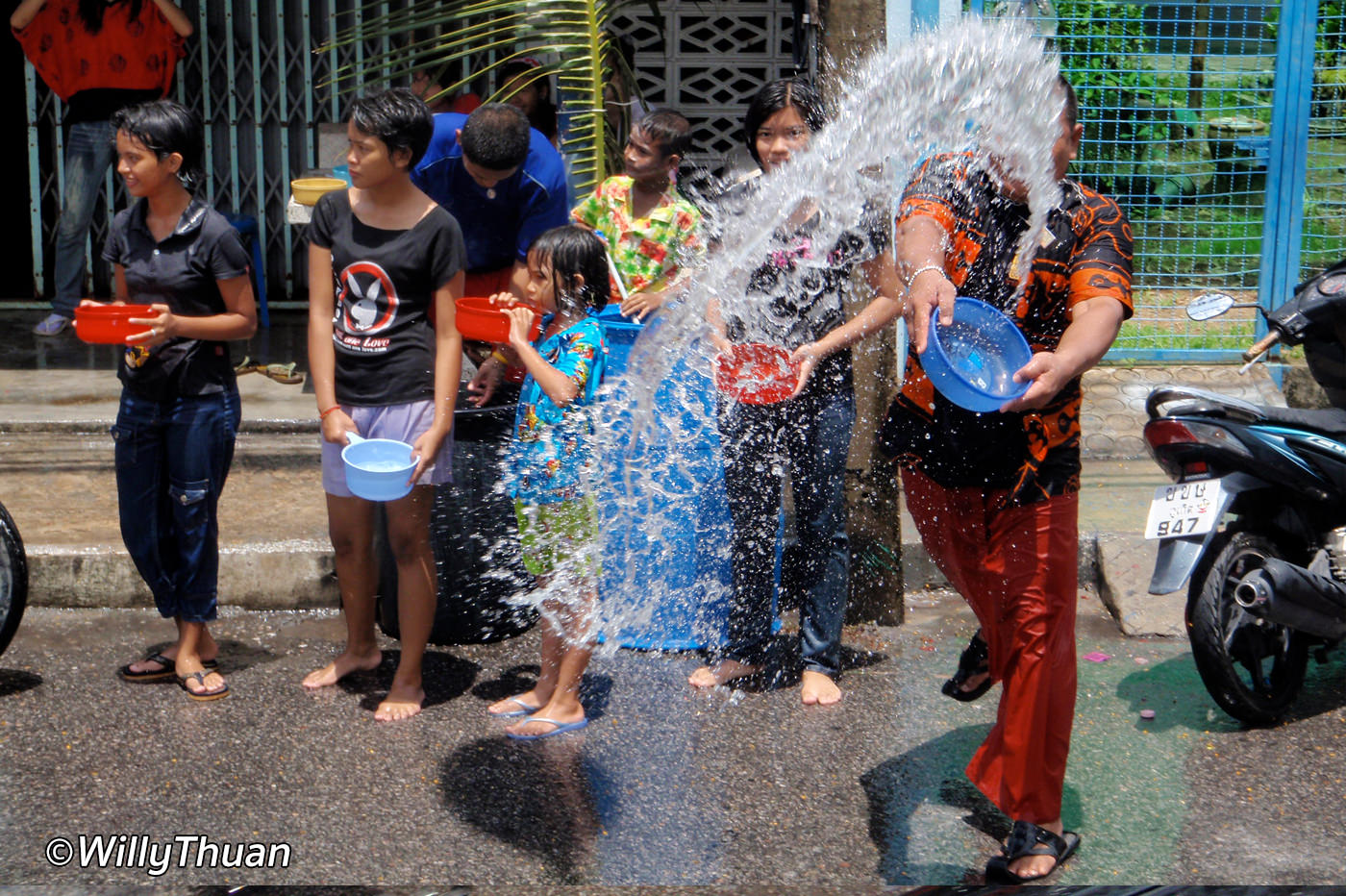
Wherever you go, everyone joins in, kids, teens, adults and tourists, divided into two camps: the ‘Strategically Ambushed‘ who set up by the roadside with plenty of water and ammunition, and the ‘Mobile Units‘ fully loaded at the back of pickup trucks.
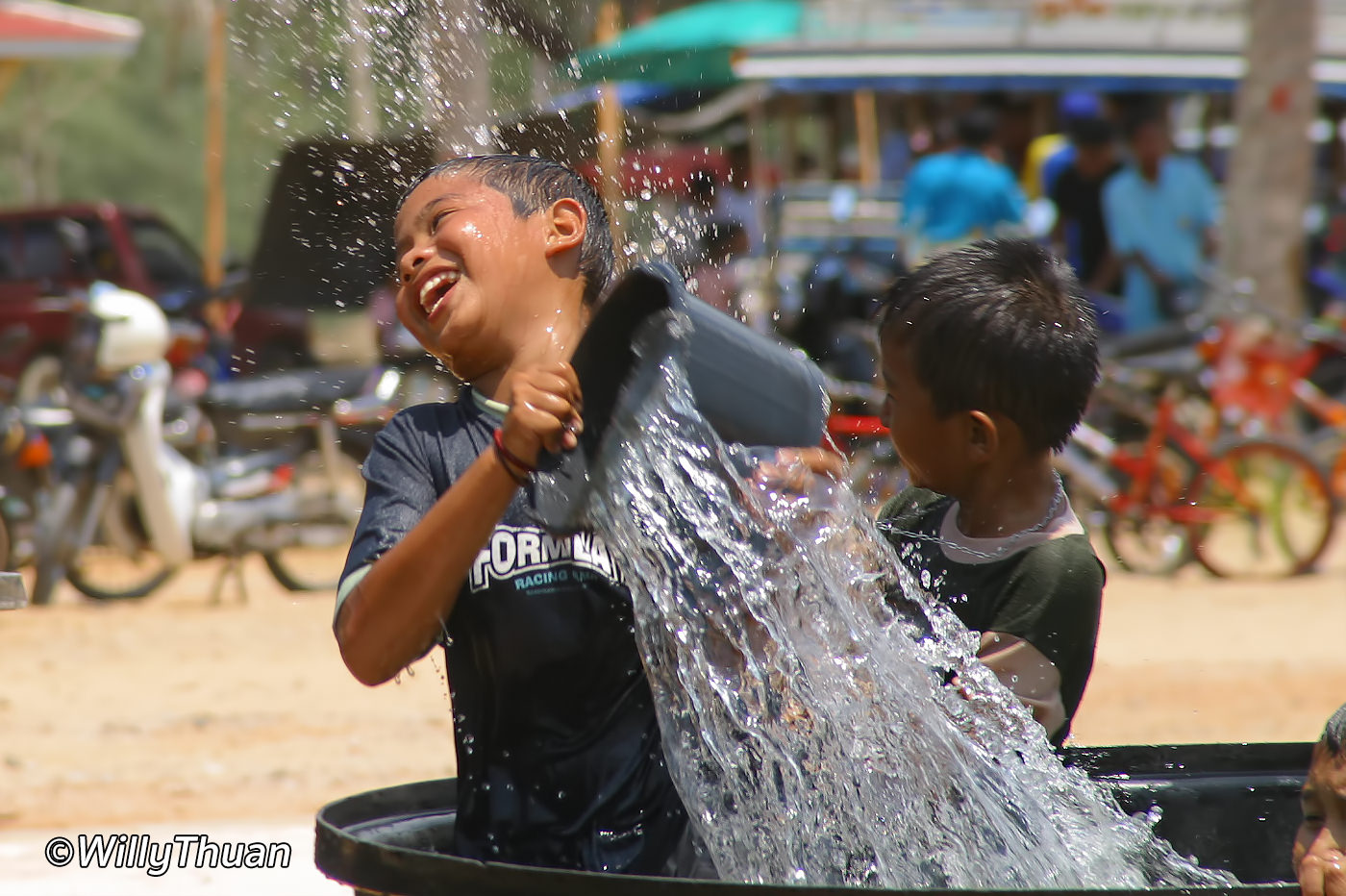
Cops doing traffic and security on the road are always favourite targets, but they’re used to it. Most of them keep a smile all day or even play along.
Survival Tips for Songkran Day
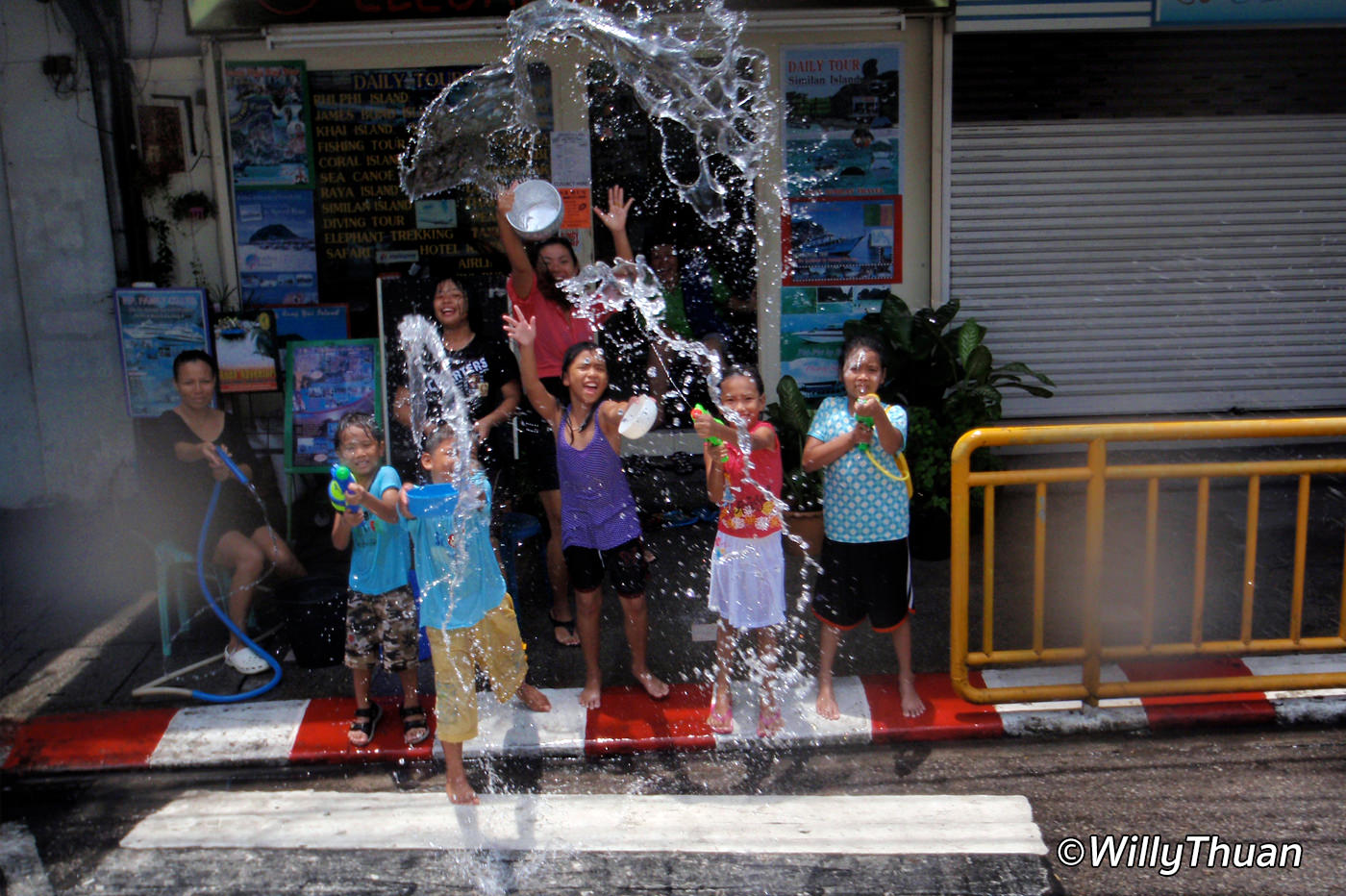 I’ve learned a few things the hard way over 30+ Songkran. Here’s what I’d tell a friend:
- Don’t drive a motorbike if you can avoid it. The roads are slippery, and you will instinctively close your eyes when water hits you in the face. That’s not great when there’s a car in front of you. On top of that, there are plenty of drunk people on the roads, both driving and walking.
- Protect your phone. Most modern phones are water-resistant, but a bucket of ice water thrown directly at your pocket can still cause problems. Get a cheap waterproof bag or waterproof phone pouch. I’ve seen too many people ruin their phones on Songkran day.
- If you need to get to Phuket airport, go early in the morning. Traffic jams in the main towns, especially Patong, can add hours to your journey. I’ve seen people miss flights because they didn’t account for the Songkran traffic.
- Don’t carry anything that isn’t waterproof. Your wallet, passport, and cash will all get wet. A waterproof bag costs almost nothing and saves a lot of trouble.
- Don’t wear expensive clothes. Some people still throw coloured powder or talcum paste, and I’m not sure how easy that is to wash off certain fabrics.
- Wear sunscreen and a cap. This is the one I learned the hard way back in the 90s. You’re wet all day, so you don’t feel the heat on your skin. But the sun is brutal in April. Get a good water-resistant sunscreen and reapply it, because the water washes it off faster than you think. The sunburn hits you the next morning.
- Have fun! Don’t take it too seriously. If you’re going out there, commit to getting completely soaked and enjoy it. If you don’t want to get wet, stay indoors, because there is no middle ground.
Songkran Etiquette: What to Do and What to Avoid
After 30 Songkran festivals in Phuket, I’ve seen tourists do some things that made locals cringe and a few that got people fined. Songkran looks like a free-for-all water fight, but there are unwritten rules and, since a few years back, some very written ones too. Here’s what you need to know.
The Cultural Side Most Tourists Miss
Songkran is actually a religious and family festival. The morning of April 13, Thai families visit temples to perform Song Nam Phra (สรงน้ำพระ), gently pouring scented water over Buddha statues to wash away bad luck from the old year. Later in the day, younger family members perform Rod Nam Dam Hua (รดน้ำดำหัว), pouring scented water over the hands of their parents and grandparents to ask for blessings. The water is caught in a bowl, never spilt, and poured only on the hands or shoulders, never the head or face.
The wild street water fights came later. The government now officially frames Songkran as a UNESCO Intangible Cultural Heritage event (inscribed in December 2023), and the 2026 theme is “Safe Songkran, Alcohol-Free.” That matters because enforcement is heavier this year than in any previous Songkran I remember.
Who NOT to Splash
This is where most tourists make mistakes without realising it.
- Monks: Never. Ever. Full stop. Splashing a monk on the street is deeply disrespectful and goes against the whole point of the festival. The only correct way water and a monk interact during Songkran is when you pour scented water gently over their hands at the temple as a merit-making ritual.
- Elders: Public splashing of older people is rude. If you want to pay respect the traditional way, wait to be invited into the Rod Nam Dam Hua ritual at a family home or temple. Never pour water over an elder’s head or face.
- Babies and very young children: Cold water shock is real, and water in the airways is dangerous. Leave them alone.
- People in work uniforms: Street vendors, security staff, hotel workers, delivery riders. They’re working and can’t fight back without losing their jobs. Off-limits.
- Motorbike riders in motion: This is the most important one. A bucket of water in the face at 40 km/h causes crashes, and motorbikes are involved in more than 85% of Songkran accidents every year. In 2026, the rules treat reckless splashing that causes injury as a criminal matter, not just bad manners.
- Anyone signalling “mai ao”: If you see someone raise their palm, shake their head, or say “mai ao” (ไม่เอา, meaning “don’t want”), respect it instantly. You can also use this yourself if you need to get through a water zone dry for some reason.
- People eating at food stalls: Anyone with food in hand, a hot drink, or their phone out is off-limits.
- Police officers on duty: Traditionally a fun target, but in 2026, with heavier enforcement, only splash them if they’re clearly in a play zone and clearly participating. Officers at checkpoints or directing traffic are off-limits.
What NOT to Use
- High-pressure water guns and pump cannons: Banned nationwide for 2026. Penalties can reach up to 2 years jail or 4,000 baht fine, more if injury results. This includes the big “bazooka” pump cannons you see at markets and any modified water guns.
- Coloured powder, talcum paste, and paint: Banned in most designated Safe Zones. The official reasons are that it blocks drivers’ visibility, causes eye and skin irritation, and has historically been used as a cover for groping and harassment.
- Foam spray: Restricted in many areas because of slip hazards and electrical risks near sound systems. Some private venues still run foam parties under permit, but it’s no longer legal on open streets.
- Ice water: Not illegal, but considered bad form. Ice in barrels gives a real cold shock and can genuinely hurt people with heart conditions. Most veteran locals avoid it and avoid people who use it.
- Dirty water: Phuket eye hospitals issue warnings every year about conjunctivitis and ear infections from people using canal or unclean water. Use clean tap water only, and if you get splashed in the face, don’t rub your eyes.
- Face shots: Even with a regular water gun, aiming at someone’s face is frowned on. Aim for the body.
Cultural Dos That Show Respect
These are the small things that make Thai people smile and genuinely appreciate that you’re making an effort:
- Say “Sawasdee Pee Mai” (สวัสดีปีใหม่), which means “Happy New Year.” It’s pronounced sa-wat-dee pee my. Add krap if you’re a man or ka if you’re a woman. Thai people love hearing tourists try.
- Visit a temple in the morning before the water fights start. Wat Chalong is the biggest in Phuket but any local temple will do. Cover your shoulders, no shorts above the knee inside the temple buildings, and watch what others do before joining any ritual.
- Bathe a Buddha statue if you visit a temple. Pour scented water gently over the shoulder, not the head. This is the original meaning of the festival.
- Be a gracious target. If you’re out on the streets and someone splashes you, smile, say “Sawasdee Pee Mai” back, and don’t get angry. The water is symbolically washing away your bad luck from the old year.
- Use clean water. Thai people notice when tourists do this and appreciate it.
- Remember the meaning. Every splash is a small blessing. Treating Songkran as just a water fight misses the entire point.
One last thing I’ve learned from 30 years here: Songkran veterans are the ones who go hard until about 3 pm, then clean up, put on dry clothes, and join family or friends for a quiet dinner. That’s the rhythm. The all-day, all-night crowd on Bangla Road is mostly tourists and young farangs. The locals know when to stop.
Photos of Songkran Festival


FAQs about Songkran in Phuket
More Events in Phuket