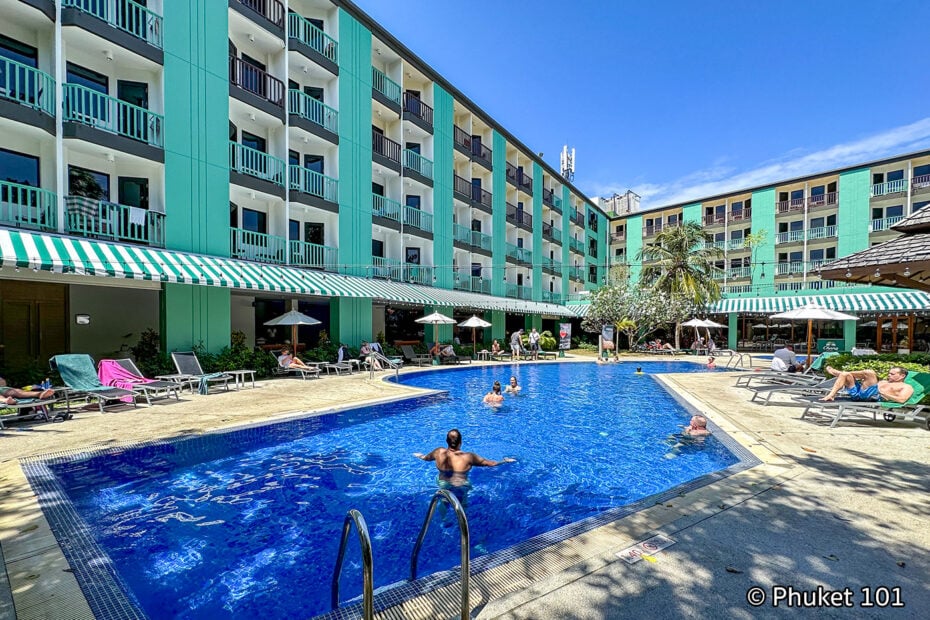


Travelling to Phuket on a Budget

Phuket is not cheap, we all know that, but if you travel on a tight budget, there are still many things you can do to save money in Phuket and have a great time. These tips rely on real and personal experience. For the short story, I arrived in Thailand with little money and no job, so I had to learn how to make the best of each day with a tiny budget, and it was fun! Here is a list of things I learned along the way. They might help you save a few bucks.
A question we got a few times on Phuket 101: Is 1,000 baht enough per day in Phuket? If you are on a tight budget, living on 1,000 baht daily is possible!
- Eat in the street because street food is good and safe
- Rent a small motorbike if you know how to drive safely,
- Enjoy the many free things to do for free on the island: amazing beaches, temples, old Phuket town, and a couple of drinks at night! Some even manage to spend 1,000 baht per day, including cheap accommodation.
Plan a bit early, read this page, and expect to do some waiting: you can’t have it all! (We have a few other pages with more useful info: “10 Things to Do in Phuket With a Small Budget“)
Change money in the street
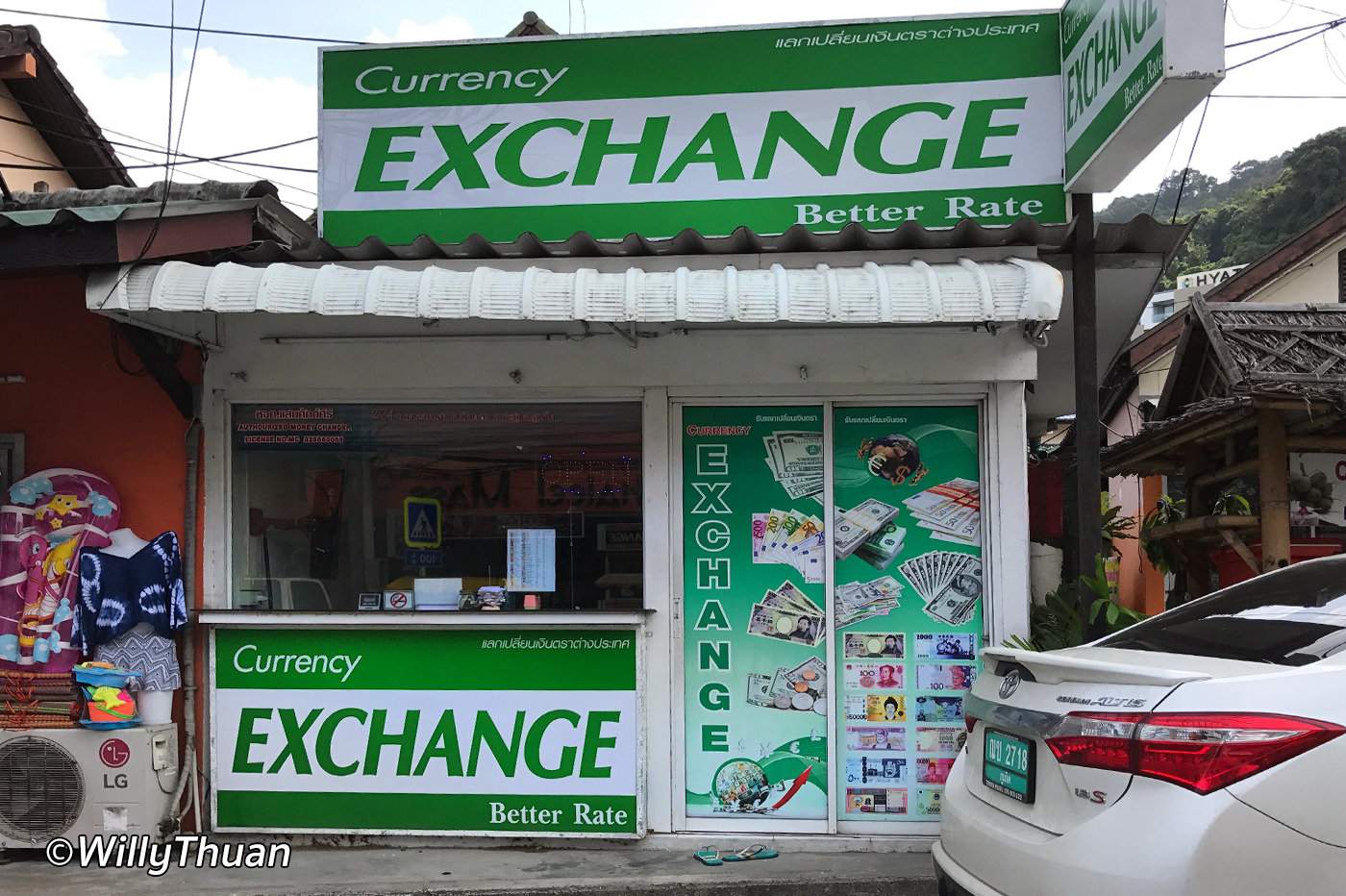
There are many ways to change your money when coming to Phuket, but it can make quite a difference if 10 baht means a lot to you. Changing currency from your home country is probably the worst option, as well as changing at your hotel in Phuket. The rate at Phuket airport is pretty good if you can spot the green ‘SuperRich‘ counter, convenient if you have to pay your taxi meter by cash.
The exchange rate from ATMs is also acceptable and is widely available at the airport and around the island. The cheapest option is to change your cash in the streets. I usually walk to three or four booths and compare the rates on their electronic boards. There is not much difference between them, but they are all cheaper than banks. The booths with no bank name tend to offer the best rates (probably not legal, but that is not your problem). Double-check your change before leaving the booth. Thailand is not known to trick tourists like they often do in Bali money changers, but better to be safe.

Eat street food

It seems obvious, but the food is excellent on Phuket’s streets and much safer than most people think. Picking a street food stall is a bit of a lucky draw, but I have never had a bad experience. I follow the smell and look at the food on the plates of other customers. Once I find a place I like, I tend to come back. Touts will kindly invite you to sit at the many open seafood restaurants along the road as you walk the streets. They are good but not necessarily cheaper than real seafood restaurants.
Banzaan and other night markets are great alternatives to picking your food and having it cooked for a small fee. The streets and markets of Patong are always more expensive than any other market on the island. Note also that you usually don’t bargain for food.
Shop at the local market
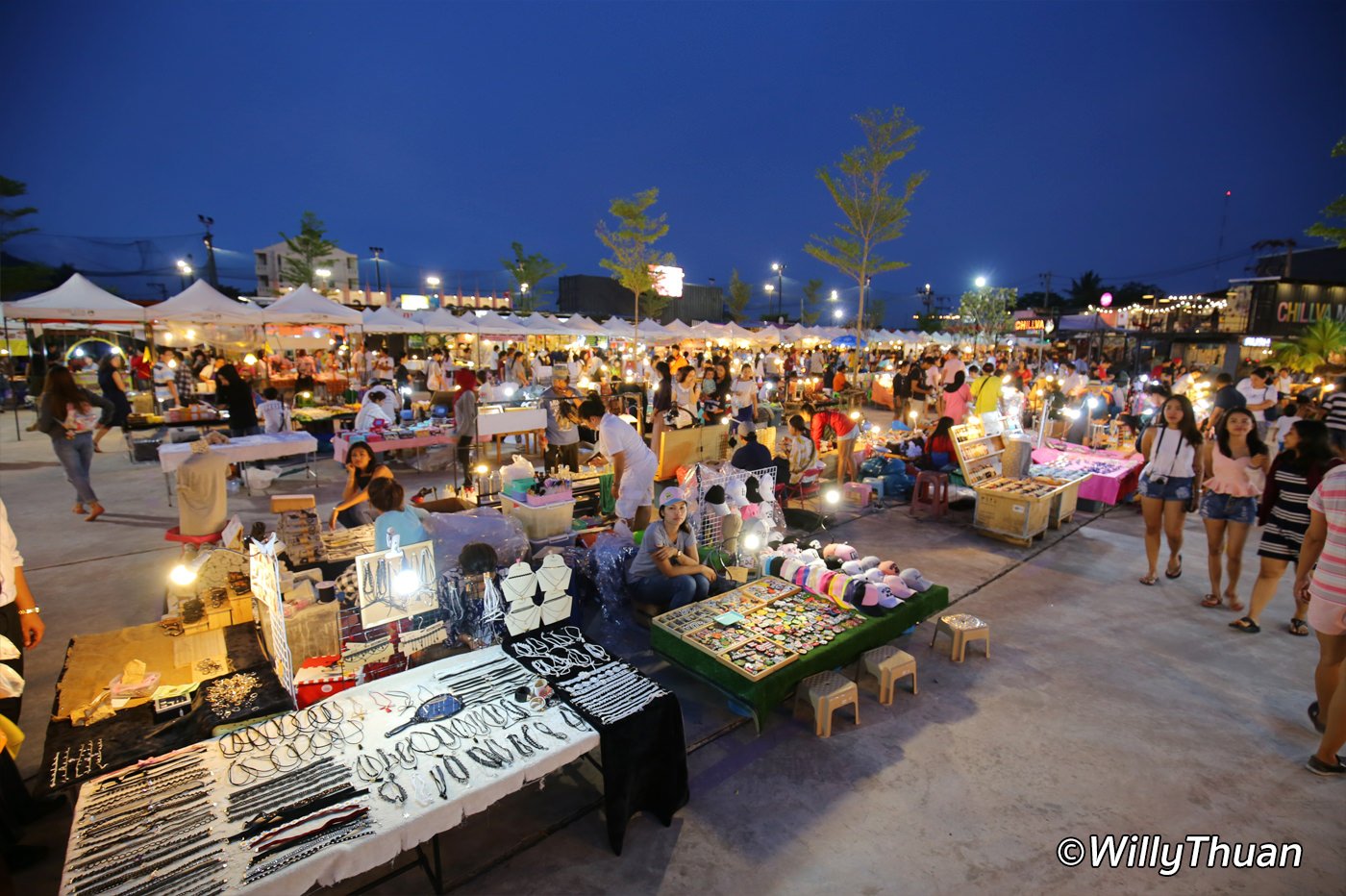
Markets are great for buying all kinds of clothing, bags, accessories, electronics and souvenirs, but get ready to bargain. Note that most of the branded goods you will find on the market are fake, and the quality will probably be on the low end.
Shop at Super Cheap

This is not a well-known tip: If you need to buy something from convenience stores, avoid 7-11 and Family Mart. We did the research, and these are the most expensive places to buy anything! This local brand called ‘Super Cheap’ now looks like a big 7-11 with purple stripes instead of orange and green. It is significantly cheaper, and locals know it very well. Super Cheap started as a huge warehouse and became hugely popular with locals. Those convenience stores are now widely available around the island.
Use the Local Buses

There are several bus options in Phuket, and they keep getting better.
The Smart Bus is the most useful for visitors. Route 1 goes from Phuket Airport all the way to Rawai, stopping at every major beach along the west coast, for a flat fare of 100 baht. Route 2 connects Phuket Town to Patong for 50 baht. Buses run roughly every hour, and you can pay by cash, QR code or Rabbit card. Children under 7 ride free.
The Blue Buses (songthaews) go from the central market on Ranong Road in Phuket Town to specific beaches. Fares range from 30 to 50 baht, and departures are roughly every 30 minutes from about 6 am to 6 pm. Buses don’t go between beaches, only from Phuket Town and back:
- Phuket Town ⇄ Patong (about 30 baht)
- Phuket Town ⇄ Karon, Kata and Kata Noi (about 30 baht)
- Phuket Town ⇄ Kamala, Surin and Bang Tao (40 to 50 baht)
- Phuket Town ⇄ Rawai and Nai Harn (about 35 baht)
- Phuket Town ⇄ Bang Rong Pier (about 50 baht)
The old pink buses around Phuket Town have been replaced by a fleet of 24 air-conditioned EV buses running three routes, mostly useful for getting around town, to Chalong or to Central Phuket mall. Fares are 15 to 40 baht, and students, monks and the elderly ride free.
If you are exploring Old Phuket Town, the Dragon Line is a small EV shuttle that loops around the historic streets with about 16 stops. It runs from 11 am to 10 pm. The normal fare is 20 baht.
Practice your bargaining

If you shop in the streets or at the market, you need to bargain; most of us are not familiar with this practice, and we tend to be shy. In most tourist areas, vendors are well aware of that and might try to take advantage by raising the price further. Bargaining is not easy for beginners, but remember that the sellers are used to it, so you don’t have to be shy when making a counteroffer.
If you are in Patong, bargain harder. By offering 50%, you should be able to knock down 30% of the asking price. However, Phuket doesn’t expect a significant discount in more remote areas. Remember that you don’t bargain in restaurants, convenience stores and malls! If you are a walk-in guest in a hotel, you can bargain for the cost of a room night.
Know your local brands

When every baht counts, you can go ‘local’. Food is easy to find in the streets and markets, but you can also get cheaper beers (Cheers, Red Horse, Archa), and local Cokes aren’t bad (Est, Big Cola). We urge you not to smoke, but domestic cigarettes are much cheaper (Krong Thip, SMS, Wonder). In the long run, your throat might become painful!
Then you have the local alcohols that are alright but tend to give you a massive hangover the next day: Sang Som and the like. Those are often used in those famous ‘Buckets’, which are cheap mixes of local alcohol, soft drinks and Red Bull you can buy cheaply in party places. Also known to give notorious hangovers. The famous Mekhong Whisky, which used to be so popular, is trying to reposition itself as a ‘luxury Thai Whisky’ and has become harder to find. What they call Thai whiskey is a spiced rum.
Book your hotel early and do your homework
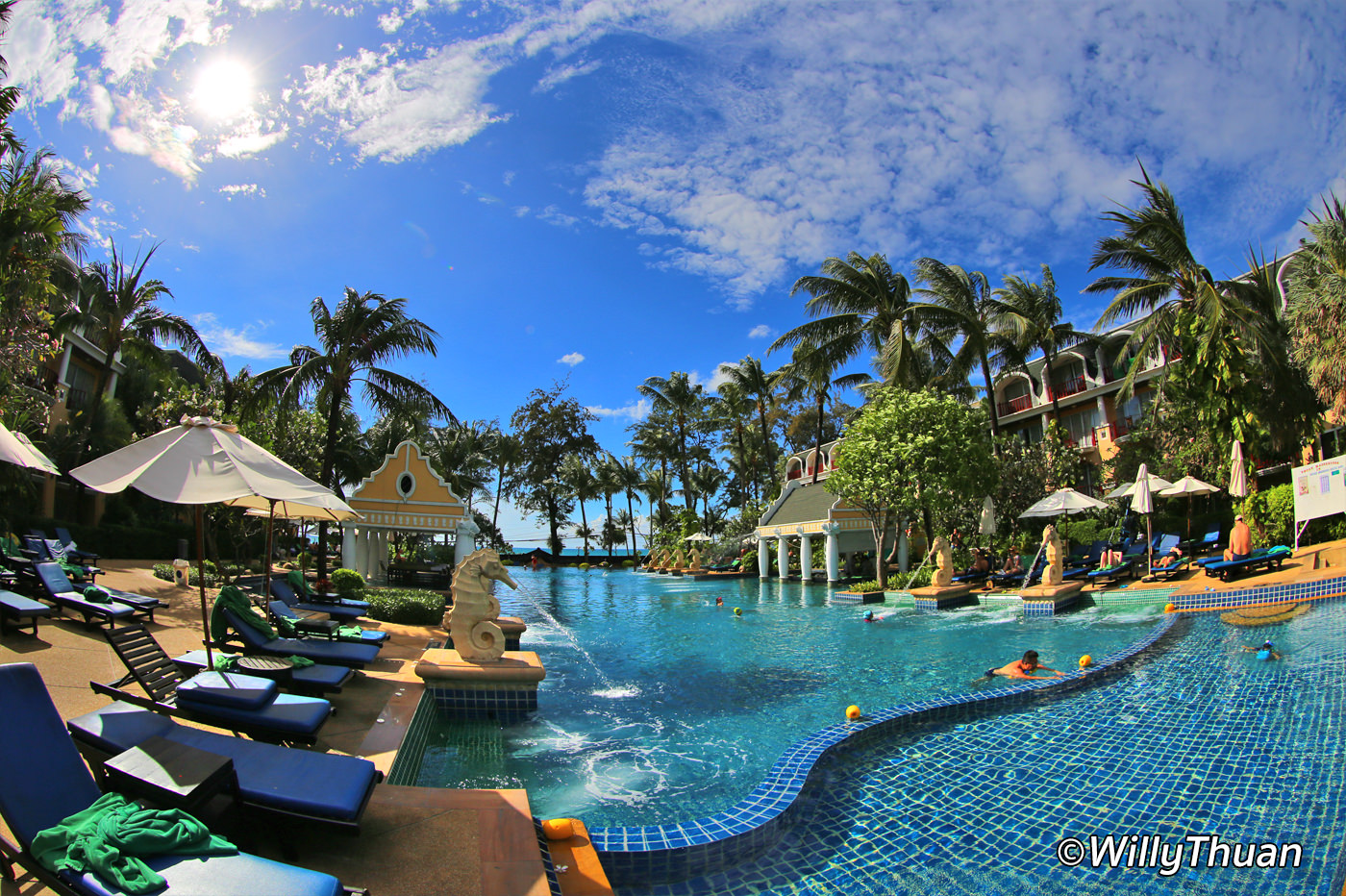
You probably read this on all the websites selling hotel rooms and in your emails, but this is true. Booking early will often get you better rates, as prices tend to increase when hotel occupancy increases. If you are really on a tight budget and you are 100% sure of your travel dates, the cheapest option will always be the non-refundable. Also, rooms become difficult to find if you plan to come for the high season (which wouldn’t be a good idea if you have a tight budget anyway). If you are on a tight budget, consider staying in a hostel; some are good.
Stay on a quiet beach

No need for a long explanation here: Everything is more expensive on most tourist beaches. Patong Beach is probably the most expensive, followed by Kata beach and Karon. Kamala Beach is a good compromise. During the high season, stay away from south Phuket!
Travel during the low season

Hotels are significantly cheaper during the low season, but the overall cost of your holiday can get considerably lower as prices are lower, and you can bargain better. Most businesses are running low, so they need income, allowing you to be tougher with your counteroffer. Just to be on the safe side, try to book a hotel with a beautiful pool, as the sea can be rough: when the flags are red, respect them and stay out of the sea.
Readers always ask about the weather during the low season. We wrote a few useful pages here: What to Expect From Rainy Season, What to Do When it Rains, and Phuket weather month by month.
Skip the hotel breakfast!
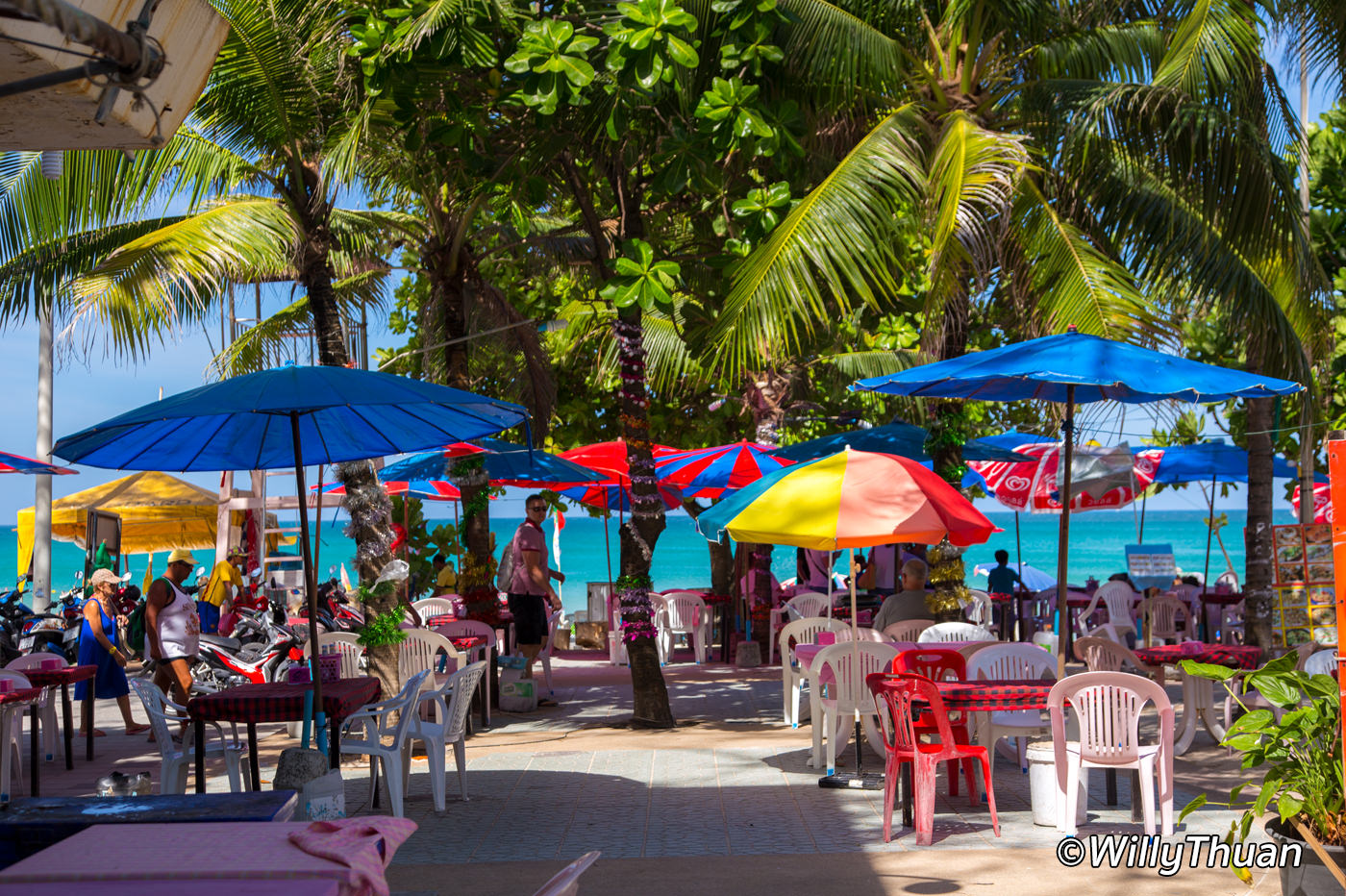
Unless you are the kind of person who can’t do the first step without having breakfast, better skip the hotel buffet. Even in a cheap hotel, it’s usually overpriced. Enjoy great local foods in the streets or go to the nearest food court. A few near the beach in Patong, Karon, Kamala and Bangtao serve a good value breakfast.
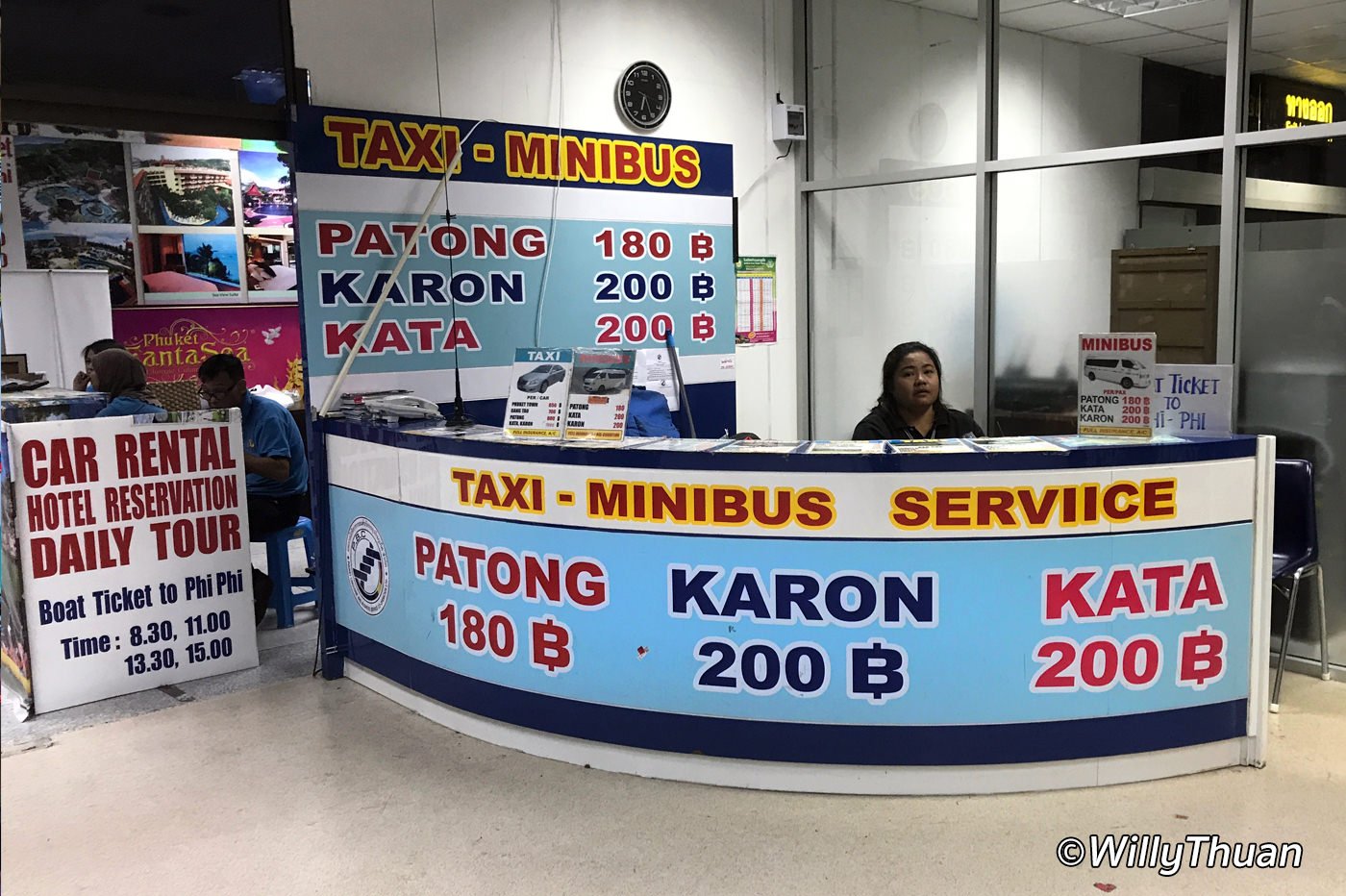
It’s about 180 baht per person to Patong and around 200 baht to Karon or Kata. You buy your ticket at the shared minibus counters in the arrivals hall, cash only. On the other hand, it will take longer to reach your hotel as you will have to wait for the van to fill up, which can mean 30 to 60 minutes of waiting.
Having a lot of time is almost a requirement when travelling on a budget, and this applies to everything you do if you want to cut costs. Yes, there is also a very cheap local bus, but it would only take you to Phuket Town, from where you would have to get another local bus to your destination, then an overpriced tuk-tuk to your hotel. Not worth the waste of time.
Rent a bike ( but wisely)
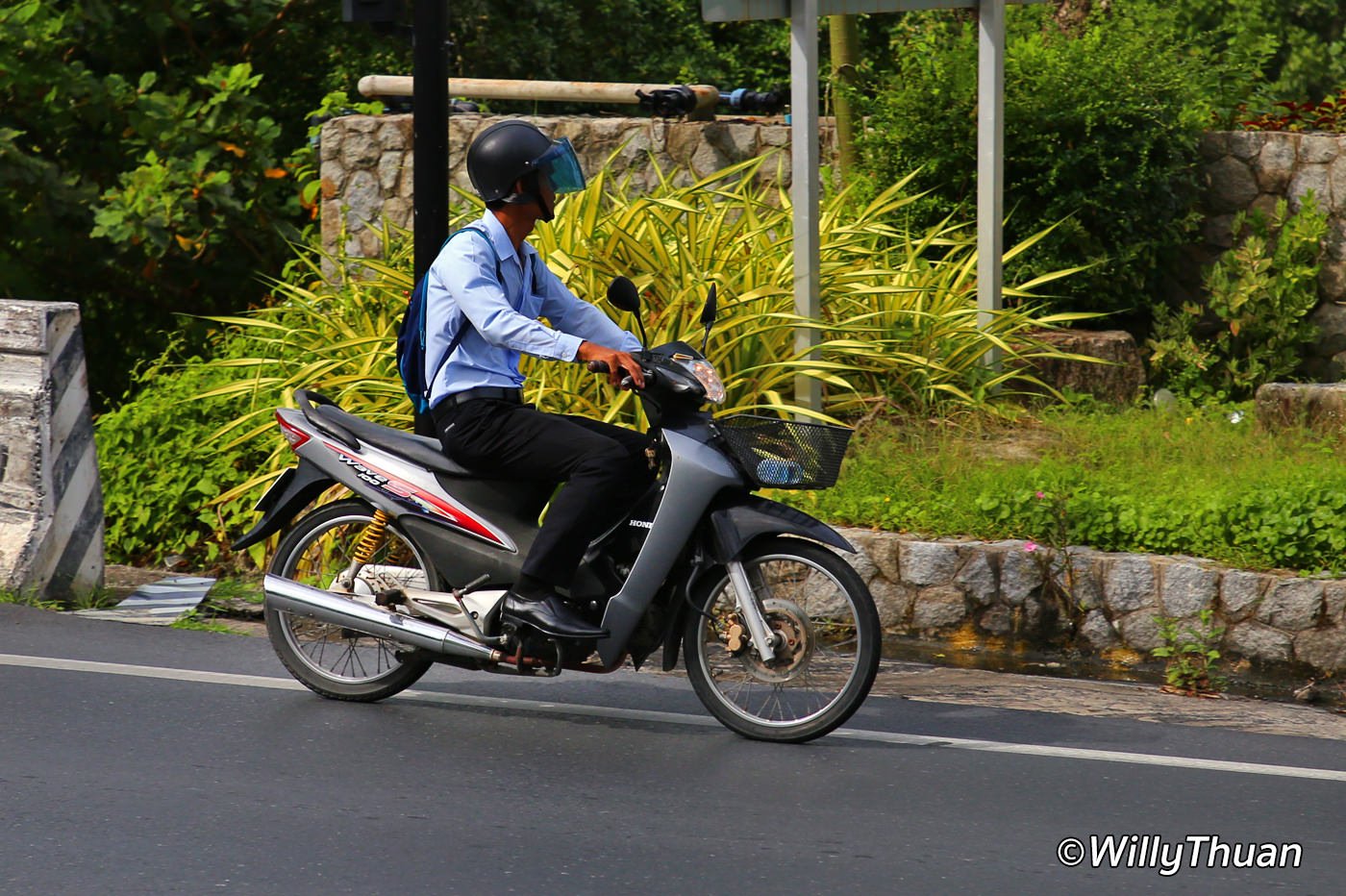
Renting a bike is the best and cheapest way to get around, as Tuk-Tuks are always too expensive. However, you need to know about a few things: have an international driving license and wear your helmet. Police controls are not unusual, and the fine of 500 baht will hurt your budget. Renting a bike can also lead to very costly accidents, so in addition to driving carefully, having an international driving license is recommended. Read here to know more about renting a bike in Phuket and here about “The Art of Driving in Phuket” and “14 Lifesaving Tips to Survive Driving a Bike in Phuket“.
More about Travelling to Phuket on a Budget