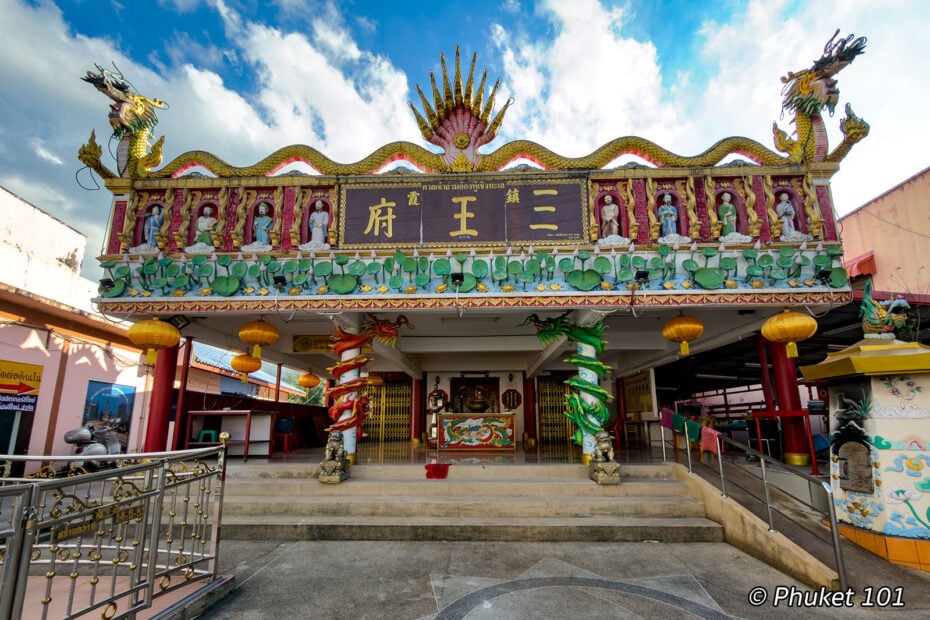
San Chao Sam Ong Hu
San Chao Sam Ong Hu is one of the oldest Chinese shrines in Phuket, founded in 1901 by the local Hokkien community in Cherngtalay, about 15 minutes from Bang Tao Beach.

The Phuket Vegetarian Festival is one of the island’s most important annual events, rooted in Chinese-Thai spiritual traditions and strict abstinence from meat.
Vegetarian Festival in Phuket
During the festival, Chinese shrines such as Put Jaw in Phuket Town become the focus of ceremonies, processions, and rituals honouring deities like Guan Yin. Many locals follow a vegan-style diet, wear white, and join street processions, while visitors come to witness the dramatic displays of faith and experience a very different side of Phuket.
San Chao Sam Ong Hu is one of the oldest Chinese shrines in Phuket, founded in 1901 by the local Hokkien community in Cherngtalay, about 15 minutes from Bang Tao Beach.
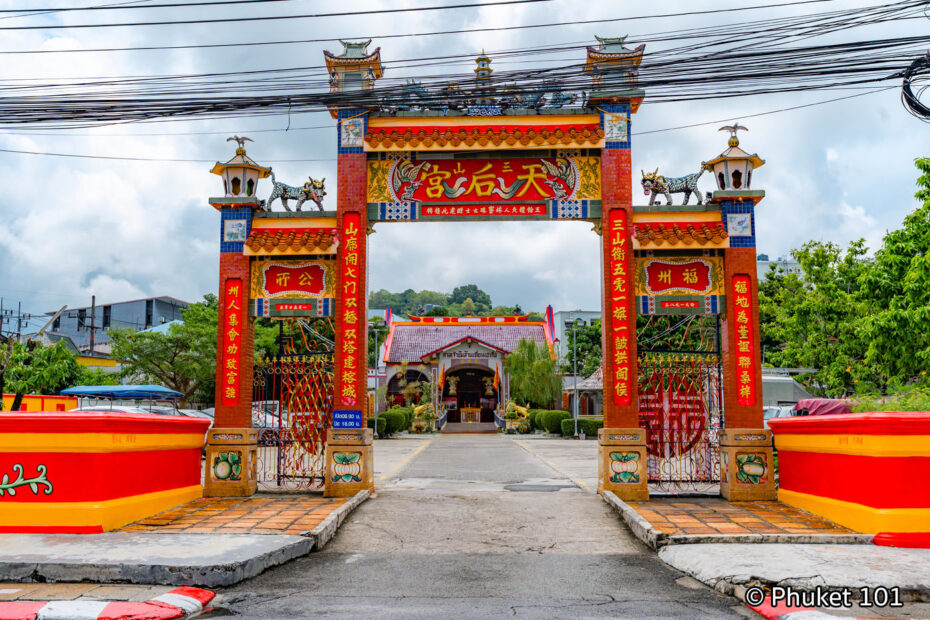
San Chao Mae Yanang Shrine, stands on Krabi Road in Phuket Town. A Chinese migrant founded the temple in 1853 during Phuket’s tin-mining boom, when many Chinese families settled on the island and brought their beliefs and rituals with them.
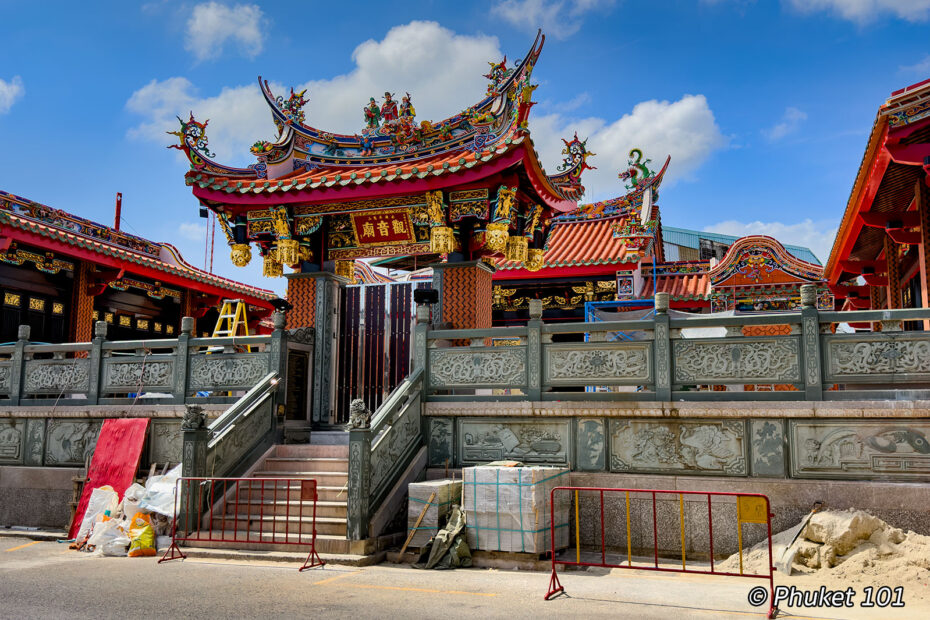
Put Jaw Shrine is one of the oldest Chinese shrines in Phuket, located in Phuket Town. It was originally built more than 200 years ago and is dedicated to the Chinese goddess Guan Yin, the goddess of mercy. The shrine plays a significant role in the spiritual life of the local Chinese-Thai community.
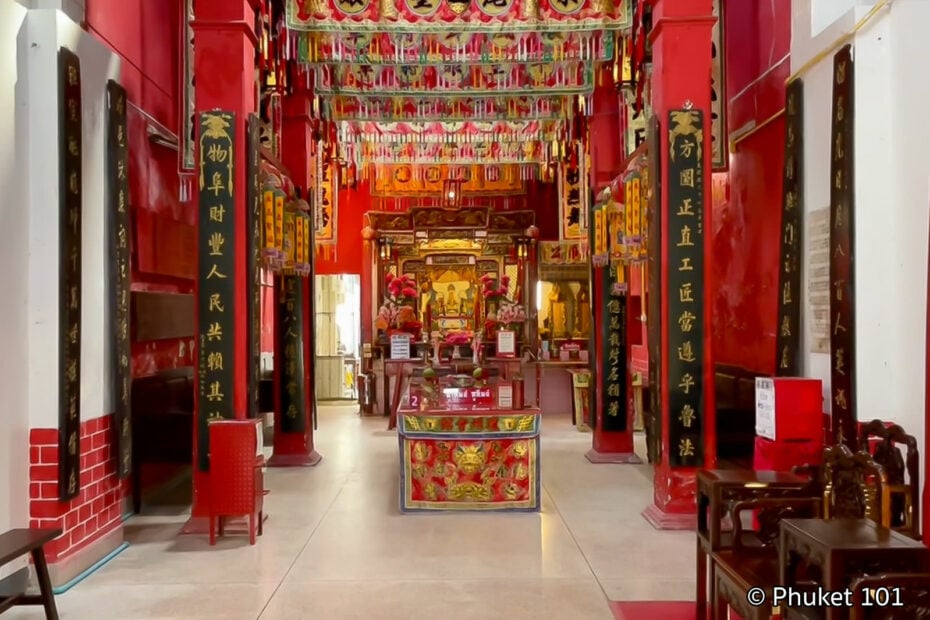
Located on the popular Thalang Road in the heart of Phuket Old Town, the Hainan Shrine is more than just a place of worship. Built in 1910, this beautiful shrine has been a cultural and spiritual centre for over a century, especially for the Hainanese community in Phuket.
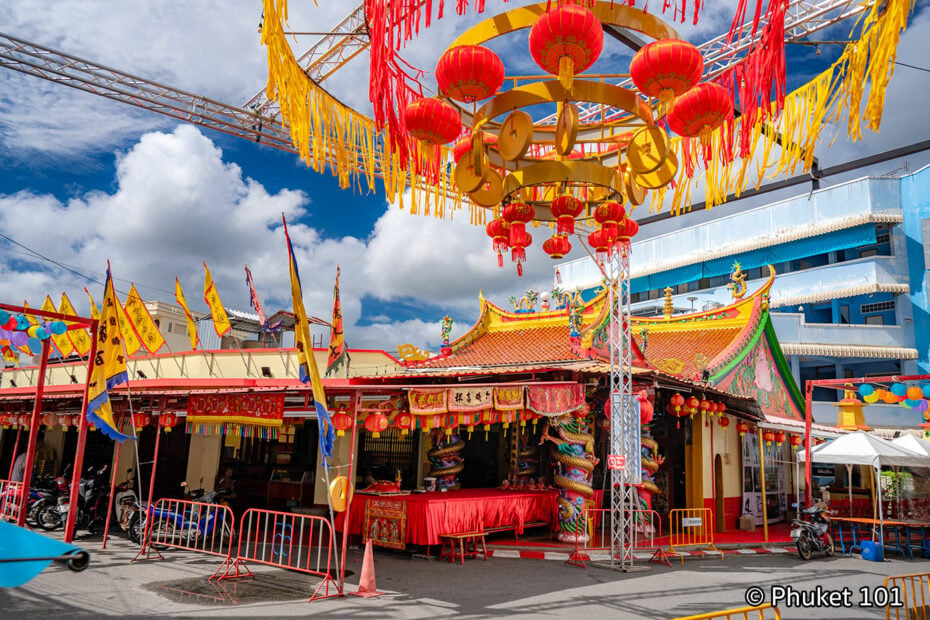
Adorned with intricate artwork depicting sins and punishments, Sheng Tek Beo in Phuket Town is a shrine that plays a key role in the Por Tor festival, or Hungry Ghost Festival, which occurs every year around September. The central celebrations occur at this shrine dedicated to the Por Tor god, or king of hell.

Sam Sae Chu Hut Chinese Shrine is a modest and discreet Chinese shrine located near the intersection of Khaw Sim Bee Road and Mae Luan Road, on the way up to Khao Rang Hill in Phuket Town; opened in May 2002.
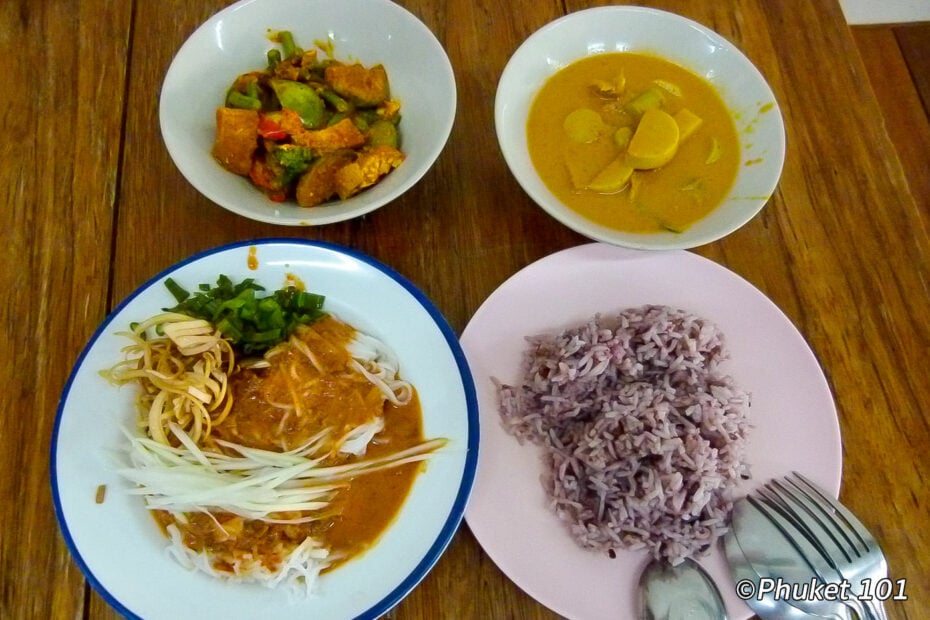
Loukthor Vegetarian Restaurant, located near Jui Tui Shrine in Phuket Town, is particularly popular during the famous Phuket Vegetarian Festival. There are a few vegan and vegetarian restaurants on that same Ranong Road, but this one is excellent. They offer cook-to-order dishes such as fried rice and stir-fried noodles.

Tha Rua Shrine is one of the oldest Chinese shrines in Phuket, found in Thalang District on Thepkasattri Road about 800m south of the Heroines’ Monument. It’s an important site during the annual Phuket Vegetarian Festival, when thousands of devotees come to hold ceremonies and eat vegetarian food during the event’s nine days.
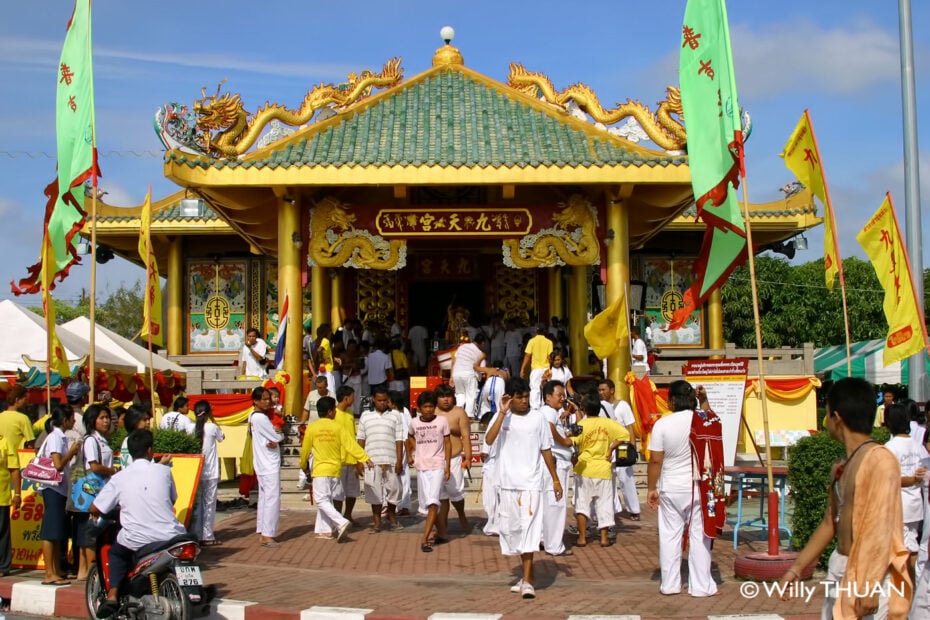
Kio Thian Keng Shrine is a colourful Chinese shrine that is set on the seashore inside Saphan Hin public park in Phuket Town. It’s a place of worship for the local Chinese-Thai community, and it plays an important role as the site of the final farewell to the gods during the annual Phuket Vegetarian Festival.

Hok Nguan Kong Shrine is a Chinese temple near the Surin Clock Circle in Phuket Town, founded more than 80 years ago by the Chinese-Thai community in Phuket. Hok Nguan Kong Shrine’s design features many traditional Chinese motifs, including columns wrapped with large dragon images, wall murals with tigers, and bright red and yellow colours throughout

Lai Thu Tao Bo Keng is one of the oldest Chinese shrines in Phuket, and many believe it was the birthplace of the Phuket Vegetarian Festival nearly two centuries ago, 1825 to be precise. The shrine is located in the subdistrict of Kathu in the island’s interior, between Phuket Town and Patong Beach.

Bang Neow Shrine in Phuket Town is one of Phuket’s oldest and most revered Chinese shrines. It’s one of the main shrines taking part in the annual Phuket Vegetarian Festival It is a place of worship and merit-making activity for the local Chinese-Thai community throughout the year.

Lim Hu Tai Su is a Chinese Taoist shrine on the north side of Phuket Town, also known as Sam Kong Shrine, for the neighbourhood in which it’s found. Though not as well known by visitors as larger Chinese shrines like Jui Tui Shrine in Phuket’s Old Town area, Sam Kong Shrine is a revered place of worship for the local community. It’s become a key part of the Phuket Vegetarian Festival when it hosts several ceremonies and a procession during the annual 9-day event.

Jui Tui Shrine (Kew Ong) is one of the oldest and most important on Phuket Island. It plays a significant role during the famous Phuket Vegetarian Festival, usually held in October and November. The festival dates use the Lunar Calendar, and the festival’s exact dates change every year.

The Phuket Vegetarian Festival runs during the ninth lunar month, marking one of Thailand’s most spectacular cultural celebrations. This nine-day Taoist festival transforms Phuket into a spiritual sanctuary where thousands of devotees in white clothing honour the Nine Emperor Gods through dramatic processions, firewalking ceremonies, and extreme body piercing rituals
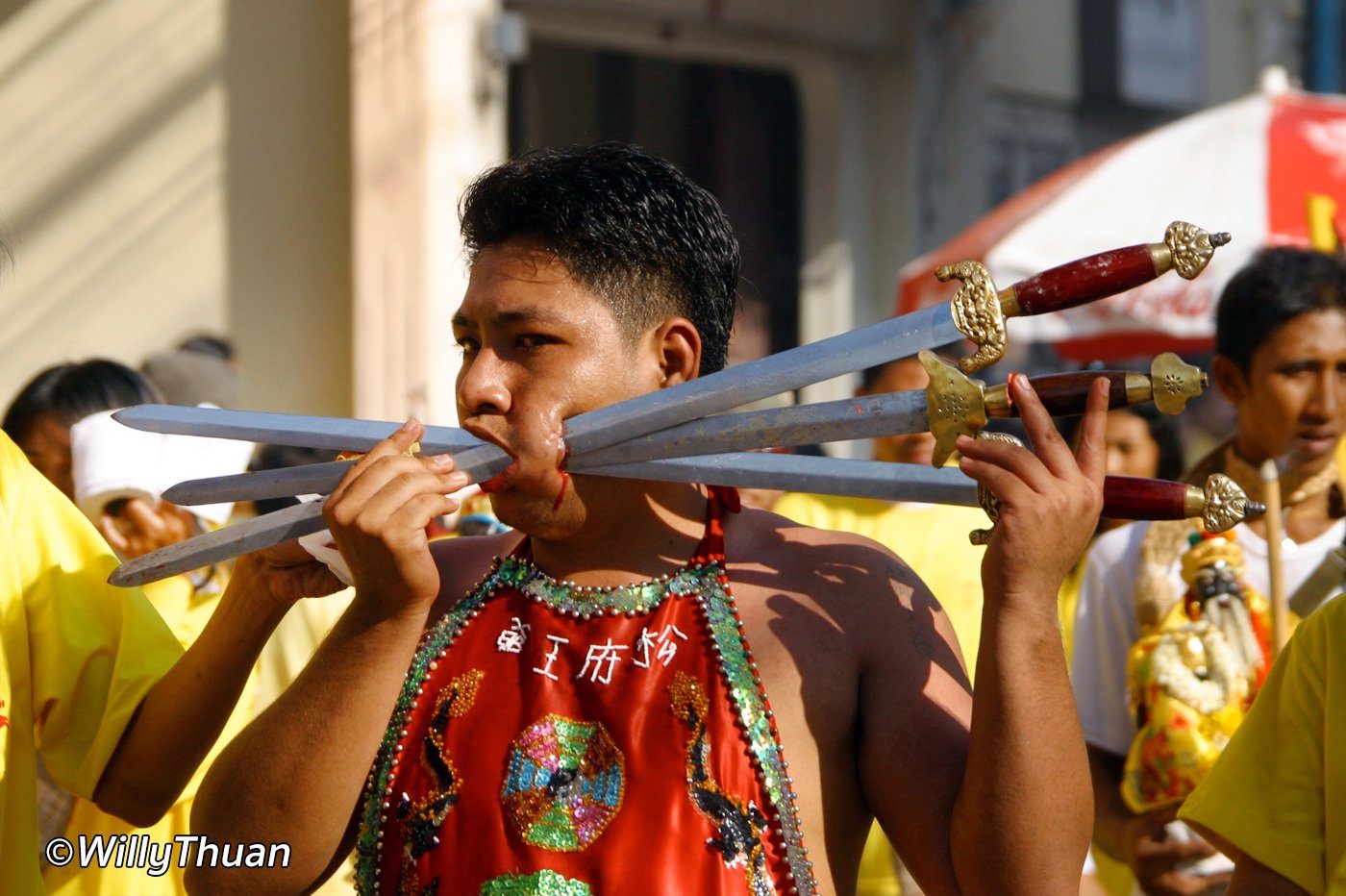
In case you are coming to Phuket in October, here is a Phuket Vegetarian Festival Schedule and Calendar of each day’s event, in which temple each event will occur, and when and where the famous processions will happen. Remember to bring a mask for the smoke and ear protection as the firecrackers sound will leave you deaf for a day.

The Shrine of the Serene Light is a beautifully decorated Chinese Temple on Phang Nga Road, one of the most famous streets of Phuket Town. It used to be ‘the little hidden Chinese temple’ tucked away at the end of a small path, right under your nose.

There are quite a few Chinese shrines in Phuket, and each has its own characteristics and unique features, which always offer excellent photo opportunities. The large ones are very popular during the Chinese New Year in February or the Phuket Vegetarian Festival in October.