

A House Museum in Phuket Town

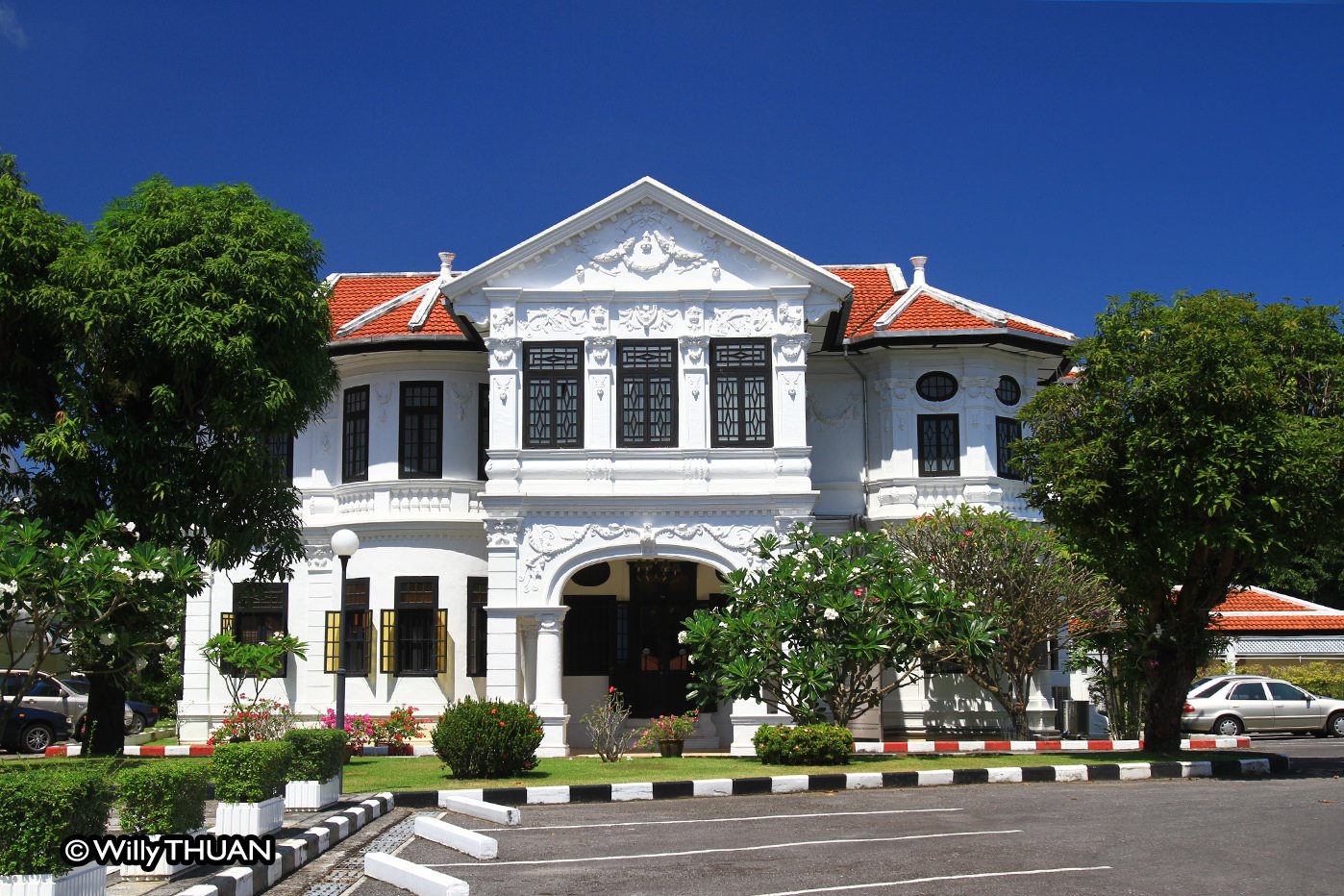
Chinpracha House (Baan Chinpracha) is one of the most beautiful mansions in Phuket, and it is spread all around Phuket Town. Some of these superb Sino-Portuguese style houses are abandoned and in bad condition; some have been renovated, but Chinpracha House is somehow unique and in its original condition. It can be visited for 150 baht and has a certain old-fashioned charm and atmosphere that may be worth looking at. Don’t expect a big display, as it is somewhat halfway between a museum and a collection of personal items gathered over time.
History
The mansion was constructed around 1903 during King Rama V’s reign by Phrapitak Chinpracha (Tan Ma Siang), son of Hokkien Chinese immigrant Luang Bamrung Chin Prathet, who arrived in Thailand in 1854 for tin mining operations.
Born in Phuket in 1883, Phrapitak built this residence at age 20, creating the first “Ang Mor Lao” mansion in Phuket, a local term meaning “house of the red-headed people”. The Sino-Portuguese architecture emerged from Peranakan culture, blending Chinese and Malay traditions.
This European-influenced design reflected Phuket’s position along major maritime trade routes, connecting it closer to Western colonial territories than Bangkok. Wealthy Chinese merchants adopted Western architectural styles to appear as equals when trading with Europeans, while maintaining traditional Chinese feng shui principles in interior layouts for prosperity and natural cooling.
Baan Chinpracha has appeared in several notable film and television productions. Most famously, the mansion was used as a key filming location in Oliver Stone’s 1993 Vietnam War movie Heaven and Earth, where it served as the setting for Saigon scenes and featured prominently in the story’s dramatic sequences. In addition to its Hollywood connection, Baan Chinpracha was featured in the acclaimed American TV series The Young Indiana Jones Chronicles, specifically in the episode and TV movie “The Adventures of Young Indiana Jones: Treasure of the Peacock’s Eye” (1992) with multiple scenes filmed inside the historic house and around Phuket Town.
The lower floor
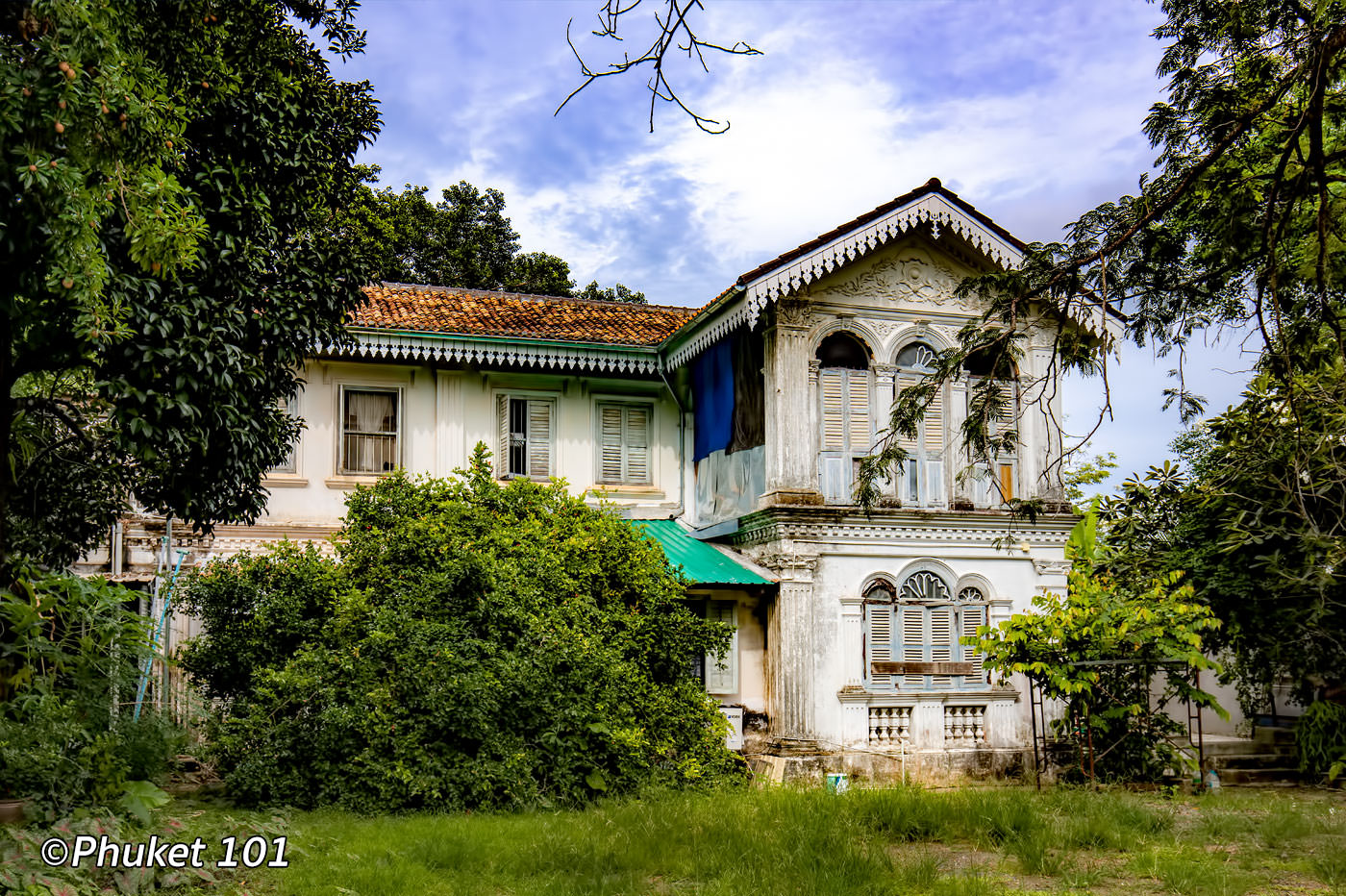
Only the house’s lower floor is open to the public, as the second floor cannot be visited. The owners still occupy it, and if you walk to the back of the house, you will notice that the upper floor is in a rather bad condition (see photo above)
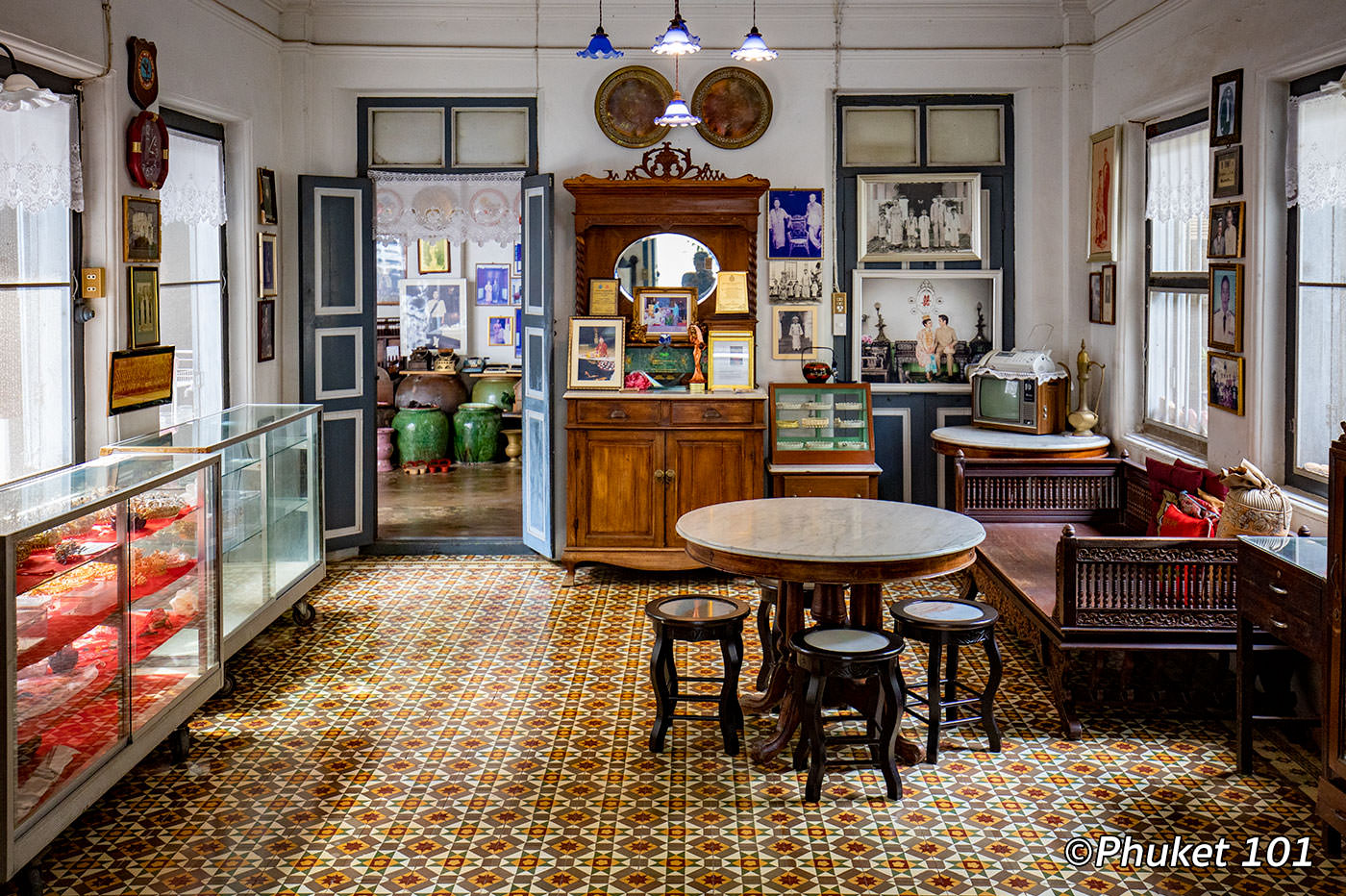
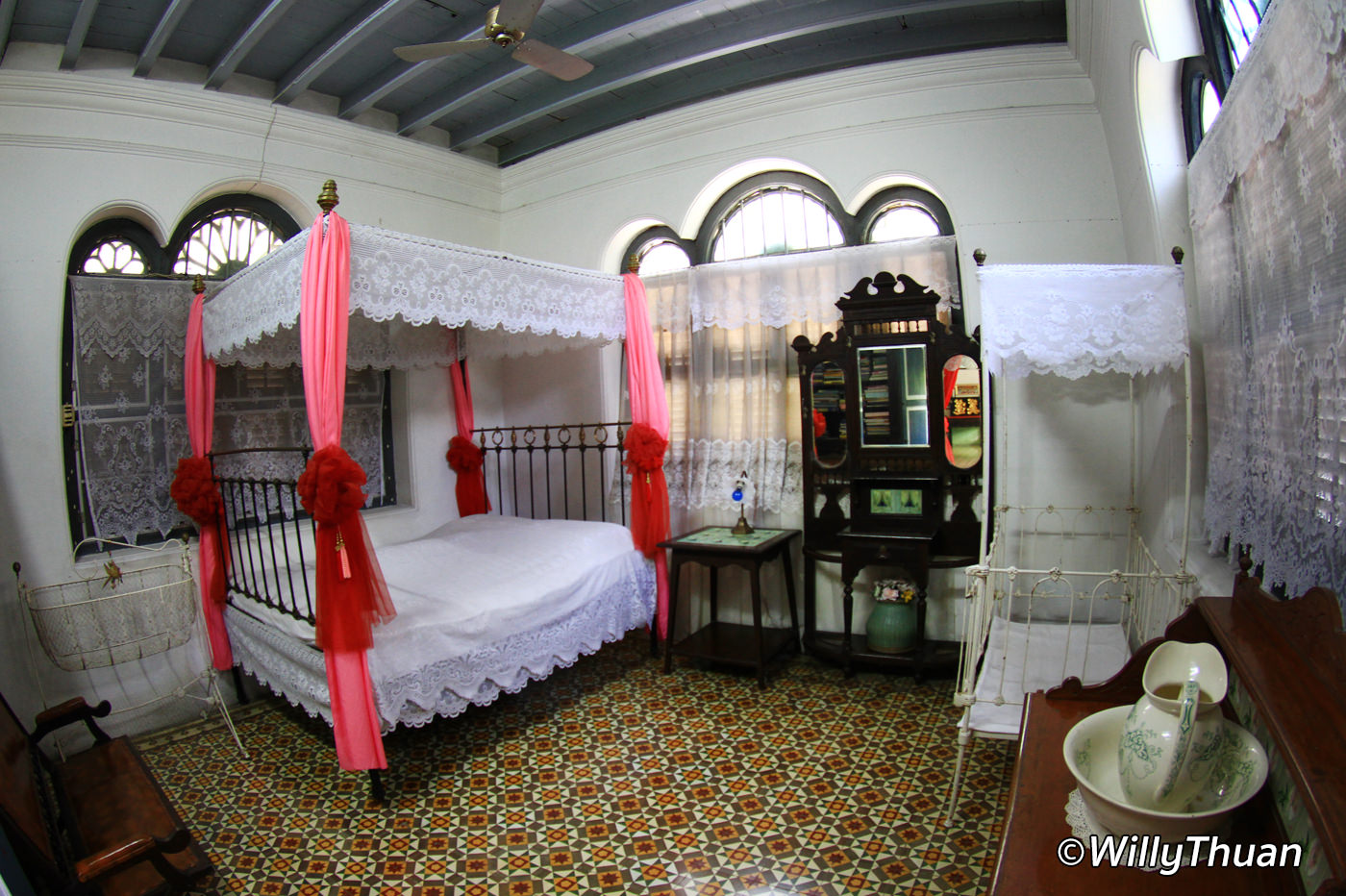
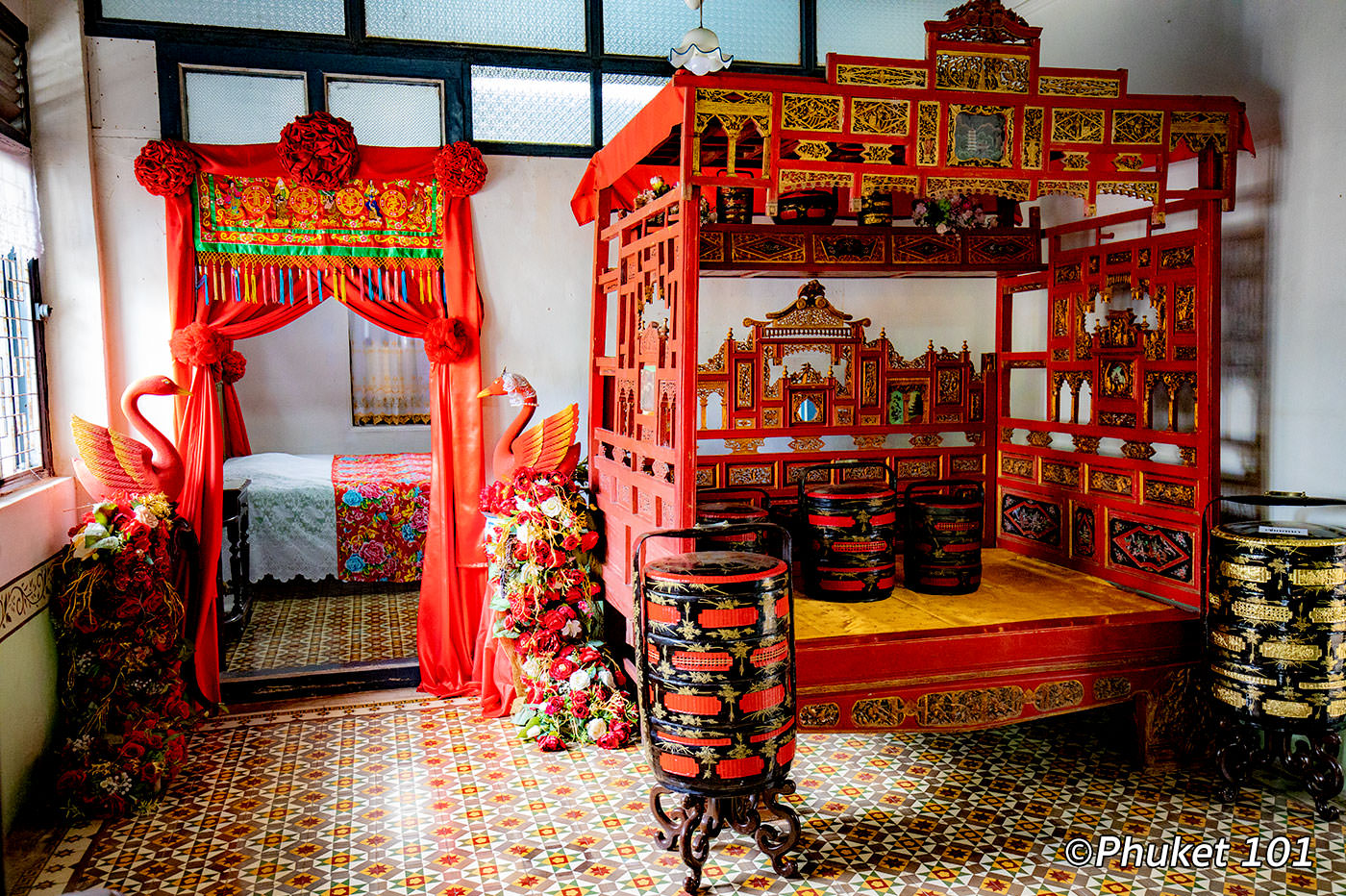
It won’t take you long to walk around two bedrooms, the entrance hallway and the large old-fashioned kitchen. The central living area is decorated with beautiful Italian tiles and is the most beautiful part of the house. In the middle is an open-air indoor pond decorated daily with flowers, a feature often found in this area, which allows the air to flow through the house and keep it cool. If you pay attention, you will feel that the place is clearly cooler than the outside temperature.
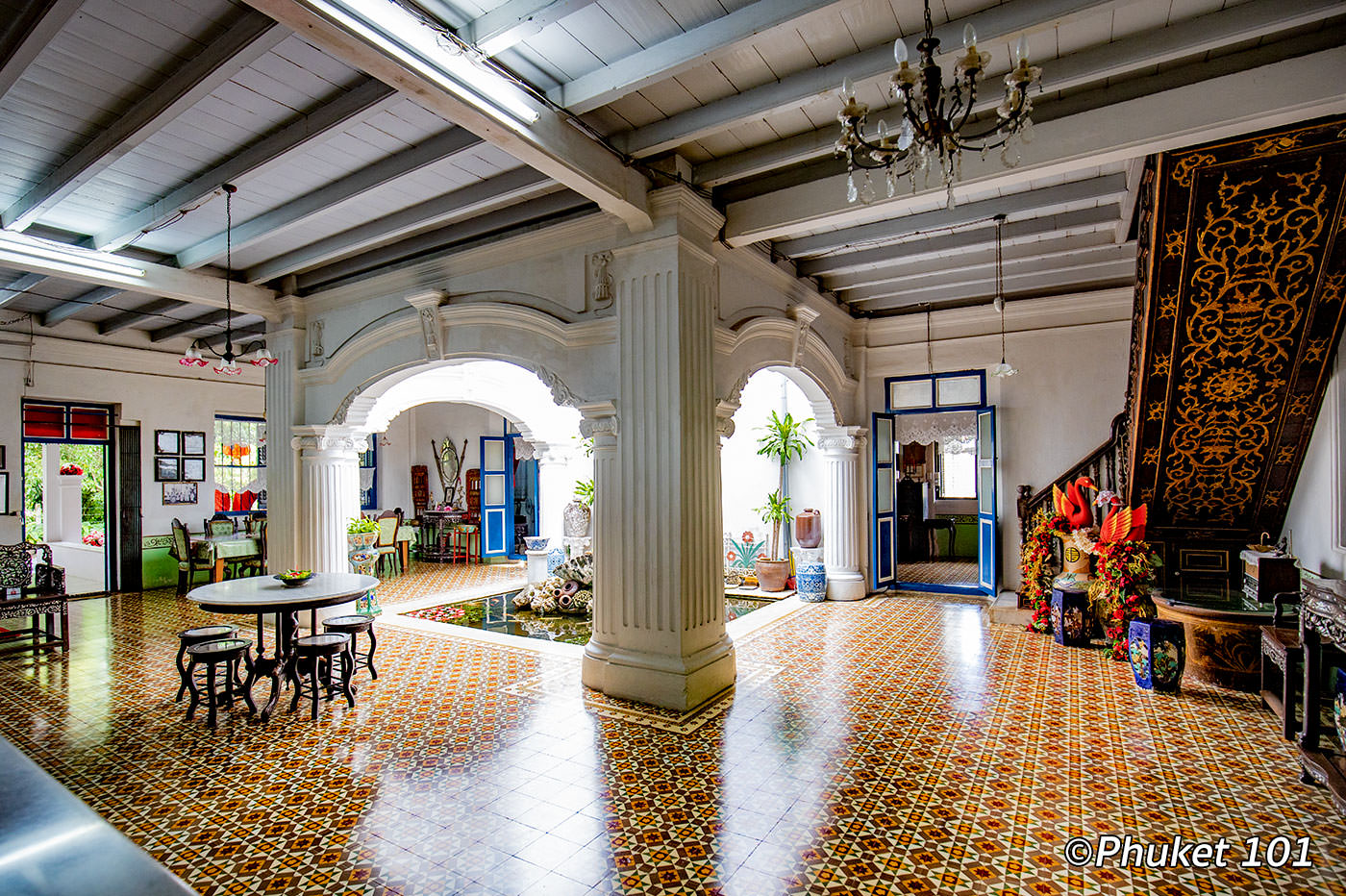
This beautiful central room is vast and in excellent condition, with some of the original furniture imported from Europe a hundred years ago. Every wall of the house displays tons of old family photos and images of what Phuket looked like in 1900. Like in many privately owned ‘museums’, the items on display are a bit eclectic, a mix of objects collected over time, many of them probably used by the owners until replaced with something better (that will also end up on the shelves one day).
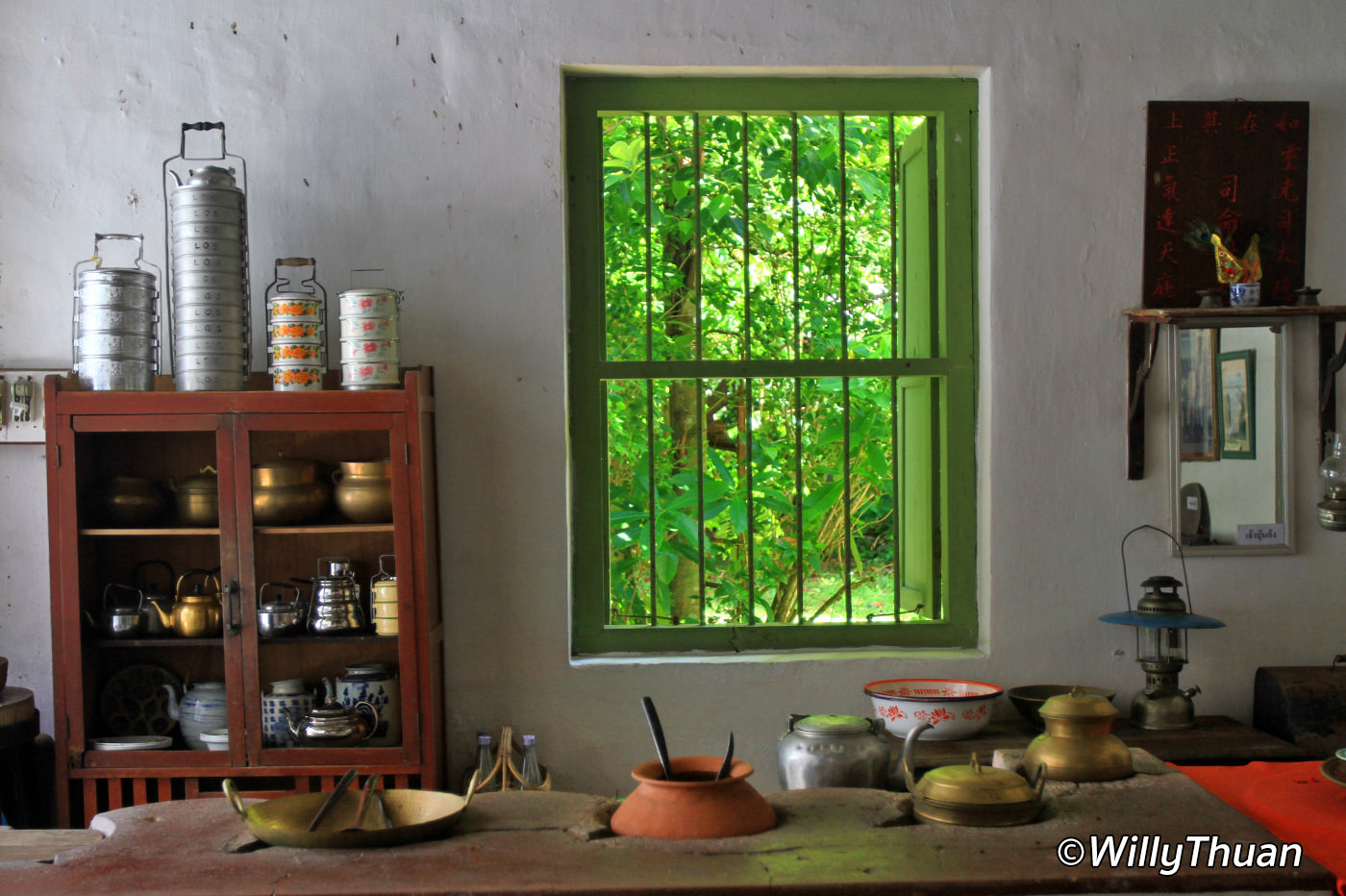
The old kitchen has a lot of charm. If you are a little familiar with the Thai kitchen, you will appreciate the many cooking items on display: copper and clay pots, woks, and many traditional Thai Tiffin lunch boxes spread on the central stove and the entire room.
The house used to be very visible from the main road, but a pair of condos is now hiding it from sight. It was always looking a bit abandoned; renovating such an old building must be very costly, and income from the few visitors might not be enough for a significant refurbishment. Anyway, it is a decent stop when walking the streets of Phuket Town, quite a walk from the famous Thalang Road, but still within walking distance if you don’t mind a bit of exercise.
Sino-Portuguese Architecture in Phuket
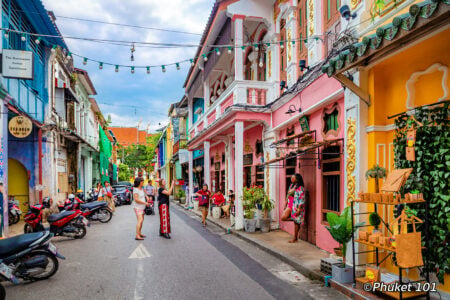
Sino-Portuguese architecture is a mixture of the Chinese and European styles. “Sino” refers to the Chinese aspects of the buildings, while “Portuguese” refers to Portugal, the first European nation to arrive in Phuket and give architectural influence to the province, in addition to Penang, Malaysia, Singapore, and Indonesia, before the advent of other European influences. Sino-Portuguese architecture gained its highest popularity from the reign of King Rama V, through towards the end of King Rama VI’s reign (1868 – 1925 AD). The period was the peak of the region’s tin-mining evolution as well as economic growth. Most of the prosperous and successful miners at that time were Chinese immigrants. A number of Sino-Portuguese buildings still remain to be seen on Phangnga, Yaowarat, Dibuk, and Krabi Roads.
More Photos of Chinpracha House


Chinpracha House Info
Location: Phuket Town
Address: 98 Krabi, Talat Nuea, Mueang Phuket District, Phuket 83000
Hours: 9 am – 4.30 pm
Phone: 076 211281
Price: 150 Baht
Built: 1903
Baan Chinpracha Map
The Real Phuket
Old Mansions of Phuket