


Memories of the Phuket Tsunami

Here are a few photos I took when the tsunami hit Phuket on December 26, 2004, and the following weeks. So they won’t vanish from my memory. It’s not a dark memory, and it’s proof of the human capacity for survival and natural optimism, and this event shouldn’t be forgotten.
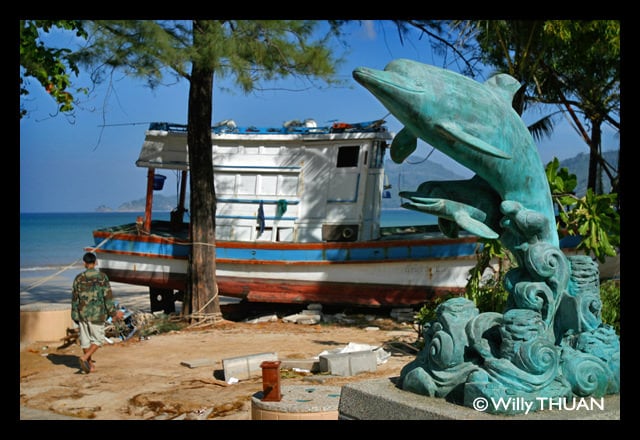
I was living in Patong Beach then, and luckily we were not on the beach that day. The first sign was only a mild earthquake, so we didn’t worry. I was supposed to go photoshoot on that beach, but I was lazy and decided to go later.
When people started to run up the street in front of our house, we suddenly knew something was going on, but it’s hard to imagine the scale of what was happening. It started to get serious when we saw people with mud and blood on their bodies and faces shouting, water is coming; run to the hills!
We jumped in our car and reached high grounds. We stayed there for most of the day, looking down on Patong bay and the incredible scale of the receding waters. From up there, you could not see much damage. We knew it was extensive, but it only took its full dimension the next day when I walked the devastated streets of Patong. Nothing can prepare you for this.

For several days, Phuket was a devastated and traumatised island, and the priority was to recover the injured and the bodies. It is something no one should have to experience, and I won’t write about this part as it was the hardest. Like everyone on that day, I wish it never happened, but it did.
The recovery
Sooner than you would expect, people started to clean, mostly not knowing what to do with the scale of the devastation. It seemed that people wanted to do something to move on, anything. I remember digging in the sand for hours with a friend, trying to pull out some piece of garbage. I felt pretty useless, but we had to do something… anything. I told myself there must be something better we could do to help the island and its people.
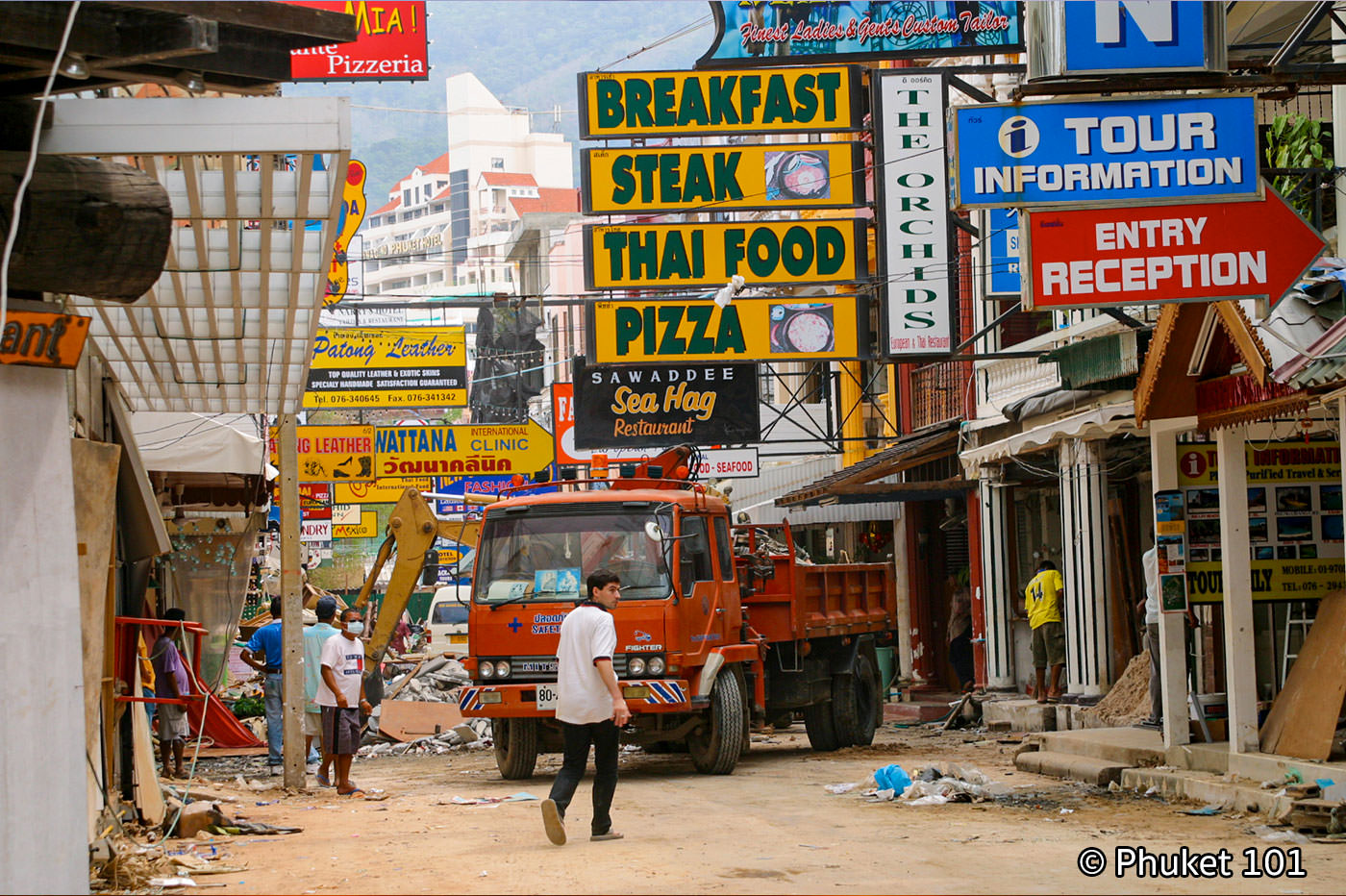
So, without really thinking about it, I started to document the island’s reconstruction and share it with the world during the following weeks. Fox News was showing the devastation; I was sharing the rebuilding. My photos contributed to the revival, and I want to believe they counted for something. It was the opposite of dark documentation. What I witnessed was unexpected; I saw how great the human spirit could be: In extreme situations, ordinary people can do extraordinary things.
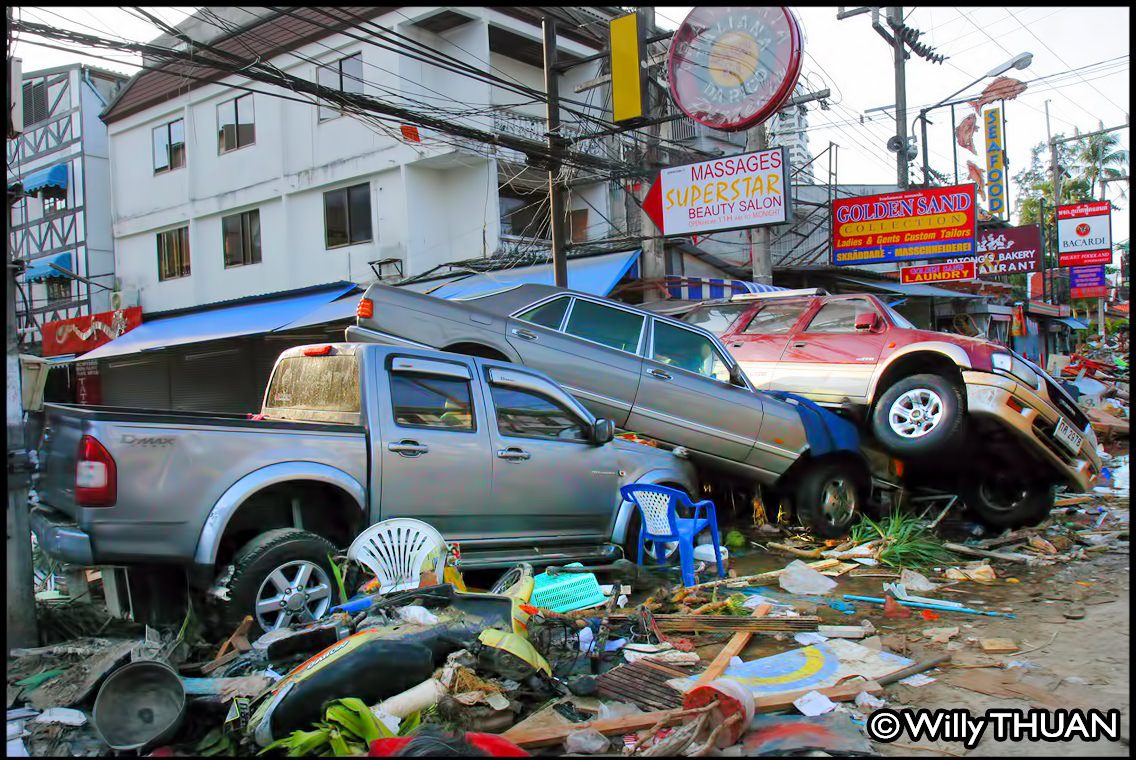
Living in Patong, I was in the middle of it, but thankfully just far enough from where the water stopped. And like everyone, we ran to the hills. Seen from up there, no one could apprehend the span of the event, and only in the following days did we all start to assimilate the sheer size of the devastation. I’m not going to go through it; everyone knows, and millions of photos have proved it. News reporters were always looking for the devastated areas to stand in front of, and everyone was mad at them for that. When I thought of it years later, we could say that maybe they did their part and unexpectedly moved the world.
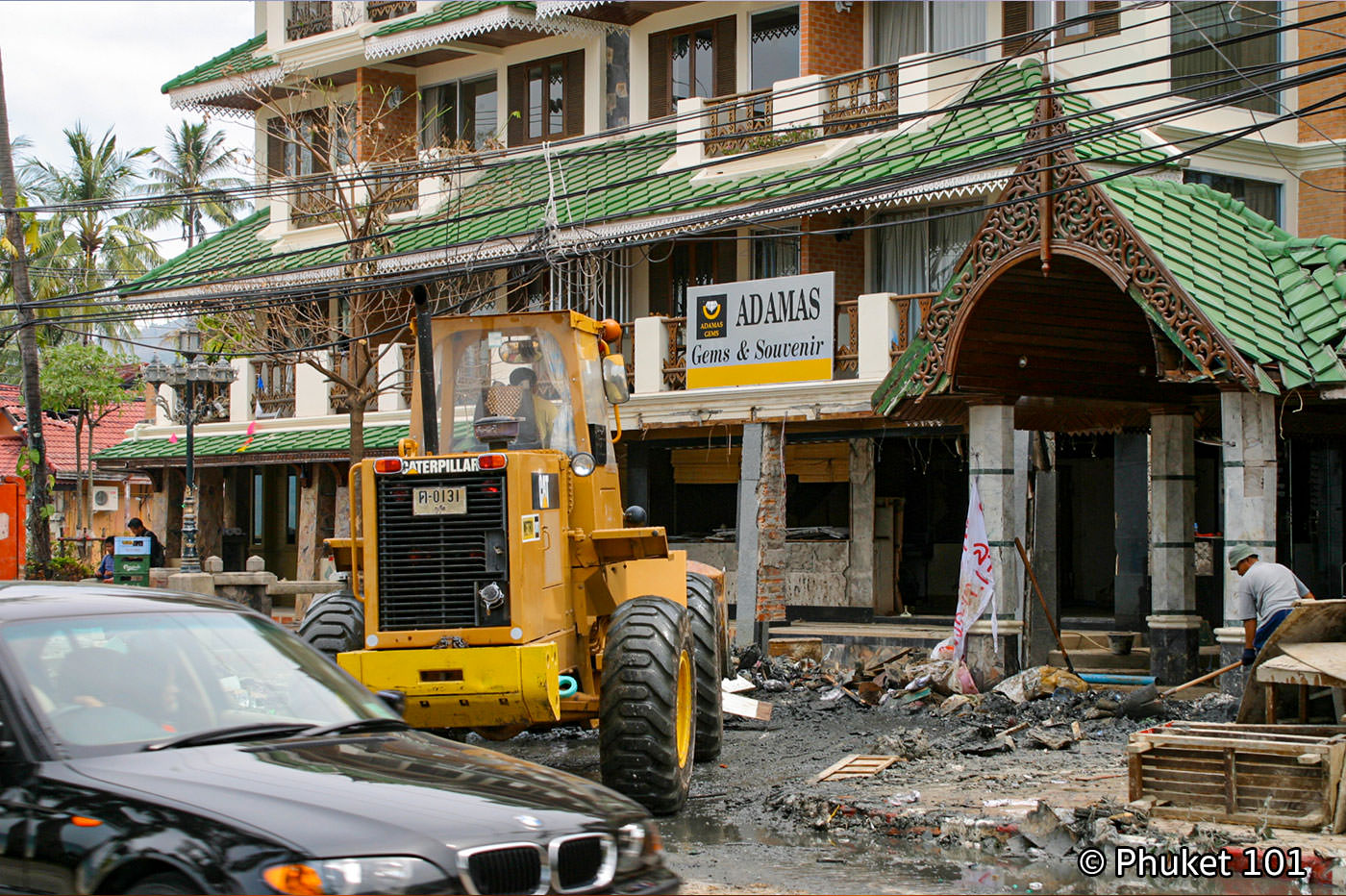
I chose another path: I walked through the ruins and the wrecks every day, and wherever I saw life coming back, I shared it on my photo blog. Comments of support flowed to such an extent that I was busy night and day posting each of them on my site. The more I posted, the more I received, until one day, a French TV crew knocked on my door and asked to follow me for a few days. I said yes, it’s hard to refuse such honour, but soon I realised that I didn’t like the idea of doing this. Nothing was wrong; they were nice guys. It was just ‘not me’. I never saw that documentary.
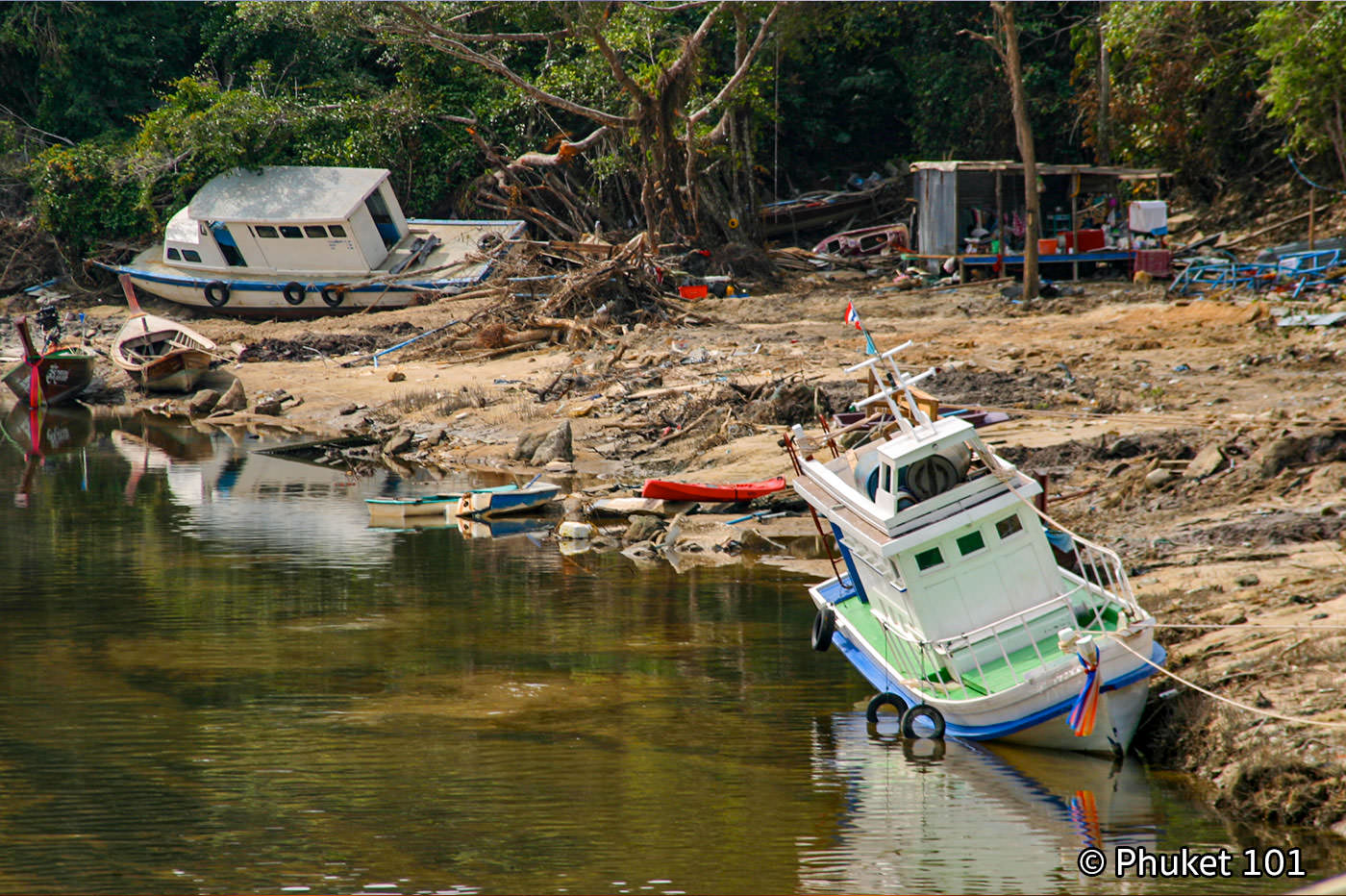
So here are some of the images of the Phuket Tsunami that meant something to me. They might not all be striking or impressive, but each comes with a story, a memory and many emotions. Six years later, when I walked on the beach, local people still called me and greeted me like a “long-time-no-see” friend. It can be overwhelming.

Quick Facts
- Date: 26 December 2004, 7:58 am local time
- Earthquake: 9.1 magnitude, off Sumatra (Indonesia)
- Deaths in Phuket: Around 250
- Deaths in Phang Nga (Khao Lak): Over 5,000
- Most affected beaches: Patong, Kamala, Kata, Karon
- Warning time: None (no system existed)


What I Remember
Here are a few photos I took when the tsunami hit Phuket on December 26, 2004, and the following weeks. So they won’t vanish from my memory. It’s not a dark memory, and it’s proof of the human capacity for survival and natural optimism, and this event shouldn’t be forgotten.
I was living in Patong Beach then, and luckily I was not on the beach that day. The first sign was only a mild earthquake, so I didn’t worry. I was supposed to go photoshoot on that beach, but I was lazy and decided to go later.
When people started to run up the street in front of my house, I suddenly knew something was going on, but it’s hard to imagine the scale of what was happening. It started to get serious when I saw people with mud and blood on their bodies and faces shouting, water is coming; run to the hills!
I jumped in my car and reached high grounds. I stayed there for most of the day, looking down on Patong bay and the incredible scale of the receding waters. From up there, you could not see much damage. I knew it was extensive, but it only took its full dimension the next day when I walked the devastated streets of Patong. Nothing can prepare you for this.
For several days, Phuket was a devastated and traumatised island, and the priority was to recover the injured and the bodies. It is something no one should have to experience, and I won’t write about this part as it was the hardest. Like everyone on that day, I wish it never happened, but it did.
The Recovery
Sooner than you would expect, people started to clean, mostly not knowing what to do with the scale of the devastation. It seemed that people wanted to do something to move on, anything. I remember digging in the sand for hours with a friend, trying to pull out some piece of garbage. I felt pretty useless, but I had to do something… anything. I told myself there must be something better I could do to help the island and its people.
So, without really thinking about it, I started to document the island’s reconstruction and share it with the world during the following weeks. Fox News was showing the devastation; I was sharing the rebuilding. My photos contributed to the revival, and I want to believe they counted for something. It was the opposite of dark documentation. What I witnessed was unexpected; I saw how great the human spirit could be: In extreme situations, ordinary people can do extraordinary things.
Living in Patong, I was in the middle of it, but thankfully just far enough from where the water stopped. And like everyone, I ran to the hills. Seen from up there, no one could apprehend the span of the event, and only in the following days did I start to assimilate the sheer size of the devastation. I’m not going to go through it; everyone knows, and millions of photos have proved it. News reporters were always looking for the devastated areas to stand in front of, and everyone was mad at them for that. When I thought of it years later, maybe they did their part and unexpectedly moved the world.
I chose another path: I walked through the ruins and the wrecks every day, and wherever I saw life coming back, I shared it on my photo blog. Comments of support flowed to such an extent that I was busy night and day posting each of them on my site. The more I posted, the more I received, until one day, a French TV crew knocked on my door and asked to follow me for a few days. I said yes. It’s hard to refuse such an honour, but soon I realised that I didn’t like the idea of doing this. Nothing was wrong; they were nice guys. It was just not me. I never saw that documentary.
So here are some of the images of the Phuket Tsunami that meant something to me. They might not all be striking or impressive, but each comes with a story, a memory and many emotions. Six years later, when I walked on the beach, local people still called me and greeted me like a long-time-no-see friend. It can be overwhelming.
Is Phuket Safe from Tsunamis Today?
Thailand built a national warning system after 2004. The National Disaster Warning Centre operates 328 warning towers along the Andaman coast, including all major beaches in Phuket. Evacuation route signs are posted on every affected beach, and annual drills are held each December. If an earthquake of similar magnitude occurred today, coastal areas would receive 15 to 30 minutes of warning. Sirens, phone alerts, and loudspeaker announcements would direct people to high ground. The risk still exists, but the response infrastructure did not exist in 2004. It does now.
Tsunami Memorials
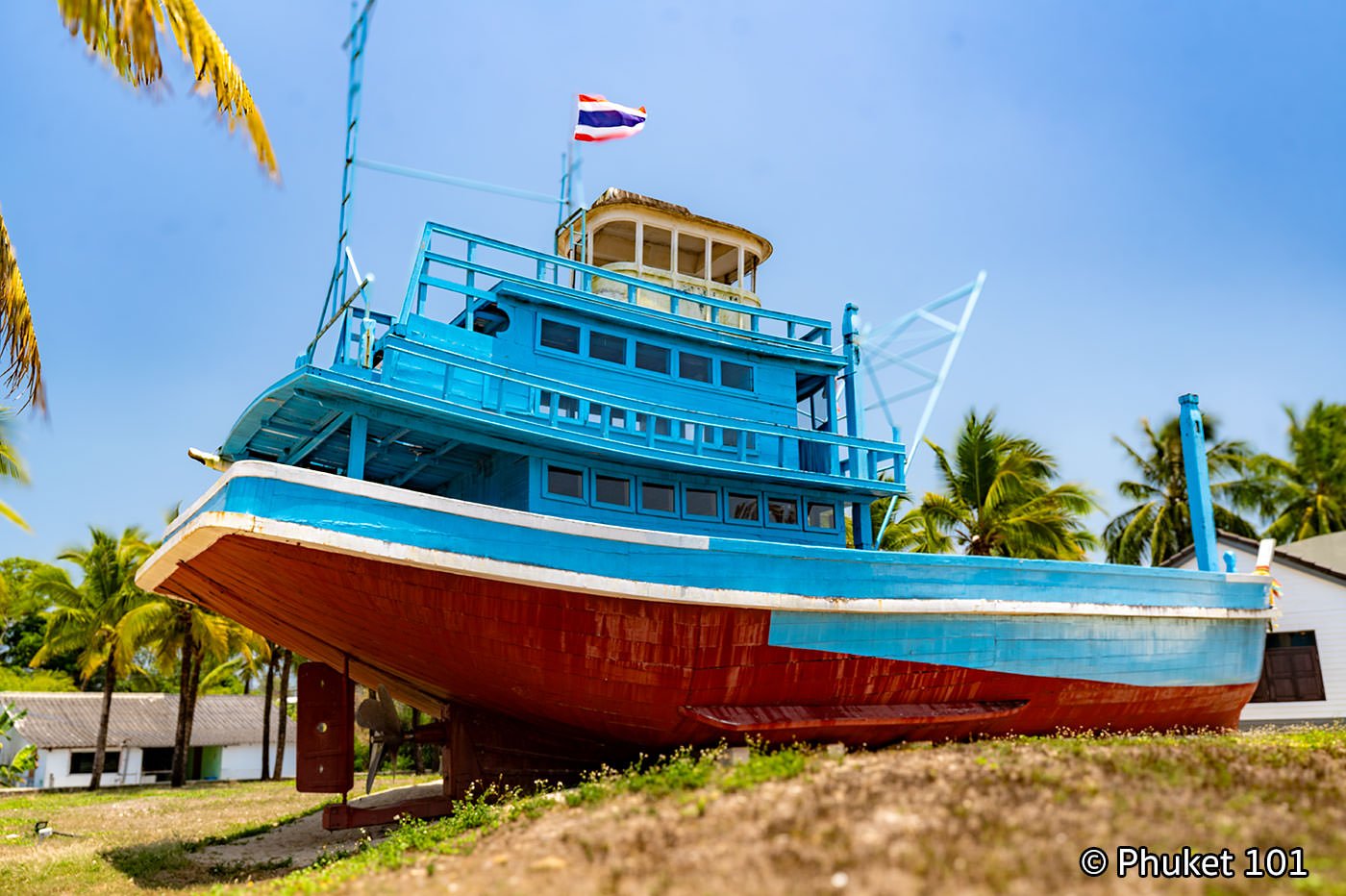
Several memorials honour those who died. The Ban Nam Khem Tsunami Memorial Park in Khao Lak is the largest, with a remembrance wall, museum, and gardens. In Phuket, there is a memorial at Kamala Beach and another on Phi Phi Island. The Police Boat 813 Memorial near Khao Lak preserves a patrol boat that was carried 2 km inland by the wave.
