


The 7 Buddha Postures for the Days of the Week
Walk into any temple in Thailand, and you’ll probably notice something interesting. There’s usually a row of Buddha statues lined up, each one in a different pose. Some are standing, some are sitting, one’s always lying down. Most tourists snap a quick photo and move on. But these aren’t random.
Each statue represents a day of the week. And if you’re Thai, you’re supposed to pay respect to the one who matches your birth day. Watching locals do this at temples is something that never gets old. They walk straight to their statue, drop a coin in the bowl, light some incense, and say a quick prayer. It takes maybe 30 seconds, but it matters to them.
| Day | Thai Name | Posture | Meaning | Lucky Color |
|---|---|---|---|---|
| Sunday | Pang Thawai Net | Standing, arms crossed at the waist | Gratitude | Green |
| Monday | Pang Ham Yati | Standing, right hand raised | Peace & Protection | Black |
| Tuesday | Pang Sai Yat | Reclining on the right side | Nirvana | Yellow |
| Wednesday (day) | Pang Umbat | Standing with an alms bowl | Generosity | Green |
| Wednesday (night) | Pang Pa Lelai | Seated in a forest retreat | Retreat & Solitude | White |
| Thursday | Pang Samathi | Seated in meditation | Enlightenment | Orange |
| Friday | Pang Ram Phueng | Standing, arms crossed on chest | Reflection | Pink |
| Saturday | Pang Nak Prok | Seated under the Naga serpent | Protection | Blue |
There are actually 40 different Buddha postures recognised in Thai culture, but these seven (sometimes eight, because Wednesday gets split into day and night) are the ones you’ll see everywhere. They’re called the 7 Buddha Postures for the Days of the Week, and each one comes from a specific moment in the Buddha’s life.
Having lived in Thailand since 1994, it took years to actually learn what these statues meant. Nobody explains it to you. You just see Thai people doing their thing at temples and eventually get curious enough to ask. So here’s what that curiosity turned up.
The Meaning Behind Buddha Statues
Before we get into each day, you should know that these aren’t just decorative. In Buddhism, everything about a Buddha image means something. The way the hands are positioned, which leg is on top, and where the fingers point. These are called mudras, and they’re like a visual language.
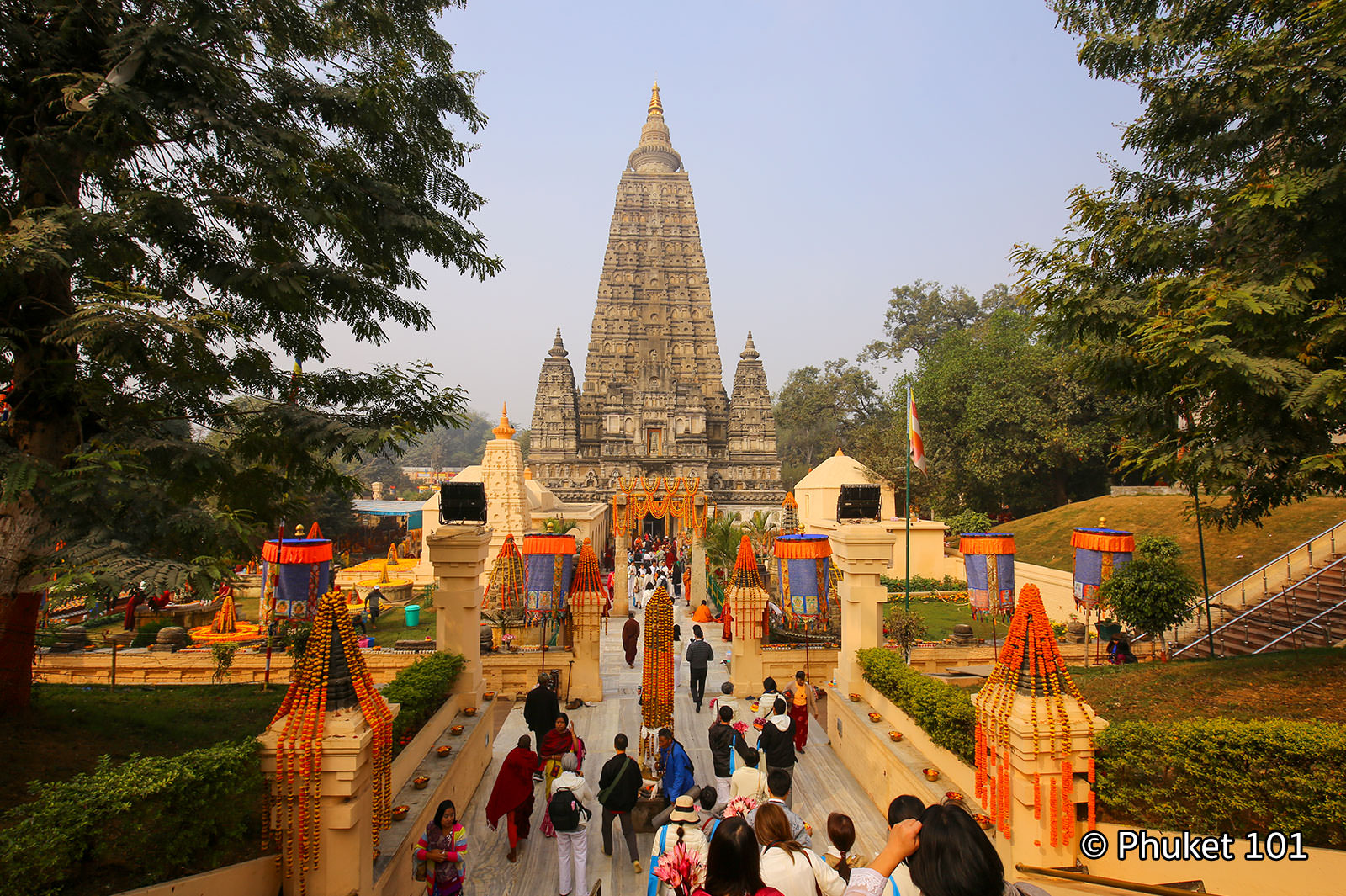
The Buddha lived around 500 BCE in what’s now northern India and Nepal. After he reached enlightenment, he spent 45 years teaching. Most of these postures capture specific moments from that time. Some are from his meditation practice, others from interactions with followers or family.
Thai culture has turned these into a daily practice. You check what day you were born, that becomes your Buddha, and that’s the one you honour at temples. It’s surprisingly organised for something that feels so spiritual.
Quick Summary
In Thai culture, there are 40 recognised Buddha postures, each showing a different moment from the Buddha’s life. These include poses such as sitting in meditation, standing in contemplation, reclining during rest, or walking in reflection. Each one carries a symbolic message linked to a story or teaching in Buddhism.
Among these, the most well-known set is the 7 Buddha Postures for the Days of the Week. These specific postures are linked to the day you were born and are often displayed in Thai temples to help visitors and locals make merit, reflect, and show respect. Some temples include an eighth posture for those born on a Wednesday night, which is treated separately from the daytime version.
Sunday Buddha Posture
Pang Thawai Net (ปางถวายเนตร – Seven Days Looking)
symbolising gratitude and great blessing
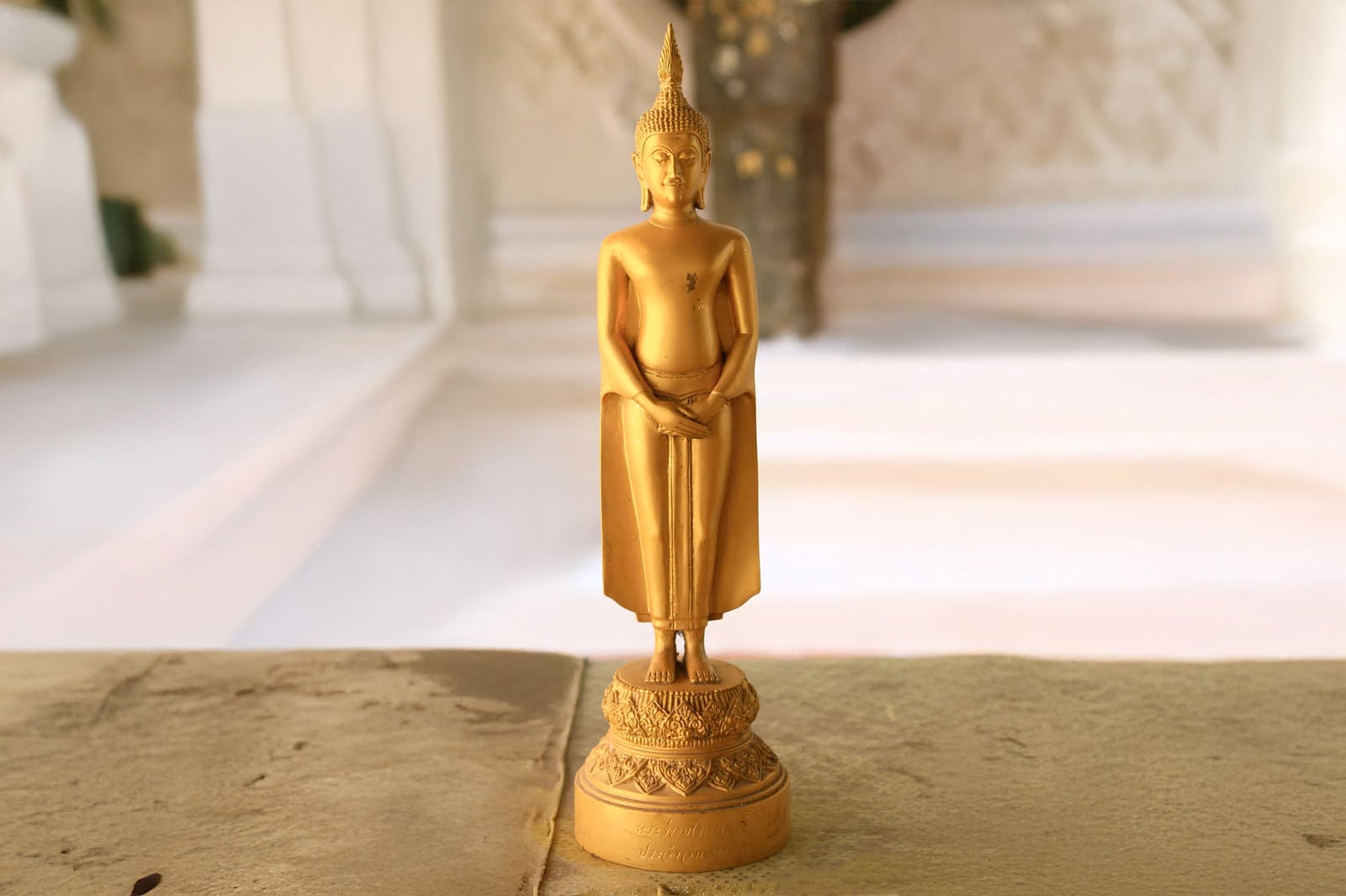
The Sunday Buddha stands with both arms crossed at the waist, right hand on top of the left. It looks like he’s just standing there thinking, which is basically what happened. After the Buddha reached enlightenment under the Bodhi tree in India, he didn’t immediately rush off to teach anyone. He stood in front of that tree for seven straight days, just staring at it. Not meditating, not moving, just looking. The story says he didn’t even blink.
Why? Gratitude. That tree had given him shelter while he figured everything out. So he spent a week basically saying thank you with his eyes. Thais call this posture Pang Thawai Net, which translates to “Seven Days Looking.” The Sunday statue is usually easy to spot in temples because of the distinctive crossed arms at the waist. People born on Sunday often leave flowers there, not just coins.
Sunday Birth Personality
If you were born on a Sunday, Thai beliefs say you are:
- Respectable, wise, and well-liked by family and friends
- Likely to succeed in a professional career
- Lucky Day: Wednesday
- Unlucky Day: Friday
- Lucky Colour: Green
- Unlucky Colour: Blue
Monday Buddha Posture
Pang Ham Yati (ปางห้ามญาติ – Pacifying the Relatives)
symbolising reassurance and emotional strength
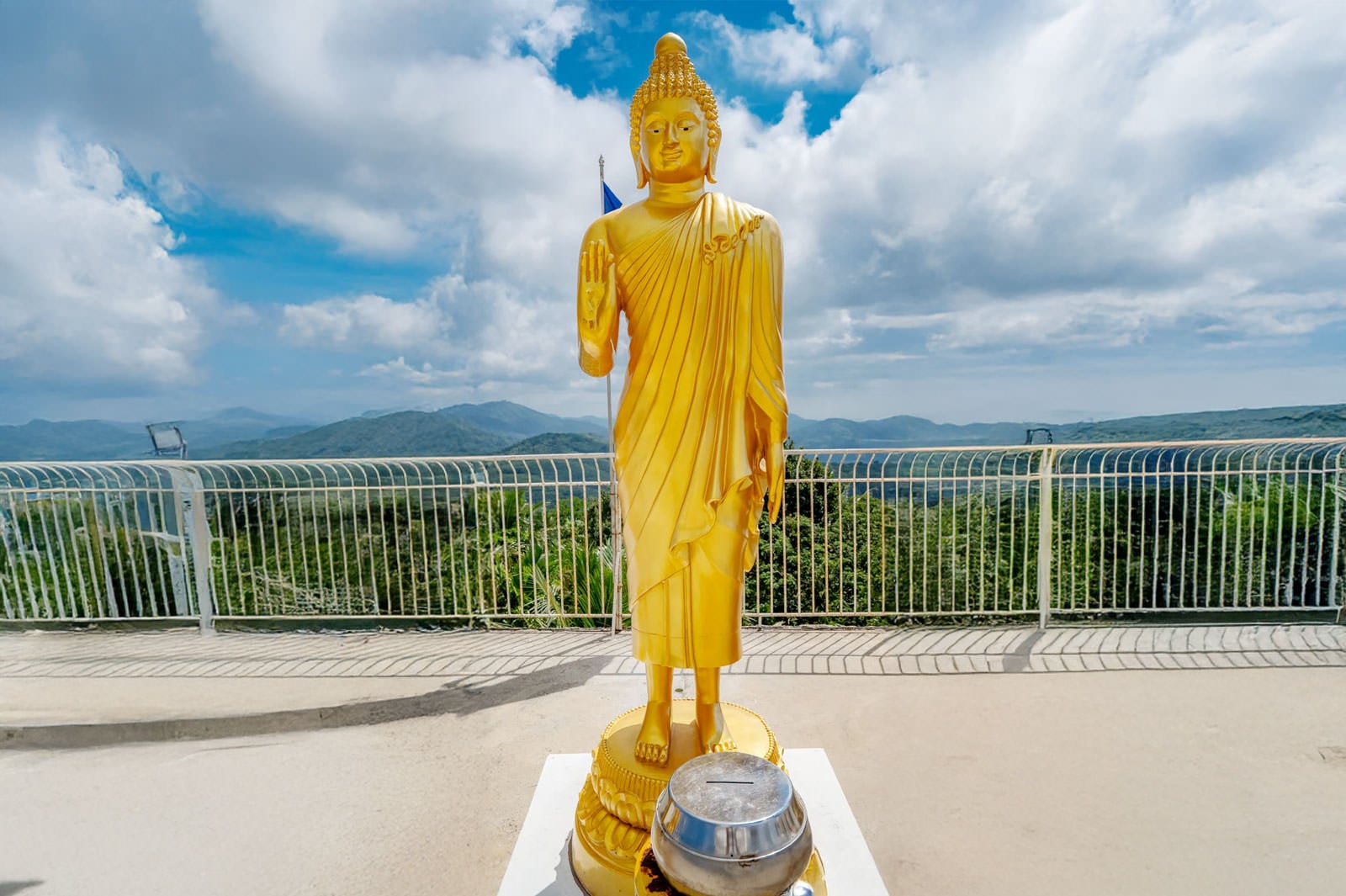
This one shows the Buddha standing with his right hand raised to shoulder height, palm facing out. It’s called the Abhaya Mudra, the gesture that means “don’t be afraid.” The story behind it is actually pretty relatable. The Buddha went up to heaven for three months to teach his mother, who had died when he was young. When he came back down, his family was in the middle of a huge argument about water rights. Two sides of the family both claimed ownership of the water flowing through their land, and it was about to turn violent.
The Buddha showed up, raised his hand like this, and basically said, “Everyone, calm down.” He got them to compromise and share the water. Thais call this Pang Ham Yati, meaning “Pacifying the Relatives.” Family drama existed 2,500 years ago, too, apparently.
Monday Birth Personality
If you were born on a Monday, Thai beliefs say you are:
- Serious, thoughtful, and blessed with a strong memory
- Likely to enjoy travel and skilled work
- Lucky Day: Saturday
- Unlucky Day: Sunday
- Lucky Colour: Black
- Unlucky Colour: Orange
Tuesday Buddha Posture
Pang Sai Yat (ปางไสยาสน์ – Realising Nirvana)
representing tranquillity and detachment
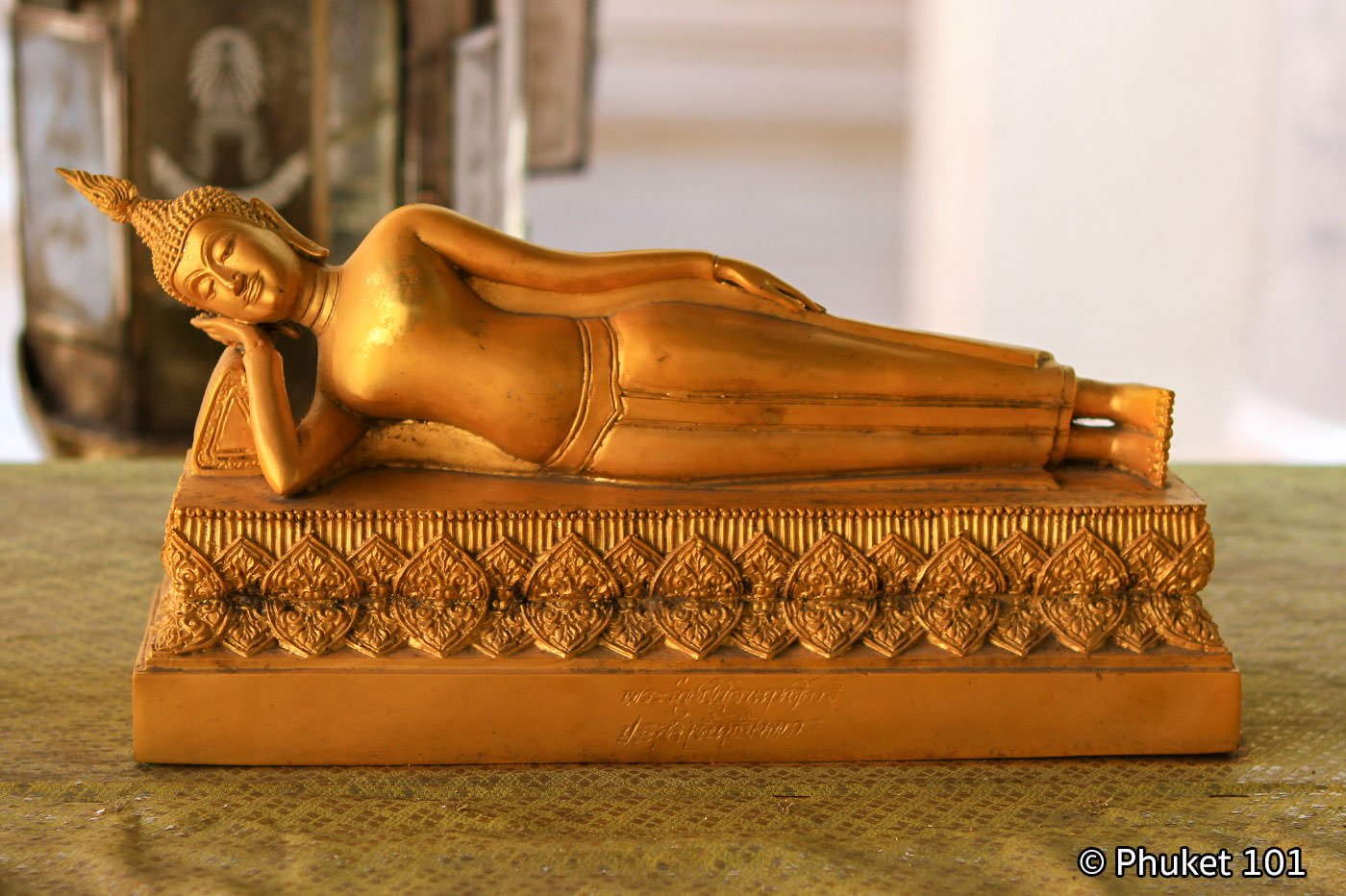
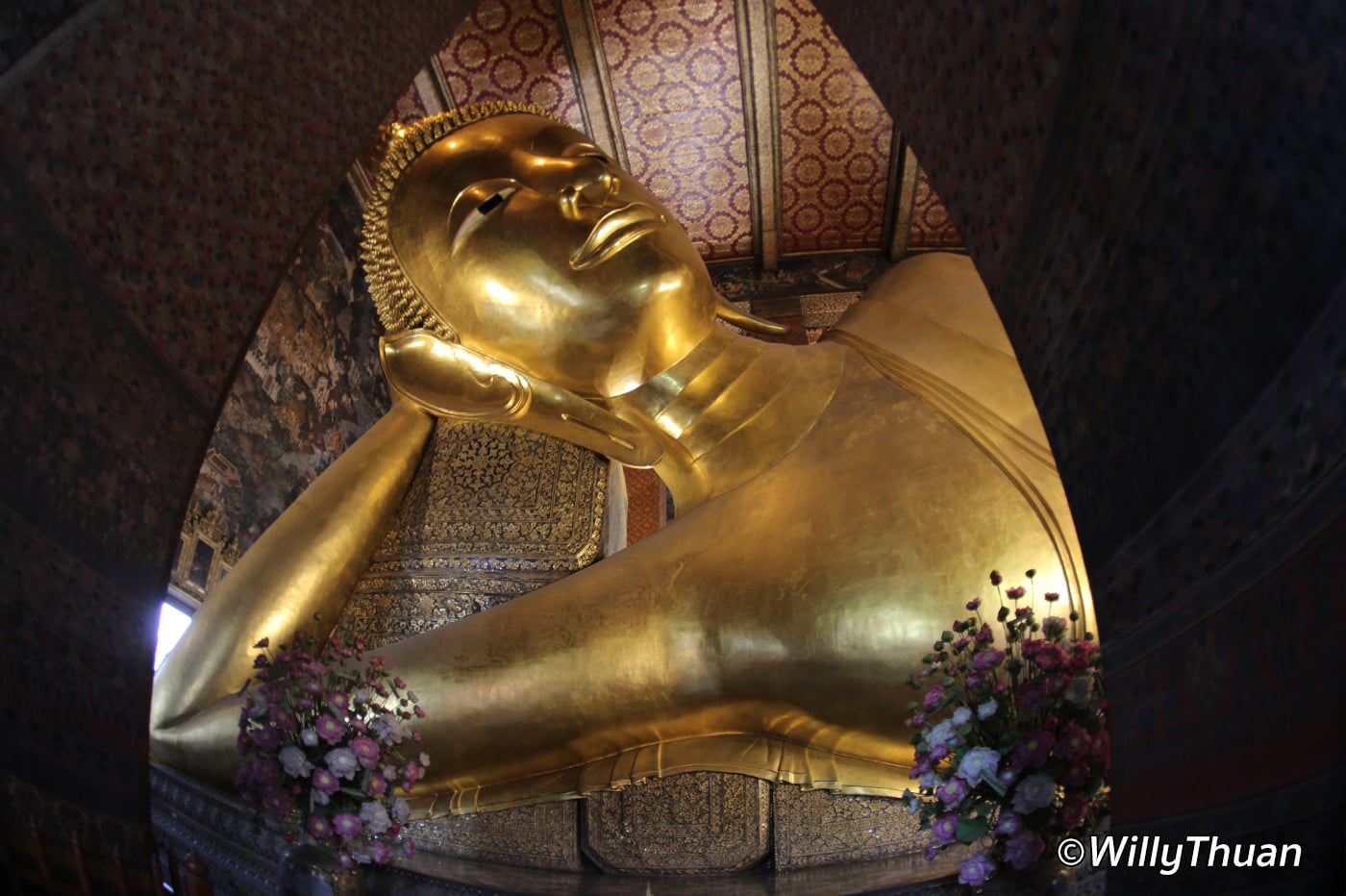
The Tuesday Buddha is lying on his right side, head resting on his hand, legs stretched out straight with toes perfectly aligned. This is the famous Reclining Buddha pose you’ve probably seen in photos of Wat Pho in Bangkok. Most people think it represents death or the Buddha entering Nirvana. That’s sort of true, but the Thai version of this statue tells a different story. There was this arrogant spirit called Asura Rahu who refused to show respect to anyone, including the Buddha. So the Buddha made himself enormous and lay down in this completely relaxed position. The spirit was so impressed by the Buddha’s calm confidence that he immediately converted and became a follower.
The posture is called Pang Sai Yat in Thai. It means achieving Nirvana, but it’s really about inner peace and not needing to prove anything to anyone. The most famous example of this posture is the massive Reclining Buddha at Wat Pho in Bangkok, which is 46 meters long and 15 meters high. But you’ll find versions of this statue at temples all over Thailand.
Tuesday Birth Personality
If you were born on a Tuesday, Thai beliefs say you are:
- Brave, determined, and action-oriented
- Likely to work in the services or security sectors
- Lucky Day: Thursday
- Unlucky Day: Monday
- Lucky Colour: Yellow
- Unlucky Colour: White
Wednesday Morning Buddha Posture
Pang Umbat (ปางอุ้มบาตร – Receiving Alms)
indicating generosity and compassion
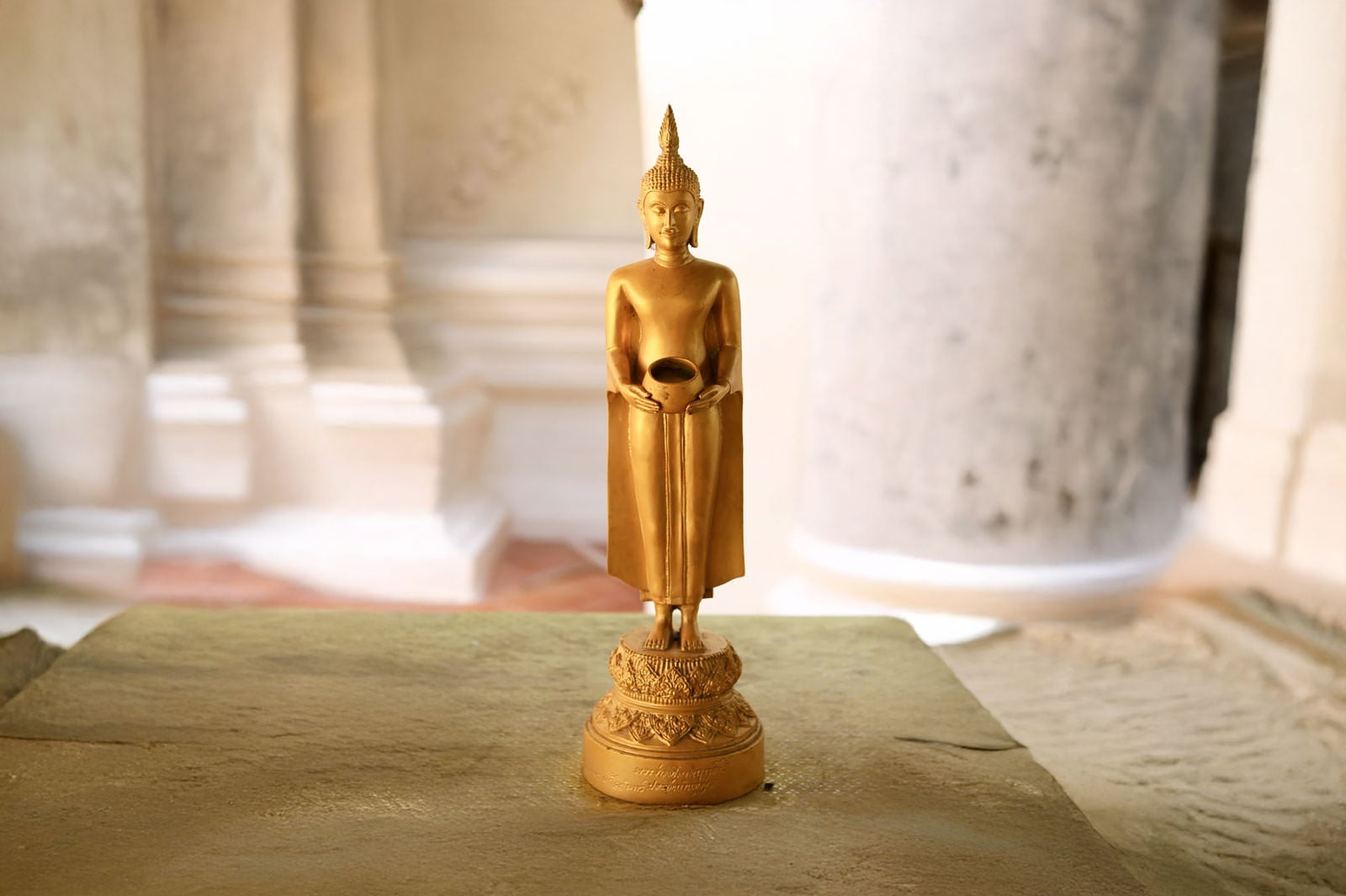
Wednesday splits into two because Thai astrology treats daytime and nighttime births differently. The morning Buddha is standing and holding an alms bowl with both hands in front of him. This captures the moment when the Buddha returned to his hometown after four years of wandering and teaching.
Every morning, Buddhist monks walk through neighbourhoods collecting food in bowls. It’s called Pindabat. The Buddha did the same thing when he came home, and his father was horrified. A prince begging for food? Embarrassing.
But the Buddha explained that this wasn’t begging. It was an ancient practice that let ordinary people gain merit by giving. By accepting food, monks give people a chance to do something good. It’s a trade.
This posture is called Pang Umbat. You’ll see it at pretty much every temple in Thailand. Thais leave food offerings in front of this statue more than the others because that’s what it represents.
Wednesday Morning Birth Personality
If born on a Wednesday morning:
- Polite, emotional, artistic, and often creative in work
- Lucky Time: Wednesday night
- Lucky Colour: Green
- Unlucky Day: Tuesday
- Unlucky Colour: Pink
Wednesday Night Buddha Posture
Pang Pa Lelai (“Forest Retreat”)
representing solitude and inner peace
The Wednesday night Buddha sits on a rock, but not cross-legged like you’d expect. His legs hang down like he’s sitting in a chair. Right hand palm-up on his right knee, left hand palm-down on his left knee. An elephant stands on one side, a monkey on the other. This comes from a story where the Buddha’s monastery split into two groups fighting over minor rule interpretations. The argument got so heated that the Buddha tried to mediate, and they refused to listen to him. So he left. Just walked away into Pārileyyaka forest and sat under a tree alone.
While he was there, a noble elephant who’d also left his herd came and brought him water and food. Later, a monkey showed up with honey on a leaf. Neither one was asked to help; they just did. The Buddha stayed there until the monks came looking for him and apologised. The posture is called Pang Pa Lelai, meaning “forest retreat.” It’s about knowing when to step back from conflict.
Wednesday Evening Birth Personality
If born on a Wednesday evening:
- Hardworking, calm, and honest, likely to be in a structured profession
- Lucky Day: Monday
- Lucky Colour: White
- Unlucky Day: Thursday
- Unlucky Colour: Yellow
Thursday Buddha Posture
Pang Samti (ปางสมาธิ – The Meditating Buddha)
signifying inner stillness and enlightenment
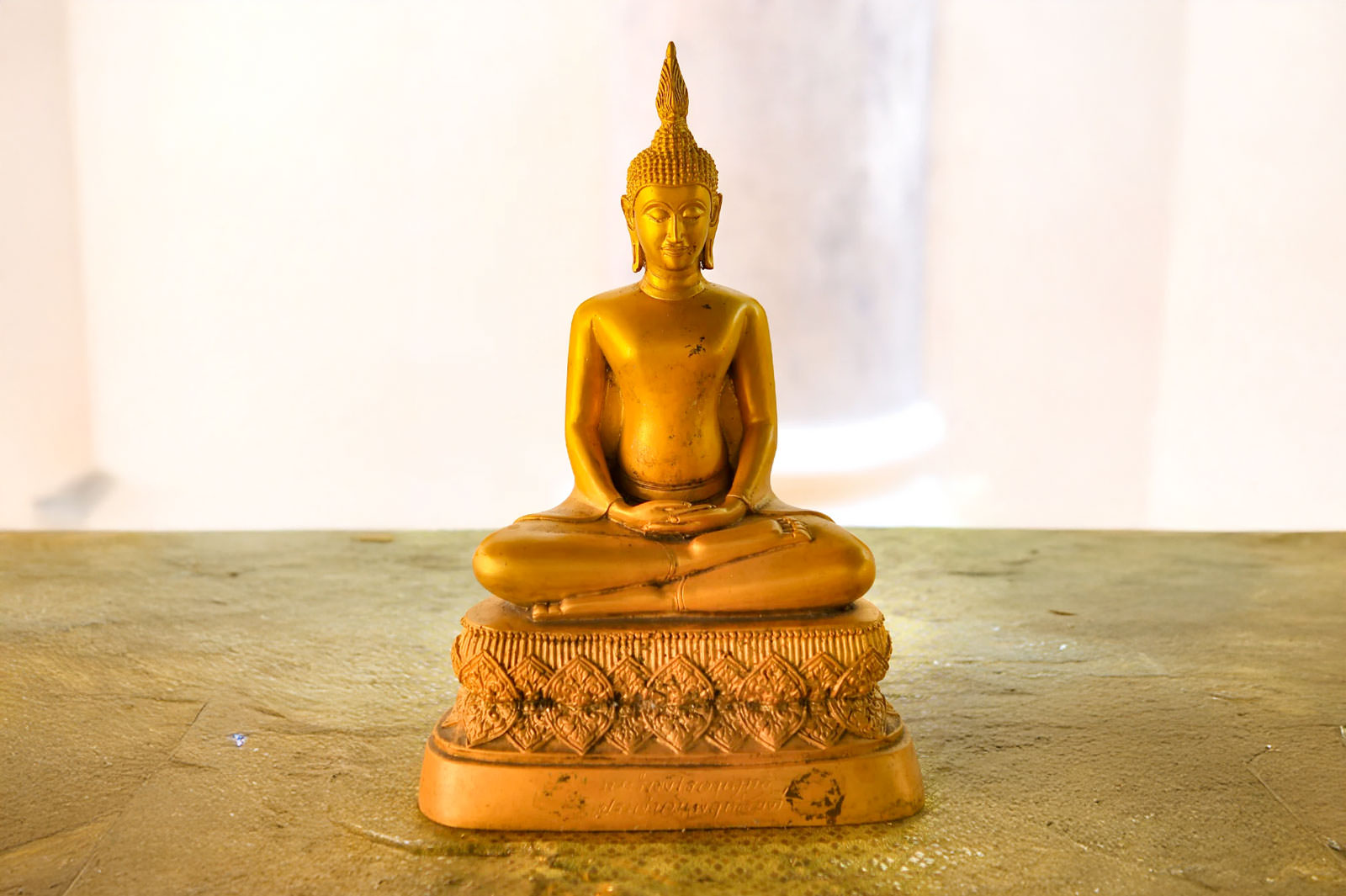
The Thursday Buddha sits in full lotus position. Both feet facing up, hands resting in the lap with the right hand on top of the left, palms open. This is the classic meditation pose, called the Dhyani Mudra.
The story is simple but intense. Before the Buddha reached enlightenment, one of his followers gave him a bundle of grass. He arranged it as a seat under the Bodhi tree and made a vow: “I will not leave this seat until I achieve complete enlightenment, even if my skin dries up, my flesh falls off, and my bones crumble.”
He sat there for 49 days straight until he figured everything out. That’s commitment. Thais call this Pang Samathi. It’s the most peaceful of all the postures and represents inner stillness and mental strength.
This is probably the most common meditation posture you’ll see in Thai temples, and many temples have particularly beautiful examples of this statue in prominent positions.
Thursday Birth Personality
If you were born on a Thursday, Thai tradition says you are:
- Calm, peaceful, and honest
- Often drawn to teaching, law, or roles involving wisdom and fairness
- Lucky Day: Sunday
- Unlucky Day: Saturday
- Lucky Colour: Orange
- Unlucky Colour: Black
Friday Buddha Posture
Pang Ram Pueng (ปางรำพึง – Contemplating Buddha)
representing reflection and inner peace
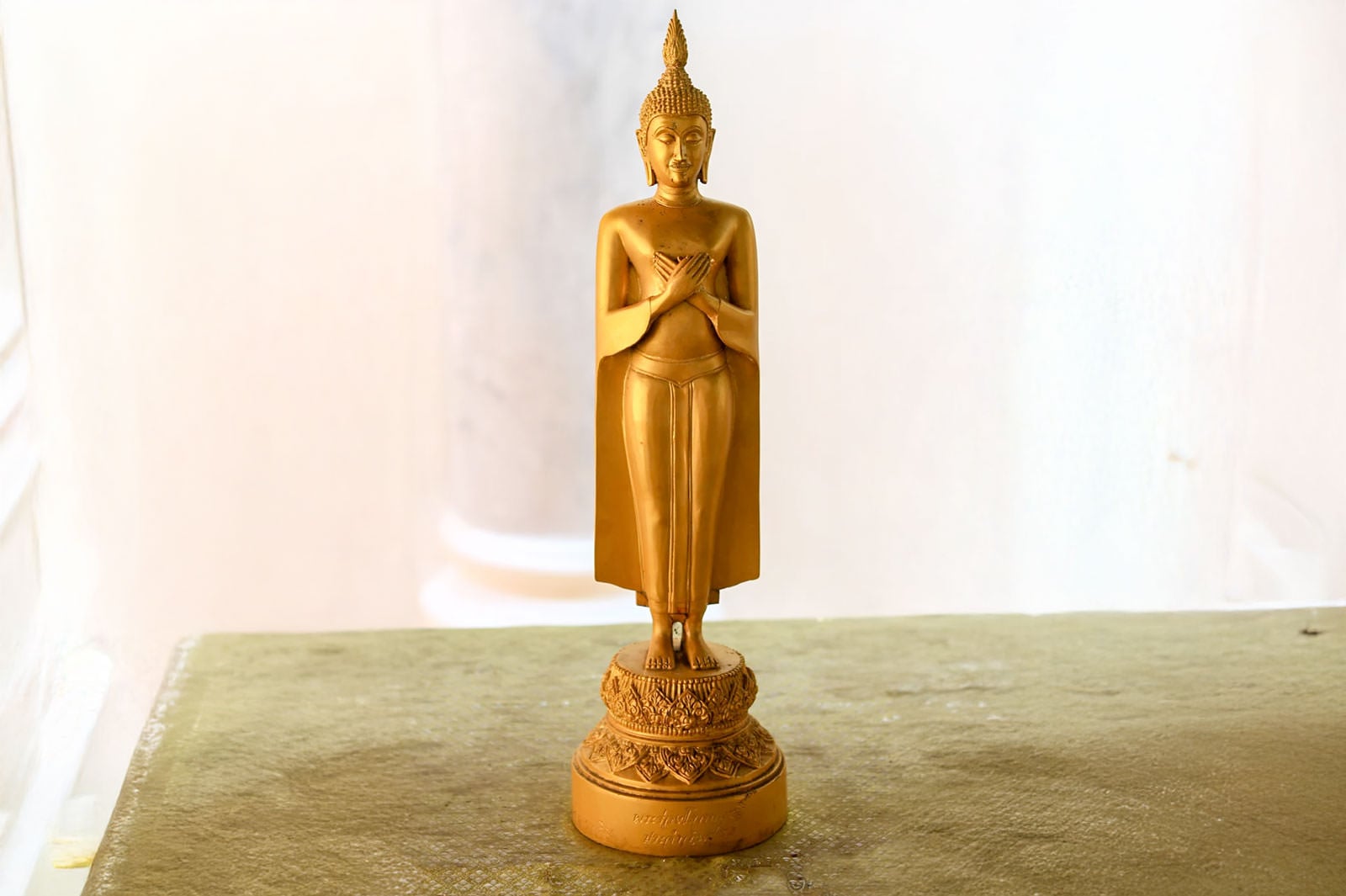
The Friday Buddha stands with both arms crossed over his chest, right hand gently covering the left. He looks like he’s deep in thought, which is exactly what was happening.
Right after enlightenment, the Buddha spent a week under a Banyan tree reflecting on everything he’d learned. The Dharma, the truth he’d discovered, was incredibly complex. He worried that it was too difficult for most people to understand. He actually considered not teaching at all because he thought people were too attached to pleasure and comfort to grasp it.
But then he realised that people are like lotus flowers growing at different depths in a pond. Some are ready to bloom, some aren’t, but a few will always be receptive to deeper truths. So he decided to teach anyway. This posture is called Pang Ram Phueng, meaning “Contemplating Buddha.” It’s about introspection and wisdom, and also about compassion. Deciding to share knowledge even when it’s hard.
Friday Birth Personality
If you were born on a Friday, Thai belief suggests you are:
- Friendly, sociable, and ambitious
- Often drawn to public roles or creative work
- Lucky Day: Tuesday
- Unlucky Time: Wednesday night
- Lucky Colour: Pink
- Unlucky Colour: Light Green
Saturday Buddha Posture
Pang Nak Prok (ปางนาคปรก – Protected by the Naga King)
symbolising resilience and spiritual protection
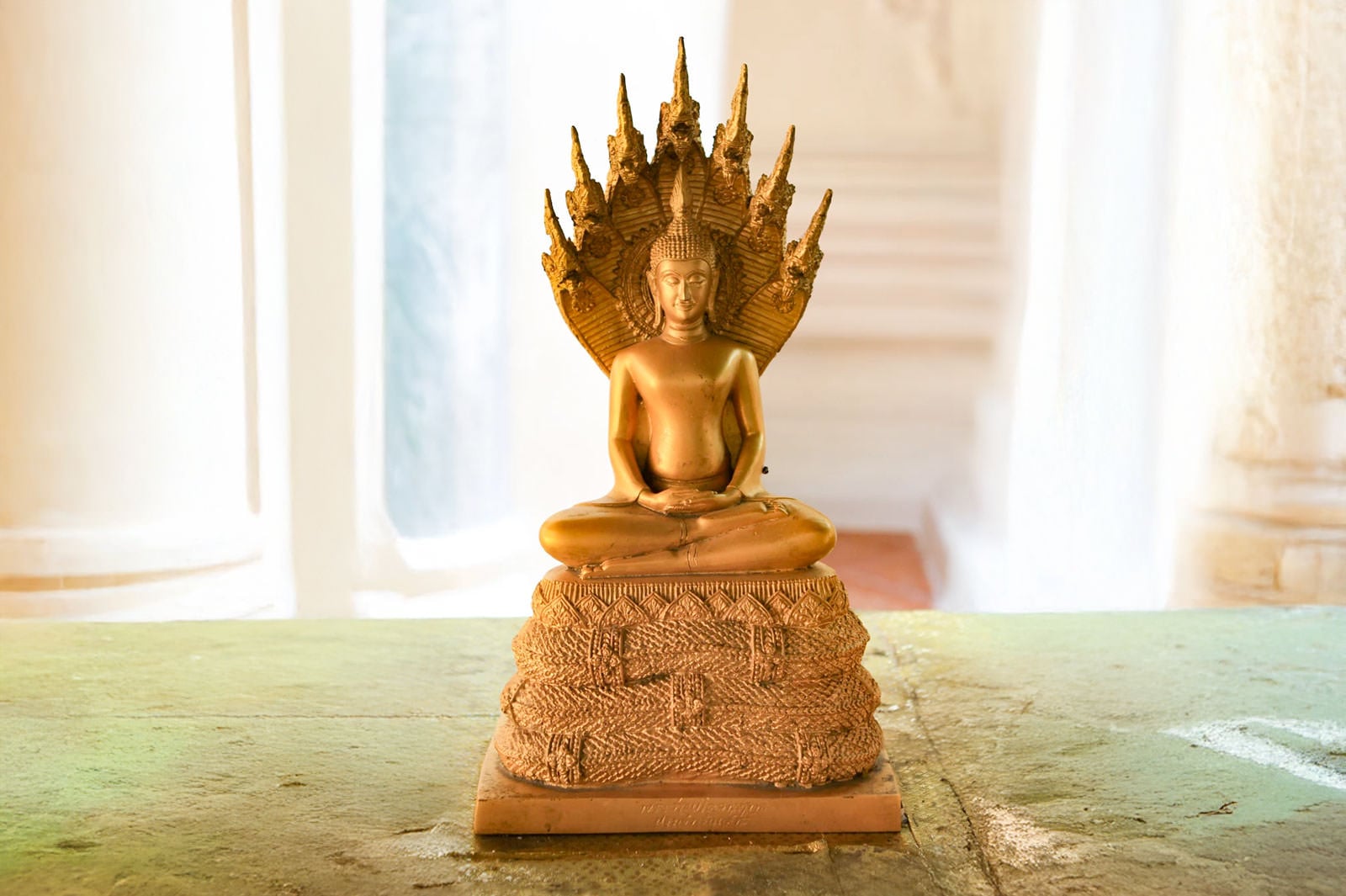
The Saturday Buddha sits in meditation on the coiled body of a giant cobra (called a Naga), with the snake’s seven heads fanned out above him like an umbrella. This is one of the most dramatic images you’ll see in temples.
During the sixth week after enlightenment, the Buddha was meditating when a massive storm hit. The Naga King Muchalinda rose up from underground, wrapped his body beneath the Buddha to lift him above the floodwaters, and spread his heads over him to keep the rain off.
When the storm passed, the Naga transformed into a young man and paid respect to the Buddha. The whole thing symbolises protection during hardship, staying focused even when everything around you is chaos. Thais call this Pang Nak Prok. You’ll see it everywhere, especially at temples with water features. The serpent coiled beneath the Buddha creates a dramatic visual that’s immediately recognisable.
Saturday Birth Personality and Beliefs
If you were born on a Saturday, Thai belief says you are:
- Calm, logical, and slightly reserved
- Often skilled in hands-on or technical work
- Lucky Day: Friday
- Unlucky Day: Wednesday (daytime)
- Lucky Colour: Blue
- Unlucky Colour: Green
Click here if you would like to know more about meditation in Thailand
Where to See These in Thailand
Almost every Buddhist temple in Thailand has all seven (or eight) postures displayed somewhere. After visiting temples across Thailand for three decades, a few stand out as particularly worth the effort.
Wat Pho (Bangkok) – Home to the famous 46-metre Reclining Buddha (Tuesday), but also has a complete set of all the weekly postures displayed in the main compound. The scale of the Reclining Buddha has to be seen in person to understand it properly.
Wat Phra Kaew (Bangkok) – The Temple of the Emerald Buddha. While most famous for its central Buddha image, the complex includes examples of all the weekly postures.
Wat Chalong (Phuket) – The most important temple on the island, and the best place in Phuket to see all seven postures clearly displayed in a row at the main prayer hall. The statues here are well maintained and clearly labelled, which makes it easier to find your own day. Worth combining with a visit to the main viharn to see the revered monk statues inside.
Wat Phra That Doi Suthep (Chiang Mai) – This mountain temple has beautiful examples of each posture arranged around the main chedi. The setting alone makes it memorable.
Most local temples everywhere – Honestly, you don’t need to visit famous temples to see these. Nearly every neighbourhood temple in Thailand, no matter how small, will have the seven daily Buddhas somewhere on the grounds. The smaller temples are often quieter and give you more space to look properly.
How Locals Actually Use These Statues
If you want to do this properly, here’s what locals actually do:
- Find your birth day of the week (not date, the actual day, like Monday or Friday). If you don’t know, there are calculators online.
- Walk to that statue. Don’t just go to all of them.
- Take your shoes off before entering any temple area. Always.
- Buy a small flower offering or incense at the entrance if you want. Maybe 20-40 baht.
- Kneel or stand in front of your statue. Drop a coin in the donation bowl.
- Light your incense if you bought it. Hold it between your palms at chest height.
- Bow three times. Thais press their hands together (wai) and touch their forehead to the ground or just bow deeply if they’re standing.
- That’s it. Some people say a quick prayer, some just pay respect and move on.
The whole process takes less than a minute. It’s not elaborate, it’s just a moment of connection.
Common Mistakes Tourists Make
- Don’t wear revealing clothing. Shoulders and knees should be covered. Some temples provide wraps at the entrance if you forget.
- Don’t point your feet at Buddha statues. Feet are considered the lowest, dirtiest part of the body in Thai culture. If you’re sitting on the floor, tuck them to the side.
- Don’t turn your back to the Buddha for selfies. It’s considered disrespectful. Take photos from the side if you must.
- Don’t touch the statues. Obvious, but people try to pose next to them and lean on them. Don’t.
- Don’t be loud. Temples are active religious sites, not museums. Keep your voice down.
- The donation is optional but appreciated. If you’re going to pay respect, a small coin (even 1-5 baht) is customary. You’re not buying anything, you’re participating in a cultural practice.
The Lucky Colours Thing
You’ll notice Thai people take the colour associations seriously. Go to a temple on a Thursday, and you’ll see people wearing orange. On Monday, lots of black. It’s subtle, but once you notice it, you can’t unsee it.
Some Thais even avoid their unlucky colours on their corresponding days. Like if you’re born on Sunday, you might skip wearing blue on Fridays. It’s not strict, more like a casual superstition people follow when they remember.
Markets and street vendors throughout Thailand often arrange their clothing by colour based on the day of the week. It’s a small detail that shows how integrated this system is into daily life. After years of noticing this pattern, it still catches my attention every time.
How It Started
Temple visits in Phuket started as background noise. Living in Kathu since 1994, temples were just part of the landscape, places to pass on the way somewhere else. The statues were always there in their rows, and Thai friends and colleagues would stop at one of them for a moment before moving on. Nobody explained it unprompted.
The question finally got asked at Wat Chalong, probably fifteen years into living here, when a Thai colleague walked straight to one specific statue while the rest were ignored. The answer was simple: that’s my day. Born on a Saturday, always goes to the Saturday Buddha. That conversation led to more questions, which led to learning the stories behind each posture, which led to this page.
What’s interesting is that the system is so embedded in daily Thai life that most Thais don’t think of it as something that needs explaining. It’s just what you do at a temple. Tourists walk past the whole row. Locals know exactly which one is theirs.
My Take
Thirty years of temple visits across Thailand will change how you see these statues. Early on, they all look similar. After a while, the differences become obvious and the stories behind each one start to feel genuinely interesting, not just cultural background.
What stands out most is how practical this system is. Thai Buddhism isn’t abstract in the way that outsiders sometimes expect. It’s built into daily routine. A 30-second stop at your birth day statue before leaving a temple is the same kind of small, grounding habit as checking the weather before you go out. It doesn’t require much. It just asks for a moment of attention.
The Wednesday night Buddha is the one worth finding specifically. Most visitors walk past it because it looks unusual compared to the others. Legs hanging down, no lotus position, an elephant on one side and a monkey on the other. The story behind it, about walking away from conflict and sitting alone in a forest until the world comes to its senses, is the most quietly useful one in the whole set.
