

I arrived in Phuket in 1994 with no job, little money, a suitcase, a camera and a huge motivation. I had no plans and no connections. My first night was at a small guesthouse in Soi Sansabai, Patong Beach, called Swiss Garden. It is still there.
That was over 30 years ago. I never left.
How I Got Here
Born in France, I caught the travel bug early and spent most of my 20s on the move. My most memorable trip started at 19, when I drove a Peugeot 504 across the Sahara, through Morocco, Algeria, Burkina Faso and Mali. I sold the car in Niger and hitchhiked all the way back through the desert. After that, nothing seemed too far away.
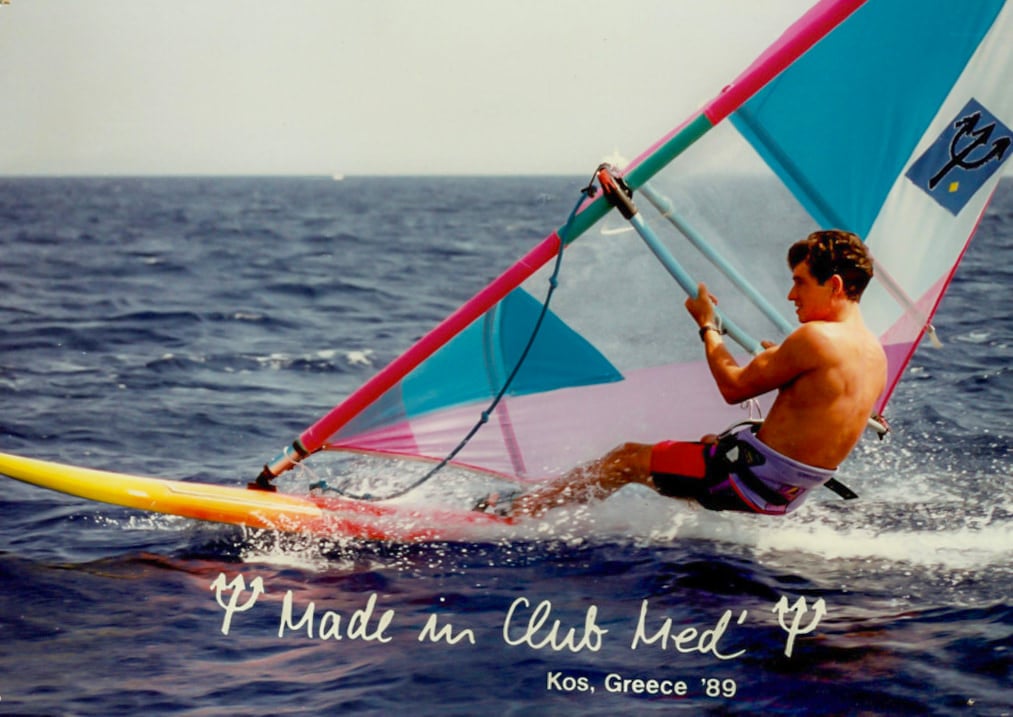
I worked as a set designer for Club Med for eight years, building stages and creating sets for their nightly shows on a rotating 15-day programme. The job was physical, creative, and came with a perk that suited me perfectly: a new country every six months. The Bahamas, New Caledonia, Tahiti, and Japan. In 1990, I spent six months at Club Med Kata Beach in Phuket, designing sets for their shows. I had no idea I would be back four years later, this time to stay.
Travelling taught me more than any book could. My appreciation for cultures and cuisine led me to love the food of Thailand, Japan, Korea, France and Italy. Food has always been part of how I travel.
In 1993, while working in Tahiti, I decided it was time to try something different. I picked a place in Asia, planning to stay for only a couple of years. That place was Phuket.
Phuket in 1994
Phuket was a peaceful island then, and a very different place from what you see today. Some of the beaches were only connected by dirt roads. Kamala Beach was just a fishing village with wooden houses along the beach. Kata Beach and Karon Beach were small towns with a few restaurants and bars. Club Med was the big deal there. Phi Phi Island was mostly deserted, with just a small village on Tonsai Bay, so imagine how beautiful Maya Bay was before the rest of the world found it.
Patong, where I lived, was small and quiet. Bangla Road was just a handful of beer bars, a couple of go-go bars, a couple of nightclubs and some live music. Phuket Town was not considered interesting by most tourists. It was mostly for locals, and many of the now incredibly popular Sino-Portuguese mansions and shophouses were abandoned and in poor condition. There was only one department store, at the clock circle, and it closed later. Finding coffee and bread for a farang was a luxury.
My first job was as a Guest Relations Officer at the newly opened Banyan Tree Resort in Bang Tao Beach. Laguna Phuket at the time had nothing but five resorts, and that was about it. There was nothing else around. Getting there every day on a small motorcycle was quite an adventure, especially on rainy days.
My salary was 12,000 baht a month. Street food became part of daily life, not by choice.
From Microsoft Word to Phuket 101
At the Banyan Tree, I was introduced to computers for the first time. My job was to use Microsoft Word to write welcome letters for each guest. In my free time, I discovered there was a drawing toolbar at the bottom of the screen. I spent so much time drawing with it that, a few years later, it led me to open my own advertising company.
In 1996, I launched Andaman Graphics, mostly designing logos and printing brochures at the beginning. There was a huge demand and almost no designers on the island, so work came fast. Being a self-taught set designer for Club Med for eight years gave me enough creative experience to handle anything clients threw at me. There was so much work that I would stay up until 4 am, then open the shop at 9 am. It was exhausting, but I loved it. The diving industry was booming, and most of my early clients were dive centres.
In 2000, an expat businessman made me an offer I could not refuse: to join a new company called Asia Web Direct and help build a network of travel websites, starting with Phuket.com and later Bangkok.com. The company grew fast. It was acquired by Wotif, then later by Expedia, where I created the Hotels.com Go Guides international travel guide with my team. I was lucky enough to keep the same job through three companies, working in UX design and SEO for nearly two decades. My professional life took a direction I never expected when I first arrived with that suitcase, and it gave me a deep understanding of how people search for and book travel online.
The Tsunami
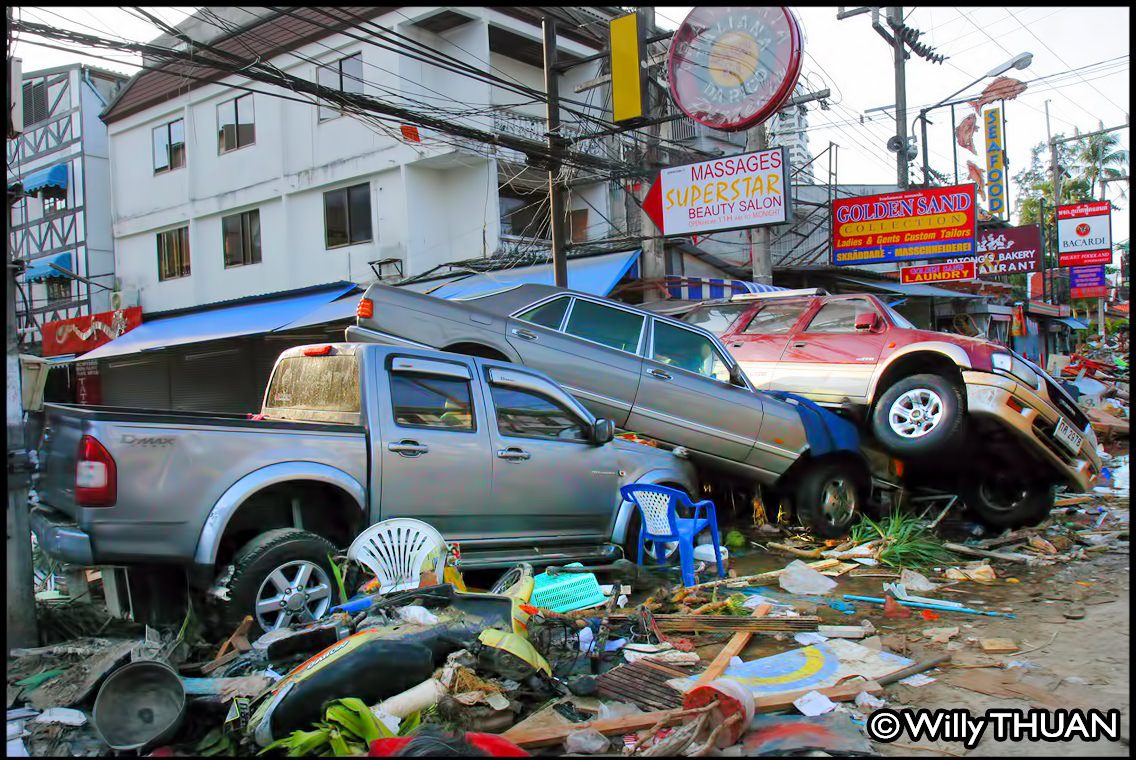
On 26 December 2004, I was living in Patong. I was supposed to go for a photo shoot on the beach that morning. There was an earthquake earlier, the first one ever felt in Phuket. I did not think much of it. I felt lazy and decided to go later. That probably saved my life.
I lived in a narrow street, just 100 metres from where the wave stopped. I did not see it, and I did not realise how bad it was until the next day. When I walked the devastated streets of Patong, nothing could prepare me for what I saw. In the weeks that followed, I chose to document the island’s rebuilding rather than its destruction. While news reporters were showing devastation, I shared the recovery. A French TV crew came to my door and asked to follow me for a few days. I said yes, though it turned out not to be something I was comfortable with.
Watching Phuket rebuild gave me a perspective on this island that most travel writers do not have. You can read the full story and see the photos here.
Why I Started Phuket 101
Phuket 101 was born on 15 January 2011. At the time, there were plenty of websites about Phuket, but most were either too formal, hard to navigate, or written by people who had never set foot on the island. I wanted to create something different: a guide based entirely on personal experience, with original photography, honest opinions, and the kind of local detail that only comes from living somewhere for a very long time.
Every place on this site has been visited and photographed by me. Working for hotel companies for nearly two decades gave me countless chances to stay at hotels across Phuket, whether for work or a weekend break. When I started Phuket 101 in 2011, I increased my hotel stays to write articles and take photos. In total, I have stayed at more than 100 hotels in Phuket and around.
I always paid to stay at hotels, and I paid for every restaurant I ate at. This is very important to Phuket 101 because it is the only way to stay honest. No press trips, no sponsored stays, no free meals. If I recommend a place, it is because I genuinely think it is worth your time and money.
Photography
Photography is a lifelong passion and the reason Phuket 101 looks the way it does. Apart from hotel-supplied photos, every image on this site is mine. I mostly shoot with a Sony Alpha 7C with a 16-35mm F2.8 GM lens and a Canon EOS R. I also use a DJI Air 2 and DJI Mini 2 drone for aerial shots. A lot of the casual shots and videos are taken with an iPhone because it is always in my pocket.
After 30 years, I am still looking for new angles and new places to photograph. Phuket keeps changing, and there is always something new to document.
In the Media
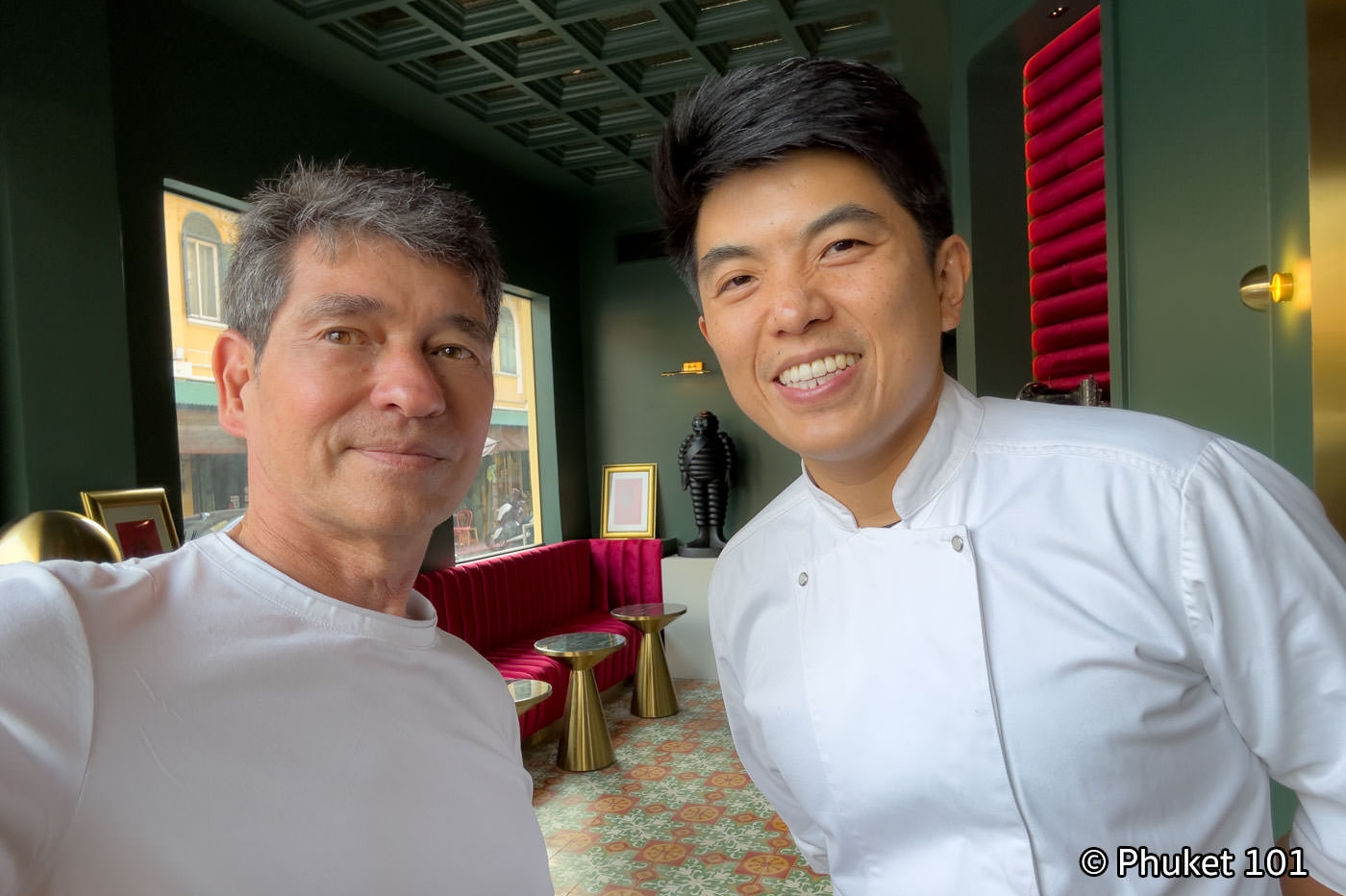 Phuket 101 has been featured on CNN and in Thailand’s national newspapers. I was interviewed on French TV for a documentary about Phuket’s recovery after the 2004 tsunami and appeared on Netflix in the “Chefs Uncut” series in 2024, alongside Chef Ton (watch here).
Why Trust This Guide?
I have been living in Phuket since 1994. I have watched hotels open and close, beaches change beyond recognition, and the island transform from a quiet place with dirt roads and fishing villages into one of Asia’s biggest tourist destinations. I remember when Bangla Road was a handful of bars, when Phuket Town’s shophouses were crumbling, and when you could have Maya Bay to yourself. I have stayed at more than 100 hotels, explored all 46 beaches on the island, and eaten at more restaurants than I can count.
I know which beaches get crowded by 2pm, which restaurants the locals actually go to, and which hotel pools look great in photos but are disappointing in person. That kind of knowledge only comes from being here, year after year.
I still live here. I still eat at the restaurants I recommend. I still drive past the beaches I write about every week. That is the difference between this guide and one written from a desk somewhere else.
Languages: French, English, conversational Japanese, conversational Thai
Based in: Phuket & Bangkok, Thailand