
How a Forgotten Trading Street Became One of Bangkok’s Coolest Neighbourhoods

For over a century, Song Wat Road quietly existed as one of Bangkok’s most anonymous streets. Running parallel to the famous Yaowarat Road in Chinatown, this 1.2-kilometre stretch was lined with neglected shophouses, empty warehouses, and small local businesses that few visitors ever noticed. Then the street artists arrived, the coffee roasters followed, and Time Out magazine named it the 39th coolest neighbourhood in the world.
| Song Wat Road Quick Info | |
|---|---|
| Length | 1.2 km (walkable in 2-3 hours with stops) |
| Where | Samphanthawong district, parallel to Yaowarat Road and the Chao Phraya River |
| Nearest MRT | Wat Mangkon station (Exit 1, walk through Yaowaphanit Road) |
| Best Time to Go | Weekday mornings (10 am start). Many food spots sell out by noon |
| Combine With | Talad Noi (adjacent) and Yaowarat Chinatown (parallel street) |
| Known For | Street art, speciality coffee, century-old food stalls, restored shophouses |
| Recognition | Time Out: 39th coolest neighbourhood in the world (2023) |
The Anonymous Years
Until recently, Song Wat Road was completely off most visitors’ radar. The historic street, named after King Rama V who literally “drew” its path on a map after a devastating fire in 1906, had become mostly empty by the late 20th century.
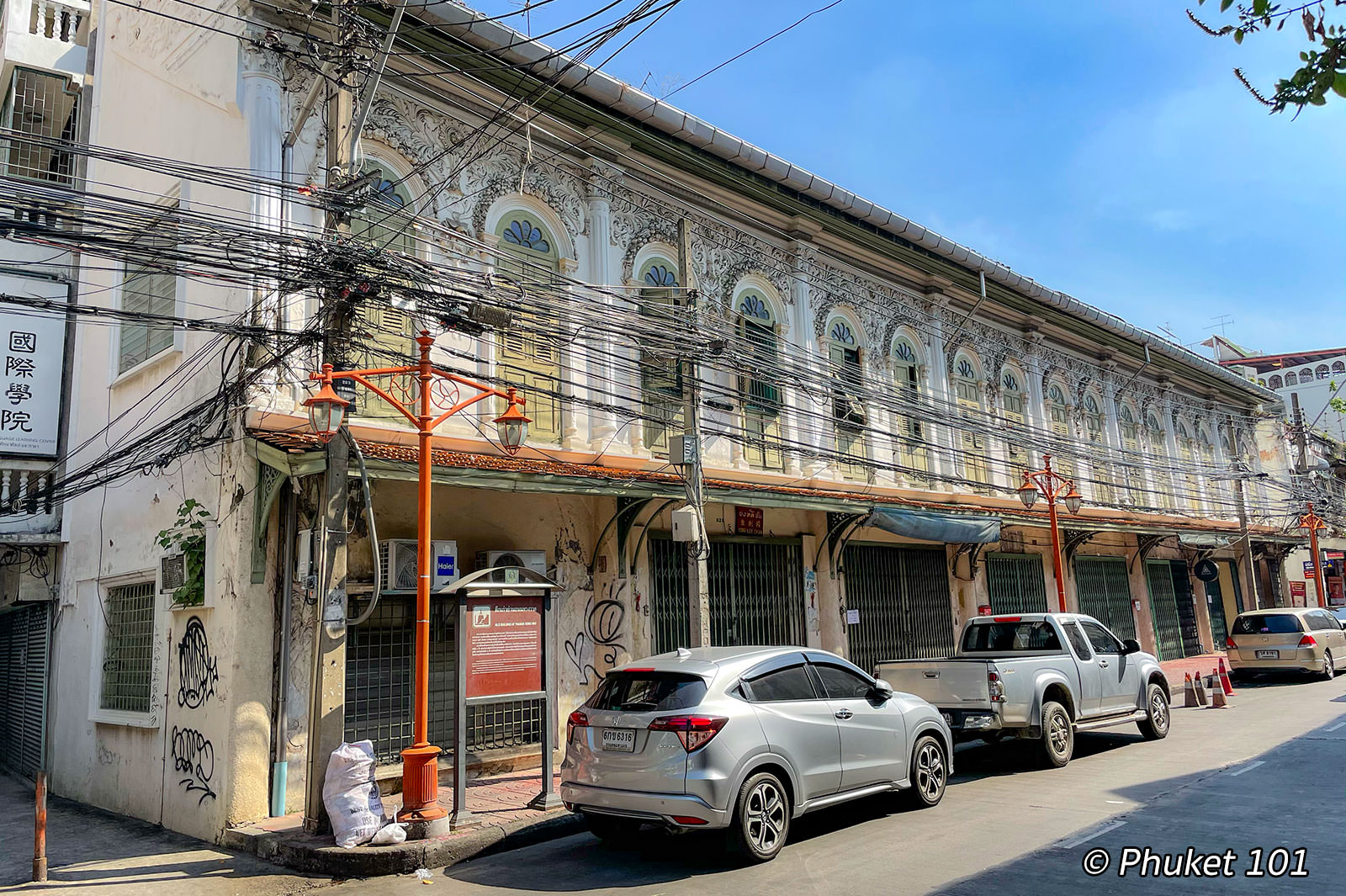
The old shophouses that once housed Bangkok’s most important trading companies sat largely abandoned or severely neglected. You could find spice warehouses, hardware stores, and small homeware shops that catered exclusively to locals, but these businesses operated in virtual anonymity. The street’s decline began in the 1950s when Bangkok’s new container port opened, making Song Wat’s piers and warehouses obsolete.
The Trading Heritage
Before its decline, Song Wat Road served as Bangkok’s vital hub for rice and spice trade. These distinctive Sino-Portuguese shophouses were originally built as offices and warehouses for agricultural goods. Many of Thailand’s largest companies, including CP Group, Bangkok Bank, and ThaiBev, originated from small businesses on Song Wat Road during its trading heyday.
The Street Art and the Turnaround
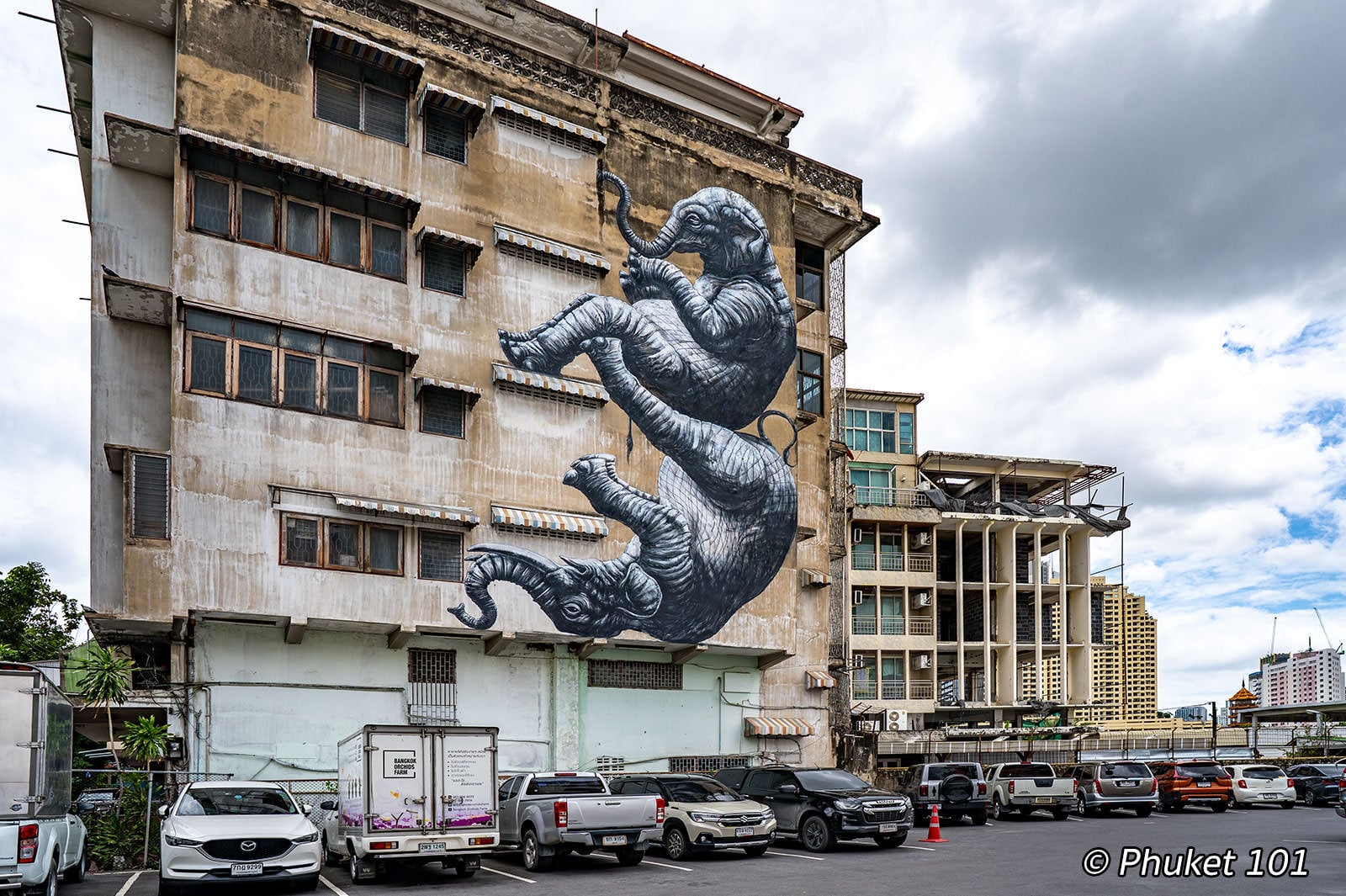
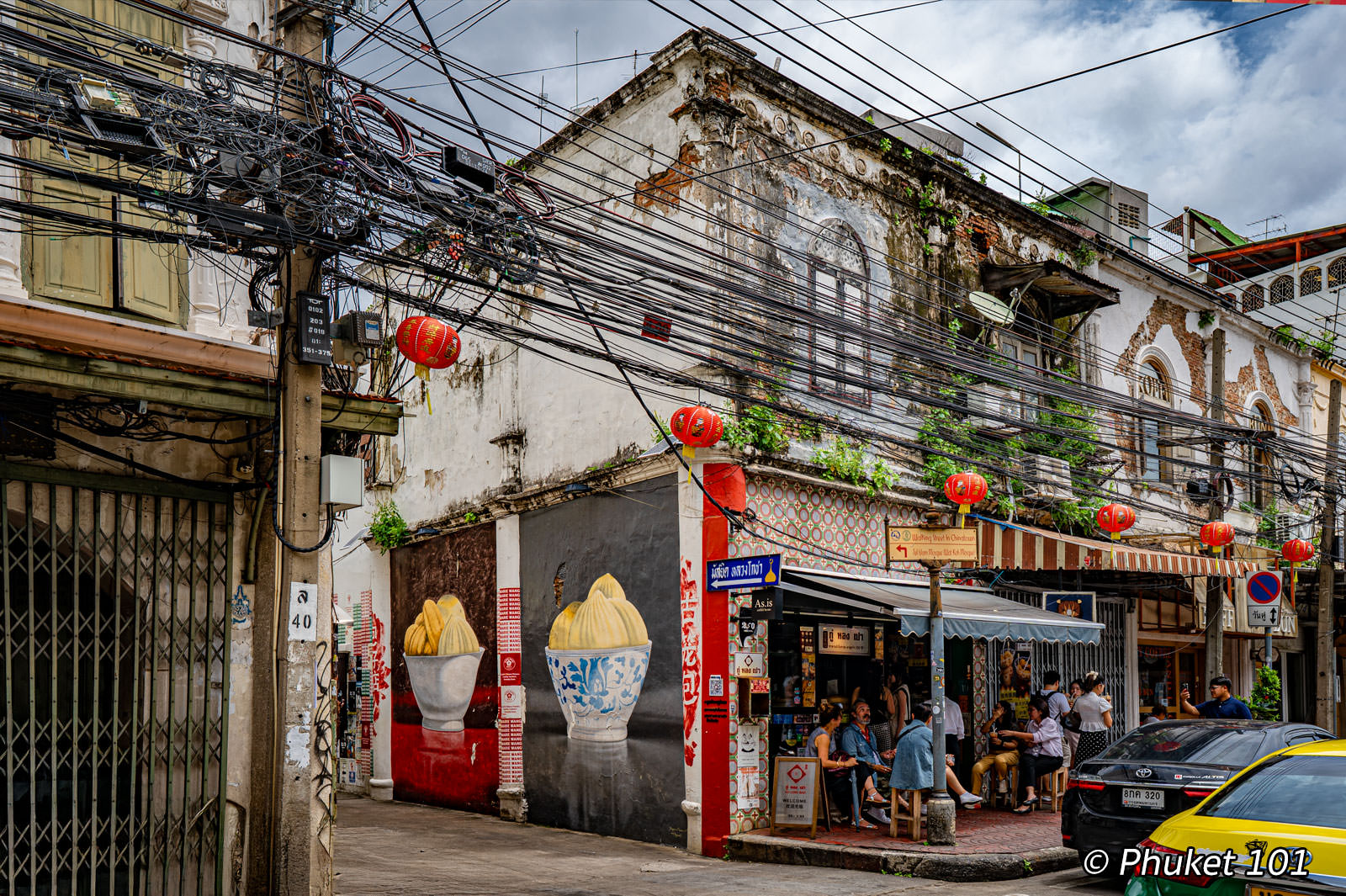
What made Song Wat Road’s transformation possible was its prime riverside location along the Chao Phraya River. The change began around 2016 when the street became a canvas for international street artists. The most famous result was a mural featuring two colossal elephants painted by Belgian artist ROA, which helped bring attention to this underrated street.
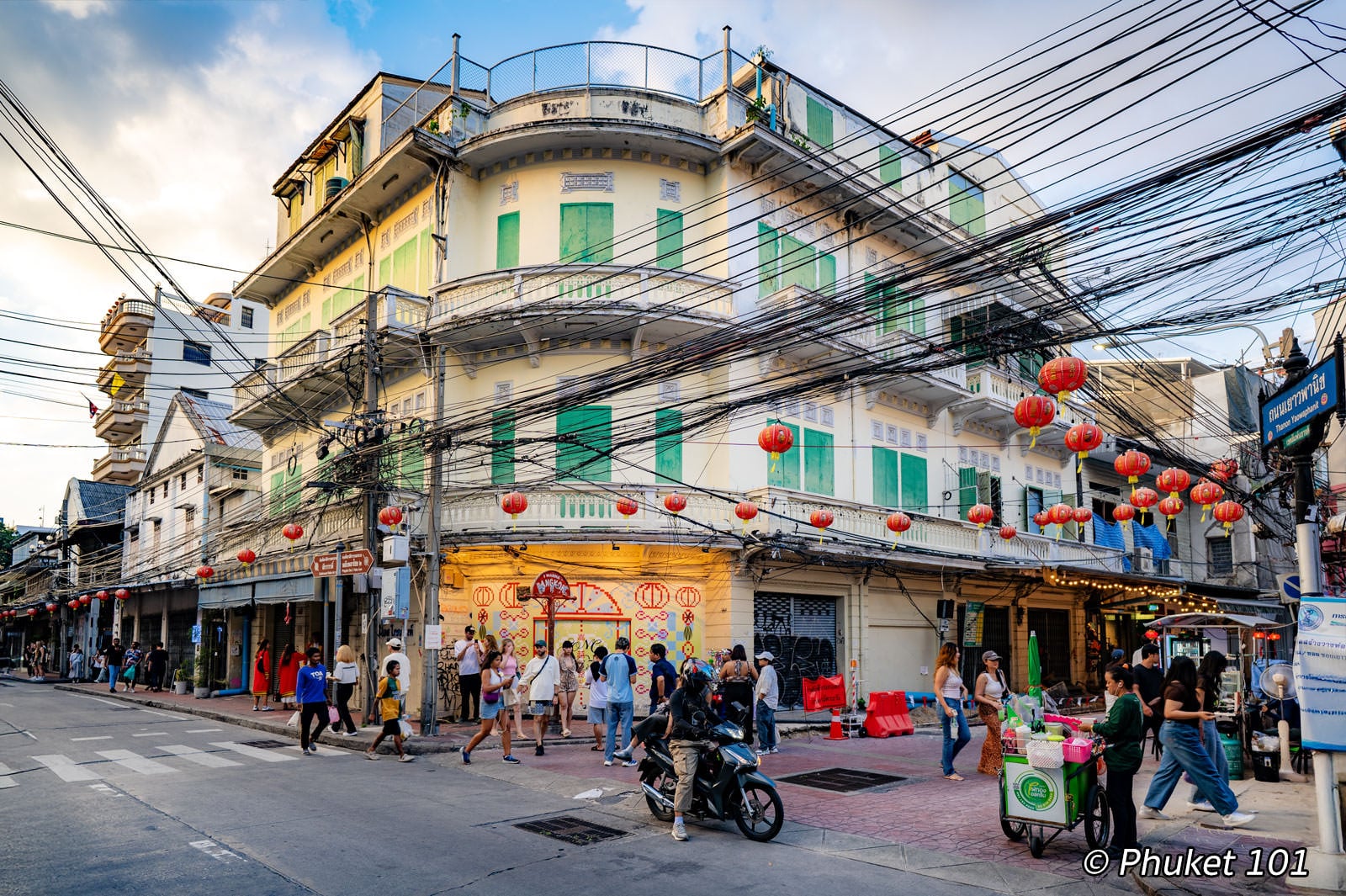
The Made in Song Wat community initiative, launched by local resident Kiattiwat Srichanwanpen, played a crucial role in coordinating this renaissance. Starting with just 10 participating businesses, the group has grown to include over 60 establishments.
How to Walk Song Wat Road
The whole street is 1.2 km long. Allow 2 to 3 hours with food and coffee stops. Start from the Talad Noi end (near Wat Pathum Khongkha) and walk north toward Ratchawong Pier. This order puts the best street art, cafes, and food stalls in a natural sequence.
Start (Talad Noi end): Begin at Wat Pathum Khongkha, the royal temple at the southern end. Walk past the Lao Pun Tao Kong Shrine and the Luang Kocha Itsahak Mosque. Three places of worship from three religions within 200 metres of each other. This tells you everything about Song Wat’s multicultural history.
First stop: Coffee: Terroir BKK or Choch SongWat for a proper speciality coffee to start. Both are on the main road.
Mid-morning: Food: Hit Urai Braised Goose before noon (they sell out). Then Gu Long Bao for steamed buns you can watch being folded through the window. If you see a queue at Nai Yong Noodle, join it.
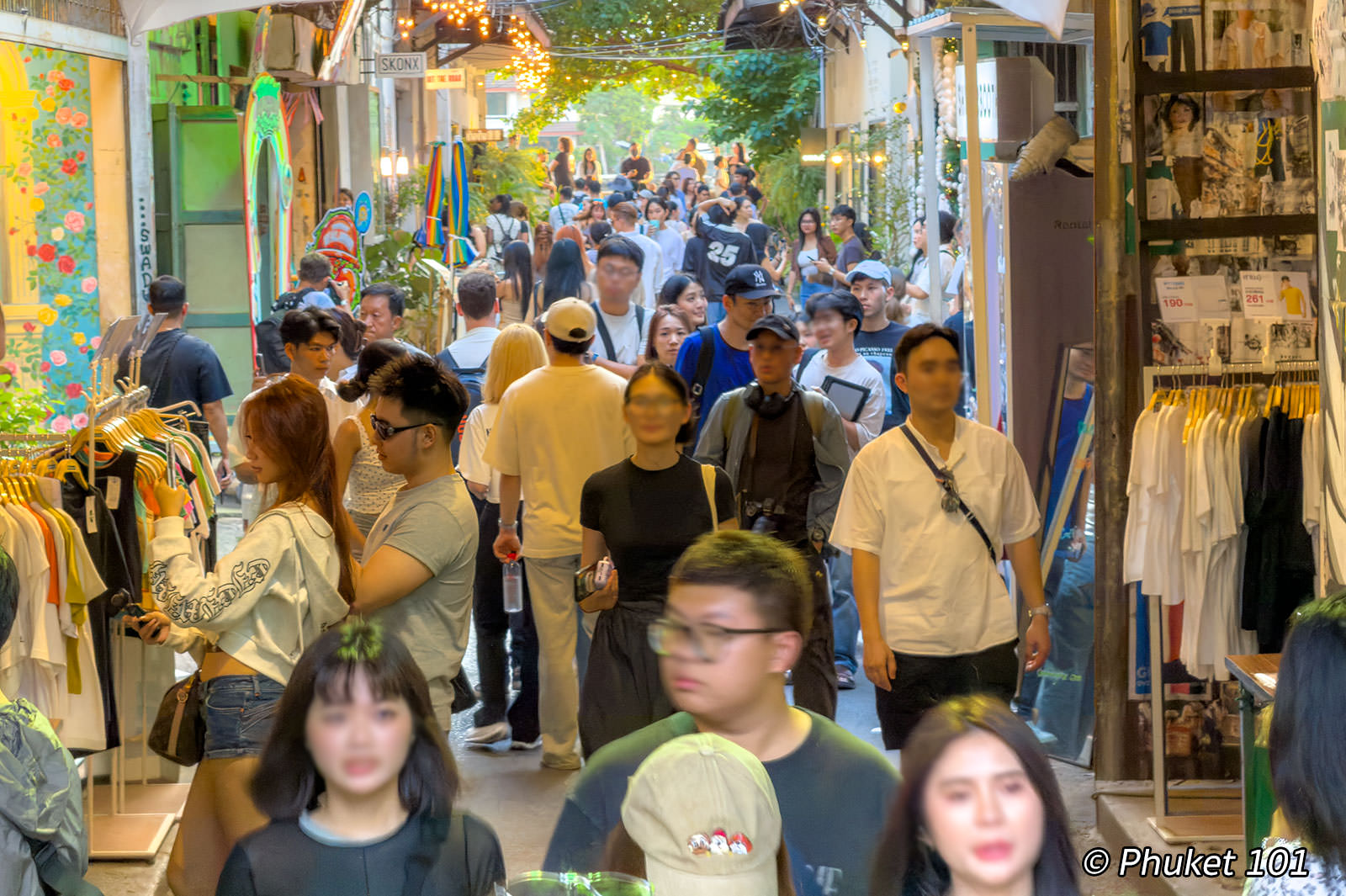
Song Wat Lane: Turn into the tiny 20-metre lane branching off the main road. This is the busiest section, packed with vintage shops and cafes. The Analog Space and Vintage Shop is worth a look.
Street art: ROA’s elephants are the landmark mural. Keep your eyes on side walls and alleys for newer work, including Kitsune Jolene’s 2024 mural commissioned for Thai-Belgian relations.
Lunch: Kang Kaang (riverside Thai food) or e-ga Lab (traditional Thai with contemporary presentation). Both need a deliberate detour down an alley.
Afternoon wind-down: FV Cafe for a watermelon granita, or Barbon rooftop for cocktails overlooking the river at sunset.
Continue to Talad Noi: Song Wat Road flows directly into Talad Noi, Bangkok’s oldest neighbourhood. Both areas work well together in a single morning if you don’t mind the heat. Start early.
Cafes, Restaurants, and What Opened Next
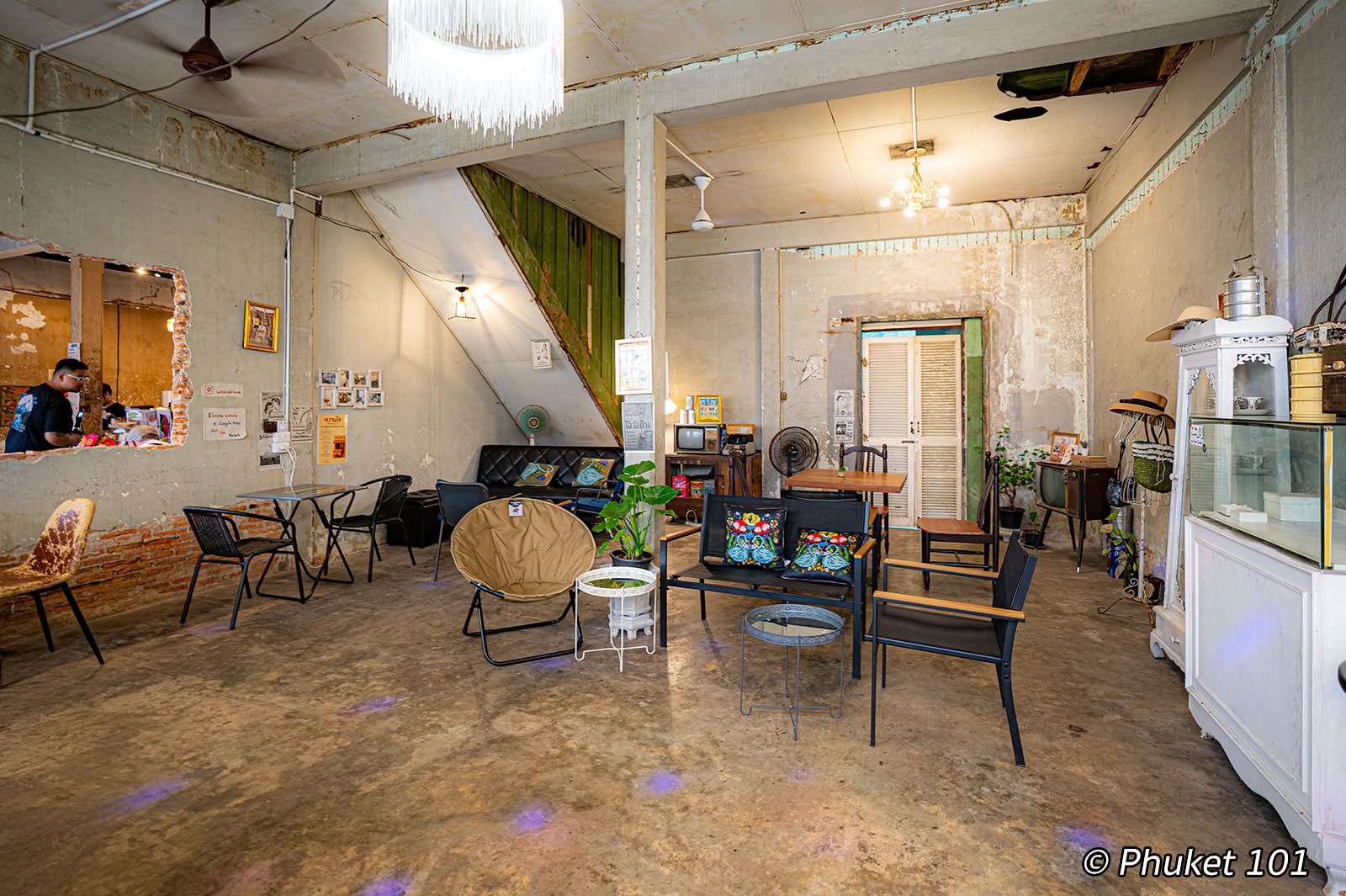
Once the first cafes proved successful, more kept opening. I counted at least ten new coffee shops on my last visit. The street now has everything from speciality coffee roasters like Song Wat Coffee Roasters to experimental venues like FV Cafe. Thai restaurant e-ga serves home-style dishes, while Bad Poutine offers Canadian-inspired dishes with Thai twists.
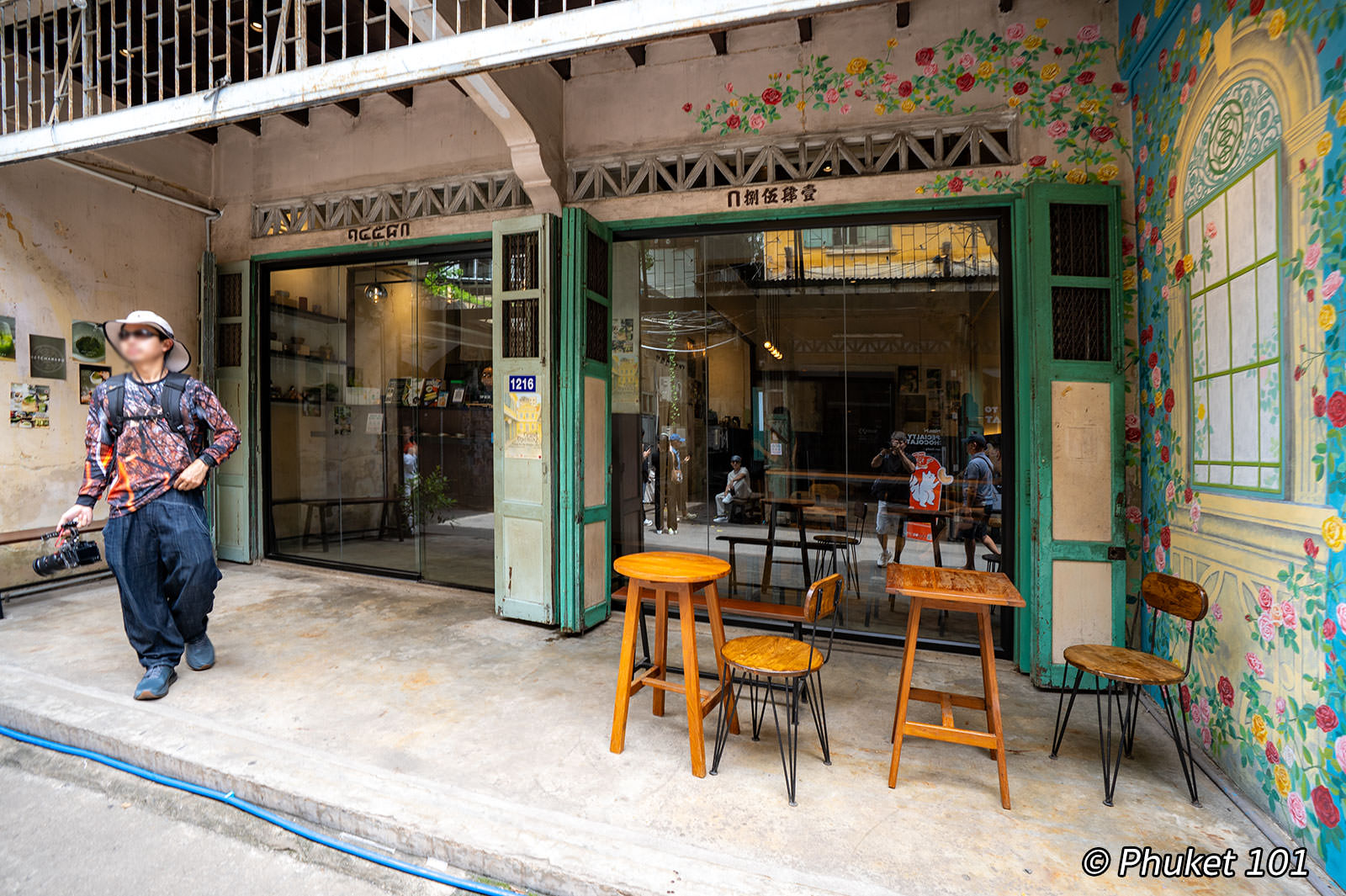
What makes Song Wat’s transformation unique is how new businesses coexist with century-old establishments. You can still find Gu Long Bao, serving artisan steamed buns from a recipe passed down five generations, alongside Urai Braised Goose, which has been operating for 50 years.
Song Wat Lane
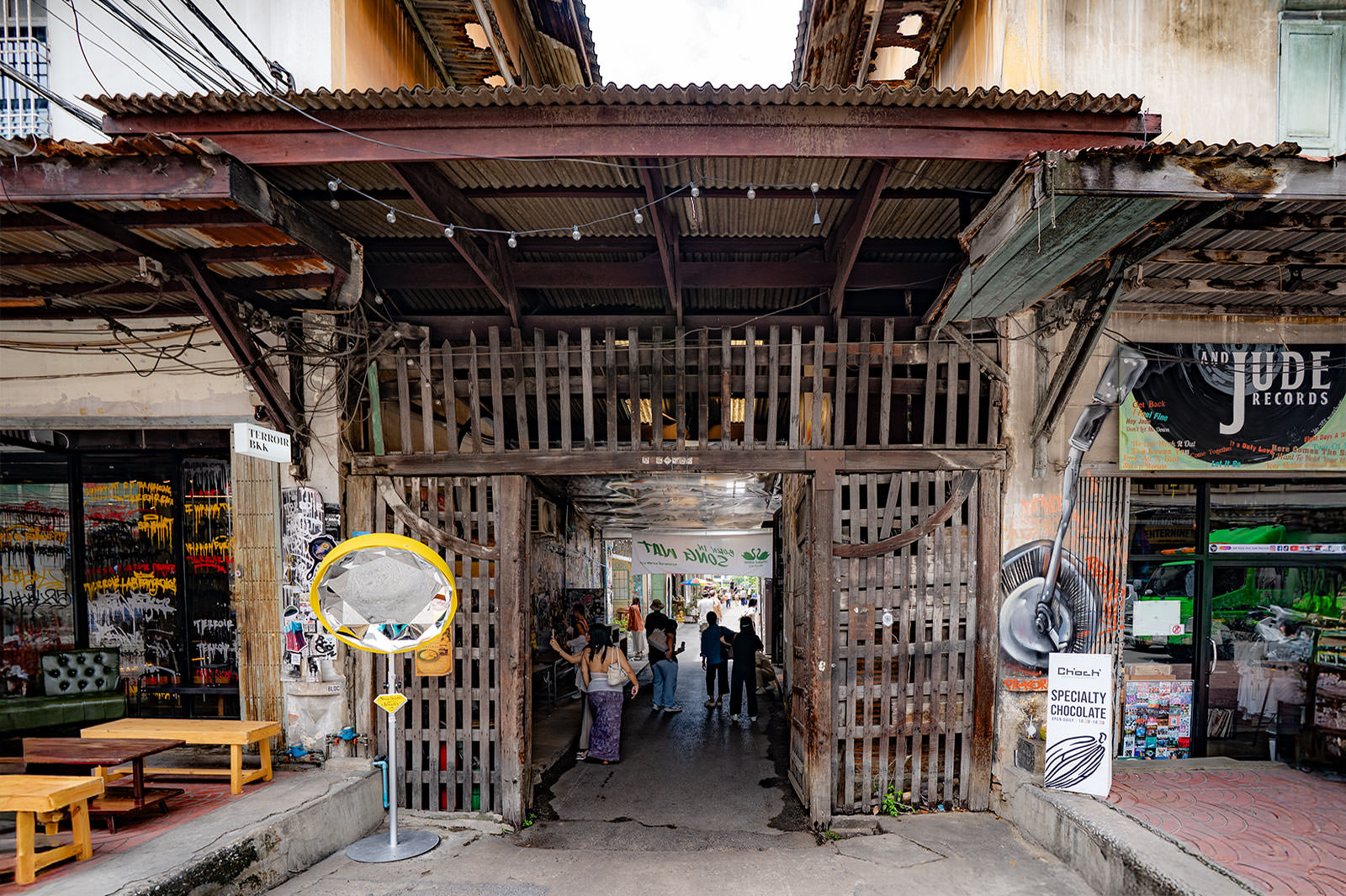
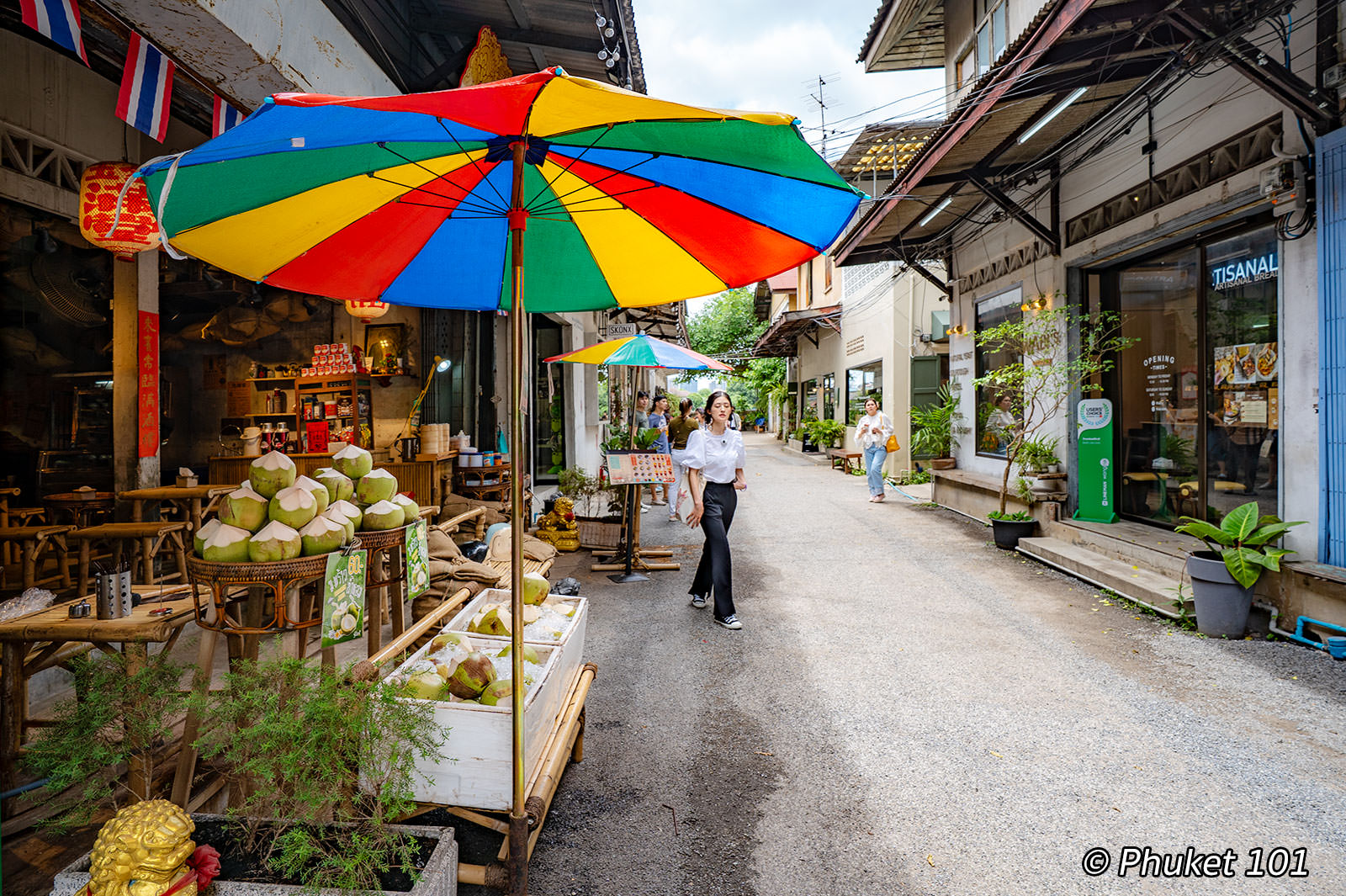
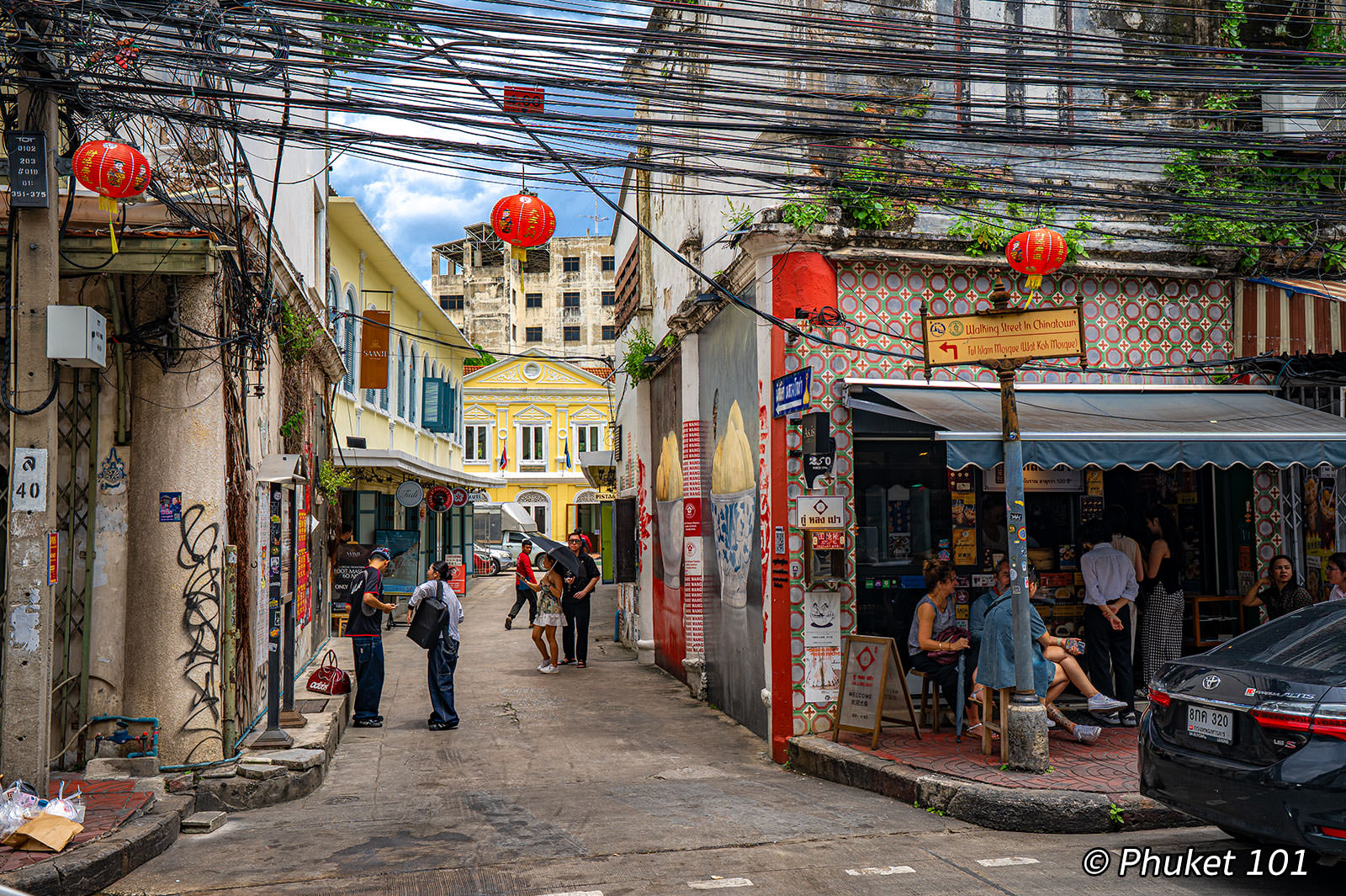
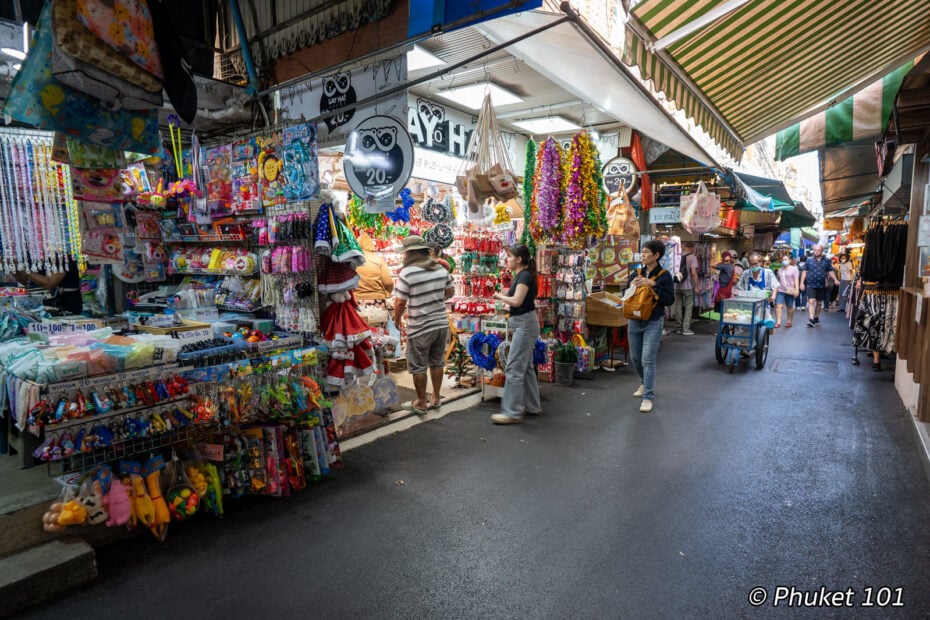
Song Wat Lane is a tiny 20-metre lane that branches off Song Wat Road and has become the busiest lane on the street, full of vintage shops and cafes.
The lane sits within the historic Song Wat area, which King Chulalongkorn built in 1892 after a major fire destroyed much of the Sampheng district. The king personally drew the road layout on a map with a pencil, giving Song Wat its name, meaning “he drew”.
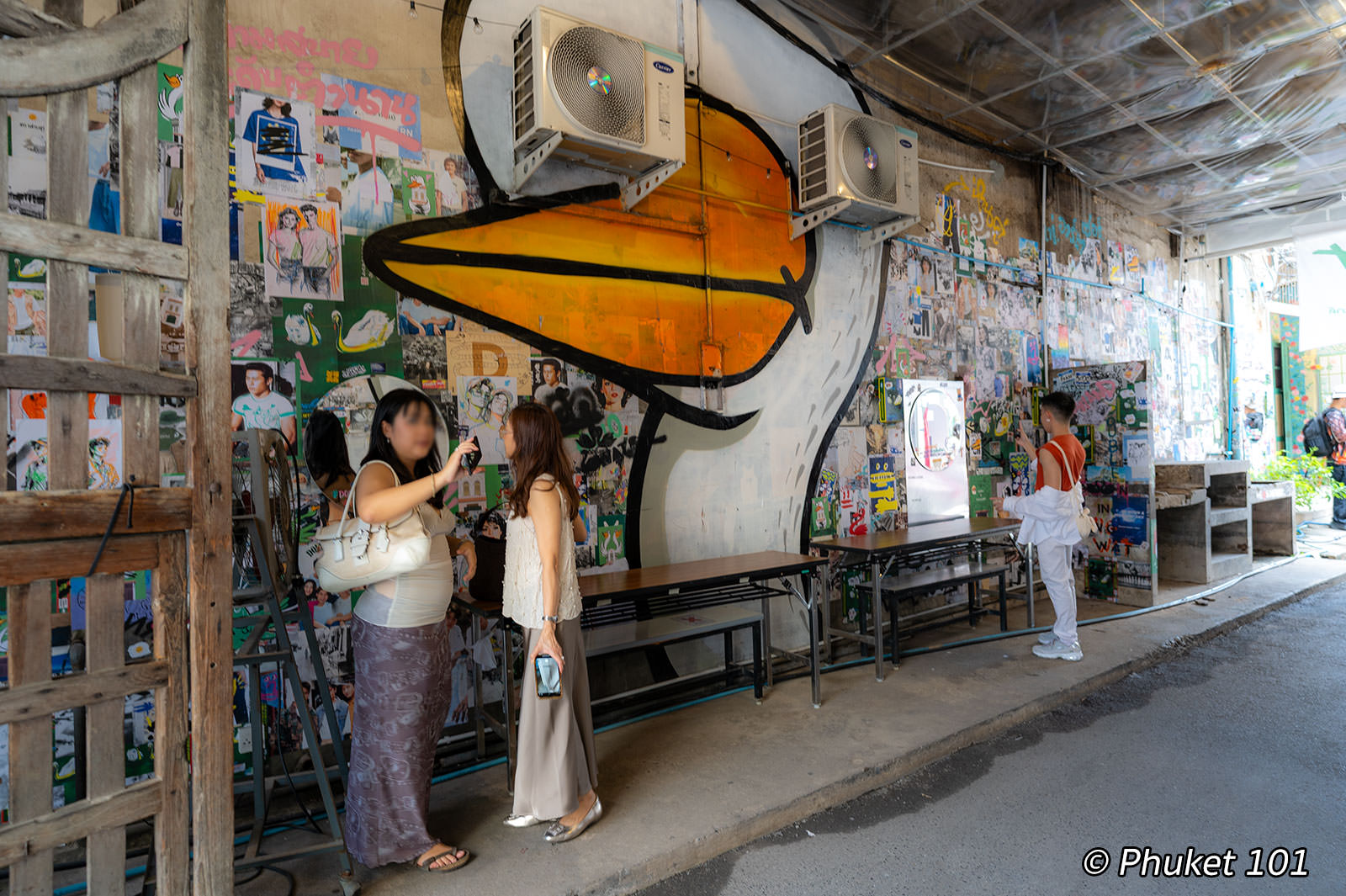
Today, Song Wat Road features restored Sino-Portuguese shophouses, speciality coffee shops, art galleries, and the “Made in Song Wat” community initiative. The area earned recognition as one of Time Out’s 40 coolest neighbourhoods worldwide in 2023.
Where to Eat in and Around Song Wat Road
Urai Braised Goose
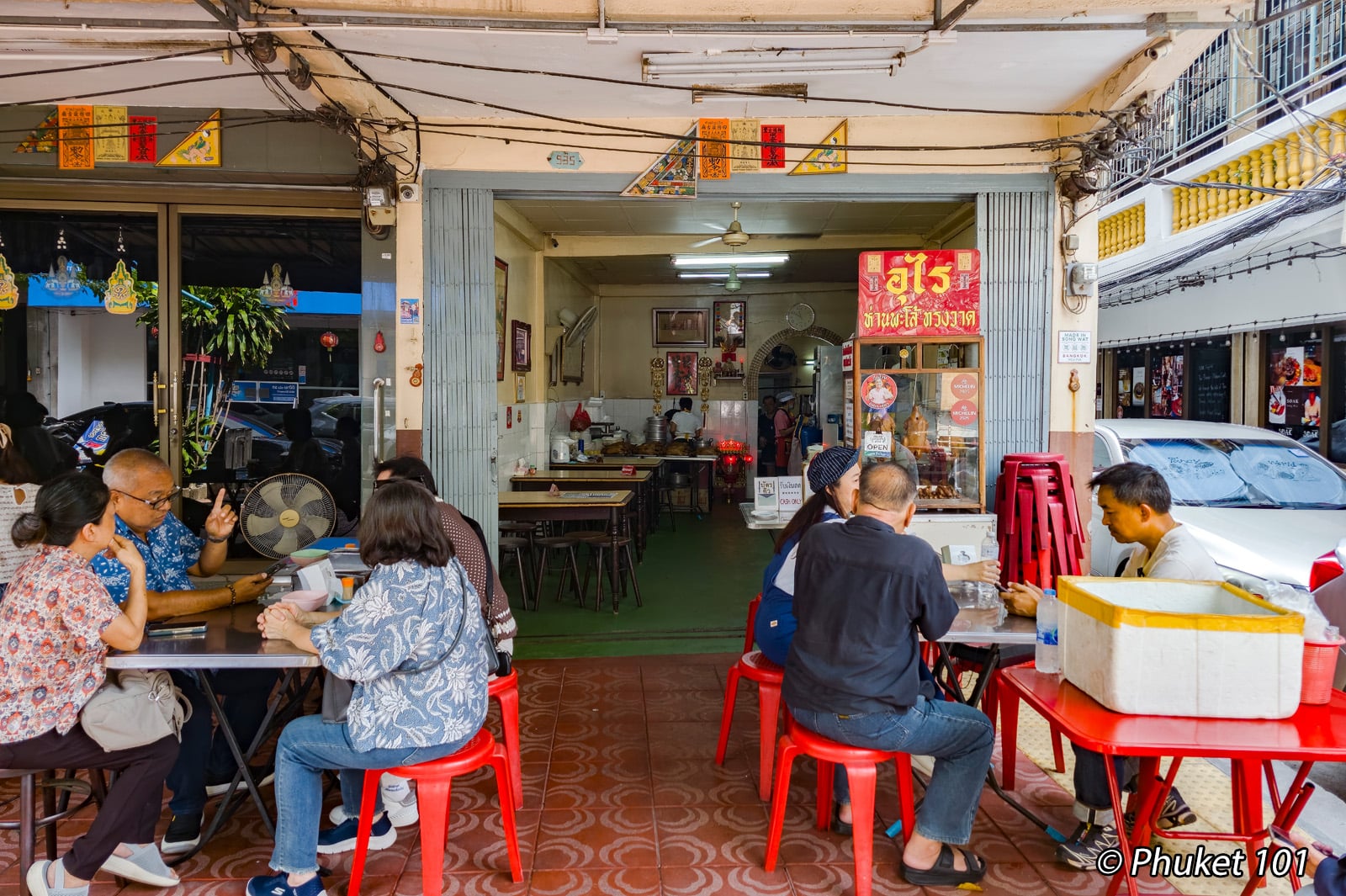
Urai Braised Goose has been doing one thing for over six decades and doing it very well. This family-run shophouse on Song Wat Road has built its reputation entirely on Teochew-style braised goose, slow-cooked each morning in a broth of soy sauce, Chinese five-spice, and aromatics passed down through generations. There is no reinvention here, no menu expansion, no pivot. Just goose, a handful of sides, and a “sold out” sign that goes up most days before noon.


Address: 935 Song Wat Rd, Samphanthawong, Bangkok 10100
Hours: 10 am – 1 pm, 4 pm – 7 pm
Kang Kaang Restaurant
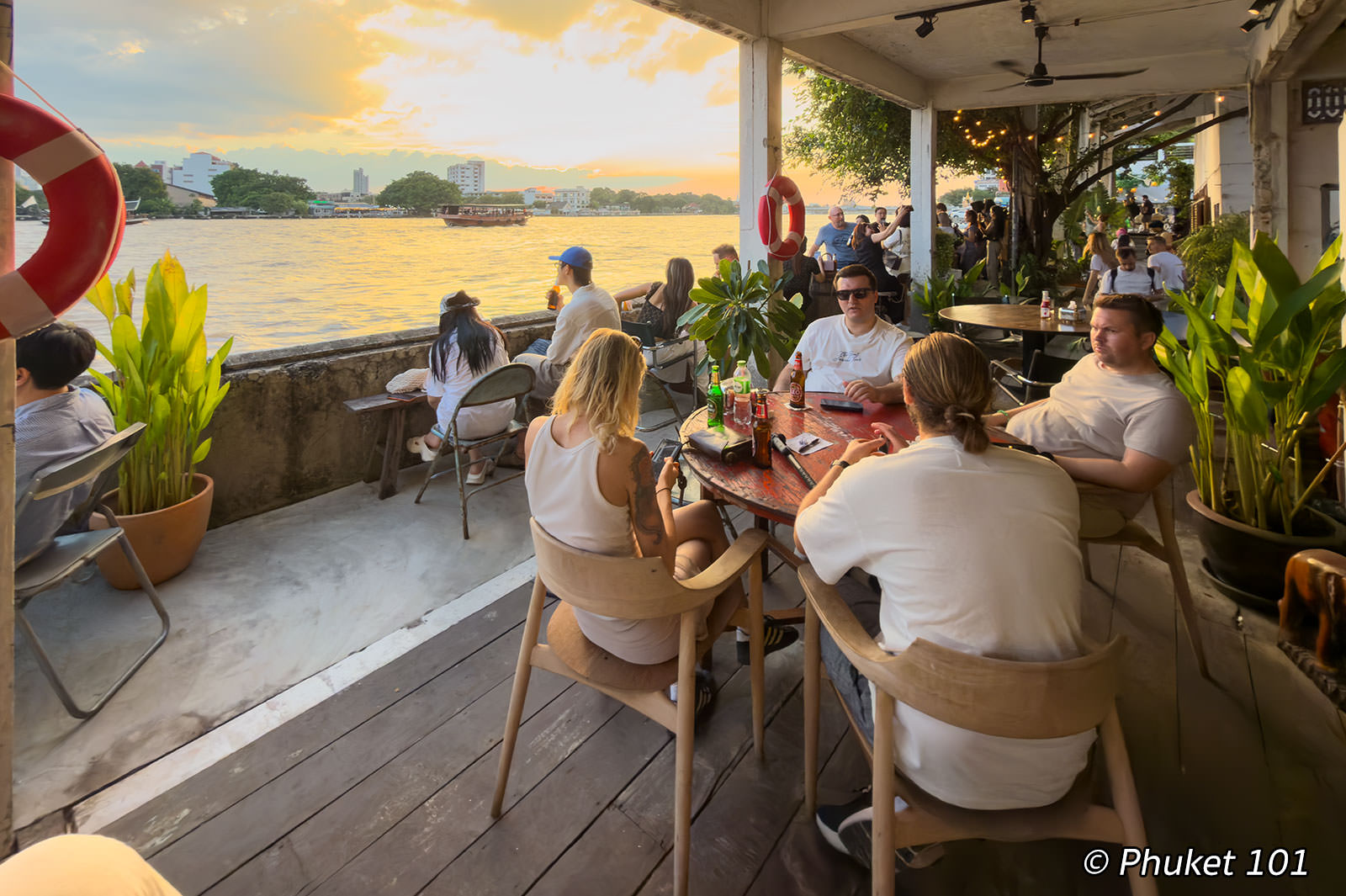
Kang Kaang is a laid-back Thai restaurant on Song Wat Road, at the end of a narrow alleyway and overlooking the Chao Phraya River. The space occupies a converted house with partially removed walls, creating an open, casual setting. Inside, you’ll find mismatched tables, basic wooden chairs, and a small counter for ordering, with both indoor and outdoor seating offering direct river views.


Address: 1204 Song Wat Rd, Khwaeng Chakkrawat, Samphanthawong, Bangkok 10100
Hours: 11 am – 6 pm (closed on Monday)
Naam 1608
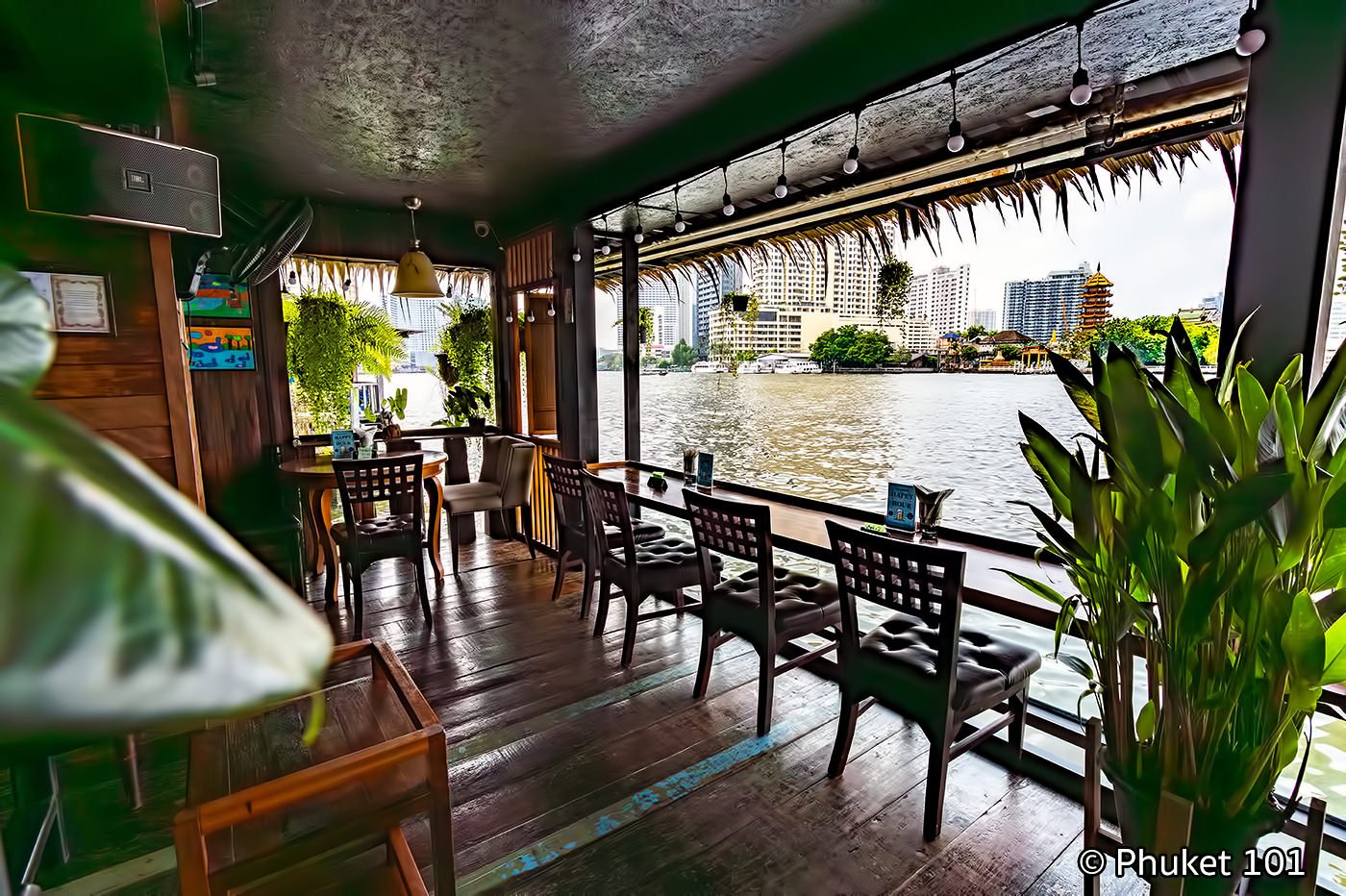
Naam 1608 is one of those rare restaurants you don’t just stumble upon: you have to know it’s there. Hidden deep between Song Wat Road and Talad Noi, along a narrow riverside lane behind a Thai temple, this Thai restaurant sits quietly by the Chao Phraya River, offering a calm escape from the busy streets of Chinatown.
Address: 1608 Song Wat Rd, Samphanthawong, Bangkok 10100
Hours: 11 am – 11 pm
Phone: 091 936 1632
e-ga LAB
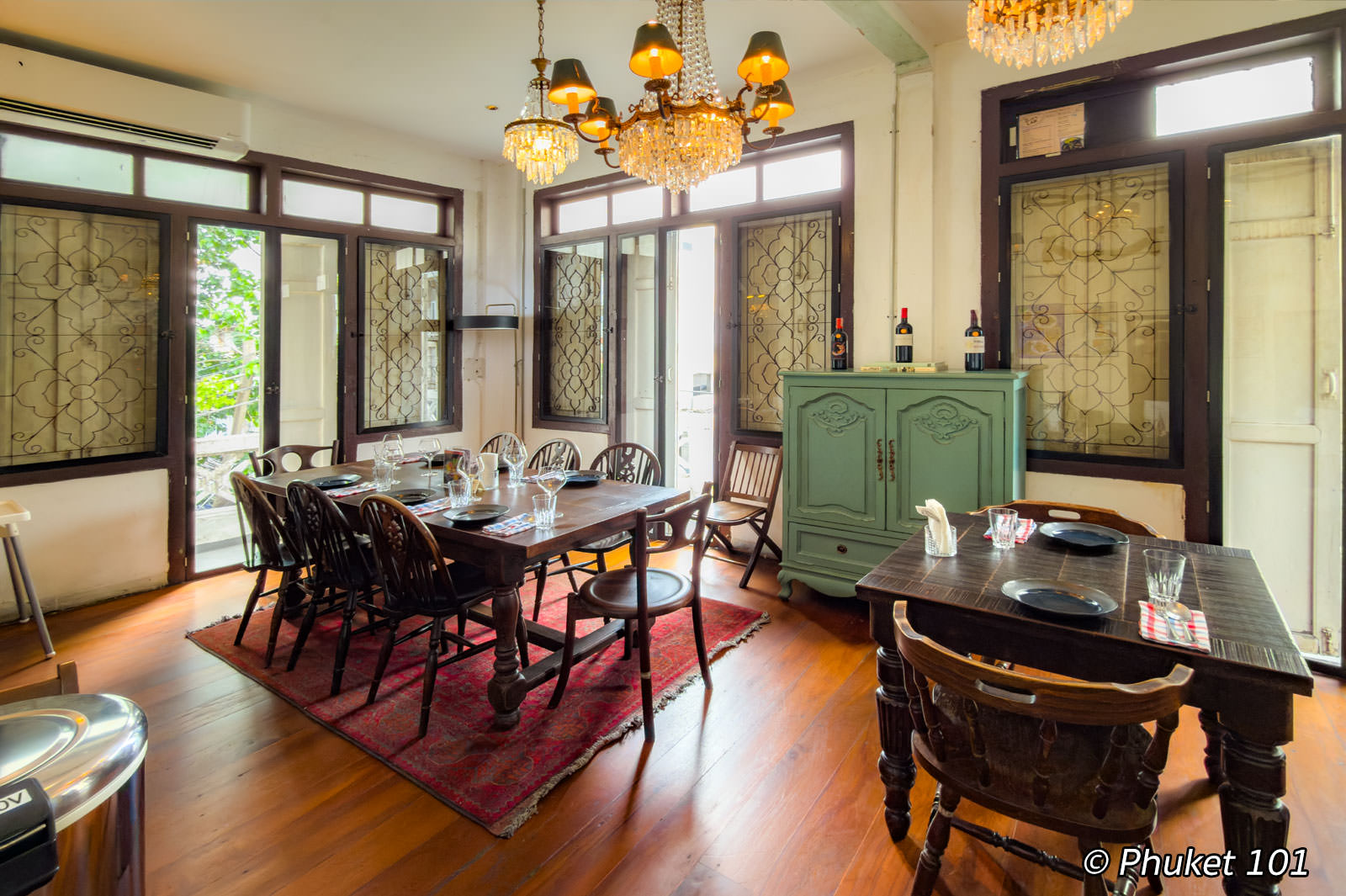
e-ga Lab serves traditional Thai cuisine with contemporary presentation in a beautiful converted heritage building on Song Wat Road. This restaurant focuses on authentic neighbourhood cooking using carefully selected local ingredients from various Thai communities. The menu features dishes like raw prawn salad, river prawns, and mi krop with traditional recipes sourced from different regions across Thailand.


The space combines vintage interior design with colourful modern touches, fitting perfectly into the historic Song Wat Road atmosphere. e-ga Lab also has a popular bakery section called A Pink Rabbit Cake Shop, offering artisanal cakes and Italian-style coffee alongside the Thai restaurant.
Address: 829 Song Wat Rd, Chakkrawat, Samphanthawong, Bangkok 10100
Phone: 081 565 2028
Hours: 8 am – 10 pm
Barbon
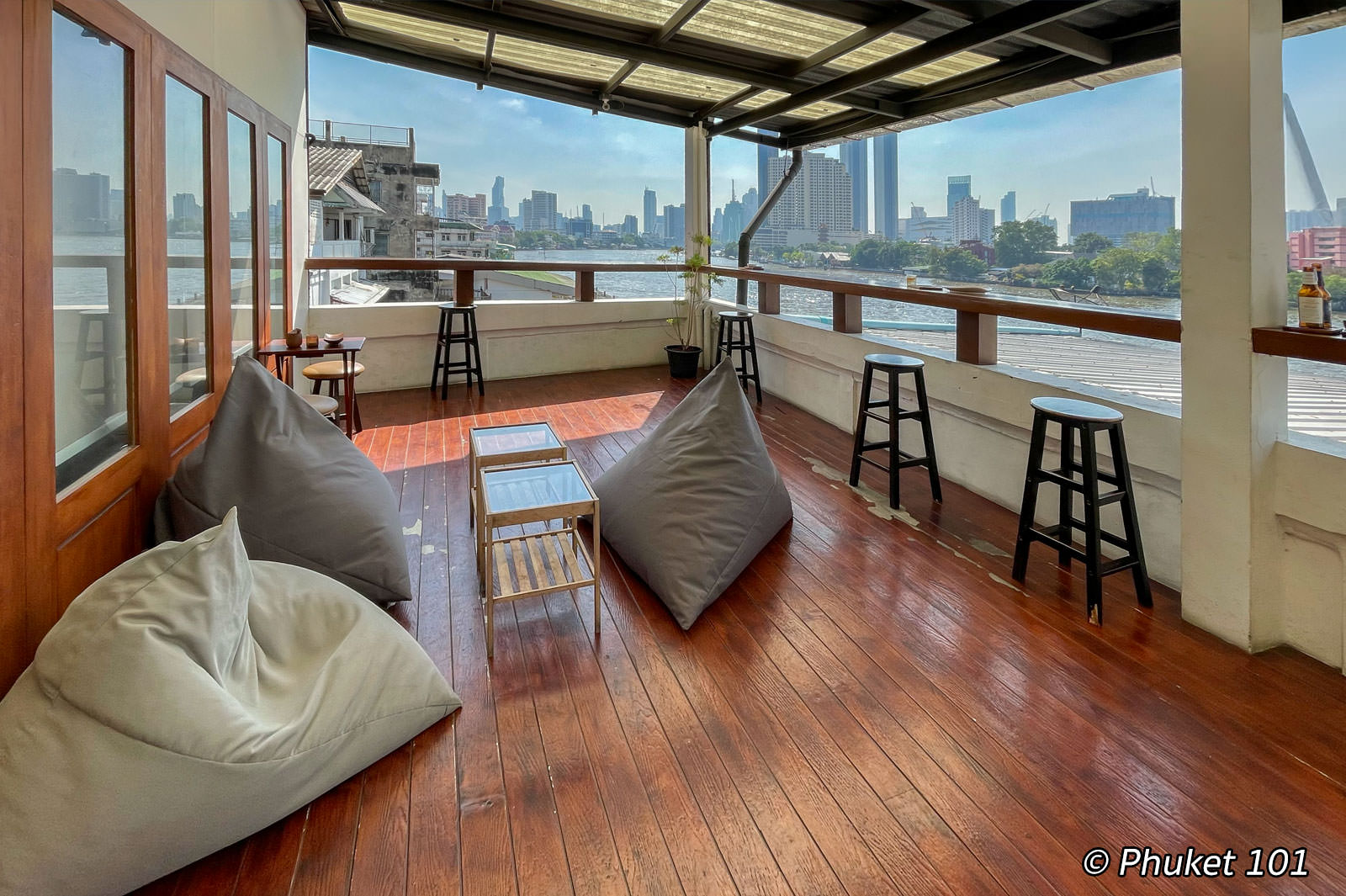
Barbon is on the third floor of Hostel Urby on Song Wat Road, featuring both an indoor space with concrete walls and an outdoor terrace overlooking the Chao Phraya River. The outdoor terrace is especially popular at sunset, offering panoramic views of the Bangkok skyline and river traffic below. Cocktails range from 190 to 400 baht, served in a space that combines vintage charm with modern industrial design. The rooftop over the river makes Barbon a standout destination for drinks with a view in Bangkok’s historic riverside district.


Address: 1222/1 Songward Road, Chakkrawat, Samphanthawong, Bangkok 10100
Hours: 3 pm – 12 am (Monday closed)
Phone: 092 249 7261
Lim Lao Ngow Fishball Noodle
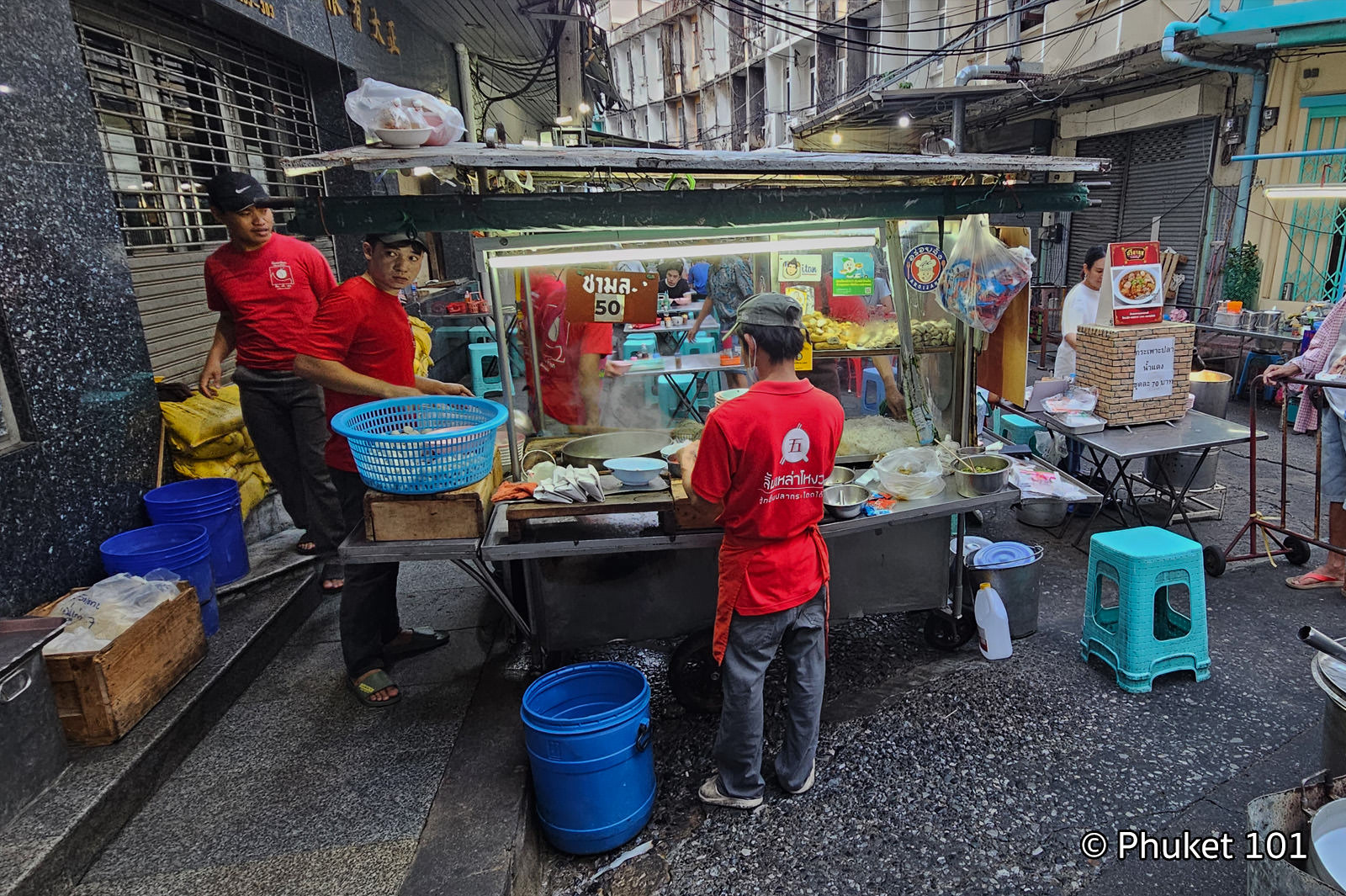
Lim Lao Ngow is one of my favourite street food stops in Bangkok’s Chinatown, and even though it’s not right on the main Yaowarat Road, it’s just a short 150-metre walk into a small side street. It’s easy to miss if you don’t know it’s there, but the Michelin Bib Gourmand sign hanging out front is a good clue. They’ve held the title for nine years in a row.


Address: 299, 301 Song Sawat Rd, Samphanthawong, Bangkok 10100
Hours: 4:30 pm – 9 pm
Phone: 081 640 4750
Mother Roaster Songwat
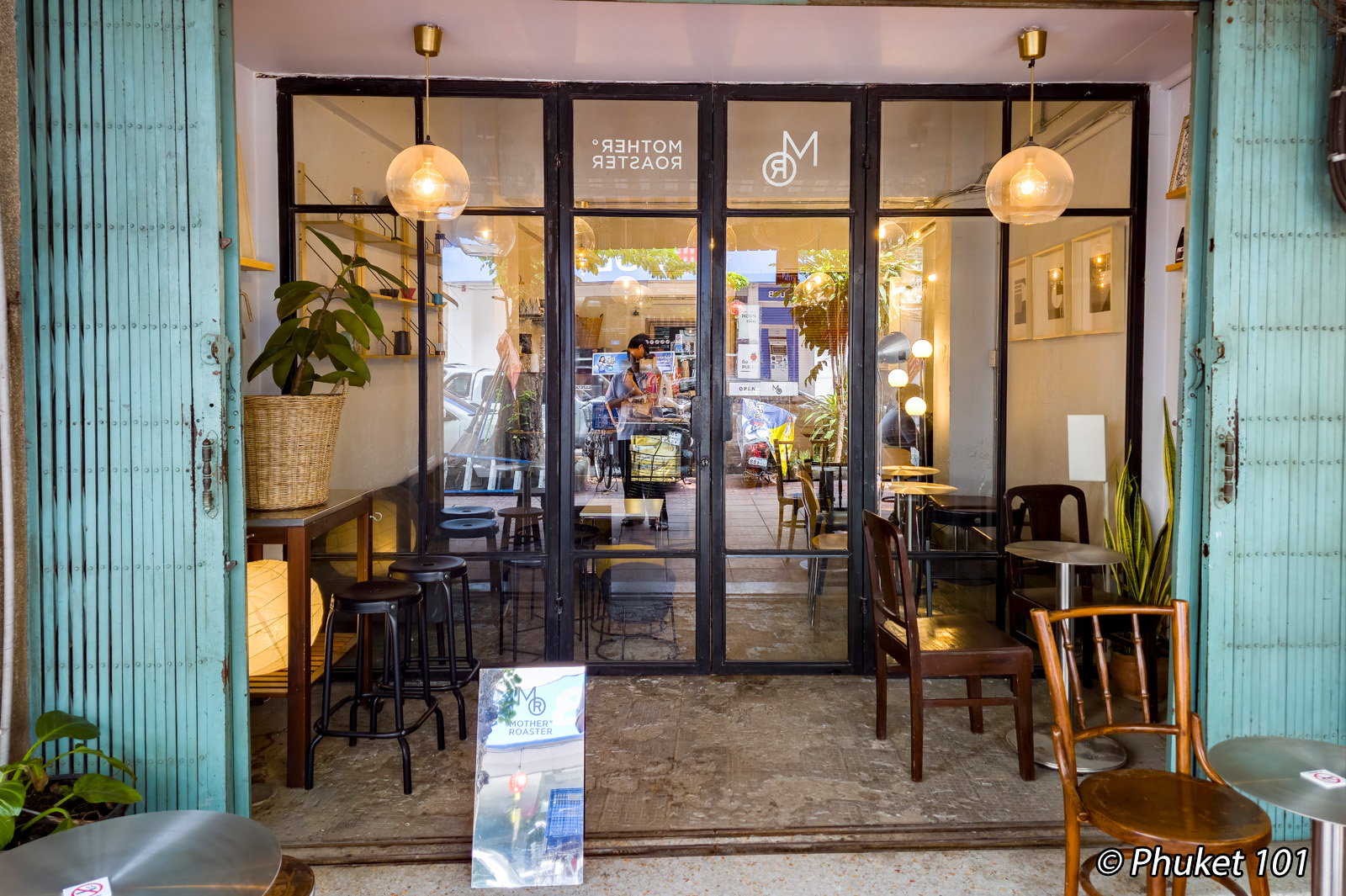
Mother Roaster Songwat is another branch of the original Mother Roaster Talat Noi, and that origin story still follows the brand around. The Song Wat Road branch is a different proposition from the one in Talat Noi. It sits at street level in a converted shophouse, with black steel-frame glass doors opening onto the pavement, pale blue-green heritage shutters on either side, and a clean interior that feels properly thought through. The coffee crowd knows this place. Most people walking Song Wat for the first time will not notice it.


Address: 931 Song Wat Rd, Samphanthawong, Bangkok 10100
Hours: 10 am – 5 pm
Nuury Chestnut Ice Cream
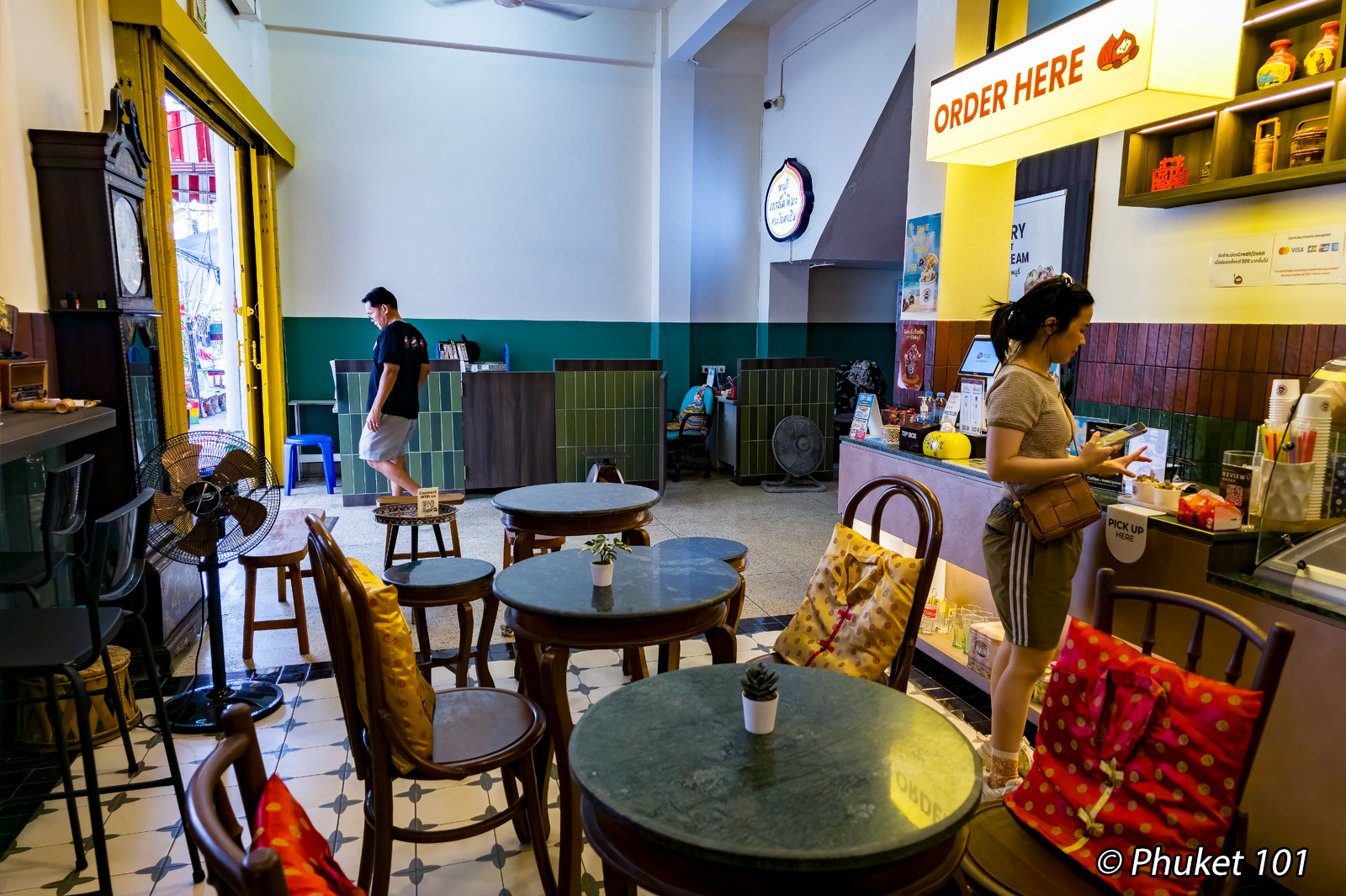
Nuury Chestnut Ice Cream has been operating out of a soi off Song Wat Road since 2000, which makes it a genuine old-timer in the neighbourhood rather than a newcomer riding the area’s recent wave of attention. It started as a modest shophouse in the alley and has since expanded into the proper sit-down space it is today.


Address: 206 Trok Saphan Yuan, Samphanthawong, Bangkok 10100
Hours: 8 am – 5 pm
More Restaurants on Song Wat Road
Gu Long Bao 古笼包 Over 100 years old. Fourth-generation family business making Teochew steamed buns by hand. You can watch them fold the buns through the shop window. Pork, salted egg, sesame, taro, and plant-based options.
Address: 983 Song Wat Rd | Hours: 9 am – 6 pm (Sunday from 10 am)
Urai Braised Goose (Urai Han Palo) Michelin Bib Gourmand. Teochew-style braised goose with Chinese five-spice, served with rice, clear soup, and tangy dipping sauce. Over 60 years old, family-run. They prepare whole geese each morning and sell out regularly. Go early or call ahead.
Address: 935 Song Wat Rd | Hours: 10 am – 1 pm, then 4 pm – 7 pm
Nai Yong Noodle Duck noodle soup with rich herb-infused broth. They’ve been perfecting this for decades. Opens at 10 am but usually sells out by noon. Don’t come late.
Address: 142 Song Wat Rd | Hours: 10 am – sold out
Khanom Chip A Liang Hand-folded dumplings with minced pork and vegetables. Over 30 years old, started as a street cart. The tangy aromatic dipping sauce is what makes it.
Address: 25 Song Wat Rd | Hours: Early morning – sold out
SongViet at SongWat Vietnamese street food from the Maison Saigon group. They brought chefs and recipes directly from Ho Chi Minh City. Saigon-style dishes done properly.
Thai Kee Lim Teashop is a family-run Chinese tea shop with dozens of varieties. Not a restaurant, but worth stopping in to see Song Wat’s trading heritage still alive.
Address: 116 Song Wat Rd
Best Cafes on Song Wat Road
Terroir BKK is a well-known Thai roaster with a slow-bar experience in a renovated loft-style building. Single-origin pours, serious coffee. One of the first speciality coffee places on the street.
Address: 1218 Song Wat Rd | Hours: 10 am – 5 pm (until 5:30 pm weekends)
Local Boys Coffee Industrial-meets-cyberpunk decor. Younger crowd. They do adventurous drinks like Peanut Butter Coffee and something called Cybernetic Cherry Blossom. Not for purists, but fun.
Address: 994 Song Wat Rd | Hours: 8 am – 5 pm
Koff & Bun Speciality coffee paired with croissants and steamed buns. Laid-back atmosphere, good beans sourced from different origins.
Address: 979 Song Wat Rd | Hours: 10:30 am – 6 pm (closed Monday)
F.V Song Wat Creative Thai fruit drinks and seasonal granitas in a quirky shophouse. Try the watermelon granita with dried fish and crispy shallots. Sounds strange, works well.
Address: 827 Song Wat Rd | Hours: 10 am – 7 pm
Choch SongWat, a minimalist cafe in a century-old building. Small-batch roasted beans with both speed bar and slow bar options, depending on how much time you have.
Address: 1192 Song Wat Rd | Hours: 10 am – 6 pm (until 7 pm Fri-Sat)
Cache Cache Patisserie Parisian-style pastries hidden down Shun Lee Alley. You have to look for it. Artisanal cakes and Italian-style coffee in a small, quiet space.
Address: 878/2-3 Shun Lee Alley | Hours: 10 am – 6 pm (closed Tuesday)
Bukowski & Co. Secret library atmosphere with old books lining the walls. Good espresso. The kind of place where you end up staying longer than planned.
Address: 88 Song Wat Rd | Hours: 10 am – 6 pm
What to Do on Song Wat Road
Analog Space & Vintage Shop
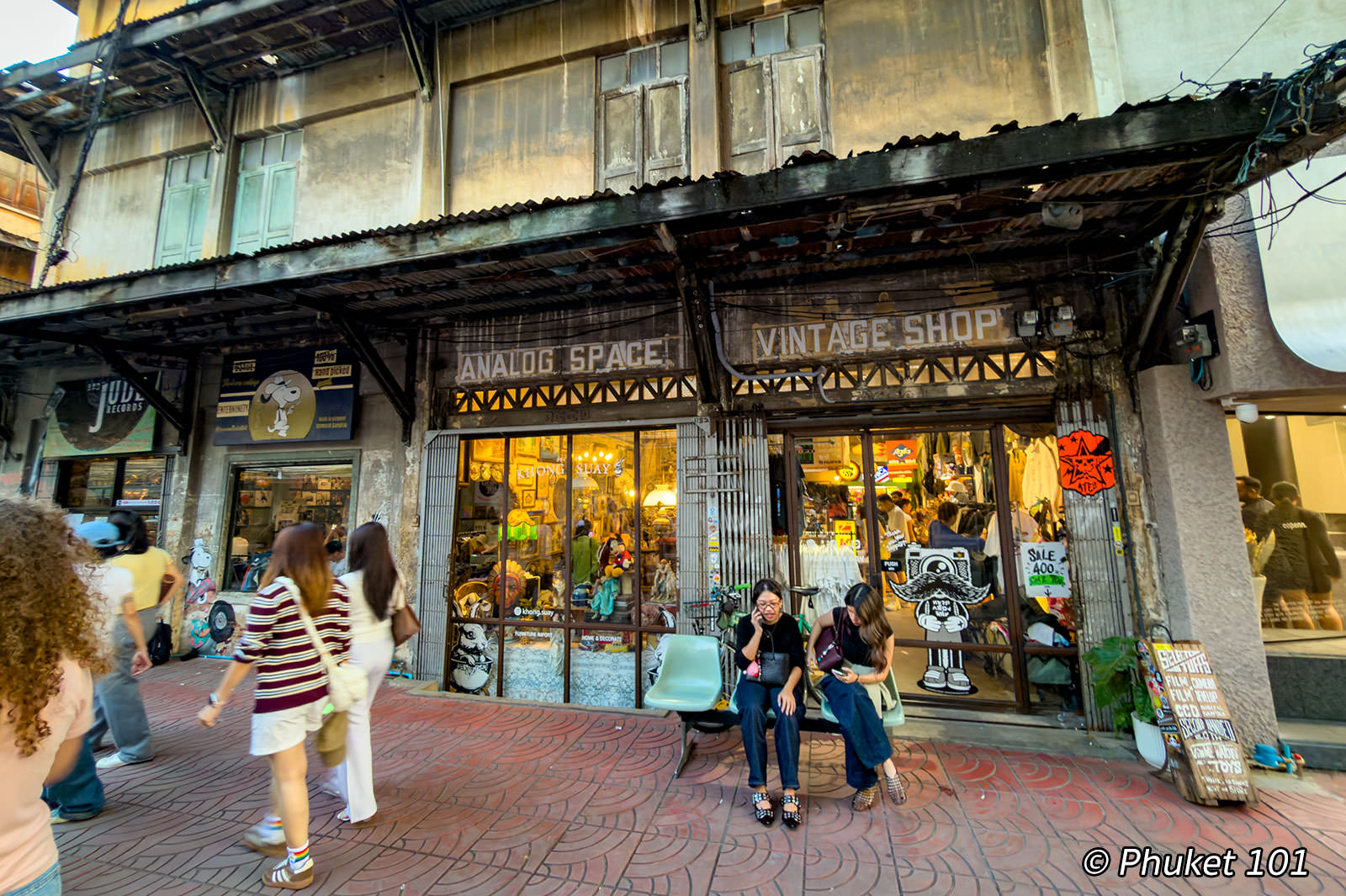
Analog Space & Vintage Shop occupies a century-old building on Song Wat Road in Bangkok’s Chinatown. The vintage collective houses multiple businesses: a second-hand film camera shop with Japanese imports, Khong Suay (European vintage home decor), a vinyl record shop, and a vintage clothing store. The owners have curated items over decades, preserving the building’s original character while adding modern conveniences.


Address: 1452 Song Wat Rd, Khwaeng Chakkrawat, Khet Samphanthawong, Bangkok 10100
Hours: 10 am – 10 pm
Phone: 089 128 7796
Wat Pathum Khongkha Ratchaworawihan
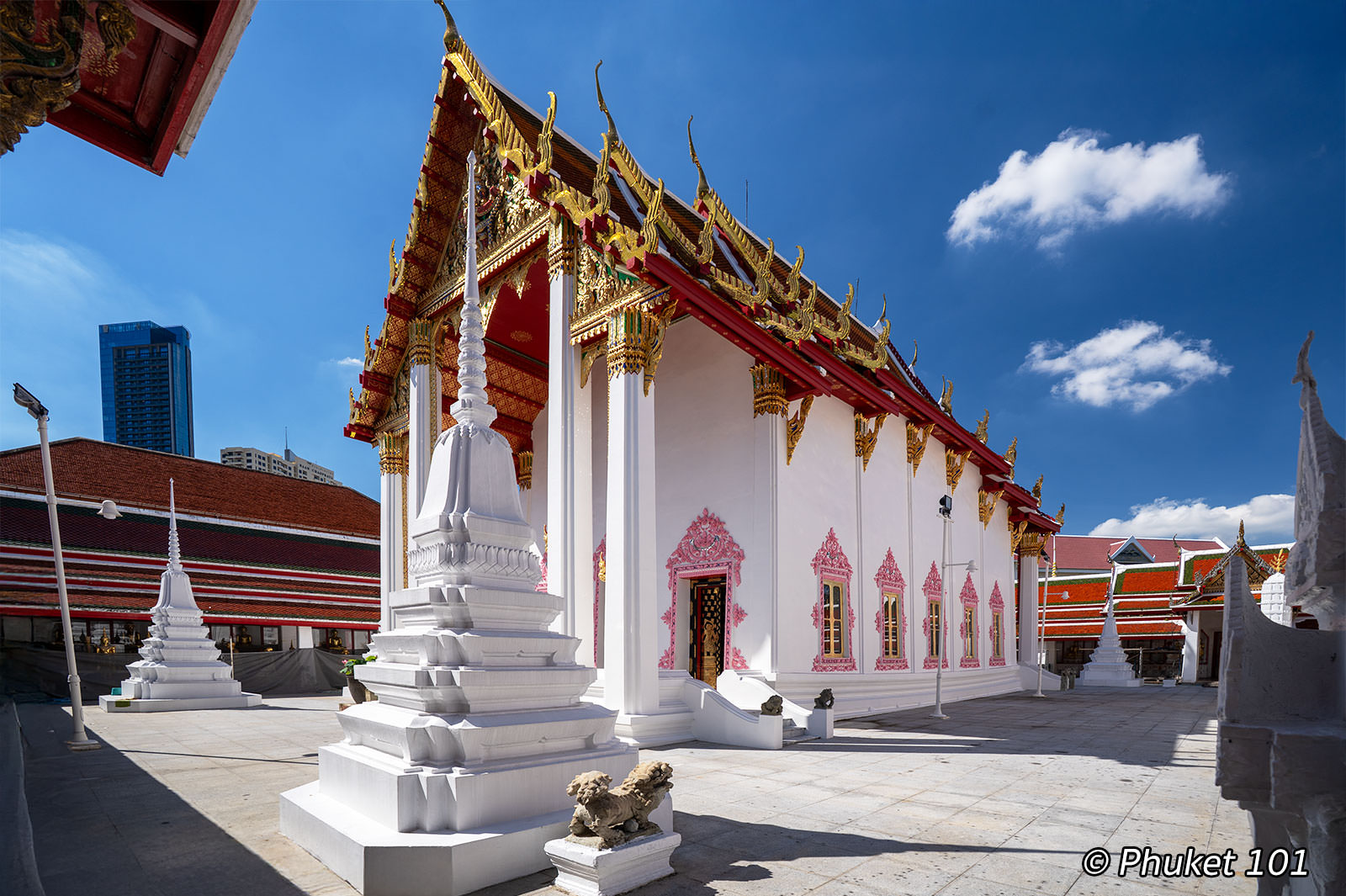
Wat Pathum Khongkha sits at the end of Song Wat Road, where Talad Noi meets Bangkok’s trendiest new street. This royal temple dates back to the Ayutthaya period and carries a dark history as a royal execution ground. Prince Kraisorn was executed here for rebellion against King Rama III. Inside, the ordination hall houses a Buddha image in royal attire, and the sermon hall doors feature original gold leaf paintings from the early Rattanakosin period. The canal out front is sacred ground where ashes of cremated royals and white elephants were scattered.


Lao Pun Tao Kong Shrine
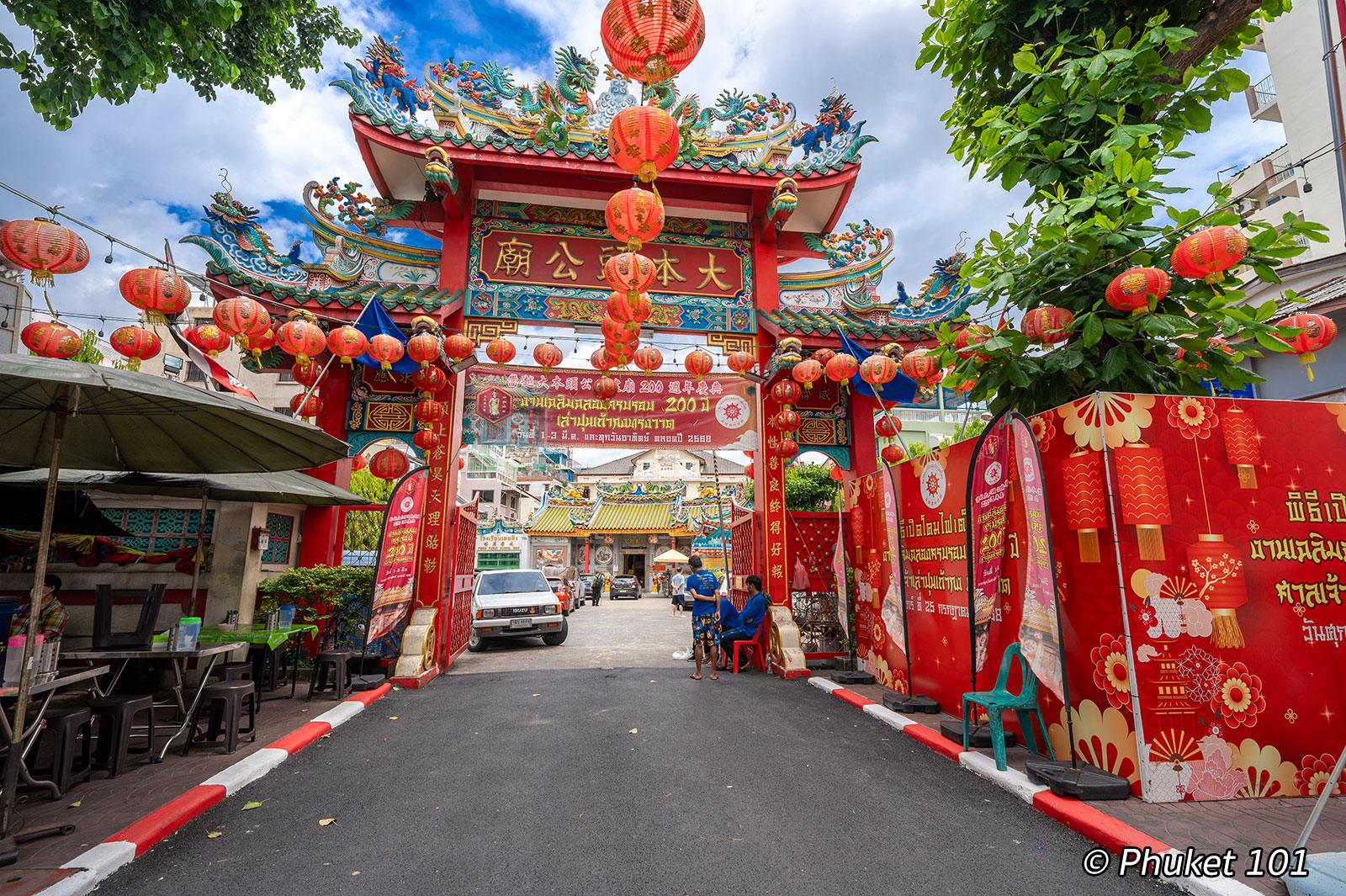
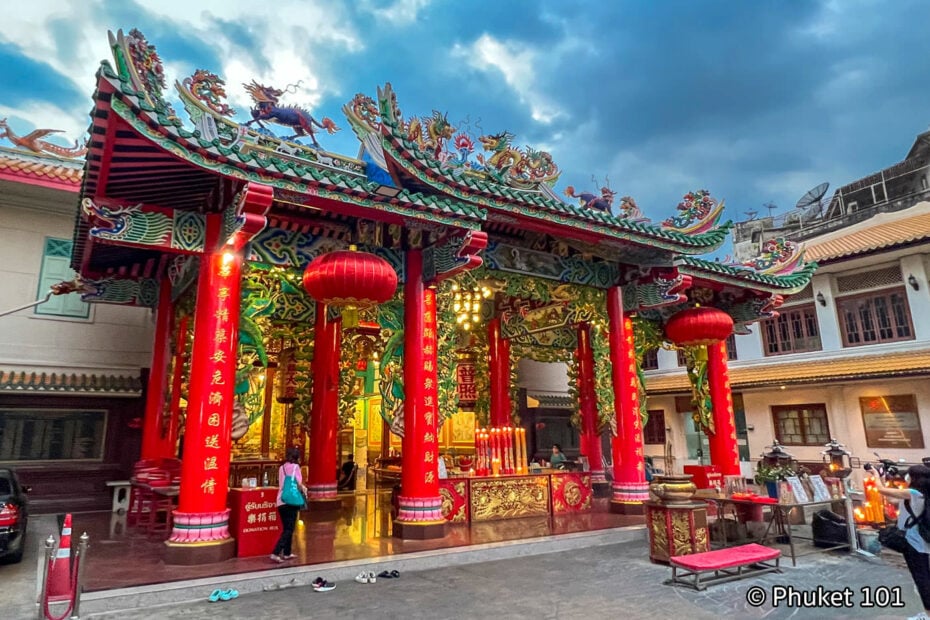
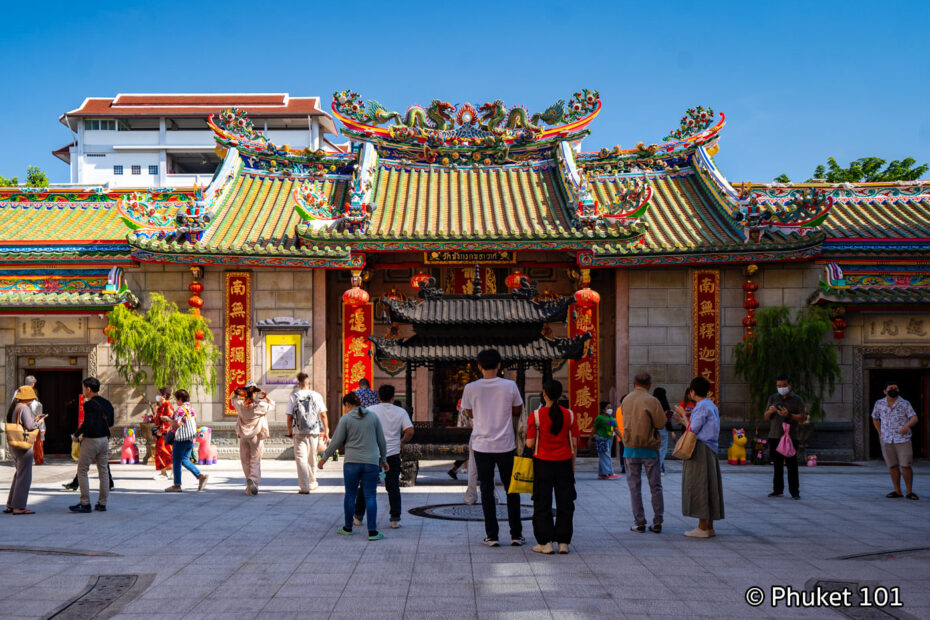
Lao Pun Tao Kong Shrine is a historic Teochew Taoist shrine on Song Wat Road, dedicated to Pun Tao Kong, protector of market districts like nearby Sampeng. Founded by Chinese settlers during the early Rattanakosin era and later renovated in 2007, it sits inside the Peiing Chinese School compound behind a striking red arch gate with green dragons.


The shrine features guardian Fu Dogs, ceramic warriors, and murals of auspicious symbols, while inside are altars to Tua Laoia Kong and Pun Tao Kong. Locals pray for health and business luck, especially during Chinese New Year and the lunar festival days.
Luang Kocha Itsahak Mosque
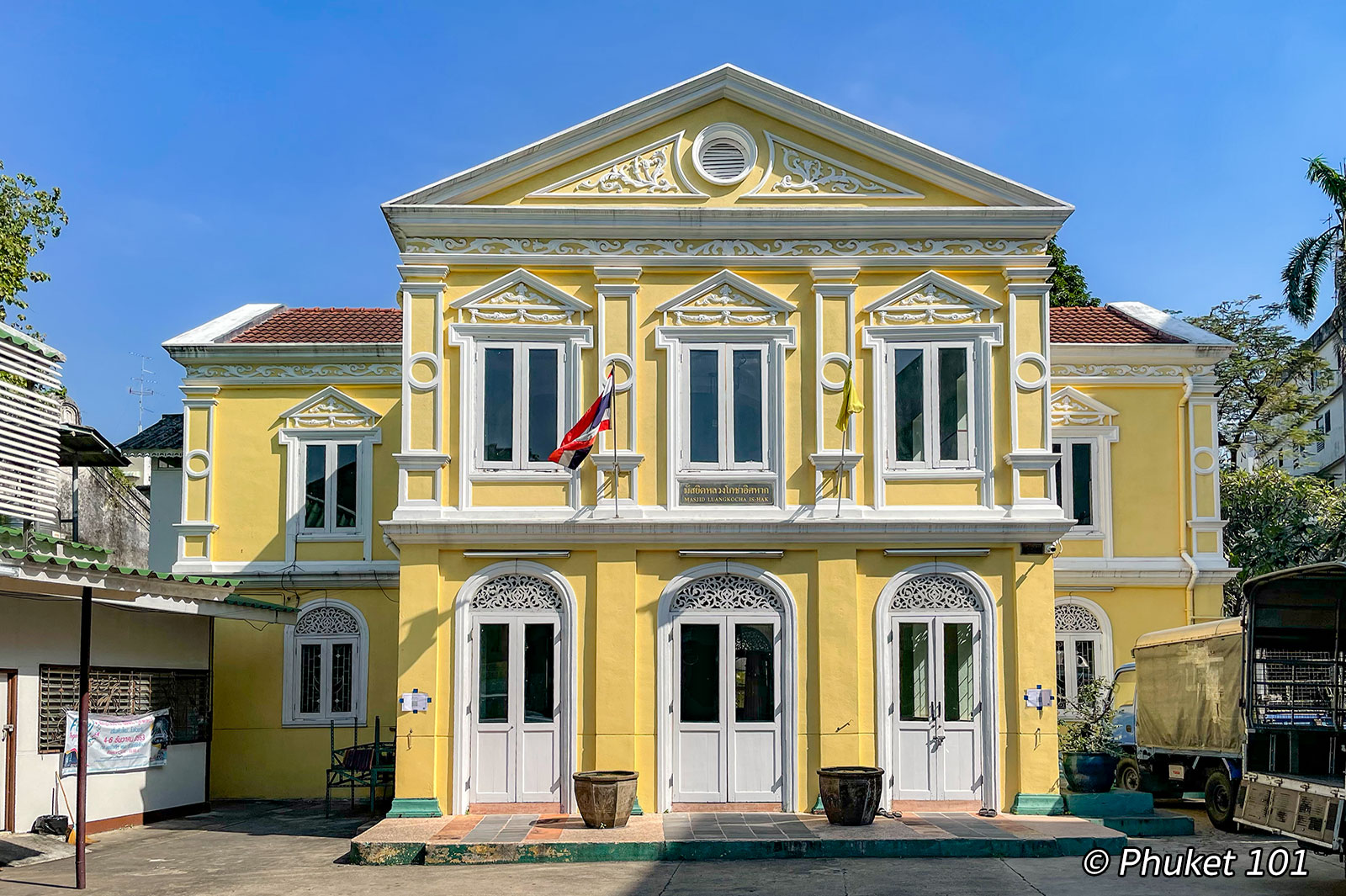
The mosque was established by Luang Kocha Itsahak, son of a Saiburi merchant. Luang Kocha Itsahak was a government officer at Krom Tha Khwa (the Department of Commerce and Foreign Affairs, responsible for contact with Western countries). His position was a Malay interpreter. He was responsible for trading and obtaining royal presents, including gold and silver trees from states in the Malay Peninsula. His duties also included being an interpreter for ambassadors and the Siam royal court.
Luang Kocha was known by foreign Islamic merchants who traded in Siam. There were no mosques around at that time, making it difficult for them to perform religious rituals, so a piece of land of about 1 acre was offered to build a Muslim place of worship. In constructing the mosque, Luang Kocha’s children helped deliver bricks and stones from his old building in Thonburi. The building is in the European style, which was well-known at the time. It has been used to perform religious rituals ever since construction was completed.
Insider Tips
Song Wat Road is one of the most rewarding streets to walk in Bangkok right now. It packs more history, food, art, and atmosphere into 1.2 kilometres than most neighbourhoods manage in an entire district.
Start early. Urai Braised Goose and Nai Yong Noodle sell out by noon most days. If you arrive at 10 am, you can hit the best food spots before the lunch crowd and still have time for cafes in the afternoon.
Wear comfortable shoes. The street is walkable but the pavement is uneven in places, especially in the side alleys. Flip-flops work, but closed shoes are better if you’re exploring for a few hours.
Don’t skip the side lanes. Song Wat Lane (20 metres long, possibly the shortest road in Thailand) is the busiest spot, but other alleys lead to hidden cafes, river views, and workshops that most visitors walk right past.
The three places of worship near the southern end (Buddhist temple, Taoist shrine, European-style mosque) are within 200 metres of each other. This is one of the clearest examples of Bangkok’s multicultural layering and worth pausing for even if you’re mainly here for the food and coffee.
Song Wat connects directly to Talad Noi at its southern end and Yaowarat (Chinatown) one block inland. A morning covering all three is possible but tiring in the heat. If you have to choose, Song Wat plus Talad Noi is the better combination because they share the same walking route.
Song Wat Road Through the Years
Song Wat Road was built in 1892 after King Chulalongkorn (Rama V) personally drew the road layout on a map following a devastating fire in the Sampheng district. The name “Song Wat” literally means “he drew.” Construction happened in two phases: the first section from Chak Phet Road to Yaowaphanit Road was completed in 1892, and the second section to Charoen Krung Road was finished in 1907.
For decades, Song Wat served as Bangkok’s main access point for river trade. Steamships connected the area to Chon Buri and Surat Thani provinces, and the street became the distribution hub for seafood, vegetables, and agricultural goods. Some of Thailand’s wealthiest business families, including the Chearavanont (CP Group) and Sirivadhanabhakdi (ThaiBev) dynasties, started from small operations on this street.
The decline came in the 1950s when Bangkok’s new container port made Song Wat’s piers obsolete. For the next 60 years, the street emptied. Shophouses were abandoned. Warehouses sat unused. The street fell off every tourist map.
The turnaround began in 2016 when street artists, including Belgian artist ROA, started painting murals on the old buildings during the Bukruk Festival. In 2022, Kiattiwat Srichanwanpen founded the Made in Song Wat community initiative with 10 local businesses. By 2025, the collective had grown to over 60 members and launched the first Awakening Song Wat Road Festival, a light and digital art showcase that drew international attention.
In 2023, Time Out named Song Wat the 39th coolest neighbourhood in the world. International brands started hosting events on the street, including Nescafe and Meta AI. The transformation is still happening. New cafes and galleries open regularly, but the century-old bun makers, goose stalls, and tea shops remain. That coexistence is what makes Song Wat work.
More Photos of Song Wat Lane


More Photos of Song Wat Road


Talad Noi
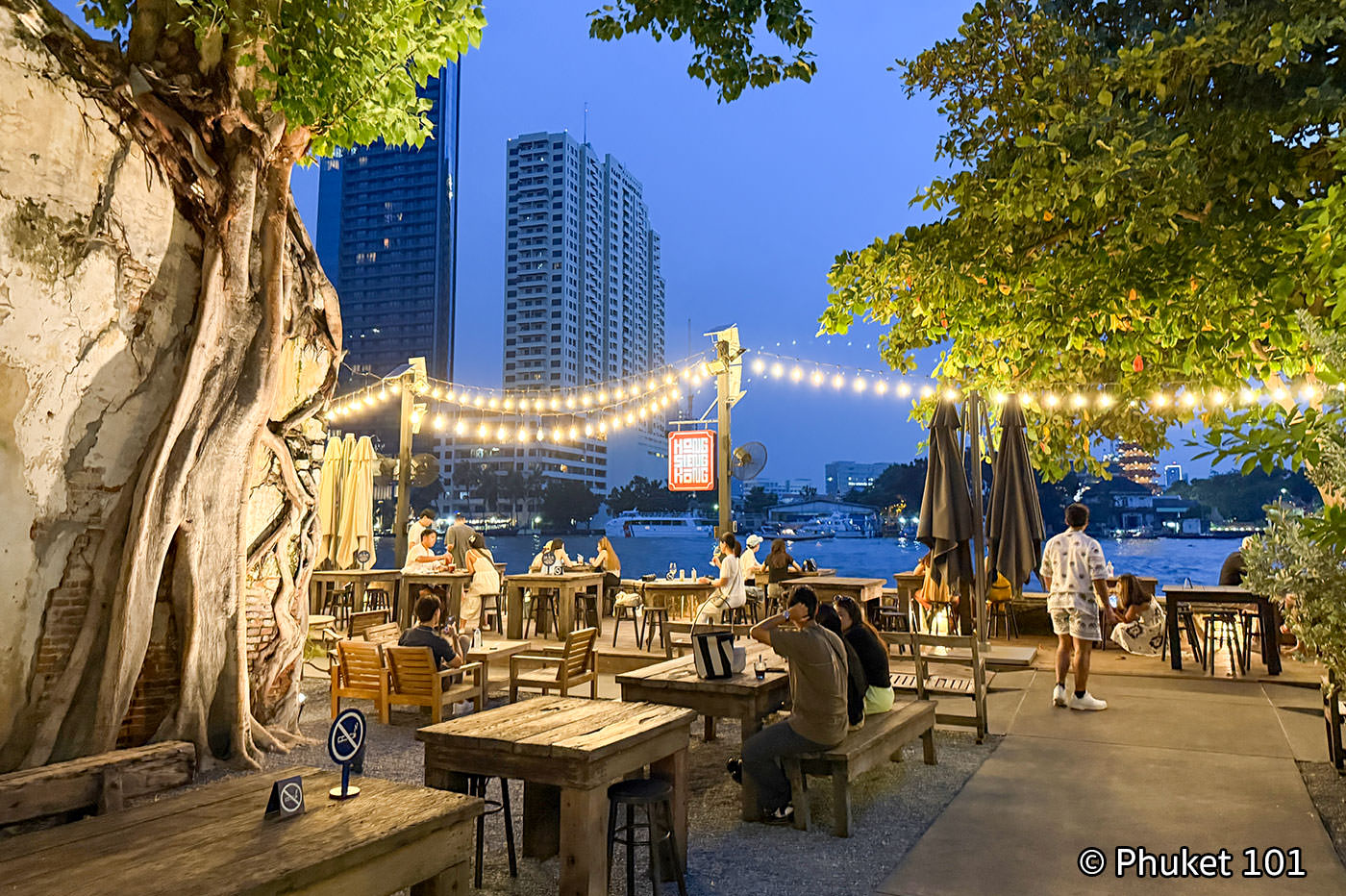
Just steps away from Song Wat Road is Talad Noi, Bangkok’s oldest neighbourhood. This historic Chinese settlement predates Bangkok itself. You’ll find 200-year-old mansions, street art by artists like Alex Face, and traditional car part workshops all on the same narrow lanes. There are colourful murals by international artists, the Gothic-style Holy Rosary Church built in 1786, and the beautiful So Heng Tai Mansion.
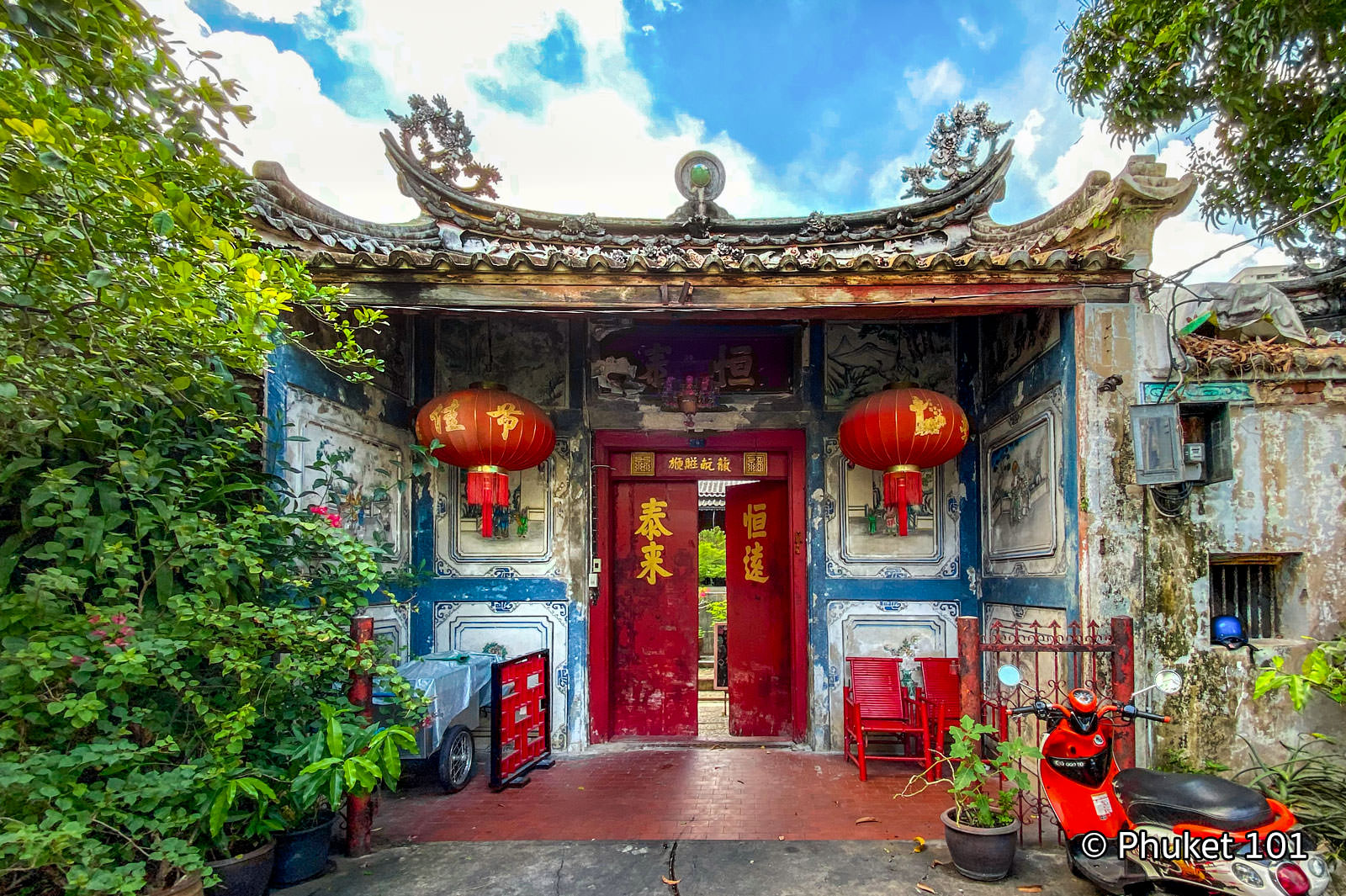
The narrow alleyways are filled with trendy cafes like Mother Roasters alongside century-old Chinese shrines and traditional food vendors. Both areas work well together in a single morning if you don’t mind the heat. Start early.
Song Wat Road Map
Popular Streets of Bangkok


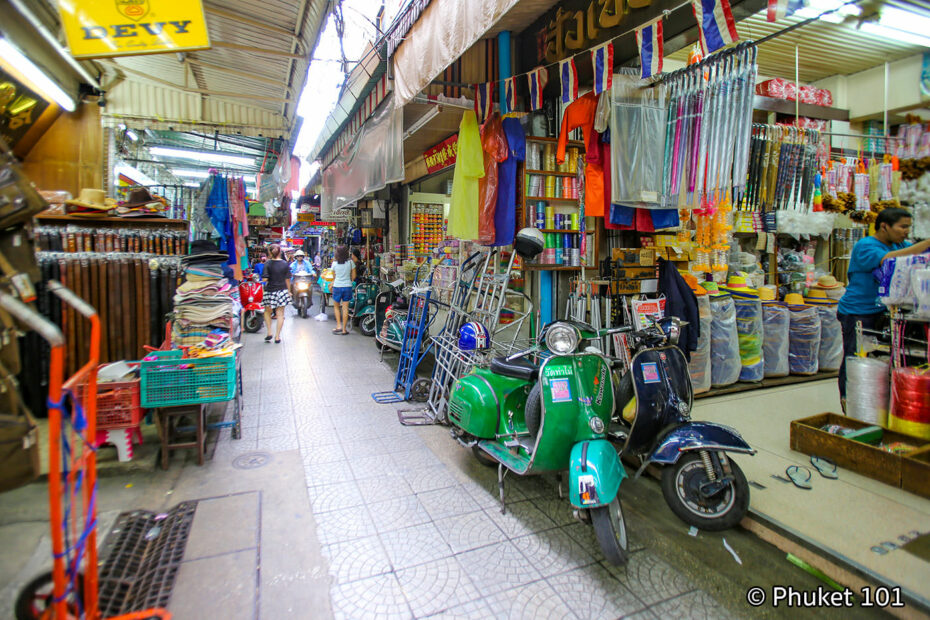
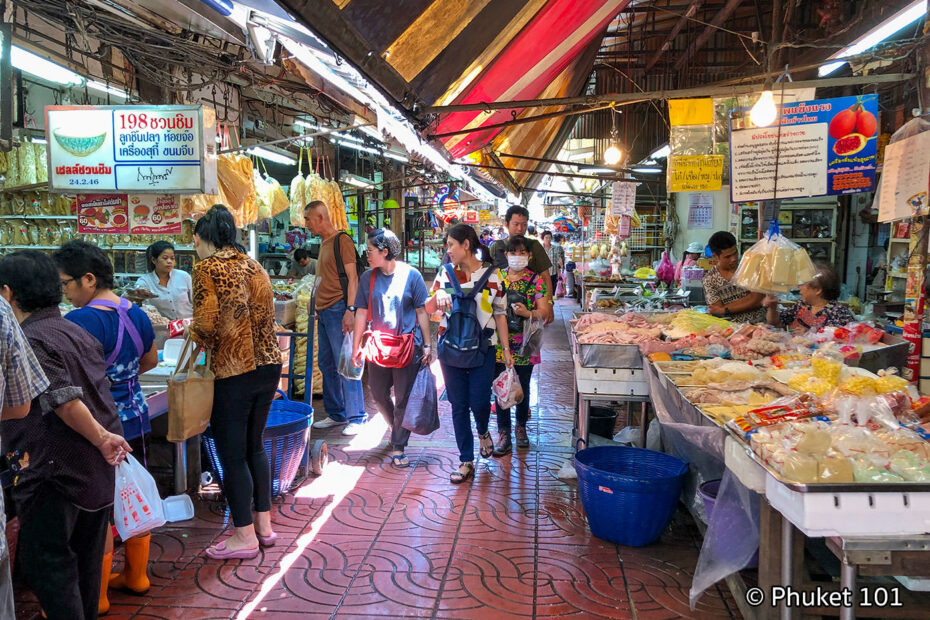
More About Bangkok Chinatown