

What is Muay Thai Training in Phuket Really Like?
15,474 viewsBy Willy Thuan
Content
show
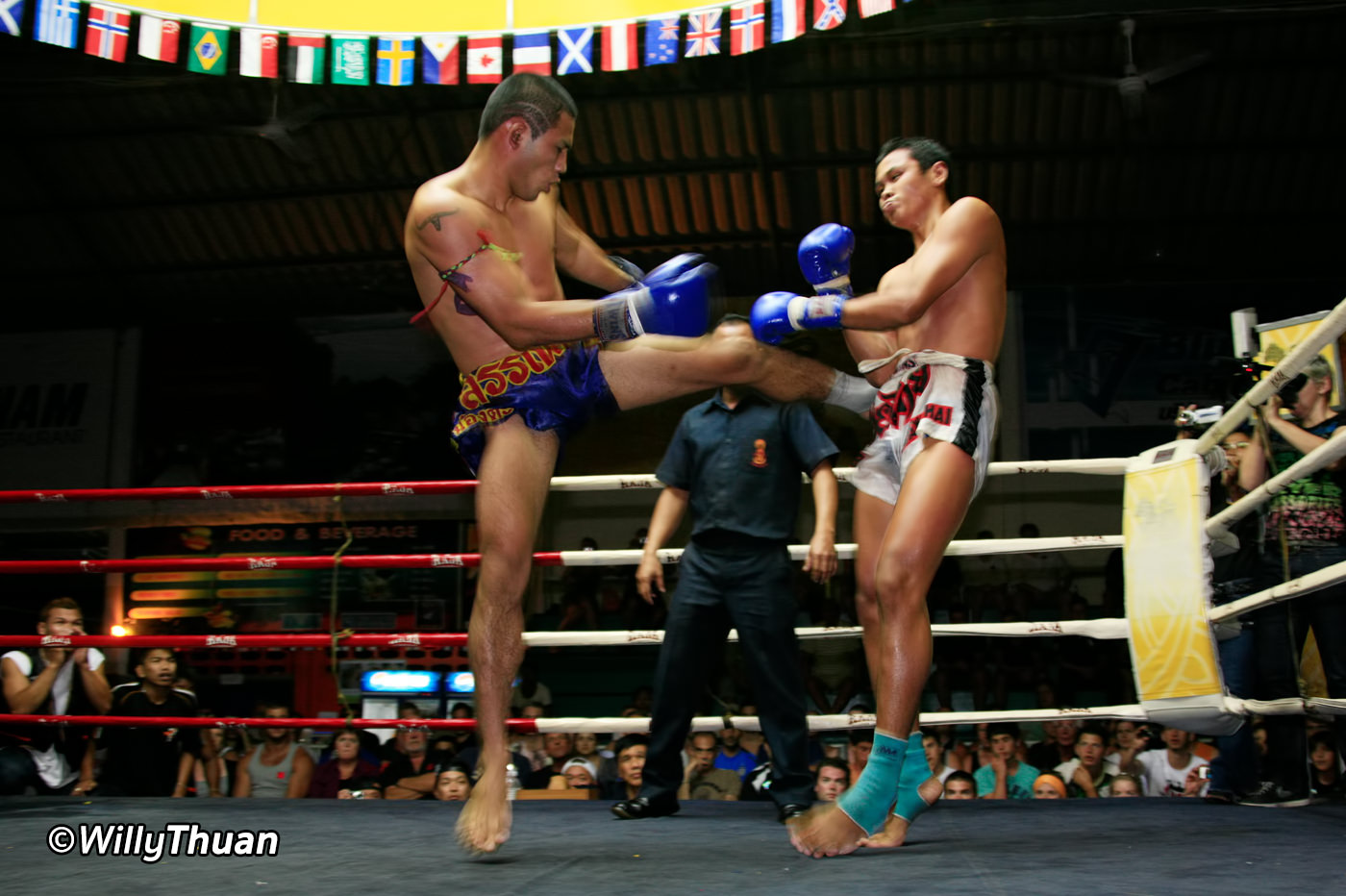
Muay Thai training in Phuket runs the full spectrum, from soft beginner-friendly classes you can drop into between beach days, to pro-level camps where amateur fighters spend months preparing for stadium bouts. The island has more than 30 active camps in 2026, most clustered around Soi Ta-Iad in Chalong and Rawai in the south. I’ve watched this scene grow from a handful of local Thai gyms in the 1990s into one of the biggest combat sports hubs in Asia, and the honest answer to “is it for me” depends entirely on which type of camp you walk into.
This page is for anyone considering their first trip. Not a list of best camps (I have a separate guide for that), but a plain explanation of what you actually sign up for: how a session feels, how the camps differ, and how to avoid landing in the wrong one.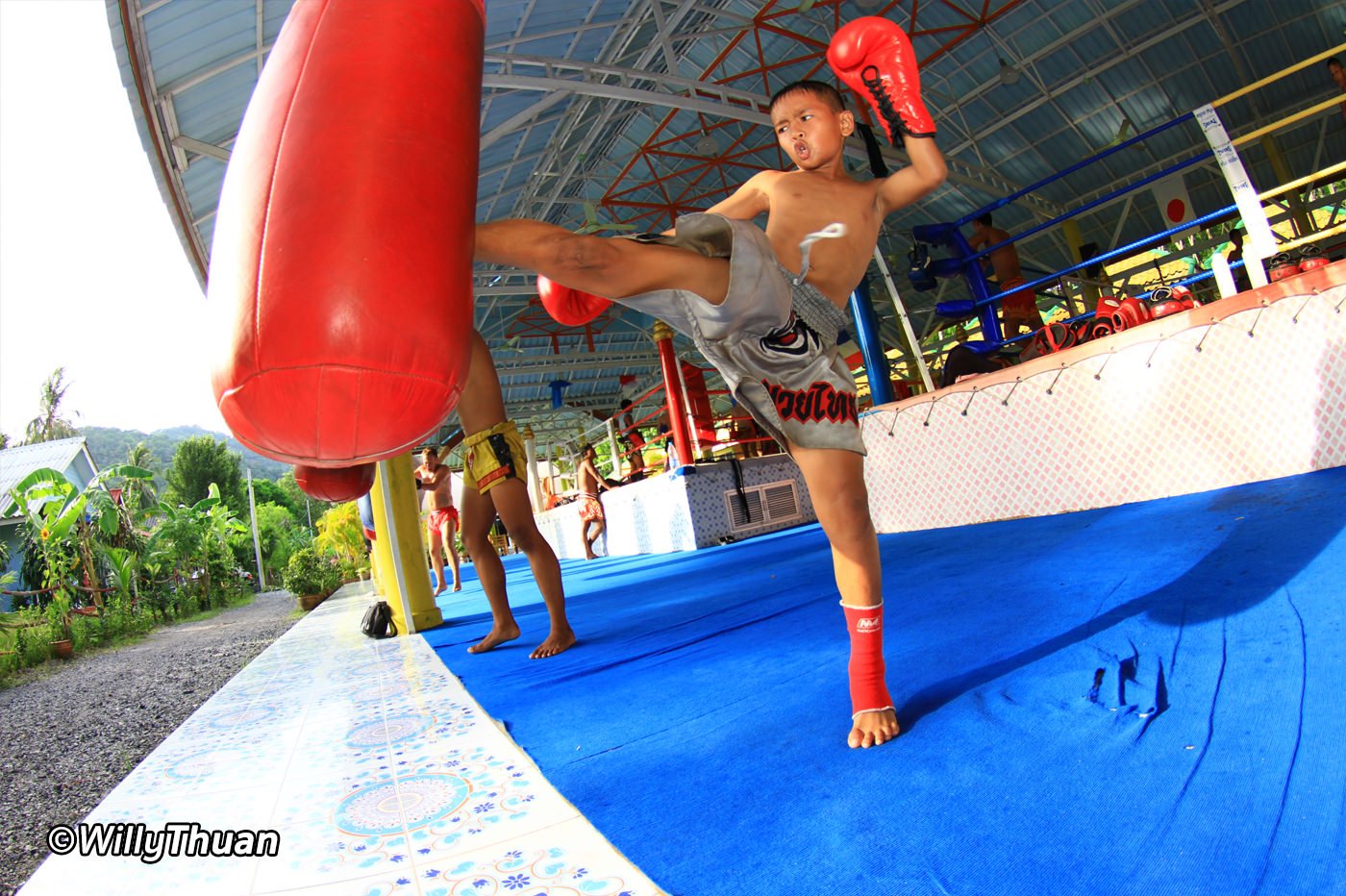
Soft, Mixed, or Serious: The Three Types of Camps
Most newcomers assume all Muay Thai camps are the same. They are not. The difference between a beach-resort fitness class and a fighter camp is enormous, and walking into the wrong one is the most common mistake I see.Beginner-friendly camps
These camps run softer programs aimed at travellers who want to try Muay Thai, lose some weight, and still enjoy their holiday. Group sizes are larger, trainers are patient, sessions are shorter (around 90 minutes), and the focus is on technique, fitness, and fun. Nobody will push you into sparring on day one. Plenty of people in their fifties and sixties train at this level. Examples in this tier: Bangtao Muay Thai & MMA in Bang Tao and Phuket King Muay Thai in Kathu both run welcoming beginner classes with mixed-ability groups.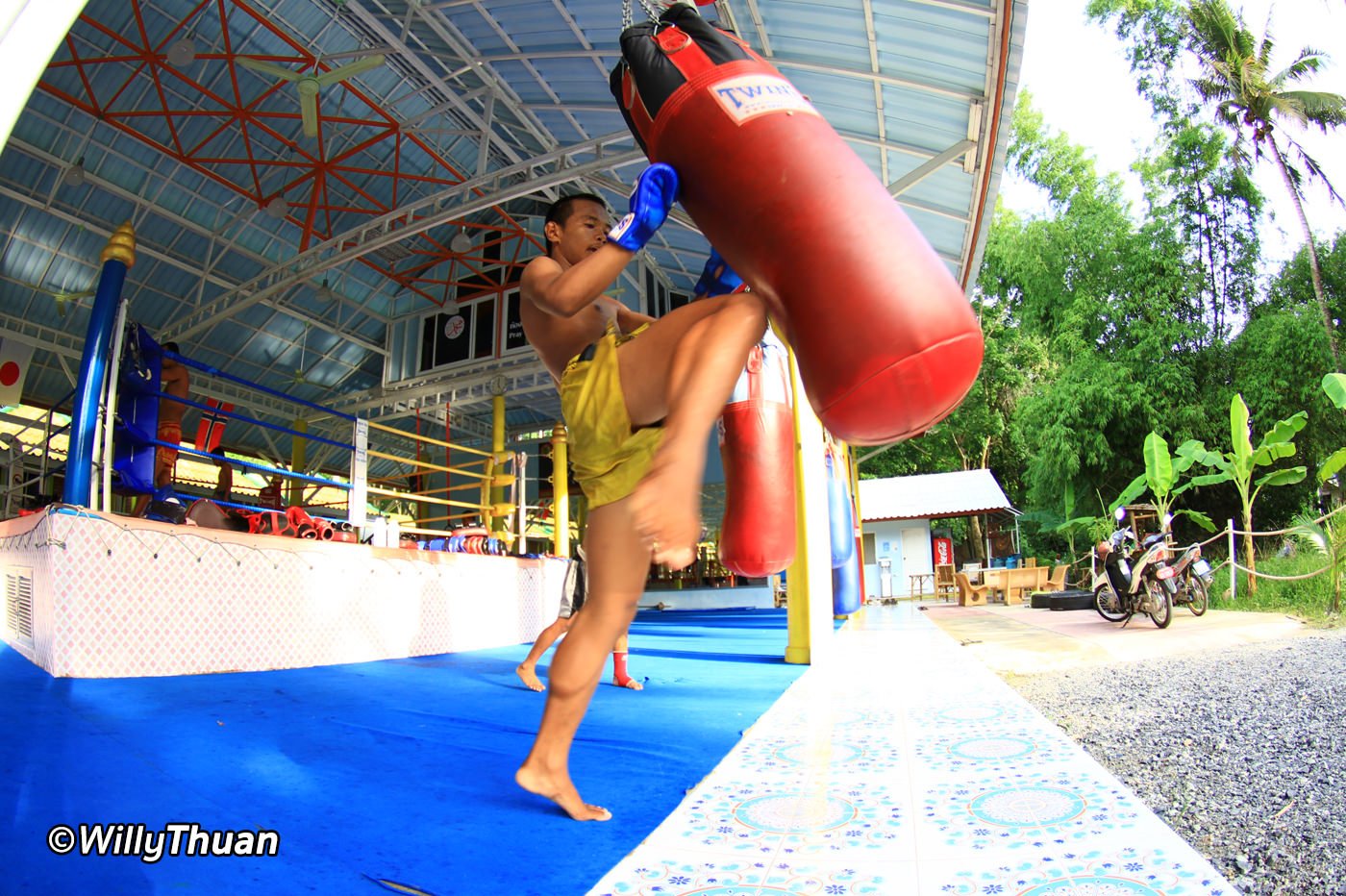
Mixed-level camps
The largest category. These camps take complete beginners, intermediate students, and competing fighters in the same gym, but split them across different rings or time slots. You’ll see UFC names training alongside someone who arrived three days ago. The atmosphere is more intense, sessions are usually 2 hours, and you choose how hard you push yourself. Examples in this tier: Tiger Muay Thai on Soi Ta-Iad and Sumalee Boxing Gym in Thalang. Tiger is the loudest and busiest. Sumalee is calmer and adds yoga and nutrition.Serious fighter camps
Traditional Thai-run gyms where most students are training to fight, often living on site for months. Sessions are 3 hours twice a day, six days a week. Trainers are former Lumpinee or Rajadamnern champions and they will read your level fast. Beginners are welcome at most of these camps, but the rhythm is built around fighters, and you’ll either rise to it or fall behind. Examples in this tier: Sinbi Muay Thai in Rawai and Suwit Muay Thai Camp in Chalong, the oldest camp in Phuket.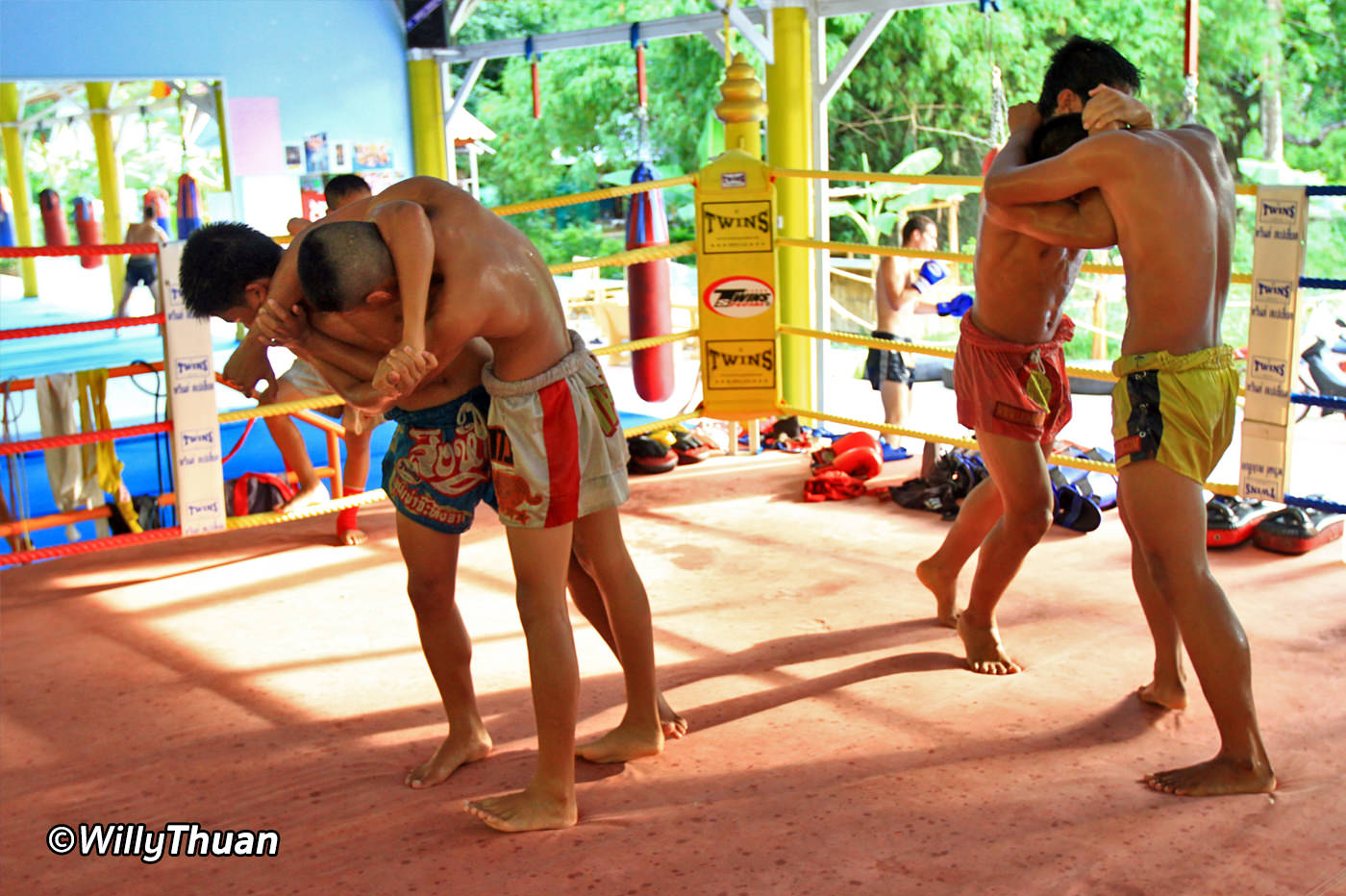
What a Typical Session Looks Like
A standard two-hour session in any mid-level camp follows roughly the same shape. Knowing this in advance removes most of the first-day shock. Sessions usually open with a 15 to 30 minute warm-up: jogging around the gym, skipping rope, then dynamic stretching. Then comes shadow boxing, where you practise punches, kicks, elbows and knees against an imaginary opponent in front of a mirror. This is where the trainers start watching you and assigning you to a coach. The main block is pad work. A trainer holds Thai pads and calls combinations, you hit them. This is the part that actually teaches you Muay Thai, and it’s where the trainers earn their reputation. Good ones correct your form on every round. After pads comes bag work, then clinching practice (the standing wrestling part of Muay Thai), and often light sparring at higher levels. Sessions end with conditioning: push-ups, sit-ups, knee strikes on the bag. Bring more water than you think you need. The first three days are brutal for everyone, then your body adapts.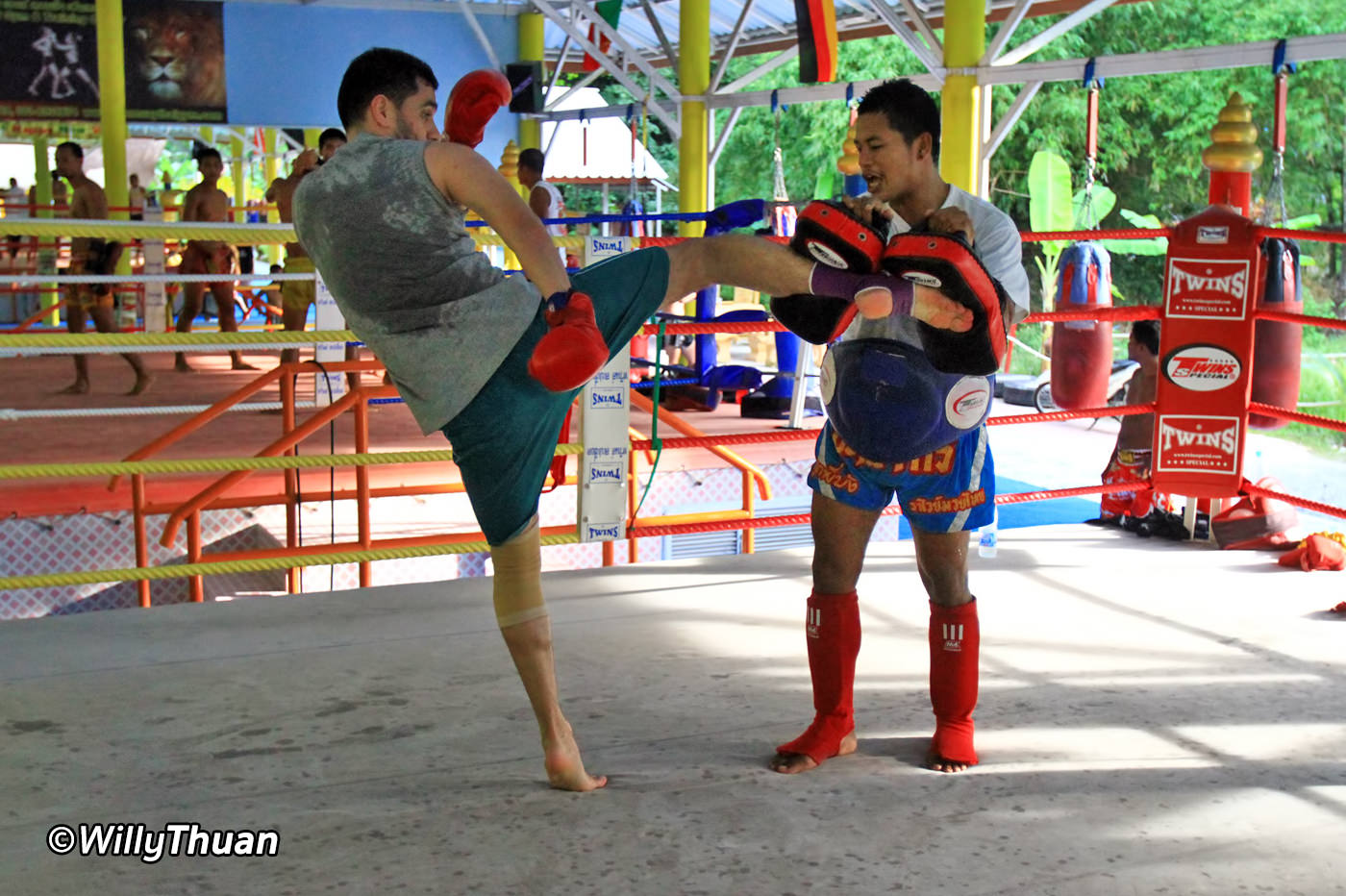
How Much Does It Cost in 2026?
Drop-in single session prices in 2026 range from 400 to 700 THB at most camps, with premium camps charging up to 800 THB. Day passes giving access to all classes typically run 700 to 1,000 THB. For longer stays, weekly packages cost between 3,500 and 5,000 THB, and monthly between 12,000 and 18,000 THB. Most camps with accommodation bundle the room into a training package, with on-site rooms ranging from basic shared dorms at 8,000 THB per month to private air-conditioned rooms at 25,000 THB per month. You don’t need to book in advance. Walk in, watch a class, decide if you like the vibe, pay for one session and try it.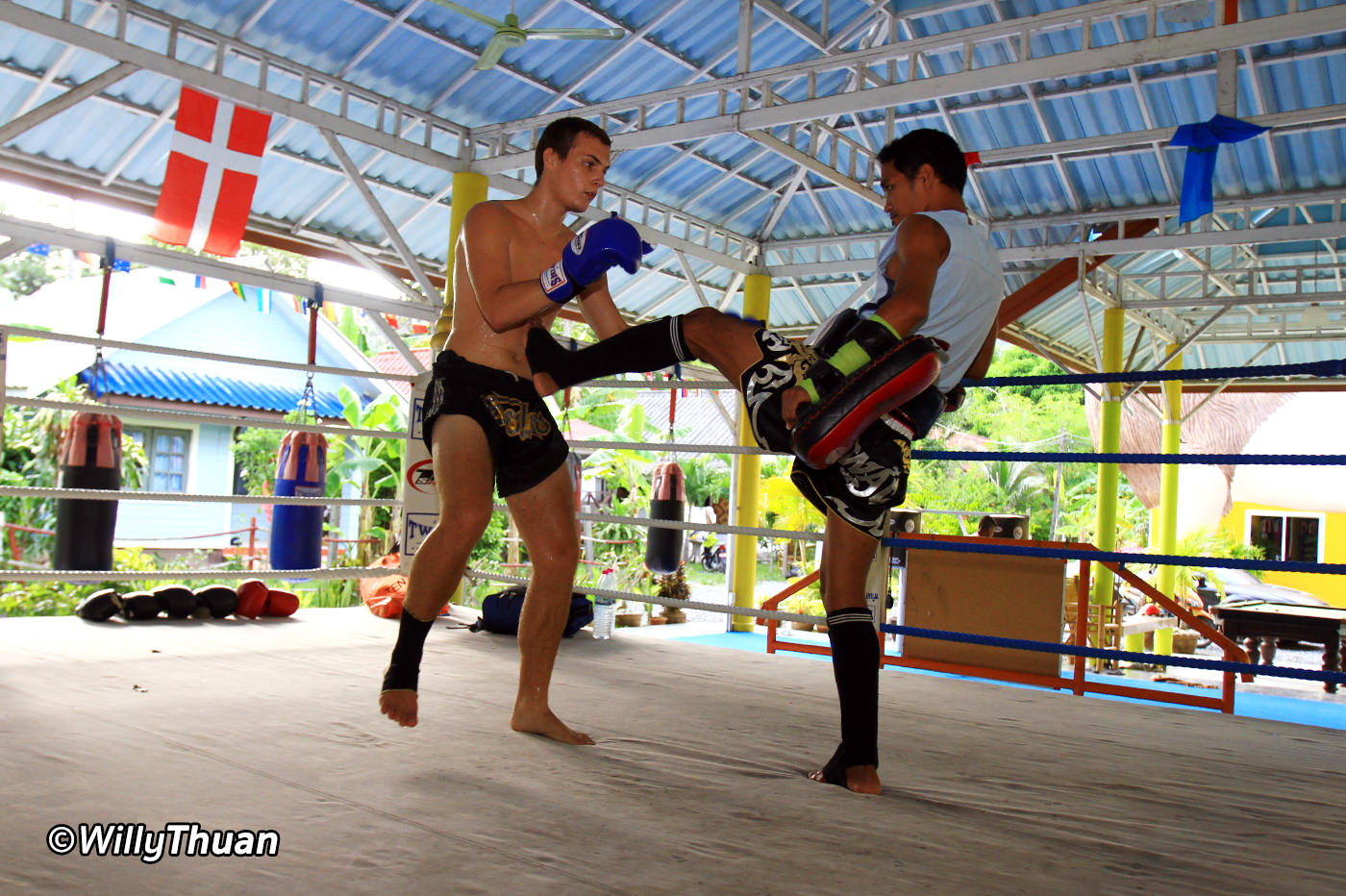
Insider Tips
What to bring on day one
Bring loose shorts (not tight running shorts), a t-shirt you don’t mind sweating through, a small towel, and a 1.5 litre water bottle. Most camps lend gloves, hand wraps and shin guards to first-time visitors, but you’ll want to buy your own once you commit to a week or more. Local sports shops on Soi Ta-Iad sell decent gear at half the price of European or American gyms. Skip the gold chains, watches, and earrings: nothing metal in the ring. Show up 15 minutes early on your first day so the head trainer can ask about your experience and assign you to the right coach. Wai (the Thai palms-together greeting) when you meet your trainer, and when you step in and out of the ring. It’s not optional, it’s basic respect, and Thai trainers notice immediately who knows.Red flags when choosing a camp
Avoid any camp that pressures you to pay for a full week before you’ve taken a single class. The good ones let you drop in for one session, no questions asked. If they push hard for a long booking on the phone, that’s a sign. Watch a session before signing up. A serious camp will have multiple trainers actively working with students, not one trainer juggling 15 people while scrolling his phone. Look at the ring ropes, the bags and the floor. Worn equipment is fine, dirty and unmaintained is not. If everyone in the gym is the same age and gender as the marketing photos, the camp is performing for Instagram more than training. Finally, trust your read of the head trainer. The best ones speak slowly, demonstrate calmly, and laugh easily. The ones who shout from the corner of the gym and never leave their chair are not the ones who’ll make you better.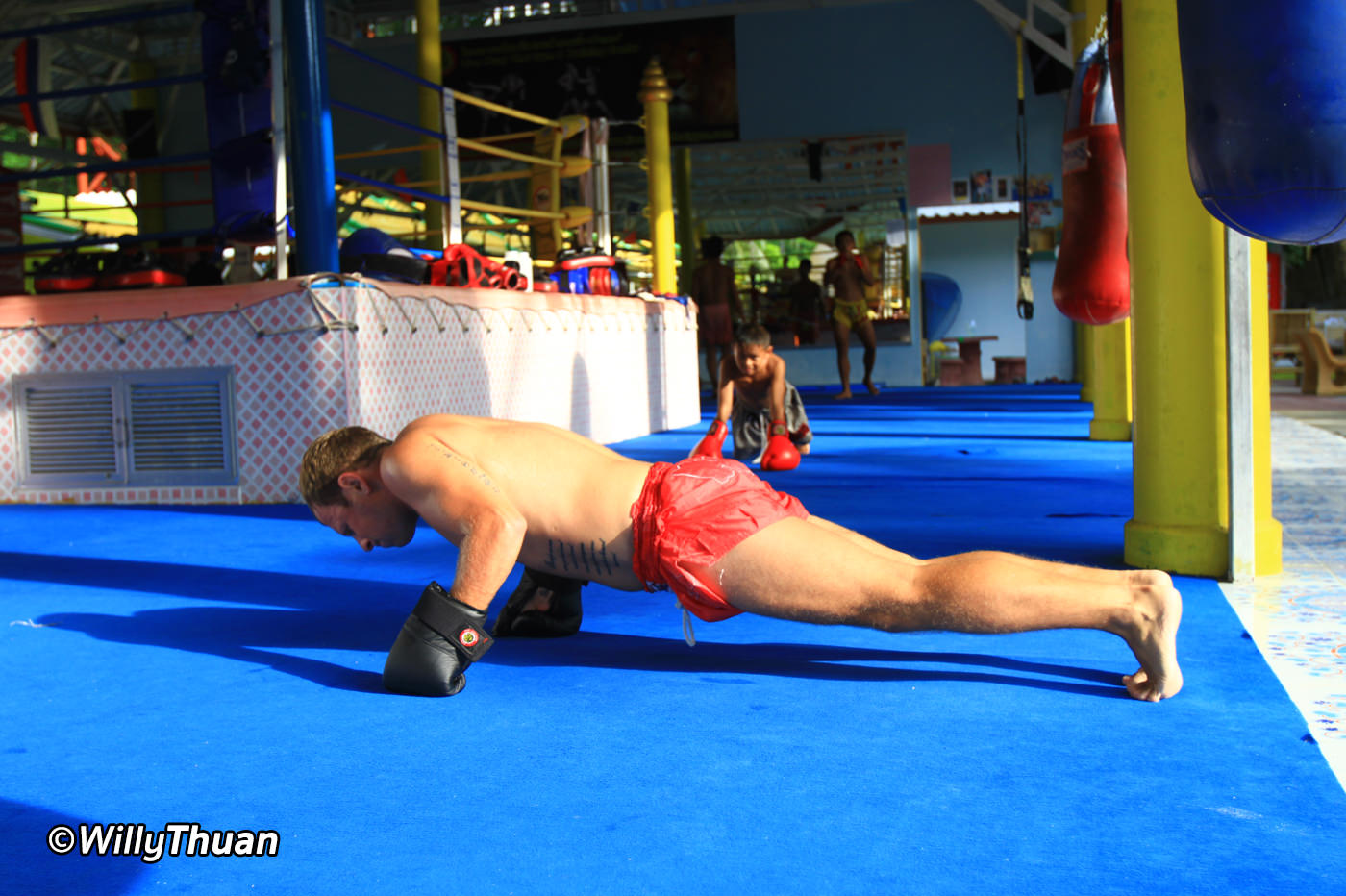
Muay Thai in Phuket Through the Years
When I first arrived in Phuket in 1994, Muay Thai was strictly a local sport. The handful of camps that existed were rough open-air sheds attached to Thai-owned gyms in Chalong and Phuket Town, and the only foreigners who trained were a small group of expats and the occasional French or Australian fighter passing through. There were no signs in English. You found a camp by knowing someone. The shift began in the early 2000s. Tiger Muay Thai opened in 2003 on what was then a quiet rubber plantation road called Soi Ta-Iad, and within a few years the road transformed completely. Cafés, gear shops, smoothie bars, and supplement stores filled in around the gyms. Other camps moved in: Sinbi, Suwit, Rattachai, AKA, and dozens more. By 2010 the area had earned its nickname of “Fitness Street.” The next decade brought international recognition. UFC and ONE Championship fighters started training in Phuket during their off-seasons. Sumalee added yoga and nutrition programs aimed at female travellers, breaking the assumption that Muay Thai was a men’s sport. Camps started offering accommodation packages targeting people coming for one to three months at a time. By 2026 the scene has matured into three clear tiers (the ones described above), and Phuket has become arguably the largest Muay Thai training destination in the world. The Thai government has awarded AKA Thailand the title of #1 Muay Thai School in Thailand four years running from 2021 to 2024, which would have been unthinkable when I first watched a stadium fight in Patong in 1995. What hasn’t changed: the trainers are still Thai, the technique is still Thai, and a serious session still leaves you on the floor doing push-ups while a coach counts you down. That part is timeless.